

Maintenance of Solar Panels and Inverters: Where Does Time Get Lost?
Most emergency shutdowns at solar power plants happen due to human factors, not equipment failure.
An engineer spends 30–40 minutes searching for the right section of a paper manual, then another 30–40 minutes cross-referencing it with the schematic and calling a more experienced colleague on the phone.
Each such shutdown means lost power generation, delayed deadlines, and extra hours of downtime for the entire crew. Staff qualification directly affects response speed: while a newcomer is figuring out an inverter using a multi-page procedure, the station is not operating.
Paper manuals become outdated, get lost, and — most importantly — do not answer the question "what should I do right now, in this situation?" An experienced engineer solves the task in 10 minutes, but their knowledge stays only in their head. When they go off shift, the whole process slows down again.
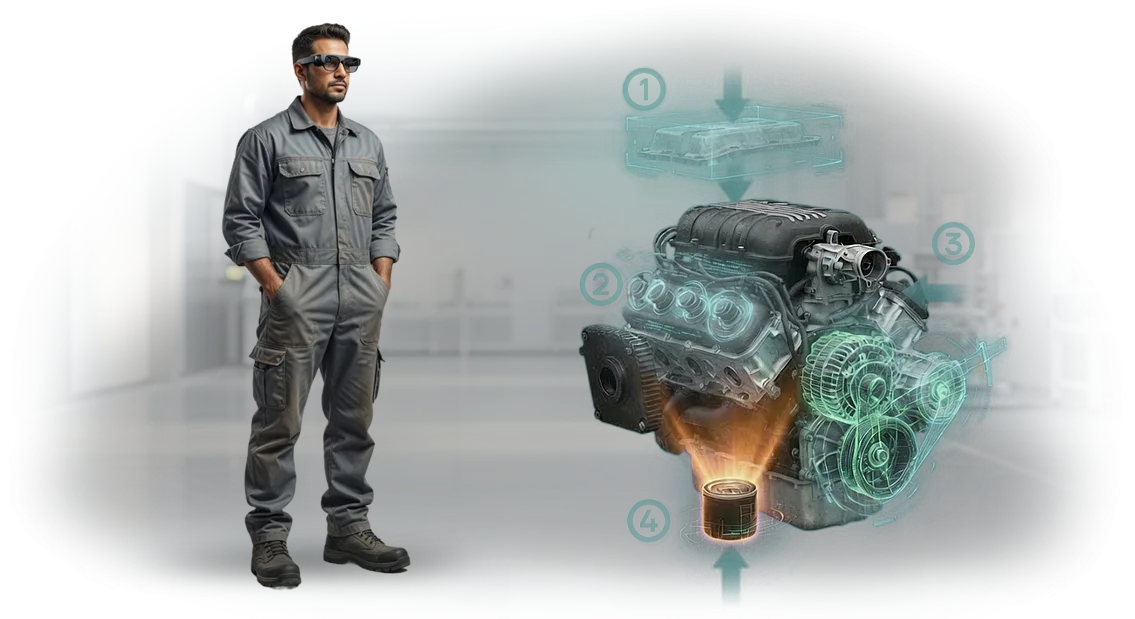
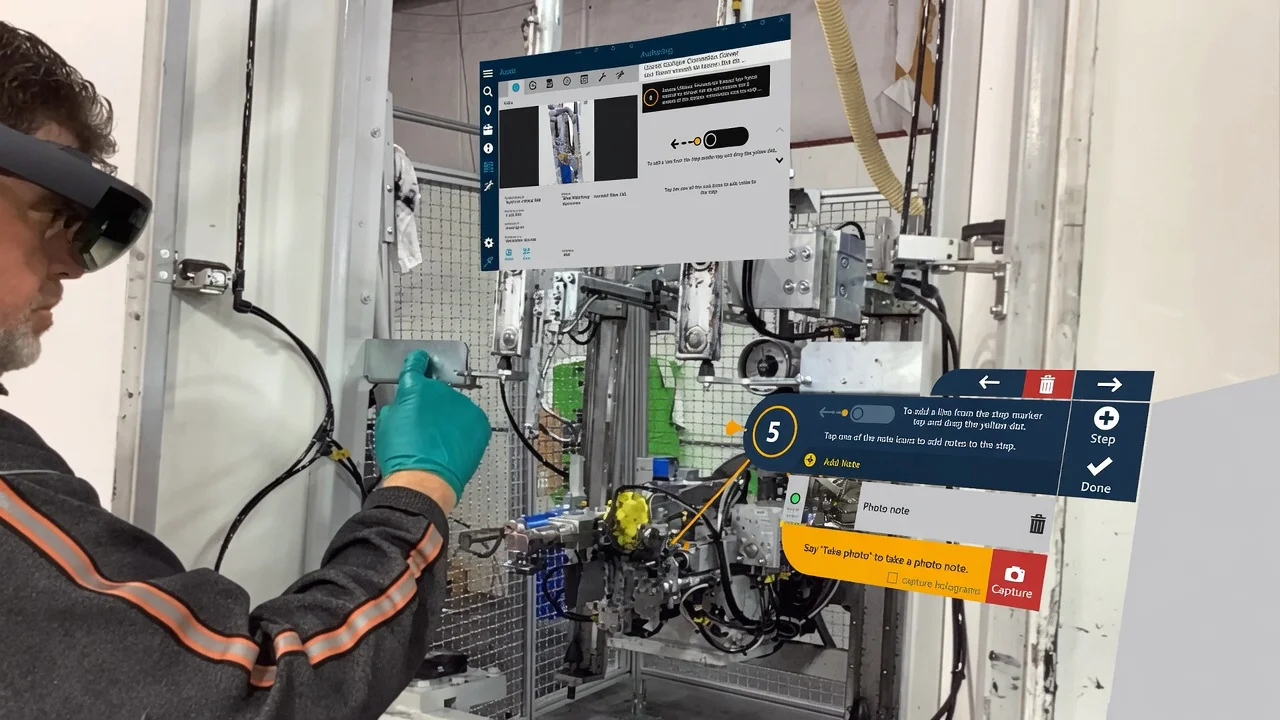
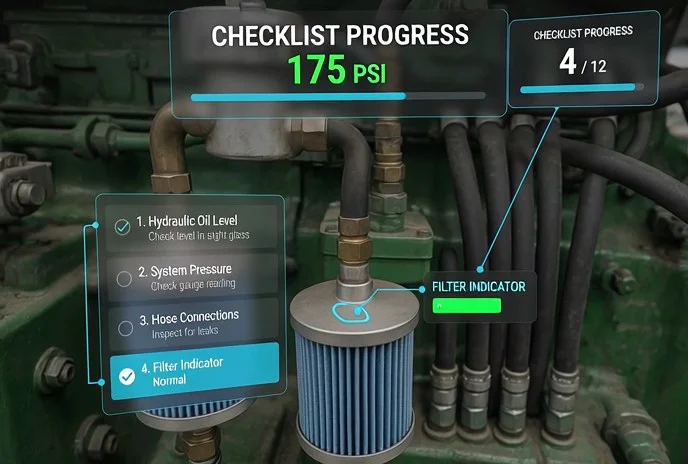
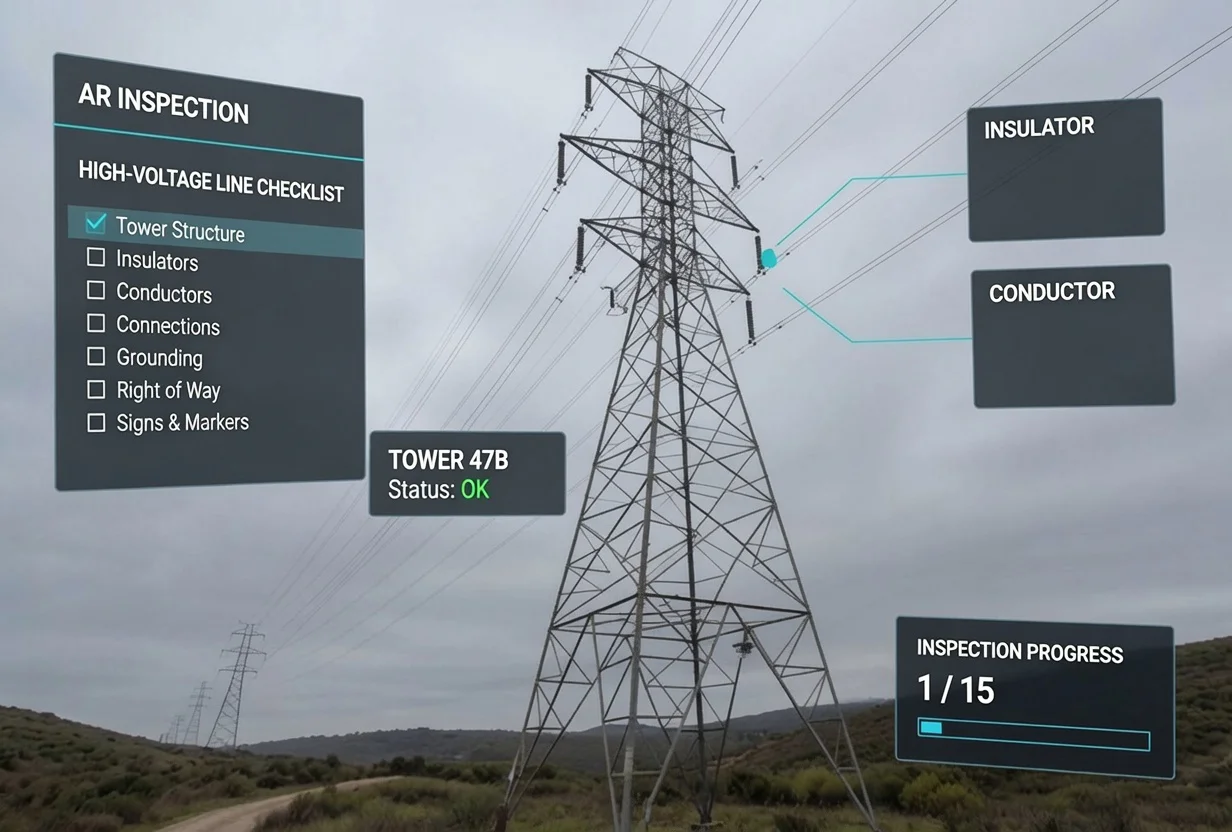
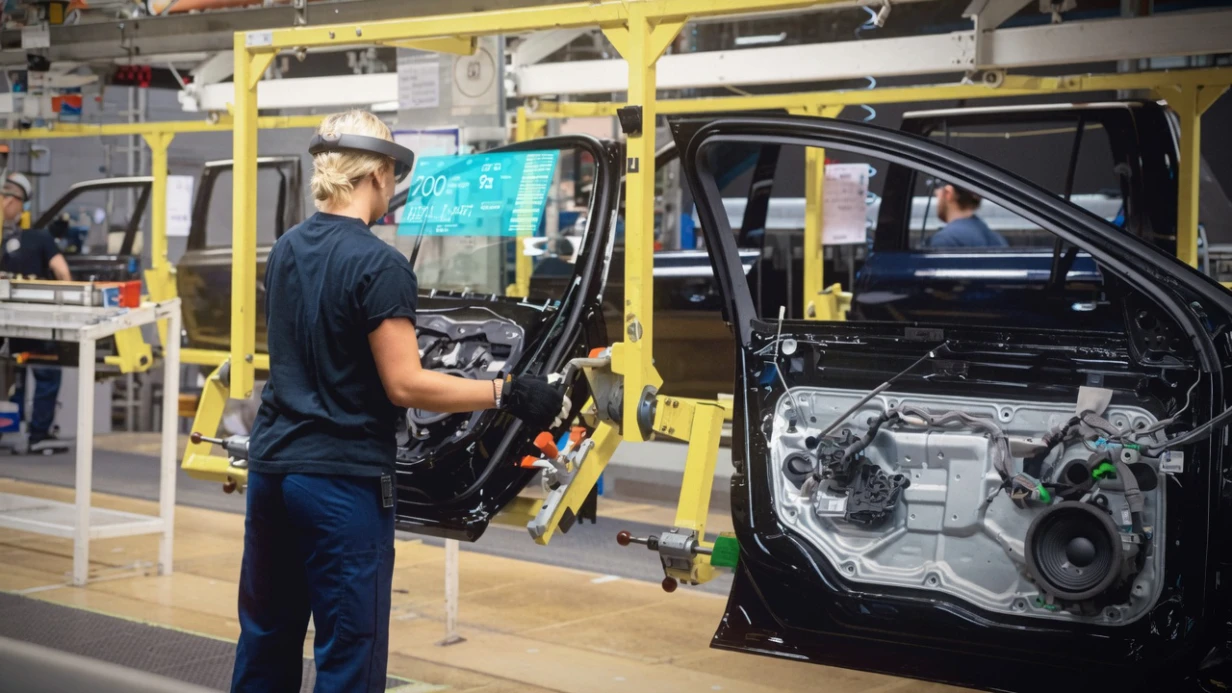
We solve this problem by turning procedures into a simple step-by-step format with visual prompts. A technician sees the next step right on the equipment, without calling a senior colleague and without flipping through folders.
3 Ways AR Instructions Can Speed Up Your Service Department
A service department that maintains solar panels and inverters faces a triple challenge: it must respond to service requests quickly, avoid errors during diagnostics, and ensure crew safety at height or in confined spaces.
Paper manuals and phone calls to the office slow things down, and every mistake results in a repeat visit and an unhappy client. AR instructions solve this right at the site: the technician sees step-by-step prompts overlaid on the equipment and acts confidently the first time.
The first way is repair speed. Instead of flipping through catalogs and waiting for an engineer's response, the specialist gets a visual instruction in a few seconds.
This cuts average visit time by 30–40% and allows handling more service requests per day without expanding the team.
The second way is eliminating errors and work safety. The instruction highlights the correct sequence of operations, warns about hazardous areas and common mistakes.
New employees get up to speed faster, and the likelihood of repeat call-outs due to incorrect connection or configuration drops noticeably.
The third way is remote support. If the situation is unusual, an engineer from the office sees the same thing as the technician on site and can virtually point to the problem part. This reduces downtime and eliminates expensive business trips to the site.
The result is confirmed by practice. The head of the service division at Solar Systems shared the results of implementation: "Average repair time dropped by almost half, and the number of errors among inexperienced mechanics fell by two times.
Now we even check complex inverters without calling in an engineer, and work safety is no longer our biggest headache." We develop instructions on professional AR equipment so the result is stable at any site — from a private house roof to an industrial plant.
AR Prompt Formats: From Simple to Predictive
AR prompt formats solve different tasks: some just need a quick display of the sequence of actions, others need step-by-step diagnostics with predictions.
The main thing is to pick the format that fits your team and the specifics of your equipment so the instruction actually reduces downtime and the number of errors.
| AR Format | Who it's for | What it gives the client |
|---|---|---|
| Static schematics and markers | Installers, operators, new staff | Fast navigation through panel and inverter components, fewer connection errors |
| Animated instructions | Service engineers, repair crews | Clear disassembly/replacement sequence, less time spent studying documentation |
| Voice control | Specialists in protective gloves, field work | Hands are free, no need to look at a tablet — convenient for inverter maintenance |
| Predictive diagnostics | Operations staff, dispatchers | Early detection of potential failures, planned maintenance instead of emergency repairs |
For most tasks, a combination of static schematics and animated instructions is optimal: the schematic helps you get oriented quickly, the animation helps you understand the sequence. Voice control is added when your hands are busy with a tool.
Predictive prompts are the next level: the system itself highlights components that need attention based on data from the equipment.
We match the format to your task, test it on real equipment, and support the launch. As a result, you get instructions that actually work in the field, not just a nice-looking demo.
Stages of Creating an AR Instruction for Your Equipment
We've structured the process so that you understand what's happening and what you're paying for at every step. No "black boxes": you get a clear plan, fixed deadlines, and a single team responsible for the result — from the first call to post-launch support. We work as partners, not as a contractor from an opaque tender.
-
Brief and equipment audit — we have a short call or meeting and break down your tasks: which components to service, who will use the instruction, under what conditions.
At this stage, we determine the format and scope of work, and fix deadlines and budget so there are no surprises for you.
-
Scenario design — we describe a step-by-step scenario for the future AR instruction: which operations it shows the employee, in what order, and which prompts and warnings appear.
We agree on the logic before production starts — this lets us avoid rework once materials have already been captured.
-
Content creation and prototype — we prepare 3D models, animations, and text prompts, and assemble a draft version of the instruction. You get a demo on your equipment (or on a mock-up) and see how an employee will interact with the AR.
-
Review and revisions — we show the intermediate result and collect feedback from technologists, engineers, and instructors. We make revisions and approve the final version. At this stage, you know for sure that the instruction matches your company's procedures.
-
Launch and team training — we hand over the finished AR instruction, install it on specialists' tablets or smartphones, and conduct a short briefing. Employees start using it on day one — without a long rollout.
-
Technical support after implementation — we stay in touch: we answer questions, help with updates, and adapt to new equipment or procedure changes. If something goes wrong, you get a response within one business day.
This approach gives you the main thing: a predictable result and protection from downtime. You see how the project is progressing, control every stage, and get a tool your employees actually use — not a pretty prototype that ends up "on the shelf."
What's Included in the Delivery: A Kit for Your Team
When you order the development of AR instructions, we hand over a complete system, not scattered materials. The team starts using it right after launch — without setup, long rollouts, or technical difficulties.
The delivery package includes:
- AR scenarios for installation, planned maintenance, and repair of solar panels and inverters. The employee sees step-by-step prompts right on the equipment — no need to flip through paper procedures.
- Ready-made AR instructions that work on tablets and smartphones. To get started, just point the camera — no special training required.
- Training for your team. We run practical sessions for installers, engineers, and technologists so everyone uses the instructions confidently from day one.
- Administration and updates. When procedures change or a new equipment model is added, we update the content for you. You don't need to deal with the technical side.
- Usage analytics. You see which operations employees spend more time on, where they stop most often, and which instructions should be improved. This helps optimize work processes.
- Integration with your documentation and procedures — without duplicates or contradictions.
As a result, the team gets a single source of knowledge for maintaining solar panels and inverters. New employees reach the required level faster, errors drop, and downtime caused by unclear instructions becomes a thing of the past. You control the result, and we handle the technical side.
Case Study: Inverter Repair at a Client's Site
The service company EnergoServis maintains solar power plants across the entire region: more than 40 sites and a team of 15 engineers. Every site visit involves working with inverters, finding faults, and replacing components.
Previously, diagnostics took 40–50 minutes: a specialist would flip through PDF manuals, cross-check error codes, call a senior colleague, and often return to the site for a repeat visit.
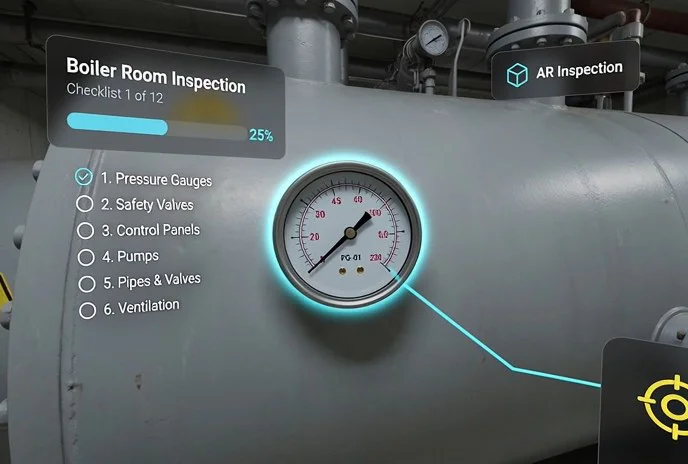
We digitized this process in augmented reality. The engineer points a tablet camera at the inverter — and sees right on the equipment which component to check, where to connect the probe, and what the indicators mean.
The instruction is adapted to the specific model, so a newcomer works confidently from day one, and an experienced specialist doesn't waste time on documentation.
Implementation took two weeks: we scanned the equipment at the sites, broke the repair down into stages, and loaded the prompts into the app on the technicians' tablets.
No complex integration with an accounting system — employees use a familiar tool, and changes are made centrally.
Result
Diagnostics time dropped by 40%, and the number of errors during the initial inspection was cut in half. The company began sending fewer repeat visits and reduced equipment downtime at client sites.
A month later, the client ordered the second stage — AR instructions for planned maintenance of all stations, and then for training new employees.
Frequently Asked Questions About Implementing AR Instructions
We know that questions come up before implementing AR instructions — that's normal. Let's look at the three most common concerns: compatibility with your equipment, payback period, and how hard it is to train employees.
Are AR instructions compatible with our equipment?
Yes. We adapt instructions to specific models of solar panels and inverters. For this, we use 3D models of your equipment — no need to change your machinery or introduce special platforms.
Our solutions work on professional tablets and augmented reality glasses that you already have or can easily purchase. Before launch, we run a test at your site to make sure everything displays correctly and doesn't interfere with work.
How quickly will the implementation pay off?
The investment pays off through reduced downtime and fewer maintenance errors. An employee finds the needed component faster and works step by step, without getting distracted by paper instructions or searching for a specialist. According to our data, time on typical operations is cut by a third, and repeat visits are halved.
This means you service more sites with the same team. With regular maintenance of a solar panel fleet, return on investment takes two to four months.
Is it hard to train staff to work with AR?
No. The interface is designed so that even those seeing augmented reality for the first time can use it. An employee just needs to point the camera at the equipment — and the system itself suggests the next step.
Training one crew takes no more than two hours. We do it at your site, so specialists get used to real working conditions right away. Follow-up support is available if questions come up.
Still have other concerns? Write to us — we'll tell you how implementation works in your specific case and prepare a preliminary effect estimate for your equipment fleet.Where to Start: Request a Pilot Project
A pilot project is a way to evaluate the benefit of AR instructions on real equipment without a major investment.
Instead of long approvals, you get a working sample for one area and clear metrics: whether employees complete the operation faster and whether there are fewer errors.
We're ready to take on the task after your first request. Describe what equipment needs to be serviced (solar panels, inverters), which operations cause difficulties, and how many people work at the site. In response, you'll get a pilot plan, cost estimate, and timeline — with no obligation.
After the request, we go through this path:
- We get on a call and clarify the task: we choose an area where the pilot will deliver quick results.
- We study the operations and prepare an AR instruction scenario — taking procedures and safety requirements into account.
- We agree on the plan, estimate, and timeline — a pilot usually takes 2–3 weeks.
- We develop a prototype and install it on your equipment or employees' tablets.
- We train the staff and test the instruction in real conditions.
- We collect feedback and show the results: how much time was saved, which errors were eliminated.
- We sum up and prepare recommendations for scaling to other areas.
At our team, over 10 years we've run dozens of pilots at industrial sites. Usually after the first stage, clients see that AR instructions reduce task completion time and reduce dependence on experienced employees. This makes it easy to decide on full implementation.
Submit a request — describe your task in it. Within one business day, we'll prepare a pilot plan, cost estimate, and terms. You pay nothing for the assessment.
How to Choose the Right AR Format for Your Task?
Which AR instruction format is right for you? The answer depends not on trendy technology, but on three things: equipment complexity, staff experience, and working conditions at the site.
These are the three main criteria we use when choosing — and they also prevent you from overpaying for unnecessary functionality.
For solar panels and inverters, two groups of tasks are typical.
Planned preventive maintenance — contact cleaning, filter replacement, visual inspection: here, a step-by-step overlay with prompts displayed on top of the device itself and guiding the operator from step to step is enough.
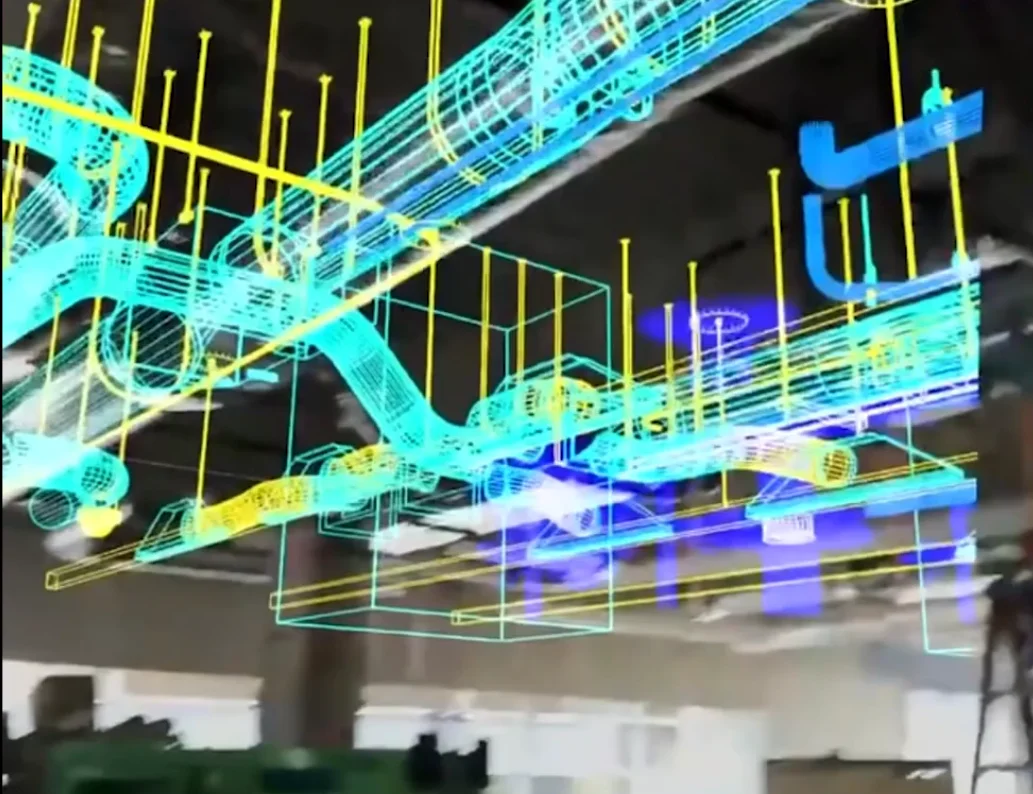
Complex repairs, diagnostics of internal modules, or installation of new equipment — this requires full 3D visualization with case disassembly, highlighting of hazardous components, and a sequence of actions. The choice between these formats directly affects task completion time and the number of errors.
The team's level is equally important. A young specialist benefits from seeing every step with detailed explanations, while an experienced engineer will work faster with a compact checklist and the ability to jump to the needed component.
If the instruction is too "spoon-fed," a master will start ignoring it; if too brief, a newcomer will make a mistake. The ability to adapt the format to the user is a key quality criterion.
Working conditions play a special role. When maintaining solar panels, you often have to work outdoors: bright sun, gloves, wind — the interface must stay readable and convenient in such conditions. For indoor stations, different control methods can be used.
That's why we choose the AR instruction format not abstractly, but for the actual work location and the equipment used.
Ultimately, choosing the right format always comes down to business results: faster onboarding, less downtime, fewer repeat visits by service engineers.
We help clients go through this path — from selecting the right format to a finished AR instruction that solves the problem and pays off in practice.