

Why customers leave because of outdated CNC machine instructions
CNC machine downtime hits the entire production floor: shipment deadlines slip, a customer who was being supported turns to a competitor, and a maintenance request becomes a source of conflict.
Outdated CNC machine maintenance instructions are one of the main reasons these losses become systemic.
Paper manuals and PDF files live their own life: the equipment version has changed, but the set of actions in the document remains the same. The operator has to guess, recall, search for hints on the internet — and that is exactly when personnel errors are born.
Wrong sequence during disassembly, incorrect force, missed lubrication step — and the machine goes into repair for days.
Every such error multiplies production downtime, and after downtime, the cost of equipment ownership grows. The customer does not see this; they see something else: your specialist takes a long time to figure things out, work is stalled, parts are not shipped.
In the end, the contract goes to someone who services faster and more reliably — even if the competitor's machine is worse.
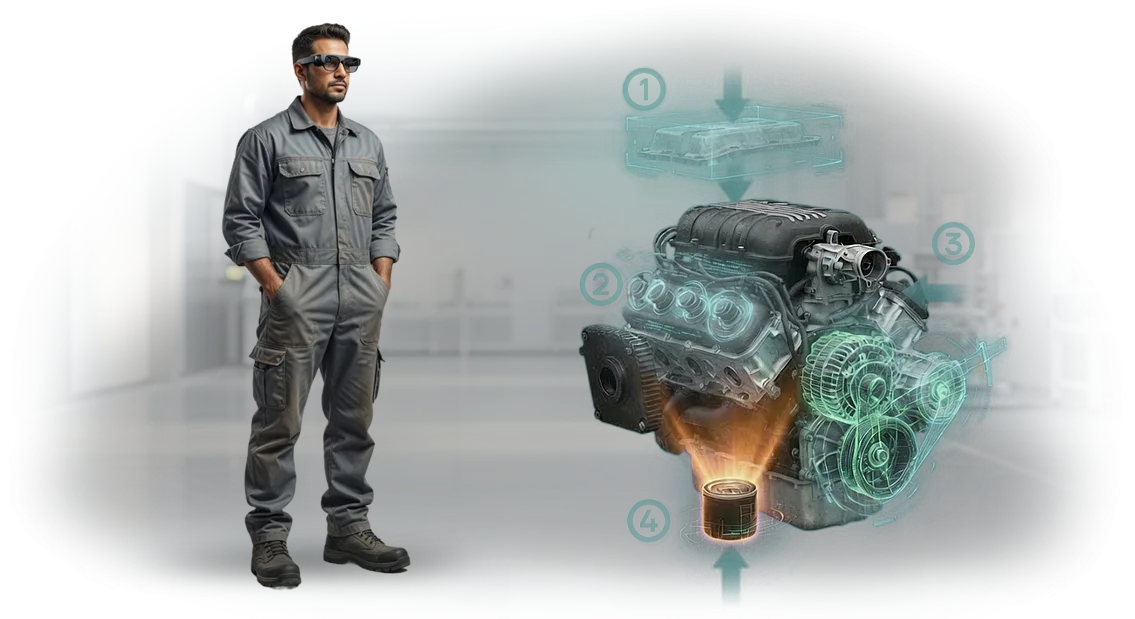
To retain a customer, you need to give technologists and service engineers a tool that removes guesswork. That is why we develop AR instructions for CNC machines: step-by-step visual hints right on the equipment, always the current version, zero risk of mistakes.
For a business owner, this is a guarantee of meeting deadlines; for operators, it is clear work without stress.
What implementing AR instructions gives the repair service and operators
Reduced equipment downtime
Every minute of machine downtime is lost production output. AR instructions help the operator or repair technician quickly find the right assembly and perform the replacement without waiting for a narrow specialist. As a result, the equipment is back in operation in minutes, not hours.
Fewer errors during repairs
Even an experienced mechanic can mix up the sequence of operations in a complex breakdown. AR hints are overlaid directly on the part and show what to unscrew, in what order, and with what force.
This eliminates the "human factor" and repeat repairs caused by under-tightened or mixed-up assemblies.
Faster training for new employees
Previously, preparing an operator took weeks of studying paper diagrams and mentoring. With AR instructions, a newcomer sees hints right on the equipment and performs operations immediately, without mistakes. The onboarding process speeds up several times, and the load on experienced employees decreases.
Improved repair safety
Working with industrial equipment involves risks: electricity, moving parts, high pressure. AR instructions warn about dangerous zones in advance, remind about lockouts, and require confirmation before each step. This reduces the likelihood of injuries and emergency situations.
Maintenance efficiency
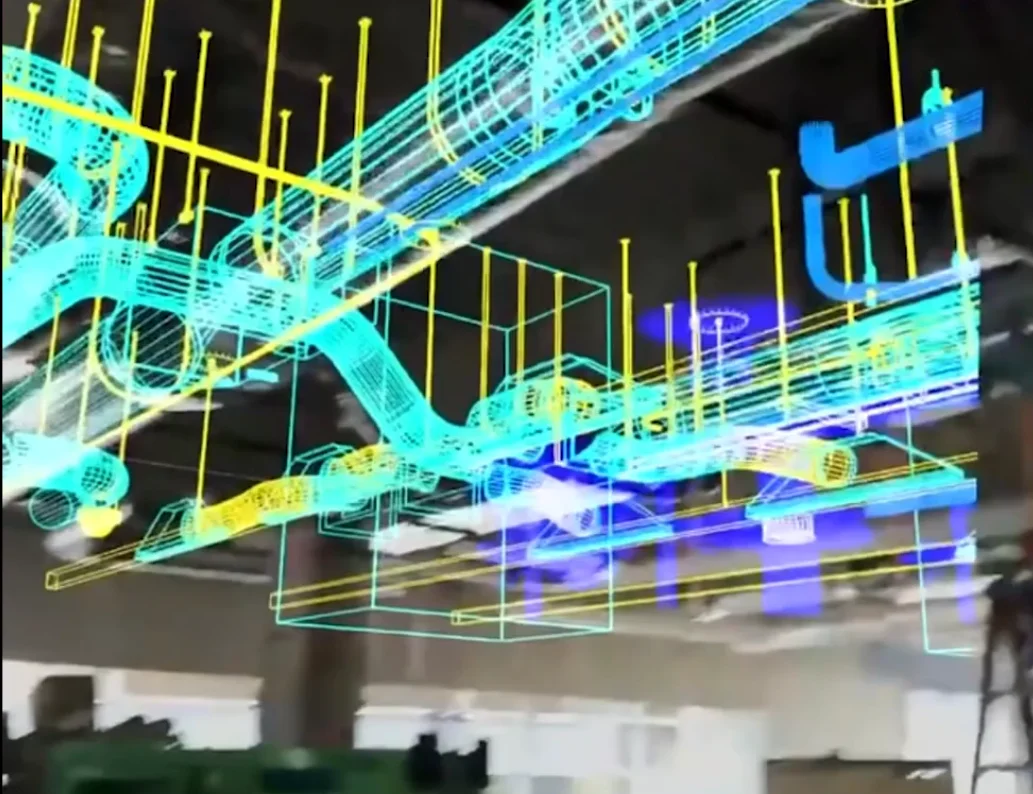
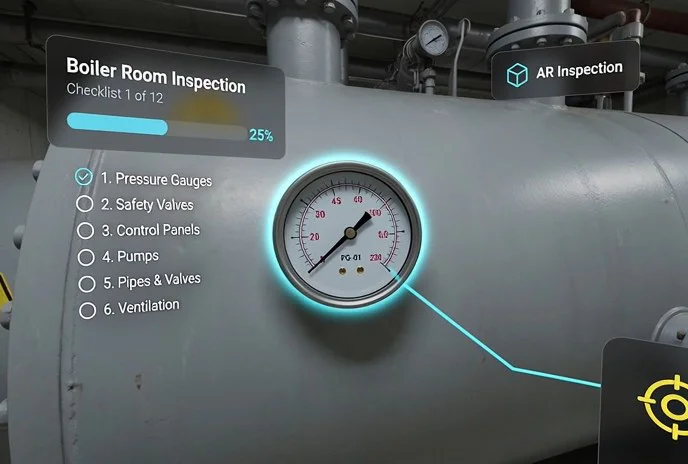
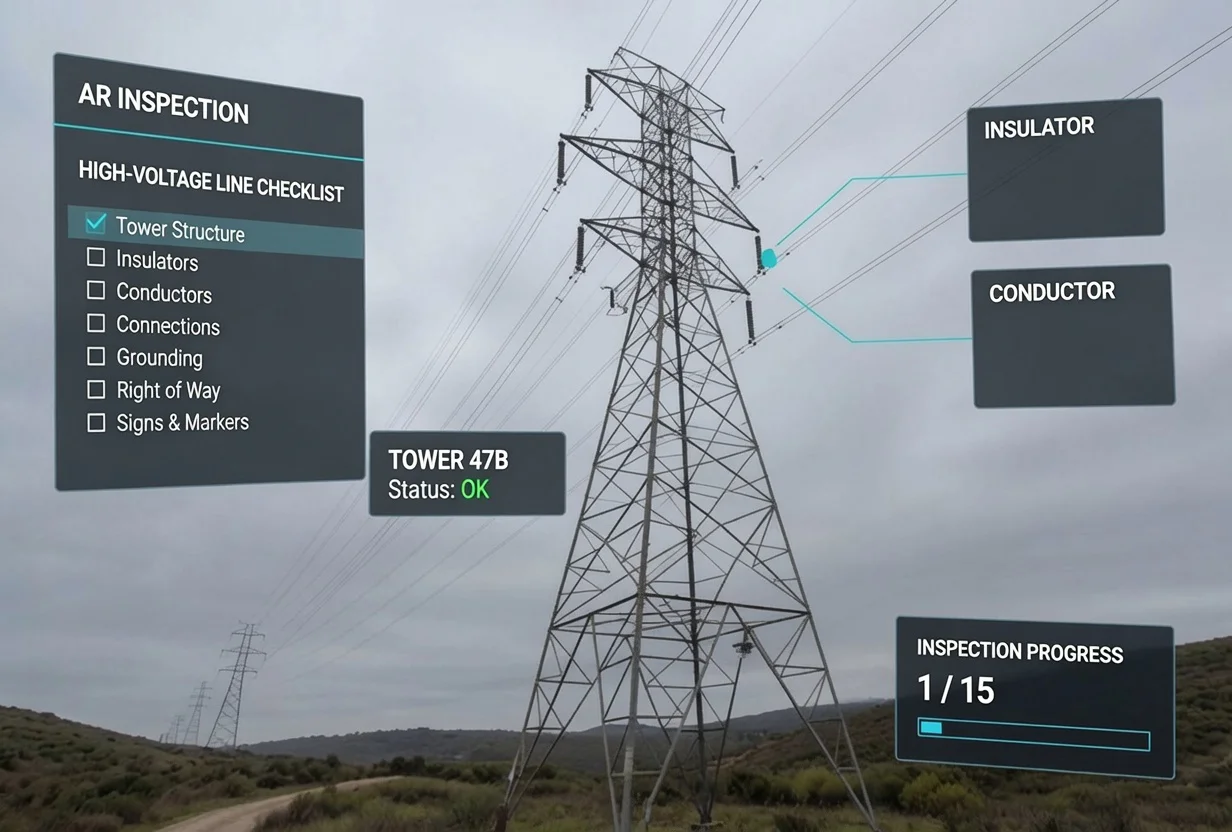
Planned maintenance stops being a formality. Instead of an "eyeball" check, the mechanic goes through a checklist in augmented reality, sees hidden assemblies, and records the result. Equipment fails less often, and unscheduled stops become a thing of the past.
As the chief mechanic of the StankoProm plant said, after implementing AR instructions, his team reduced average breakdown resolution time by a third: "Operators stopped waiting for an engineer — most minor faults are fixed by themselves, right at the machine, in 15 minutes."
AR instruction formats for CNC machines: from a single line to an entire fleet
Every plant solves the task differently: someone needs to deal with one machine, someone is responsible for a whole fleet of equipment. Needs differ, and that is normal.
That is why we do not offer "one box" for everyone, but rather select an AR instruction format for your task — from a single line to the entire enterprise.
The scale of implementation determines the type of content: from short hints for the operator to a complete database of procedures for all equipment units.
In any case, you get step-by-step visual instructions that are overlaid on the real machine — the employee sees where to press, what to unscrew, and in what order to act.
| AR format | Who it is for | What it gives the customer |
|---|---|---|
| For a single machine | Operators, setters | Quick tooling replacement, fewer errors at startup, reduced time for training a newcomer |
| For a section or line | Team leads, repair service | Unified instructions for several units, quick diagnostics, fewer downtimes caused by incorrect actions |
| For the entire fleet and plant | Chief engineer, production director | Process standardization, procedure compliance control, knowledge protection during staff turnover, full analytics of operation completion |
| For remote support | Service engineers, maintenance | Expert help from a distance, fewer site visits, "first-time-right" problem solving |
You do not have to choose the scale right away. You can start with one machine, verify the result, and roll the solution out to other sections — the architecture allows scaling without loss of quality or rework.
The key point is that all formats work on the same data: you create content once and use it at different levels — from on-screen hints to management reports. This makes implementation predictable and cost-effective regardless of fleet size.
We will help you choose the right format for your tasks and show it on your own equipment. Leave a request — and we will prepare a demo scenario for a test section.
How AR instruction development works: a step-by-step process for the customer
Implementing AR instructions for CNC machine maintenance is a managed project that goes through six clear stages. We handle all coordination: you do not need to understand the technologies, you only need to take part in approvals and accept the result.
-
Brief and task definition. We gather the requirements of your operational service: which operations matter most, where errors happen most often, what skill level your employees have. We set goals — reducing repair time, lowering accident rates, simplifying newcomer training.
-
Equipment and documentation analysis. We study the specific machine models, procedures, and typical faults. We determine which assemblies to show in AR so that the instruction covers real needs rather than being just a demonstration.
-
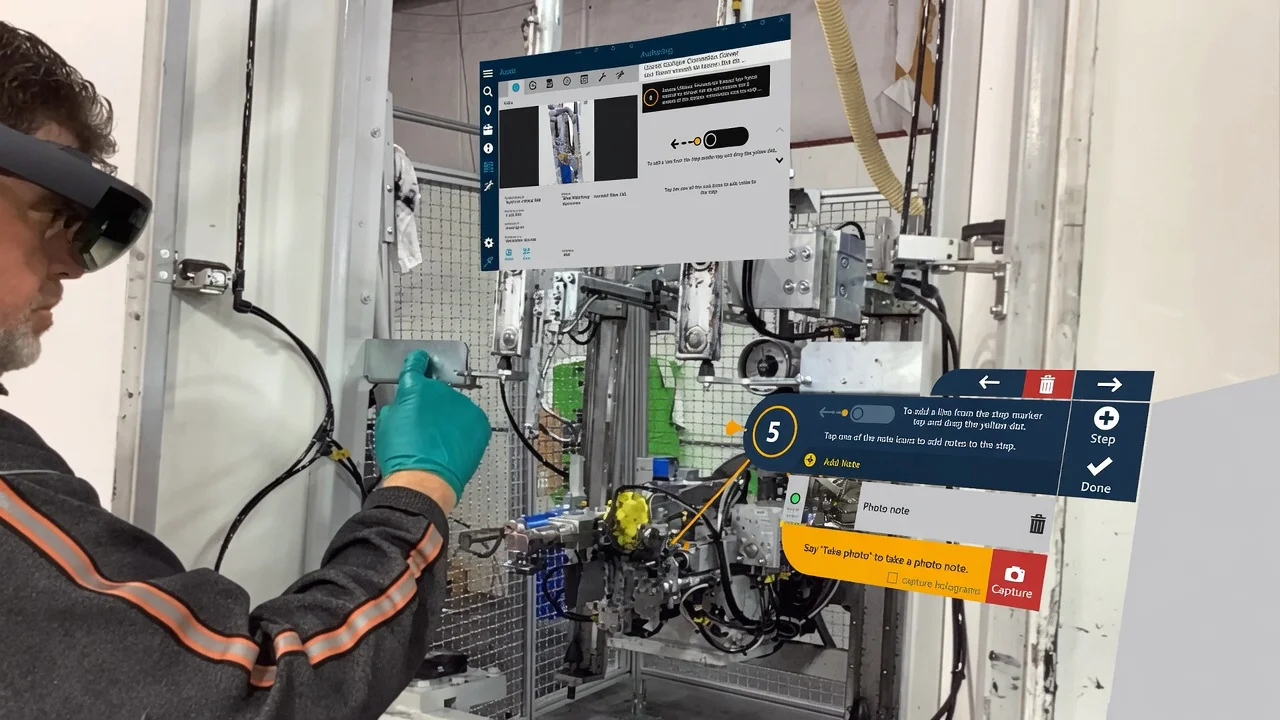
Scenario creation. We develop step-by-step scenarios: from preparation for work to part replacement. Every step is accompanied by hints that appear right in the employee's field of view — they do not need to hold a paper manual in their hands.
-
Prototype approval. We show a prototype on your machines or their digital copy. Together with your technologists, you check the logic, sequence, and clarity of wording. We make revisions before the main work begins.
-
Implementation and assembly. We build the final AR instruction on professional equipment and verify the display quality on different devices — from tablets to smart glasses. You are not tied to one type of hardware.
-
Launch and support. We deploy the instruction on employees' devices and train personnel to work with the AR application. We stay in touch for content updates when procedures change or new equipment models appear.
This process eliminates surprises during implementation: you control every step and see the result already at the approval stage. On average, a project takes two to four weeks; the exact timeline depends on the number of operations and the complexity of the equipment.
What is included in the AR instruction package: a turnkey delivery set
You receive a ready-made package that can be implemented immediately after handover. Nothing needs to be refined: we connect the software, content, and training to your maintenance system, and your personnel starts working in a short time.
- A ready-made AR program for CNC machine maintenance — navigation through assemblies, step-by-step checks, and fault signals. It works on tablets and smartphones your employees already have, without purchasing additional equipment.
- Interactive content for all major machine assemblies — from the spindle to the feed system. Every operation has a visual instruction: what to inspect, how to disassemble, what to replace, what to pay attention to.
- Instruction updates when procedures change — if maintenance standards change or new equipment is added, the content is refined without stopping production and without additional approvals.
- Training for personnel and technologists — we hold sessions right at your site: we teach how to use the AR instruction, quickly find the right assembly, record inspection results, and hand over the shift.
- Technical support and maintenance — we are available during working hours, help with failures, answer employee questions, and quickly make content edits when necessary.
- Documentation and reporting for management — personnel actions are recorded automatically. You can see which assemblies were inspected, how long maintenance took, and plan crew workload without manual logs.
This package allows you to forget paper procedures and move to digital maintenance: employees find assemblies faster, make fewer mistakes, and downtime is reduced. You get a unified system that covers training, practice, and control — all turnkey.
Case study: how AR instructions reduced repair time by 35% at a plant
Situation: why CNC machine repairs turned into downtime
At one machine-building plant — let's call it TekhMash — the CNC machine fleet operated almost non-stop until a serious breakdown occurred.
Then production stopped for 6–8 hours: repairs were entrusted only to two experienced setters, and newcomers did not dare approach complex assemblies.
Paper instructions were outdated, drawings were stored in different offices, and every repair turned into a quest to find the right information.
How AR instructions changed the process
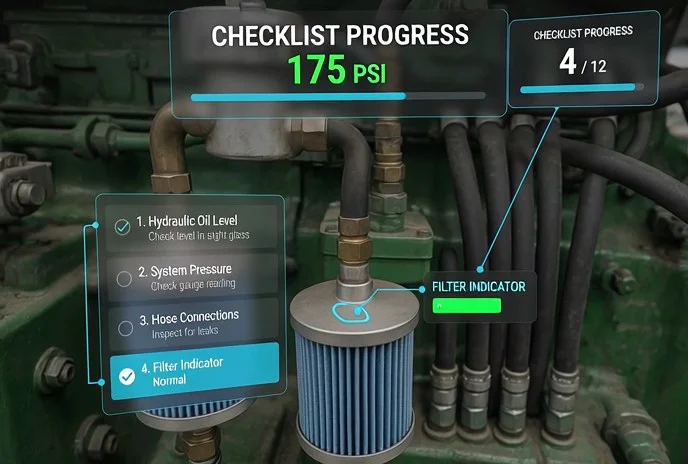
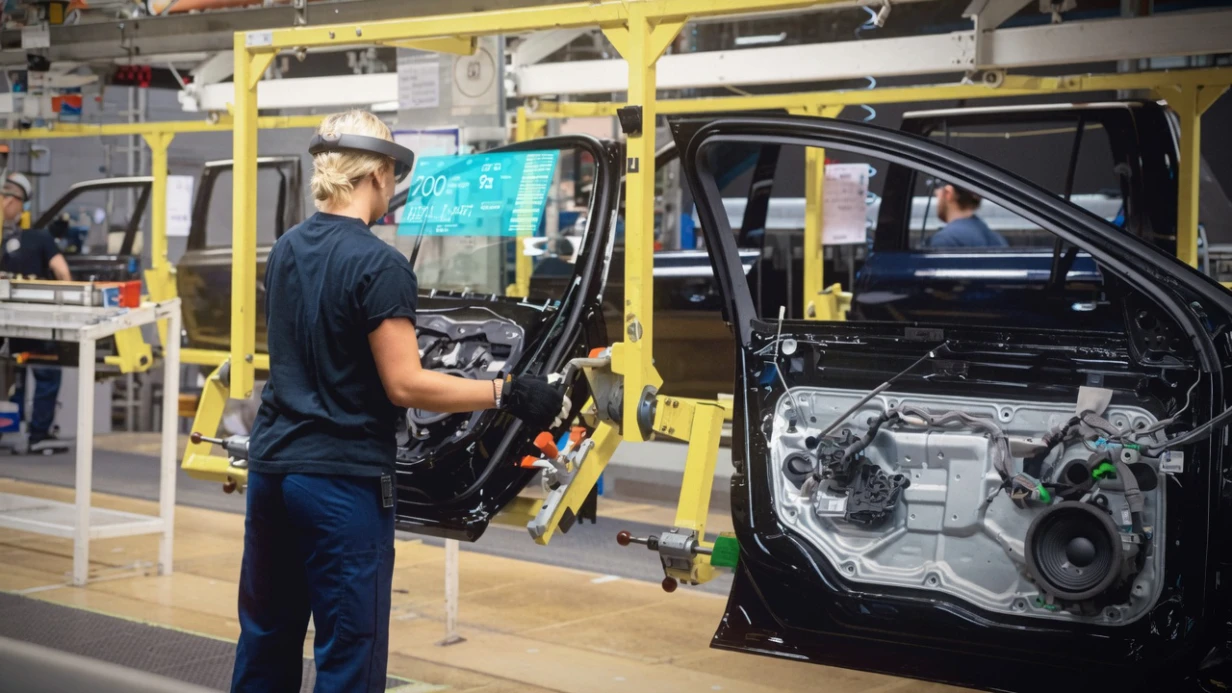
We developed augmented reality for machine maintenance: an employee puts on a headset or takes a tablet and sees a step-by-step diagram right on the equipment. The system highlights the required assemblies, shows the disassembly order, and provides a checklist of operations.
No searching through documentation and no calls to experienced colleagues — the next step is always in front of you.
After two months, the plant recorded concrete results:
- repair time decreased by 35%;
- personnel errors during maintenance dropped by 50%;
- the share of repairs fully completed by newcomers doubled.
The plant's chief engineer noted: "We expected acceleration, but the main surprise was that employees with up to a year of experience now confidently handle complex assemblies without making mistakes. Downtime has decreased, and experienced setters only deal with non-standard cases."
This result is not magic, but a properly structured maintenance scenario. We take your documentation and turn it into clear hints for your machine fleet — regardless of the skill level of your personnel.
How to choose the right AR instruction format for your machine fleet?
Choosing an AR instruction format starts not with technology, but with analyzing your CNC machine fleet. Similar equipment with repetitive operations requires one approach, while unique and complex units require another.
There is no universal solution: the task is to determine where exactly your employees lose time, make mistakes, or depend on narrow specialists.
If the plant has several machine models with similar operations, a modular instruction that adapts to each model is more effective.
If the fleet is heterogeneous and maintenance includes rare and complex procedures, you need a detailed step-by-step instruction with visual hints on the working assemblies.
We help you get oriented: we analyze how often maintenance work is performed, what skill level the operators have, and which operations are critical for uninterrupted production.
The key point is not to try to digitize everything at once. We recommend starting with the section that causes the most downtime or errors and choosing a format for it.
This way, you quickly see the effect, calculate the savings on maintenance time, and calmly decide whether to scale the solution to the entire machine fleet.
To avoid guessing, we invite you to a consultation: we study your fleet, typical procedures, and staff tasks, then propose a format that fits into your work without restructuring processes.
You get not a technology presentation, but a concrete recommendation with arguments, implementation timelines, and a clear assessment of the result.
Common doubts when ordering AR instructions — addressing them point by point
Ordering AR instructions for CNC machines for the first time — it is normal to have doubts. People ask about integration, cost, compatibility, training, and safety. Let's go through these concerns point by point, briefly and to the point.
How difficult is it to integrate AR instructions into the current process?
Implementation does not require restructuring production. We connect to existing documentation and create instructions that open on a regular tablet or smartphone. Launch takes from a couple of weeks — in parallel with the main work of the shop.
Isn't it too expensive? When will it pay off?
The cost is comparable to a few hours of machine downtime. Payback comes from reducing maintenance errors and accelerating the onboarding of new employees. Based on project experience, the costs are recovered in the first months of use.
Will AR work with our machine models?
We work with most modern CNC machines: vertical and horizontal machining centers, lathes, milling machines, multi-axis machines. Technical documentation for the specific model is enough — we configure the overlays and scenarios for your equipment.
Will workers be able to use the instructions without special training?
The interface is designed so that training takes no more than an hour. Overlaying hints directly on the equipment removes the need to read drawings and manuals. The worker sees the next step — and repeats it.
Won't the hints distract from safety?
Instructions are displayed on a tablet mounted on or near the machine. Hands remain free, and the gaze is directed at the work area most of the time. Scenarios are designed so that critical steps are duplicated with text and highlighting.
What if something does not work or breaks?
We take responsibility for the result. At the start, we define the performance criteria — down to each step of the instruction. If something goes wrong on the equipment, we quickly make edits to the scenario and repackage the project.
Support continues after delivery: we adjust content when procedures change or new operations appear.
Get a cost estimate for AR instructions for your enterprise
A CNC machine stop due to an operator error means lost working hours and missed deadlines. An AR instruction guides the employee to the right action directly on the equipment: less scrap, faster maintenance, simpler training for newcomers.
But before implementing it, it is important to understand what it will give your enterprise specifically and what investment will be required.
We will prepare a cost estimate for AR instructions for your machine fleet and tasks — without fluff or hidden extras. All you need to do is leave a request and answer a few questions: which equipment models, how many operations need to be digitized, and how often failures occur. After that, we take over the analytics.
After your inquiry, you will receive:
- a consultation with an AR specialist — we will explain how the technology fits into your processes;
- a preliminary implementation plan: which operations to digitize first;
- a cost estimate for your scale — accounting for the number of machines and scenarios;
- an effect assessment: reduced downtime and training time;
- examples of industrial projects similar to yours;
- implementation timelines and work stages — from task definition to launch.
The decision is yours: we simply show the numbers and options. If you do not like the estimate — you still keep the free consultation and an understanding of how to improve your processes.
Leave a request — and in the coming days you will have a clear cost estimate and an action plan for AR instructions for CNC machines. Fill out the form, and we will contact you within one business day.