

Repair of Construction Machinery Without AR — Downtime and Chaos
When construction machinery breaks down, the entire site stops. An excavator or crane sits idle — and with it, crews stand still, supply schedules are disrupted, and the contractor pays for downtime out of pocket.
Imagine: an excavator failure in the middle of earthworks halts concreting, installation, and finishing — each subsequent operation waits for the previous one.
As a result, repairing construction equipment costs more than the breakdown itself: losses from downtime often exceed the cost of spare parts and labor.
Equipment downtime never goes without consequences: without a clear maintenance system for special machinery, even a minor glitch turns into emergency repair. The dispatcher has to find a specialist, wait for them to arrive, wade through paper manuals, and order parts at random.
Every hour of this chaos means mountains of uncompleted tasks and a missed project deadline. And if the equipment operates at a remote site, downtime stretches into days, and repair of construction machinery is further complicated by lack of contact with engineers.
That is why construction equipment maintenance requires clear, step-by-step instructions available right at the breakdown location.
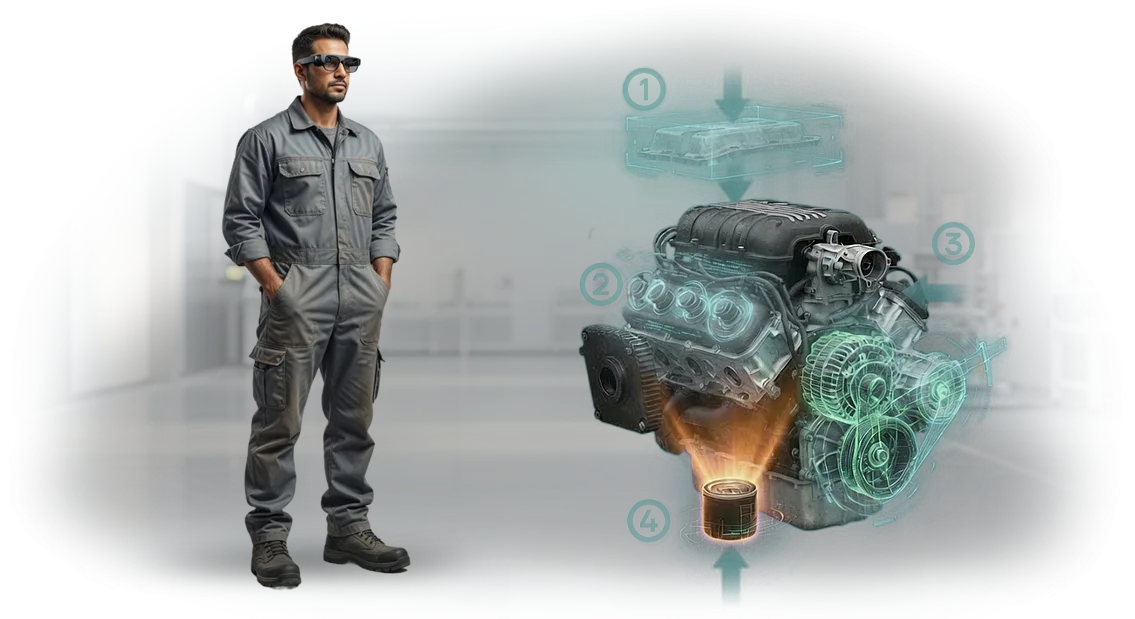
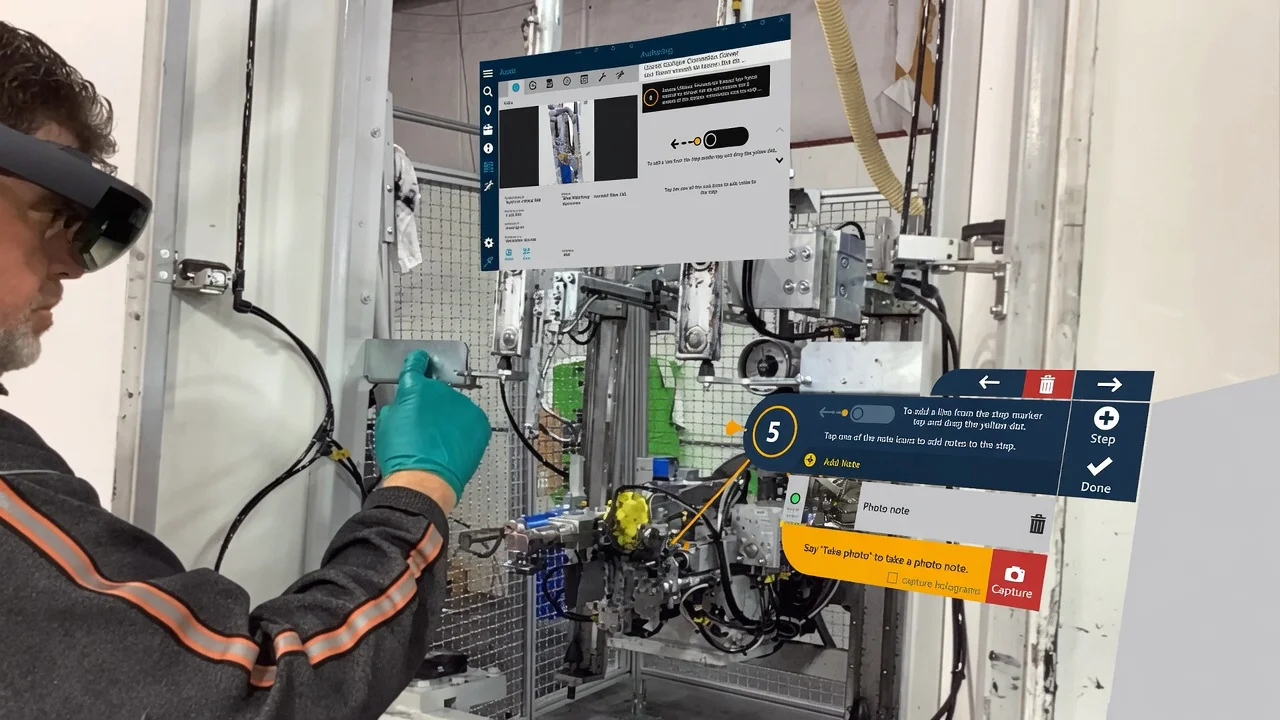
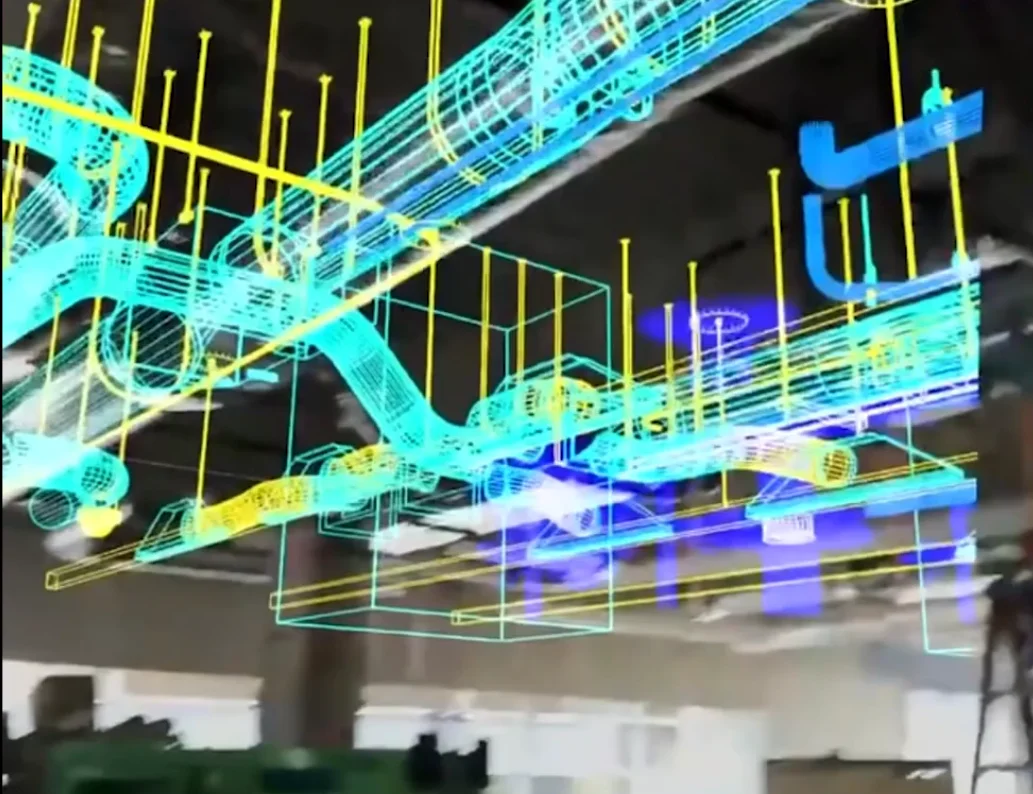
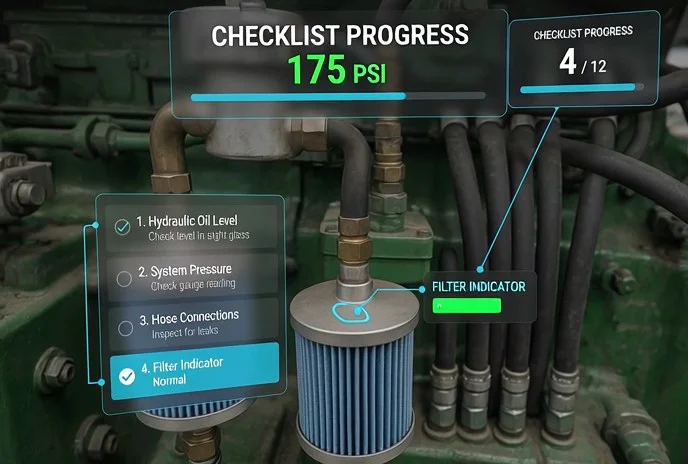
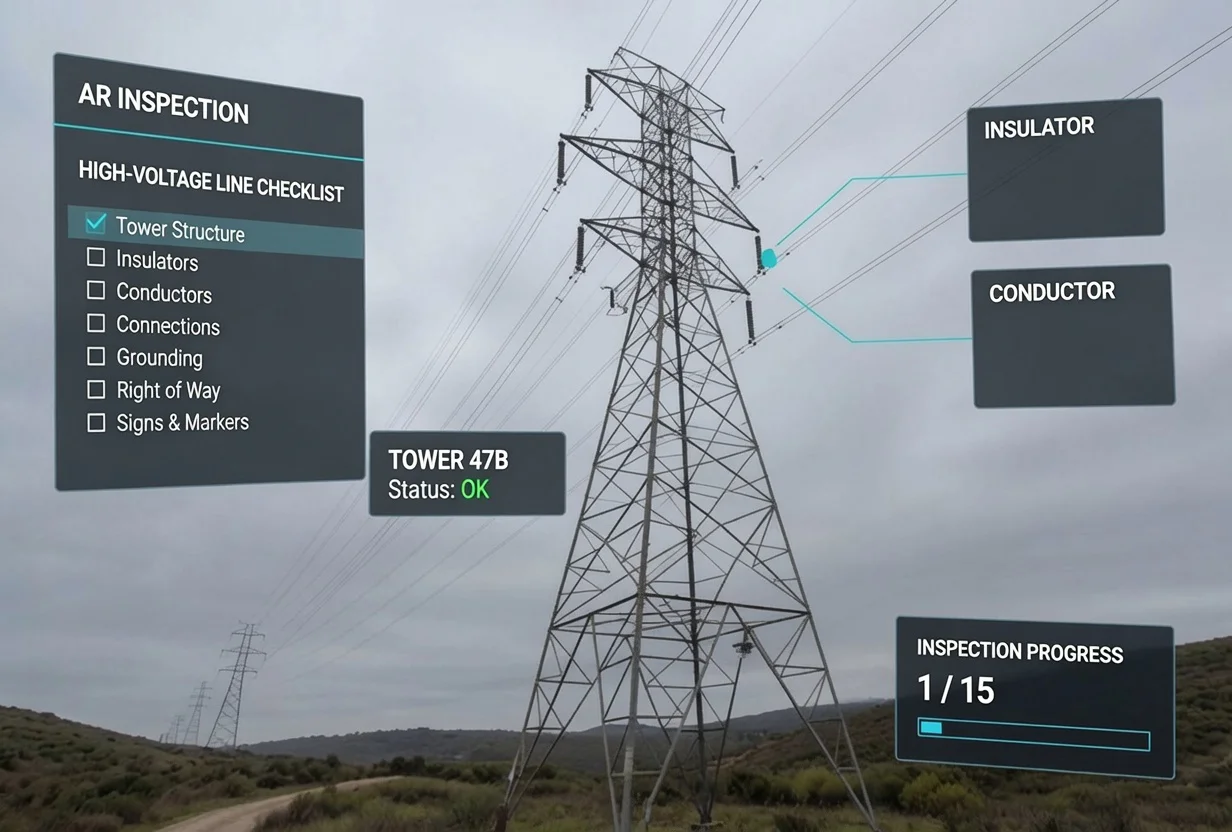
AR instructions overlay prompts onto the actual mechanism: the mechanic sees which part to remove, where to press, and in what order to assemble the component.
This cuts emergency repair time severalfold, reduces the risk of errors, and gets equipment back in operation within hours, not weeks. The mechanic does not guess or reread hundreds of pages — they simply follow the on-screen prompts.
Wehave been developing AR instructions for industrial equipment for over 10 years. Our solutions help reduce construction equipment downtime, speed up repairs, and establish planned maintenance without relying on scarce specialists. Below, we will show how this works in practice — with concrete numbers and examples.
What AR Instructions Deliver: Speed, Accuracy, and Peace of Mind
Construction equipment downtime is costly: deadlines slip, crews stand idle, and the client loses profit.
Ordinary paper manuals and video instructions do not solve the problem — the mechanic spends time searching for the right section, and an error in the sequence of operations can lead to a serious breakdown and even longer downtime.
AR instructions change this: prompts are overlaid directly onto the equipment, and the technician sees what to do and where, without getting distracted by diagrams. This delivers measurable business results for your service department.
Fast Repair Without Downtime
With AR instructions, repair takes up to 30% less time. The mechanic does not flip through manuals or search for the right component — arrows and highlights point directly to it in their field of view. Less time on diagnostics and disassembly means faster return of equipment to service.
For a business owner, this means more completed jobs per shift and satisfied clients whose sites are not stalled.
Accuracy and Fewer Errors
Step-by-step prompts eliminate the “human factor”: it is impossible to mix up the order of operations or skip an important step, such as tightening to the required torque. Every action is controlled by the system, not by the mechanic’s memory.
As a result, fewer repeat calls and lower risk of damage to expensive components and spare parts. This translates to direct savings on warranty repairs and claims.
Client Peace of Mind and Greater Loyalty
When repairs are predictable and deadlines are met, the client begins to trust you. They know the equipment will be returned on time and will work without surprises. Such reliability leads to repeat orders and referrals — clients come back and bring new ones.
Wehave been developing AR instructions for industrial equipment for over 10 years, and we build them to solve your business tasks rather than serve as a mere tech toy.
Every instruction is tested on real sites and takes into account the specific characteristics of your equipment and specialists.
AR Instruction Formats for Construction Machinery Maintenance
For an instruction to truly work in the workshop, what matters most is not the technology itself but the format in which a fitter or mechanic receives it. Some work in a cramped cab, some in the open air, and others need to check components against a drawing.
The choice of device affects learning speed, the number of errors, and how quickly staff will start using AR in daily work.
Below is a comparison of the three main AR formats for construction machinery maintenance. We match the device to your task, not the other way around.
| Format | Best suited for | Benefits for the client |
|---|---|---|
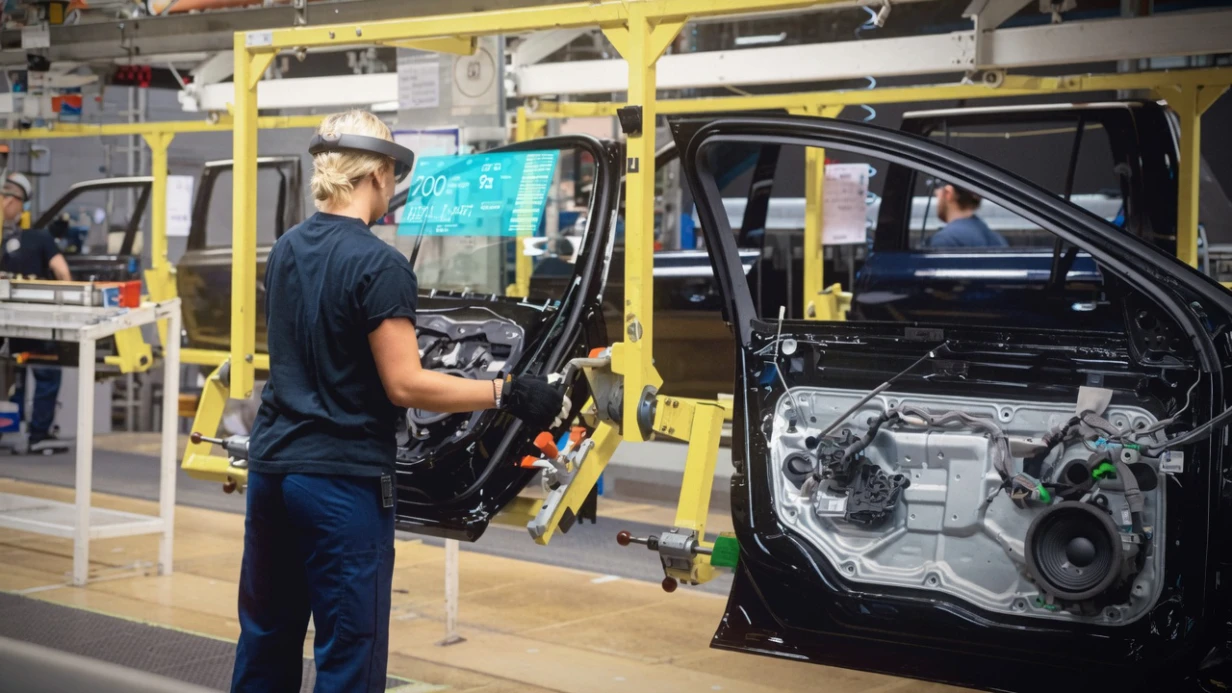
| AR headset | Installers and mechanics who work with both hands — in a cab, under the hood, at height | Full hand freedom, prompts right in the field of view. Faster operations, lower risk of damaging parts |
| AR tablet | Teams that need large diagrams, step-by-step 3D disassembly views, and simultaneous work by several people | Detailed instructions on a big screen, convenient for training newcomers and inspecting complex assemblies |
| Mobile AR on a smartphone | Service engineers on the road and mobile crews | Instruction always in your pocket, no need to carry technical documentation. Quick start — point the camera and get a prompt |
How to Choose a Format for Your Task
Run a typical scenario through a short checklist. If a mechanic performs the operation alone and both hands are occupied, choose a headset. If you need a detailed 3D diagram and group training, choose a tablet. If you need maximum coverage and a low entry threshold, choose a smartphone.
- Count how many employees will use the instruction every day.
- Assess the working conditions: is there a free table, access to a power outlet, how aggressive is the environment.
- Decide who will update the instructions and how often the regulations change.
- Check what equipment you already have in the fleet — smartphones and tablets often require no new purchases.
If you are unsure which format will bring quick results, start with a tablet or smartphone — they are quickly implemented and pay off on the very first batch of work. And for complex, unique operations, add headsets later.
We will help design an AR instruction for your chosen scenario and test it with your specialists before launch.
How a Project Unfolds: From Brief to Launch
We know that for a service department and construction machinery contractors, every minute of downtime is money.
That is why the AR instruction development process is structured so you understand what happens at every stage, control the timelines, and get a result you can immediately use in practice. Below is a typical project path: from the initial brief to launch and ongoing support.
-
Brief and task immersion. We gather the needs of your mechanics and engineers: what equipment, which components most often fail, where mistakes cost the most.
At the same stage, we determine which devices the AR instruction will run on and how it will fit into your current maintenance procedures.
-
Plan and scope estimation. We prepare a detailed development roadmap, list of instructions, timelines, and approval format. You receive a transparent cost estimate based on the scope of work — with no hidden stages or unexpected surcharges.
-
Project approval. We discuss use cases: engine repair, hydraulic replacement, scheduled maintenance. We approve the structure of the future AR instruction, visual style, and navigation flow so the final product is convenient specifically for your specialists.
-
Implementation and content creation. We build step-by-step AR scenarios with 3D component models, animations, and prompts. In parallel, we prepare text and voice explanations in language mechanics can easily understand — without complex technical abstractions.
-
Testing AR on real equipment. We verify the accuracy of virtual prompts overlaid on real components, stable operation in different lighting conditions, and ease of use in a service workshop environment. We involve your mechanics — they provide feedback, and we make adjustments.
-
AR instruction launch. We publish the instruction on your team’s devices, set up updates, and train the staff. You get a working tool, not just a demo file: employees can immediately use it when servicing equipment.
-
Support and development. After launch, we stay in touch: we update content when equipment models change, add new instructions, and help roll out the solution to other departments.
This process allows you to see results at every stage and influence the course of work. As a result, you get an AR instruction that reduces repair time and lowers the risk of errors — with minimal involvement of your team in technical details.
What Is Included in the AR Instruction Delivery
When you order an AR instruction package for construction machinery, you receive not separate files but a complete maintenance solution.
The delivery includes AR models, instructions, training materials, and documentation — everything needed for quick launch and daily operation of a service department.
Here is what the AR instruction package includes:
-
Ready-to-use AR instruction for each key component — a step-by-step service and repair scenario. The employee sees prompts directly on the equipment without opening paper manuals.
-
3D models of components and assemblies — digital copies that can be disassembled, inspected from all sides, and studied before touching the real part. This accelerates training and reduces the risk of errors.
-
Personnel training materials — interactive courses for operators and engineers: from basic diagnostics to complex repairs. Your employees practice without risking damage to equipment.
-
Digital technical documentation — diagrams, regulations, and spare parts catalogs in a single interface. The specialist does not waste time searching for a page in a paper binder.
-
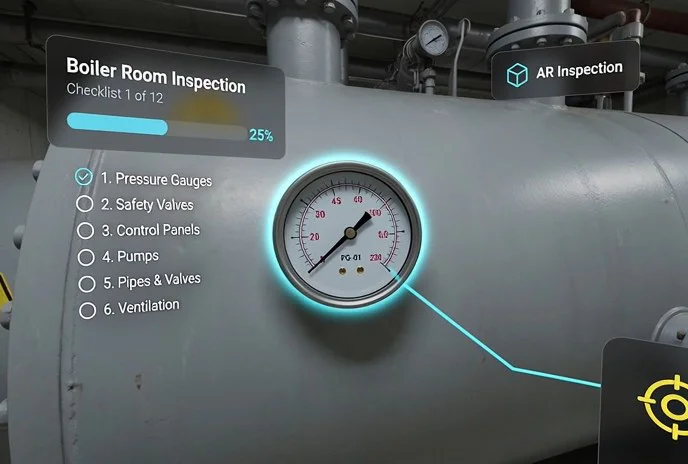
Admin panel for control — you can see which employees worked with instructions and which operations raise the most questions. You get data for improving service.
-
Support and content updates — when construction machinery designs change or new regulations appear, we make changes to the delivery package without requiring a new system purchase.
This package covers the entire cycle: specialist training, work execution, and quality control. You order not scattered 3D models but a ready-made tool that works for your efficiency from day one.
Case Study: How AR Instructions Cut Downtime by 30%
The service department of a construction machinery dealer spent up to five hours on every hydraulic component replacement: mechanics flipped through paper manuals, searched for the right section, and called factory engineers back.
Excavator downtime on site was expensive for the client, and every extra minute of waiting threatened to disrupt the work schedule.
We proposed converting the most frequent maintenance operations into AR format.
The mechanic points a tablet at the component — and sees the step-by-step instruction directly on the equipment: where to unscrew, in what order to remove parts, and at which point to call an assistant.
Result — repair time dropped by 30% within the first month, and the number of assembly errors fell by nearly half.
What Changed on Site
The fitter, who previously worked from paper and experience, gained a digital mentor. A new employee now needs only two or three shifts to confidently perform operations that previously took weeks to learn.
Dealer center — a major player in the construction machinery market — ultimately integrated AR instructions into its service maintenance procedures. And after the pilot, it ordered an additional set of instructions for five more machine models.
Why It Works for You
Any equipment ages, and qualified mechanics are in short supply. AR instruction does not replace experience, but it protects against mistakes and speeds up work where you previously had to rely on memory or guesswork.
Answers to Frequently Asked Questions About AR Instructions
Any new format raises questions, and AR instructions for construction machinery maintenance are no exception. Clients most often ask about price, implementation complexity, compatibility with equipment, and guarantees on results. We answer directly — without tech jargon or hidden conditions.
How much does AR instruction development cost?
The cost depends on the number of components to be described and the depth of detail. After a short consultation, we provide an exact price and break it into stages: material preparation, creation, testing, and support.
In the end, you pay not for “pictures” but for fewer errors and faster repairs. Typically, an AR instruction pays for itself during the first major maintenance jobs.
How difficult is it to integrate AR into a service process?
No special equipment is needed — AR instructions open on tablets and smartphones that mechanics already have. We adapt the format to your procedures: from simple prompts for beginners to full checklists for an experienced team.
Training takes no more than one working day, and after that the team works on its own.
Will AR work for construction machinery?
Yes, and this is one of our most common areas. Hydraulics, engines, electronic modules — an AR instruction shows the sequence of actions step by step and warns about typical mistakes. It is especially effective for complex components that require precision.
We work with your drawings and manuals, so the instruction always matches the specific model.
What guarantees do you offer on results?
We set guarantees in the contract: timelines, scope of work, and format of final deliverables. Before launch, the instruction is tested with real specialists, and after that you receive support and the ability to make changes.
If anything changes in the design or regulations, we will supplement the instruction without reworking the entire system.
Submit a Request for AR Instruction Development
Submit a request for AR instruction development for construction machinery maintenance — and we will show how digital prompts reduce downtime and speed up onboarding of new employees.
You do not need to understand technical details: just describe the task, and we will select a solution for your equipment fleet and budget. This takes a couple of minutes and will save hours of downtime and mechanics’ nerves.
After submitting a request, you receive:
- Consultation: we analyze your situation, answer questions, and point out where AR instructions will deliver quick results.
- Cost estimate for your task: we fix the timeline and scope of work with no hidden payments.
- Demo examples: we show what finished AR instructions on construction machinery look like, so you can assess usability before the project starts.
- Adaptation to your equipment: we take into account machine models, maintenance procedures, and staff qualifications.
- Implementation plan: we outline stages, roles, and timelines — from the first briefing to launch.
- Post-launch support: we help update instructions and advise your team.
Starting a project is simple: submit a request, and within one business day we will contact you, clarify the details, and offer options. You will receive a clear action plan and can make a decision without haste or unnecessary risk. And if needed, we will start with a pilot area to assess the effect on one equipment model.
How to Choose the Right AR Instruction Format?
The choice of AR instruction format always depends on the task a mechanic needs to solve and the equipment they work with.
There is no one-size-fits-all solution: for regular maintenance of a loader, short step-by-step prompts are enough, while for a major overhaul of excavator hydraulics you need detailed 3D overlays with control over each component.
So the first thing we do is determine the use case: frequent scheduled inspection, troubleshooting an unexpected failure, or training new staff.
The second criterion is working conditions. If a specialist services a crane or drilling rig in the field, where hands are occupied with tools and there is noise all around, voice prompts and large visual markers are more useful than small text annotations.
In an enclosed workshop or service center with a stationary tablet, you can use richer graphics and animation.
Also assess the team’s skill level: experienced mechanics will be fine with quick prompts like “what to unscrew and in what order,” while beginners need a full demonstration with verification of each step.
The third point is frequency of use. For routine operations repeated weekly, it is better to choose a lightweight format that loads in seconds and does not require complex equipment.
For rare and expensive repairs, deeper development is justified: interactive diagrams, exploded component views, and the ability to pause at any stage and go back. This reduces the risk of errors, which in turn reduces equipment downtime and the cost of repeat repairs.
Final advice: do not choose a format “by eye.” First determine three things: the type of equipment, the skill level of mechanics, and the work environment.
If you are unsure, start with a pilot project on one model: we will select a format, show it on your equipment, and decide together what to scale. This way you get a working solution, not an abstract technology.