

Why Does Welding Equipment Repair Eat Up 30% of Your Budget?
Every hour of downtime at a welding station means an unfulfilled order, a missed deadline, and a cascade of problems for adjacent workshops.
When welding equipment repair stretches over weeks, an enterprise loses not only on the repair itself but across the entire production chain — and downtime, as a rule, costs more than the breakdown itself.
At the same time, an expensive repair is not just the price of spare parts. Equipment is often disassembled several times, diagnosed "by eye," serviceable components are replaced, and only then is the real cause found.
Each such iteration means more hours of downtime and invoices for work that brought you no closer to the result.
Add to that a shortage of qualified personnel: experienced service engineers are worth their weight in gold, while young specialists learn on your equipment through trial and error.
In addition, the enterprise depends on the knowledge of specific people. The master leaves — and all the accumulated know-how for servicing a particular model leaves with him.
A new employee has to retrace the whole path of trial and error, and documentation often exists only as thick manuals that are inconvenient to use right at the machine.
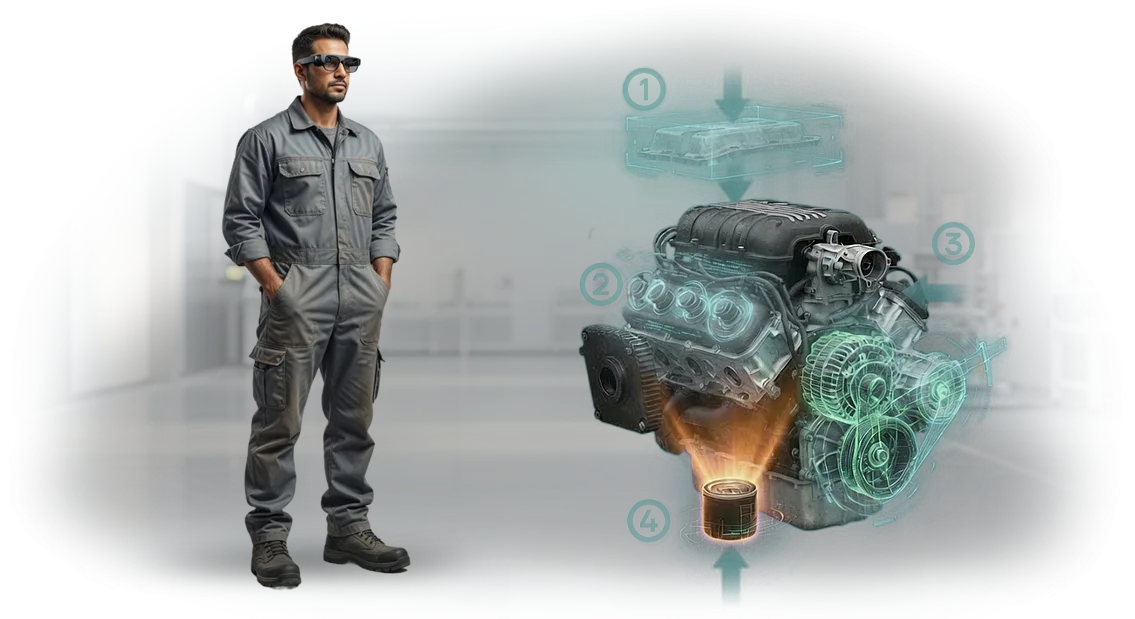
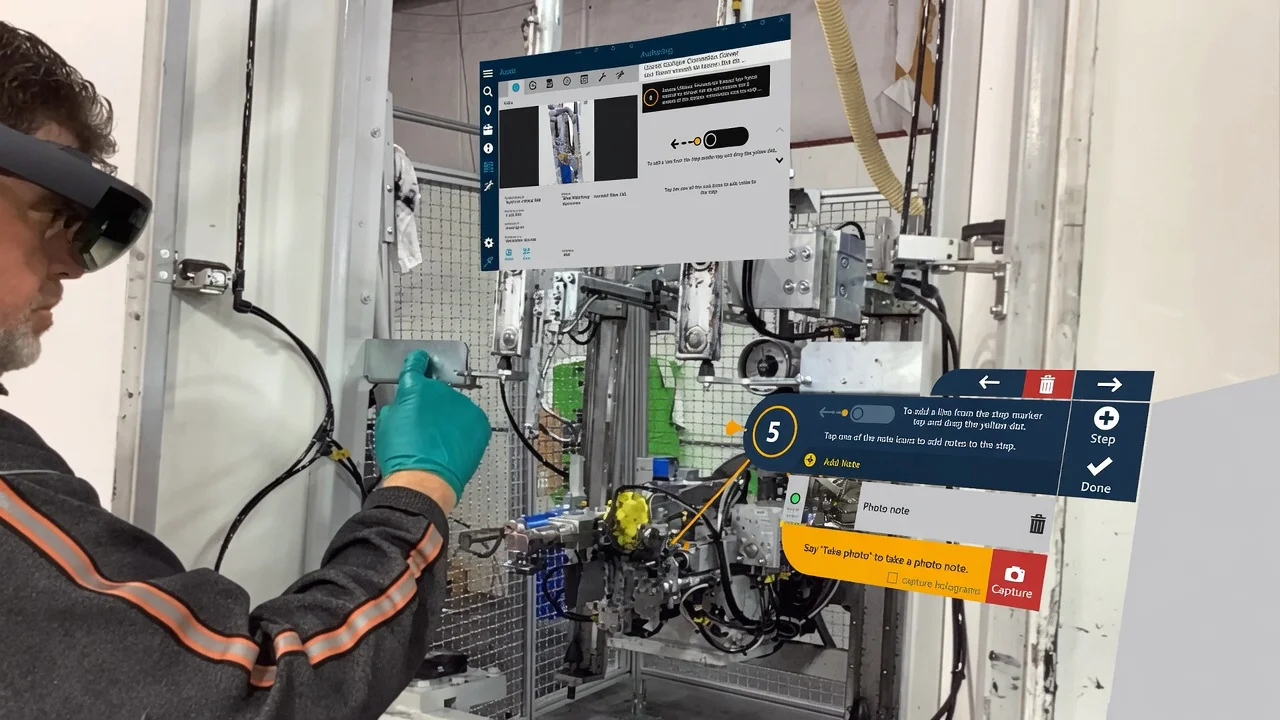
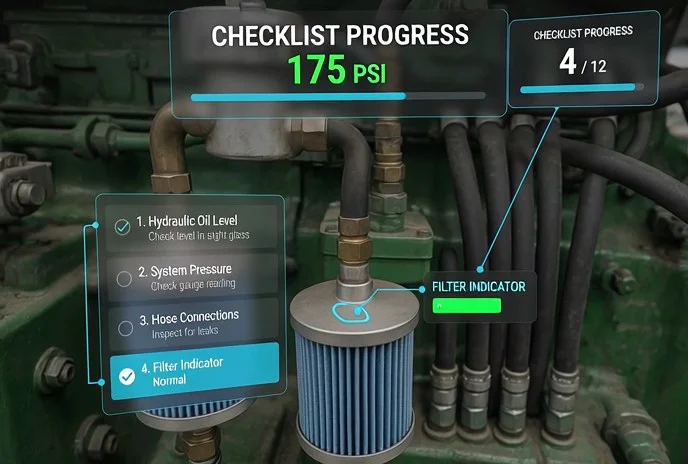
We solve this problem with augmented reality: step-by-step AR instructions are overlaid directly onto the equipment and guide the employee from diagnostics to component replacement.
This cuts downtime, removes unnecessary service calls, and reduces dependence on the "golden hands" of a single specialist.
What an AR Instruction Gives Your Production
Repair and maintenance of welding equipment often turn into a long quest: a worker looks for a diagram, calls over a mentor, tries — and still makes mistakes. Every failure in these operations means hours of downtime and money lost on troubleshooting. A specialist needs an answer he can see right in front of him, not in a thick catalog.
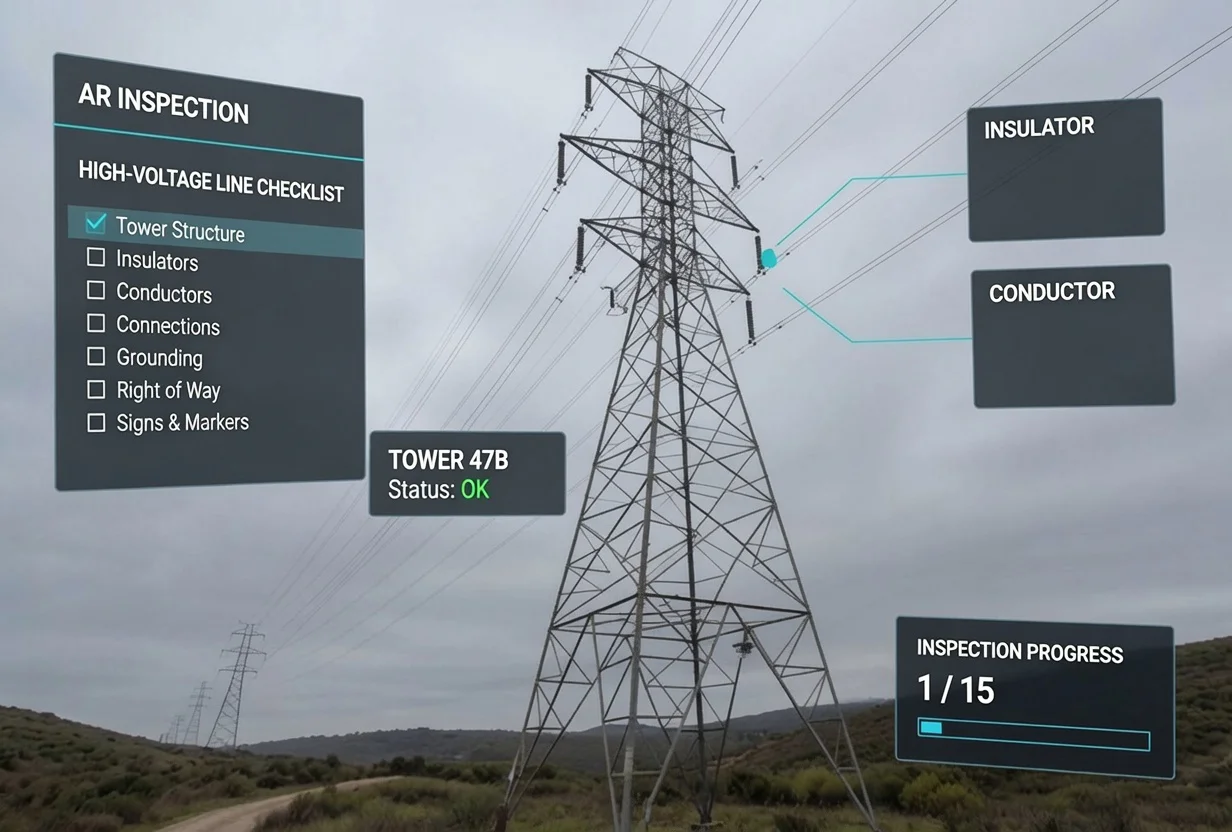
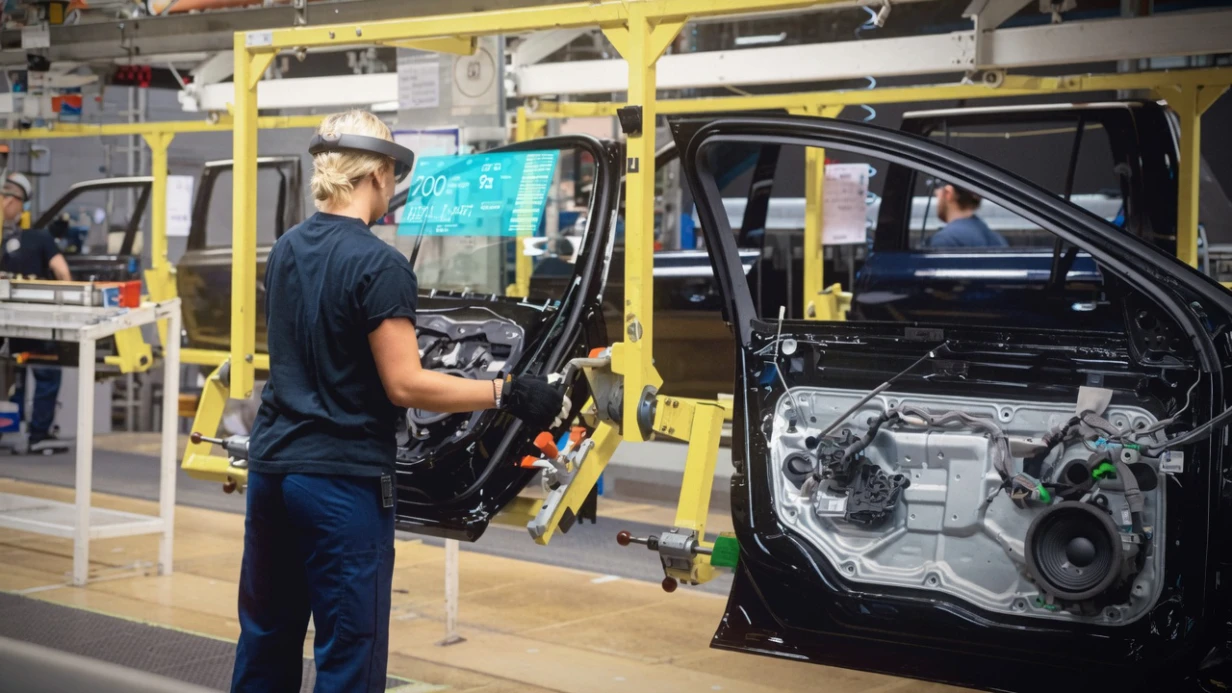
AR instructions for manufacturing solve this problem: digital hints are overlaid on the real equipment and guide the employee step by step. The worker sees what to turn and in what order without being distracted from the process.
The result — fewer downtime hours, faster commissioning, and peace of mind for the manager who knows the procedure has been followed.
Shorter Repair and Maintenance Time
Instead of half an hour searching through a manual — a few minutes of working with on-screen hints. The employee immediately understands which component to service and how to properly remove or replace a part.
Welding equipment returns to service faster, and that directly affects the rhythm of the entire workshop.
Fewer Errors
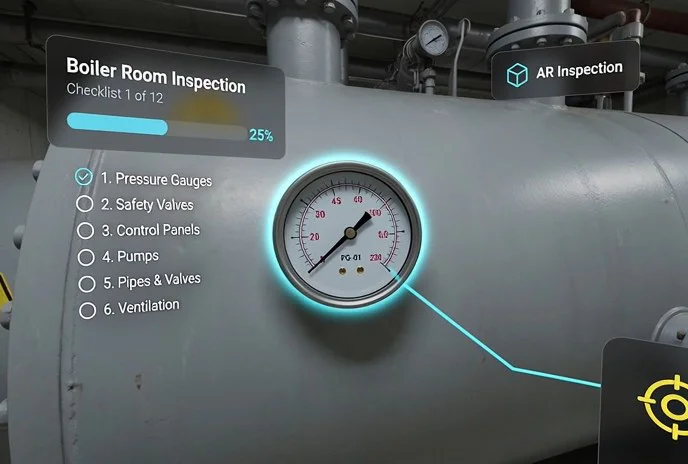
When the sequence of operations is visible directly on the mechanism, the risk of mixing up steps or tightening the wrong screw practically disappears. The system highlights the required elements and shows the correct tool position before the specialist even performs the action.
Faster Staff Training
An AR instruction turns a beginner into a confident worker in a matter of days. A mentor no longer spends hours re-explaining — the digital hint shows all the operational logic. Experienced welders also benefit: less time spent passing on knowledge, more time on actual work.
In the end, production gets an intuitive tool that cuts costs at every level: from a trainee's first day to emergency repairs. Every employee works according to a single, well-tuned scheme — with predictable results.
AR Instruction Formats for Welding Equipment
A welder works in conditions where a mistake is immediately visible: expensive material, a halted line, or a reworked weld.
Paper procedures and video tutorials do not answer the question "what exactly should I do right now," while training on real equipment takes up a mentor's time and is risky for a novice.
AR instruction formats close this need — hints are projected directly onto the equipment, and the employee sees the next step at the moment they perform it.
We select the format for a specific task: training new welders, scheduled maintenance, or urgent help for an experienced master. The table shows which AR instruction option works in each of these cases.
| AR instruction format | Who it's for | What it gives the client |
|---|---|---|
| Step-by-step training scenario | New welders, students, staff without experience | Fast path to independent work, fewer defects on the first operations |
| Interactive diagram for maintenance | Repair crews, process engineers, service departments | The sequence of actions is visible right on the equipment components — scheduled work proceeds without unnecessary downtime |
| Remote session with an expert | Engineers, masters, field specialists | The expert sees the camera feed and helps the operator solve the problem on the spot — no need to wait for a visit |
The separate AR format for remote assistance is especially important for welding equipment, where downtime is expensive: the master at the site "shows" the problem to the expert, and the expert controls the hints in the interface. This works faster than phone calls or sending photos.
You can combine formats — for example, use a training scenario and a remote session for emergencies. We adapt each format to your equipment and process so the instruction solves a real problem rather than remaining a pretty demo.
How an AR Instruction Implementation Project Goes
We structure the project so that within a few weeks your employees are using AR instructions instead of paper procedures. No "fluff" and no long approvals — just clear stages, clear deadlines, and a result that does not gather dust on a shelf.
Here is what a typical AR instruction implementation project for welding equipment looks like — from the first conversation to the daily work of your team.
- Brief and audit. We discuss your tasks: which equipment you service, which operations are the most frequent, and where employees make mistakes most often. The output — an understanding of the scope of work and approximate deadlines.
- AR scenario design. Together with your process engineers, we break down each operation: what the operator should see, what hints to receive, in what order to act. We create the structure of future instructions — simple and logical.
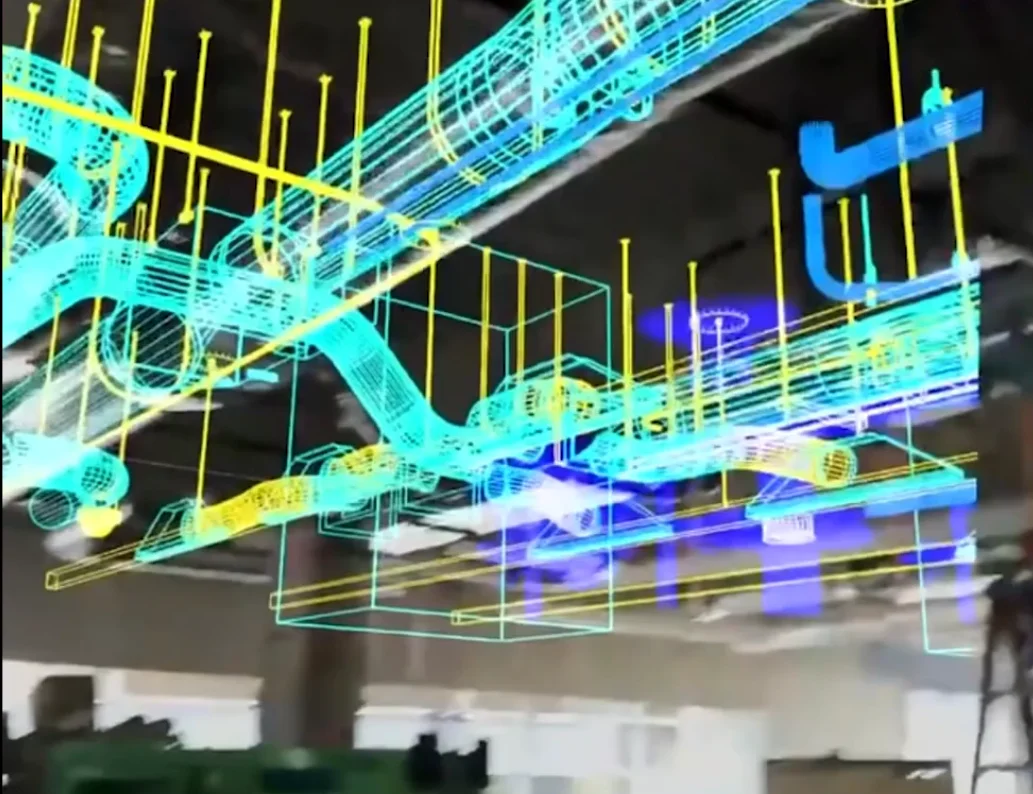
- Content development. We prepare step-by-step AR scenarios: 3D models of components, animations, text hints. All of this looks like clear "arrows" over the real equipment, not like an engineer's blueprint.
- Assembly and customization for your machinery. We bind the instructions to specific models of welding machines and lines. We verify that the operator sees their own workshop on the tablet or smartphone screen, not an abstract picture.
- Staff training. We run a short training session: how to open the instruction, how to use the hints, what to do in case of a failure. Your masters master the system in one day without being pulled away from work.
- Launch and support. We hand over the instructions, accompany the first month of operation, collect feedback, and refine details. After that — you work independently, and we stay in touch for updates.
The most important thing — you are not left alone with the technology. We oversee the project until the employees themselves say that AR instructions have become their everyday tool, not "yet another program."
What's Included in the Delivery and Support
What's Included in the Delivery and Support
Developing AR instructions is not just an animation file, but a ready-to-use working tool that gets integrated into the equipment maintenance process. The contractor is responsible for the result: from the first drafts to training your masters and technical support after launch.
The delivery package is always assembled for a specific customer task, but the key elements remain unchanged.
- AR instructions for your components and procedures — step-by-step scenarios for typical operations: consumable replacement, parameter setup, diagnostics, scheduled maintenance. Every step is tied to the real model of your equipment.
- Software for the workstation and tablets — an employee opens the instruction in the workshop, sees the hints directly on the equipment, and performs the steps without reaching for paper manuals.
- Adaptation to your procedures and standards — if the company has its own requirements for formatting, operation sequence, or quality control, they are built into the instructions at the development stage.
- Team training — we run a short training session for masters and engineers: how to use the app, what to do in case of errors, how to quickly find the right instruction. Without this, implementation drags on and employees fall back into old habits.
- Technical support after launch — if something changes on the production floor or a question arises about the app, you are not left alone with the problem. Support is available during working hours; we take your request and resolve it within agreed deadlines.
- Instruction updates on request — has the maintenance technology changed, or have you purchased a new modification of equipment? We update the scenarios to match the current process so the instructions never become outdated.
This package addresses the customer's main fear — that after payment they will receive a "pretty picture" and be left alone with it.
Every stage, from development to support, is fixed in the contract, so you understand what you are paying for and what benefit you get at each step.
As a result, you get not just AR instructions, but a solution that reduces downtime, lowers dependence on the experience of a particular master, and protects production from mistakes. And it works from the very first day after implementation.
Case Study: Cutting Downtime at a Steel Structures Plant
A steel structures plant approached our team with a typical pain point: repair and setup of welding equipment took too much time. Engineers waited for a specialist, searched for documentation, made errors during setup — every day of downtime meant missed deadlines on orders.
We developed AR instructions for key operations: consumable replacement, welding parameter setup, fault diagnostics. Instead of thick paper manuals — step-by-step hints right in the master's field of view.
Training for a new employee went from two weeks down to two days, and tech support requests became a third less frequent.
The Result
After three months of operation, measurements showed a 40% reduction in downtime. The average time to fix a typical fault decreased severalfold: the operator can see which component to check and which tool to use, without getting distracted by searching for an instruction.
Payback
The customer recouped their investment in four months — thanks to reduced losses from line stoppages and fewer emergency dispatches of service teams. The AR instructions continued to work as a knowledge base: staff make fewer mistakes, and new employees reach a full shift faster.
Within six months, the company expanded the project to two neighboring workshops. For us, this is the best indicator: the AR instruction case stopped being an experiment and became part of the production process.
How to Choose an AR Instruction Format for Your Task?
Choosing an AR instruction format is not a technology question but a task question: what exactly the employee must do and how quickly they need to master the operation.
There is no universal option, so we select the AR type for the specific equipment and the skill level of your team. This determines how simple and safe the work will be, how much time training will take, and how often mistakes will occur.
If the equipment is complex, with many components and non-standard operations, it is worth choosing full-format AR instructions with step-by-step guidance.
This format shows the sequence of actions directly on the parts of the mechanism, eliminating guesswork and unnecessary movements.
For typical welding operations where the process is already well-tuned, compact AR hints that focus attention on critical moments — for example, welding parameters or the order of transitions between stages — are sufficient.
The second deciding factor is staff qualification. Beginners need detailed scenarios with every step and visual accents to reduce the risk of errors at the start.
Experienced masters, on the contrary, perceive long hints as a hindrance: they just need an anomaly to be pinpointed or a special requirement to be reminded.
That is why we first analyze who will use the instruction, and only then propose a format — an interactive tour, a diagram overlaid on a component, or short control checklists in the field of view.
We help you decide on the AR instruction format for your task in a single meeting: we show examples from work with industrial equipment, discuss the specifics of your machinery pool and the skill level of your welders.
You get a clear plan of what to implement first, which format will deliver a quick effect, and which is better to postpone. The final decision is always based on business metrics — reduced downtime, faster shift readiness, and fewer defective operations.
Addressing Common Doubts About Implementation
Most often, the customer doubts not the technology itself but the implementation process: "How will this fit into our repair workflow?", "Will our masters handle a tablet?", "Where is the guarantee that we won't have to redo half the workshop?" Let's go through these one by one.
Is it difficult to integrate AR instructions into current repair and maintenance processes?
No. We do not change your work procedures, process maps, or spare parts logistics.
AR instructions are overlaid on top of existing processes: a master opens the instruction on a tablet or smartphone, sees step-by-step animation right on the equipment component, and performs familiar operations with hints.
The project is launched in stages: first a pilot on one or two components, then scaling. Your employees continue to work to the same standards — only the way they receive information changes.
Integration with existing document management or operating time accounting systems is done on the side, without stopping production.
Will the technology work with our welding equipment which is many years old?
Yes, and this is one of the most common scenarios. We work with equipment from different manufacturers and years of manufacture — from modern machines to units that have been in service for 10-15 years.
An AR instruction does not require a "smart" machine with sensors: a 3D model of the component and a step-by-step scenario from your process engineer are enough.
We visit the site ourselves, take photos and videos, clarify the procedures with your masters, and build the instruction around the specific characteristics of your equipment pool. For the employee, it looks like a handy "cheat sheet" that is always at hand.
Won't older employees be able to work with augmented reality?
The AR instruction interface is designed so that no technical background is required from the master. No complicated settings: turn on the tablet, point the camera at the component, see the arrows and hints.
Training consists of one short briefing — usually 30-40 minutes — and then the person works independently.
What is more, AR instructions simplify onboarding for beginners: a new employee sees the visual sequence of operations and makes fewer mistakes than when reading text-based cards. This reduces the burden on mentors and speeds up the master's path to independent work.
How quickly will the implementation pay off, and will we have to wait long for results?
We prepare the first version of the instruction for a pilot site in 2-3 weeks. This allows you to quickly test the hypothesis against the real tasks of your service department and understand the effect before scaling.
The economics consist of three components: fewer repair errors, faster onboarding of new employees, and reduced dependence on "narrow specialists" who keep knowledge in their heads. Even a single prevented long equipment downtime usually covers the cost of the pilot.
After a successful pilot, we develop a standard template — subsequent instructions are created much faster and at lower cost.
Shall We Discuss Your AR Instruction Task?
Downtime and errors in welding equipment maintenance cost a lot. AR instructions overlay hints directly onto the unit — the employee sees the sequence of actions and does not get distracted by paper procedures.
Leave a request for AR instructions: we will consult you for free and calculate the cost for your specific task.
Tell us which operations you need to cover — scheduled maintenance, repair, setup, or training newcomers. We will propose a format that fits into your existing processes and does not require restructuring your service department.
What you get after contacting us:
- Free consultation: we will identify where AR instructions will deliver the maximum effect.
- Cost calculation within two business days — a transparent estimate with no hidden charges.
- Assessment on your equipment: we will show how the hints will look in real conditions.
- Integration with your existing process maps — no need to rewrite documentation from scratch.
- Support after launch: we will update the instructions when the model or procedure changes.
- Measurable results: we track the reduction in operation time and the number of errors.
Leave a request on the website or call us — we will get back to you within one business day. The free consultation and cost calculation come with no obligation: you will receive a clear solution for your welding equipment and will be able to calmly compare it with other options.