

Why Ordinary Wind Turbine Repair Is Dangerous
Wind turbine repair is nothing like regular repair work. A wind turbine as tall as a multi-story building brings together dozens of components, and each one demands a strictly defined sequence of actions.
A small mistake during maintenance turns into a serious breakdown that halts power generation for weeks.
The consequences of such a mistake are measured not in hours but in lost revenue. A damaged component requires expensive parts and long logistics lead times, and every day of downtime is electricity that the turbine never fed into the grid. The cost of downtime in the end exceeds the cost of the work itself many times over.
Add to that the shortage of qualified specialists. Experienced engineers are worth their weight in gold, and their knowledge lives in their heads and leaves with them.
A newcomer acts slower, hesitates, and makes more mistakes — especially when the procedure is complex and the situation on site is stressful.
Another risk is working at height. Maintenance and repair at heights of many meters in a cramped nacelle require flawless precision in every movement.
Accidents on wind turbines are not just broken equipment — they are a threat to personnel lives, investigations, fines, and a blow to the operator's reputation.
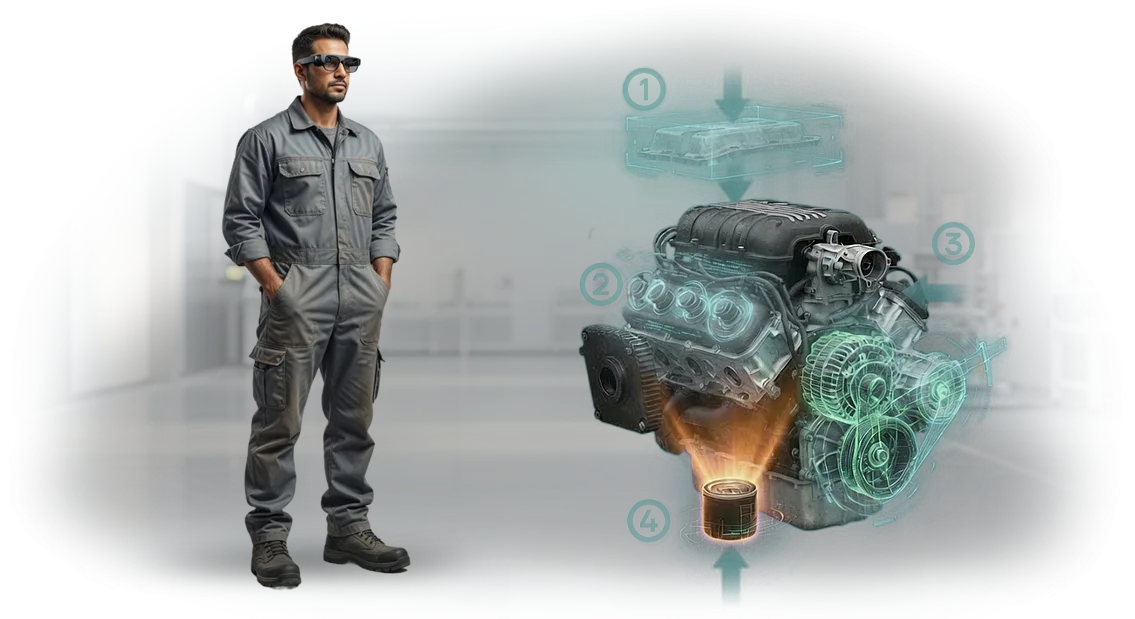
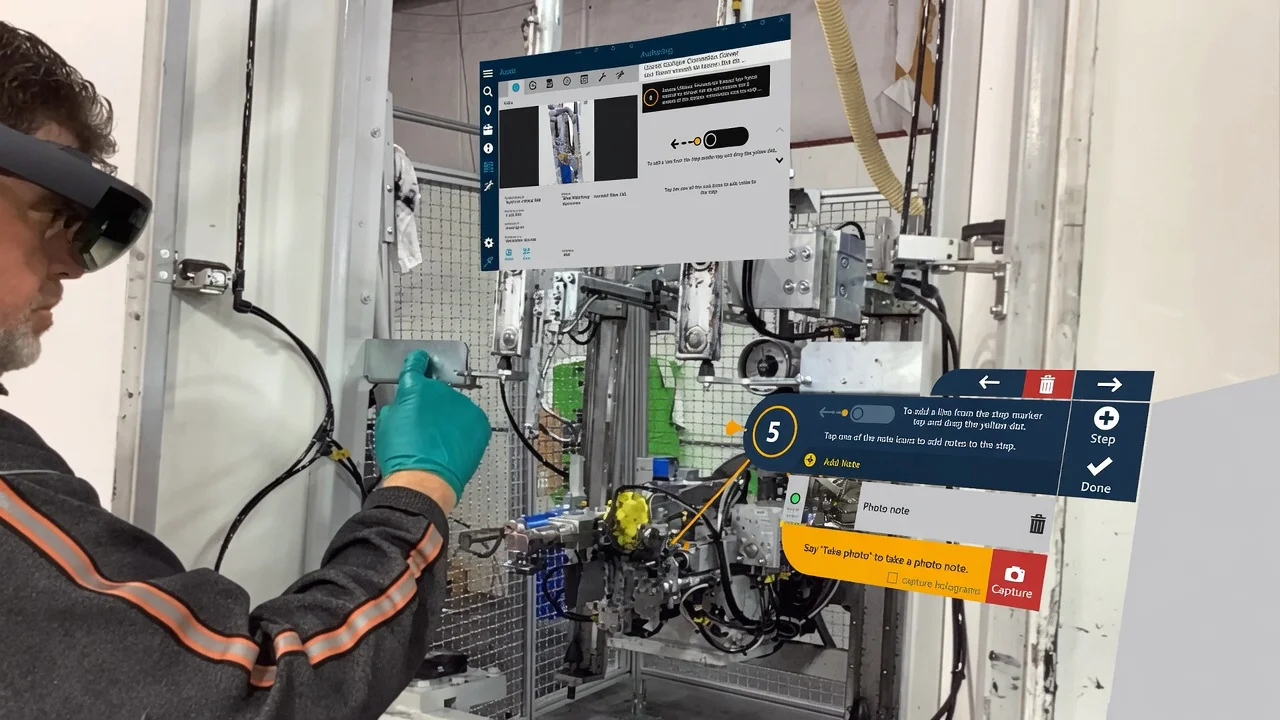
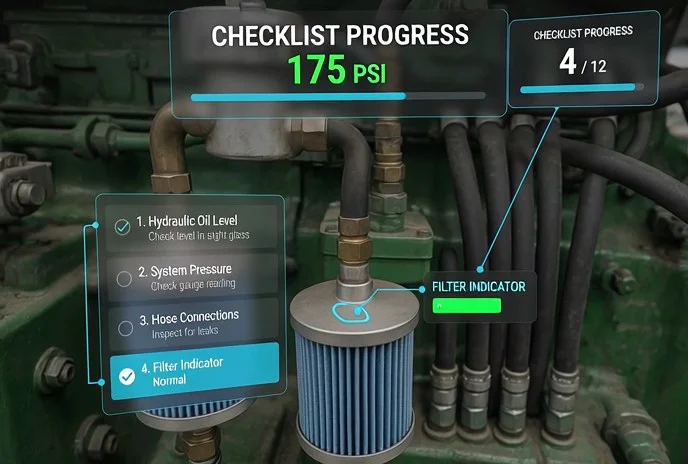
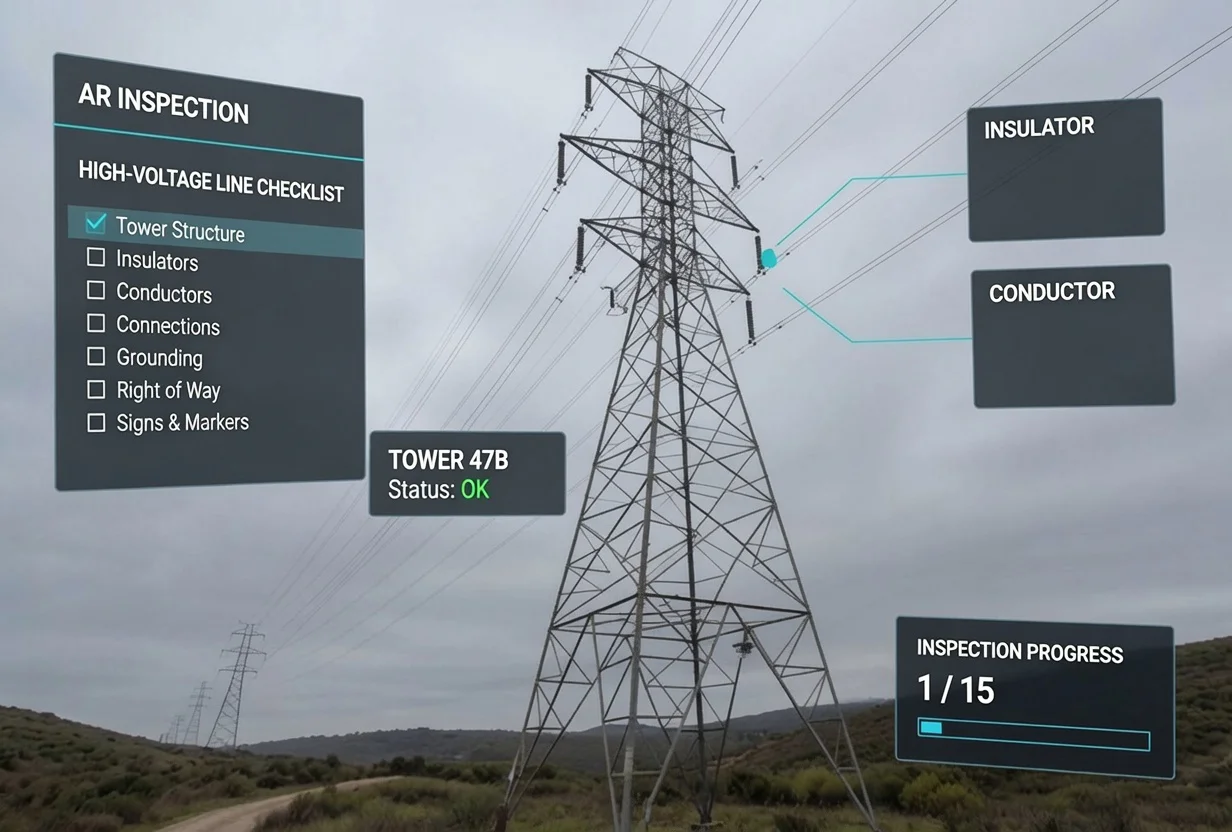
We address this pain. Step-by-step AR instructions guide the technician through the procedure right on site: they show the right component, suggest the sequence of actions, and record every step.
Repairs become predictable, downtime shrinks, and safety at height no longer depends on human memory.
The Benefits of AR Instructions for Your Service
Every day of wind turbine downtime is a direct loss for the owner and a reputational risk for your service. The pool of experienced fitters is not unlimited, and new employees take months to learn: complex equipment, non-standard situations, high safety requirements.
AR instructions turn this process from "trial and error" into something predictable and manageable.
A new fitter with a tablet or smartphone sees a step-by-step action diagram right on the component housing — no need to flip through paper manuals or remember which bolt to tighten.
Training time shrinks dramatically: a recent newcomer is performing routine operations at the level of an employee with a year of experience within just a few days. This solves the staffing shortage without expanding the team.
Precision directly affects repair time. When a mechanic sees highlighted work zones and checkpoints, they don't spend time searching for components or second-guessing the order of operations. Assembly errors are one of the main reasons for repeat site visits.
AR instructions eliminate swapped connectors, incorrect tightening torque, and skipped steps. You close the ticket on the first visit and don't burn profit on repeat trips.
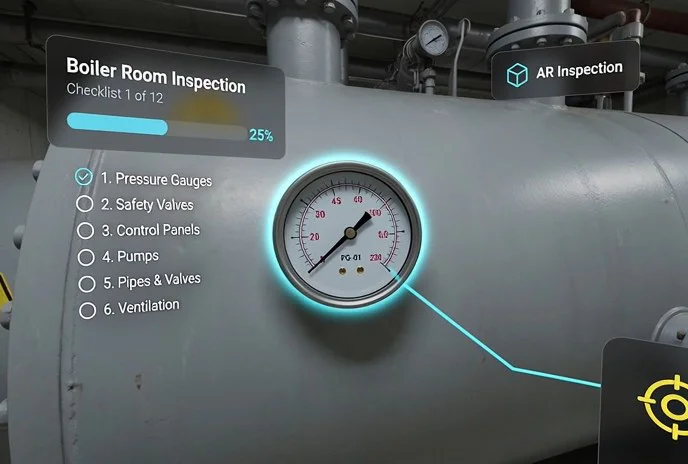
Plus safety: instructions display risk zones and mandatory protective measures. This reduces the likelihood of injuries, which means fewer outages due to sick leave and less strain on insurance.
When a fitter faces a complex non-standard situation, they get remote engineer support via AR — visual hints, arrows, comments overlaid on real equipment.
The result for your service is more completed orders in the same time, higher customer loyalty, and peace of mind about the outcome of every field crew.
AR Instruction Formats for Your Task
Whether you work with wind turbines in the field, at a service center, or at a remote site, the AR instruction format should match the crew's real conditions. If a specialist works at height, they need free hands.
If maintenance happens in a cramped machine room, a tablet will be awkward. If the task is quick on-site diagnostics, a smartphone is enough.
We match the format to your task, not the other way around. Every option works on professional equipment and integrates with your procedures — the technician gets a clear step-by-step instruction exactly where it is needed, without hunting for documents or paper manuals.
| Format | Who it's for | What it gives the client |
|---|---|---|
| Tablet AR instructions | Service crews, scheduled maintenance, repairs in the machine room | Clear diagram overlaid on equipment, fast access to data, fewer errors when disassembling and assembling components |
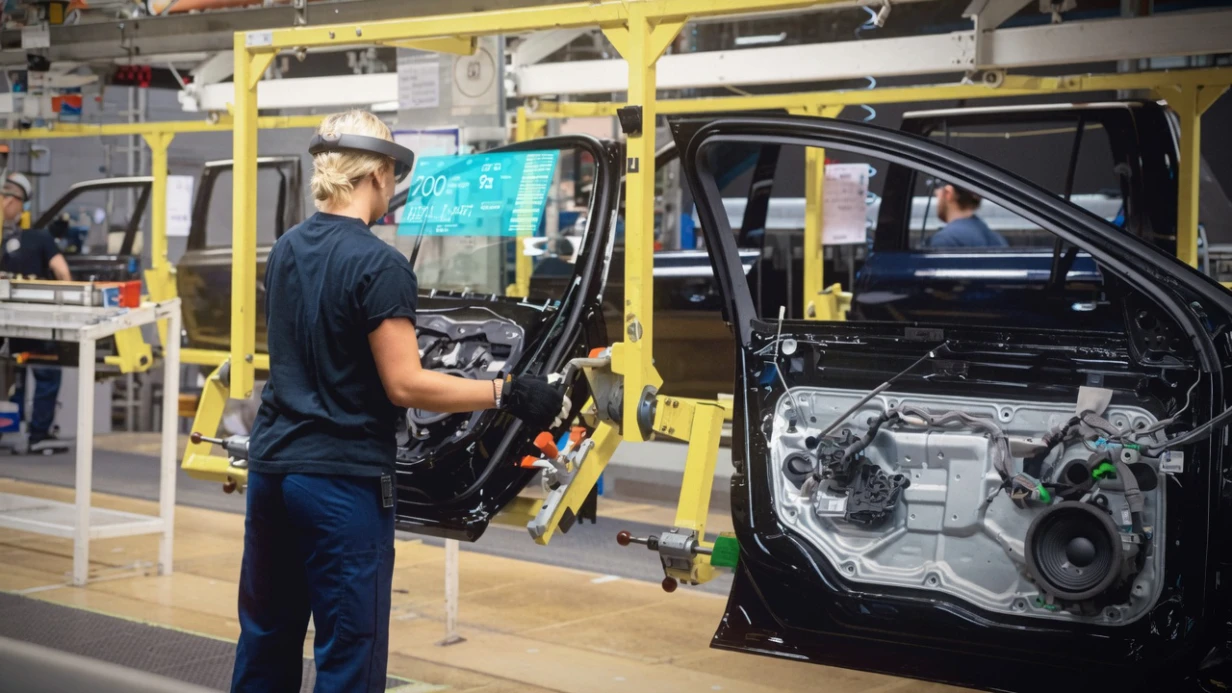
| AR glasses for repair | Work at height, in confined spaces, during complex assembly | Both hands free, instructions always in sight, higher safety and speed |
| Mobile AR app | Field specialists, remote sites, express diagnostics | Instructions always in your pocket, no extra tablet needed, quick launch and simple step-by-step navigation |
To choose the right option, you just need to understand where and how your crew works. If technicians are often at height, AR glasses are the more common choice. If you need a universal tool for different tasks, go with a tablet. If speed and mobility are the key criteria, a smartphone app is the way to go.
We consult at the start and help you decide on the format so you don't overpay for features you don't need. The result is a convenient tool for the crew that pays for itself through reduced repair time and fewer errors.
Stages of Developing AR Instructions for Wind Turbines
Building AR instructions for wind turbines is a transparent process, not a "black box." At every stage you can see what is happening, control timelines and budget, and make key decisions — we handle the technical side and are accountable for the result.
- Development brief — together we capture your procedures, typical maintenance operations, and the most common technician errors. You walk away with a clear technical specification and an estimate with no hidden work.
- Scenario design — we analyze which wind turbine components need explanations first and decide on the hint format (animation, text, 3D diagram). You approve the work plan and priorities.
- Layout approval — we show a prototype of the future instruction on screen before the final shoot. You make edits to the structure and content while it still costs nothing.
- Content creation and AR instruction development — we build 3D models of components, animations, and text descriptions, linking them to your existing procedures. We send interim versions periodically so you can see progress.
- Testing on equipment — we verify how the instruction performs in conditions close to reality: lighting, viewing angle, protective gloves. We fix flaws before your technicians ever encounter them.
- AR instruction implementation — we deploy the solution on your service team's tablets or smartphones and run a short training session. You get an operating procedure and a quick-reference card for employees.
- Support and updates — when procedures change or a new equipment model is added, we update the instruction without redoing the entire project. This saves your time as your wind turbine fleet grows.
The full cycle — from brief to implementation — takes weeks, not months. You don't lose control even during the technical implementation stage: every step ends with a checkpoint before moving on.
That is how AR instruction development is structured, so the result is ready for field work right away, not just for presentations.
What's Included in a Delivered AR Instruction
When you order an AR instruction, you get not just an app but a complete working tool for repair and maintenance. The package includes everything needed for technicians to start using the system immediately after delivery, without hiring programmers on your side.
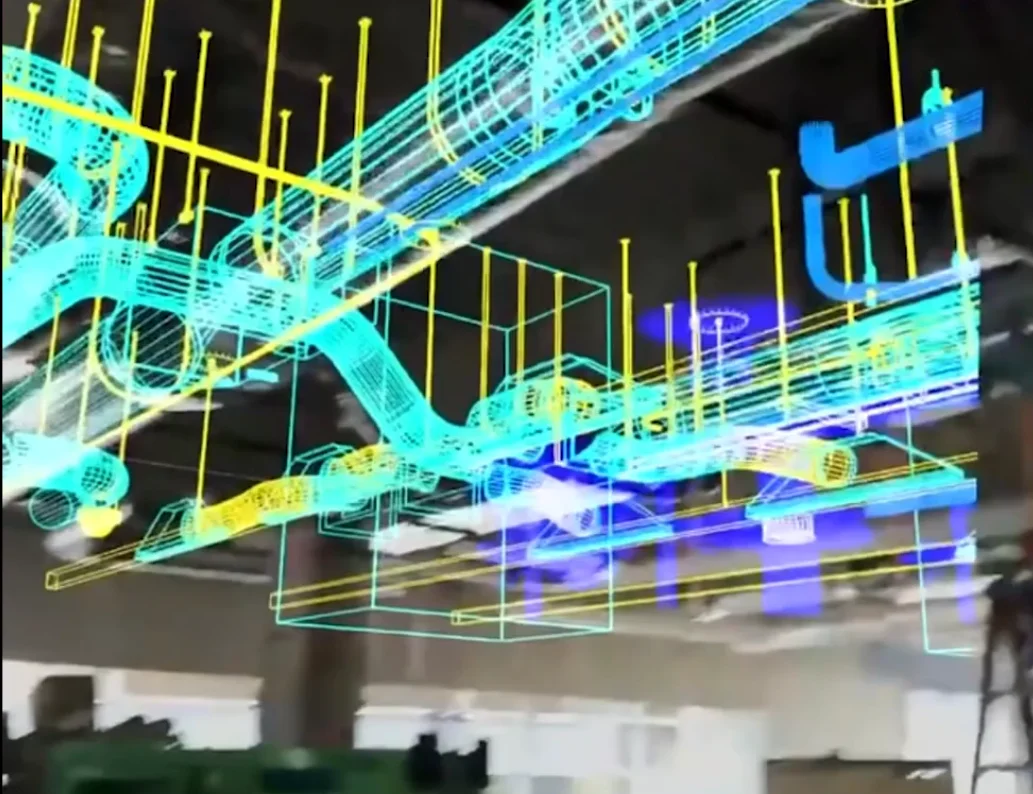
- 3D models of wind turbine components and parts — the technician can see the internal structure of the equipment and the disassembly order even if they previously worked only from drawings.
- Text maintenance scenarios — step-by-step instructions in plain language that appear right on the tablet or smartphone screen.
- Integration with your accounting system and documentation — instructions load from your database, and task completion is recorded automatically.
- Staff training — we run a training session for engineers and technicians so they can work confidently with AR without our help.
- AR technical support — we support the launch and stay in touch: upgrade your equipment or change a procedure, and we adapt the content.
This package addresses the main risk that often stalls AR adoption: employees don't know how to use the system and fall back to paper instructions.
We deliver not a "raw" product but a working solution with training and support — so the AR instruction is used from day one and pays off through reduced downtime and errors.
Case Study: Repair Twice as Fast with AR Instructions
Every minute of wind turbine downtime means lost generation and broken energy supply commitments. Especially when the crew works at height: the paper instructions aren't always at hand, and an experienced specialist may not be available.
That is why we build AR instructions that overlay hints directly on the equipment and help execute the procedure without hiccups.
One of the most illustrative cases is a project for the service company VetroServis, which maintains a wind farm. Before a scheduled gearbox repair, the crew spent nearly a full working day constantly checking drawings.
We converted the procedure into an AR instruction format: step-by-step hints appear on the relevant components, and the operator sees the sequence of operations and allowable forces.
As a result, maintenance time dropped by 47% — the crew finished in 4.5 hours instead of 8, almost twice as fast. Meanwhile, the newcomer didn't need to ask the mentor questions: they saw every step right in front of them. Safety also improved: fewer trips to documentation at height.
The head of service at VetroServis described the effect this way: "No paper manual in the basket.
The specialist sees the right component and does exactly what is needed — we got back to base ahead of schedule and passed the acceptance inspection without a single error." A month later, the company ordered three more AR instructions for other equipment.
This case confirms that repair time savings are not an abstract advantage but a measurable metric for a service operation. The larger the equipment fleet, the more working hours can be returned to the production cycle.
Contact us — we'll show you how such an AR instruction can be integrated into your maintenance procedures.
How to Choose the Right Format for Your Equipment?
There is no one-size-fits-all AR instruction — what works perfectly in a clean workshop will be useless on a windy site or in a cramped machine room.
That is why choosing a format starts not with a pretty picture but with answers to three questions: where the instruction will be used, who will use it, and how often the equipment changes.
The first criterion is operating conditions. If the technician works in a noisy room, voice prompts and large on-screen hints that don't require reading are important.
On an open site in bright sunlight, the screen must remain readable, and for work with gloves, gesture or gaze control should be supported.
For stationary equipment, full 3D diagrams with component breakdowns work well, while mobile crews need compact step-by-step scenarios that don't require a powerful device.
The second criterion is the user's skill level. A newcomer needs detailed "what's next" prompts; an experienced specialist needs quick access to the component and checkpoints without extra information.
A well-chosen format cuts employee training time from weeks to a couple of days and reduces maintenance errors many times over. This directly affects downtime and safety.
The third is budget and development horizon. We deliberately don't offer a "solution for every occasion," because an expensive system covering 20% of tasks is worse than a simple scenario that solves 80% of needs.
That is why many start with one or two typical operations that cause the most trouble, then scale the format to the rest of the equipment. This spreads out costs and delivers visible results quickly.
Our role is to help you make this choice. During a consultation, we'll review your scenarios, working conditions, and current procedures, suggest a suitable format, and show how it fits your budget.
You'll get not an abstract presentation but a concrete plan: which instruction type suits your equipment, how long development will take, and when the savings begin.
FAQ on AR Instruction Implementation
Before implementing AR instructions for wind turbine maintenance, customers tend to ask the same questions. Their main concerns are compatibility with already installed equipment, the difficulty of integrating into current service processes, cost, and timelines. We answer the key concerns.
Are AR instructions compatible with our equipment?
Yes. We adapt instructions to the specific wind turbine models, their components, and your company's procedures. No modification of the equipment is required: the AR instruction runs on an ordinary tablet or smartphone that the mechanic takes along.
How hard is it to integrate AR into service processes?
Integration happens without stopping operations. We connect AR to your ticketing system or leave it as a standalone tool. Mechanics learn it in a few hours — the system shows the next step right on the part, so no retraining is needed.
How much does development cost and what are the timelines?
The cost depends on the number of components and the complexity of operations. After an audit of your procedures, we give you a transparent estimate: you understand exactly what you are paying for. Timelines are between two weeks and two months. The investment pays off through reduced downtime and fewer repair errors.
What guarantees do you provide and what happens after launch?
We guarantee that the instruction works at your site. We test it together with your specialists and make adjustments until it fully meets your needs. After launch, we update instructions when procedures change and provide consulting support to your staff.
Order AR Instruction Development for Your Service
Starting a project is simple — leave a request on the website, and we'll get back to you within one business day. After a short conversation, we'll prepare a commercial proposal with an implementation plan, timelines, and an exact cost — no hidden extras.
We work on a transparent timeline:
- Request — we schedule a call and clarify your tasks and equipment type (1–2 days).
- Brief — we gather the details: service procedures, common errors, and the specifics of your fleet (3–5 days).
- Cost estimate — we calculate the cost and timelines and prepare a commercial proposal with stages and a list of work (2–3 days).
- Development — we create AR instructions based on your documentation using professional equipment (2–4 weeks).
- Testing — we verify the scenarios at your site and refine them for real conditions.
- Launch — we hand the instructions over to your staff and train them for field use.
In the commercial proposal you will receive:
- a fixed cost with no hidden charges;
- a calendar plan with exact dates;
- a list of required hardware and software;
- a demonstration of an AR instruction on one of the components;
- support and update terms after launch;
- the staff training schedule and acceptance criteria.
Submit your request now — within a week you'll know the cost and implementation plan. Start with a single component, evaluate the result, and scale the solution across your entire wind turbine fleet.