

Why the aviation industry lacks clear instructions
Modern industrial equipment is becoming more complex faster than documentation is updated.
Paper instructions and static PDF manuals running hundreds of pages no longer work: to find the right procedure, a specialist spends minutes, and in the aviation industry every minute of equipment downtime translates into missed deadlines and additional costs.
When an instruction does not answer a question instantly, the technician starts acting from memory — and this is the main source of maintenance errors.
In aviation, the cost of such an error is especially high: an incorrect sequence of operations, a skipped inspection step, or improper fastener tightening can lead to component failure both on the ground and in the air.
Instead of working, personnel flip through manuals, double-check themselves, and stop the process — and that means direct downtime and lost hours.
Personnel training is a pain point of its own. A newcomer needs weeks to master a complex unit using text descriptions and diagrams, while an experienced employee spends time explaining instead of doing their own job.
Traditional formats do not provide the needed onboarding speed and do not reduce the number of errors during independent work.
That is why the aviation industry needs instructions that speak to employees in the language of their actions.
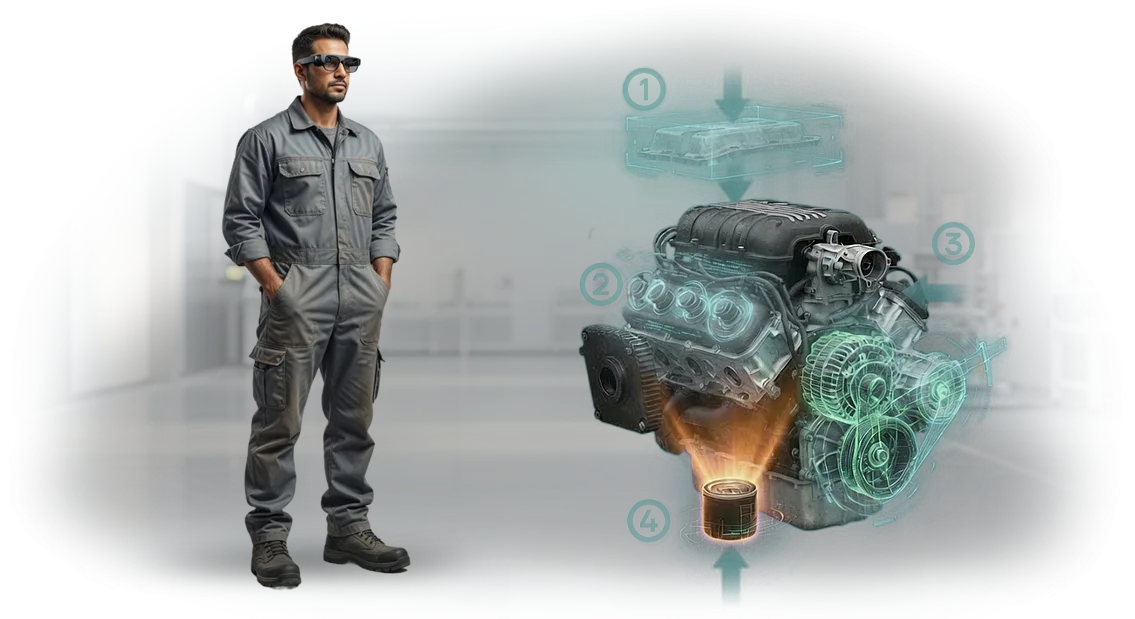
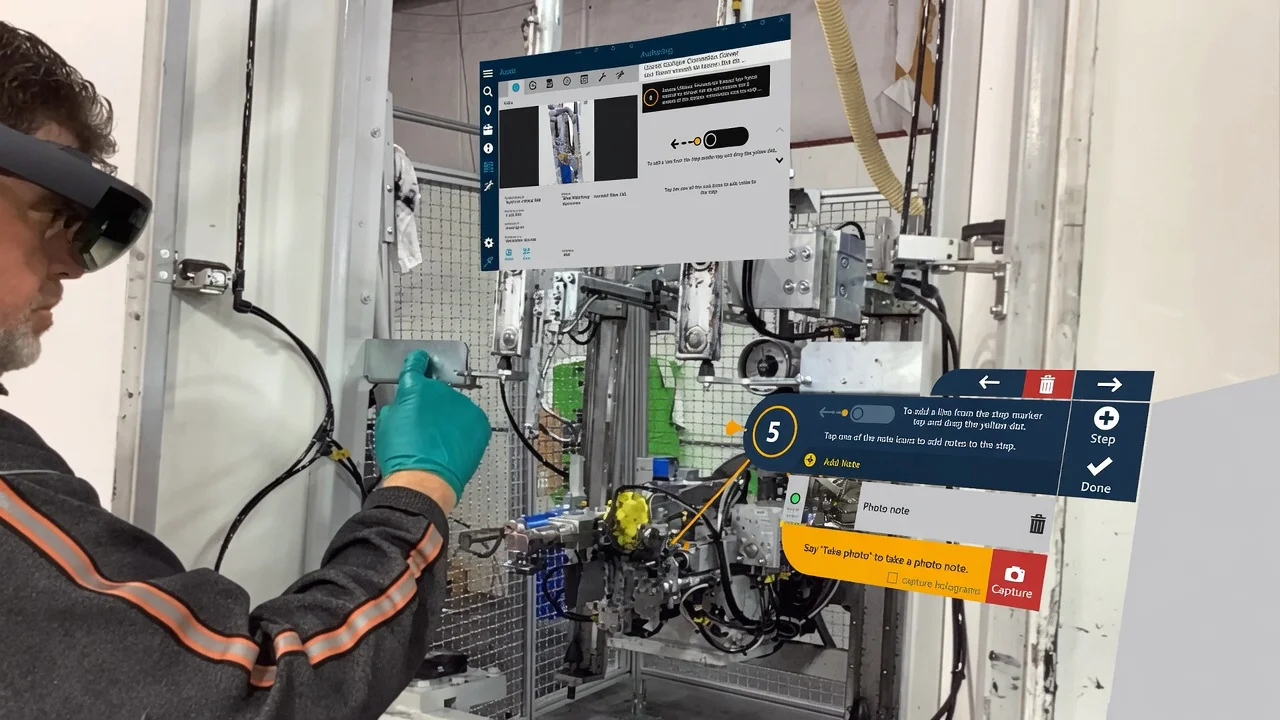
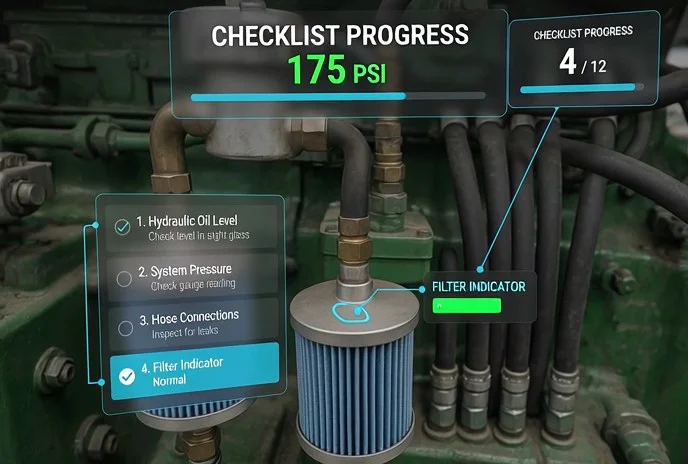
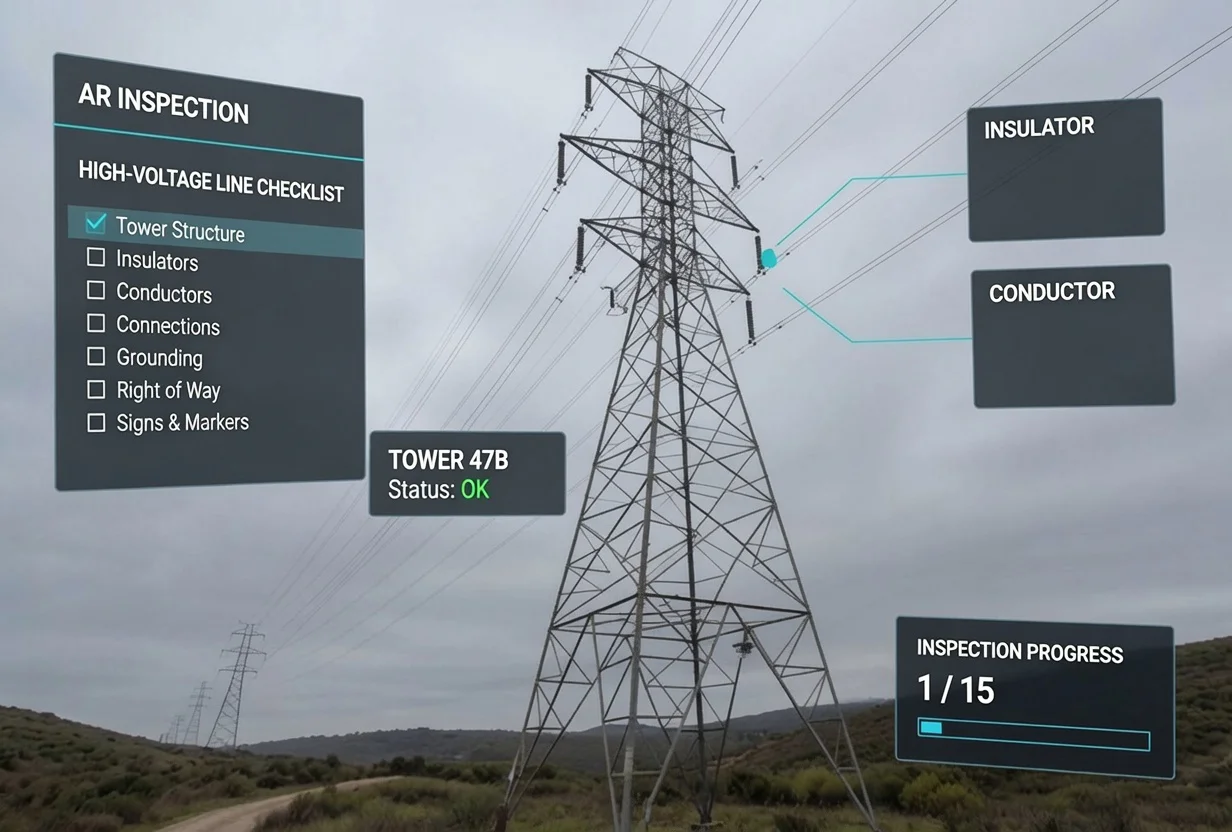
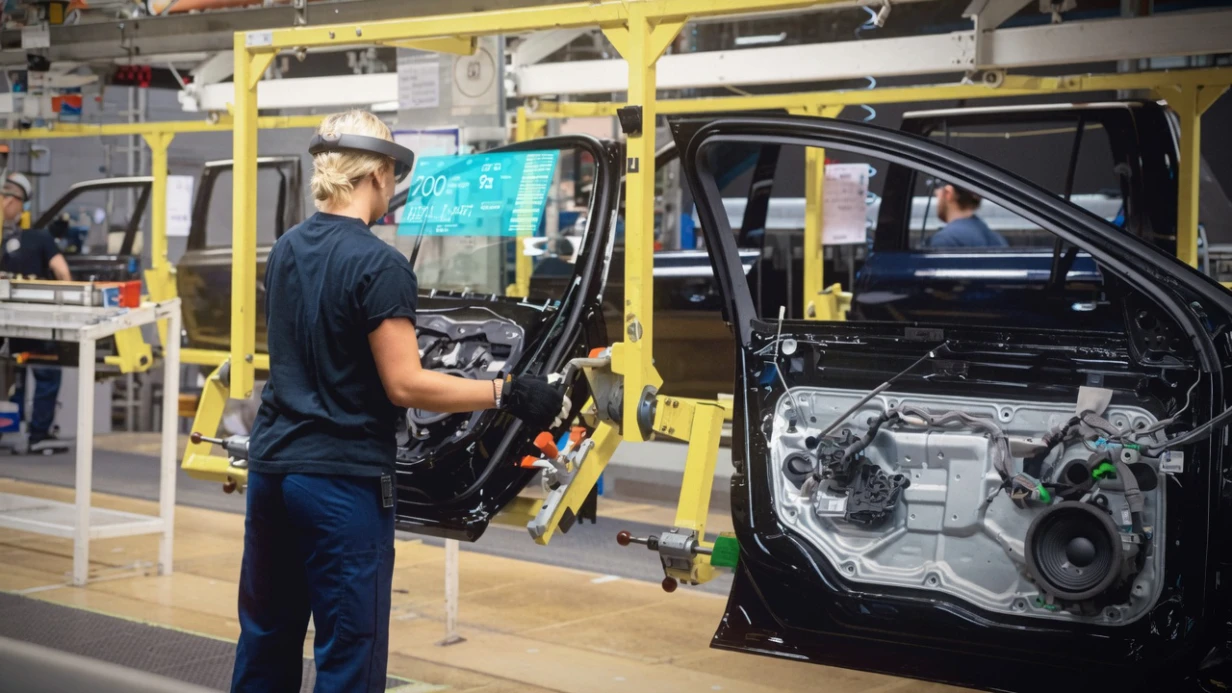
AR instructions overlay visual cues directly on the equipment: step sequences, checkpoints, permissible parameters — everything in front of the technician's eyes, with no need to search through documents.
This accelerates maintenance, eliminates errors, and makes personnel training visual and fast. This is exactly what we deliver with our projects — clear AR instructions embedded in the workflow of an industrial enterprise.
What benefits AR instructions bring to production
In aviation production, the cost of an error is measured not in minutes of downtime but in people's safety and customer reputation. A new employee studies documentation for weeks, yet knowledge still gets lost between shifts.
An experienced specialist is pulled away from work to explain the same things over and over. AR instructions solve this problem: the worker sees the needed information right on the equipment — what to do, in what order, and exactly where.
The main benefit of AR instructions is fast onboarding. Instead of memorizing reference books and searching for the right section, the employee gets step-by-step prompts right in their field of view.
Personnel training is compressed many times over: new people start working within the first days, not after months of internship. This reduces the load on mentors and speeds up shift turnover.
The second business result is fewer errors during equipment repair. The technician sees an interactive diagram overlaid on the real unit and does not waste time deciphering drawings.
The likelihood of mixing up a connector, skipping a step, or tightening a fastener with the wrong torque is minimized. The result: fewer rework cycles, lower spare parts costs, and virtually no unplanned downtime.
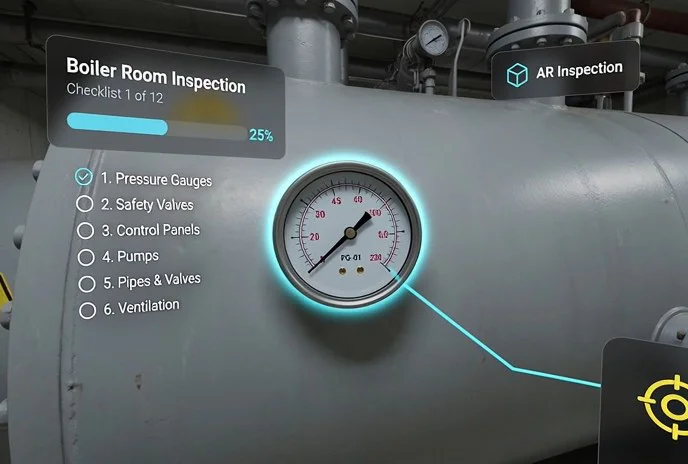
The third benefit concerns safety — and in aviation this is critical. AR instructions do not allow a control operation to be skipped and warn about risks in advance.
Every step is recorded, making the process manageable: less human factor, a stronger safety culture, and simpler audits. The production manager gets predictable shop-floor performance instead of dependence on the "golden hands" of individual specialists.
In the end, AR instructions are not a technology experiment but a tool of production economics. They pay for themselves through faster training, fewer errors, stable repair quality, and saved resources.
For a business owner, this is a direct link between a technical solution and a financial result: less downtime, higher efficiency of every shift, and peace of mind about safety.
AR instruction formats for the aviation industry
Aviation operates under strict regulations: a maintenance error results in downtime or a safety risk. At the same time, documentation is voluminous, and experienced specialists are scarce.
That is why the AR instruction format must solve a specific problem: speed up work, train a newcomer, or bring in a remote expert.
We have split the formats into three levels — from simple step-by-step prompts to full remote support. The choice depends on where the bottleneck is: planned maintenance, diagnostics, or an unusual breakdown.
| AR Instruction Format | Who It's For | Value to the Client |
|---|---|---|
| Step-by-step AR instructions | Scheduled maintenance technicians, new personnel | Reduce time to locate components and perform operations — fewer errors in standard work |
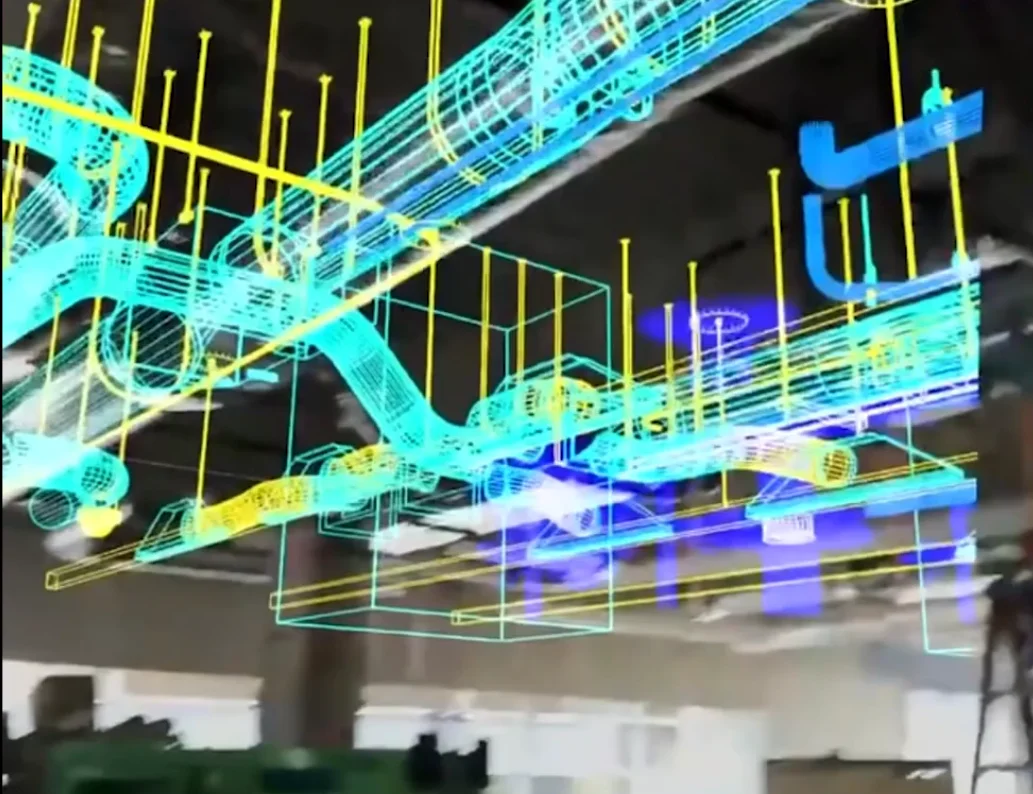
| Interactive 3D schematics and overlays | Diagnostics and assembly control specialists | Visually show internal equipment components — faults are localized faster |
| Remote AR assistant | Emergency callouts, scarce experts | Expert sees through the technician's eyes and guides them to resolution — no waiting for travel |
For the aviation industry, this is not just convenience but a manageable process: each format is embedded into existing regulations and the quality control system. We select specific scenarios for your tasks — from personnel training to round-the-clock support on site.
All levels run on professional equipment and scale easily: you can start with one section and then roll the solution out across the entire fleet.
How AR instructions are developed: project stages
Implementing AR instructions is a project with clear stages, each of which you control. We do not work "blind": at key checkpoints you see interim results, make changes, and take decisions. This approach eliminates surprises at the final stage and keeps you within agreed deadlines.
- Brief and audit. We study your production process, equipment types, and typical employee work scenarios. We capture the goals: reducing training time, lowering error rates, standardizing personnel actions.
- Concept and approval. We determine which operations to convert to AR format and which devices specialists will use. We agree on the instruction structure and prompt logic — before development starts.
- Content development. We create scenarios, visualizations, and prompt texts based on your regulations and the experience of your own experts. We account for real-world conditions: lighting, operator position, and the specifics of each component.
- Technical implementation. We configure the software and build a working prototype. You receive a sample to test directly on the equipment — not in a presentation, but on the shop floor.
- Testing and training. We run a pilot deployment with your employees, collect feedback, and refine the instructions. In parallel, we train personnel to use the interface.
- Deployment and support. We launch the instructions into industrial operation. We stay in touch: we update content when equipment, regulations, or the composition of operations changes.
At every stage you get clear results to verify, not a "black box." This lets you control your time budget and hit target metrics within a few weeks of launch.
What is included in the AR instruction delivery
We deliver not just a prototype but a working system that engineers start using from day one.
The delivery includes ready-made AR scenarios based on your regulations, an admin panel for independently updating instructions, and technical support after launch — a full support lifecycle.
- Ready-made AR scenarios for typical operations: inspection, maintenance, repair, and parts control — adapted to your equipment and the requirements of the aviation industry.
- Step-by-step animations and markers directly on the equipment: the specialist sees the sequence of actions and makes fewer mistakes during complex operations.
- Admin panel: update texts, photos, and videos, add new operations, and change instruction versions without involving developers.
- Training for your team: we train engineers and instructors and hand over training materials — employees master the system quickly.
- Integration with regulations: we tie scenarios to operation numbers and maintenance logs so instructions fit into existing workflows.
- Technical support: we consult, resolve issues, and update scenarios for an agreed period after launch.
- Post-launch refinement: we collect feedback from your technicians and make edits so instructions become more accurate and convenient.
- Full documentation: user and administrator guides — your team manages the system independently without our constant involvement.
Case study: AR instructions cut repair time at an aviation enterprise
The aviation industry does not forgive slow decisions: every hour of equipment downtime is a missed flight and a broken contract. At the aviation enterprise Krylo-M, repairing complex units took up to eight hours, and some errors surfaced only during re-inspection.
We deployed an AR instruction system that overlays step-by-step prompts directly on the real equipment.
The technician sees where to apply a tool, in what order to remove components, and what to look out for — without being distracted by paper manuals or switching between schematics.
First month results: repair time fell by 30%, personnel errors were cut in half. Onboarding time also dropped — new employees reached independent work three days faster. The project payback period was less than six months.
For the manager, this means a stable repair schedule without overtime and fewer customer complaints. For the enterprise, it means faster return of equipment to service and a lower risk of accidents caused by human factors.
Today, Krylo-M uses AR instructions as the standard for all complex operations. We continue to support the project: we update content whenever regulations and technical documentation change, so the step-by-step prompts always match current requirements.
How to choose the right AR instruction format?
To choose the right AR instruction format, start not with technology but with the problem you need to solve. The same scenario can work in different ways: accelerate newcomer training, cut repair time, or connect an employee with an expert in another region. Determine what is critical for you right now — and the format will become obvious.
If the main goal is training personnel to work with new equipment, choose step-by-step instructions with visual prompts. They help employees master an operation faster and reduce errors during the first independent steps. This format works well for regular training and simple knowledge checks.
When it comes to repair and maintenance, interactivity matters. The employee sees unit parts, gets hints on disassembly and installation, and receives risk warnings. This reduces equipment downtime and removes reliance on paper manuals that quickly become outdated.
For remote support, a format with video communication and prompts overlaid on the live image works best. An expert sees the same thing as the on-site employee and can point precisely to the needed element.
In the aviation industry, where safety depends on precision, this approach saves hours and reduces the load on rare specialists.
Once you choose a format, you get a clear system rather than scattered experiments. We help clients analyze their processes, select the right scenario, and implement it so the result is measurable: faster onboarding, less downtime, higher service quality.
Frequently asked questions about implementing AR instructions
Implementing AR instructions in aviation production is a serious step, and clients naturally have doubts. The most common questions are about risks to equipment, the need to buy new devices, and the speed of documentation updates. We answer directly — the same way we talk with clients during project discussions.
Will the equipment break if AR instructions are used?
No. We do not connect to machine control systems or change anything in them. An AR instruction is an information layer on top of the real object: the employee sees prompts on the screen of a tablet or smart glasses, while the equipment itself operates normally. There are no risks to machinery or the production cycle.
Will we have to buy expensive glasses for employees?
Not necessarily. Tablets and smartphones already used at the enterprise are enough to start. If the project proves its value, you can move to smart glasses — we will help you choose a model for your tasks and arrange a trial period. All instructions work on different devices, so you are not locked into a single vendor.
How quickly are instructions updated when regulations change?
In days, not weeks. We release the new version into the shared system and it becomes immediately available to all employees — no need to reprint paper manuals or hold briefings.
This is especially important at aviation enterprises where requirements change regularly and demand a fast response.
Will employees find it hard to get used to the new format?
No. Training takes minimal time: the interface is intuitive and the prompts guide the user step by step.
In practice, workers master AR instructions faster than traditional technical documentation because they do not need to search for the right section in a text and cross-check details.
Order AR instructions for your production
Ordering AR instructions means getting a tool that speeds up personnel onboarding and reduces the number of errors when maintaining complex equipment.
Interactive prompts are embedded in the workflow: the technician sees step-by-step guidance right on the object without flipping through paper manuals. This is especially important in aviation production, where the cost of an error is many times higher.
To get started, simply leave a request on our website. We will clarify your task, show examples from industry, and propose a format for your production — without unnecessary meetings and long calls.
What you get after contacting us:
- A preliminary timeline estimate and a development plan for your equipment.
- A demonstration of scenarios on a sample of your machinery before full development begins.
- Instruction development: from basic components to complex repair operations.
- Deployment with training for your engineers — they will be able to update content themselves.
- A contractual guarantee and post-launch support, including maintenance and refinement.
We work remotely, so you get access to the expertise of a team with aviation industry experience. Every stage is backed by reporting and checkpoints — you always know where development stands.
Leave a request — we will discuss your task and show how AR instructions reduce training time and help avoid downtime. Start with a short conversation, not a long approval process.