

Schedule Disruptions in Automotive Manufacturing Are Avoidable
In modern automotive manufacturing, every minute of downtime means lost output, a disrupted schedule, and unnecessary costs.
Complex equipment requires precise actions, but operators often work by guesswork: experience is lacking, documentation is scattered, and instructions take too much time.
Any mistake by an assembler or setup technician can stop the assembly line for hours, and the consequences are then corrected at the expense of the entire shift.
The most painful point is staff training and adaptation. A new employee reaches full working pace only after months, and staff turnover on the production floor forces you to spend resources on constant retraining.
As a result, even a stable team occasionally makes mistakes during changeovers or non-standard operations, and it is precisely these disruptions that lead to delays in shipping finished vehicles.
The cost of a mistake today is higher than ever: production cycles are shrinking, quality requirements are rising, and competitors are already using digital tools. A manufacturer must simultaneously maintain pace, control quality, and quickly bring new people up to speed.
If operators are not given simple, clear prompts right at the workstation, any failure will cost more than it seems at first glance.
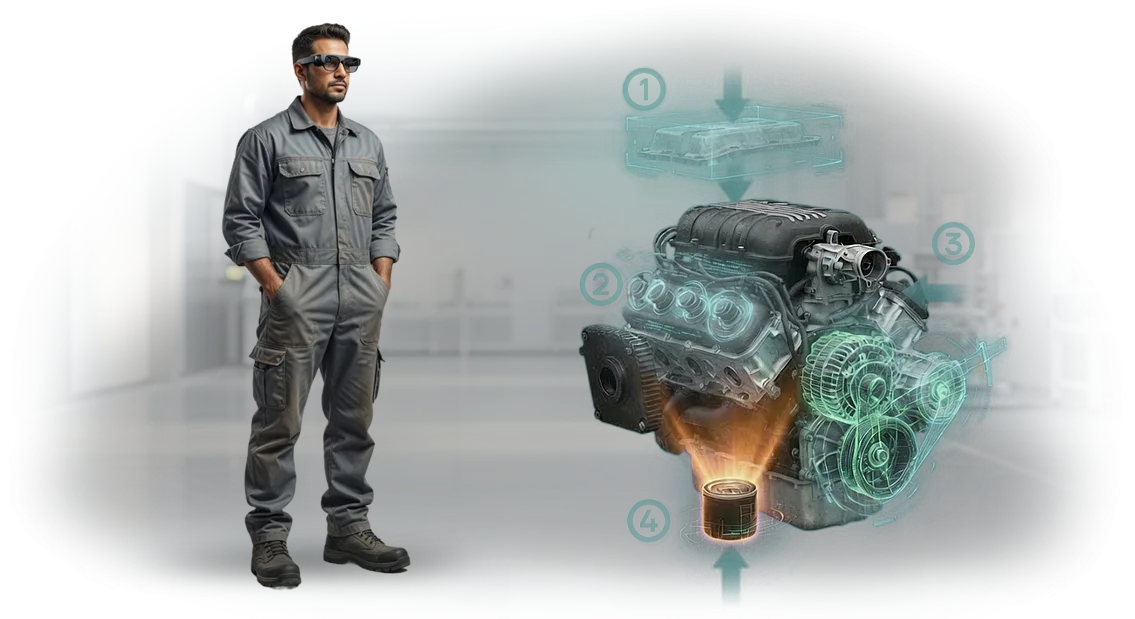
We help automotive manufacturers close these risks. We implement AR instructions that show actions step by step on real equipment, reducing downtime, lowering error rates, and accelerating new employees’ transition to a productive rhythm.
This is not theory but working practice that has already changed production schedules at enterprises in the industry.
What Results You Get from AR Instructions
Implementing AR instructions on the production floor is not just a technological upgrade; it changes how your team works with equipment.
A plant or workshop gains measurable advantages already at the launch stage, and in the automotive industry, where every minute of downtime is critical, the effect is immediately visible.
Faster Training for New Employees
Newcomers no longer depend on busy mentors. Instead of thick manuals and verbal explanations, they see directly on the equipment what to do and in what order. Time-to-competence is reduced many times over — not weeks, but shifts.
Fewer Errors and Controlled Operations
The instruction is tied to a specific component and prevents steps from being skipped. The operator receives confirmation that an action is correct before moving to the next step. The result is less scrap, fewer reworks, and fewer unscheduled stops.
Remote Support Without Downtime
When a non-standard situation occurs on a work area, a rare specialist does not have to travel to the site. Through the AR interface, they see the same thing as the operator and provide step-by-step guidance. Downtime drops from hours to minutes.
Standardization and Quality on Every Line
AR instructions level the work of employees with different experience levels. A supervisor sees which stage caused difficulty and can adjust processes based on facts rather than guesswork. This delivers consistent results across all work areas.
AR Instruction Formats for Different Scenarios
The same production process looks different to a newcomer, an experienced operator, and a remote expert. That is why AR instructions are not created in “one standard form” — for each task, we select a format that delivers results without wasting time or training effort.
The table below shows three basic scenarios we work with most often in the automotive industry and related sectors. This is a guide: when defining the task, we adapt the format to your specifics, equipment, and employees’ skill levels.
Format Table
| Format | Who It Is For | What It Gives the Client |
|---|---|---|
| Training instructions | New employees, trainees, workers during onboarding | Shorter adaptation period: the employee immediately sees how to handle the equipment correctly and reaches planned productivity faster |
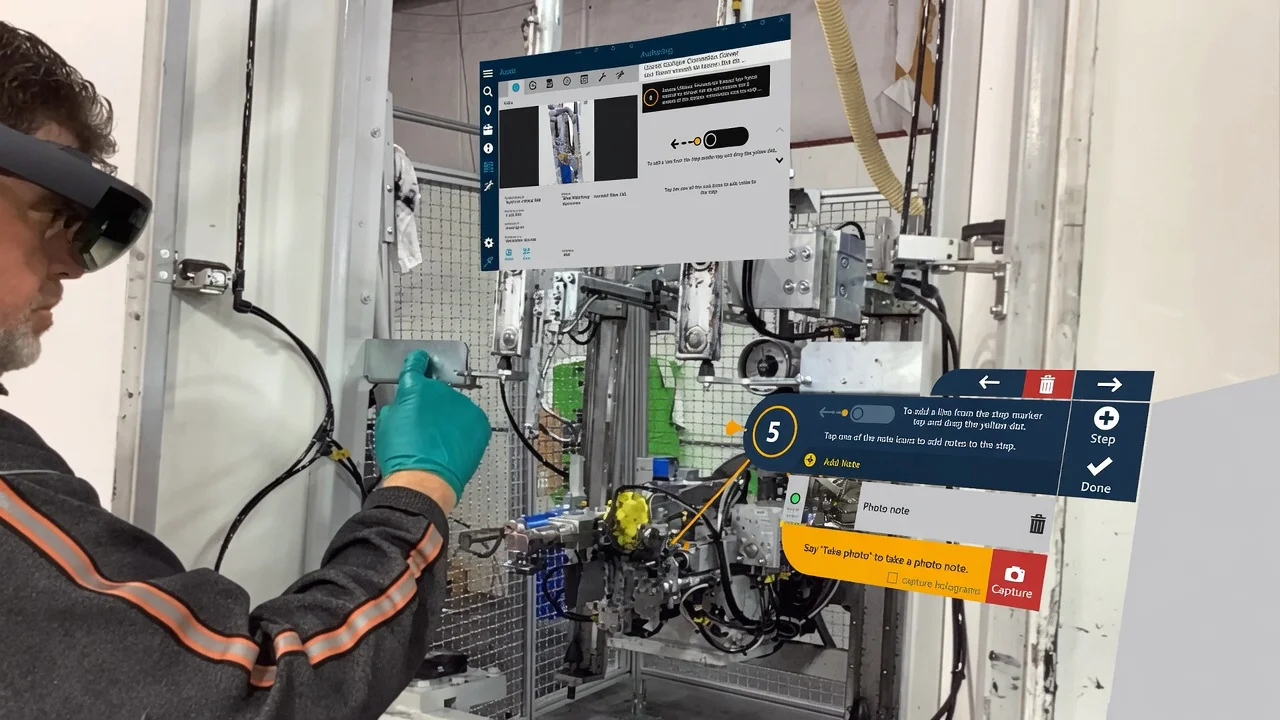
| Step-by-step instructions | Operators performing complex or rare operations | Fewer errors and defects: the operator checks prompts directly on the equipment without being distracted by paper documents |
| Remote assistant | Engineers, service departments, employees at remote sites | Savings on time and travel budget: the expert sees the same as the employee and can give guidance without visiting the site |
The choice of format affects implementation speed and how quickly employees start working with AR. During a consultation, we show examples of each format based on your types of operations and help you determine what will deliver the greatest effect in your case.
Stages of Creating an AR Instruction in Our Project
We understand how important it is for a manufacturer to avoid stoppages and time-consuming approvals. That is why we have created a process where you see the result at every step and can influence it — from the first brief to post-launch support. Transparency and clear timelines help avoid surprises and quickly deliver a working tool.
- Brief and audit. We meet with you, examine the specific operation and equipment, and determine which scenario will deliver the greatest effect — training newcomers, repairs, or quality control. We record goals and expectations.
- Scenario approval. We show what the instruction will look like: the sequence of steps, prompts, and the employee interface. You approve the prototype before development begins — this eliminates rework.
- Implementation. We create 3D models, animations, text and voice prompts. We use professional tools to ensure the result is stable across different devices and shop-floor conditions.
- Testing. We check the instruction on your equipment together with your specialists. We account for real conditions: lighting, noise, workwear, and gloves. We eliminate all inaccuracies.
- Launch and training. We install the instructions on tablets or smart glasses and train your instructors and operators. We hand over documentation and quick-start guides.
- Support. We stay in touch after launch: we update content when regulations or equipment change, add new scenarios, and help with questions.
What Is Included in the Delivery Package
We do not hand over just files; we provide a ready-to-use working tool that can be deployed immediately after setup.
The delivery package includes everything your team in automotive manufacturing needs to master new operations faster, make fewer mistakes, and spend less time on explanations.
- Step-by-step AR instructions for key operations — visual scenarios that guide the operator directly on the equipment through the sequence of actions, control points, and required parameters.
- Technical documentation — regulations for working with the instructions, update procedures, and a description of roles for your specialists.
- Training materials for personnel — short videos and manuals that help operators and process engineers quickly master the new tool without leaving production.
- Usage analytics — a report on which instructions are in demand, at which steps employees most often pause, and where the scenario should be improved.
- Administrative access for your team — the ability to independently make changes to instructions when regulations change or new components are added.
- Integration with your systems — connection to existing equipment databases and maintenance regulations so that data is always current.
- Launch support — our specialists help deploy the instructions to production areas, train the first users, and adjust scenarios based on trial operation results.
Case Study: Reducing Downtime in Automotive Manufacturing
AvtoTech — a commercial vehicle assembly plant — approached us with a typical pain point: line downtime caused by waiting for setup.
There was one experienced engineer for the entire workshop, and young specialists spent a long time searching for the right regulation in paper folders or waiting for a senior colleague. Every hour of downtime meant an unproduced vehicle, a shifted shift, and excessive overtime.
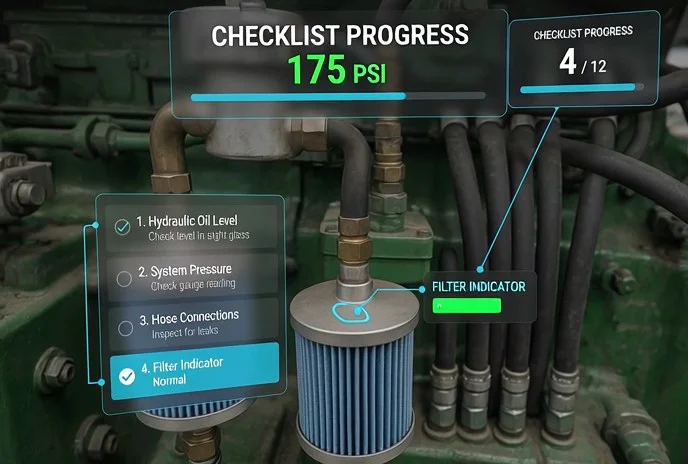
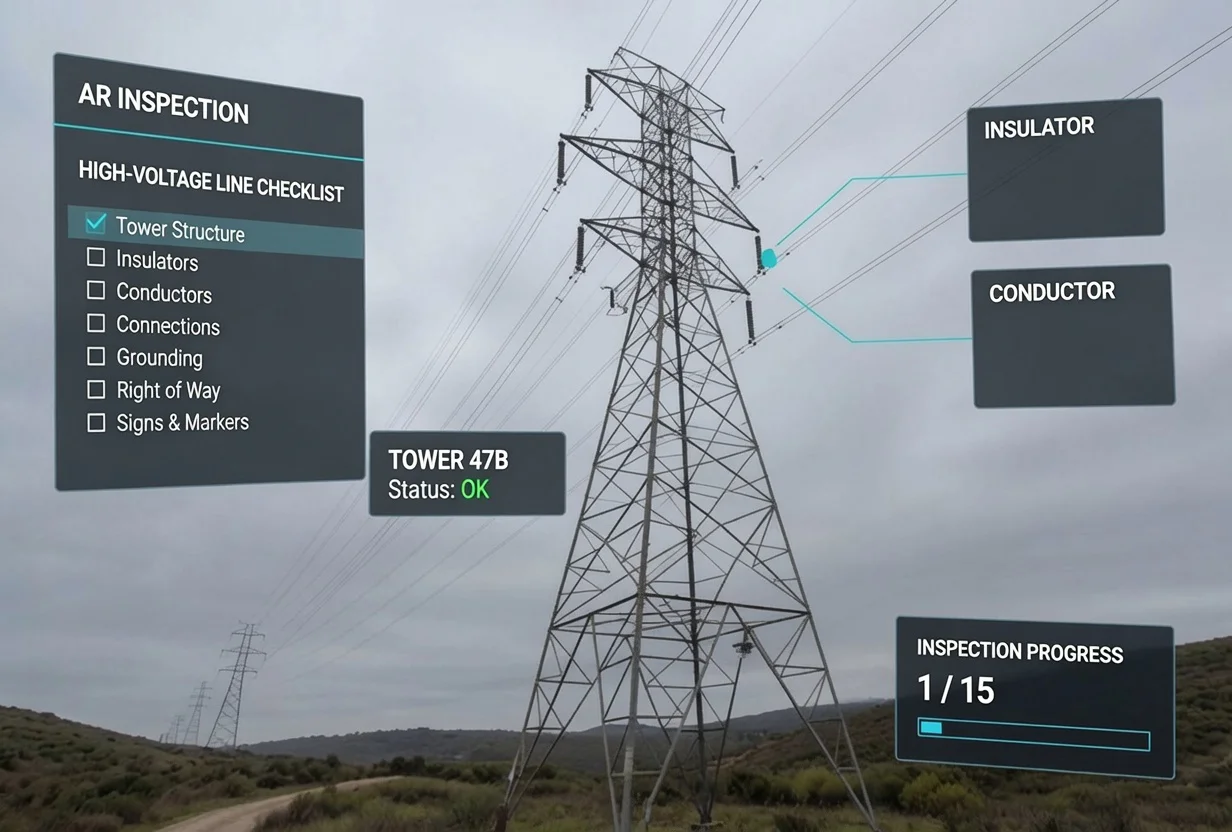
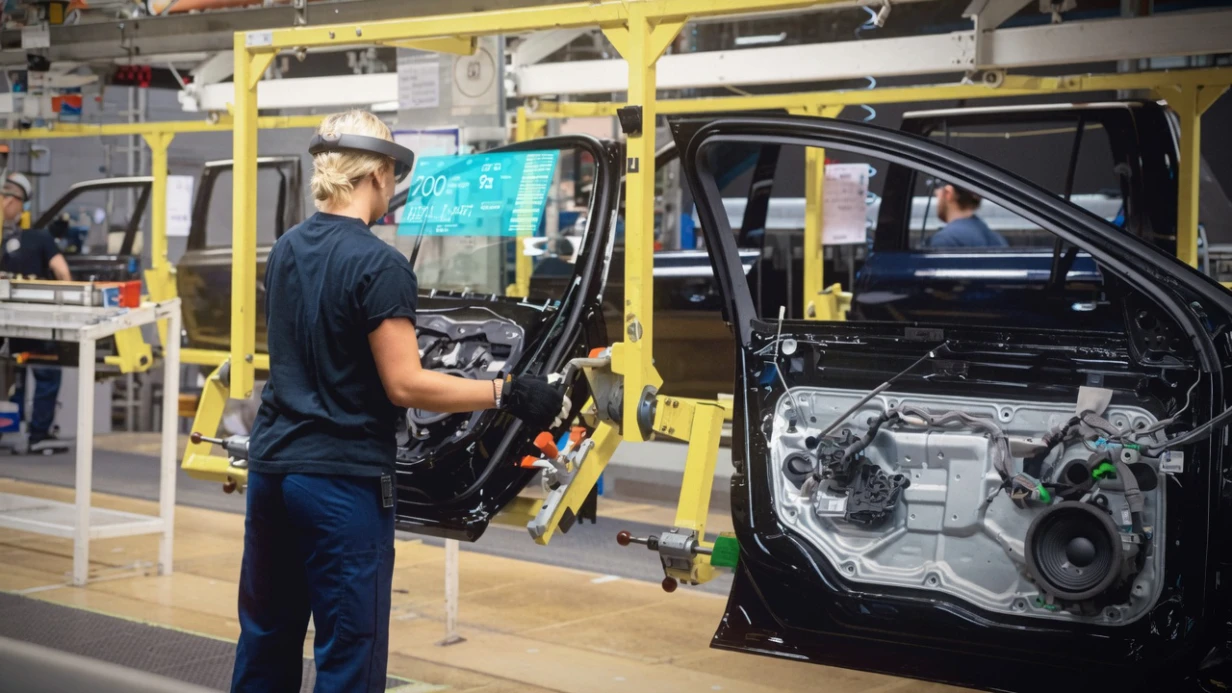
We proposed replacing paper instructions with AR prompts that appear directly on the equipment. The worker sees on a tablet or smart glasses screen which component to open, which tool to use, and in what order to tighten fasteners. No guessing — only sequential steps.
Result
After two months of the pilot, average setup time dropped by 40%, and line downtime fell by almost a third. A new employee reached the level of an experienced setup technician in two weeks instead of six months.
The production manager noted that the main thing was not even the numbers, but the confidence of the crew: people stopped hesitating and now act without fear of making a mistake.
The investment in developing the AR instructions paid for itself in four months through reduced downtime losses. The solution remained with the customer, and they are now scaling it to other areas — from tool preparation to quality control.
How to Choose the Right Format for Your Task?
Choosing an AR instruction format begins not with technology but with a question: what should happen on the production line? If the goal is to reduce training time for new employees, step-by-step prompts directly on the equipment are sufficient.
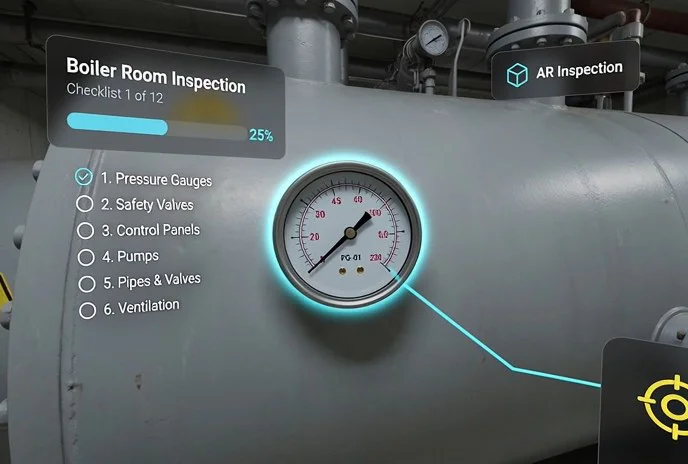
If you need to reduce the risk of errors during repairs or maintenance, you will need a format with action verification and feedback.
For automotive manufacturing, where every line stoppage is expensive, the main criterion is the speed and accuracy of the operation, not the number of visual effects.
The second step is to gather requirements together with those who will use the instruction: supervisors, setup technicians, and quality engineers.
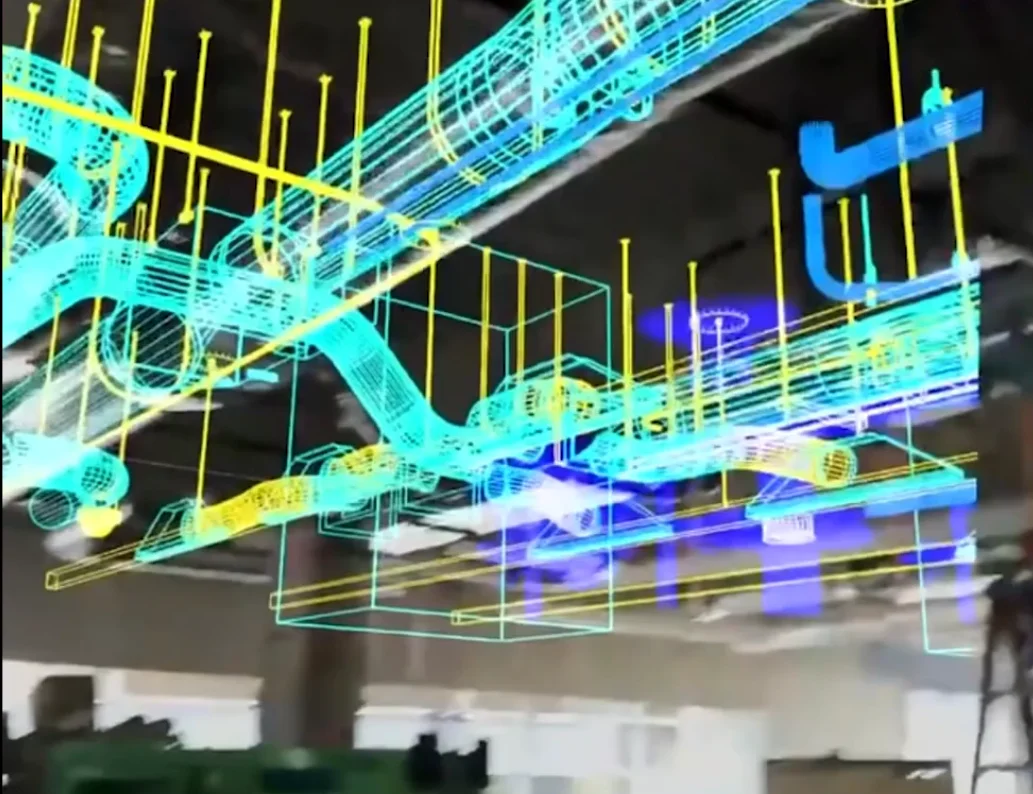
The specifics of the equipment determine the format: for large components and assemblies, AR navigation by zones is more convenient; for precise operations with small parts, enlarged diagrams with highlighting of the required element are better.
It is important that the instruction works on devices already available at the enterprise and does not require restructuring existing processes.
We select a format for a specific task rather than offering a universal solution.
At the start, we analyze the operations where errors most often occur, calculate the potential time savings, and only then propose a scenario: from a simple “show and explain” to an interactive mode with control over each step.
In automotive manufacturing, this allows you to get results quickly and pay back the development investment in a short time.
The main thing is that the format should be convenient for people and fit into the regulations, not force them to change their familiar way of working. We create AR instructions that an employee opens in a few seconds, follows the prompts, and immediately sees the result.
If you are unsure which option suits you, we will send a short example for your operation so the decision is clear.
Answering Common Concerns
Any new technology in production raises questions: will it interfere with work, will it require a line stop, and what will it actually cost? For managers in automotive manufacturing and related industries, we have collected answers to the most common concerns.
Won't AR instructions disrupt line safety?
Safety is the main condition of any production process. An AR instruction works as a digital assistant: the employee sees prompts on the device screen, their hands remain free, and attention stays focused on the operation.
Scenarios are adapted to your occupational safety regulations, and access to instructions can be restricted by role and work area.
Is it difficult to integrate the system with existing equipment?
Integration takes place without stopping production. The system works as an additional layer, does not interfere with control controllers, and does not require replacing tools. We use proven tools and professional devices, so deployment takes days, not months. Everything is configured to your technological process.
How much time does employee training take?
Operators only need one short session — from half an hour to a shift, depending on experience. They learn to launch the instruction and follow the steps, rather than delve into technical details. Work area supervisors get a simple way to update scenarios without involving programmers.
What costs should we expect beyond the system price?
We include scenario development, adaptation to your equipment, and launch-stage support in the price. You do not pay for hidden work.
If you later need to expand the system to another workshop, it will cost less than a project from scratch because the scenario base is already ready.
Leave a Request for AR Instruction Development
Leave a request — and we will show how AR instructions reduce training time and lower error rates specifically on your production line.
You do not need to implement anything blindly: first we analyze your task, then we propose a format that fits your current processes and equipment.
What you get after contacting us:
- Consultation with a technical specialist: we analyze your situation and point out where AR will deliver quick results — in repairs, assembly, or quality control.
- Cost calculated after audit: a transparent estimate without hidden work, with timelines and stages indicated.
- Pilot project: we launch one AR instruction in a limited area so you can evaluate the result at real workstations and calculate the economics.
- Demonstration on your equipment or at our testing ground — we show how an employee interacts with an instruction using smart glasses or a tablet.
- Ready implementation plan: which operations to convert to AR first, how to train personnel, and how to scale the solution to other workshops.
- Methodological materials and post-launch support: instructions, regulations, and consultations from our team at all stages.
We work remotely across the entire country, so it does not matter where your production facility is located. Leave a request through the form — within one business day we will send a cost estimate and propose dates for a consultation.