

How the Chemical Industry Can Reduce Losses from Human Error
In the chemical industry, the cost of an employee's incorrect action is higher than in any other manufacturing sector.
Working with aggressive substances, high pressure, and extreme temperatures turns an ordinary mistake during equipment maintenance into a local accident, a plant shutdown, or an environmental incident.
Most of these situations occur not because of inattention but because of a lack of accurate information at the right moment.
An employee walks up to a unit with a paper instruction manual, relies on memory or a verbal hint — and somewhere around the twentieth step mixes up the order of operations. The result: non-compliance with the procedure, damage to a component, and an unscheduled downtime.
The cost of downtime in chemical production is not just repairs. A line shutdown disrupts supply, contracts must be renegotiated, and some orders go to competitors. Rebuilding reputation takes months, which is why any measures that reduce accident risk pay for themselves quickly.
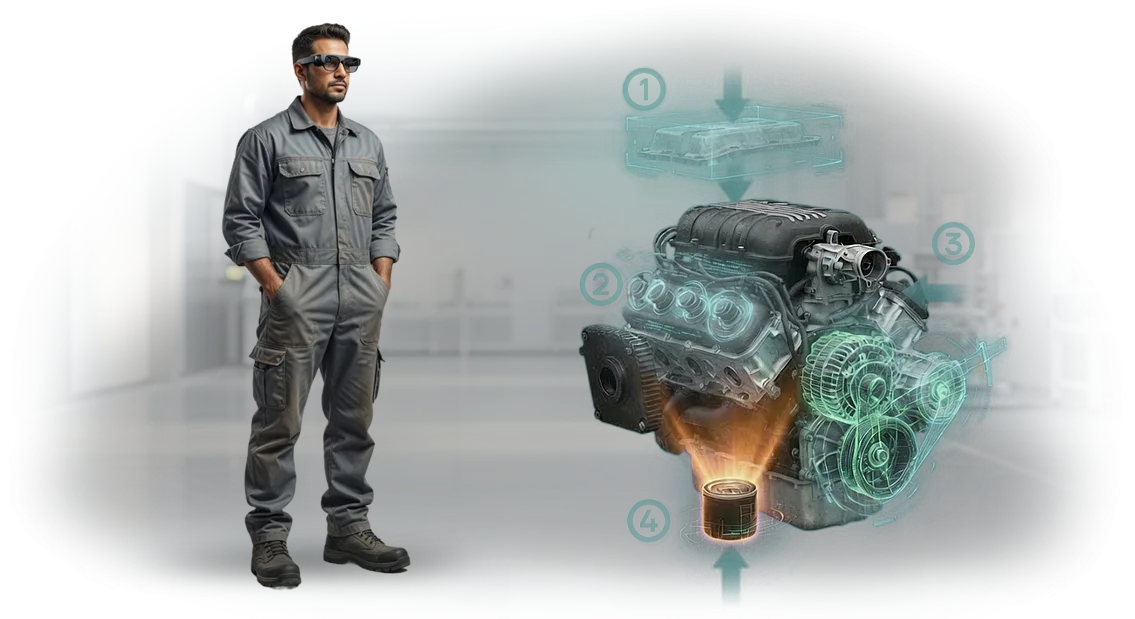
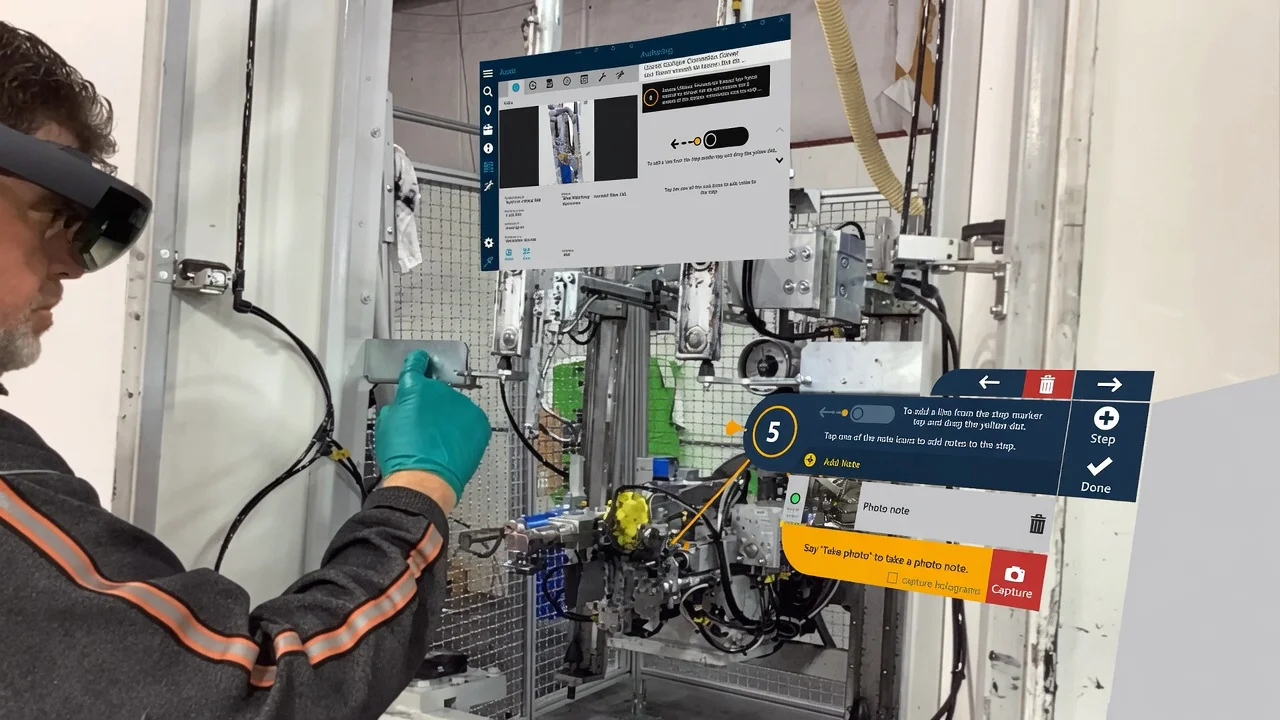
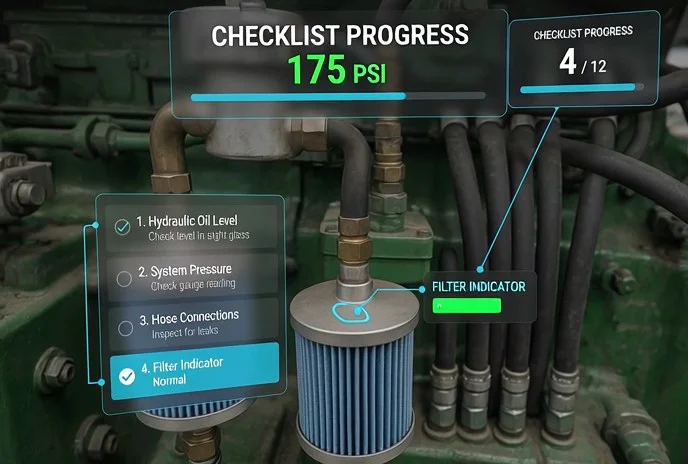
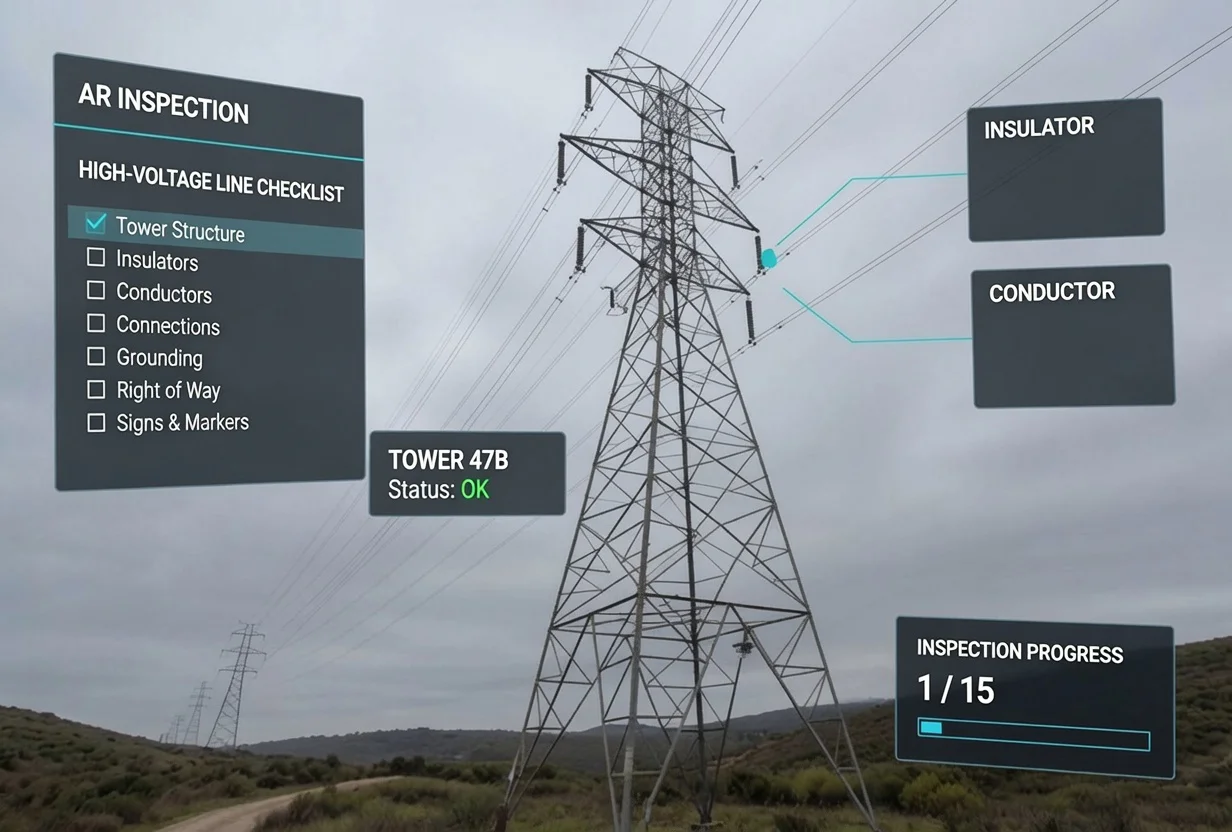
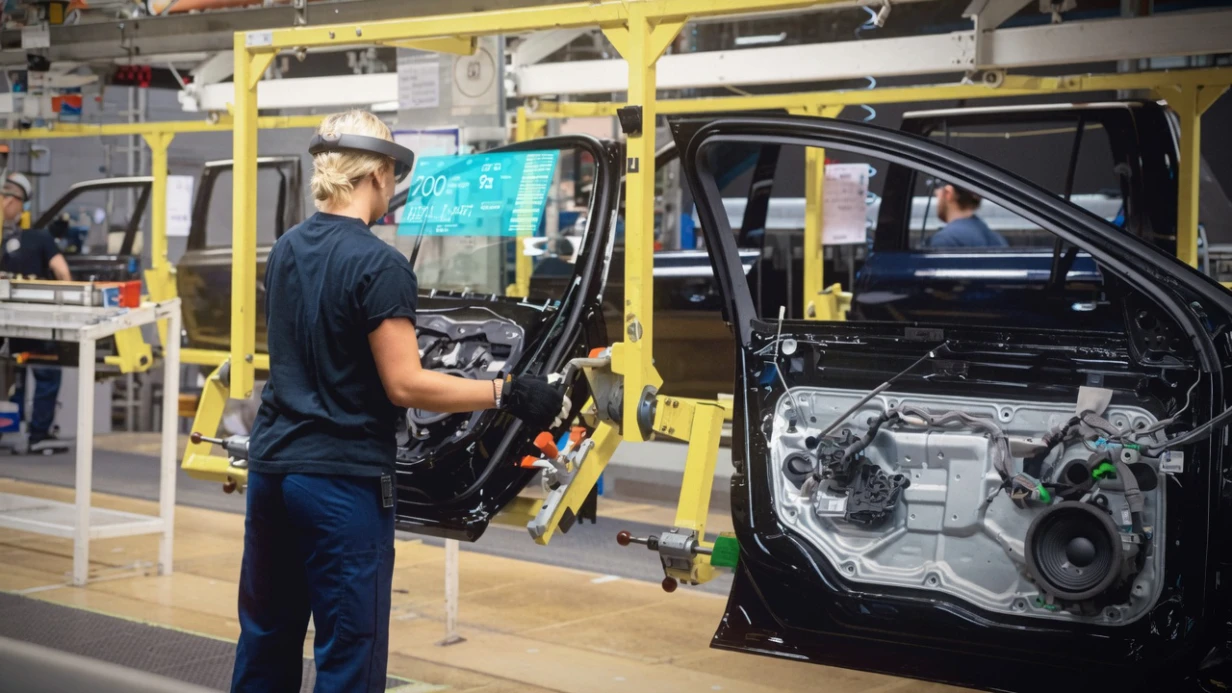
The solution — give the worker a prompt right in the equipment's field of view, not in a logbook or on a tablet. The system shows the next step, highlights the relevant component, and does not allow moving forward until the operation is performed correctly. This reduces dependence on the human factor and makes every process reproducible.
We close these losses with AR instructions tailored to chemical industry tasks. The employee gets step-by-step guidance; the supervisor gets control over actions and recorded results.
As a result, the client reduces human error, speeds up maintenance, and stops treating accident risk as unavoidable.
What You Get from Implementing AR Instructions
Implementing AR instructions takes equipment work to a new level: the employee sees prompts directly on the object instead of searching for the right section in a paper procedure.
Instead of multi-page documentation — step-by-step hints that appear in the field of view at the right moment. This reduces the time needed to master operations and lowers the workload on experienced mentors.
New employee training speeds up dramatically. A newcomer does not need to memorize the sequence of actions: the AR instruction guides them through each stage, highlights the relevant components, and warns about potential mistakes.
The result — a specialist starts independent work sooner, and the risk of incorrect actions at the start is minimized.
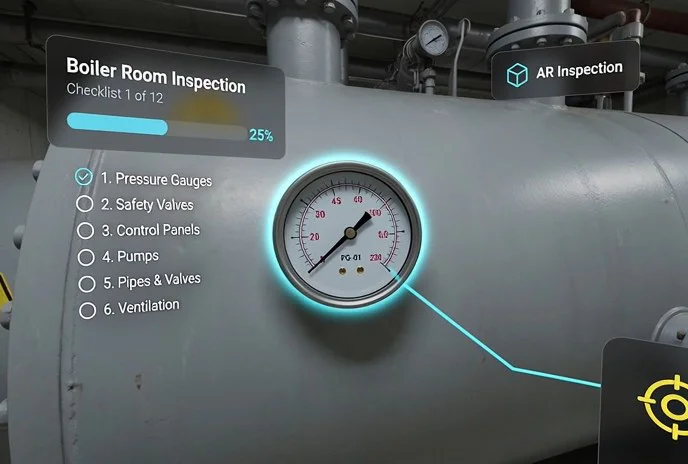
Worker safety is another advantage. AR instructions warn about hazardous zones in advance, require confirmation of key steps, and remind about PPE. This is especially important in chemical production, where the cost of a mistake is high.
The system does not allow skipping a critical stage — which reduces the number of incidents and related downtime.
Fewer errors directly impact efficiency. Personnel get distracted less often, redo work less often, and spend less time searching for information. Equipment is used more rationally, and product quality becomes more stable thanks to uniform task execution by all employees.
Ultimately, you get not just a digital instruction but a knowledge management tool: the expertise of the best specialists becomes available to everyone. This reduces dependence on "irreplaceable" employees, accelerates onboarding, and makes production more predictable. AR implementation is a step toward processes that are faster, safer, and cheaper to maintain.
AR Instruction Formats for the Chemical Industry
In chemical production, different tasks require different formats of AR assistance: one thing is training a new employee, another is giving a real-time hint to an operator on the line, and a third is showing the internal structure of a reactor without stopping it. Below are three core formats that we adapt to your procedures and specific equipment.
| AR Format | Suitable Tasks | What It Delivers to the Client |
|---|---|---|
| Interactive step-by-step instructions | Performing routine procedures, repair and maintenance of pumps, valves, heat exchangers | Eliminates skipped steps and "from-memory" errors, new employees act confidently from day one |
| Remote support with augmented reality | Expert assistance in abnormal situations, commissioning, on-site mentoring | Reduces downtime, the expert does not need to travel to the site — they see the same thing as the operator and place markers right in the frame immediately |
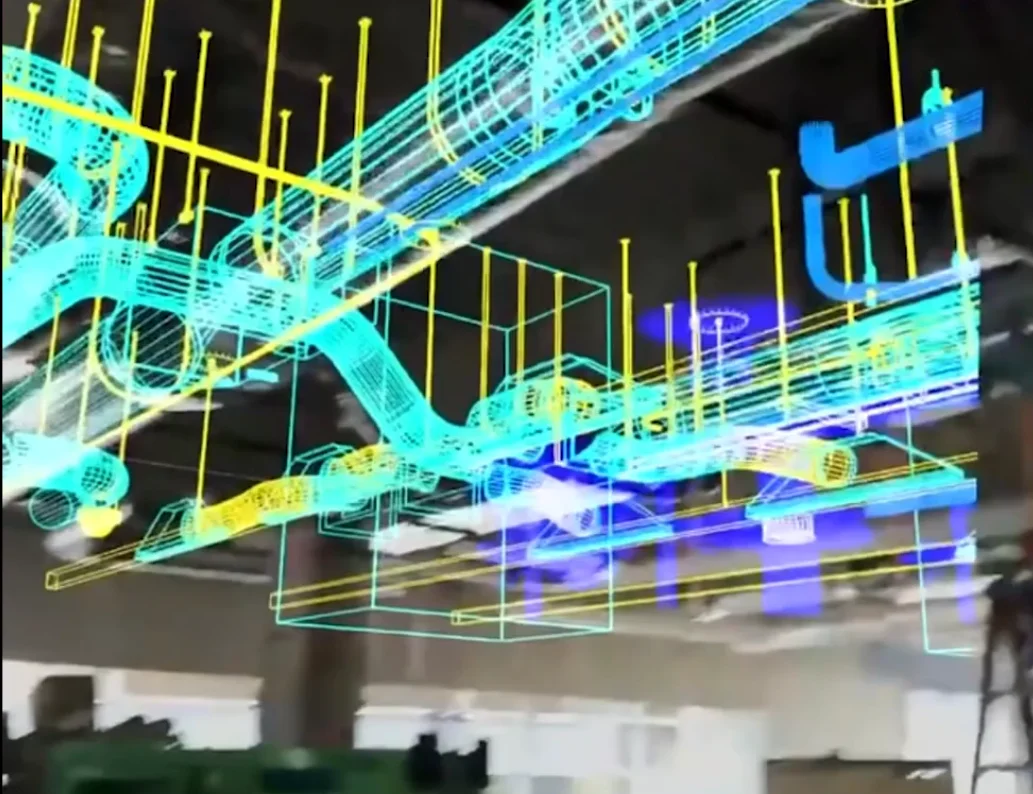
| Equipment visualization | Demonstrating internal component structure, kinematics, media flows before repair | Quick understanding of the design, lower risk of damage during disassembly, clear training without opening the equipment |
We do not lock ourselves into a single scenario: we select formats for your task and demonstrate at a pilot site which one delivers fast results.
All models and graphical data are loaded into the enterprise's secure perimeter, so design documentation and procedures never leave the facility.
At the same time, any format is easy to scale: start with one workshop — within a month you cover adjacent areas without reworking the system. Employees need to be trained only once, and every new scenario is added to the same devices without requiring equipment replacement.
How We Develop AR Instructions: From Task Definition to Launch
We work on a transparent model: at every stage you see the interim result and control the project progress. This is especially important for the chemical industry — an AR instruction must precisely match the procedures and real production conditions. Below are the stages we go through together with you.
-
Analysis of the task and usage scenarios. We study the equipment, working conditions, and typical human errors.
We determine which operations most often cause difficulties and where an AR instruction will deliver the greatest effect — this forms the basis for the technical specification.
-
Designing the instruction structure. We develop the logic of the step-by-step scenario: what the employee sees at each stage, how they receive prompts and warnings.
We coordinate with your technologists and occupational safety specialists to ensure the content matches internal procedures.
-
Creating AR content. We prepare texts, diagrams, 3D models, and visual prompts that overlay onto the real equipment. We make the materials clear to a worker without special training — with an emphasis on safety and speed of task execution.
-
Review and refinement. You receive interim versions of the instruction and make edits. We quickly implement changes, show updated versions, and finalize the release version. No "work for the drawer" — only what your production actually needs.
-
On-site testing. We test the instruction on real equipment: overlay accuracy, usability, and correctness of prompts. We involve your employees to capture feedback and resolve all issues before the official launch.
-
Deployment and training. We install the AR solution on the required devices, integrate it with your document management system, and train personnel to work with the instruction. We hand over the full set of materials and internal documentation for your maintenance department.
-
Post-launch support. We stay in touch: we update content when procedures change, add new operations, and scale the solution to other equipment. You get not a one-off development but a tool that lives together with production.
What's Included in the AR Instruction Delivery Package
When you order AR instructions for industrial equipment, it is important to receive not a "raw project" but a working solution that can be deployed immediately.
We structure the delivery package so your team has everything needed: from interactive scenarios to documentation you can rely on when formalizing processes.
The package includes:
- Interactive guides in multiple formats — for smartphones, tablets, and AR glasses. The employee chooses the device already available at the production site and does not waste time learning new hardware.
- Technical documentation: scenario logic, operator action procedures, and update procedures. It forms the basis of your internal standards and helps the safety department verify the processes.
- Training materials for personnel — short video instructions, cheat sheets, and presentations for initial onboarding. This helps you train new employees faster and reduce mentors' time.
- 3D models and animations of equipment components — they can be used for creating new instructions and for visual verification of correct task execution.
- Administrator guide: how to add scenarios, edit texts, and track statistics — which sections are viewed most often and where employees encounter difficulties.
- Project source files and modification rights. You are not tied to the contractor and can update the system in-house or with any other team.
This package covers the entire AR instruction implementation cycle: from the first launch to regular updates. You will not need to order anything extra or adapt anything — all materials are already packaged into a single delivery and ready for use at your production site.
Case Study: How We Reduced Operator Training Time at a Chemical Plant
A chemical plant is not the place to learn from mistakes. The management of one enterprise approached us with a task: reduce the onboarding time for new operators and lower the number of errors on the line.
Traditional training stretched over several months, and on-the-job training on real equipment created risks for both the newcomer and the production.
We developed a suite of AR instructions for the KhimResurs plant. These are step-by-step scenarios displayed right before the operator's eyes: the system highlights the relevant parts, shows the sequence of actions, and signals if a step is performed incorrectly.
A new employee does not need to memorize hundreds of pages of procedures in advance — AR guides them through the process, and the training department gets objective action statistics.
Results for the Plant
After implementation, the time to full competency was reduced by 40%, and the number of errors during work shifts dropped by half.
Operators became more confident within the first few weeks, and experienced employees use the prompts for rare operations — this significantly reduced the impact of the "human factor."
Business Value
The plant's management saw the effect quickly: the training department stopped being a bottleneck, and staffing plans were no longer held back by training timelines.
After the initial results, the client ordered an additional module for maintenance and plans to roll the solution out to other sites.
Frequently Asked Questions about Developing AR Instructions
Before deciding to implement AR instructions, clients tend to ask the same questions: compatibility with existing equipment, realistic timelines, and cost structure. We answer them directly — based on projects for chemical industry enterprises.
Will the AR instruction be compatible with our equipment?
We do not modify or upgrade your machines and lines. The instruction overlays onto the real object through a tablet or smartphone — factory markings or distinctive housing details are enough. For accuracy, we use professional software proven on dozens of industrial sites.
At the start, we run a pilot on one unit: you see how the system behaves in your workshops and only then decide on scaling.
What are the development timelines?
A typical project for one unit takes 2–4 weeks: from the site visit to the finished instruction. Complex installations with dozens of operations take up to 8 weeks. We fix a clear stage plan in the contract, so you always know when you will get the result.
How much does it cost and how is the price calculated?
The cost depends on the number of instruction steps, the complexity of the components, and the content format (animation, voice guidance, 3D model). After a short brief, we give you an exact figure — no hidden extras.
To assess the value, we offer a pilot project: you pay for one unit and decide for yourself how beneficial it is.
Do we need to buy special equipment?
No. Tablets or smartphones that your engineers already have — or that can be purchased within a few days — are sufficient. We do not tie you to expensive headsets: the AR instruction works on standard devices, which makes implementation fast and economical.
Is it difficult to train employees?
The interface is designed to be intuitive: step-by-step prompts on screen, arrows, and animation. A new employee gets the hang of it within one shift. We also provide short training for technical specialists and supply a cheat sheet for self-paced work.
Order AR Instruction Development for Your Enterprise
You are ordering not just a set of 3D models but a comprehensive project embedded into the logic of your production. We develop AR instructions for your specific units, procedures, and personnel skill levels — from brief to launch and ongoing support.
What you get after placing an order:
- A tailored project. Every instruction is created for your specific equipment, taking into account the specifics of chemical production and safety requirements.
- Adaptation to real operations. Scenarios mirror the sequence of actions of your employees, which reduces the risk of errors and accelerates training.
- Support at every stage. We stay in touch during implementation, help set up the process, and answer your team's questions.
- Guaranteed results. If the instruction does not solve your task — we refine it at no additional cost.
- Post-launch support. Content updates, adding new units, adjustments for changed procedures.
- Personnel training. We transfer the skills of working with AR instructions to your specialists so they can use the tool every day.
The bottom line: you get a working solution, not just files. Order AR instruction development for your enterprise — and your employees will start working with visual algorithms within just a few weeks.
What If You Have Specific Equipment Requirements?
Specific equipment requirements are not a limitation but a task we exist to solve. Off-the-shelf AR instructions rarely fit the chemical industry: you have unique units, special safety procedures, and internal standards that do not exist in public databases.
We do not force your production into a pre-made template. Instead, we adapt the system to your specific pieces of equipment, your terminology, and the operational sequence used on site.
We start with an audit: we study the procedures, drawings, and work scenarios, then translate them into step-by-step visual prompts. This way the employee sees not an abstract diagram but their own unit, their own pipeline, their own sequence of actions.
An individualized solution means we account for the skill level of your personnel and production conditions — noise, lighting, and the need to work in gloves.
We configure the interface for your scenarios: some places require control of every step, others need a free mode for experienced specialists. Procedure changes are made without stopping the process, by your own team.
As a result, you get a tool that fits precisely into your existing occupational safety instructions and technological maps.
Adapting to non-standard equipment does not delay the launch: we prepare the baseline version for one piece of equipment in a few weeks on average, then scale to the rest of the fleet.