

Downtime in Logistics: How AR Instructions Restore Timelines and Profit
Every minute of equipment downtime in logistics translates into missed shipments, idle staff, and lost contracts. Downtime never stands still: while the line is silent, salaries, rent, and contract penalties keep adding up. The longer the equipment sits idle, the more expensive each hour becomes.
It hurts especially when a newcomer is learning a complex assembly and no experienced employee is around. Searching for instructions or waiting for a mentor turns minutes into hours and eats away at profit. The operation itself takes fifteen minutes — it's the waiting that takes much longer.
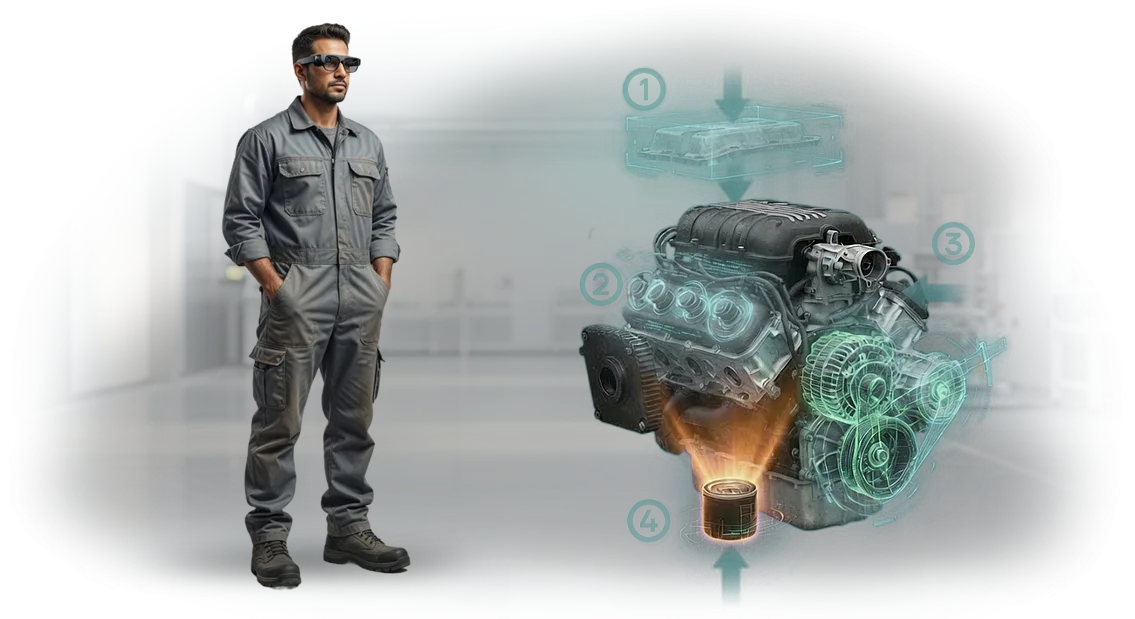
Traditional training and paper instructions can't keep up with the speed of processes. our team develops AR instructions for equipment that solve this problem: all the necessary information appears right in the operator's field of view.
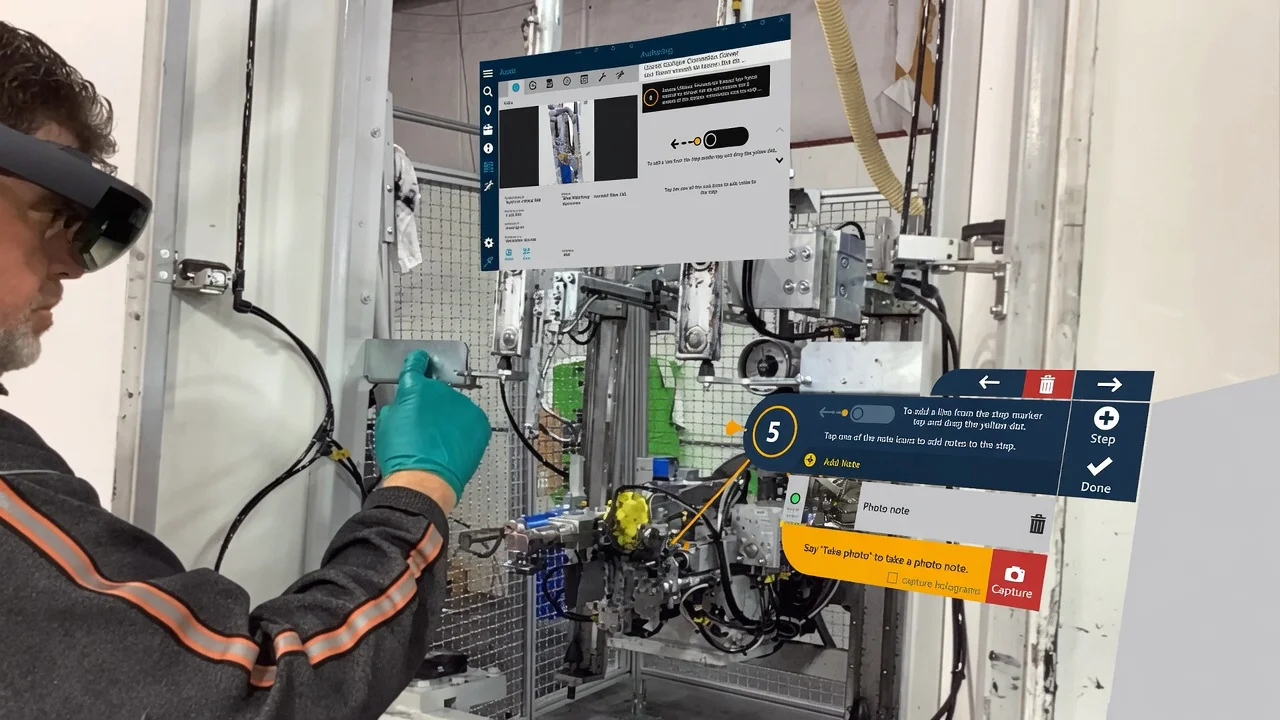
Let's illustrate with an example: instead of waiting two hours for an engineer, the operator launches the instruction and gets step-by-step guidance.
The reduction in downtime is visible from the very first shift: the line keeps running, the newcomer doesn't distract senior colleagues, and the supervisor sees the status of every operation.
New employees become operational in hours, not weeks. We have already helped logistics companies win back lost timelines and revenue. Calculate what an hour of downtime costs you — and you'll see how quickly the implementation pays for itself. Submit a request, and we'll show you how it works on your equipment.
What Implementing AR Instructions Brings to an Enterprise
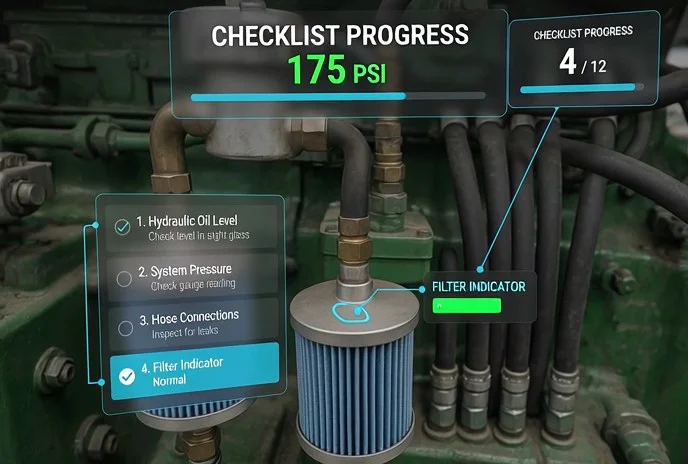
Implementing AR instructions addresses several enterprise challenges: training new hires, quality control, and process stability. Instead of thick manuals, employees get prompts right on the equipment. This is a tool that affects both the speed and the cost of work.
The main benefit is faster staff training. A new employee performs standard operations by day two or three, not after weeks. Equipment downtime during onboarding is reduced.
The second result is fewer errors. The operator sees the sequence of actions and warnings right on the unit. Defects and emergency stops decrease, especially in areas where a mistake is particularly expensive.
Visual instructions help experienced employees too: there's no need to keep rare operations in mind. A prompt shows the correct sequence of actions at any moment. That's confidence and speed.
A unified standard is another advantage. All shifts work from the same up-to-date version of the instruction. Procedure changes appear immediately, without discrepancies or paper-based delays.
Finally, the load on mentors is reduced. The AR instruction answers routine questions, while experienced staff handle only complex tasks. Newcomer onboarding accelerates without losing control.
AR Instruction Formats for Logistics and Manufacturing Tasks
In manufacturing and logistics, every minute of downtime costs money, and an employee error can result in delayed shipments or broken equipment.
AR instructions give staff the information right in their field of view — no need to flip through paper manuals or recall a training course. The key is choosing the right format for the specific operation.
| AR Format | For Whom | What It Delivers to the Client |
|---|---|---|
| Step-by-step voice prompts | New employees, warehouse operators | Fast on-the-job training, fewer errors during the first shifts |
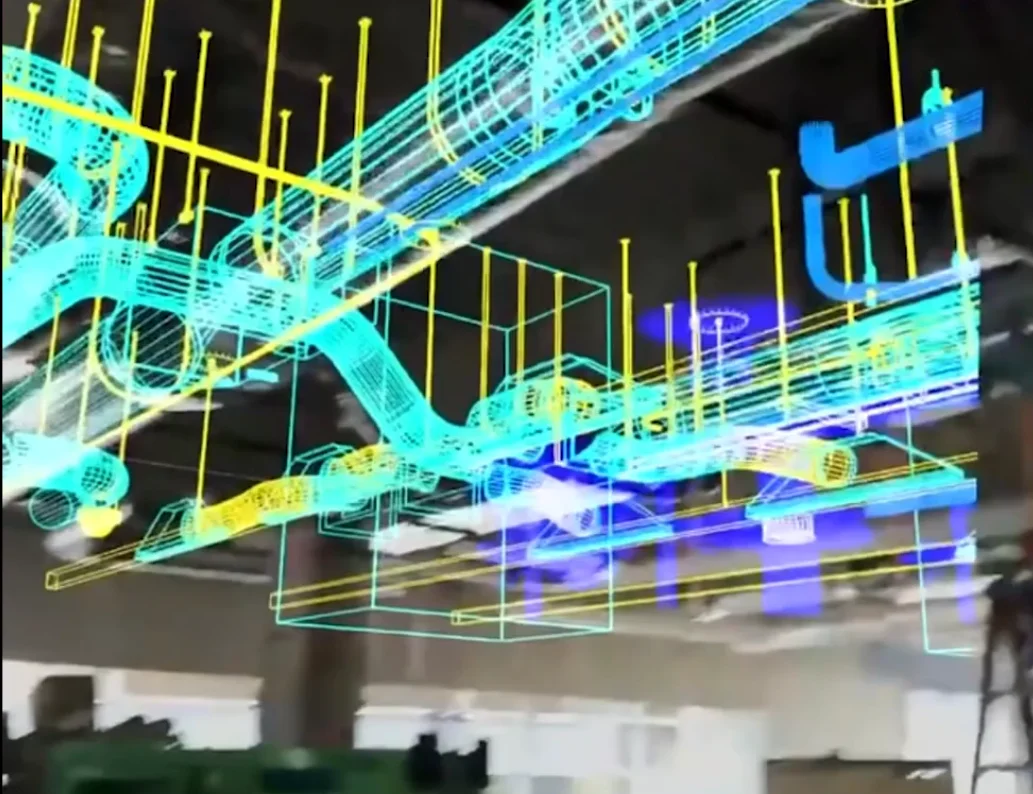
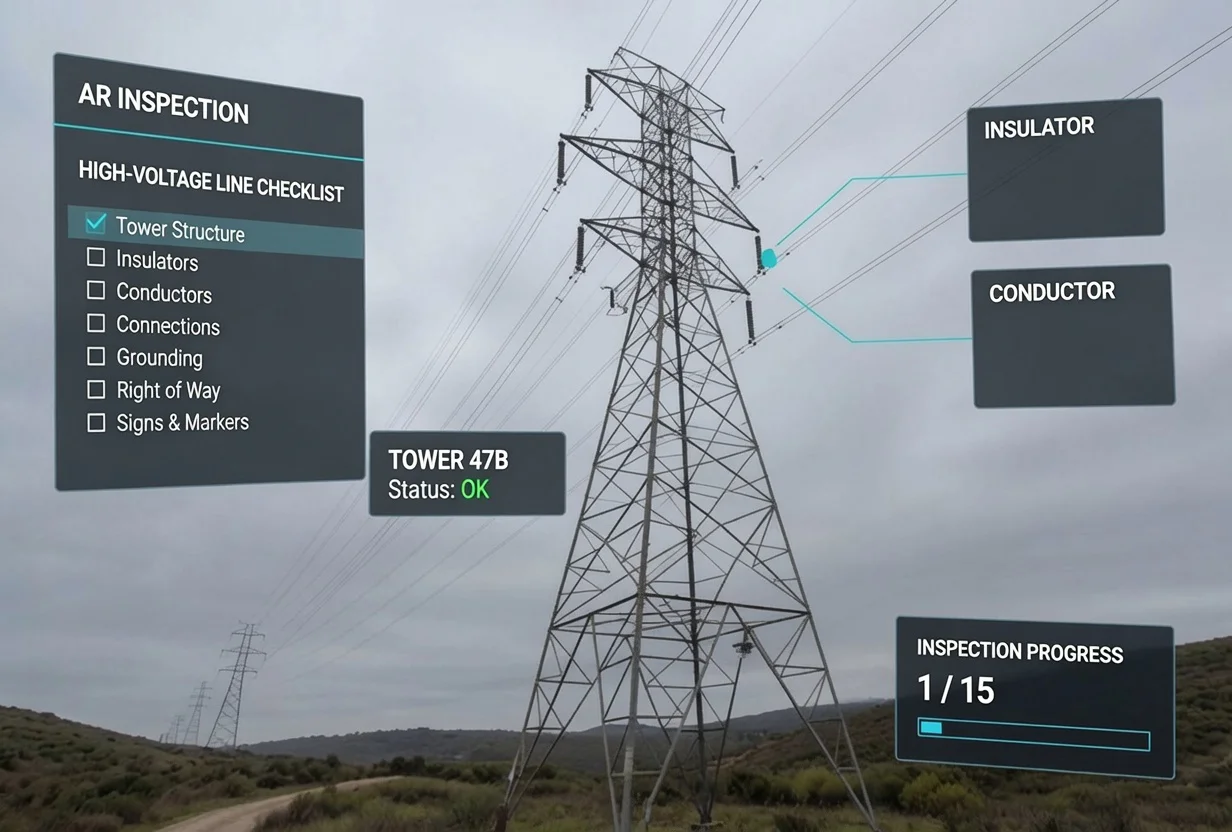
| Overlays on equipment | Maintenance teams, machine setters | Clear guidance on where to look and which part to replace — shorter repair time |
| Remote support | Remote sites, branch offices | Expert sees through the employee's eyes and guides in real time — no need to travel to the site |
| Operations control | Shift supervisors, senior warehouse staff | Confirmation that tasks were completed, adherence to the sequence of actions, process transparency |
Step-by-step voice prompts fit repetitive warehouse operations: order picking, receiving deliveries, cargo movement. Overlays on equipment fit repair and maintenance of machines, where it's important to point precisely at the right assembly.
A remote assistant is indispensable when there's no specialist on site, while operations control helps a supervisor see that the work was done to standard.
The choice of format depends on the task and the current maturity of your processes. We help determine which scenario will deliver quick results at your site and implement it without stopping production.
How an AR Instruction Development Project Unfolds in 5 Steps
AR instruction development shouldn't be a "black box" with unclear timelines and results. Our team has built a transparent five-step process — from brief to support. You see intermediate results, control the timeline, and know exactly what you'll get at the end.
-
Development brief. We discuss your objectives: what equipment your employees work with, where errors most often occur, and which operations need to be accelerated. Based on this, we lock in goals, scope, and a project plan — you see the time budget and the stages ahead.
-
Operations audit. We study real workflows at your site or from the materials you provide. We identify the most labor-intensive and failure-prone operations so the AR instructions address your actual pain points — not "instructions for the sake of instructions."
-
Scenario creation. We design step-by-step scenarios: what the employee sees on the screen, in what order they perform actions, and what prompts they receive. You see intermediate versions at this stage — we refine the content before resources are invested in the final delivery.
-
Project approval. We iterate: you make edits, we refine scenarios and visual prompts. The final version is approved by you — and only then do we move on to implementation.
-
Implementation and support. We configure AR instructions on employees' tablets and smartphones and train the staff. After launch, we stay in touch: we update content when procedures change, help with day-to-day operation, and adapt scenarios to new tasks.
This approach eliminates surprises at the final stage. You know in advance what the solution will look like and get a tool your employees will actually use.
What's Included in the Package: AR Instruction Kit for the Maintenance Department
The delivery package is more than just an app — it's a ready-made working tool for the maintenance department. You get everything needed to launch: from scenarios to employee training. Below is the full list of what's included and how each element works toward your result.
- Ready-made AR instruction scenarios — step-by-step guides for standard operations: repair, maintenance, inspection. The employee sees prompts right on the equipment, so there's no need to flip through paper manuals.
- Mobile AR application — installed on your team's tablets and smartphones. It runs on professional hardware and delivers a stable, smooth image even on the shop floor.
- Admin panel — your maintenance department manages scenarios on its own: activates new instructions, tracks how often they're used, and makes changes without involving programmers.
- Technical documentation — clear guides for administrators and users. No need to dig into the technology — open the description and set everything up in a day.
- Update rights — under the contract, you receive regular updates to scenarios and features. The system doesn't become obsolete — it evolves together with your production.
- Employee training — we run hands-on sessions for your team: operators learn to work with instructions, administrators learn to manage the panel. As a result, you don't study an "instruction for the instruction" — you use the tool in real work right away.
This isn't just a set of files — it's a working system. Employees master equipment faster, make fewer mistakes, and the administrator manages content independently without lengthy approvals. After launch, we stay in touch and help adapt scenarios to your real tasks.
Case Study: AR Instructions for a Network of Sorting Centers
In logistics, the staffing challenge is more acute than in other industries: high turnover, seasonal peaks, and the need to quickly train newcomers on conveyors, scanners, and sorting lines.
During peak periods, the load on the lines doubles, and every mistake leads to delays and extra costs for re-sorting. Traditional paper instructions and mentoring can't keep pace with growth and don't provide a unified quality standard.
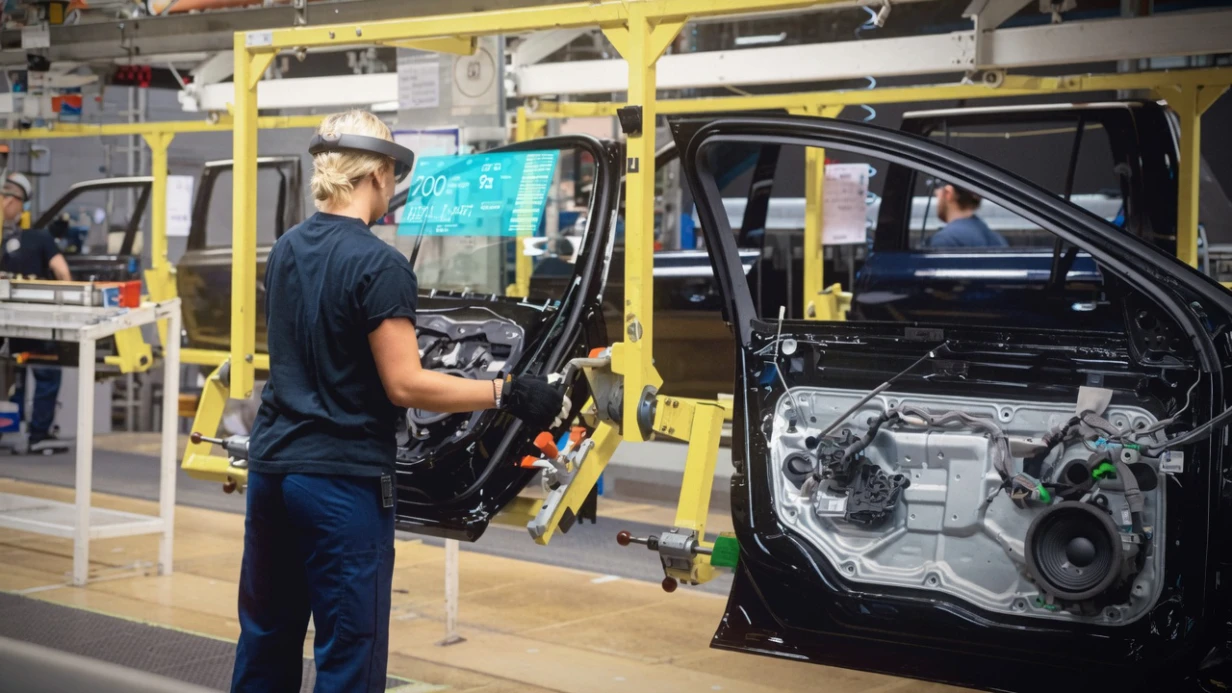
We implemented AR instructions for the Logistik-Pro network of sorting centers. Operators received step-by-step prompts right in their field of view: which zone to pick from, where to apply labeling, how to handle a non-standard shipment.
Employees no longer need to glance at a tablet or a cheat sheet — all information appears at the right moment on the screen of smart glasses or a mobile device.
Implementation Results
Over two months of operation, the training time for new operators decreased by 40%, and the number of sorting errors dropped by 25%.
These aren't just numbers — they mean less load on mentors and logistics staff, fewer mis-sorted items, and the ability to cover staffing needs faster during peak seasons.
Sorting quality leveled out across shifts, and supervisors gained a transparent view of which operations need refinement and which employees perform consistently.
The company is now scaling the solution to other branches. AR instructions have become part of the training standard and daily operations, making it possible to unify processes across the entire network.
If your sorting center faces similar challenges — we're ready to show how this works on your equipment and calculate the economic effect for your business.
How to Choose the Right AR Instruction Format for a Specific Task?
Choosing an AR instruction format starts not with technology but with an answer to a simple question: what business problem are you solving?
Training new employees, repairing equipment, or verifying that operations are performed correctly — each case calls for its own way of presenting information.
There's no universal solution, so the use case and audience are defined first, and only then are the interface and level of detail chosen.
If the task is to quickly teach staff how to work with unfamiliar equipment, the format should guide the user step by step. The AR instruction shows on the real object which part to take, where to press, and in what order to perform operations.
For training, what matters is clarity, the ability to repeat a step, and no need to memorize complex sequences. The selection criterion here is how often processes change and how many new employees need to be onboarded.
For repair and maintenance, the format is different: the employee already knows the basic structure and needs to quickly find the cause of a fault and get a specific sequence of actions.
An AR prompt can highlight the right component, show a disassembly diagram, or bring up a video example. The key criteria here are the speed of getting an answer and a lower probability of error during scheduled maintenance.
This format is especially useful for rare operations that can't be performed regularly to maintain skill.
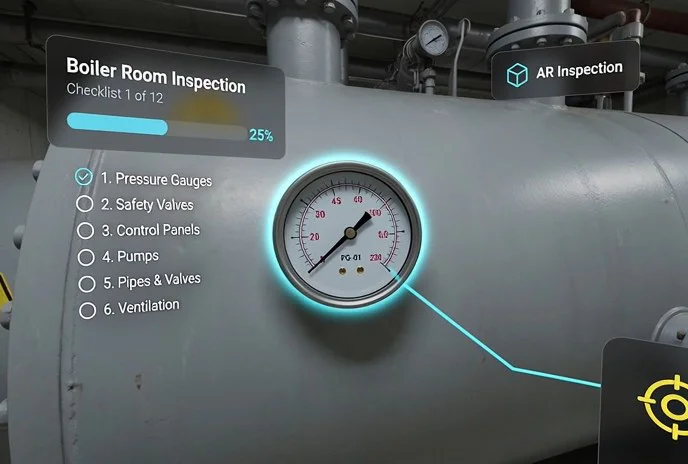
When it comes to quality control or safety compliance, the AR instruction becomes a verification tool: the employee performs a step, and the system records the action and provides feedback.
This makes it possible to collect data on typical mistakes and prevent them before they turn into defects or injuries. The selection criterion is the need for objective control and results analytics.
When choosing a format, we assess the AR tasks, the specifics of your equipment, the skill level of your staff, and the conditions at the workplace. Based on this, we propose a solution that fits into existing processes and doesn't require retraining personnel.
In the end, you get not "technology for technology's sake" but a tool that reduces training time, lowers error rates, and improves safety — precisely for your task.
Common Concerns: Reliability, Timelines, and Costs — Our Answers
Before implementing AR instructions, logistics managers tend to ask the same questions: will the hardware fail in the middle of a shift, how long will setup take, and when will the first results appear? We answer honestly — based on our experience with projects for warehouses and distribution centers.
What happens if the equipment fails?
AR instructions run on the same fleet of tablets and headsets already used at your site — and we choose industrial-grade models with dust and moisture protection to match the client's needs.
All data is synced with the server, so if one device fails, the employee simply restarts it and continues from the same step. In addition, we provide a backup set for the shift and support during the launch period.
How quickly can we implement it, and will warehouse operations be stopped?
Integration happens without stopping operations: first, we run a pilot on one line or area, in parallel with the main work.
Preparing AR instructions for a specific machine typically takes two to four weeks — including filming, step tagging, and alignment with your process engineers.
Implementation doesn't require restructuring processes: the employee sees prompts on the screen instead of on a paper card.
When will we feel the economic impact?
The first improvements are visible in the pilot already: less time spent searching for information, fewer errors in assembly or shipping, and faster progress for newcomers toward independent work.
Payback is calculated against your metrics — number of shifts, average employee salary, cost of defects. In typical logistics projects, costs are recovered through reduced downtime and faster training within one or two quarters.
Get an AR Instruction Prototype for Your Equipment in 10 Days
To order AR instructions, you don't need to roll out the system across all workshops right away. We suggest starting with a prototype in 10 days — you'll see how augmented reality works on your specific equipment and make a decision based on facts, not on a presentation.
After your inquiry, you receive a clear, step-by-step result:
- Equipment and task audit — we analyze where AR instructions will deliver the maximum effect and reduce training time.
- Scenario for the future instruction — we describe a step-by-step algorithm for the operator: startup, operating modes, typical faults.
- Technical specification — we document requirements for content, interface, and conditions at your production site.
- Prototype test at your site — your employees try AR on real equipment, not in a demo video.
- Usage procedure — you get a description of how operators will use AR in daily work.
- Implementation plan — you understand what resources are needed for industrial rollout and how to embed AR into current processes.
- Commercial proposal — a transparent estimate for the pilot project and subsequent scaling.
You receive all of this within 10 days — without lengthy approvals or abstract reports. Submit a request, and we'll show you how an AR instruction works at your facility.