

AR Instructions for Refrigeration Equipment Manufacturing
Manufacturing refrigeration equipment involves dozens of operations that must be performed in strict sequence: from brazing circuits to configuring automation.
Even experienced personnel sometimes confuse the order of actions or skip important steps, while a newcomer has to reread paper instructions many times over. The result is errors, defects, and line downtime that costs more than any training expense.
Every hour of downtime caused by an incorrectly performed operation results in missed deadlines and lost orders.
At the same time, classic paper or PDF instructions solve the problem only partially: the employee must independently match the diagram to the actual unit, spend time finding the right section, and still risks misinterpreting the drawing. The more complex the equipment, the higher the price of such uncertainty.
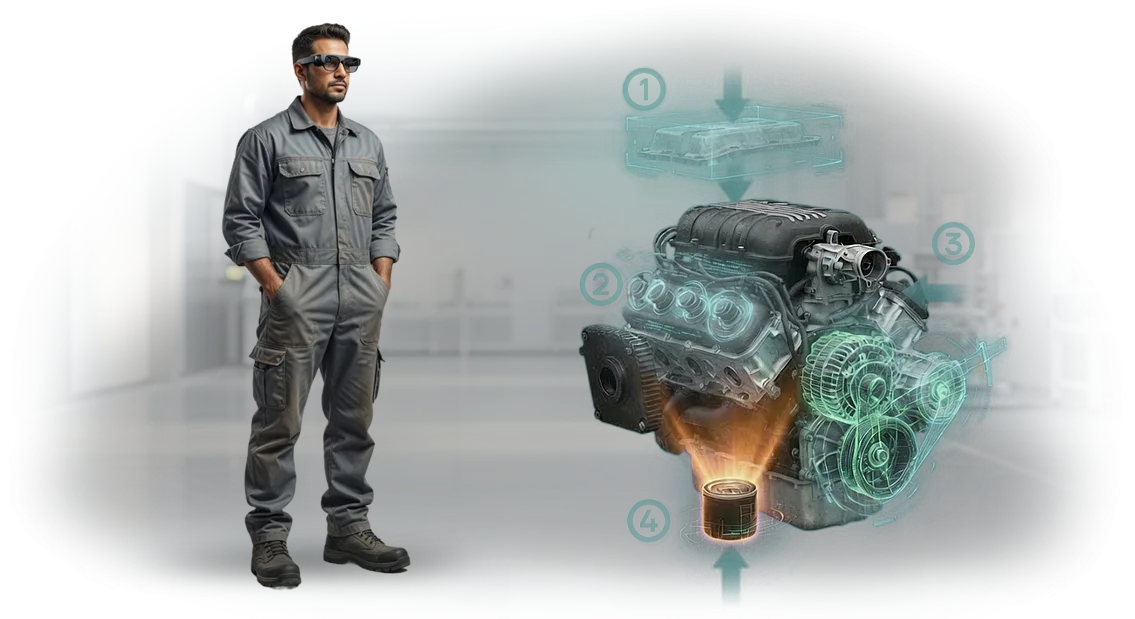
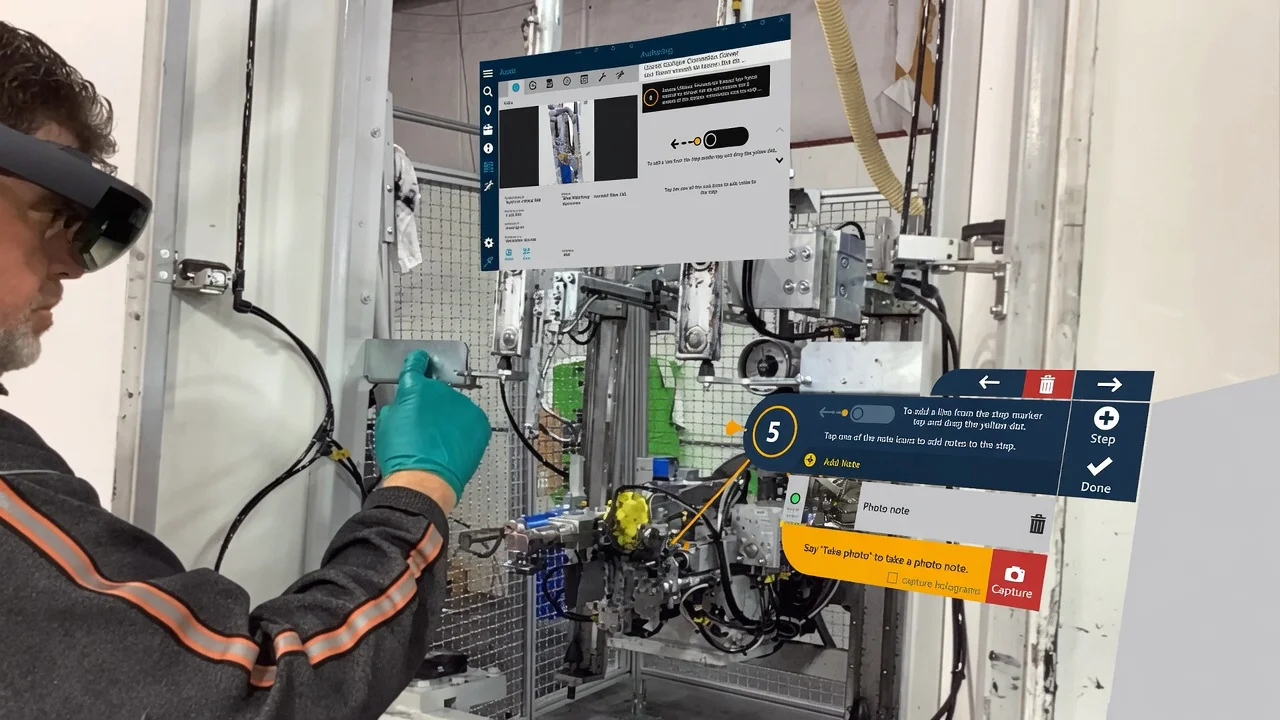
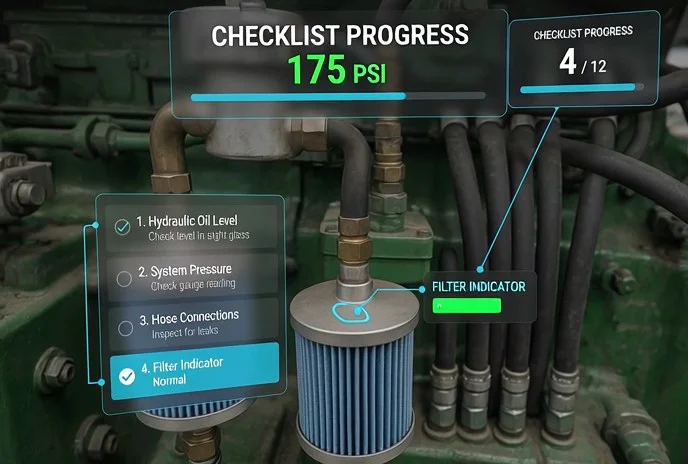
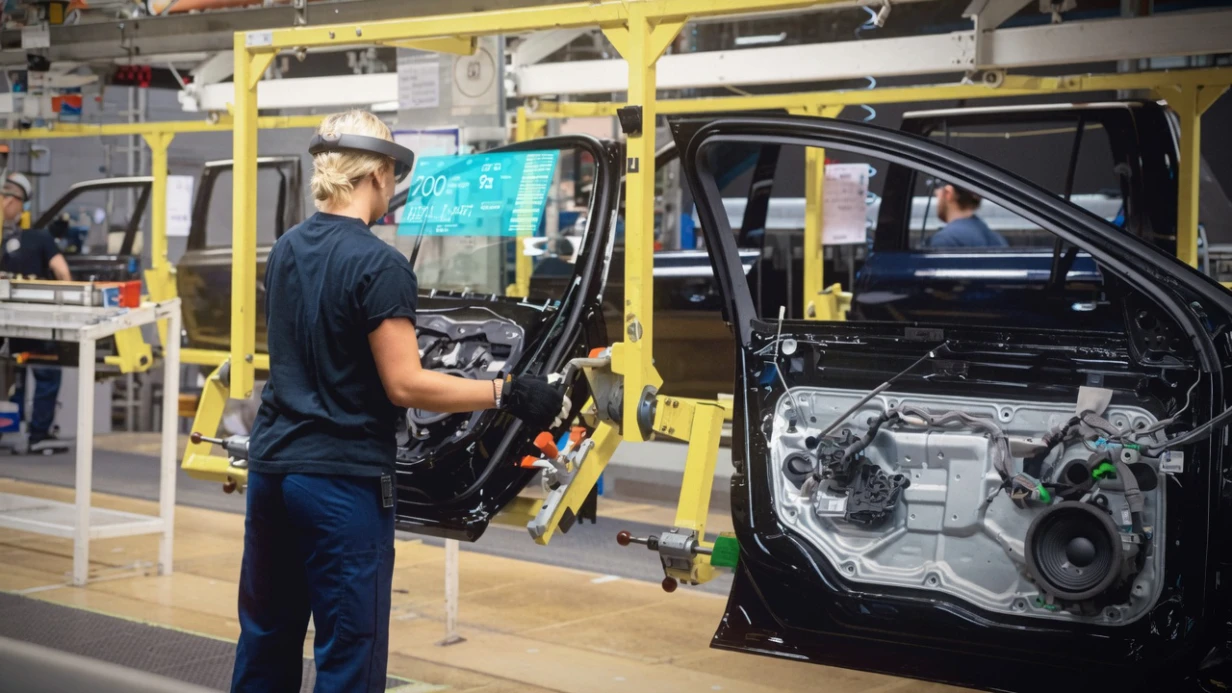
AR instructions change the very principle of work: prompts appear directly on the equipment, in the employee’s field of view.
The operator sees where to install a part, what tightening torque to apply, and in what order to perform checks—without shifting attention to documents and without room for error.
The time to train a new specialist is reduced, the number of errors drops significantly, and the line keeps running without downtime.
This is not magic, but a well-honed technology that we adapt to your production processes. We develop AR instructions for assembly, maintenance, and repair of refrigeration equipment—taking into account your regulations and real operations.
Staff get a simple and visual tool, and you get consistent quality and a predictable result without downtime or defects.
What Benefits Does an Enterprise Get from AR Instructions
Maintenance of refrigeration equipment requires high qualifications: every pump, compressor, and controller has its own specifics. Experienced engineers are expensive, and training newcomers takes weeks. Repair errors lead to downtime and spoiled product batches.
Augmented reality transfers knowledge directly into the work area. Instead of thick manuals, the technician sees prompts on the equipment—just like in the AR-Instructor system for refrigeration equipment manufacturers. Here is what this gives an enterprise:
- Repair speed. A specialist locates a unit and understands the sequence of actions in seconds, rather than spending minutes searching through documentation. Line downtime is reduced, and the service request is closed faster.
- Fewer errors. Step-by-step control does not allow skipping an operation—for example, pressure release or leak testing. Fewer repeat visits and less scrap.
- On-the-job training. A newcomer performs real tasks with augmented reality support from day one. Reaching full productivity happens much faster than with traditional internships.
- Savings on instructors. Part of the expert’s knowledge is transferred into digital instructions, and one mentor can support several teams simultaneously.
- Quality standardization. All employees follow a single algorithm rather than working from memory. The result does not depend on the experience of a specific technician.
- Analytics and control. Management sees which units are repaired most often and can plan preventive maintenance or spare parts procurement.
The implementation of AR instructions pays off within a few months through reduced downtime and training costs. And when the equipment model changes, it is enough to update the digital instruction—and all staff already know how to work with the new product.
AR Instruction Formats for Refrigeration Equipment
Refrigeration equipment manufacturing combines scheduled maintenance, emergency failures, and newcomer training. These tasks have different rhythms: inspection requires attention, emergencies require speed, and training requires clear steps. A universal instruction does not cover all scenarios equally well.
At our team, the augmented reality format is selected according to the task. The engineer sees prompts directly on the unit components, without paper diagrams. The required action appears in the field of view and leads to the result.
| AR Format | Target Audience | What It Gives the Client |
|---|---|---|
| Scheduled maintenance | Service engineers | Control of every operation, fewer missed checkpoints |
| Emergency repair | Duty specialists | Instant diagnostics and a step-by-step action plan |
| Newcomer training | New employees | Visual prompts, faster transition to independent work |
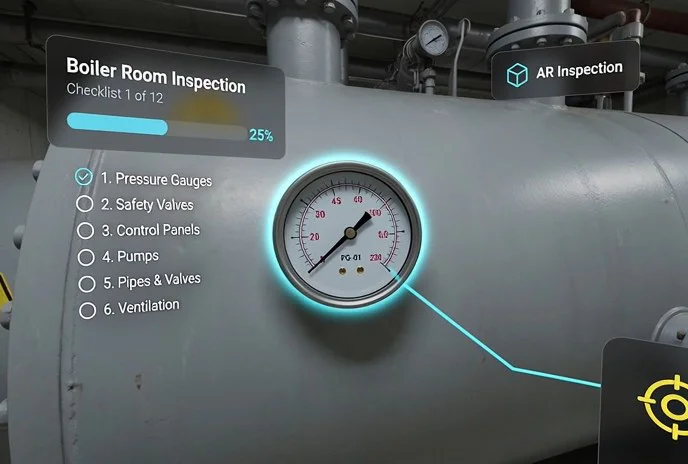
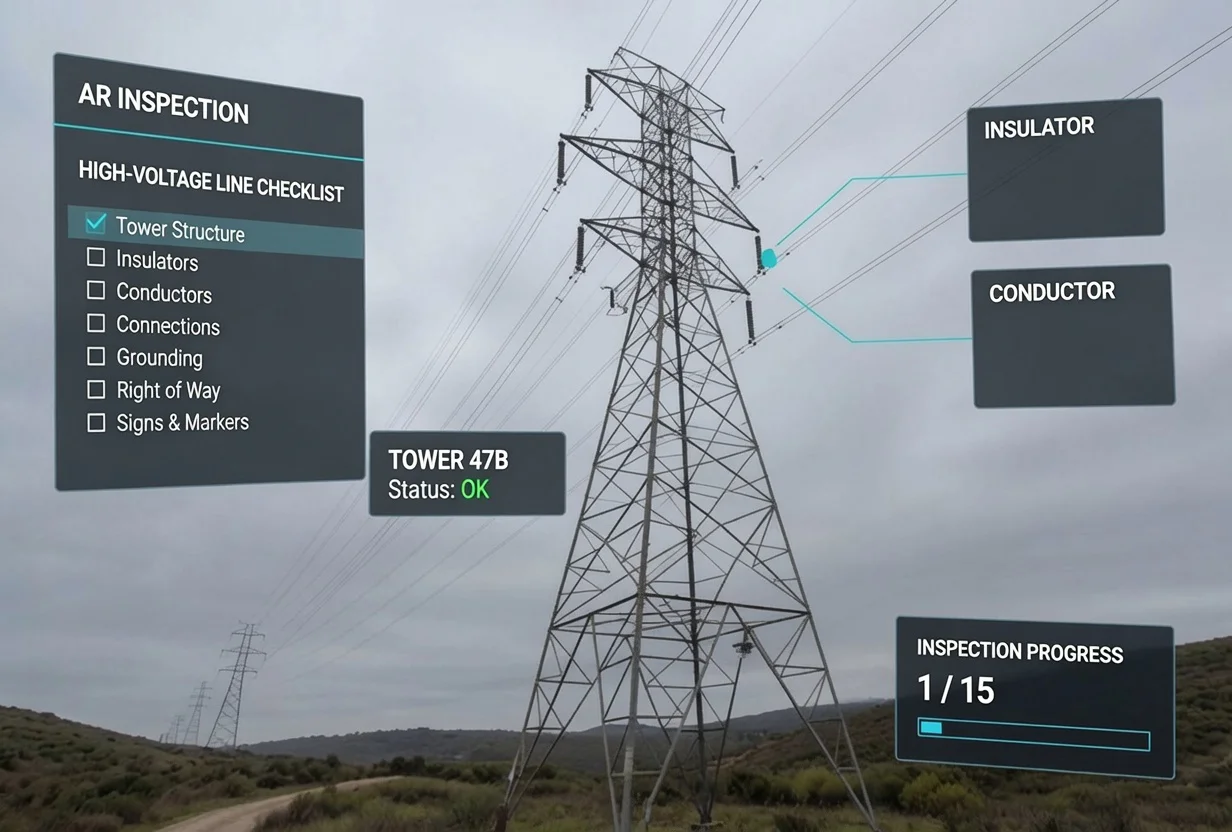
For scheduled maintenance, augmented reality becomes a checklist overlaid on the equipment: the engineer checks the unit and immediately sees the next step. This reduces the number of errors and improves service quality.
For emergency repair, speed is critical. The specialist points the camera at the unit and receives the nearest actions: where to shut off the circuit, what to check first, and how to safely remove the component. Downtime is reduced.
The training format helps a newcomer perform operations on a real object with visual prompts and reach the required performance standard faster. Mentors spend less time on onboarding.
Tell us about your scenarios—we will select the formats and demonstrate them on your equipment.
How AR Instruction Implementation Proceeds On Site
Implementing AR instructions is not a one-time delivery but a phased project that integrates into your production process.
We support you from the first brief to regular maintenance: employees quickly master the system, and downtime and errors in refrigeration equipment production are reduced within the first weeks.
-
Brief and goal setting. Together with your team, we identify which operations in refrigeration equipment production cause the most losses: lengthy newcomer training, frequent assembly errors, or diagnostic complexity. We record the goals and success criteria.
-
Site and process audit. We study the regulations, working conditions in the areas, and how personnel interact with the equipment. Based on this, we select AR instruction scenarios that will deliver a quick effect—rather than choosing something “trendy but useless.”
-
Development of AR instructions. We create step-by-step scenarios for assembly, setup, and maintenance of your models.
The instructions show the employee exactly what to do: from the fastener tightening sequence to checking the pressure in the circuit—all the key steps that previously had to be kept in mind.
-
Review and refinement. We demonstrate a prototype on your equipment. Technologists, supervisors, and the operators themselves make adjustments—so that the instruction takes into account the specifics of your particular site and the real daily routine.
-
Installation and setup. We deploy the system on employee tablets. If necessary, we integrate it with your instruction database and accounting system—updates will not require production stoppage.
-
Personnel training. We conduct practical sessions for operators and administrators. The former are working with the AR instruction within a day, and the latter are able to make changes and add new components without involving developers.
-
Post-launch support. We stay in touch: we update instructions when the model range changes, monitor stability, and help scale the solution to new areas.
At each stage, you see intermediate results and understand what you are getting for your money. AR instruction implementation does not become a “black box”—we work so that your team eventually owns the tool and can develop it independently.
What Is Included in the AR Solution Delivery
When you order AR instructions for refrigeration equipment production, you receive not just files—but a complete system that can be implemented from day one.
Everything needed for operation is already included in the package: you will not have to purchase additional equipment, hire contractors, or deal with technical details.
Here is what is included in the delivery:
- Custom AR instructions—adapted to your refrigeration equipment models. The employee sees step-by-step prompts directly on a smartphone or tablet screen, which reduces training time and lowers the number of errors.
- Implementation documentation—simple procedures for connecting the solution, updating content, and training staff. You do not need a technical specialist on the team.
- Personnel training materials—short courses and reference guides for line employees, supervisors, and engineers. They help quickly master AR instructions without interrupting production.
- Usage license—official rights to use the solution and content at your enterprises. No hidden fees or restrictions on the number of users within the contract.
- Technical support—a dedicated communication channel with our team. We help with questions, updates, and refinements throughout the entire usage period.
- Content updates—adjustments to instructions when models or regulations change. You always work with current data.
This package covers all questions—from procurement to daily use. You get a predictable result and a clear process, and your employees get a tool that truly simplifies their work.
Real Example: Faster Repair at a Factory
How We Accelerated Repair at a Factory
A large refrigeration equipment manufacturer, PromKholod, faced a typical industry problem: compressor repair required experienced engineers and took up to two days. Every hour of downtime was expensive, and training new specialists stretched over weeks. The solution was an AR instruction that we developed specifically for this factory.
A technologist puts on a tablet—and sees step-by-step prompts overlaid directly on the equipment. AR shows the order in which to unscrew components, where hidden fasteners are located, and what to pay attention to when replacing parts.
No paper manuals and no memory searching: everything needed appears in the field of view at the right moment.
Results
Compressor repair became 40% faster, and training for new employees shrank from two weeks to a couple of hours. Even engineers with minimal experience handle tasks that were previously entrusted only to senior specialists.
| Metric | Without AR Instruction | With AR Instruction |
|---|---|---|
| Average compressor repair time | 2 days | 1.2 days |
| New employee training | 14 days | 2 hours |
| Assembly errors | 5–6 per operation | 1–2 |
The factory reduced equipment downtime and training costs, and the service department stopped depending on a few key experts. After the first months of operation, the client approached us again—now we are adapting AR instructions for other production lines. This confirms that the technology delivers measurable results that are easy to scale.
Frequently Asked Questions About AR Instructions
Before implementing AR instructions in refrigeration equipment production, clients ask the same questions: will the technology work with existing lines, how much time is needed for training, will implementation be expensive, and is it safe for employees.
Let’s address the main concerns—so you can see in advance what tasks AR covers and how the process works in practice.
Is AR compatible with our equipment, which was manufactured a long time ago?
Yes. We develop instructions for specific models and components—from new lines to installations that have been operating for years. There is no need to modify the equipment or stop production for a long period. We place AR prompts directly on real objects, so the instruction reflects your exact configuration.
Is it difficult for employees to learn AR instructions?
No. The worker simply points a tablet or smartphone at a part and sees a step-by-step prompt: what to unscrew, where to press, where to get the next component. Basic training takes one or two days, and if necessary, we conduct instruction sessions right on site. As a result, a new employee begins working with fewer errors already in the first weeks.
How much does development cost and when will results appear?
The cost depends on the number of instructions, the complexity of operations, and the presentation format. We prepare a commercial proposal after a free analysis of your task—this usually takes a few days.
We create the first test instruction quickly so that you can evaluate the effect before the full project launch.
Is it safe to use AR in production?
Safety is built in at the design stage: prompts do not block the view, do not require holding the device constantly, and do not distract from monitoring hazardous areas.
The instructions are reviewed with the participation of your technologists and occupational safety specialists. If necessary, we add risk warnings directly into the scenario—before the operation begins.
If you still have questions about a specific area or type of equipment for refrigeration equipment production, send a description of the task—we will advise which AR instruction format is suitable and what results can be expected.
Order AR Instructions for Your Enterprise
AR instructions for refrigeration equipment reduce employee training time and lower the number of maintenance errors. This means less downtime and faster onboarding for new specialists.
But ordering such a solution is usually difficult: it is unclear where to start and what it will cost. We have made the process transparent—here is what you get after contacting us:
- Free analysis of your task: we assess where AR will bring real value and pay off.
- Time and cost estimate within 2 working days—no hidden fees or surcharges.
- A demo version of the future instruction on your sample or drawing—you see the product before final payment.
- A phased schedule with fixed dates—you see progress and control deadlines.
- Adaptation to the specific models of your refrigeration equipment.
- A complete system that works on a smartphone or tablet—no need to buy expensive hardware.
- Training for your team and technical support after launch.
We manage the project from goal setting to implementation. You communicate with one manager, and we show intermediate versions at every stage—you can make changes without being a technical expert.
Leave a request on the website or simply call us—within one business day we will contact you to discuss your task and offer a solution suited to your budget. We have been working remotely for more than 10 years, so we accept orders from any region.
How to Choose the Right AR Instruction Format for Your Task?
There is no universal AR solution for refrigeration equipment production—the format selection depends on four criteria: the type of equipment, staff skill level, frequency of operations, and budget.
The main principle is simple: the more complex and less frequent the operation, the more step-by-step and detailed the instruction should be.
Equipment type determines the depth of prompts. For serial equipment, short prompts on key components are enough; for unique lines, detailed development of each step is required.
Operation frequency also matters: for daily actions, employees quickly memorize the order, while for rare actions, they return to the instruction every time.
Staff skill level is the second important criterion. Beginners need visual prompts at every step, while experienced technicians only need targeted reminders in complex areas.
Proper format selection allows you not to waste the time of those who already know the process while simultaneously accelerating the training of new employees.
Budget determines the scale of implementation—from a limited pilot project in one area to a full library of instructions for all lines.
At the same time, a well-chosen format pays off not by saving on development, but by reducing errors and increasing repair and maintenance speed.
During our consultation, we select a format for your tasks: we analyze operations, team level, and frequency, then propose an option that delivers quick results without overpaying for unnecessary functionality. our team will support you from format selection through implementation and impact assessment.