

Glass Production Challenges: Downtime, Errors, Expensive Training
Glass production tolerates no downtime. Even a one-hour line stop means a lost batch, delayed shipments, and stressed process engineers.
But most often, time is lost not on the fault itself but on finding its cause: while the operator flips through a paper manual, while the senior foreman recalls a similar case, the furnace is already cooling.
The cost of the human factor is especially high here. An incorrect sequence of actions during mold changeover or burner adjustment leads to defective glass and, in the worst case, equipment damage.
Each such incident is a direct loss: remelting, product write-offs, and unscheduled repairs. The more complex the line, the more expensive an operator error becomes.
A particular pain point is training new employees. Experienced foremen retire, and passing on their knowledge through words and paper diagrams is nearly impossible.
An operator trains for months, and throughout that period they work more slowly and with a higher risk of making mistakes. The company pays twice: for the training itself and for losses caused by an inexperienced newcomer at the hot line.
Paper instructions on a glass plant floor work poorly also because they are static, while the process is alive. Equipment is modernized, procedures change, but updating piles of documents is a separate task that is usually postponed.
In the end, the operator must rely on memory and colleagues' hints, which brings us back to the risk of human error.
We see this cycle of losses at most glass manufacturers. That is why we are building a remote assistant system that overlays guidance directly onto equipment: the employee sees where to press and what to check, without paper and guesswork.
What an AR Instruction Gives Your Production
In glass production, every minute of downtime and every defective batch is costly.
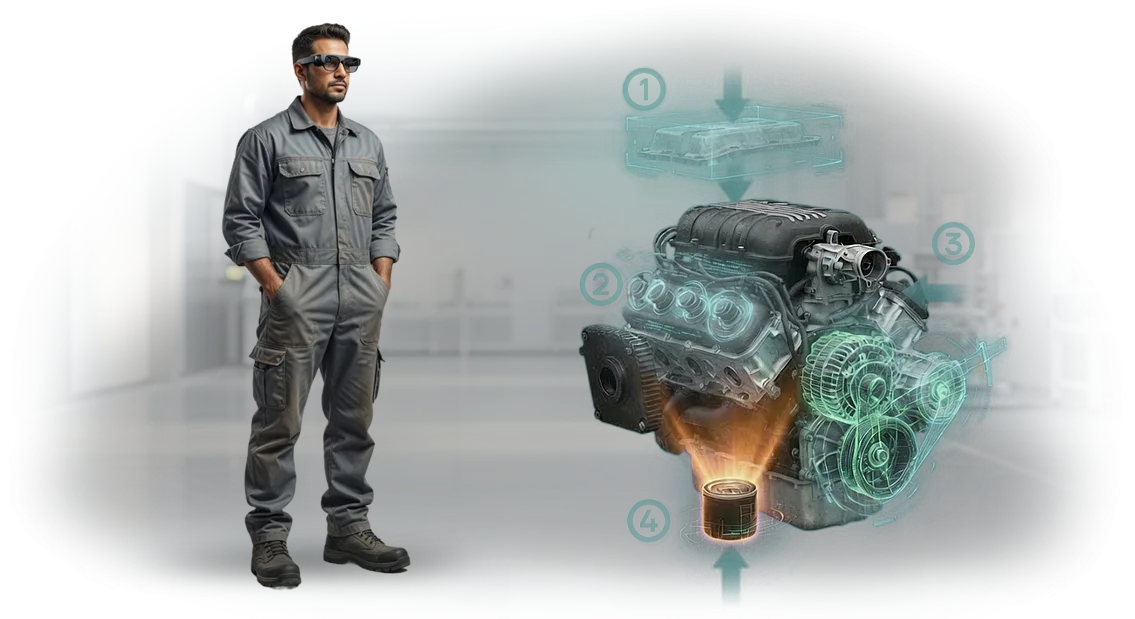
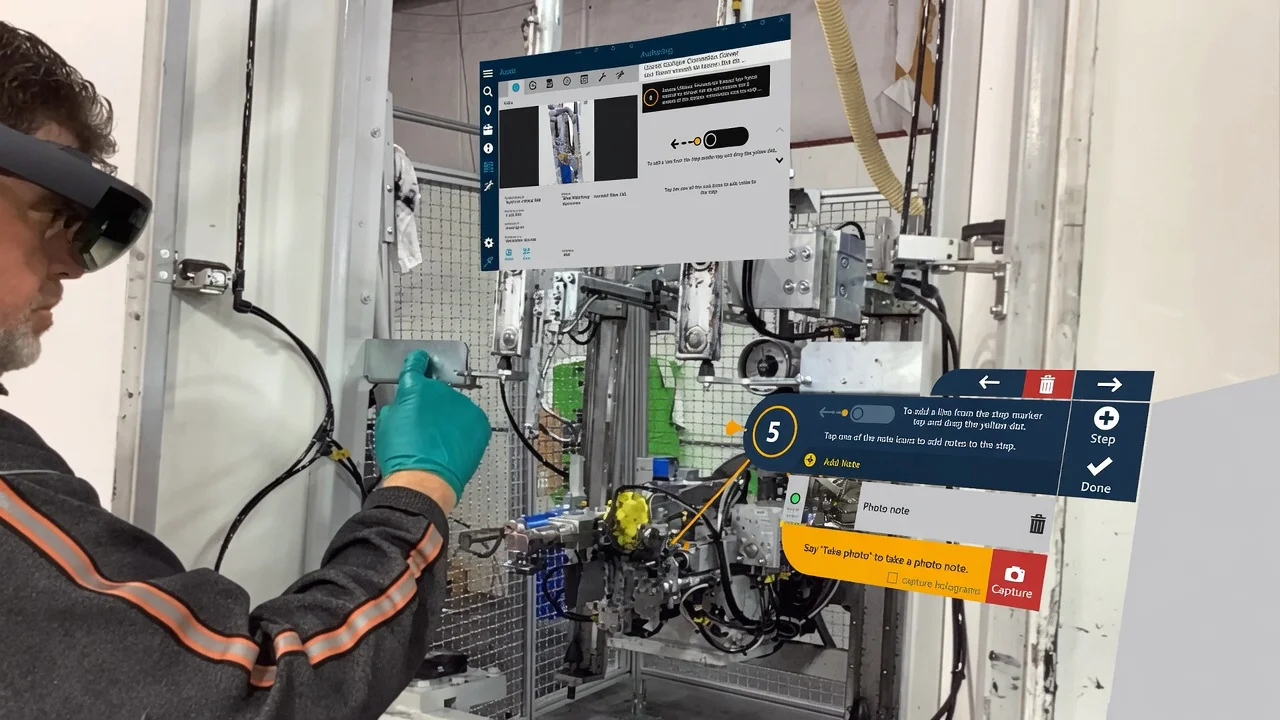
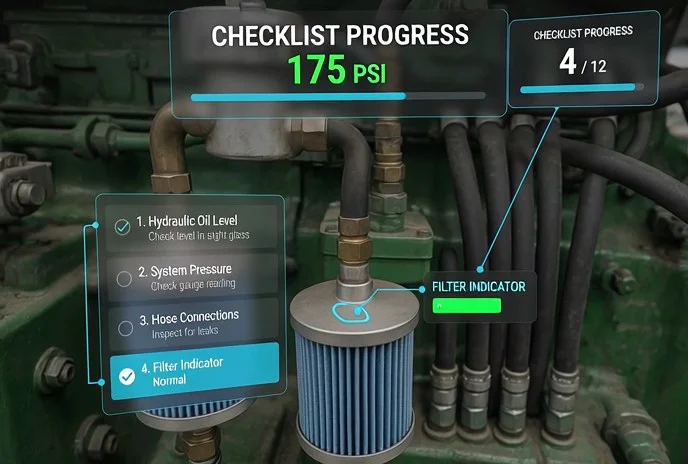
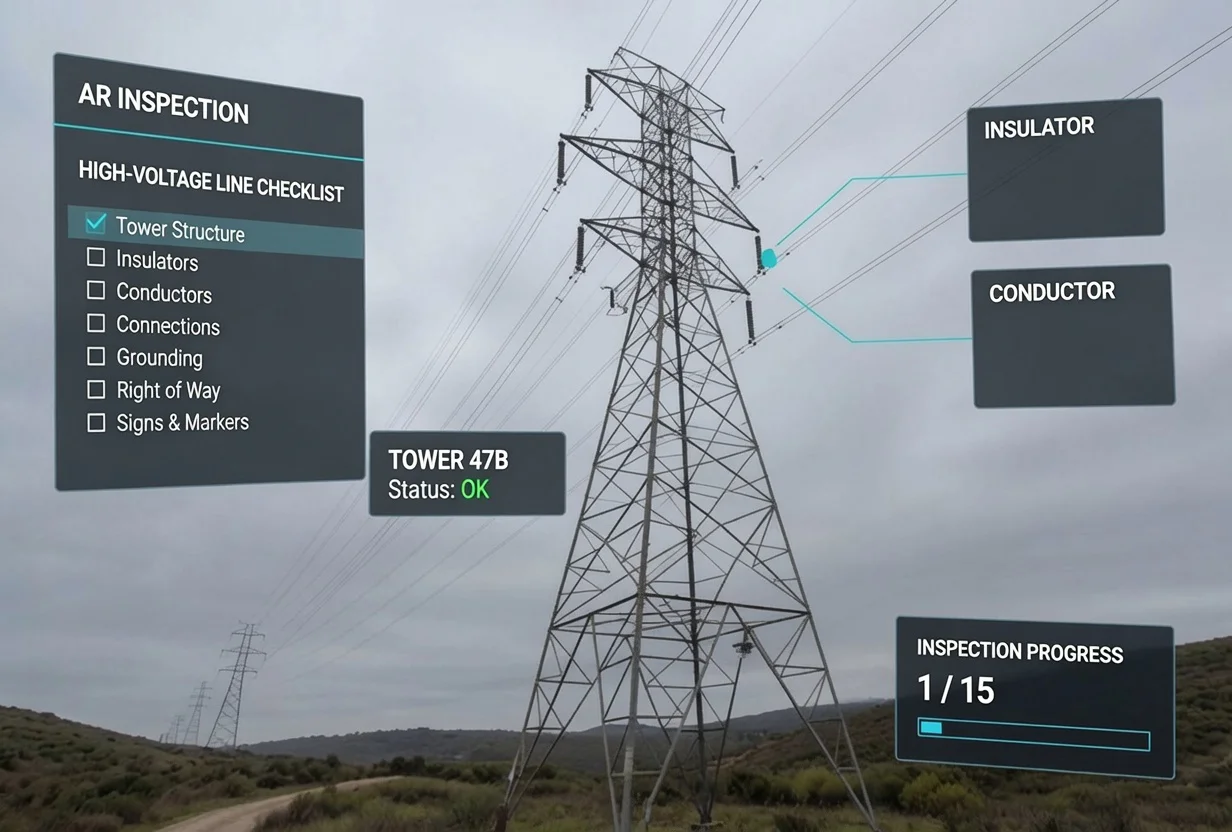
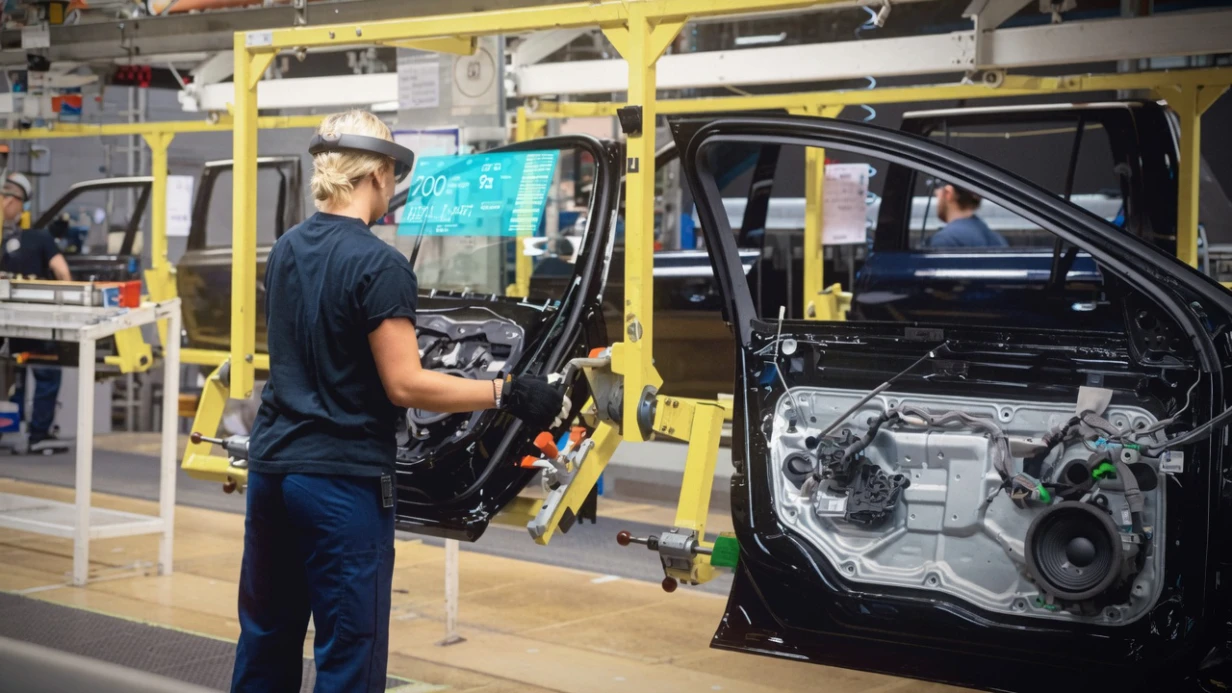
AR instructions from our team overlay step-by-step prompts directly onto the equipment—the operator sees the required actions without being distracted by paper procedures or searching for information.
Faster Operations—No Downtime, No Unnecessary Movements
Instead of reading manuals and shifting attention, the employee gets visual cues right in their field of view. This cuts equipment setup and changeover time—the process moves faster and the work rhythm is not disrupted.
Less Defect—Fewer Errors, Higher Quality
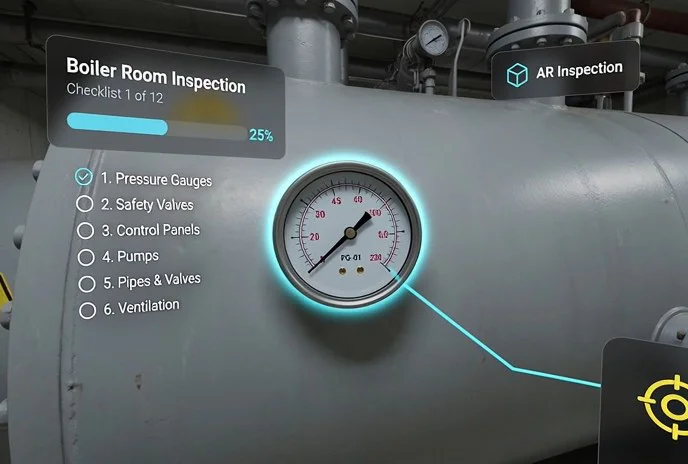
When every step is visually confirmed, the likelihood of skipping a step or performing it in the wrong order decreases.
In glass manufacturing, where the precision of temperature regimes and the sequence of operations is critical, this directly reduces the share of defective products.
Easy Training—a New Employee Works Like an Experienced Master
AR instructions allow a newcomer to perform complex operations from day one. The experience of senior colleagues is turned into visual scenarios—there is no need to memorize procedures for a long time; simply follow the prompts.
Remote Assistance—Experts Connect in Minutes
If an abnormal situation occurs on the line, a specialist sees what the operator sees and can remotely highlight the required component or provide a voice prompt. This reduces problem-resolution time and lowers the need to send an engineer to the site.
Taken together, these capabilities deliver a predictable result: stable quality, faster personnel adaptation, and fewer losses. We work remotely and implement solutions tailored to the specific needs of your production.
AR Instruction Formats for Different Production Tasks
Glass production is an ongoing process where even a short equipment stoppage translates into losses. An operator at the furnace, a mechanic at the cutting section, and a newcomer at the control panel handle different tasks, so AR instructions must also differ.
We use three formats that cover all typical scenarios—from a quick on-site prompt to detailed training for complex operations.
The format is chosen for the task, not the other way around.
In some cases, pointing a smartphone camera at a component and seeing the next step is enough; in others, a stationary screen with a clear algorithm is needed; and for especially critical operations, individual guidance with control over each action is required. Below is how this works in practice.
| Format | For whom | What the client gets |
|---|---|---|
| Mobile | Line operators, maintenance services | Quick guidance on a smartphone or tablet: the employee sees steps directly on the equipment, spends no time searching for paper documentation, and makes fewer errors. |
| Stationary | Control stations, setup areas | A large screen with a step-by-step algorithm and completion control. Accelerates changeover and reduces error risk when switching product formats. |
| Individual | New employees, complex repairs | Personal guidance: the instruction adapts to the user's actions, records the result, and, if necessary, connects them with a remote expert. |
The choice of format depends on the equipment type, staff qualifications, and the criticality of the operation.
When designing, we combine mobile, stationary, and individual formats to reduce downtime and accelerate new employees' transition to independent work—it is precisely these metrics that directly affect the production cost.
How We Develop an AR Instruction in 7 Steps
We have structured the process so that at every stage you understand what is happening and what result you will get. This eliminates surprises and redundant approvals—you accept the work against clear criteria. All stages have been refined across dozens of projects, including those in the glass industry.
-
Brief and task immersion. You tell us about the specifics of your production, typical operations, and growth areas—where errors or downtime most often occur. We study the equipment, procedures, and gather requirements for the future instruction.
-
Scenario planning and approval. We determine which operations are best to move into AR, where it will save time or reduce defect risk. We define the scope of work, timelines, and acceptance criteria so you can see the full scope before the start.
-
Layout and logic development. We show how the employee will see the prompts, which steps and in what order, and where warnings will appear. You make edits at this stage—this is faster and cheaper than reworking a finished system.
-
Building a prototype on your equipment. We build a working sample tied to the actual components of machines and units. We test navigation convenience and pointing accuracy, so the instruction is practical rather than just a "pretty picture."
-
On-floor testing. Together with your operators and process engineers, we test the instruction on real operations in production conditions. We collect feedback, make final adjustments, and ensure that employees are comfortable working.
-
Launch and employee training. We install the application on tablets or smartphones and conduct brief hands-on training. We provide quick-reference cards—the team starts using the instruction quickly without being taken away from work.
-
Support and updates. We stay in touch after launch: answer questions, update content when procedures change, and help extend the instructions to other equipment. You get not a one-off service but a working tool that lives alongside your production.
What Is Included in an AR Instruction Delivery
The AR instruction delivery includes a complete package that you can start working with immediately after handover. You receive not just technology but a clear tool for training employees and reducing downtime in glass production. Everything needed for launch and control is already included.
- Use scenarios — well-developed step-by-step algorithms for typical operations: from equipment setup to troubleshooting. We describe them in the language of your process engineers.
- AR instruction content — markup and prompts overlaid onto the equipment. The employee sees what to do right at the workstation, without consulting paper procedures.
- Administrative access — you manage permissions: who can view, edit, and update instructions. No need to wait for us for every change.
- Implementation guide — recommendations on training staff, integrating instructions into workflows, and evaluating results.
- Operator's manual — a short reference for employees on how to use the prompts without special training.
- Source materials — project files that remain yours forever. This is your property, and you can develop it without restrictions.
We deliver not just an application but a solution embedded in the glass manufacturing process. Usage rights are clearly defined in the contract—you receive a perpetual license for your instance of the system.
If further development is needed, we are always available, but the basic package already provides a complete picture and works immediately.
Case Study: Advancing Glass Production with AR Instructions
In glass production, every minute of downtime is an unfulfilled order, lost time, and the risk of missing a shipment. When the line stops, finding the cause can be difficult: components are hidden behind covers, and an experienced setup technician is not always nearby.
At the StekloTech plant, such stops happened regularly, and each one cost hours of lost time, until we proposed using augmented reality.
We broke down the most common scenarios: planned tooling replacement, sensor adjustment, and resolving typical malfunctions.
Instead of paper instructions, the employee received a tablet with AR overlay: they point the camera at a component and see step-by-step prompts directly on the equipment.
The operator does not need to remember all the procedures—the system itself guides them on what to do and in what order.
After two months, we measured the results: downtime dropped by 30%, and the time to bring new employees up to speed was halved. Setup errors became rare because the instruction does not let you skip an important step.
The plant recovered lost hours and expanded the project to adjacent workshops—this is the best indicator of the value of an AR solution.
If you want to achieve a similar effect at your production site, you do not need to implement AR across all lines at once. We will start with a pilot area, measure downtime before and after, and you will see the real result in numbers, not promises.
Frequently Asked Questions About AR Instructions and Their Implementation
When implementing AR instructions for glass production, customers typically raise the same concerns: compatibility with existing equipment, launch timelines, ease of training, and final cost.
These questions come up at every presentation, so we have gathered the answers on наша команда. Based on completed projects, here are our answers to the main ones.
Will an AR instruction work with our equipment?
Yes, in most cases no modification of the production lines is required. We overlay digital prompts onto the existing operations: the employee sees them through a tablet or smartphone.
During a preliminary audit, we show how this will work at your site, and only then do we propose a solution.
How quickly can the system be implemented?
A typical project takes two to four weeks. First, we visit the site and record the processes, then we prepare a prototype for testing. After approval, we launch the full version—without lengthy approvals.
Is it difficult for workers to learn AR prompts?
Training takes one day. The interface shows step-by-step instructions right on the screen, so employees do not need to memorize the sequence of actions. This reduces errors and simplifies onboarding for new specialists.
How much does development cost and are there hidden fees?
The cost is calculated individually after an audit and depends on the number of operations and the level of detail. The estimate is fixed in advance and includes filming, development, and staff training. There are no hidden surcharges and no mandatory long-term software subscription.
Order AR Instruction Development for Your Production
Every minute of equipment downtime in glass production means lost batches and missed deadlines. Employees spend time studying paper manuals and act by guesswork during format changeovers—hence defects and restart runs.
AR instructions guide the next step right in the field of view, reducing setup technician training time and lowering the number of errors.
We develop such instructions for industrial glass production lines—from individual components to the entire line. Professional equipment and proven tools guarantee consistent results.
Submit a request—a specialist will contact you within one business day, clarify your task, and prepare an estimate for your site.
What you get after contacting us:
- Cost and timeline estimate within 1 business day.
- Personal consultation on integrating AR at your production site.
- Free demonstration at the selected area.
- A guarantee that the instruction will be used—training, testing, and adjustments.
- Post-project support and updates in line with procedure changes.
- Priority assistance from those who have already launched AR in glass production.
- Access to a library of typical AR scenarios for glass lines.
Fill out the short request form—it will only take a couple of minutes. A specialist will contact you, clarify the details, and prepare a custom estimate.
You will learn how AR instructions can reduce downtime on your specific line, without buying new equipment or going through a lengthy approval process.
What If the Equipment Is Not Suitable for AR?
Equipment in glass production is often called "non-standard": old lines, unique machines, closed control protocols, or units that have long been discontinued. But for us, this is not a limitation; it is an adaptation task.
We do not tie ourselves to a specific model or manufacturer—we start from what already works at your site.
We visit the facility, study the actual operations, and record the process with professional equipment.
If documentation is outdated or lost, we reconstruct the logic from what is actually there: how the operator interacts with the panel, where the service points are, and what abnormal situations are possible.
This allows us to build a digital instruction that follows the real scenario rather than an ideal diagram from a technical datasheet.
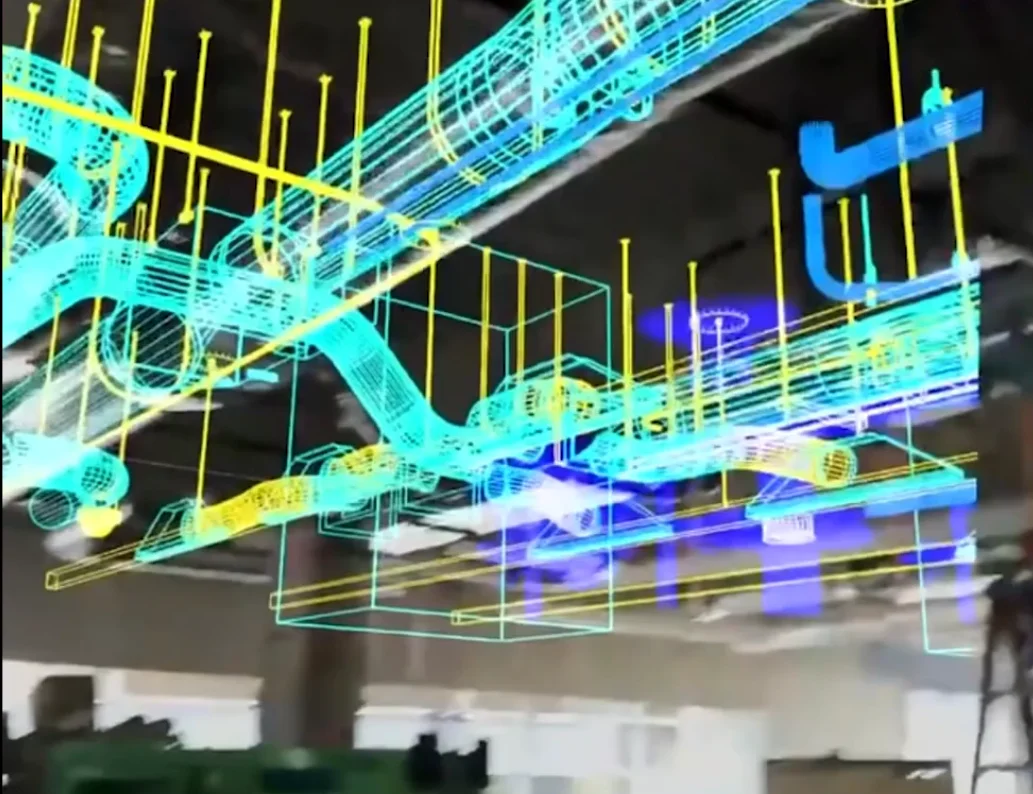
Next, we choose the overlay method for the specific task. In some cases, static markers and a step-by-step AR mode are sufficient; in others, object shape tracking is used so that prompts "stick" to the equipment as the camera moves.
For complex components, we emphasize video inserts and close-ups so the operator sees every step without guessing.
The key point is adapting to real workshop conditions: dust, vibration, lighting, and working in protective gear. We test the instructions at your site and adjust them until an employee can complete the entire cycle without a foreman's prompt.
As a result, even specific equipment gets a simple and clear training system that reduces onboarding time and lowers errors during repair and setup.