

Why Do Water Utilities Waste Time on Training Briefings?
Every water utility faces the same problem: staff training takes weeks, sometimes months. Paper instructions describe equipment abstractly, while the real environment in a workshop or at a pumping station is completely different.
A newcomer has to memorize diagrams, procedures, and technical details — without hands-on practice this turns into rote learning. As a result, the first independent shifts are spent under constant stress, with endless questions and fear of making mistakes.
And mistakes lead to breakdowns and unplanned downtime. A failed pump, a stuck gate valve, or a glitch in the filtration system halts operations. The utility misses its schedule, incurs losses, and repairs cost many times more than proper training.
Downtime is not just hours of idle equipment — it also means firefighting, overtime, and frayed nerves. For water supply, every hour of stoppage is critical: consumers suffer, reputation is damaged, and fines arrive.
The worst part is that this state of affairs is perceived as normal. Managers get used to it: the briefing is long, the trainee makes mistakes, breakdowns happen. Yet every breakdown could have been prevented if the instructions actually worked under real-world conditions.
An experienced employee who spends time mentoring also loses efficiency. And a newcomer, even after completing the briefing, still operates equipment with uncertainty.
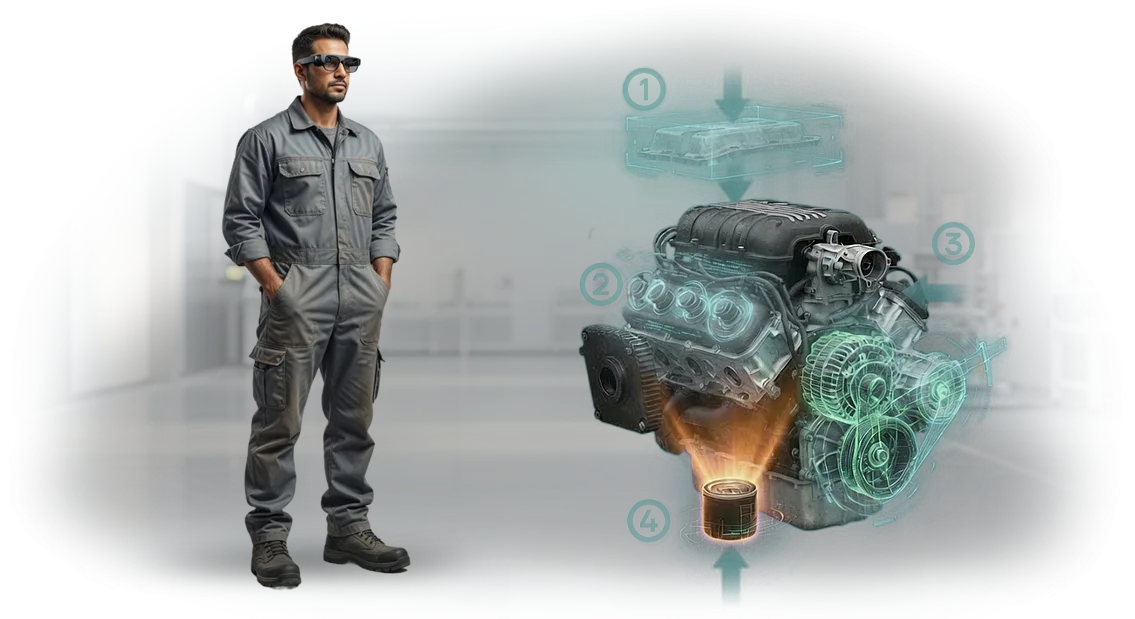
We changed the approach to instructions for water utilities. Instead of abstract texts and diagrams — visual cues that appear directly on the equipment. Staff master operations faster, make fewer mistakes, and downtime shrinks. Training stops being a long and costly stage: it becomes quick, clear, and controllable.
What Benefits Do AR Instructions Offer for Equipment Maintenance?
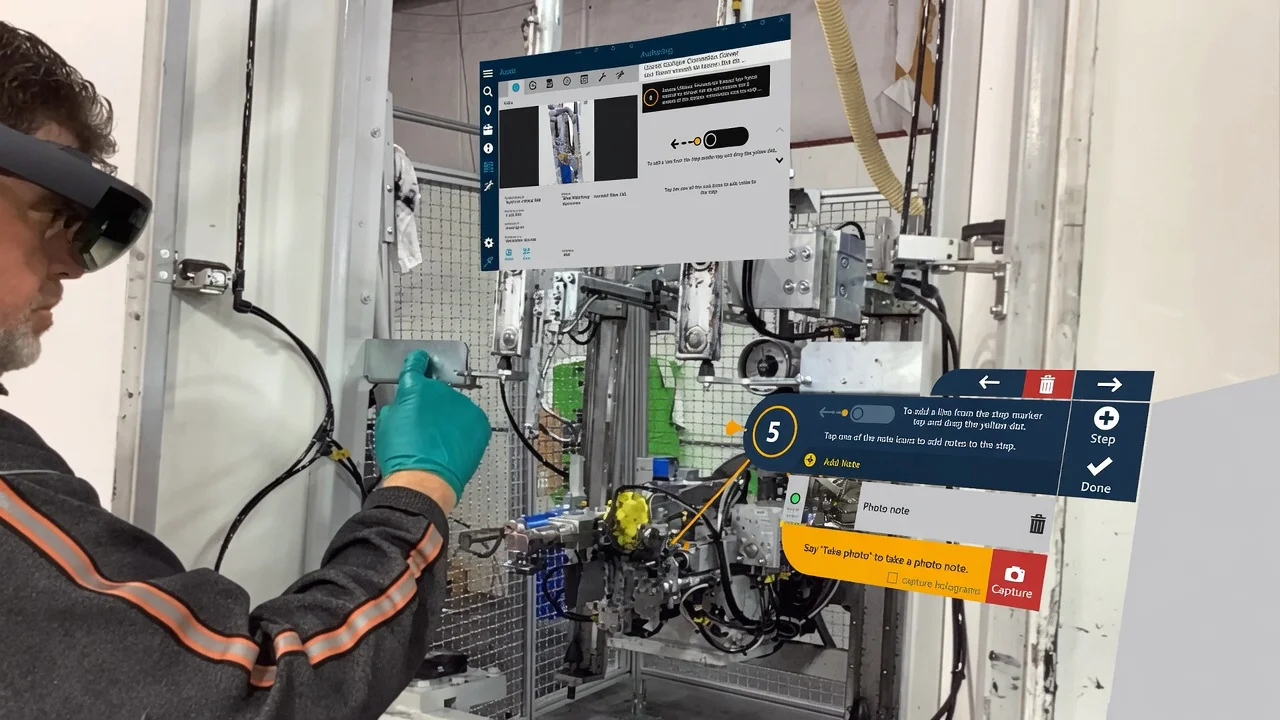
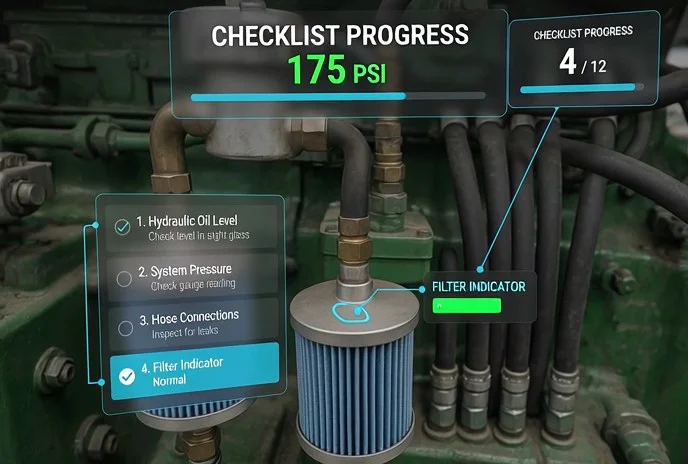
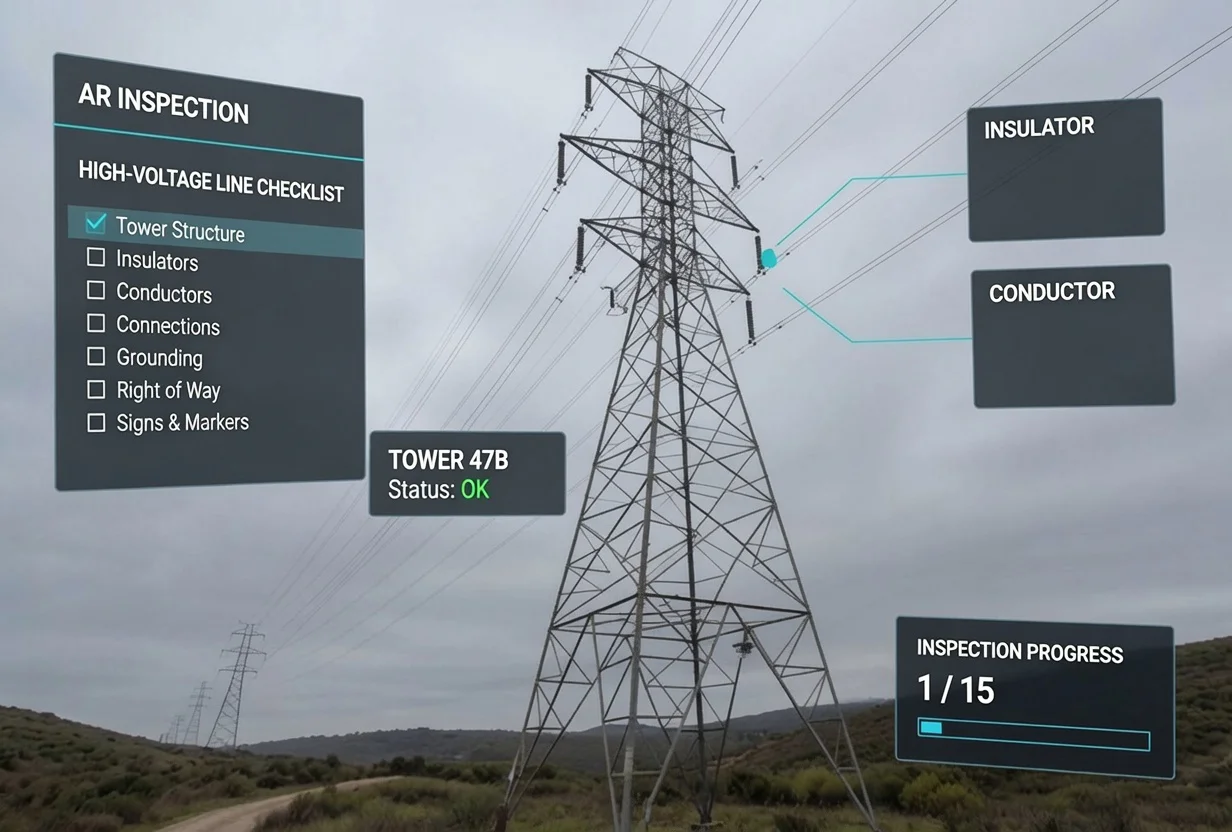
AR instructions turn complex equipment maintenance into a clear step-by-step process. Instead of thick manuals and long lectures, an employee sees hints directly on the object — this speeds up work and reduces the number of errors. For a manager, this means less downtime, stable quality, and peace of mind about staff safety.
Below are the main benefits you get already at the implementation stage:
- Training speed. A new employee masters operations 2–3 times faster than with paper instructions. They don’t wait for a mentor to become available but immediately get down to work with a ready-made scenario.
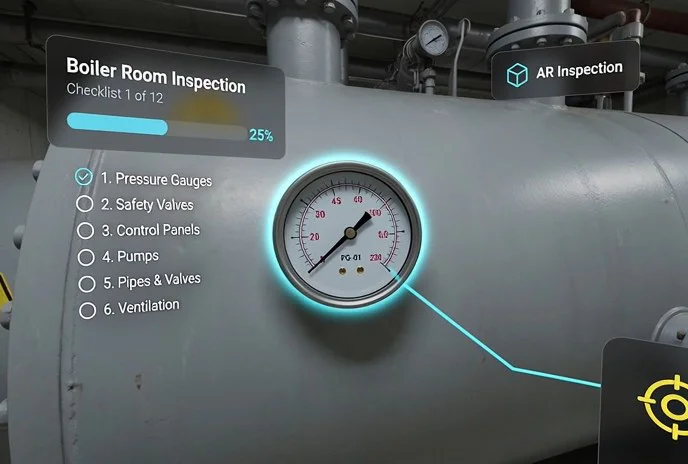
- Safety. AR cues warn about hazardous zones, remind about lockouts and the correct sequence of actions. This reduces the risk of injuries and accidents, which in turn cuts unplanned downtime and fines.
- Service quality. All employees work according to a single standard embedded in the instruction. The outcome does not depend on the experience of a particular technician — equipment is maintained with the same thoroughness every time.
- Fewer errors. Instead of memorizing hundreds of points, a specialist sees each step before their eyes. This eliminates skipped operations, incorrect tightening, wrong sequences, and other human factors.
- Training without a mentor. Experienced employees are not distracted from their work, while newcomers can learn at their own pace and review complex components. This is especially important with staff turnover and remote sites.
At our team we develop such instructions for your equipment — from simple regulations to complex diagnostic scenarios. As a result, you get a predictable maintenance process, quick ramping up of new employees, and minimal risk of emergencies.
Comparing AR Instruction Formats for Water Supply
There is no universal AR instruction format for water supply — it all depends on where and how employees work. A field installer is better served by a smartphone, while an engineer at a pumping station may prefer a tablet or AR headset when hands need to stay free.
At our team we compare formats against real scenarios so you don’t overpay for equipment that won’t pay off.
| Format | Who it’s for | What it gives the client |
|---|---|---|
| Mobile AR (smartphones) | Service engineers, installers, field crews | Quick launch without buying hardware: the employee uses a personal phone, the instruction is always at hand, errors during repairs and maintenance are reduced |
| Tablets | Crews at large sites, maintenance of complex assemblies and pipelines | Large screen with diagrams and step-by-step prompts, comfortable to use in gloves, clear visualization of networks and shut-off valves |
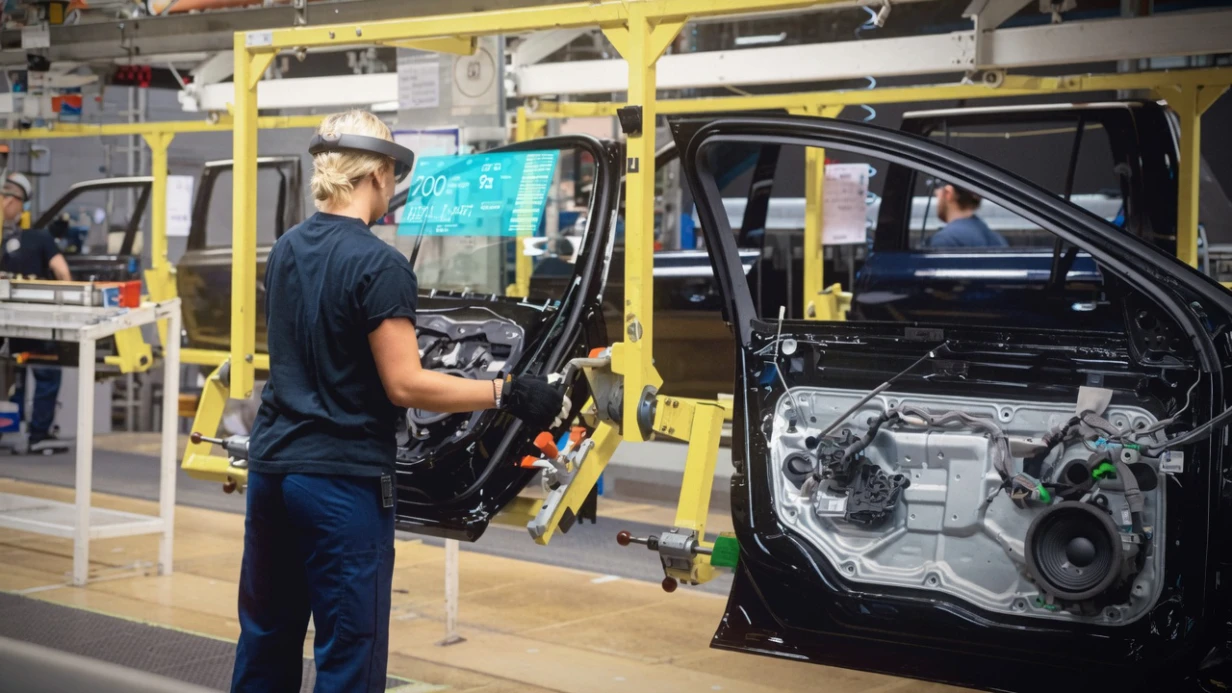
| AR headsets | Rare complex operations when hands are occupied with tools | Overlaying hints directly into the field of view, fully freeing hands, minimal distraction from the process — ideal for critical water supply components |
Thus, mobile AR is usually enough for remote support at remote sites — this is the fastest start without purchasing additional hardware. For complex installation or scheduled maintenance of large pumping units, a tablet delivers more value thanks to large diagrams. Headsets are used selectively where safety and precision are critical.
The key point is not to tie yourself to one format. We will test each one on your equipment, match them to your staff’s tasks, and show the result in a pilot area. That way you get an understandable instruction set without spending your budget on unnecessary devices.
How AR Instruction Development Works: Project Stages
The process is transparent: you always know what is happening and what result you will get at every stage. We work together with your engineers and technologists so the AR instruction becomes part of daily operations, not just a demo.
- Brief and audit — we discuss the task and see how operations are performed today. We define goals: reduce training time, decrease downtime and staff errors.
- Scenario design — we develop the step-by-step logic of the instruction, texts, and visual prompts. We align it with your technologists so all actions are accurate.
- Mockup approval — we show how the instruction looks on screen: arrows, graphics, animations. You make changes before launch, not after — this saves time and effort.
- AR content development — we create all elements: 3D models, animations, prompts. We use professional equipment, so the image remains sharp even in a bright workshop.
- Pilot launch — we test on real equipment with your employees. We collect their feedback and make final adjustments.
- Launch and support — we hand over the instruction, train the team, and integrate with your system if needed. We support and update content when regulations or equipment change.
You get a clear working tool with no surprises. Deadlines and responsibility are fixed in the contract, and you approve the result at every stage.
What Is Included in the Delivery of AR Instructions for Industrial Equipment
Instead of scattered paper instructions and verbal explanations on the shop floor, you get a unified AR assistance system that works on a tablet or smartphone right at the machine.
We put together a package that covers the entire chain: content development, integration into your processes, staff training, and post-launch support.
-
Equipment operation scenarios — step-by-step algorithms for typical operations: commissioning, scheduled maintenance, troubleshooting. The employee sees prompts right on the screen and does not waste time searching for the right manual section.
-
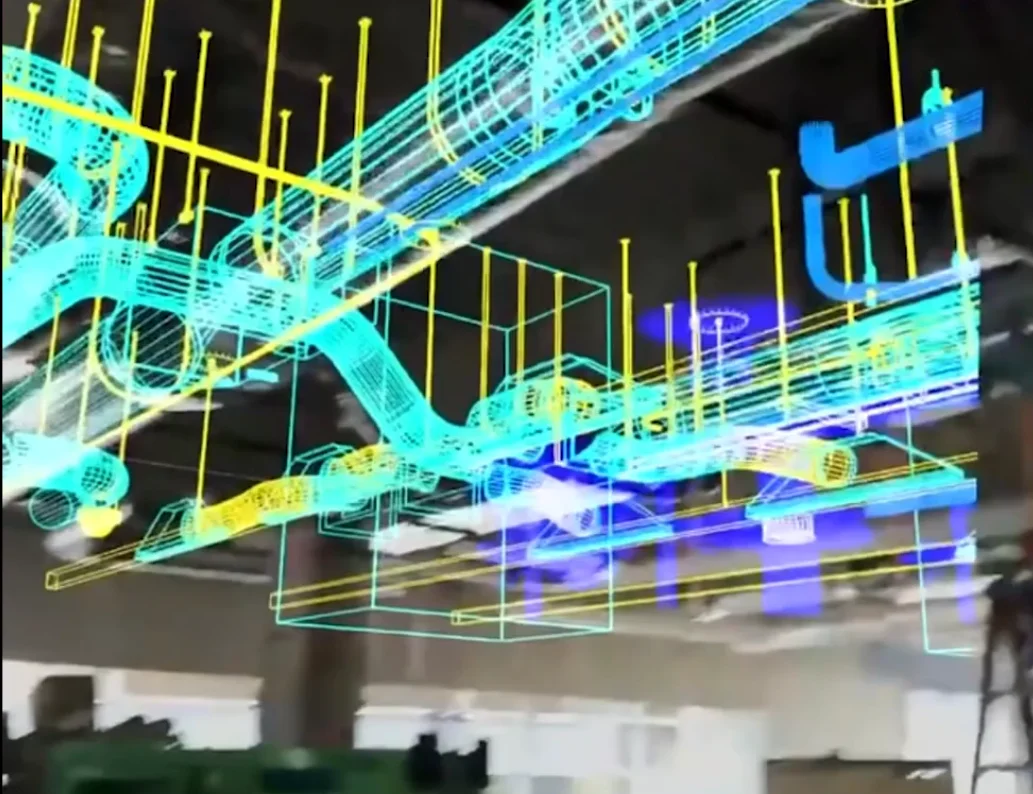
3D models of your components and assemblies — accurate digital copies that clearly show how a mechanism is built and where each part is located. This eliminates errors during disassembly and assembly, especially for pumping and filtration equipment in water supply.
-
Integration with your training system and document flow — we connect AR instructions to existing regulations so nothing has to change in your processes. The technology complements current standards rather than replacing them.
-
Employee training — we conduct training sessions for technical staff and adjusters. In a short time, the team starts using the new tool confidently. The training is based on real scenarios from your production environment.
-
Content updates — when equipment design or regulations change, you update scenarios without stopping production. Instructions stay current on an ongoing basis instead of “freezing” at the moment of delivery.
-
Usage analytics — you see which operations cause the most questions, how long each action takes, and where employees pause. This helps improve processes and reduce equipment downtime.
This package is especially in demand at water supply and wastewater utilities, where uninterrupted water delivery to consumers depends on the speed and correctness of actions. Everything needed for launch is delivered turnkey — all that remains is to use it and get results.
Case Study: AR Instructions Cut Downtime at a Water Supply Facility
At one water supply pumping station, the client faced a typical problem: every equipment failure resulted in hours of downtime.
The crew wasted time searching for paper instructions, coordinating actions with an engineer, and waiting for guidance — repairs dragged on, and consumers were left without water.
We developed AR instructions with a remote assistant for them: a technician points a smartphone camera at a component, sees step-by-step prompts directly on the equipment, and can connect an expert in real time if needed.
The employee does not have to keep complex diagrams in mind — the system guides them through the repair process. The instructions work on regular smartphones, and updating them takes minutes instead of reprinting paper manuals.
Numbers After Implementation
In the first three months of operation, the time for a typical pump repair dropped from four hours to one and a half. Station downtime fell by a third, and visits by external specialists nearly halved, because the crew handled most faults on its own.
In annual terms, this gives the team back dozens of work shifts that previously went to waiting and coordination.
This result ensured a fast return on investment and became a reason to scale the solution: the client has already expanded the AR system to all pumping stations in the region. According to the chief engineer, what matters most is not only speed but also employee confidence:
“Previously, a young technician was afraid to tackle a complex component and waited for a senior colleague. Now he opens the augmented reality instruction and calmly carries out the repair.
The station is back online in a couple of hours, and we don’t let consumers down” — chief engineer of AquaRegion.
Common Customer Questions About Implementing AR Instructions
Before implementing AR instructions, customers ask the same questions: how will it affect current processes, how long will setup take, will they have to change equipment, and how much will it cost.
Below are answers to typical concerns we encounter in projects for water supply and related industries.
How difficult is the integration with our systems?
We do not require reworking production processes. AR instructions work on top of existing documentation and do not replace current systems. Integration usually takes from two weeks to a month. During the pilot launch, we stay in touch and help embed the tool into daily work.
Will employees need special training?
No special preparation is needed. The interface is clear to any specialist: point the camera at a part — and a step-by-step prompt appears on the screen. We conduct a short briefing for key users, and then they train their colleagues themselves. The whole process takes no more than a couple of hours.
What equipment will we work with?
We work with professional tablets and smartphones that many enterprises already have. If devices are outdated or unsuitable, we will offer rental or purchase tailored to water supply tasks.
The main thing is stable operation: we configure the project for your real conditions and test it on-site before launch.
How much does it cost and how is the price formed?
The cost depends on the number of instructions, the complexity of the equipment, and the need for a remote assistant. We prepare a transparent estimate after a short audit — you know in advance what you are paying for.
For first projects, we often create a pilot section so you can evaluate the effect before full scaling and confirm the budget.
Get AR Instructions for Your Water Supply Within a Month
To start saving time and reducing the risk of errors with AR instructions, you don’t need long deployments. We have designed the process so that within a month you are already using the solution on real equipment — and you see initial results even earlier.
You submit a request — and then everything moves along a clear path. Here is what happens after that:
- Request. We contact you within one business day, clarify the task, and determine where AR instructions will deliver the greatest impact at your water supply facility.
- Consultation. An expert shows examples for similar equipment and discusses scenarios: service, installation, operator training. You get an honest assessment of whether the technology fits your specific tasks.
- Cost calculation. A transparent calculation for your process: volume of instructions, number of operations, formats. No hidden payments or “surprise” surcharges.
- Pilot. We test the AR instruction in real work on one site or one operation. You see with your own eyes how an operator finds parts faster and consults the paper manual less often.
- Ready package in a month. Following the pilot, you receive a scalable solution: an AR instruction library for the entire water supply system, accessible from staff tablets and smartphones.
This approach removes risks and uncertainty: you pay for results, not for “process.” Leave a request — we will provide a consultation, calculate the cost, and show a pilot on your equipment.
How to Choose the Optimal AR Instruction Format for Water Supply?
There is no universal AR instruction format for water supply: the result depends on where and how the technology will be applied.
Practice shows that the choice narrows down to three parameters — working conditions, the specific task, and the budget you are willing to allocate for implementation.
Operating conditions determine the basic requirements. Pumping stations, treatment facilities, and distribution nodes are spaces with high humidity, vibration, and not always stable lighting.
An employee at a site often works in gloves, so AR prompts must be activated without complex gestures and remain readable on any background.
When selecting a format, we take these nuances into account: professional equipment and adapted interfaces provide a clear picture even in less comfortable conditions.
The task determines the depth of instruction detailing. If you need to reduce repair time for shut-off valves or pump calibration, step-by-step navigation with prompts on the equipment is sufficient.
If the goal is remote support for a non-standard failure, the format should include a video call with an expert and image transmission with their markup.
The format is matched to the scenario: training a new employee, scheduled maintenance, or an emergency call — each has its own suitable option.
Budget is about scale, not the number of features. You don’t have to allocate funds for developing all instructions at once: it is often best to start with a pilot project on the most critical components, measure the reduction in downtime, and only then expand the system. We help shape such a plan and select a format that will pay off on your equipment fleet.
In other words, choosing the AR instruction format for specific conditions, tasks, and budget is a normal engineering task. We take it on: we conduct a water supply audit, propose a format, and clearly explain why it suits you.