


Airport Kiosks: Eliminating Lines and Chaos for Passengers
A passenger in an unfamiliar airport means stress, wasted time, and a line at the information desk. Even a brief pause by one person creates a bottleneck, and during peak hours airport queues stretch for dozens of meters.
Staff physically cannot respond to everyone, and some passengers simply get lost in the terminal, risking missing their flight.
It’s not that staff work poorly — airport navigation must be continuous and available at any moment, not only where the counter is open. Otherwise, every other question — “where is my gate,” “where’s a café,” “how do I get to boarding faster” — falls on human staff.
Lost passengers are not only missed flights but also an extra burden on personnel, who end up answering repetitive questions instead of handling unusual situations.
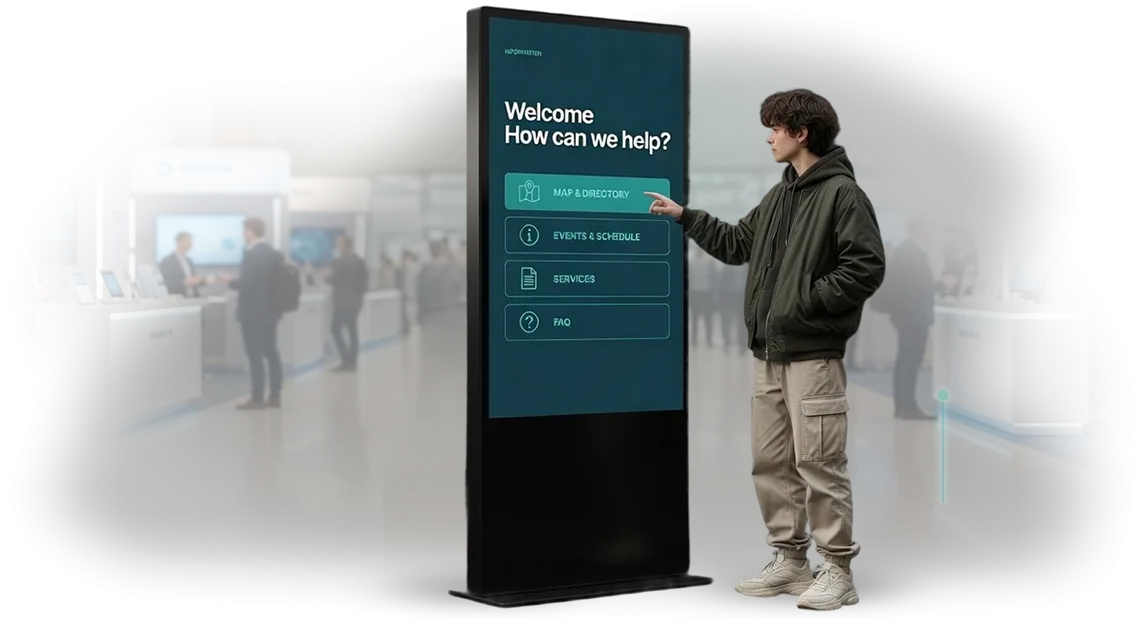
Interactive kiosks solve this problem. Touch panels placed at key points in the terminal let passengers independently find exits, waiting areas, shops, cafés, and restrooms.
This reduces queues and eases the load on staff: employees handle only the requests that truly require human assistance.
For airports, this is also flow management. When passengers find their way faster and are late less often, the number of emergencies and delayed flights drops.
Less chaos means higher punctuality and passenger satisfaction, and therefore a calmer, smoother operation across the terminal.
We develop turnkey interactive kiosks and touch panels for airports: we design the menu structure, navigation scenarios, design, and operating logic. We use professional equipment built for round-the-clock use, so the result remains stable even during the busiest periods.
We’ll help remove queues and confusion, and give passengers confidence in an unfamiliar building. Tell us about your airport — we’ll propose a solution tailored to your needs.
What an Interactive Presentation Gives Passengers and Your Team
For an airport passenger, the most important thing is speed of navigation: quickly understanding where the boarding gate is, where the left-luggage office is, and how many minutes to the required terminal.
An interactive presentation on a touch panel provides the answer in 10–15 seconds, without queues or hunting for staff. This reduces anxiety, eliminates unnecessary questions, and makes the journey clear from the first minute.
For your team, the main benefit is reducing the workload on staff. A portion of routine requests — “how do I get to…”, “where is the check-in desk,” “which transport goes to the city” — is handled automatically, and information desk staff are left with only non-standard tasks. Meanwhile, passengers don’t feel abandoned: the kiosk responds instantly, even during peak hours.
Another result is increased passenger loyalty. When the airport itself helps people find their way, it’s perceived as care, not a formality. A person remembers the positive experience, is more likely to return to that airport, and recommends it to acquaintances.
And if the panel shows information about shops, cafés, and special offers, the average spend for tenants also grows — a benefit for everyone at once.
Interactive kiosks also build brand recognition. The screen can show the airport’s history, destinations, corporate identity, and key services — all of this creates a coherent atmosphere and sets the airport apart from others.
Passengers remember not only the logistics but also the character of the place, and that’s part of branding capital.
All of these benefits of interactive kiosks appear almost immediately after launch: clear logic, fast response, and stable operation without freezing.
Passengers spend less time searching, staff spend less time repeating themselves, and the airport gains a modern service that pays off through the experience of every guest.
Interactive Kiosk Formats for Airport Needs
Choosing an interactive kiosk format starts with passenger flow logic. The entry zone is for navigation, the waiting area is for exploring offers, the boarding gate is for targeted hints.
When the structure matches the scenario, visitors use it more willingly, and staff are less distracted by repetitive questions.
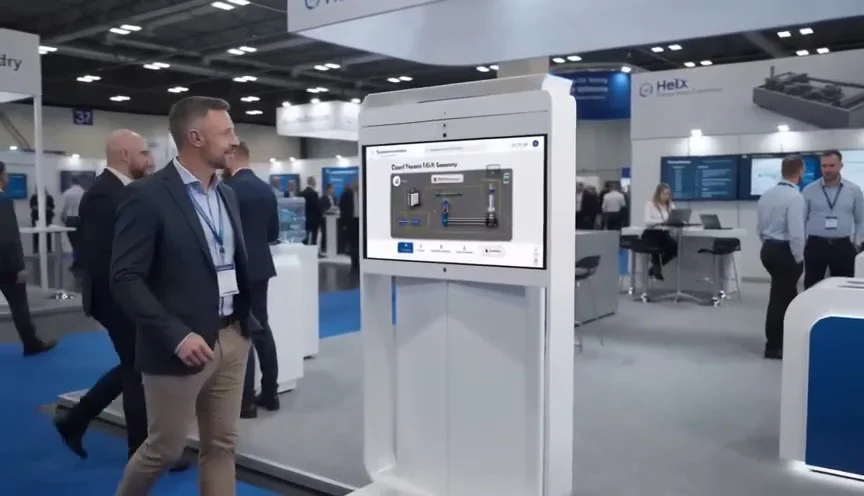
Floor-standing information kiosks are a universal solution for heavy traffic and open spaces: they are visible from afar and can handle several people at once. Wall-mounted touch panels save space and can be installed where a floor kiosk would get in passengers’ way.
Multimedia tables turn waiting into a brief brand interaction and hold the guest’s attention longer than a typical sign.
We design airport kiosks in three basic configurations: floor-standing, wall-mounted touch panel, and multimedia table. All options run on professional touch equipment built for high loads and round-the-clock operation, so the result remains stable even at peak hours.
| Format | Where to install | What it gives the airport |
|---|---|---|
| Floor-standing kiosk | Terminal entrance, baggage claim area | Quickly shows flights, terminal map, and services; relieves the live information desk |
| Wall-mounted touch panel | At the boarding gate, near escalators, in walkways | Provides a quick direction and time hint; helps passengers navigate confidently |
| Multimedia table | Waiting area, business lounge, kids' zone | Engages passengers with maps and service content; increases brand contact time |
By combining formats, you build a navigation and information system at every stage of the passenger journey: from entry to boarding.
We’ll help you choose the number of devices and placement points for your space, and also manufacture kiosks in the terminal’s style and configure them to your navigation scheme.
Launch Stages: From Brief to Support
When ordering an interactive kiosk, the main questions are: how long to wait, what you’ll get, and who is responsible for the result. We’ve structured the process so that you see intermediate results at every stage and can influence the project’s direction.
Below is the standard path from brief to launch and support, refined across dozens of projects, including information kiosks for airports.
- Development brief. We discuss installation location, audience — passengers, guests, staff — and business objectives: navigation, schedules, advertising, feedback. We record requirements and timelines so you understand the scope of work.
- Touch panel prototype. We create a clickable mockup with the logic of screens and transitions. You see the structure of the future kiosk before design and can adjust it without extra costs.
- Design concept. We develop a style that fits your brand and interior. For airports, we account for readability from a distance, large touch targets, and screen behavior in bright light.
- Development and content. We assemble the logic, connect schedules, maps, surveys, and information blocks. Content is structured so you can update it without developers.
- Testing. We test real-user scenarios — from random touches to long uninterrupted operation. We fine-tune stability before installation so the kiosk won’t let you down on launch day.
- Kiosk launch. We install the equipment, connect it to the network, perform final configuration, and train your staff: power on, content replacement, basic operations.
- Kiosk support. We stay in touch after launch: remote monitoring, updates, functionality enhancements. You always know who to call if anything is needed.
This process makes kiosk development fully transparent: you understand where the project stands and when you’ll receive the finished solution. As a result, the kiosk helps passengers navigate, relieves staff, and improves service quality — without surprises or extended deadlines.
What’s Included in Delivery: A Complete Working Package
When ordering an interactive kiosk, you expect it to start working right away and not require a long learning curve for your team. We’ve put together a delivery package that resolves everything before launch — from content logic to staff training.
The package includes:
- Interactive scenario — a ready-made structure of screens, texts, and transition logic. Visitors find the information they need on their own, without staff assistance.
- Interface design — a visual style matching your brand, adapted for a touchscreen: large elements, high-contrast labels, simple navigation.
- Software — an installed and configured system that starts when the kiosk is powered on and runs stably all day.
- Staff instructions — a short guide covering power-on, content replacement, and actions in unexpected situations.
- Staff training — one or two short sessions to help your team confidently work with the kiosk and assist visitors.
- Launch support — our specialists are on hand during the first days of operation to quickly resolve any issues.
All of this is one project with a clear estimate and responsibility for the result. You don’t need to separately search for designers, developers, and methodologists — an integrated approach saves your time and budget.
Case Study: Airport Kiosks Helped Passengers Avoid Missing Flights
Passengers in a large airport often get lost: unfamiliar navigation, long transfer corridors, rush. The result is stress, missed flights, and dissatisfaction that spreads to the entire airline.
Solving this problem with only signs and information desks is difficult — staff can’t keep up with the flow of questions.
We developed a network of interactive kiosks with touch panels and terminal navigation for an international airport. A passenger selects their flight — and the kiosk plots the shortest route to the boarding gate, shows travel time, and warns if they need to hurry.
The interface is intuitive even for first-time flyers: large buttons, minimal text, and support for several languages.
We measured the results before and after installation. The average time to find the right gate was almost halved, and the number of passengers missing flights due to navigation dropped by a quarter.
People stopped coming to the desk with the same questions — staff gained more time for real assistance. The kiosks also displayed advertising space for airport partners, adding a revenue stream.
This interactive kiosk case study confirms that clear navigation directly affects flight punctuality and the impression of the airport.
After the first months of operation, the airport ordered an expansion of the network to other terminals and waiting areas — we continue to develop the project and adapt the interfaces to new tasks.
How to Choose the Right Format for Your Needs?
Choosing a kiosk format comes down to three things: where it will be located, how many people pass by, and what task it must solve.
This determines whether it will be a touch panel for an airport with a navigation map, an interactive directory, or a presentation screen with widescreen content.
In high-traffic areas — for example, in the arrivals hall or near the boarding gate — interactive navigation kiosks work best. A passenger is not willing to wait: they want to understand where to go in 10–15 seconds.
An interactive map with search by flight or point of interest solves this task without staff involvement.
If the goal is to inform about schedules, services, rules, or to show advertising, another format is appropriate: a touch panel with a multi-level menu where passengers choose the section they want. Such a kiosk is convenient in waiting areas, where people have time. Speed is less important here than the structure of information presentation.
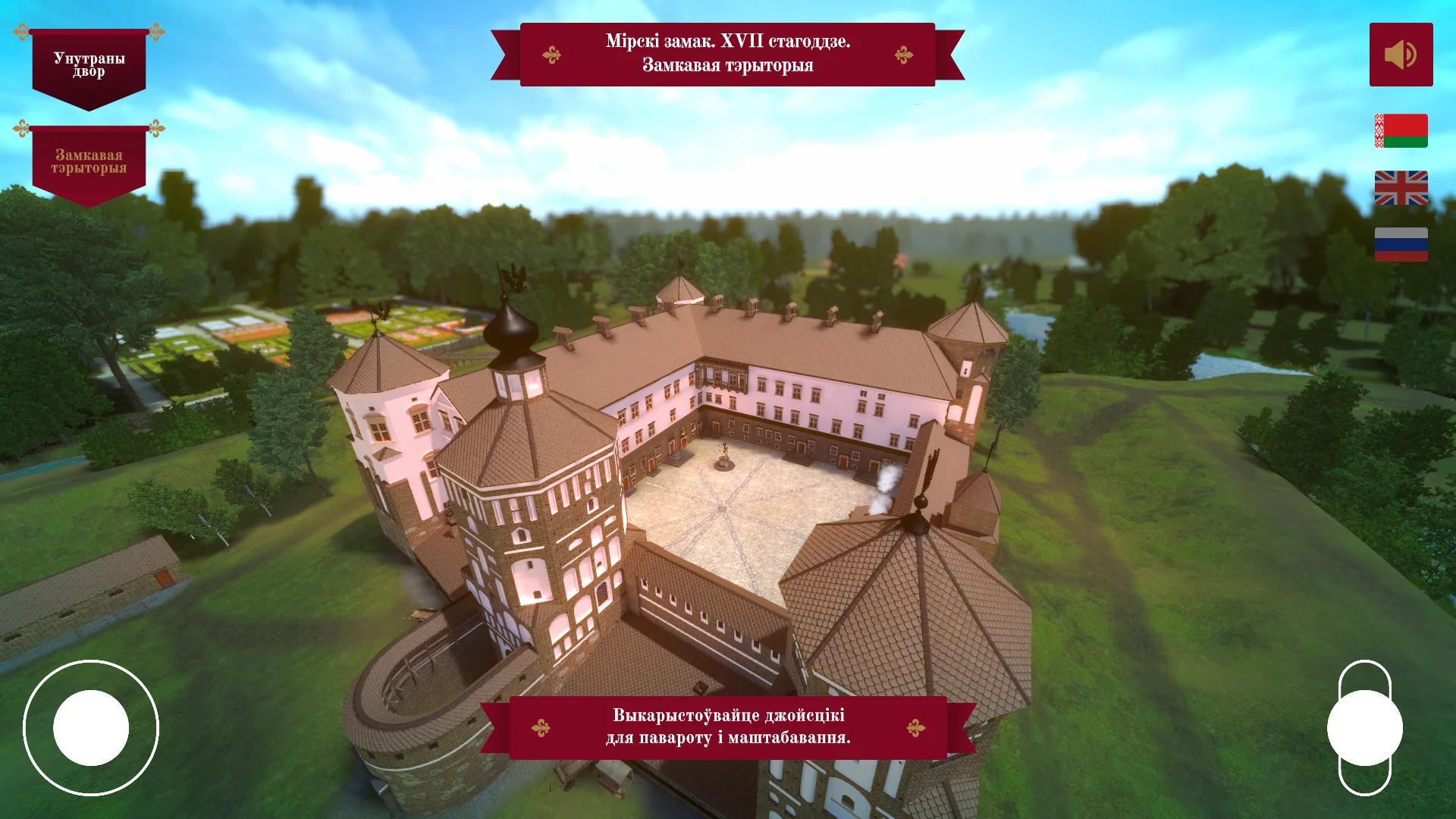
To increase engagement and airport recognition, you can use interactive scenarios: virtual tours, city information, children’s entertainment.
Choosing a kiosk for your tasks is not a matter of a single solution, but rather finding a compromise between cost, installation area, and audience expectations.
We help you choose a format that fits the interior and logistics of the area, accounts for traffic and your team’s goals.
At the brief stage, we analyze passenger flow, placement points, and the content to be displayed — and propose a solution that pays off by reducing staff workload and improving navigation.
Addressing Common Concerns: Timelines, Complexity, Reliability
Before ordering an interactive kiosk for an airport, many people have the same questions: will the device withstand high loads, how quickly can it be installed, and will it look out of place in the interior.
We’ve gathered the most common concerns and answer directly — without technical details, from the perspective of the result for your project.
What if the kiosk breaks during an event?
We address this scenario that clients fear as early as the production stage. We use proven industrial components designed for round-the-clock operation in crowded places.
We provide an official warranty on all work on the kiosk, and for critical projects we plan for fast device replacement so the event runs without interruptions.
How long does development and installation take?
From brief to launch usually takes two to four weeks, depending on the number of scenarios and design complexity. We work according to a transparent plan: we approve the concept, create a prototype, launch a test version, and only then install the kiosk in the terminal. Installation takes one or two days, including configuration and testing.
How hard is it to integrate a kiosk into the airport interior?
We build the housing according to your sketches or offer our own option — color, shape, and materials are chosen to match the terminal’s style. The kiosk can become a standalone art object or, conversely, visually “dissolve” into the space. The design is approved in advance, so there are no surprises on site.
Can content be changed after launch?
Yes, and that’s one of the main advantages. Flight schedules, advertising banners, navigation — all of this can be updated without modifying the device. You upload new materials through a simple interface, and we help with preparing layouts if needed. Content can be changed as often as every day — the kiosk always stays current.
If you have a question we haven’t answered, feel free to ask it directly. We’ll explain how we solve non-standard tasks for your airport and what timelines are realistic for your specific project.Ready to Discuss Your Project? Leave a Request
Every interactive kiosk at an airport should solve a business problem: speed up passenger navigation, relieve information desks, increase tenant revenue, or collect contacts for marketing.
We start not with the “hardware,” but with analyzing these problems, so the first step is a short request. After that, you’ll receive a plan that accounts for the specifics of your venue, guest flows, and your brand requirements.
To order an interactive kiosk or get a preliminary estimate, you don’t need to prepare a technical specification. Just leave a request for a consultation — we’ll guide you through a transparent process:
- We’ll contact you within one business day and schedule a convenient consultation time.
- We’ll clarify your goals, usage scenarios, and design requirements.
- We’ll prepare a development brief with budget and timeline estimates.
- We’ll calculate the kiosk cost and propose an optimal configuration.
- We’ll approve the project, launch it, and remain available for support.
What you get after submitting a request:
- a clear understanding of which kiosk fits your task and audience;
- a preliminary budget and timeline estimate with no hidden surcharges;
- a development brief for further approval;
- recommendations on content and scenarios for passengers;
- answers to questions about warranties, installation, and support.
We speak the language of business and take responsibility for results. Leave a request — it’s not binding, but it gives you a clear understanding of how to launch a kiosk with maximum benefit for your airport.