


UX and Kiosk Integrations: Why Clients Leave
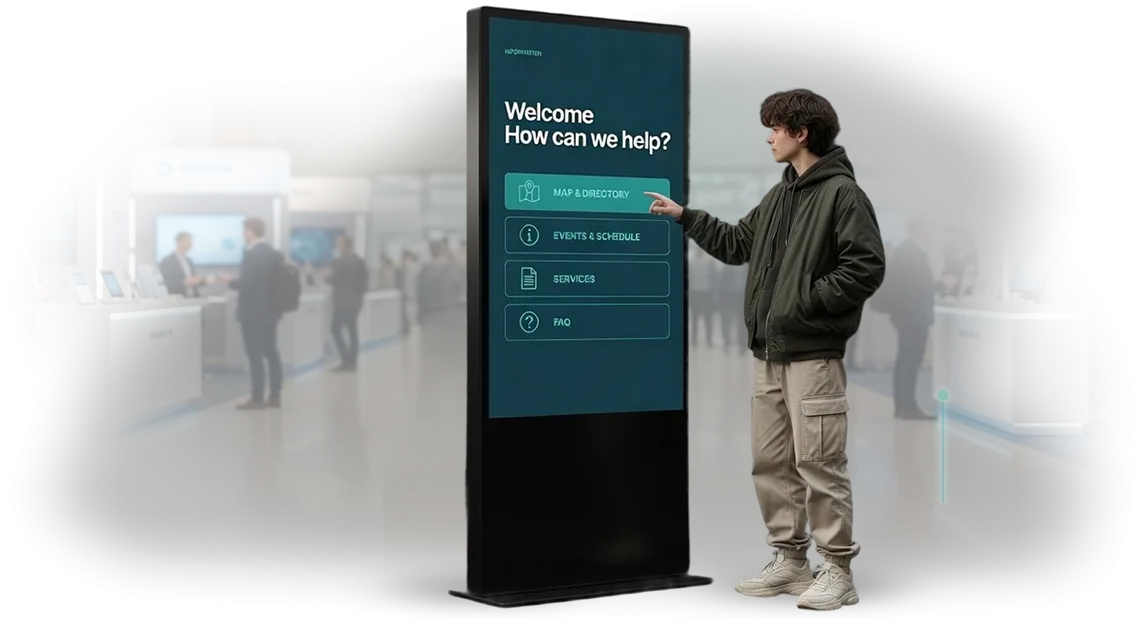
Visitors make decisions within seconds, and the kiosk interface is often the deciding factor. If the screen greets them with a confusing menu, slow touch response, or outdated design — the person simply walks away without even exploring your offering.
An interactive kiosk turns from an assistant into a source of frustration, and every such interaction reduces brand loyalty.
User experience determines whether a client returns and recommends you to others. A kiosk with illogical navigation pushes visitors to look for alternatives: a checkout counter, a phone, a competitor's website.
Instead of a quick resolution, they get wasted time and negative emotions that become associated with your company.
The second reason for abandonment is weak integration with databases. A kiosk that operates on its own cannot see the client's history, bonuses, order status, or personalized offers.
The guest is forced to re-enter data or turn to staff, which kills the core value of automation — speed and seamlessness.
When the kiosk interface is not connected to internal systems, operational efficiency suffers as well. Managers waste time on manual data entry, errors occur, and clients encounter conflicting information. All of this undermines trust in the service and makes people question the company's reliability.
These are exactly the problems we solve at our team. We design interfaces that any visitor can understand without training and set up integration with your databases so that every screen displays up-to-date data in real time.
The result is a kiosk that retains clients, speeds up service, and increases repeat-visit conversions.
What a Thoughtful Interface and Reliable Processes Deliver
A well-designed information kiosk interface is the first thing a visitor encounters, and it shapes their impression of your company.
If a guest finds the needed service, submits a request, or gets directions within 10–15 seconds, they leave with a positive attitude and are ready to come back.
Convenient UX directly boosts visitor satisfaction: they spend less time, feel no irritation, and are more willing to use the kiosk next time.
Improved interface design works quietly but steadily to drive sales.
When the screen has clear buttons, logical hints, and simple navigation, the client makes decisions faster and more readily agrees to additional offerings — for example, choosing an upgraded service or subscription.
This mechanic increases the average ticket without staff involvement and makes repeat visits a natural habit rather than a coincidence.
Reliable kiosk operation and well-planned integrations with your internal systems remove routine work from employees. Orders, payments, and appointments automatically flow into the accounting system, eliminating manual entry, errors, and queues.
As a result, staff focus on real clients and genuinely important tasks, and process efficiency grows even during peak hours.
A systematic approach to UX and integrations is not just a pretty screen — it is a tool that pays off every day. Visitors get comfort, the company gets loyalty and revenue growth, and employees get less routine workload.
In the end, the kiosk becomes a full-fledged business assistant rather than another point of failure.
Work Formats and Solutions for Your Task
An information kiosk is more than just a screen with a menu. The quality of the interface determines whether visitors will use it and resolve their tasks without staff assistance.
That is why we choose the format to fit the specific task: from strict minimalism to interactive gaming.
Beyond design, we plan integrations with accounting systems: the kiosk can book appointments with specialists, check application status, and display current data from the internal database.
As a result, you get not a static picture but a working tool that saves staff time and accelerates client service.
| Format | Who It Fits | What It Delivers to the Client |
|---|---|---|
| Minimalism | Navigation, information zones | Visitor finds what they need within seconds, staff workload decreases |
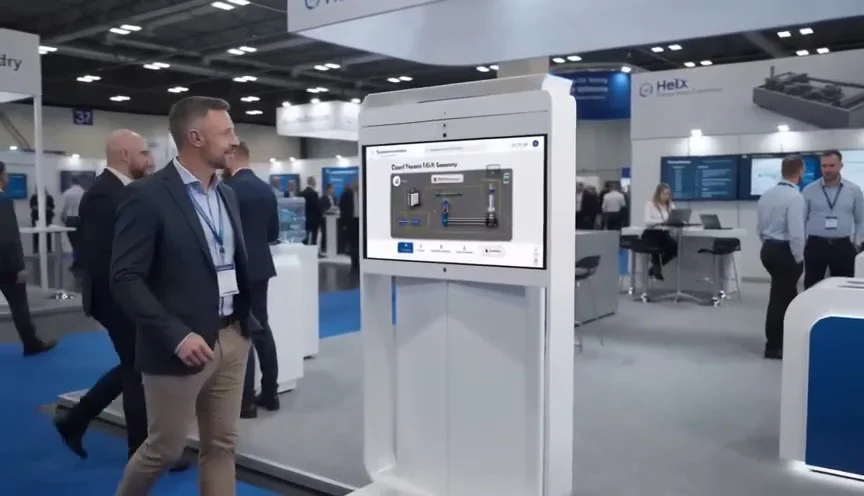
| Corporate style | Business centers, offices | Kiosk looks like part of the brand and strengthens the company's image |
| Government brand | Public institutions, MFCs | Official appearance, strict structure, clear scenarios for all ages |
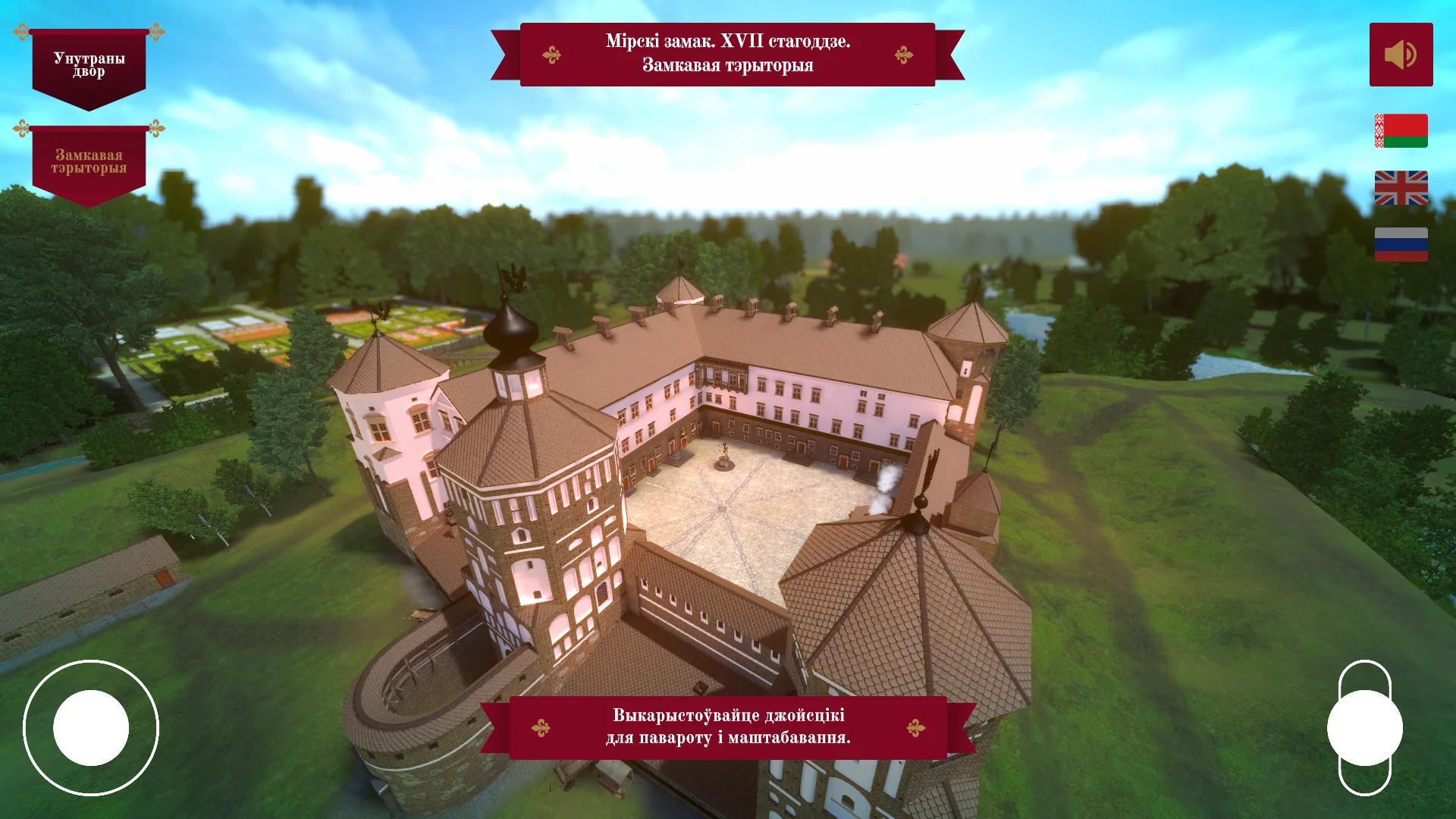
| Game interface | Shopping malls, museums, exhibition zones | Attracts attention and increases time spent interacting with the brand |
| Accessible design | Social facilities, mass events | Considers the needs of people with disabilities: large fonts, voice guidance, high-contrast elements |
Any format can be adapted to your specifics — the logic, color scheme, or level of interactivity can change. We also fine-tune the kiosk's connection to your services on professional hardware so the system works reliably from day one.
Describe your task — we will suggest a suitable option and show examples of completed projects in similar industries.
How the Project Goes: From Brief to Launch
We have completed dozens of information kiosk projects from the first meeting to ongoing operation, so we have built a process without unnecessary complications. You always understand what is happening and what result you will get at each stage. No magic: we discuss the task, show a mockup, approve, launch — and stay in touch.
- Brief and task exploration. You describe who the kiosk is for and what it should deliver to visitors and the business. We ask clarifying questions and prepare a proposal with clear timelines and a scope of work.
- Scenario design. We think through how a person will use the kiosk: where they will pause, what they will do quickly, and where they might hesitate. You receive the interface structure — without design applied, just the logic.
- Design and mockup approval. We present the visual solution for the screens for approval. Revisions are made before development begins — this is faster and cheaper than reworking the finished product.
- Interface development. We build a clear, responsive system that works equally well on a touchscreen and alongside video walls. You see intermediate results and control the timeline.
- Testing and debugging. We verify everything against a real usage scenario: labels, response speed, resistance to careless taps. We fix issues before the kiosk meets its first guests.
- Launch and training. We deliver the kiosk, install it, configure it, and briefly show your team how to add content and update materials. After launch, we remain on support and answer questions.
This sequence eliminates surprises and unnecessary expenses: you know in advance what you will receive and make decisions at every step, not at the end when changing something becomes difficult.
What Is Included in the Deliverable: A Complete Package
When you order a kiosk, you receive not just a device but a ready-made solution that can be launched and developed immediately. We hand over a complete set of materials — from visual mockups to staff instructions. Everything needed for operation and control is gathered in one place.
- Design mockups of all screens — you see the final appearance of the kiosk before launch and can make revisions without reworking the finished system.
- Style guide — a unified interface style matching your brand, plus the rules for applying it to any future screens.
- API integration with your systems — the kiosk automatically receives up-to-date data from your website, CRM, or inventory system, without manual updates.
- Documentation for administrators and staff — clear instructions for replacing content, configuration, and basic maintenance.
- Updates during the support period — we expand functionality and adapt the kiosk to new business challenges.
This package allows your team to manage the kiosk independently and not depend on the contractor in daily operations. And if questions arise, we stay in touch within the support agreement.
Case Study: Metrics Growth After Implementation
A typical kiosk provides information but does not hold attention. The "Pulse" fitness club chain faced a situation where guests opened the schedule, could not find what they needed, and went to the front desk — queues grew and some requests were lost.
We replaced the interface: removed unnecessary steps, added large buttons and clear hints, and introduced quick search by club and time. Now a guest selects a service, sees available slots, and books within a couple of taps.
Results After Implementation
Three months later, we measured the changes. The average session time grew from one and a half minutes to four — people no longer leave the screen but explore the services.
The booking error rate decreased by 70 percent, and the number of successful bookings through the kiosk increased by a third.
For the chain, this means less strain on administrators and more requests without staff involvement. Employees spend their time on real tasks instead of repeating the schedule.
Client Feedback
The chain's director noted that the kiosk ceased to be "just another screen in the corner": guests now bring others to it, and the staff gained a sales tool. No hardware replacement was needed — we refined the software side and the screen logic.
The same approach applies to your project: we analyze the weak points of your scenario, prepare a new interface version, and launch with minimal risk.
How to Choose a Contractor for Integration?
Choosing a contractor for kiosk integration is a decision that determines whether the screen becomes a growth point or a source of downtime.
There are many criteria, but three matter most: real experience, a comparable portfolio, and willingness to support the project after launch. Start with the portfolio — ask for cases from your industry: retail, HoReCa, services.
If the contractor understands your business processes, the integration will be faster and more cost-effective than with a generalist.
The second criterion is integration standards. Ask how data exchange will work: with your CRM, inventory system, or booking service.
A responsible contractor offers a clear scheme: what data is transferred, how synchronization is protected, and what happens if the connection fails. This is a sign of company maturity — the ability to turn complex integration into a predictable process.
Support and guarantees are equally important. Ask how incidents are handled, who is responsible for interface updates, and what post-warranty maintenance covers.
Ideally, the contractor takes on monitoring and fixes response times — then your staff are not distracted by technology and can focus on clients.
Finally, check how the company talks about guarantees. A transparent contract with a list of work and deadlines protects your money. Our team work exactly this way: we show references, define integration criteria, and stay in touch after launch.
When comparing contractors, choose not the one who promises louder, but the one who can show a working system and is ready to answer for results.
Frequently Asked Questions About Work and Guarantees
We understand: when ordering an interactive kiosk, you expect smooth operation without surprises. Hardware and software are not things you want to think about during daily use. That is why we address the typical questions about guarantees, support, and updates in advance.
What happens if the kiosk breaks down?
All kiosks are covered by warranty and technical support. If an issue arises, you contact us — most problems are resolved remotely within a business day. If an on-site visit is needed, we arrive on schedule and resolve the issue on location.
Who is responsible for uninterrupted operation?
We are. You receive a configured system with redundancy and automatic monitoring. Professional hardware and a well-tuned server architecture handle peak loads, so the kiosk does not freeze or lose data at the most critical moment.
How is the software updated?
Software and content are updated directly on running kiosks without stopping the service. At any time of the year, you can change schedules and promotions yourself — through a convenient admin panel, without contacting developers.
How secure is the data and the system?
We use modern encryption protocols, staff authorization, and protection against unauthorized access. Critical data is backed up, and we define action scenarios for emergency situations so that kiosk operation is never disrupted.
Let's Discuss Your Project and Prepare a Solution
Every interactive kiosk project is unique: its own goals, installation locations, audience, and integrations with your systems.
That is why we do not send out standard price lists — we provide free consultations, analyze your situation, and prepare an individual commercial proposal with a clear cost calculated after audit and clear timelines.
What you get when you contact us:
- Free consultation — we discuss goals, usage scenarios, and the expected result.
- Project request — you describe the task in whatever way is convenient: phone, email, or the form on the website.
- Cost calculation — within 1–2 days, we prepare a transparent estimate with no hidden fees.
- Individual proposal — we adapt the kiosk's functionality and design to your brand and goals.
- Turnkey solution — design, development, equipment delivery, installation, and configuration.
- Post-launch support — we train staff, update content, and accompany the project.
With us, you get a clear process: from the first call to a working kiosk. You always know what stage the solution is at and what happens next.
Leave a project request — we will contact you within a business day, answer your questions, and prepare a concrete proposal tailored to your needs.