

Why Do Visitors Walk Past Your Exhibition Booth?
A visitor walks past a booth in a couple of seconds if nothing catches their eye. Identical banners, stacks of brochures, and a polite manager—it all looks like everyone else's booth.
The eye glides over the display, and the person moves on to where they can touch, try, or flip through something themselves.
As a result, participating in an exhibition turns into an expensive rental of square meters with unclear returns. Your staff patiently wait for questions, while targeted leads at the show go to your neighbors in the hall. Each such pass is a lost contact that can never be recovered, and a budget that brought no profit.
To change this scenario, you need a reason to stop—and better yet, to linger.
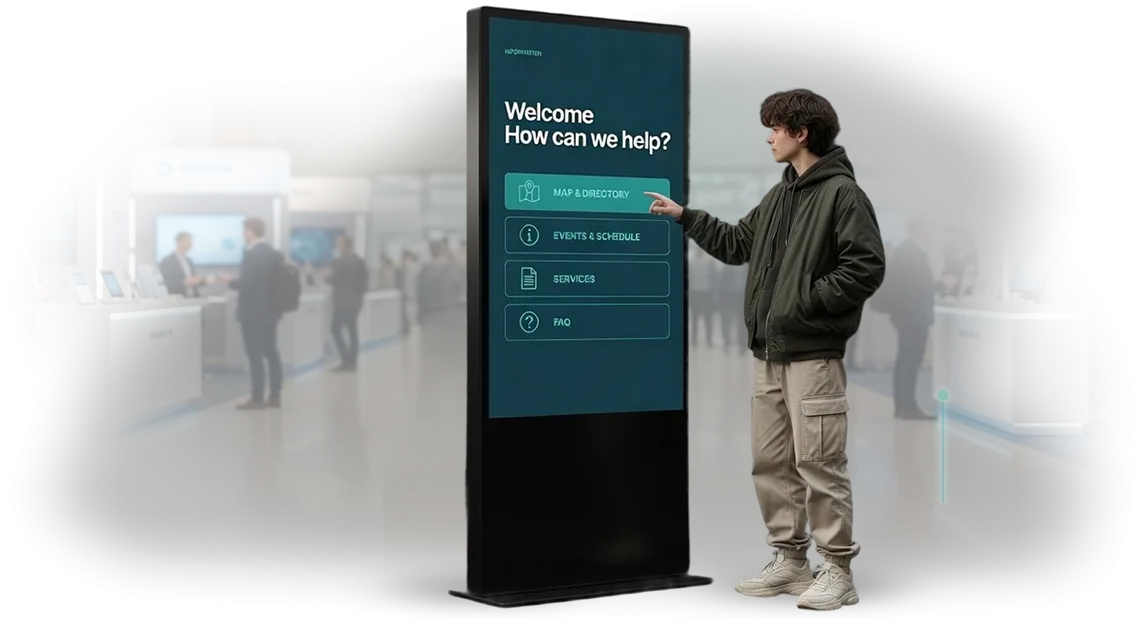
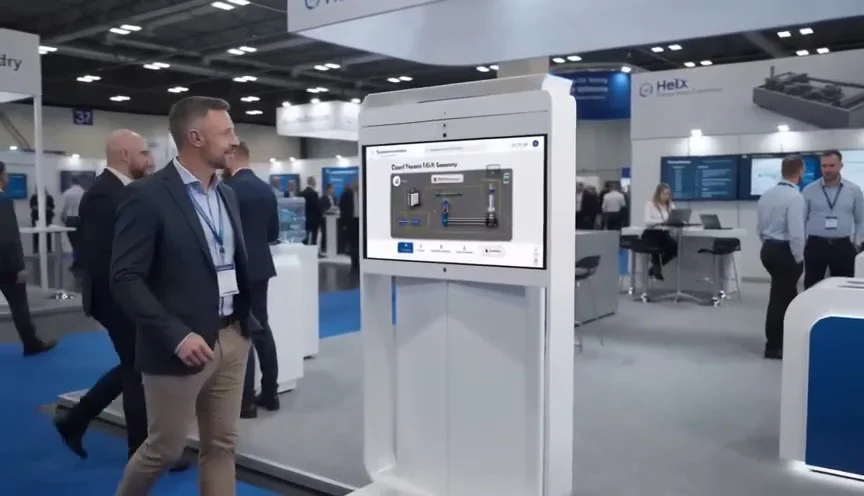
An interactive presentation on a touch panel provides exactly that reason: a bright screen attracts the eye, and self-directed exploration of the product—catalog, specifications, solution options—holds attention for far longer than a standard booth.
During that time, a live dialogue develops. The visitor shows interest on their own, leaves their contact details, and you get a qualified lead—someone genuinely interested, not a random passerby with a free souvenir.
Your exhibition booth transforms from static furniture into a working tool for attracting visitors and collecting inquiries.
We develop exactly such interactive presentations on touch panels for your booth's goals: from scenario and design to launch and support during the exhibition days.
We help you make your participation pay off through a steady flow of engaged guests and clear results for your business.
What Benefits an Interactive Kiosk Brings
Exhibition visitors walk past a booth in seconds if nothing catches their attention. An interactive kiosk changes this dynamic: visitors approach on their own, touch the screen, and get involved.
The first measurable benefit is engagement. A touchscreen attracts attention and holds visitors 2–3 times longer than a regular brochure stand. People don't just look—they explore the product, flip through the catalog, watch videos—and remember your company.
The second benefit is lead capture. The kiosk can work as an electronic form: visitors leave their name, email, and phone. You get a structured database of potential clients—without manual entry and no data loss.
The third benefit is brand awareness. An interactive kiosk becomes an attraction in itself: guests take photos, shoot videos, and share them on social media. That's free reach that keeps working after the exhibition ends.
We develop interactive kiosks on professional hardware and proven scenarios—the client gets stable operation throughout the entire event. Our team has over 10 years of experience in interactive solutions for exhibitions and events.
In the end, the kiosk delivers measurable results: more time at the booth, more contacts, more recognition. It's an investment that pays off even before the exhibition is over.
Interactive Presentation Formats for an Exhibition Booth
A visitor walks up to a booth and decides where to look. If the presentation doesn't answer their question within a few seconds, their interest goes to the neighbors, and your brand's reach drops.
The format of the interactive screen determines how quickly you capture a guest's attention and what they remember about your company.
We develop interactive presentations for touch panels to meet exhibitors' goals. We work on professional hardware and proven tools—the solution runs reliably throughout the entire exhibition day, without reboots or delays during peak hours.
Which interactive presentation formats for an exhibition booth are worth considering are shown in the table below. Each option solves a specific task: show the product, guide through the range, collect contacts, or create buzz.
| Format | For Whom | What It Gives the Client |
|---|---|---|
| Product Showcase | To show a product in detail when the physical sample can't be brought | The guest independently explores specs, photos, and videos, views a 3D walkaround—without a consultant's help |
| Interactive Catalog | Large assortment, many models and options | Fast filtering by criteria and model comparison—managers work only with warm inquiries |
| Booth Quiz | To collect interested contacts | The guest answers a few questions and leaves an email or phone—you get warm leads |
| Game | To attract foot traffic and create buzz around the booth | People linger, take photos, share on social media—reach and recognition grow |
This isn't a strict one-or-the-other choice: formats are combined within a single kiosk. For example, a quiz first engages the guest, then a "product showcase" presents the key solution, and an interactive catalog helps select a modification. That way, one screen serves the entire chain—from first touch to a contact in your database.
We'll match the format to your goals, booth footprint, and audience behavior. We'll design the logic, write the scenario, and fill it with content—so the presentation delivers clear results rather than being just a "pretty little screen."
How We Develop an Interactive Kiosk: Stages
We know that deadlines and predictability are critical for your exhibition booth. That's why the kiosk development process is structured so that you see results at every stage and can make edits without delays. Below are five steps we take together with you, from the brief to on-booth operation.
-
Brief and task immersion. We gather requirements: who your audience is, what materials need to be shown, and where the touch panel will be located. The output is a fixed technical specification and a development roadmap.
-
Prototype and interaction logic. We determine the section structure, number of screens, and visitor behavior scenarios. You see the prototype before design begins—this saves time and budget at the layout approval stage.
-
Design and content. We adapt your brand identity to the screen and prepare texts, images, and videos. We review and approve the layout together—you get a finished interactive experience in your visual language.
-
Build and testing. We connect the design to the logic and test it on real hardware: response speed, content display, and stability over long sessions. You get a tested product ready for installation.
-
Launch at the booth and support. We install the software on your panel, train staff if needed, and remain available throughout the exhibition. If necessary, we make quick, on-the-spot edits right away.
The entire process takes an average of 2–4 weeks, depending on the volume of content. You get a manageable, transparent project: after each stage, there's an interim result you can show to management or partners.
In the end, the interactive kiosk works from the first day of the exhibition and requires no involvement from you in technical details.
What Is Included in the Supply and Setup of a Kiosk
When you order an interactive kiosk for your exhibition booth, you get not a "bare" touch panel but a turnkey solution.
We assemble the kit, configure the software, prepare the content, and install the equipment at your booth—all that's left for you is to accept the work and start welcoming guests.
- Touch panel — professional hardware that withstands heavy use and runs reliably throughout the exhibition day.
- Software — starts automatically when powered on, doesn't crash, and requires no involvement from your staff.
- Interactive presentation — content built from your materials: product catalog, surveys, and photo gallery, packaged into a guest-friendly scenario.
- Interface design — branding in your corporate style so the kiosk looks like part of the exhibition rather than an external device.
- On-booth installation — we deliver the panel, mount it on a stand or in a niche, connect power, and verify operation before the exhibition opens.
- Event-specific configuration — endless demo mode and auto-return to the home screen so the kiosk never gets stuck and is always ready for the next guest.
- Instructions and support — a short guide for your staff and access to our specialist throughout the booth's operation.
All equipment is tested before installation, so the kiosk works from the first minute until the exhibition closes. You get a predictable result: guest attention, engagement, and captured contacts—without extra hassle for your team.
Case Study: How We Revived a Booth at an Exhibition
Exhibition visitors walk past a booth in three seconds if they don't see anything interesting.
Even the most thoughtfully designed booth with handout stands and a poster loses 80% of traffic—people don't approach, don't leave contacts, and the participation budget doesn't pay off.
It was with this exact challenge that a client came to us: the booth was noticeable but "dead." We proposed turning it into an interactive attraction where each guest controls the presentation themselves and leaves with a clear impression of the product.
What We Did
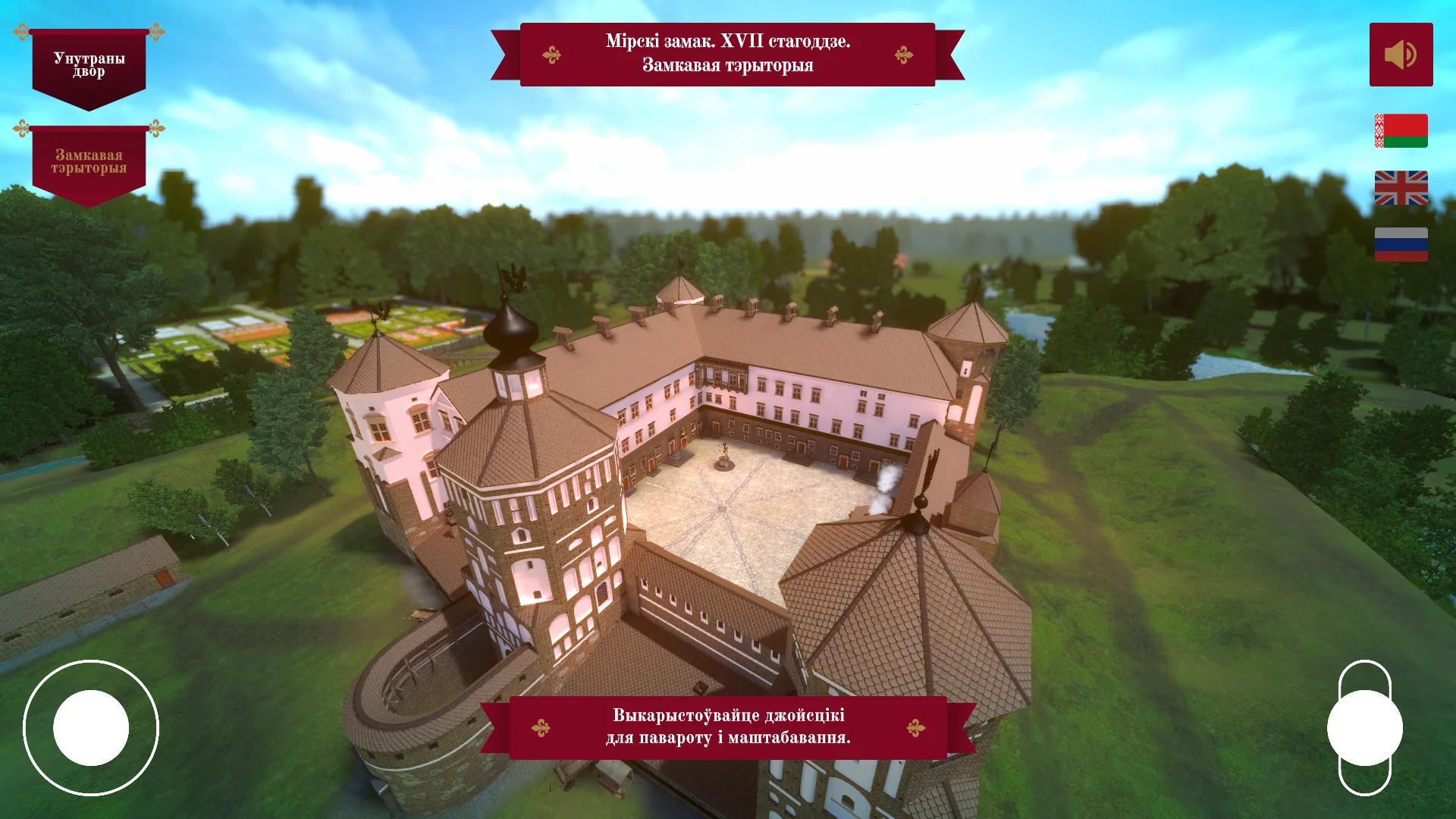
We placed an interactive product catalog with a gamified scenario on a touch panel at the center of the booth: the guest chooses a category of interest, watches short videos, and answers a couple of questions—then receives a selection of solutions tailored to their task.
The experience takes a few minutes but creates the feeling of a personal conversation with the brand.
We also set up lead capture: at the end of the scenario, the visitor leaves a business card or enters an email to receive materials. For the booth managers, this meant not "we talked and forgot," but a ready database of interested leads.
Results for the Client
- Time at the booth grew from 30 seconds to 4–5 minutes—guests didn't walk past; they queued up.
- Over two exhibition days, more than 600 contacts were collected—three times more than classic business card collection.
- The share of repeat inquiries after the event increased: about a third of new contacts turned into deals within the first month.
The client later noted: "For the first time, the booth worked on its own, and managers only had time to talk with genuinely hot prospects. We didn't just get contacts; we got people ready for dialogue."
This approach is universal: we adapt the scenario to the industry, booth size, and goals of a specific event. You don't need to change your exhibition concept—just one point of attraction is enough for traffic to start driving results.
How to Choose the Right Format for Your Task?
The choice of format depends directly on what the guest should do at your booth: just look, explore the product on their own, or get a personal consultation.
If the main goal is to attract attention and hold it for 2–3 minutes, a bright interactive video that starts with a touch and quickly draws people into your brand story is enough.
When visitors need to compare models, read specs, or find a solution for their task, you need a full-fledged interactive catalog with convenient navigation and search.
Between these two extremes, several other working formats exist: overview presentations with buttons for moving between sections, games and quizzes to make the product memorable, or scenarios where on-screen content changes based on the visitor's choice.
We help you decide as early as the briefing stage: we listen to your task, look at the event's audience, and propose a format that addresses exactly that challenge.
Sometimes the simplest option delivers better results than an expensive interactive solution, and sometimes it's precisely a complex scenario that becomes the main reason guests line up at your booth.
The decision is easiest when you clearly understand what you want from the exhibition: maximum reach and social media photos, lead capture, or direct negotiations at the counter.
Short touchscreen quizzes and eye-catching videos are ideal for the first goals, interactive catalogs with request forms for the second, and for the third—a presentation that helps managers visually showcase the product and quickly answer questions.
One and the same touchscreen kiosk can combine all modes, but the priority is always determined by your goal.
If you're not sure which format your audience will choose, don't guess. We'll have a short consultation, discuss the event, the typical visitor, and your expectations, then offer a solution with clear results.
You'll end up with not just a screen with beautiful graphics but a tool that makes your booth work more effectively. Leave your request—we'll analyze your task and choose a format that delivers measurable results from the very first day of the exhibition.
We Answer Frequently Asked Questions About Touch Panels
Before ordering a touch panel for an exhibition booth, clients ask the same questions: will guests understand how to use it, can the equipment handle several days in a row, will we meet the deadlines. We answer these concerns—briefly and to the point.
How difficult is it for guests to use the touch panel?
We design the interface around simple "touch—get information" scenarios. No instructions or training are needed: guests of any skill level figure it out in seconds.
The content guides visitors through the booth's logic and helps them quickly find what they need—about a product, service, or special offer.
How reliable is the setup for several days of continuous operation?
We use professional equipment designed for continuous exhibit-mode operation. Before the event, we run a test of all scenarios, and during the show, we provide technical support. If anything goes wrong, we resolve the issue the same day so the booth doesn't sit idle.
What are the development timelines?
A standard project takes 7 to 14 days from the moment we receive content from your side. If you need custom functionality or integration with external services, we discuss this during the brief and set the timeline in the contract. Our top priority is meeting your event date, so we adjust the work around your schedule.
How much does such a system cost?
The cost depends on the panel size, volume of content, and complexity of the interactive scenario. We offer several configurations to fit different budgets—from a concise presentation to a multimedia solution with animation and video. After the brief, you receive an accurate, itemized quote for each block, with no hidden fees.
What do you need from us to get started?
Only source materials: logo, texts, photos, and video. We take care of everything else—presentation structure, design, programming, navigation logic, and on-booth installation. You get a complete turnkey solution and can focus on other exhibition preparation tasks.
If you still have questions about the format, timeline, or content—write to us, and we'll guide you and prepare a proposal tailored to your task.Order an Interactive Presentation for Your Next Exhibition
Leave your request—and in just a few days you'll have a finished interactive presentation for your exhibition booth. We handle the entire process: from idea and scenario to installation on the touch panel. All you need to do is accept the work and put it to use at the show.
Here's what you get after ordering:
- An interactive presentation tailored to your booth's goals—attention capture, navigation, product catalog, and a form for collecting visitor contacts.
- Adaptation to any touchscreen: from a compact panel to a video wall.
- Content management without a programmer—replacing texts, photos, and promotions takes minutes.
- Training for your team and an easy-to-follow guide—booth staff will quickly get the hang of it.
- On-site launch and technical support during the exhibition if needed.
- A guarantee of stable performance from both equipment and content for the entire duration of the event.
To calculate the cost, send us a description of your task—we'll respond within one business day.
You can also get a consultation: we'll advise which interactive format will work best for your booth and how to measure its effectiveness by the number of contacts and time spent at the screen.
We are a team. Over 10+ years, we've completed more than a hundred projects for exhibitions and events in various industries. We work on professional hardware and proven tools, so you get reliable results without surprises.
Fill out the form or write to us in a messenger—we'll discuss the details and lock in the timeline. Ordering an interactive presentation is simple: leave your request, and we'll take care of everything else.