

Interactive Kiosks for Factories: How to Increase Interest in Products
If at an exhibition a factory booth looks the same — posters, brochures, mannequins — visitors slide their gaze across it and walk past. A static display doesn't explain what makes the products useful, doesn't show them in action, and quickly becomes tiresome.
As a result, the investment in participating in the exhibition doesn't bring the expected interest and contacts.
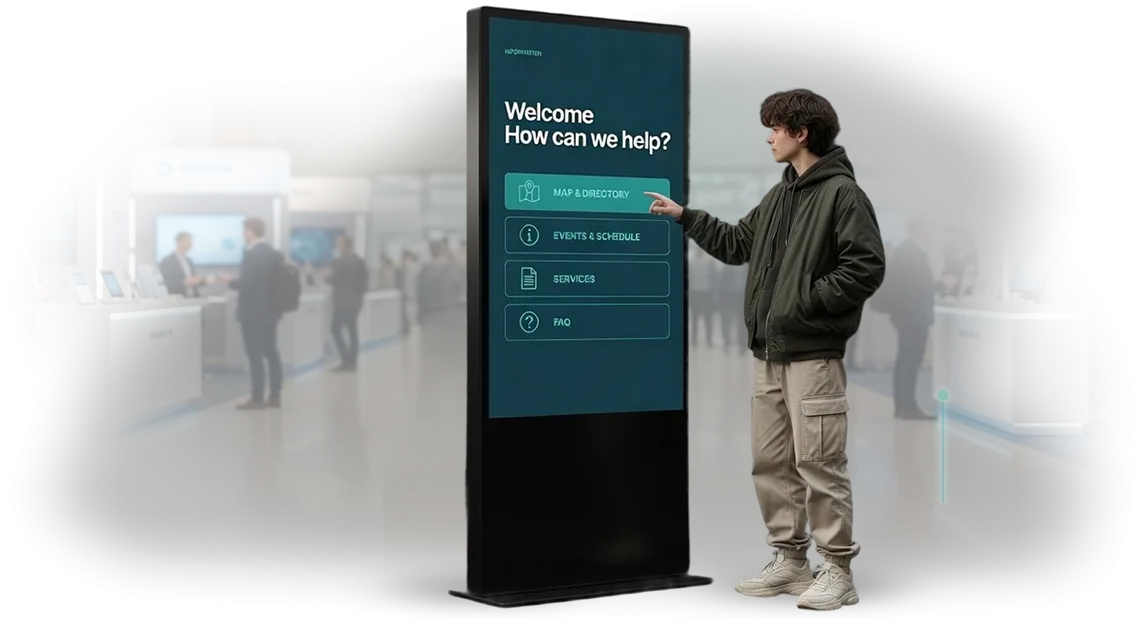
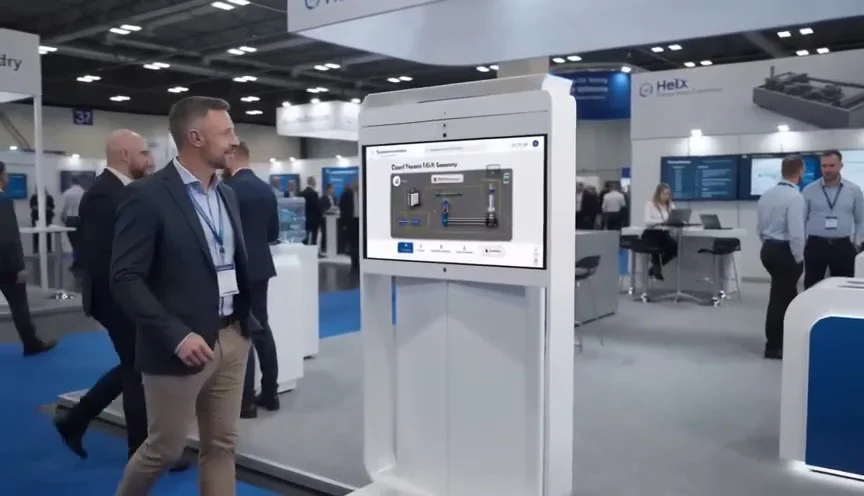
An interactive kiosk for a factory solves this problem. A touch panel for an industrial enterprise attracts attention from the very first touch: instead of boring text — lively interaction.
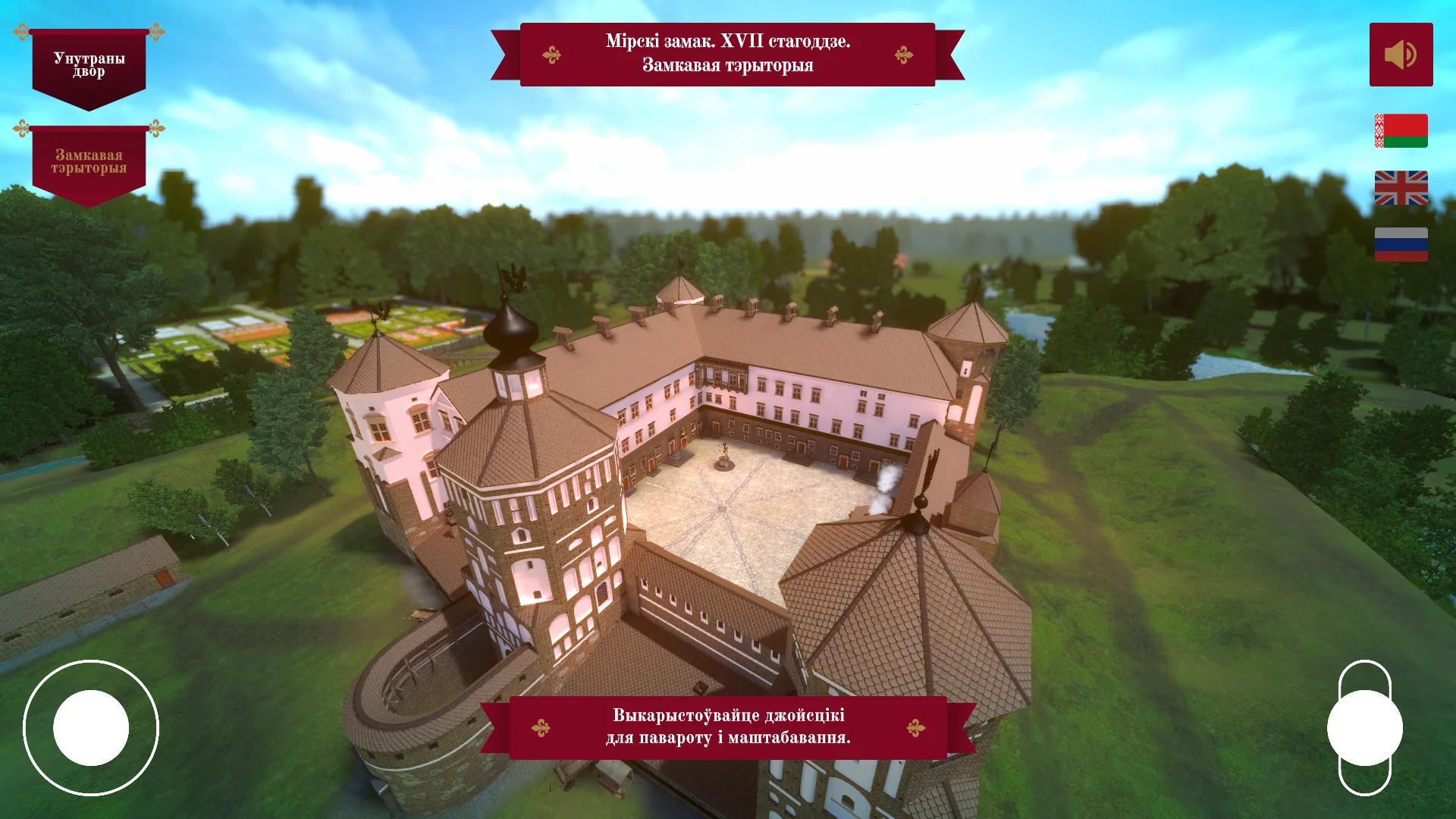
The guest chooses what to look at: workshop videos, 3D models of components, material specifications, supply schemes.
This turns a product presentation from a story into an exploration — a person stays at the booth 3–5 times longer, remembers the brand, and is more willing to leave a request.
A factory display with a kiosk looks modern and technologically advanced. This strengthens the company's image: partners and clients see that the company keeps pace with the times.
At the same time, the kiosk relieves the staff: employees answer only complex questions, and guests get basic information themselves.
Wehave been creating interactive solutions for manufacturing companies for more than 10 years.
We develop an interface for your product catalog, configure scenarios for the needs of an exhibition or a showroom, and ensure stable operation of the equipment throughout the event. We'll bring visitors' interest back to your booth — let's discuss the project at a consultation.
What a Touch Presentation Will Give Your Enterprise
For an enterprise that shows its products to guests and partners, it is important not just to demonstrate the range but to hold their attention.
An interactive presentation on a touch panel turns passive viewing into a live introduction to the product: visitors choose what to look at, zoom in on details, and compare specifications.
This format engages more strongly than a poster or brochure and helps people quickly find their way around the product range.
The key result is higher visitor engagement. People are more willing to study material when they can control it: press, swipe, watch videos.
Every minute of such interaction helps build brand recall and gives the client the feeling that this is a modern, technology-driven production facility. That is a direct investment in reputation that pays off at negotiations and exhibitions.
Another practical advantage is the ability to collect visitor contacts. An integrated contact form or catalog request removes the barrier between interest and an inquiry. A guest leaves their data right at the booth, and you get a ready-made database for further work.
In this way, a touch presentation solves not only the demonstration task but also serves as a tool for attracting potential customers.
Finally, the very fact of using an interactive solution changes how partners and clients perceive the factory. A modern interface, polished material presentation, and professional implementation speak to the company's high level even before any verbal presentation.
We focus on convenience for your guests and practical benefit for your sales department, so the result looks cohesive and works for your business.
Interactive Kiosk Formats for Factory Tasks
For a factory, the kiosk format is not a matter of design, but of how guests and partners receive information. A stationary kiosk in the lobby works constantly, a portable panel travels around workshops and exhibitions, and an interactive table brings a delegation together. Each scenario has its own task, and we match the format to it.
A stationary kiosk covers the reception area or plant administration: it shows products, the company's history, and certificates without a staff member. A portable touch panel is for negotiations and off-site meetings: it can be set up on a table or stand in minutes.
An interactive table is for delegations: several people can study the factory map and 3D models of workshops. Trade show kiosks are compact structures that can be quickly deployed at an exhibition point.
| Format | For What Tasks | What It Gives the Factory |
|---|---|---|
| Stationary kiosk | Reception area, lobby, checkpoint | Round-the-clock information about products without secretary involvement |
| Portable touch panel | Negotiations, field trips, presentations | Display materials anywhere — from office to partner's site |
| Interactive table | Delegations, open house days | Joint study of workshop maps and development plans |
| Trade show kiosk | Industry exhibitions, forums | Attracts attention in the flow, collects contacts |
We choose the format at the start together with you: we take into account where the equipment will be placed and what goal we are covering — informing, demonstrating, or collecting requests.
We combine formats: a stationary kiosk in a workshop, a portable panel for managers, an interactive table in the meeting room.
The factory gets not "a screen with pictures" but a tool that welcomes guests, sells products, and strengthens the enterprise's image.
How Kiosk Development Works: From Brief to Launch
Developing an interactive kiosk is not buying a ready-made device; it is creating a tool that works for your revenue and reputation. We have structured the process so that you can see the result at every step and influence it. Below are the stages that every project goes through.
- Brief and task analysis. We discuss where the kiosk will be placed, who the users are, and what information it should convey. This is the basis for all decisions.
- Layout and structure. We think through the screen logic: how a visitor will navigate, how many steps to the needed information. You receive a scheme for approval.
- Design. We create a visual style that fits the interior and corporate identity. You approve the layout — and we move on to content.
- Content and filling. We adapt texts, photos, videos, diagrams — everything guests or clients need. We help structure the information.
- Assembly and programming. We turn the layout into a working system, connect equipment, and configure the touch screen.
- Testing. We test scenarios from quick tapping to long-term use. We make sure the kiosk is stable under your visitor flow.
- Launch and support. We install the kiosk and train staff. We stay in touch: we support the system and help update content.
What Is Included in the Delivery: A Package for the Marketing Department
When you order the development of an interactive kiosk, you need not just a screen with a program, but a ready-made solution that can be launched immediately in a workshop, warehouse, or showroom.
We put together a package for the marketing department's tasks: you get everything needed for work — from content to staff training.
Here is what is included in the delivery:
- Ready-made content for your factory. Presentation structure, texts, photos of workshops and products, process diagrams — everything is adapted to touch control and the company's corporate identity.
- A touch panel program with an intuitive interface. A visitor or employee figures it out in seconds: swipes, taps, zooms into needed sections — without training.
- Installation and startup instructions. Simple steps: connect, turn on, load content. Fits any panel or screen already present at the enterprise.
- Staff training. We conduct a short training session for your specialists: how to update information, change blocks, add product news. It takes less than an hour.
- Technical support at launch. We help with setup and answer questions during the first weeks of operation — so the kiosk immediately solves the task instead of "sitting" waiting for debugging.
- Source materials and access. All content files, logins, and rights stay with you — you are not dependent on us when you need to change something.
- Placement recommendations. We advise where to place the kiosk at the factory so it delivers maximum benefit: near the checkpoint, in the waiting area, at an exhibition, or in the company museum.
This package covers the entire cycle: from idea to a working tool that is clear to both marketing and guests. You don't have to dive into technical details — you simply get an effective way to show your production to clients and partners.
Moreover, the delivery scope is fixed in the contract, so you know in advance what you are paying for and what you will receive.
Case Study: A Kiosk for a Steel Structures Factory — Growth in Inquiries
A notable interactive kiosk case study is the steel structures factory Stalgrad. Before implementation, potential buyers got lost in the assortment: beams, columns, trusses, canopies — without a manager's consultation, it was hard to see the difference.
Employees answered the same questions over and over, and visitors left without leaving contacts. The factory needed a tool that would explain the product itself and prompt an inquiry.
How We Implemented the Touch Panel
We prepared an interactive presentation for a touch panel in the showroom. The visitor chooses the type of structure, views specifications, examples of completed projects, and timeline references.
At the end, they can send the selection to their email or immediately request a quote — so the factory gets a contact right on the spot instead of losing the visitor after the visit.
What Changed for the Factory
The time a client interacts with the product grew from a couple of minutes to five to seven: people independently study series, compare, and ask managers more specific questions.
In the first six months, the number of inquiries from the website nearly doubled — some visitors went home, studied the selection, and came back with a ready request.
The factory achieved growth in inquiries without expanding the sales department, and after the launch ordered two more kiosks for its branches — the best indicator of satisfaction with the result.
Frequently Asked Questions About Kiosks for Enterprises
Factory owners and workshop managers often hesitate before implementing touch kiosks: will the equipment fail, how to fit it into work processes, and who will maintain it.
We have collected answers to typical questions — without complicated technical details, only what affects your work.
How reliable is a kiosk in factory conditions?
We use industrial touch panels and vandal-resistant enclosures, so the kiosk operates reliably in dust, vibration, and temperature fluctuations. Dozens of projects for enterprises confirm this: the equipment withstands intensive use for several years. And if anything needs attention, the system will warn you in advance.
How will employees learn to work with the kiosk?
Training takes minimal time — the interface is built around the logic of your tasks: select a shift, view instructions, order components. Everything is clear from the first screen, so staff master the kiosk in a day or two. If necessary, we conduct on-site training and leave a reference note right in the system.
What happens if the equipment breaks down?
The kiosk is covered by a warranty. In case of a malfunction, you get fast repair or parts replacement, and if it is connected to the network, we perform remote diagnostics.
Most issues are resolved without stopping operations — the service team gets in touch within one business day.
Order a Kiosk for Your Factory — Deadlines Will Be Fixed in the Contract
Production doesn't wait, so decisions need to be made quickly. You call with the question "how much does a kiosk cost" and hear "send us a technical specification" — and the project stalls.
We work differently: you send a short brief or simply describe the task in a messenger, and within two business days you receive a cost estimate and a realistic launch timeline.
We fix the details in the contract: the delivery date, the scope of delivery, and the obligations of the parties. If we deliver late, we are responsible. For you, this means predictability: you plan the launch rather than live in a waiting mode.
We are a team with more than a dozen industrial projects behind us, each confirmed by a contract and acts.
What you get when ordering:
- Free brief and consultation — we help you formulate the task, even if there is no clear technical specification yet.
- Cost and timeline estimate before signing the contract — you see the final figure without hidden surcharges.
- Interface prototype for approval — before development starts, you see what the kiosk will look like and make changes.
- Fixed deadlines in the contract — the launch date is known in advance, and delivery is confirmed by an acceptance act.
- Warranty on work and equipment — after delivery we don't disappear: we support, update content, and consult employees.
- Stage-by-stage payment — you pay as stages are completed, not the entire amount upfront.
Leave a request for a cost estimate — we will call you back within an hour, ask a couple of clarifying questions, and prepare a commercial proposal with the exact price and timeline.
Next — the contract, development, and launch of a kiosk that works for your factory, not the other way around.
How to Choose a Kiosk Format for Your Specific Production?
A kiosk format should be chosen not by a picture in a catalog but by three questions: who will use it, what the products show, and where it will be placed. In a production environment, the visitor flow usually consists of delegations, potential customers, and new employees.
If there are few guests and they come in groups, a compact touch panel on a stand will work. If hundreds of people pass by each day, you need a floor-standing kiosk with a large screen that is visible from afar and does not create queues.
The type of product determines what exactly the kiosk needs to show. For large-sized products — machines, equipment, complex assemblies — it is important to demonstrate details: close-ups of components, cross-sections, and operating principles.
For serial products — the assortment, specifications, and configuration options. Think about what clients most often ask at exhibitions and during visits: the same answer should be available in the kiosk without a manager's involvement.
The installation location is the third factor that is often underestimated. In a noisy workshop or near a checkpoint, a kiosk with a protected enclosure and well-thought-out sound volume is needed.
In a meeting room or office lobby, a more presentable solution that supports the image is better. It is also important to consider lighting: in bright light, the screen must remain readable, and in limited space, it should have a convenient tilt angle.
We take these nuances into account at the design stage so that the kiosk is not just standing there but is actually used.
A properly chosen format pays off because guests get the information they need on their own, and your employees are not distracted by recurring questions.
We help you decide on the format based on your tasks and offer a solution that fits the interior and is convenient for visitors. As a result, the kiosk becomes part of the production presentation rather than just an expensive stand with buttons.