



Visitors Get Lost in the Library: How to Bring Back Easy Navigation
A reader comes for a specific book, but after a few minutes is already standing perplexed in front of the shelf. The title is in the catalog, but where it is physically — unclear: floors, departments, circulation desk, reading room, shelf arrangement.
Instead of calmly exploring the collection, the visitor spends time searching, and staff spend time on the same repetitive answers about "where to go, what to take, where to find it."
When the flow of visitors is heavy, each such question eats up staff working hours and distracts them from those who genuinely need help.
People get lost in the library, leave without the literature they needed, and are unlikely to return — navigation has become part of the impression a place makes.
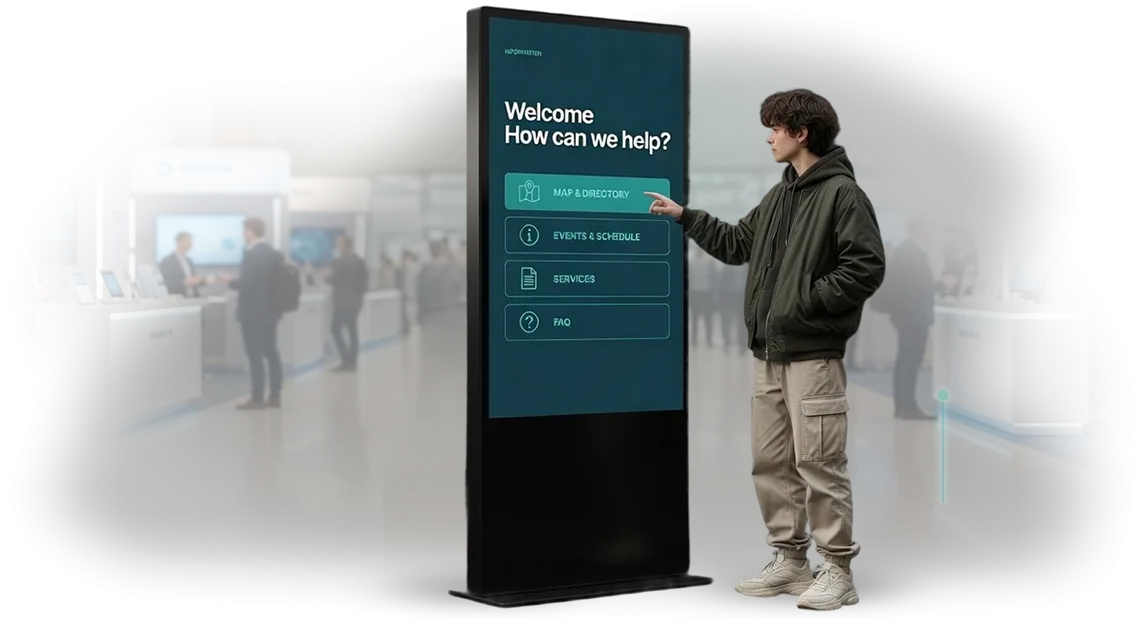
The solution is a touchscreen information terminal with convenient literature search. The reader finds a book by title, author, or topic on their own, sees the exact department and shelf, and gets a route to the right spot. Visitor navigation no longer depends on queues at the desk or personal knowledge of the floor plan.
The terminal takes over routine questions: where a department is, how to get to the circulation desk, whether a book is available. Staff focus on the real work — helping with recommendations and content — instead of pointing the way for the tenth time that day. The visitor gets a quick answer and keeps the feeling that the library cares about them.
We have been building such systems for over ten years: we design search logic around a specific collection, configure hints so readers of any age can figure things out, and support the project after launch. The result — fewer lost visitors, higher satisfaction, and more repeat visits for new books.
What an Interactive Kiosk Gives Readers and Staff
An interactive kiosk removes the library's main pain point: finding a book stops being a conversation with the librarian and becomes a self-service action that takes 30 seconds.
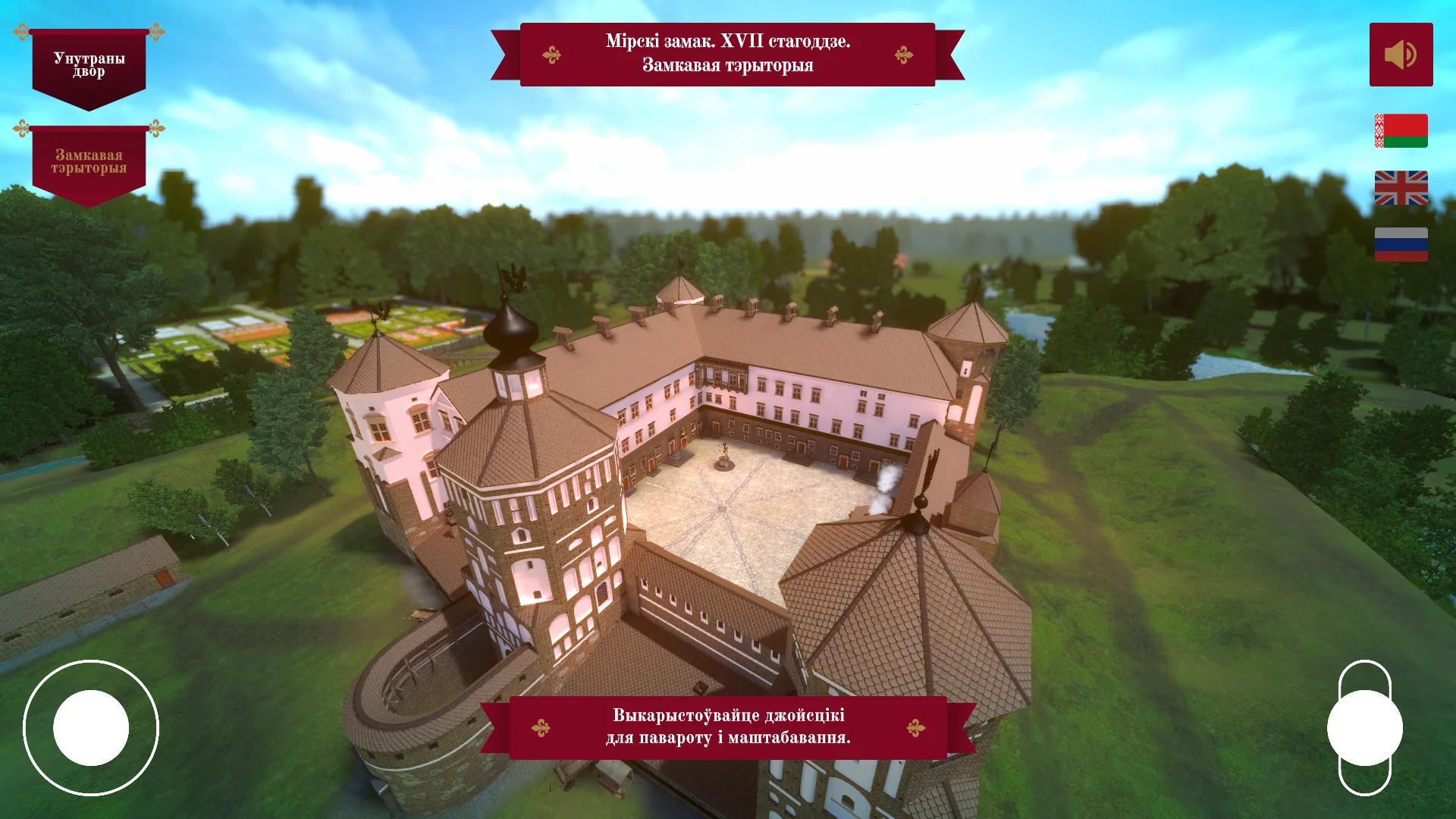
The reader sees the room plan, the exact location of the title, and its status — available or checked out. Staff are meanwhile freed from repetitive questions and can focus on substantive work.
| Situation | For the Reader | For the Library |
|---|---|---|
| Search by title, author, or topic | Instantly finds the needed copy and sees the shelf | Lower volume of repetitive requests to staff |
| Navigation through rooms | Gets a route from the current point to the shelf | Fewer lost visitors, less staff assistance needed |
| Availability check and booking | Sees the book's status and can place a hold | Faster circulation of titles, easier loan planning |
| Access to the events program | Signs up for an event right from the screen | Higher attendance, less manual registration |
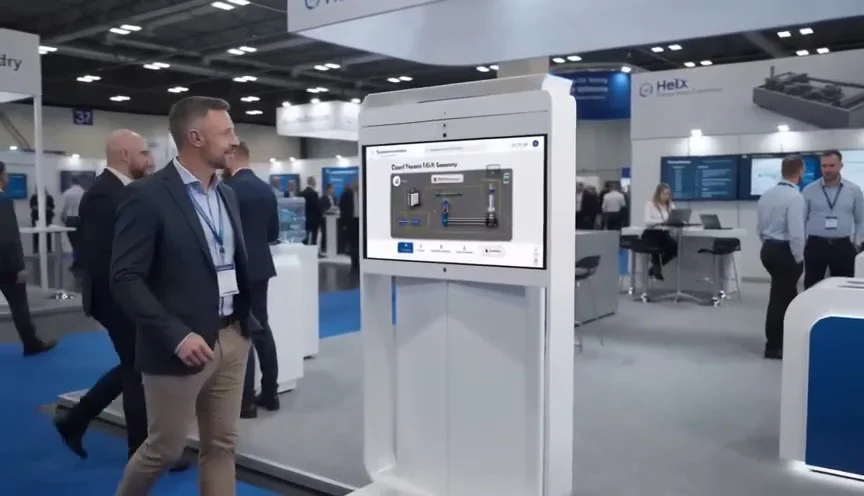
Such kiosks run on professional touch hardware and polished software — the system stays stable even during peak hours, and the catalog updates automatically.
Design and implementation are handled by our team: dozens of navigation solutions for cultural institutions and businesses behind us.
For librarians, the kiosk becomes a digital assistant: it shortens queues at checkout, handles routine reference questions, and helps process returns faster.
Thanks to built-in analytics, management sees which titles are in demand and which are worth reconsidering in procurement — this boosts reader satisfaction and the overall efficiency of the library.
Formats of Interactive Kiosks for the Library
The choice of kiosk format directly affects how comfortable readers find it and how much space the structure takes up in the library.
A floor-standing unit at the entrance, a compact panel in the corridor, or an interactive table in the children's room — these are different scenarios: one helps quickly find the right department, another reduces the queue at the administrator, a third engages young visitors.
We analyze the floor area, layout, and main reader flows, then suggest the right configuration: from a freestanding terminal to a wall panel or a model with built-in printing. Importantly, the kiosk fits the interior and creates no obstacles even in high-traffic zones.
| Format | Who It Is For | What It Gives the Library |
|---|---|---|
| Floor-standing kiosk | Spacious lobby, waiting area | A visible navigation point, fewer inquiries to the administrator |
| Wall-mounted kiosk | Narrow corridors, small rooms | Space savings, quick book or department search |
| Touch table | Children's zones, reading rooms | Collaborative catalog exploration, visitor engagement |
| Kiosk with printing | Checkout area, copy center | Self-service printing of references and slips, shorter queues |
| Terminal format | Entrance, cloakroom, information desk | Quick reference on opening hours and events without a queue |
This breakdown helps choose exactly the option that solves the task of your space and does not overload readers with unnecessary features.
How Installation and Launch of an Information Kiosk Proceeds
We have structured the process so that installing a kiosk does not distract the library from its main mission — working with readers. All stages are agreed in advance, installation is scheduled at a convenient time, and staff are trained on site.
- Brief and task analysis — we discuss which zones need navigation, which reader categories most often ask for help, and which data matters to your team.
- Plan and layout approval — we prepare the menu structure, design concept, and texts. You approve the layout before work begins, so the result matches expectations exactly.
- Hardware and software preparation — we assemble and configure the kiosk with your interior and accessibility requirements in mind.
- Installation and on-site setup — we install the kiosk at the chosen location, connect it to the network, and check touch controls and information updates.
- Staff training — we show employees how to use the system, how to quickly change schedules, announcements, and floor plans. All training takes no more than a couple of hours.
- Launch and technical support — after going live, we stay in touch: we advise, update content, and monitor stable operation.
For each stage, you receive clear reports and firm deadlines. We work remotely, but installation and configuration are done on site — so the kiosk works from day one. Technical support is available during business hours, and remote assistance is provided when needed.
What Is Included in Kiosk Delivery and Setup
A kiosk is not just a screen on a stand but a complete system that must work from day one. We take on the entire cycle: hardware selection, interface development, installation, and ongoing support.
You receive a turnkey solution that immediately helps library visitors orient themselves in the space, find the right departments, and avoid distracting staff.
- Hardware package — a touchscreen kiosk in a rugged, load-resistant housing designed for long-term use in a public space. No breakdowns from heavy use.
- Software — a preinstalled navigation system with an intuitive interface. It requires no constant administrator oversight and is easily updated when the library layout changes.
- Interface design — screen mockups in the library's brand style: room maps, book search, event schedules. Guests figure it out in seconds, even on first use.
- Installation and commissioning — we deliver, install, connect, and verify operation on site. You do not need to hunt for separate contractors or coordinate between them.
- Warranty and support — an official warranty on hardware and software, plus remote diagnostics. If necessary, we quickly dispatch a replacement — a simple solution with no lengthy approvals.
- Staff training — a short guide for librarians: how to update content and resolve common issues without calling the contractor. Saves time and nerves in daily work.
As a result, the library gets a working kiosk that reduces staff workload and improves visitors' impression of the space. And you get a single point of responsibility for the whole project — from the first mockup to warranty service.
Case Study: How Readers Found the Right Rooms and Literature
Readers got lost in the rooms even with paper signs in place — a classic situation for libraries with large collections. At the Litera library, the load on the reference desk kept growing, and visitors spent up to 15 minutes finding the right department.
Navigation did not answer questions like "where is the periodicals room" and "how do I find a book by request" — staff were constantly distracted by the same directions.
We proposed replacing static diagrams with interactive kiosks that show the route to the desired room on a touchscreen and point to the shelf with the literature.
Readers choose a section themselves or enter the book title — the system builds the path and displays it on the building map. Staff were freed from routine explanations and turned to helping where it was truly needed.
Project Results
After the kiosks launched, the average time to find the right zone dropped from 15 to 4 minutes, inquiries to the administrator fell by nearly half, and 9 out of 10 visitors used the kiosk without staff assistance.
Navigation efficiency improved noticeably — readers stopped wandering into staff areas and were less often late to events because of searching for the venue.
Director's Feedback
"We expected readers to be cautious with the new technology, but within the first week both students and retirees were using the kiosks. People like finding their own way instead of asking — that is what proper navigation is.
We are especially pleased that children treated the kiosks as a game and now lead their parents to the right rooms without our help," noted the head librarian.
After the successful pilot, the library ordered additional kiosks for the children's department and the local history museum.
The case showed: an interactive system pays for itself through staff time savings, and visitors come back because the library becomes friendlier and easier to navigate.
Common Concerns When Ordering an Interactive Terminal
When ordering an interactive kiosk, doubts easily creep in: what if it is hard to manage, what if the terminal gets hacked, or what if it does not fit the existing system. These concerns usually arise before you see the real result — and they are resolved at the design stage.
We have gathered four typical questions we hear from libraries and cultural centers. Below are short answers, without technical details, focused on your benefit.
How will we manage the kiosk?
All configuration is done through an easy-to-understand administrator panel. An employee without special training can master replacing materials, adding sections, and viewing statistics within a couple of hours.
Updates happen remotely, without calling a specialist. This means the content is always up to date, and you are not dependent on the contractor for daily operations.
Could the terminal be hacked?
Protection is built into the architecture: restricted system access, security updates, and integrity controls. Visitors can only use navigation — no system functions are available.
The librarian can always restart the interface with one click. Even in an unusual situation, the kiosk will not become a weak point in your network.
How much does it cost?
The cost is calculated after audit based on your tasks: the number of navigation points, design complexity, and the need for integration with the electronic catalog. We offer several configurations — from basic to extended.
You receive a fixed estimate before work begins and understand what each stage includes. No hidden payments: the final amount does not change during development.
Does the kiosk integrate with our system?
We connect the terminal to your ERP system or electronic catalog through open data exchange formats. The visitor sees real-time book availability and event schedules, and you do not update information manually.
Integration is tested on your data in advance, so launch happens without stopping library operations.
If these questions match yours — move on to the next section, where we break down each scenario in more detail.How to Choose the Right Kiosk Format for Navigation?
Choosing a kiosk format for library navigation starts with three questions: how large is the lobby, how many visitors need guidance at the same time, and how often the layout of departments changes.
In a small space, a wall-mounted touch panel is enough — it takes up minimal room, does not block passage, and easily blends into the interior.
For libraries with checkout zones, reading rooms, and children's corners, a floor-standing kiosk makes more sense: it is visible from afar, and the large screen can accommodate a map of the entire building.
The budget determines not only the device price but also future content costs. Wall-mounted solutions are usually more affordable but leave less room for a detailed floor plan.
Floor-standing units cost more but allow adding search by book title, interactive hints, and printing a route to the needed shelf.
If you plan to expand collections or open new rooms, choose a model with headroom in screen size and performance — this way you avoid replacement in a year or two.
A separate criterion is ease of management. It is convenient when staff themselves update floor plans, temporary announcements, and opening hours without involving developers.
So when choosing, pay attention to the administrator panel: it should be intuitive rather than requiring special training.
Wehave already helped municipal and university libraries select configurations based on area, traffic, and budget.
If needed, we bring a test kiosk and let you work with it in a real lobby — you evaluate the navigation experience for visitors and only then make a decision.
Order Turnkey Development — Start with a Consultation
Library visitors get lost in departments, waste time searching for the book they need, and create queues at the information desk.
An interactive kiosk removes this burden from staff and gives guests instant navigation — but only if the system is designed around your space and tasks.
We provide turnkey development: we handle design, development, installation, and configuration. To get started, simply leave a request for a consultation — we will then suggest a convenient working format ourselves.
What You Get After Reaching Out
- A consultation request — we will contact you within one business day, clarify your tasks, and answer questions about kiosk capabilities.
- A specialist visit — we will assess the premises, visitor traffic, and connection points to propose optimal placement.
- A project estimate — we will document the scope of work, required equipment, and the final cost with no hidden surcharges.
- Timelines — we will give realistic dates from approval to launch so you can plan the opening or navigation update.
- Turnkey development — from interface design to installation and staff training. No need to search for contractors individually.
- Warranty and support after launch — we will help update content and quickly resolve any issues.
Leave a request for a consultation — we will discuss how interactive kiosks can simplify navigation in your library and reduce the load on staff. We will start with a free conversation about your task, and then show a concrete plan, estimate, and timeline.