

Visitors Get Lost in a Science Center? How to Save Their Experience
A science center is a place where visitors first encounter a maze of exhibits, laboratories, and rest areas.
Even a well-thought-out floor plan does not help: without clear navigation in a science center, people waste time searching, get frustrated, and remember not the discoveries but the chaos. Instead of delight, they leave with disappointment — and share that feeling with friends.
Lost visitors are not just a matter of bad moods. They mean fewer repeat visits, weak recommendations, and overloaded staff who have to explain directions endlessly.
The impression of a center is built from small details: whether a guest easily reached the right exhibit, understood where they were, managed to see the main attractions. It is these small details that define the venue’s reputation.
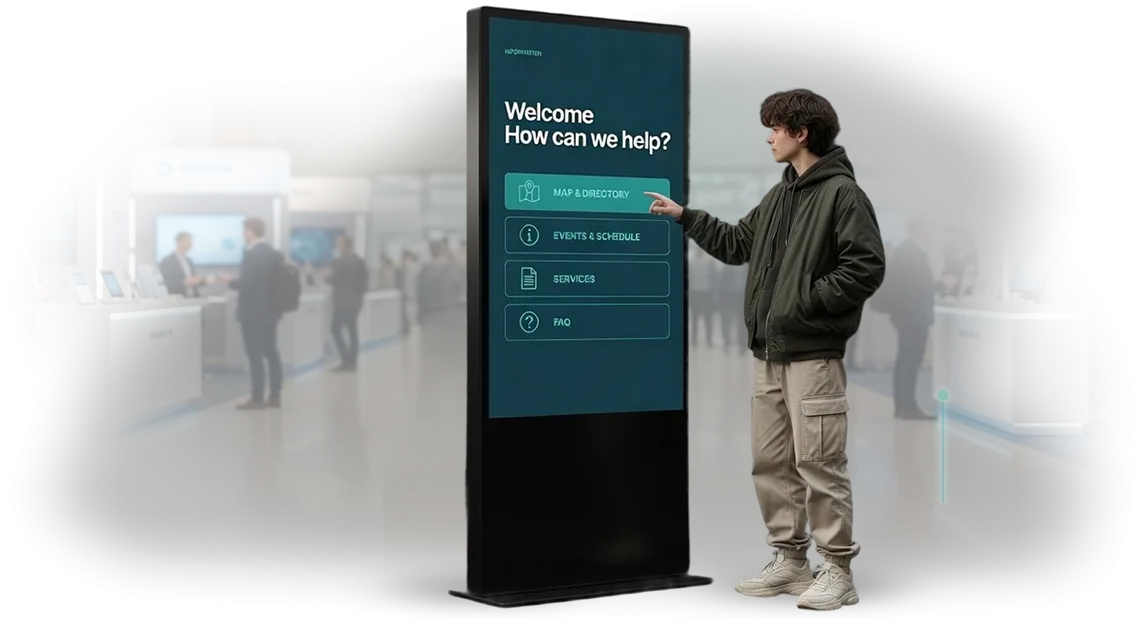
The solution is an interactive navigation system based on touchscreen kiosks. It replaces paper signs and verbal directions with a clear digital route.
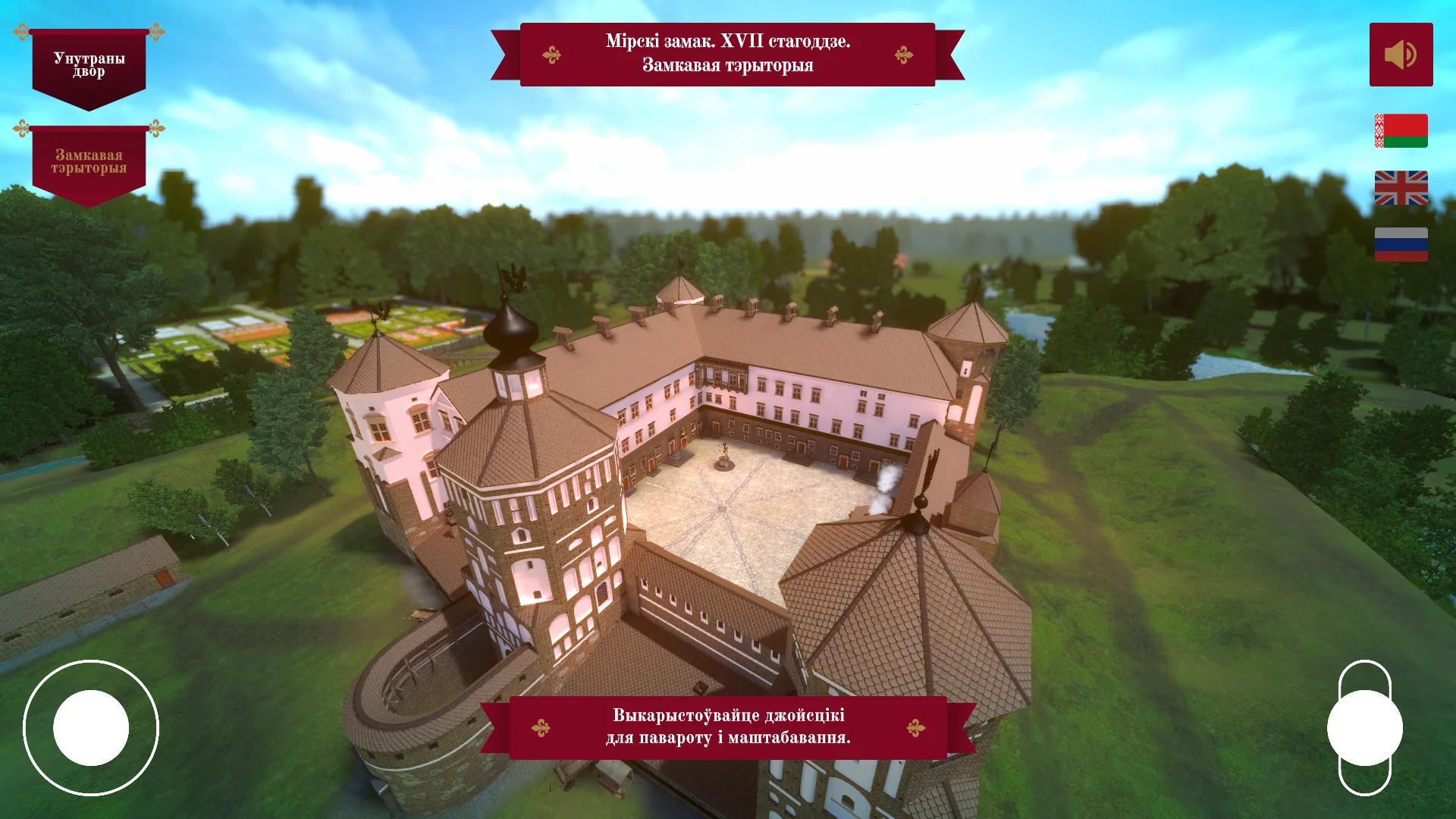
Visitors choose the zone or exhibit they are interested in, see the path on a map, and get additional information — without asking staff. As a result, guests feel confident, and the center looks modern and caring.
Touchscreen kiosks operate continuously and never get tired, which is especially important during peak hours and large guided tours.
Fast navigation in a science center reduces search time and increases time spent exploring exhibits: guests manage to see more and come back for new experiences. As a result — higher satisfaction, longer visits, and more positive reviews.
We help science centers implement such kiosks with consideration for their space and audience. We analyze visitor flows, design the menu logic, and make navigation intuitive even for first-time users.
In the end, you get not just signs but a full-fledged digital guide that works for your reputation and brings guests back.
What Interactive Navigation Will Give Your Center
Visitors come to a science center for experiences, not for adventures in finding the right hall. If the route to an exhibit or lecture hall turns into a quest involving staff questions, the first impression is spoiled before the tour even begins.
Interactive kiosks solve this problem calmly and unobtrusively: with one touch, guests see the route, the time until the session starts, and the nearest events that actually interest them.
The first and most obvious benefit is increased visitor satisfaction. When people easily find the ticket office, cloakroom, exhibit, or exit, they stay in a good mood and are more likely to linger in the center.
This directly affects repeat visits, recommendations, and length of stay: a satisfied guest is more willing to stop by the café or souvenir shop on the way out.
The second benefit is reduced staff workload. Employees at the reception desk and in the halls stop explaining the way to the restroom or elevator ten times a day.
They use the freed-up time to work with guests: help with tickets, talk about exhibits, and answer substantive questions. For the center, this means saving resources without expanding the team.
The third value is collecting data about visitor behavior. You see which exhibits are in demand, where guests stay longer, and which zones they pass by.
Based on these observations, it is easier to plan tour schedules, emphasize certain exhibits, and prepare new formats — decisions are made based on facts, not intuition.
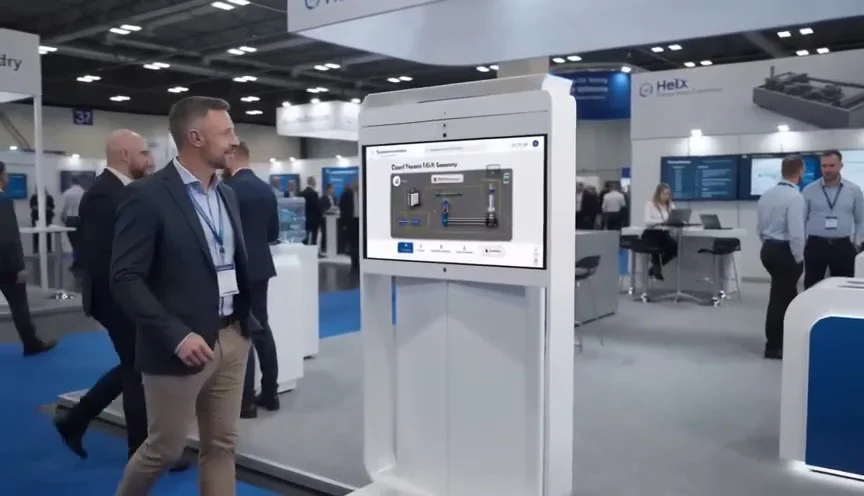
The fourth result is a modern image and additional sales. A touchscreen kiosk itself looks high-tech and creates the feeling that the center is keeping up with the times. At the same time, the screen can show announcements of paid lectures, workshops, and special programs.
A visitor who has just conveniently built a route is more likely to respond to an offer to attend something else — navigation becomes a revenue growth tool.
Finally, interactive navigation reduces the load on information desks during peak hours and major event days. When the visitor flow doubles, kiosks handle routine requests, while live staff focus on complex and non-standard situations. The center remains hospitable even on the busiest day — without chaos and long lines.
Touchscreen Kiosks in a Science Center: Three Formats for Every Task
Visitors to a science center are not a homogeneous group. A schoolchild is looking for where the tour starts, a parent — how to get to the planetarium, a researcher — the conference schedule.
One kiosk format cannot cover all scenarios, so we design a navigation system as a set of formats that complement each other.
Three Formats for Every Task
Each format solves its own task: from quick assistance for visitors to turning the kiosk into a standalone exhibit. Below is a comparison by key criteria.
| Format | Purpose | Audience | Result |
|---|---|---|---|
| Information terminal (kiosk stand) | General information, opening hours, event announcements | Visitors who came without a specific goal | Fewer questions to staff, reduced load on the administrator |
| Interactive wayfinding panel | Finding an object on the map, route to a hall or exhibit | Families with children, school groups, conference guests | Quick orientation, fewer "lost" visitors, higher building capacity |
| Multimedia stand | Immersion into an exhibit theme, quizzes, interactive materials | Researchers, students, tourists interested in science | Longer dwell time, new impressions, a reason to return |
An information terminal is a "quick reference": visitors see the schedule and announcements without spending time looking for a staff member.
Wayfinding panels are indispensable in complex buildings with multiple wings — they build a short route and reduce the flow of "lost" visitors, especially during peak hours.
Multimedia stands are no longer just navigation — they are exhibits. They tell the story of a scientific discovery, let visitors interact with interactive materials, and create photos that guests share on social media. This gives the center additional online exposure and an incentive for repeat visits.
We work on professional touchscreen hardware and tailor each format to the building architecture and visitor behavior. During a consultation, we will select a combination of kiosks, panels, and stands according to the center’s goals and budget.
How the Project Works: From Brief to Launch in 4 Weeks
We understand: for a science center, a kiosk is not entertainment but a working tool that must immediately and reliably provide visitors with the necessary information.
That is why the process is designed so that you do not have to dive into technical details: you get a turnkey solution in 4 weeks, with clear checkpoints at every stage.
-
Brief and task immersion. On a call, we discuss where the kiosk will be placed, who uses it, and what information visitors are looking for. We record scenarios: navigation through halls, lecture schedules, exhibit descriptions. As a result, you receive a concept document — no fluff, only what is really needed.
-
Plan and timeline. We create a calendar schedule: what we do each week, when you receive interim results, and when you receive the final version. You know exactly what will be ready and by what date, and you can plan the launch without surprises.
-
Structure and design approval. We show a static mockup of the future interface: section layout, main menu, navigation logic. You make edits before programming begins — this saves time and prevents misunderstandings.
-
Interface development and kiosk assembly. In parallel, we prepare the system’s visual design and assemble the touchscreen terminal on professional hardware. For a science center, this means reliable operation in continuous-use mode — from morning to closing time, without freezes.
-
Testing and installation. We check scenarios: finding the right hall, returning from deep sections, behavior when touched by children and adults. Then we deliver the kiosk, install it in the right location, and connect it — you receive a fully working device.
-
Staff training. We conduct a short instruction session for your administrators and hall attendants: how to turn on the kiosk, update the schedule, and what to do in an emergency. Training takes no more than an hour, and everything is explained with simple examples.
-
Post-launch support. We stay in touch: help with content, answer questions, and respond quickly if something goes wrong. You are never left alone with the technology — it is part of the service.
As a result, the entire process takes exactly 4 weeks, and your involvement is limited to a couple of approvals and accepting the finished solution. No complexity: you simply get a tool that helps visitors and relieves staff.
What You Get in the Delivery: A Complete Working Package
We have assembled the package so that you do not need to buy anything extra, negotiate with subcontractors, or deal with technical details. You receive a working navigation system for your science center — from equipment to trained staff.
The standard package includes:
- A touchscreen kiosk on professional hardware. The enclosure, screen, and reinforced internals are designed for round-the-clock operation in a public space. No breakdowns in the middle of a tour.
- Interactive software with an interface tailored to your center. Visitors find the right hall, exhibit, or event on their own. You can change schedules and content without programmers — through an easy-to-use control panel.
- Design mockups and adaptation to your brand style. The kiosk looks like part of the interior, not a foreign device. Logo, colors, fonts — all in one coherent concept.
- Administrator and user manuals. Simple illustrated instructions: how to turn it on, how to replace information, what to do in non-standard situations. Your staff will figure it out in one day.
- Staff training. We conduct a short training session for administrators and technical specialists: we show in practice how to manage the kiosk and handle typical visitor questions.
- Warranty on equipment and work. If something breaks, we repair or replace it within agreed timeframes. You will never be left without navigation at a critical moment.
- Project support after launch. For the first month, we stay in touch, monitor performance, and make adjustments. After that, it is optional: extending technical support or expanding functionality.
At the same time, you are not tied to us forever: all documentation, source materials, and access remain yours. If you want to hand the system to another team or update content yourself, it will be easy.
The package is designed so that after handover the project works without our constant involvement. And if you need help, support is just one call away.
Case Study: How an Interactive Kiosk Relieved the Administrator Desk
In a science center, hundreds of visitors pass through every day: school groups, families, individual guests.
Most questions at the administrator desk were repetitive: where is the restroom, how to get to the "Space" hall, when does the lecture start, are there any available tours.
During peak hours, a line formed at the desk, administrators could not keep up with phone calls, and time was lost on mechanical directions — this reduced service quality and created tension for guests.
We proposed an interactive wayfinding kiosk that took over typical questions and routes. Guests choose the desired hall or service on the touchscreen, get a short route, and receive additional information about the day’s events.
The administrator desk stopped being the only point of entry — peak hours were relieved, and staff gained time for non-standard requests and visitor care.
Project Results
The first two weeks of operation showed: the number of requests to administrators dropped by 45%. Visitor loyalty increased — guests waited in line less often and felt more confident in the center’s space.
The indirect effect was just as important: staff stopped working in "repetitive answers" mode and focused on the quality of tours and group work.
"The kiosk has become a real employee for us: it answers typical questions quickly, politely, and without getting tired. Administrators finally do what they are meant to do — communicate with visitors," — noted the head of guest relations at the Science Center.
What This Means for Your Project
The success of this case is not accidental: we did not just install a screen — we analyzed visitor flow, collected real questions, and built navigation logic that is understandable at any age. The kiosk pays for itself through staff time savings and increased guest satisfaction.
If your institution has a similar situation — a line at the desk, repetitive questions, wasted staff time — let’s discuss how an interactive kiosk can remove that burden. Write to us, and we will prepare a cost calculation based on your working format.
How to Choose the Right Kiosk Format for Your Center?
Choosing a kiosk format starts with three questions: how much space is available for the placement area, what visitor flow passes nearby, and what tasks the panel must solve.
The decision "which kiosk to buy" is often made before these data are available — and then it turns out that the device either gets lost in a large area or blocks the passage.
If your science center has a constant flow of groups and families with children at the entrance, pay attention to large touchscreen panels with an interface height comfortable for both adults and schoolchildren.
For small niches, cafés, or themed zones, a compact kiosk is enough — it takes up no extra space and looks neat. The main thing is not the screen size itself, but how quickly a guest understands that what they see is navigation and finds the right hall.
The next criterion is the usage scenario. If the kiosk is needed for routes around the exhibition, a stable interface and large buttons matter more than bright graphics.
If it is an information panel about an exhibition or event calendar, add emphasis on visual content, but keep the first screen simple. Ultimately, choosing an interactive panel comes down to a balance: how easily a visitor can get an answer within 30 seconds.
Suggest to your project manager that they test two different models — a floor-standing and a tabletop one — and place them in parallel in different zones. Within a week, it will become clear which format is actually used and which only takes up space.
This decision will help avoid overpaying for unnecessary options and give confidence that the purchase pays off within the first months.
Common Concerns: We Answer Before the Project Starts
Every client asks the same questions before starting a project: what will happen to the kiosk after launch, who updates the content, will we meet the deadlines, and why does the project cost exactly this amount.
In a science center, this is especially important — kiosks work with visitors every day, and even a short downtime hurts the exhibition’s reputation.
We address the main fears in advance:
What if the kiosk breaks down?
All equipment is covered by a warranty and touchscreen kiosk maintenance after launch. In case of a fault, we resolve the issue remotely or come to the site. While repairs are underway, we provide a replacement terminal so the kiosk continues working without interruptions.
Now about content. We handle updates to event posters, exhibit descriptions, and news. And if you want to edit content yourself, we will provide a simple control panel — updates take minutes and require no developer.
Deadlines are fixed in the contract and broken down into stages: we approve the mockup, show intermediate results, and deliver the finished kiosk. You always understand what stage the project is at.
The price is calculated before the start and includes all work — no hidden items or surcharges for "unforeseen" options.
We are ready to answer your questions and prepare a solution for your science center. Write to us to discuss the details.
Let’s Discuss Your Project? Get a Calculation and Plan in 1 Day
Leave a request for a project calculation — tell us what task your science center is facing. We will clarify the details: the number of kiosks, navigation zones, whether you need a hall map and event schedule. Within one business day, you will receive an implementation plan and a preliminary calculation.
You will not have to dig into technical details — we will select a solution for your audience and tasks. You will get a ready-made action plan, not an abstract proposal: from concept to technical specification and post-launch support.
Why choose us:
- Free consultation — we discuss the task and suggest a solution.
- Project calculation — cost and timeline in one document.
- Clear plan — work stages and expected results.
- Confidentiality — project details are not shared with third parties.
- No obligation — the calculation does not commit you to anything.
- Support at every stage — from concept to launch.
To order a kiosk or get a consultation, submit a request through the form on the website. Attach any materials: photos of the premises, hall layouts, examples of similar solutions. We will ask clarifying questions by message or phone — this makes the calculation more accurate.
Do not put off the project: the earlier we start, the sooner the kiosks will be working in your science center. One day — and you will know how the kiosks will look and where to begin. Leave your request right now.