

Guests Get Lost in the Amusement Park and Leave Without Emotions
Guests come to the amusement park for emotions, but instead spend part of their time searching for the ride they need. The lack of clear navigation for visitors is not just an inconvenience but a direct loss: fewer attractions visited, more fatigue and disappointment.
When a person cannot quickly find their bearings, they get irritated and start evaluating the park negatively before even trying the main attractions. This is especially acute in an area of several hectares, where every location is far from the entrance.
As a result, guests leave without vivid impressions, and the park loses out on café sales, souvenir sales, and repeat visits.
Phone maps help only a little: the screen glares in the sun, connectivity and battery let you down, and the interface does not take into account the park's specifics. People need a quick and clear landmark in physical space — one that works always and anywhere on the grounds.
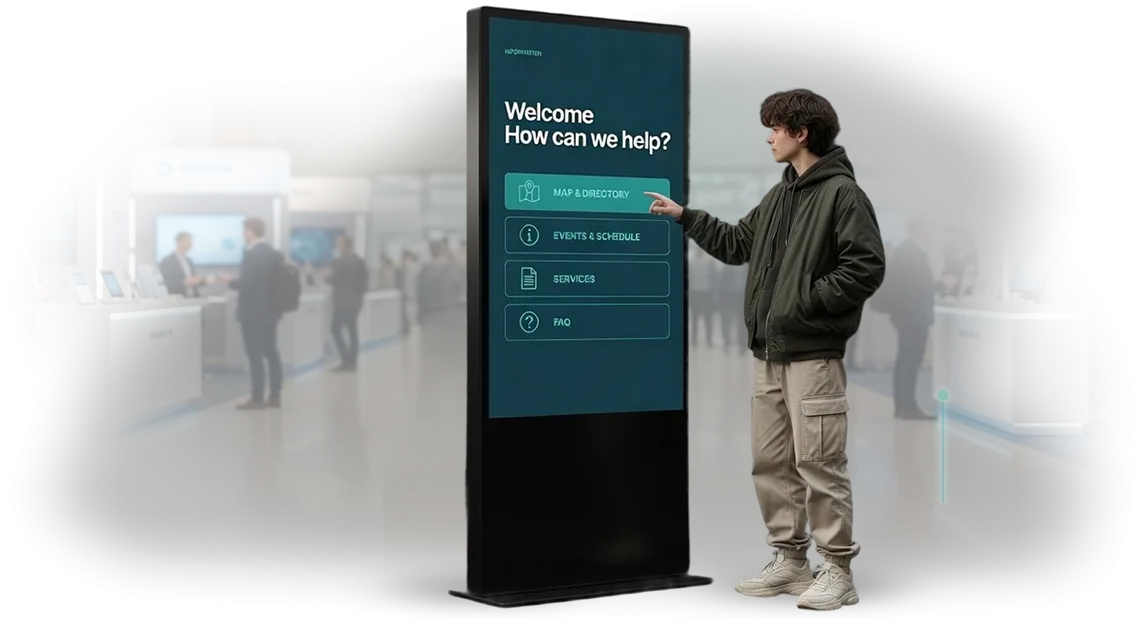
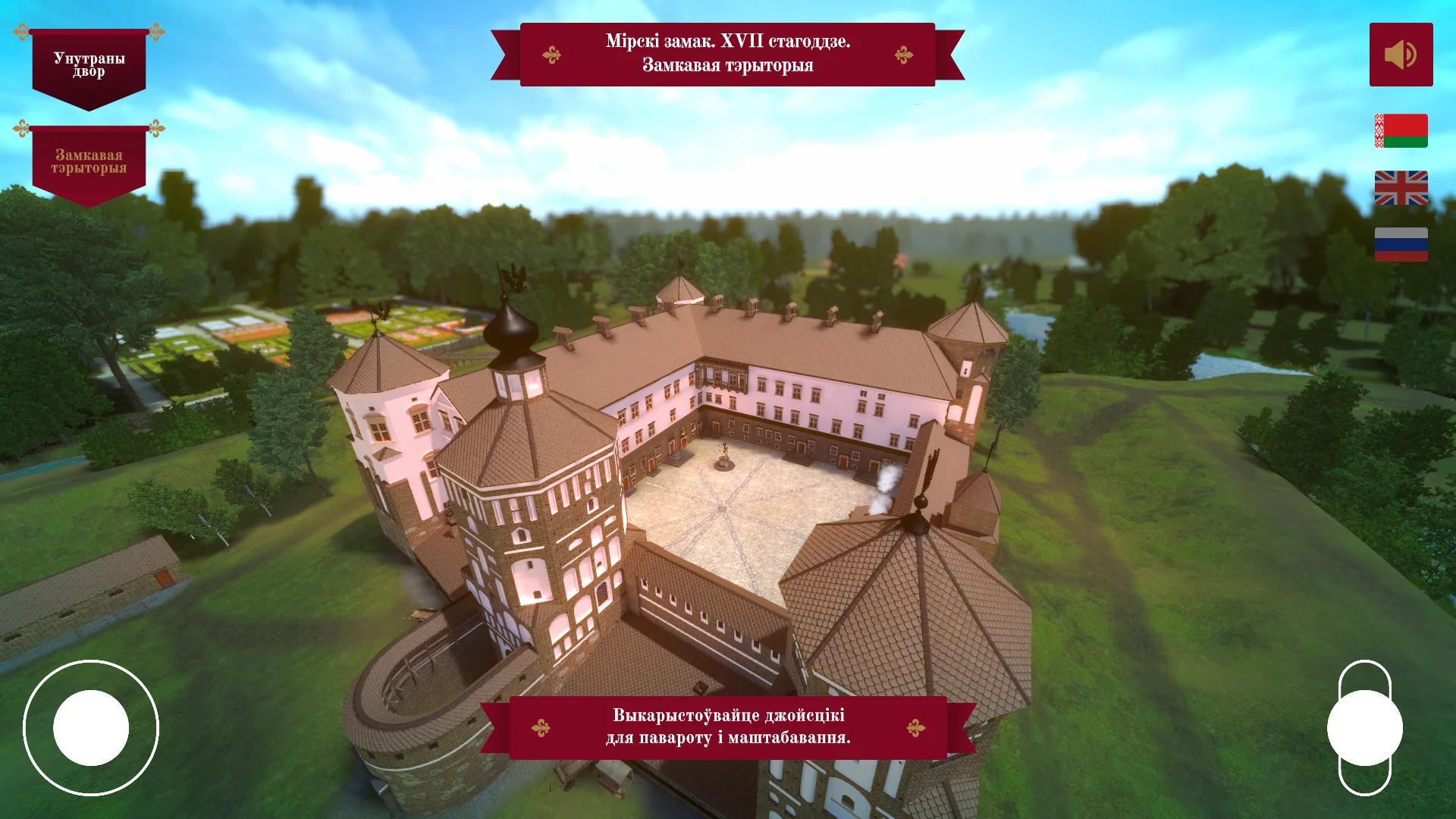
Interactive kiosks solve this problem. In 10–15 seconds, a guest sees the route to the desired ride, waiting times, nearest cafés and restrooms. This increases guest convenience, and the amusement park gets denser traffic and satisfied visitors who return again.
We develop these kiosks for the needs of a specific park: we design navigation logic, adapt the interface for different age groups, and ensure stable operation throughout the day.
This addresses the main pain point — guests stop getting lost and start spending their time on emotions, not on searching.
What You Get from the Navigation System
Park guests don't like wasting time searching for the right ride — every minute in line or in front of a map reduces the impression of the visit.
An interactive navigation system on touchscreen kiosks helps a visitor quickly build a route, find out waiting times, and immediately get a personal recommendation, which enhances the enjoyment of the day.
The direct benefit is increased sales: the kiosk turns into an active assistant that tells the guest where to grab a bite, what souvenirs are nearby, and which rides are currently less busy.
In this way, you increase the average check and the load on food outlets without extra effort from staff.
Well-thought-out navigation directly affects loyalty: a visitor who easily finds their way and gets to experience more returns to the park again and recommends it to friends. For you, this is long-term profit, not one-time ticket sales.
Built-in analytics collects data on which park zones are popular, where guests stay longer, and which routes are chosen most often. Based on this data, you make decisions about improving logistics, placing new sales outlets, and show schedules — based on facts, not guesses.
Ultimately, an interactive kiosk is not just a screen with a map, but a working tool that generates revenue, increases guest retention, and makes the park clearer and friendlier for every visitor.
We build these benefits into every project, taking into account the specific features of your facility.
Interactive Kiosk Formats for an Amusement Park
An amusement park is a place where a visitor makes decisions quickly: where to go, how long to wait, what to get to. An interactive kiosk helps the guest find their way, and the park sell more, but the same housing will not suit both outdoors and a lobby. It is important to choose a format for the tasks of a specific zone.
Below is a comparison of the three main options we use in projects for parks. All of them are customized to the brand style and run on professional equipment, so they deliver stable results on peak days.
| Format | Who it's for | What it gives the park |
|---|---|---|
| Outdoor kiosk | For the entrance area, queues and open spaces | Helps guests orient themselves before entering, sells tickets and passes without a queue, works in any weather |
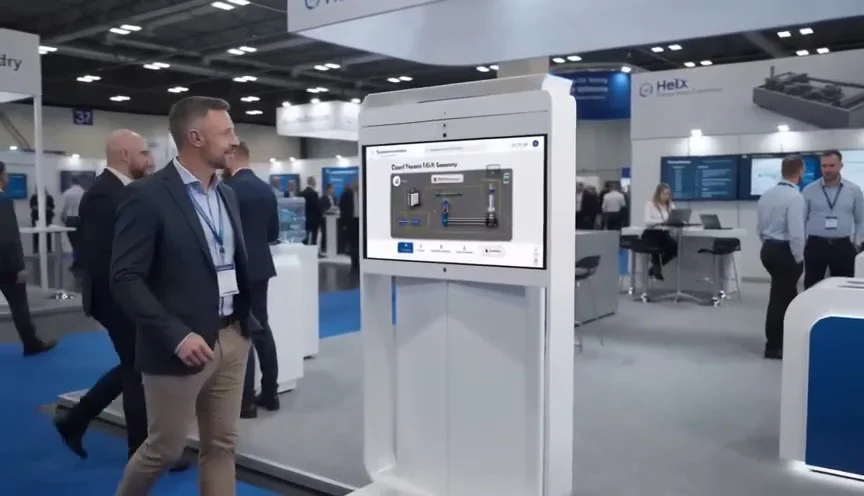
| Indoor kiosk | For lobbies, food courts and rest areas | Shows the park map, promotions and waiting times for rides, increases the average check and reduces staff workload |
| Touch panel | For children's zones, entertainment locations and interactive spaces | Engages guests through games and quizzes, holds attention, creates a reason for photos and social media posts |
The choice of format depends on which task the kiosk solves: to guide a guest, speed up a purchase, or entertain. We help select the optimal option for the park's zones and launch a pilot in one area — so you see the result before scaling.
How We Create a Project for Your Facility
Every park is unique: you have your own geography, your own rides, and your own guests. We structure our work so you control every stage and know exactly the deadlines. No magic — only transparent steps with your approval.
Work Stages
-
Brief and immersion. We collect the tasks: which zones are important, who will use the kiosk, and what difficulties guests face. We record the goals and success criteria — you approve the document.
-
Prototype and approval. We design the screen structure and search logic. You see the navigation scheme before development starts and can make changes without unnecessary costs.
-
Design in your style. We draw a bright, clear interface with your characters and brand colors. You approve the mockups — and we move forward.
-
Implementation. We assemble the kiosk and populate it with maps, events, and operating schedules. You receive a draft version and comment on it.
-
Testing and launch. We test real visitor scenarios: finding a ride, getting a route, returning to the map. We fix any issues and install the kiosk in the park — without failures on opening day.
-
Support. We train your team, provide instructions, and stay in touch. We update maps, add new points, and change seasonal banners.
We set the timeline in the contract: from brief to launch usually 4-6 weeks, depending on the number of zones and the volume of content. You always know what stage the project is at and approve key decisions personally.
What Is Included in the Delivery of an Interactive Kiosk
When you order an interactive kiosk for an amusement park, it is important to understand what is included in the delivery set.
We offer a turnkey solution — from equipment to warranty service — so you can start using the system immediately after installation and don't need to search for contractors separately.
-
Kiosk equipment. A touchscreen with a vandal-resistant housing, protected from dust and moisture — this is important for a park where kiosks are placed outdoors or in high-traffic areas. The entire device is assembled and tested before shipment.
-
Software. A ready-made navigation system with a park map, search for zones and attractions, show schedules, and advertising screens. The software is easy to update and runs without failures even during peak hours.
-
Installation and connection. Our specialists deliver the kiosk, install it, and connect it to the power supply and the internet. You get a working station without involvement from your technical teams.
-
Content filling. We develop the interface design, map all park facilities, and upload current information about rides, cafés, and events. If necessary, content can be updated remotely.
-
Staff training. We provide instructions for administrators: how to use the kiosk, replace information, and turn the system on and off. You won't have to figure it out on your own.
-
Warranty and technical support. The set includes a warranty on equipment and software, as well as support for the entire service life. Any issues are resolved remotely or with a specialist visiting the site.
Thus, the delivery includes not just a device, but a fully ready tool for guest convenience and relief of your information service. All you need to do is choose an installation location — we take care of the rest.
Implementation Result: Case Study with Numbers
For an amusement park covering more than 20 hectares, we developed an interactive navigation system on touchscreen kiosks.
The client faced a typical pain point: visitors got lost, spent up to half an hour finding the ride they needed, and cafés and shops deep in the park did not get enough visitors.
Staff were constantly distracted by "how do I get there" questions, even though they had no time for it.
"Navigation Park" Case: What Changed After Launch
Two months after the kiosks were installed, we got numbers the client had only dreamed of. Sales of additional services — cafés, souvenirs, and paid shows — grew by 23%.
Guests who used the kiosks visited an average of one and a half more attractions and went into two additional cafés along the way. The average check of such a visitor turned out to be 14% higher than that of other guests.
Repeat visits to the park grew by 18% — a direct consequence of the fact that the visit became easier and more enjoyable. People got less tired and did not waste time, so they took home positive impressions and a desire to return.
The client received not just a map, but a flow management tool: now it is clear which zones are popular and which need additional promotion.
The park's manager summed it up: "We expected a convenient map, but got a revenue growth driver. The kiosks paid for themselves in one season, guests stopped asking for directions, and the navigation quietly relieves the staff. This is the best investment in infrastructure in recent years."
Project "Navigation Park" is one of dozens of examples where an interactive kiosk becomes not a "pretty storefront" but a measurable business tool. That is why we only take on projects where the economic effect for the client can be calculated in advance. This approach lets us guarantee results, not just install equipment.
How to Choose the Right Format for Your Task?
Choosing a kiosk format does not start with design, but with the task it needs to solve in your amusement park. First, define the main scenario: park navigation, ticket sales, or entertaining guests in line. The construction, dimensions, and even maintenance frequency depend on this.
For navigation, tall floor-standing kiosks with a large map work better — they should provide a route in under half a minute.
For tickets and additional services, compact terminals with protection from the environment are suitable, and for waiting areas — small interactive panels with games and quizzes that keep the guest engaged.
The second criterion is the location.
The entrance area, passages between attractions, and the food court have different foot traffic: at the entrance, the kiosk must work quickly and not create a crowd; in narrow passages, be compact; and in rest areas, allow for longer interaction.
Also consider the load: outdoors you need vandal-resistant housings and bright screens; indoors, standard protection is enough.
If you are in doubt, our experience suggests that in an amusement park, the best combination is stationary navigation kiosks and entertainment panels in queues. This approach covers both fast navigation and attention retention.
We will help you choose a format for your task, assess installation spots, and calculate the load — so the kiosk pays off through service speed and additional sales. Leave a request, and we will show which option is right for your park.
Frequently Asked Questions About Kiosk Operation
Amusement park owners most often ask us the same things: how often kiosks break down, who services them, what warranties are provided, and why the cost is what it is. We answer the main questions — without technical details and complex diagrams.
How stable are the kiosks?
We use professional equipment designed for continuous operation in high-traffic areas. Over 10+ years, we have refined our processes so that downtime is rare and quickly resolved. The system itself reports failures, and we respond remotely or visit the site.
Who will service the kiosks?
We handle maintenance ourselves. The contract specifies scheduled maintenance, content updates, and technical support. You don't need to hire a separate specialist — our team handles all issues. Average response time is a few hours, but we usually respond faster.
What warranties do you provide?
We provide a warranty on work and equipment, which is fixed in the contract. If something fails, we repair or replace it for free within the warranty period.
Additionally, we can offer an extended maintenance contract after the warranty expires — with the same cost and priority support.
What does the cost depend on?
The cost depends on the number of kiosks, the set of features, and the launch timeline. We prepare a detailed estimate at the first stage — you see every line item and understand what you are paying for. No hidden payments or asterisks: the final cost does not change after the contract is signed.
If you still have a question, ask us, and we'll answer in detail.Let's Discuss Your Project? Leave a Request
Every amusement park owner knows how easily guests get lost among rides, cafés, and rest areas. Clear navigation solves this problem: it increases traffic to the right locations, reduces staff load, and improves the overall impression of the park.
We develop interactive navigation kiosks for the needs of your park, not a "boxed solution". To understand which format is right for you, start with a request — from there, we take over all the organization.
After your request, you get:
-
A consultation with our expert: we discuss goals, audience, kiosk installation points, and non-standard scenarios — from finding a restroom to a route to a favorite character.
-
A preliminary project estimate: timeline, budget, required equipment, and integrations with your systems — without complex technical details.
-
A work plan with stages and results: you see what will be done at each step and when you will receive the ready solution.
-
An understanding of how the kiosks will fit into the park's existing logistics: how they will affect queues, guest distribution, and analytics collection.
-
A clear commercial proposal with the scope of work, so you can make a decision without hidden conditions and unclear items.
Leave a request through the form below — we will contact you within one business day, clarify the details, and already at the first consultation offer first ideas for navigation in your park. No spam and no obligations: only value for your project and quick answers to questions.