

Zoo Visitors Get Lost and Can't Find the Enclosures They Need
In a large zoo, guests find it hard to get their bearings on the first visit. Enclosures are scattered across the grounds, and the paper map at the entrance quickly stops being useful when children are running around and you want to find the giraffes or penguins.
People start wandering, wasting time, and getting tired — and the experience of the walk is spoiled even before they reach their favorite animals.
This sense of being lost directly hits the zoo's bottom line.
When a visitor can't quickly get to the place they want, they shorten their walk, skip the café and souvenir shops, and later write in a review: "beautiful, but everything is inconvenient and far away." Keeping such guests is hard — a repeat visit requires confidence that next time will be easier.
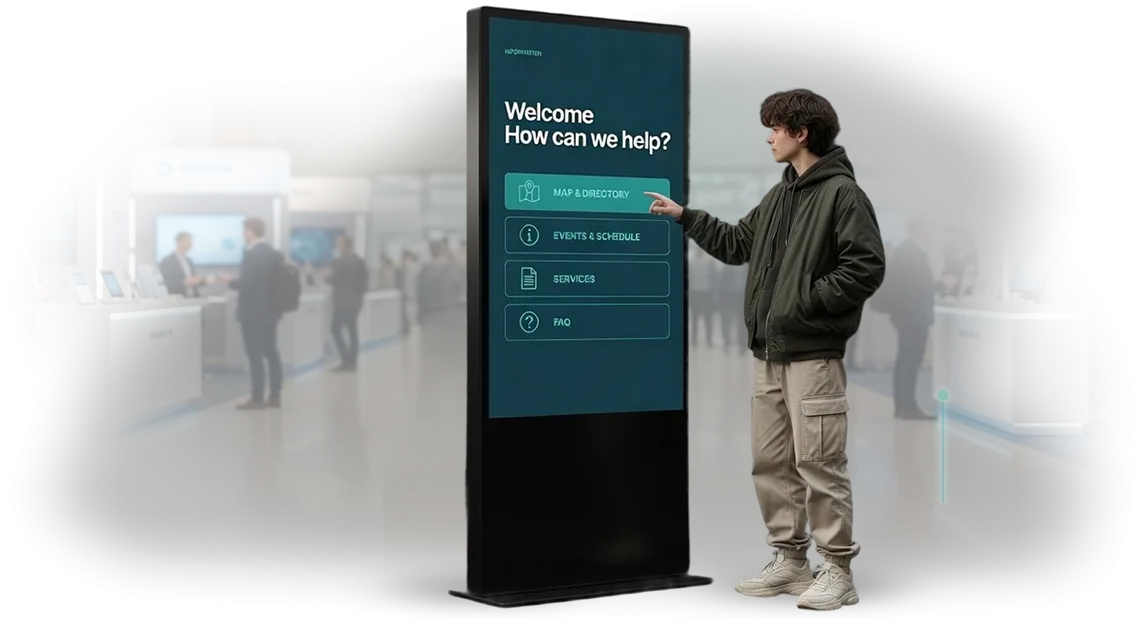
An interactive navigation kiosk removes this pain point. On the touchscreen, a guest selects an animal, enclosure, or café — and gets a clear route around the grounds.
No unnecessary steps: one screen replaces both the map and the staff member you would otherwise have to go and ask.
Such a system makes the zoo genuinely friendly. Guests stop getting frustrated, spend more time at enclosures, and drop by for snacks and souvenirs. Meanwhile, staff are freed from constantly repeating "where are the pandas?" and can focus on animal care.
That's why we design interactive navigation for zoos from scratch: we study the grounds, place kiosks at key points, and configure the interface so it's clear for children and adults alike. The result — visitor convenience and steady revenue from cafés, shops, and repeat visits.
What Interactive Navigation in a Zoo Delivers: Emotions and Repeat Visits
Zoo visitors come for emotions, and it's their experience that determines whether they want to come back. A regular map and signs help people find the way but don't create engagement.
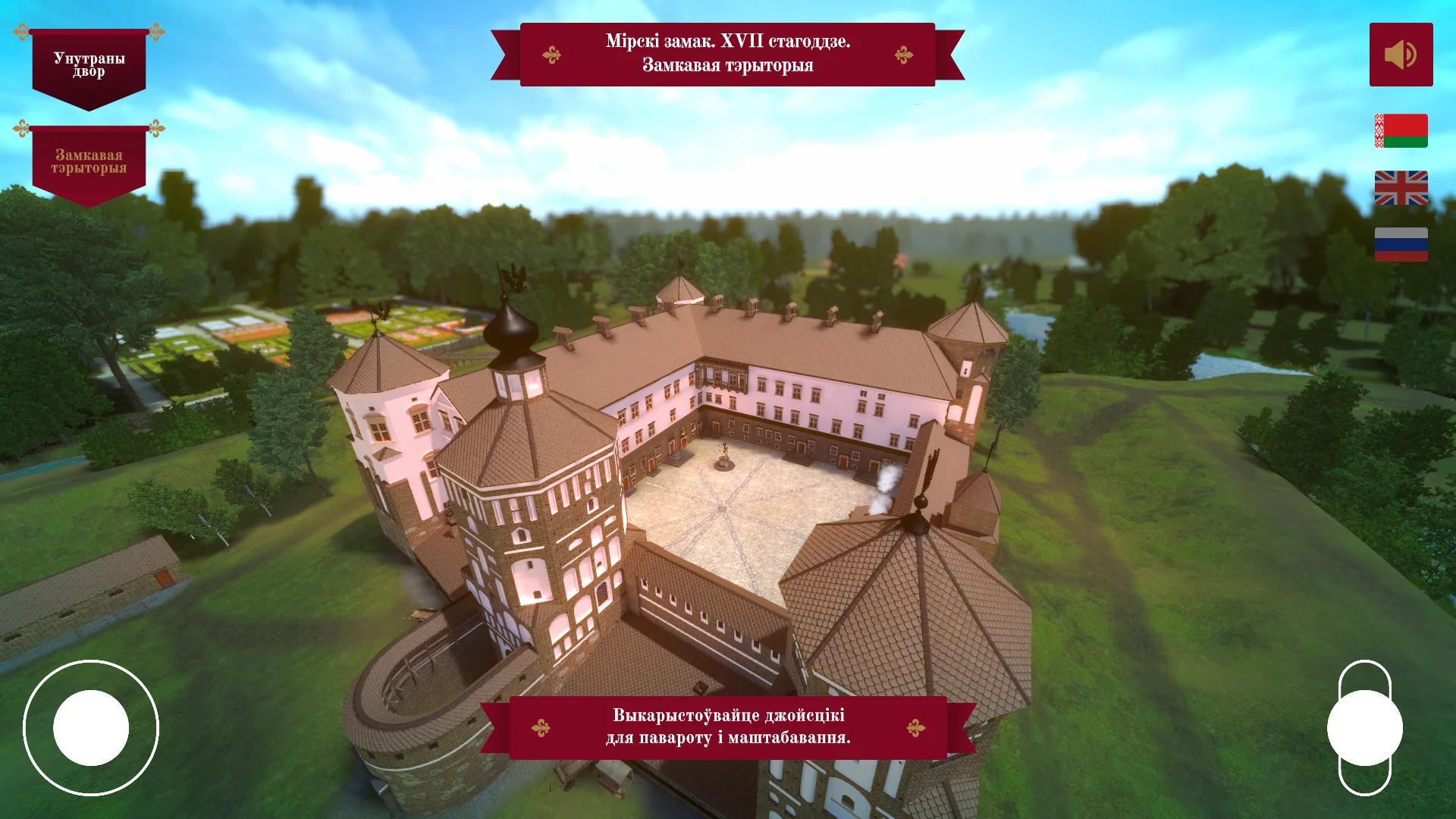
An interactive zoo map turns the walk into a game: guests choose their own route, learn interesting facts about animals, and feel like explorers. This approach keeps a family engaged for several hours longer than a standard visit.
Growing engagement directly drives repeat visits. When a child remembers how they "fed" a virtual giraffe or collected digital rewards for visiting enclosures, they ask their parents to come back.
For the zoo, that means a regular stream of guests without extra advertising investment. And parents are happy to recommend the place to friends — the zoo's awareness grows naturally through real experiences.
Interactive kiosks also open up a new source of revenue. On touchscreens, you can offer paid tours, additional programs, or souvenirs — a guest places an order right on the spot without interrupting their walk.
Plus, you get data on which routes visitors choose and can flexibly improve your service. In the end, navigation stops being just a signpost and becomes a growth driver for the entire zoo.
Implementation doesn't require stopping zoo operations: we install kiosks at key points, configure scenarios for your grounds, and train staff. Guests start using the navigation from day one, and within a week you see changes in visitor behavior.
This works for your reputation and for regular attendance — exactly the results that make updating navigation worthwhile.
Interactive Kiosk Formats for a Zoo: Map, Guide, Learning
Zoo visitors come for experiences, but often get lost on the grounds, don't know feeding schedules, and can't find the enclosure they need. An interactive kiosk solves all these problems at once: it provides a map, plots a route, and turns the walk into an educational game.
We select a format based on your location, visitor flow, and budget — from a compact touchscreen stand to a game kiosk for children's zones.
Which Format Should You Choose for Your Task
| Format | Who It's For | What It Gives the Client |
|---|---|---|
| Touchscreen Stand | Central entrance, large pavilions, high-traffic areas | Fast navigation, interactive map, show schedule — fewer questions for staff and more free employees for personal interaction |
| Mobile Stand | Seasonal exhibits, holiday events, new locations | Flexibility without construction: easy to move around the park, adapt to temporary zones, and change content for promotions |
| Game Kiosk | Children's zones, family routes, educational programs | Children engage their parents in play; quizzes and quests extend the walk and increase loyalty to the zoo |
For every placement point, we show a prototype on your site and calculate the load so the kiosk works reliably even on peak weekends. This helps you choose a solution that pays for itself in the first season and doesn't require constant IT support.
The format table makes it easy to match tasks and budget — all you need to do is tell us where you plan the installation, and we'll prepare a custom proposal for your zoo.
Stages of Interactive Kiosk Development: From Brief to Launch
We've structured the process so you always know what you're paying for and when you'll get the result. No "black box": each stage is agreed with you, and the timeline and scope of work are fixed in advance.
- Brief. You tell us about the kiosk's tasks, audience, and installation location. We study visitor flow, your goals, and prepare a technical specification — it becomes the basis for the cost estimate and plan.
- Plan and approval. We develop the menu structure, navigation map, and design mockup. You see how the kiosk will look and what the visitor will see — implementation only starts after your "okay."
- Development. We create the interface, fill it with content about animals, routes, and events, and integrate zoo maps. At this stage, you receive intermediate versions to monitor progress.
- Testing. We test the kiosk in real usage scenarios and for resistance to rough tapping, and adjust navigation logic and response speed. This avoids hiccups on opening day.
- Launch. We install the equipment, configure it, and run a final check on site. The kiosk meets its first visitors on a working day, not in delayed mode.
- Support and growth. We stay in touch after launch — update content, monitor stability, and help add new sections when needed.
In the end, you get a predictable process and clear deadlines. Each stage is like a milestone showing progress toward the result, and any change is discussed and documented in advance.
What's Included in the Interactive Kiosk Delivery: The Complete Package
When you order a turnkey touchscreen kiosk, you get a ready-made package — no need to search for separate contractors or wonder what else you'll need. We've included everything required for launch: from equipment to content and warranties. This saves time and eliminates unexpected costs after installation.
The full delivery scope looks like this:
- Equipment: a touch panel and durable housing designed for intensive zoo use. We handle installation and configuration — you don't need to understand the technical side.
- Interface: simple, clear navigation designed around how visitors search for information. Guests quickly find enclosures, cafés, and restrooms, and staff answer fewer questions.
- Kiosk content: a map of the grounds, animal descriptions, opening hours, and daily events — all populated for your zoo. Updates take just a few minutes, so information is always fresh.
- Administration: a personal dashboard where you change content, add event listings, and manage pages without needing a programmer.
- Instructions: staff guidelines and visitor quick guides. Employees get up to speed quickly and know what to do even in an unusual situation.
- Warranty: an official warranty on the equipment and software. If anything breaks down, we'll quickly replace or repair the device.
- Support: we stay in touch after launch — consult, update, and refine features for new tasks.
All items are fixed in the contract, so you know the package contents and deadlines in advance. You receive not a box of hardware, but a ready-to-use tool that starts delivering value from its very first day in the zoo.
Case Study: How We Built a Kiosk and Increased Visitor Loyalty
Zoo visitors come for emotions, but often leave without them: routes are unclear, information is scarce. Guests rush through the exhibit in an hour and rarely return.
A client zoo came to us with exactly this problem — and that led to one of the most compelling development cases in our practice.
Fauna Zoo — a large territory with thousands of guests every day. Staff couldn't keep up with the same questions, and static signs held no one's attention.
We replaced them with interactive touchscreen kiosks: visitors plot their own routes, discover animal facts, and check feeding times. The interface is so simple that both children and older visitors can use it. This format took the load off staff and made every visit self-guided.
How We Increased Visitor Loyalty
First, we studied guest behavior: where they got lost, what they asked about. Then we designed the navigation and measured results a month later. The average time spent at an enclosure increased 2.5 times, and the number of repeated questions to staff dropped by a third.
Visitors began actively sharing their experiences on social media — mentions of the zoo tripled in a month. Visitor loyalty also showed up in foot traffic to cafés and souvenir shops: people stayed in the park 30–40 minutes longer. And photos at the kiosks became part of the exhibit — guests themselves promoted the park.
Results of the Zoo Project
The share of repeat visits almost doubled — guests come back with their families and bring friends. After the first two kiosks, the client ordered three more along popular routes.
What began as a single development case turned into a long-term partnership, and the zoo became a place people want to return to. We're proud of this case — it shows how technology creates emotions.
Frequently Asked Questions About Interactive Kiosks: Honest Answers
Zoo owners often picture an interactive kiosk as an expensive, fragile "screen on a stick" that's difficult to install and impossible to update.
In reality, it's a working tool that pays for itself through better navigation, time savings for guests, and reduced staff workload. Here are honest answers to the four main concerns — the same way we explain them to clients during consultations.
Is the kiosk difficult to install?
Installation takes one day. We arrive, set up the housing, connect everything, configure the software, and show you how to manage it. All you need to prepare is a location and a power outlet — we take care of the rest.
Can the kiosk withstand rain, snow, and heat?
The housing is made of professional materials protected against moisture and temperature swings. These kiosks already operate year-round in parks and outdoor areas. We provide an official warranty on the housing and electronics.
How often can the information on the screen be changed?
Content is updated through a convenient admin panel — no developers or programmers needed. Change the zoo map, event schedule, news, and promotions in a couple of minutes. All changes appear instantly from any device.
Will the kiosk pay for itself?
The kiosk replaces an information desk and frees up to several hours of staff time per day. Guests find the right pavilion faster, wait in line less, and get answers even during peak hours.
In addition, it's an image element that enhances the impression of the zoo and encourages repeat visits.
Order Interactive Kiosks for Your Zoo: Start with a Brief
A zoo visitor comes for emotions, not for reading signs. An interactive kiosk lets them plot their own route: find a favorite animal, check feeding times, see the map, and discover interesting facts.
The result — fewer lines at staff desks, more time for experiences, and a higher chance that the family will return.
Ordering a kiosk means getting turnkey development, without the need to separately hire a designer, programmer, or installers. We handle scenario design, interface, equipment selection for your conditions — street, pavilions, a child's height — installation, and staff training.
Let's start with a brief. Describe the zoo's territory, route specifics, and your requirements: within two business days, we'll return a timeline and cost estimate. No fluff — just a clear commercial proposal with work stages.
What you get after the brief:
- an individual cost and timeline calculation;
- a prototype of maps and navigation scenarios;
- recommendations on the number and format of kiosks;
- a clear solution presentation for your team;
- one contract and one contractor for all stages;
- post-launch support and technical assistance.
Submit a request through the form below — in two days, you'll know how to turn information about animals into a convenient service for guests.
How to Choose the Interactive Kiosk Format for Your Project?
Choosing an interactive kiosk format for a zoo usually comes down to three things: installation area, expected visitor flow, and project budget.
There is no perfect "one-size-fits-all" solution — a floor-standing touchscreen stand and a compact wall-mounted panel solve different tasks.
So first, decide where the kiosk will work and what function it will perform: plotting routes, telling visitors about animals, or entertaining guests while they wait in line.
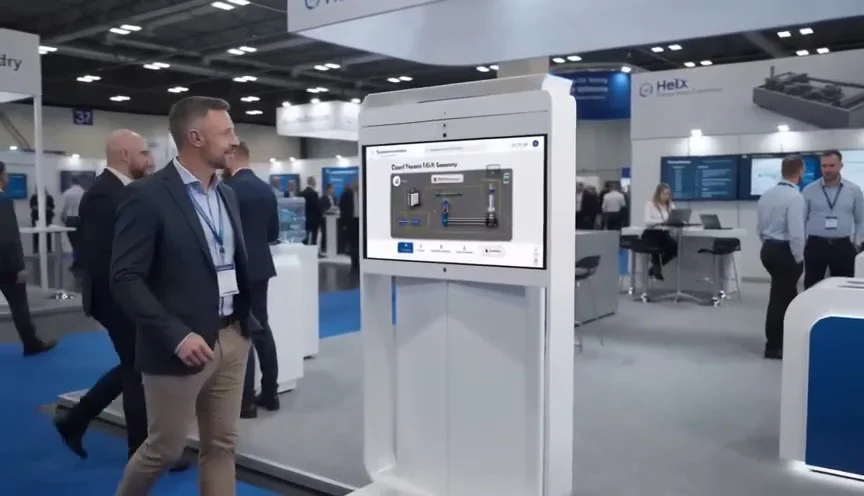
Space is the main guide. In a spacious lobby or near the entrance, a floor-standing kiosk with a large screen works well: it's visible from afar, draws attention, and lets whole families gather around it.
For narrow corridors, small pavilions, or areas near enclosures, wall-mounted panels are more practical — they don't block the walkway and take up minimal space.
If space allows, combining both formats delivers maximum effect: a large kiosk provides navigation at the entrance, while compact screens repeat the prompts throughout the grounds.
Visitor flow determines the number of kiosks and their design. The higher the traffic, the more responsive the screen should be and the more durable the housing: during peak hours, a queue forms at the kiosk, and guests won't wait several seconds for each tap.
For a zoo with many families with children, choose models with an intuitive interface — large buttons, clear icons, minimal text.
If traffic is consistently high, it's better to place several compact kiosks around the grounds than one big one in the center — that distributes the load evenly and avoids bottlenecks.
A project budget doesn't necessarily mean buying the most expensive equipment. In many cases, it's smarter to start with one or two kiosks, assess actual demand, and expand the network the following season.
We help you choose a format that fits your task without overpaying for unnecessary features: for example, navigating the zoo grounds only needs a basic map and object search, while children's zones benefit from game scenarios.
All our kiosks run on professional equipment and are easily scalable — if a new enclosure or pavilion appears in a year, you can add it to the map without replacing hardware.
The final solution always comes from your specific situation: site size, seasonal attendance, and goals for the coming years.
We don't sell a "box" — we offer an option tailored to a specific location and scenario, and we test it with real visitors before launch so you get a working tool, not just a pretty screen.
Visit us for a demo or send us a plan of your grounds — within a few days, we'll find the optimal configuration and show you how it fits the space and budget.