


Why a movie theater loses guests before the show even starts
Guests come to the movies for an experience, and the first thing they see is the line at the box office. When there are five minutes left before the show starts and there are still six people ahead, the mood is hopelessly ruined.
At that moment, the viewer is no longer thinking about the movie — they are thinking about how to make it in time, and often choose another screen or simply leave. This is how lines at the cinema turn into a direct loss of visitors that you don't even track in your reports.
The box office is a bottleneck that costs you not only tickets but also ancillary sales. A guest in a hurry skips popcorn and drinks because they are afraid of being late.
And if they are late and miss the beginning, they often ask for a refund or come back next time to a different theater. A single bottleneck during peak hours can cost you significant lost revenue, and regular congestion builds a reputation of "always a line."
The worst part is that the consequences don't end at the box office. A tired and irritated viewer writes a negative review, tells their friends, and even a good movie doesn't save the situation.
Speed of service becomes part of the impression of your venue, and it is exactly what guests remember when deciding where to go next time. It's a vicious circle: the longer the line, the fewer repeat visits, the greater the losses.
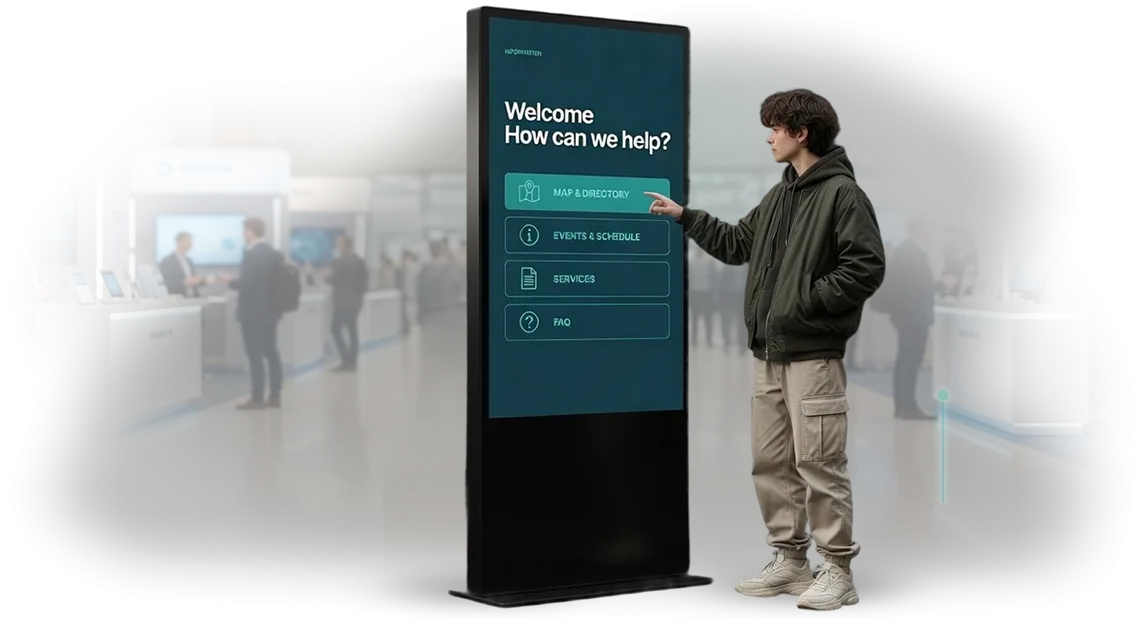
We help break this circle. We implement interactive information kiosks that take over routine operations: ticket sales, seat selection, and directions to screens. Guests are served in 30–40 seconds, while the box office stays for those who want human interaction.
As a result, lines dissolve, revenue from popcorn and drinks returns, and guests begin to associate your cinema with comfort and care. All that's left is to take the first step — we'll show you how to implement this without stopping box office operations.
What an information kiosk brings to your business
An information kiosk in a cinema is not just a way to accept payments, but a full-fledged tool for increasing revenue and service quality.
It addresses several business challenges at once: from reducing lines to increasing the average ticket value, so it's important to understand how exactly it works for your bottom line.
First of all, speed. Self-service terminals process orders much faster than a cashier: the guest selects the showtime and seat, pays by bank card, and gets the ticket in a couple of minutes.
Lines at the box office dissolve, and guests are less likely to abandon a purchase due to long waits. This is especially noticeable during peak hours and before premieres.
Next — additional sales. The kiosk can suggest add-on items: popcorn, drinks, combo meals. The guest doesn't see the line at the concession stand, but sees the option in the terminal menu and often adds it to the order.
As a result, the average ticket value grows without staff involvement, and the cinema bar gets less load.
Guest convenience is a value in itself. Every viewer can take their time picking the best seats, browse the schedule, and pay the way they are used to.
For younger audiences, it's a matter of comfort: they are used to handling everything on their own and value not having to talk to a cashier. For families with children — the ability to prepare for the show in advance.
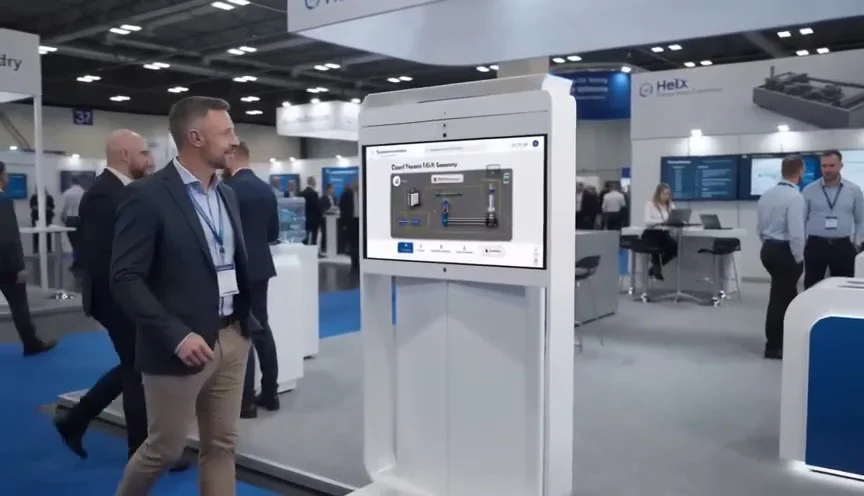
Finally, the cinema's image. An information kiosk is a modern, tech-forward solution that guests notice right away. It demonstrates that your cinema keeps up with the times and cares about its audience.
A stylish terminal in the lobby raises the venue's status and sets it apart from competitors, attracting a more affluent audience.
Each of these functions drives financial results: higher purchase conversion, more sales per guest, and lasting loyalty. If the kiosk is integrated with the ticketing system and the cinema bar, you get a single ecosystem that saves time and simplifies management. That's why the investment pays off not only through staff savings but also through revenue growth.
Interactive kiosk formats for a movie theater
A movie theater lives by guest flow: before a show, a line forms at the box office, visitors look for their screen in the lobby, and at the food court they waste time waiting for their order.
A line is not just frayed nerves for the audience; it's also lost revenue: some guests leave without waiting. An interactive kiosk takes the load off the staff and speeds up the guest — you just need to choose the right format for the task, otherwise the terminal will sit idle.
Typical formats
We build kiosks for cinema scenarios: from tickets to popcorn orders and loyalty bonuses. The table below shows popular formats and their business value.
| Format | For whom | What it gives the customer |
|---|---|---|
| Entrance kiosk | Guests who have already picked a movie | Ticket sales without waiting in line, relieving box office pressure during peak hours |
| Ticket pickup terminal | Guests with online tickets | Ticket printing via QR code, less crowding at the entrance |
| Navigation terminal | Visitors with children, first-timers | Guides to the screen and time until show — fewer questions for staff |
| Food court kiosk | Guests before the show | Order and pay in half a minute, food ready when they arrive |
| Promo stand with movie listings | Sponsors and partners | Revenue from ads and trailers without administrator involvement |
| Loyalty kiosk | Regular guests | Registration, bonuses, and personalized offers — they come back more often |
How to choose a format
The choice depends on traffic and layout: a cinema chain can use 2-3 formats at once, while a small venue may need just one universal kiosk. We'll advise which option will pay off faster, set up the interface, and take care of support.
How we develop a kiosk: project stages
A clear process means a predictable result.
For a movie theater, deadlines and stability matter: the kiosk must be ready for the premiere, not "someday." We have structured our work so that at every stage you can see what is happening with the project and influence it without delays.
We break the project into short iterations with clear outcomes. You get not just "development" but a managed process where every week brings you closer to launch and sales growth.
- Brief and getting into the task. We study your cinema, guest flow, and current sales logic. We identify what tasks the kiosk should handle: ticket sales, popcorn menu, loyalty program.
- Planning and estimate. We lock in timelines, scope of work, and budget. You get a clear project plan and know when the design, prototype, and working version will be ready.
- Design and interface approval. We show how the kiosk will look on screen and how guests will interact with it. You approve a convenient purchase flow in just a couple of clicks.
- Development and integration. We assemble the kiosk on professional hardware and connect it to your sales system. Screens, prices, and showtimes update without involving programmers.
- Testing with real scenarios. We check how the system behaves during peak hours: fast purchase, card payment, receipt printing. We fix any issues before launch.
- Launch and support. We install the equipment, train the staff, and stay in touch. We monitor the kiosk's performance in the first weeks and quickly resolve any questions.
This approach guarantees that the kiosk starts generating revenue from day one rather than becoming a source of problems. You always know what stage the project is at and when the result will be ready.
What's included in the kiosk solution delivery
When you order a kiosk from us, you get not just a cabinet with a touchscreen, but a ready-made tool for growing sales and relieving the box office. The package includes everything for the kiosk to start delivering value from day one — from the interface to ongoing support.
- Software that quickly guides a visitor through selecting a movie, showtime, and buying a ticket. The interface is intuitive; guests don't linger at the screen, so the line moves faster.
- Design tailored to your cinema's style. The kiosk looks sleek and recognizable, setting your brand apart from competitors.
- Configuration for your point-of-sale system and sales rules. Viewers can pay for tickets by card, use a loyalty club, or apply a promo code — everything works automatically.
- Integration with showtime schedules, screens, prices, and promotions. Data updates without administrator involvement, so visitors always see up-to-date information.
- Staff training. Your employees know how to upload new movies, change banners, and quickly handle common guest questions.
- Technical support and maintenance after launch. We're available during business hours, quickly resolve any issues, and periodically update the system so the kiosk never becomes outdated.
The bottom line: you get a working turnkey solution — with software, design, configuration, training, and support. All you have to do is plug in the kiosk and use it — we take care of its ongoing stable operation.
Case study: revenue growth after implementing kiosks
Deploying interactive kiosks at Panorama cinema started with a typical problem: long lines at evening shows drove viewers away, and snacks were sold separately — guests often left without them.
We proposed kiosks that sell tickets and popcorn on their own, leaving the box office for those who prefer human interaction.
What changed after launch
Within two months, ticket revenue grew by 23% because the kiosk removed the biggest barrier to the spontaneous decision to "go see a movie." Snack sales doubled: one-click combo meals are easier to choose than a display case with ten different options.
Staff stopped working as cashiers — the same employees now help guests in the auditorium and manage premiere screenings. Average service time dropped from four minutes to forty seconds, which is especially important when hundreds of visitors arrive per hour.
The cinema director confirmed in a testimonial: "We expected faster service, but didn't expect such growth in average ticket value. The kiosks paid for themselves in four months and continue to generate profit."
Why this works
The secret isn't in the screens but in the logic: the kiosk immediately shows available seats, compares showtimes, and offers attractive combos — like the best sales consultant, without the line. The viewer sees the entire selection, so they more often buy several items.
After launch, we support the project: we update menus and promotions on the screens and monitor stability. In the cinema segment, investments pay off in three to six months, and seven out of ten customers go on to expand their kiosk network.
How to choose the right kiosk format?
Choosing a kiosk format starts not with the equipment model, but with three parameters: the floor area where it will be placed, the traffic at that location, and the tasks the kiosk needs to handle.
The answers to these questions immediately narrow the options to two or three suitable choices; the rest — implementation details — we take care of.
If the lobby is compact or the kiosk is planned near the entrance to the screens, it's better to look at slim floor-standing units that don't obstruct visitor flow.
For spacious lobbies, larger formats with a big screen work better — they are more visible, can show the schedule, trailers, and other information, without taking up space at the box office.
Traffic determines the number of kiosks and their processing speed.
In a cinema with high visitor flow during peak hours, a single universal machine will create a line, so it makes sense to place several specialized stations: one for quick ticket purchases, another for navigation and information.
With moderate traffic, a single kiosk combining several functions pays off more easily and doesn't require expanding the area, while still relieving the box office during peak hours.
The tasks are the main criterion.
A ticket-selling kiosk should guide a visitor from selecting a showtime to payment in just a few steps; a navigation kiosk should help find the screen, restroom, or café; and an informational kiosk should keep the guest engaged until the show begins by displaying the schedule, promotions, and new releases.
Often a single format covers everything at once, but for that, it's important to understand in advance which function is primary for you and which are secondary.
We select the format for each specific cinema: we visit the site, calculate load by day of the week and showtime, propose placement options, and show how the kiosk will fit into your logistics and lobby style. As a result, you get a solution that works for visitor flow, not just a pretty screen in the lobby.
Answering frequently asked questions and concerns
A kiosk is an investment, and before making a decision, questions naturally come up: is it hard to install, when will it pay off, who will update the content. Below, we address the most common client concerns — briefly and to the point, the way we answer them in practice.
Is it hard to install and launch a kiosk in a cinema?
We handle the entire process: from structural design to installation and configuration. The kiosk plugs into a standard outlet, and the software starts automatically. On launch day, you get a fully ready station — no need to hire a separate specialist or dig into settings.
When will the kiosk pay off and how quickly?
Payback depends directly on the scenario. In a cinema, the kiosk most often sells tickets, popcorn, or shows schedules and trailers — it relieves the box office and increases the average ticket value through add-on sales.
With steady visitor flow, the investment is recovered within a few months, and after that the kiosk starts generating profit.
How do we update content: showtime schedules, ad banners, promotions?
You change information through a simple admin panel — no programmers or special knowledge required. Updates take minutes: upload new posters, change prices, add trailers — and everything appears on screen immediately. If needed, we can set up automatic synchronization with your ticketing system.
What about warranty and maintenance?
The kiosk comes with an official warranty, and while repairs are underway, we provide a replacement screen so your station doesn't sit idle. Support includes remote monitoring and regular preventive maintenance — you don't need to worry about breakdowns; we handle it for you.
Leave a request for kiosk development
Movie theater visitors don't like lines at the box office or confusion when picking a showtime. While a person stands in line for a ticket, they can change their mind and go to another cinema.
An interactive kiosk solves this: a purchase takes under a minute, prompts help choose the row and seat, and cashiers are freed up for complex questions. The kiosk is also an image element: it shows that the cinema keeps up with the times.
We will design a kiosk around your cinema's needs: number of screens, showtime frequency, and average guest count. Kiosk design includes the interface, purchase scenarios, payment, and ticket printing.
Kiosk development ends with testing under real loads, so the kiosk runs reliably from day one. Leave a request for a kiosk, and in no time you'll have a ready-made solution.
What you get when you order:
- Analysis of visitor flows and box office load, so the kiosk doesn't create new lines.
- A user-friendly interface: select a movie, time, and seat in a couple of taps, clear for any age group.
- Integration with your sales system — the kiosk sees available seats and current prices.
- A personal dashboard for managing the schedule and ads on the kiosk — update content in a minute.
- Payment and personal data protection in compliance with payment system requirements.
- Warranty on hardware and software, plus support after launch.
- Fixed deadlines and transparent control at every stage.
To order a kiosk, submit a request. We'll get back to you within one business day, clarify the details, and propose a work plan. You'll get a solution that pays off through increased ticket sales and reduced staff workload.