

Your competitors have already adopted the OKOF interactive table
Visitors to an exhibition or office walk past a boring stand in a matter of seconds — even if your product is truly better than your neighbors'.
Ordinary brochures, posters, and videos on screens no longer hold attention: modern customers don't have time to read text, they need to see the result immediately.
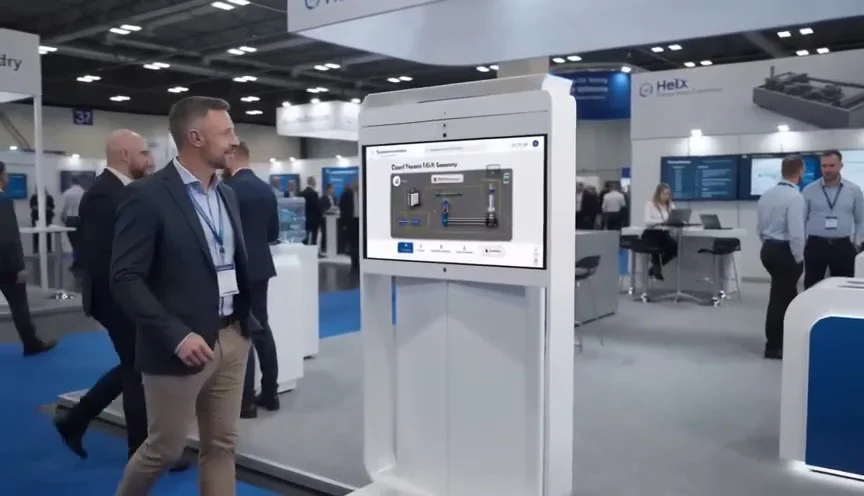
Competitors who have already adopted the OKOF interactive table use this moment — they keep guests at the stand two to three times longer and manage to show more advantages than you can in a standard presentation.
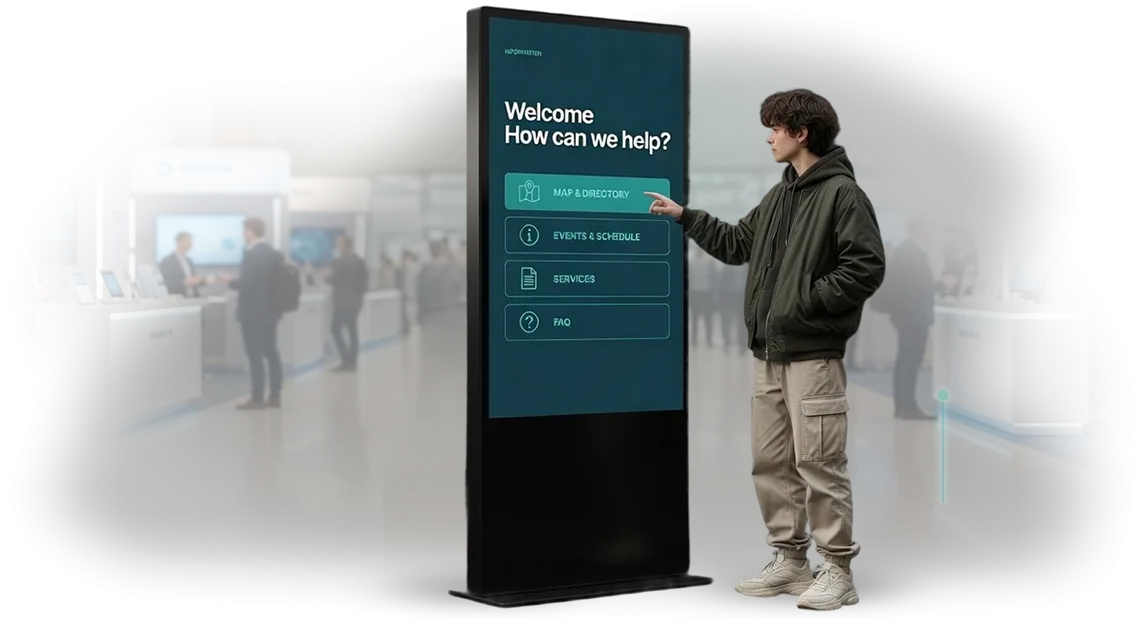
An interactive table for an office or exhibition turns your exposition into a living demonstration space: the client chooses what to look at, browses the catalog themselves, animated diagrams, compares models — and does it with interest, not out of politeness.
Your managers don't waste time repeating the same words: they only join when the visitor has already become interested.
And for a large flow of guests, an exhibition interactive table becomes a point of attraction around which a group of people always gathers — that's additional reach and natural advertising for your brand.
The business effect of such a solution is obvious: higher awareness, fewer missed contacts, more time for communicating with truly promising clients.
Many managers believe that the cost of an interactive table is a significant investment, but when recalculated against the number of retained leads and the growth of the average order value, it pays off after the first major exhibition.
We design and implement such solutions to fit a specific business objective: we select interaction scenarios, design, and content so that the table works for your business metrics from day one, rather than simply being a beautiful exhibit.
Three reasons to order development right now
Benefit 1: Guests get engaged and remember the brand
An ordinary information stand or poster rarely attracts attention. An interactive table turns getting to know a product into a game: visitors touch the screen themselves, study the catalog, watch videos, assemble configurations. This holds attention many times longer.
An engaged visitor is not just a view, but an action. They remember information emotionally and share their impressions with colleagues or on social media. As a result, the brand gets a warmer contact with the audience than with any static presentation.
Benefit 2: A modern image of the company
An interactive table is a noticeable marker of technological sophistication. When a client or partner sees that a company uses modern digital tools, trust in it grows even before negotiations begin. This is especially important for exhibitions, showrooms, and client zones.
This format sets you apart from competitors who still use paper brochures and static stands. Guests remember exactly your stand, which means brand awareness increases without extra advertising costs.
Benefit 3: Reduced load on staff
The interactive table itself handles some of the typical visitor questions: it shows features, availability, promotions, and directions. Consultants spend time only on truly complex tasks and deals.
This allows you to reduce expenses on additional personnel while simultaneously improving service quality. The interactive table works 24/7 — even during hours when employees are not on site, the client gets the information they need.
Table formats for different client tasks
An interactive table is not a single “universal” product, but a family of solutions for a specific task and installation location. How the visitor interacts with the screen — sitting, standing, or moving — determines both the equipment format and the content scenario.
We select the design based on the physical space and business goal: a freestanding table for a waiting area, a built-in panel for an exhibition, or a vertical screen that saves floor space.
The main thing is that the solution works toward a result: increasing time at the display, growing orders, or directing visitor flow.
| Format | For whom | What it gives the client |
|---|---|---|
| Touch table (horizontal) | Museums, exhibitions, showrooms | Keeps the visitor at the exhibit for 3–5 minutes, engages them in exploring details in a game-like form |
| Table in a niche / built into a counter | Cafés, restaurants, waiting areas | The guest places an order or studies the menu on their own — reduces staff load |
| Vertical touch panel (wall) | Shopping malls, lobby navigation | Helps quickly find the needed department and shows promotions, increasing foot traffic to locations |
| Interactive kiosk table (slanted) | Info kiosks in public institutions, banks | Simplifies submitting applications and obtaining certificates without waiting in line to an employee |
| Educational format table | Schools, children’s centers, libraries | Turns learning into a team game — children absorb material through interaction and competition |
In a museum, the key scenario is immersion and emotion: the table helps examine exhibit details in high quality and supplements the guide's story.
In a shopping mall, speed and navigation are the priority: the visitor finds the needed store in 10 seconds and immediately sees promotions. For a restaurant, it is a way to speed up ordering and increase the average order value through vivid menu items.
We don't sell a “box with a screen” — we assemble a format for your task: we determine the optimal size, tilt angle, and surface protection, taking into account the intensity of traffic and the features of the room.
The result is equipment that blends into the interior and solves a business problem, rather than just standing in a corner.
How we develop your project: step by step
We have structured the process so that you understand what happens at each step and when you will receive the result. After the brief, you get a plan with timeline and cost; then we move forward in stages with approvals at key points.
-
Brief — we discuss goals, audience, installation locations, and expected results. We propose solution options.
-
Scenario design — we determine the menu structure, action logic, and content. You see the scheme before development.
-
Design mockup — we create an interface in your style, with large elements and clear navigation. We approve it before programming.
-
Development and assembly — we build the software part in parallel and select reliable equipment for your conditions. This saves your time.
-
Testing — we check usage scenarios, long-term operation, and content updates. You receive a demo for evaluation.
-
Installation and launch — we deliver, install, configure, connect to the network, and upload content. We hand over the solution turnkey.
-
Support — we stay in touch: we update materials, add functions, and monitor stability.
A standard project takes from two weeks to one and a half months — depending on the number of scenarios and locations. Timeline and cost are fixed in the contract, so you know exactly when the kiosk will start working.
What is included in the delivery of the finished solution
After project handover, you receive not just equipment, but a ready-made point of interaction with visitors. The delivery package includes everything needed to launch the interactive table on installation day: from hardware to staff training.
We put together a kit for your scenario — lobby navigation, interactive catalog, or multimedia zone at an exhibition. You won't need to buy additional parts or hire extra contractors.
- Interactive table set — a touch panel with a vandal-resistant screen and a durable enclosure designed for continuous use in high-traffic locations.
- Pre-installed software — the software is configured for your tasks: navigation, presentation, catalog, or entertainment content; the interface is filled with your materials.
- Content management system — an intuitive tool for independently replacing texts, images, and videos without contacting developers.
- Installation and commissioning — engineers install the table, connect it, test all operating scenarios, and adjust settings on site if necessary.
- Staff training — a practical session for administrators: switching on, uploading content, typical questions, and daily checks.
- Documentation package — user manual, technical documentation, and certificates for proper accounting of the equipment.
- Warranty and support — an official warranty on equipment and software, as well as a communication channel with specialists for the entire service life.
As a result, you get a predictable package with clear timelines and budget. All that remains is to choose the usage scenario — and then we organize everything.
Case study: increasing visitor engagement
Visitors walked through the main exhibition of the museum in 15 minutes — they looked at displays, read labels, and left. The venue director wanted to keep guests longer and give them the opportunity to explore the city's history in a format that interests a modern audience.
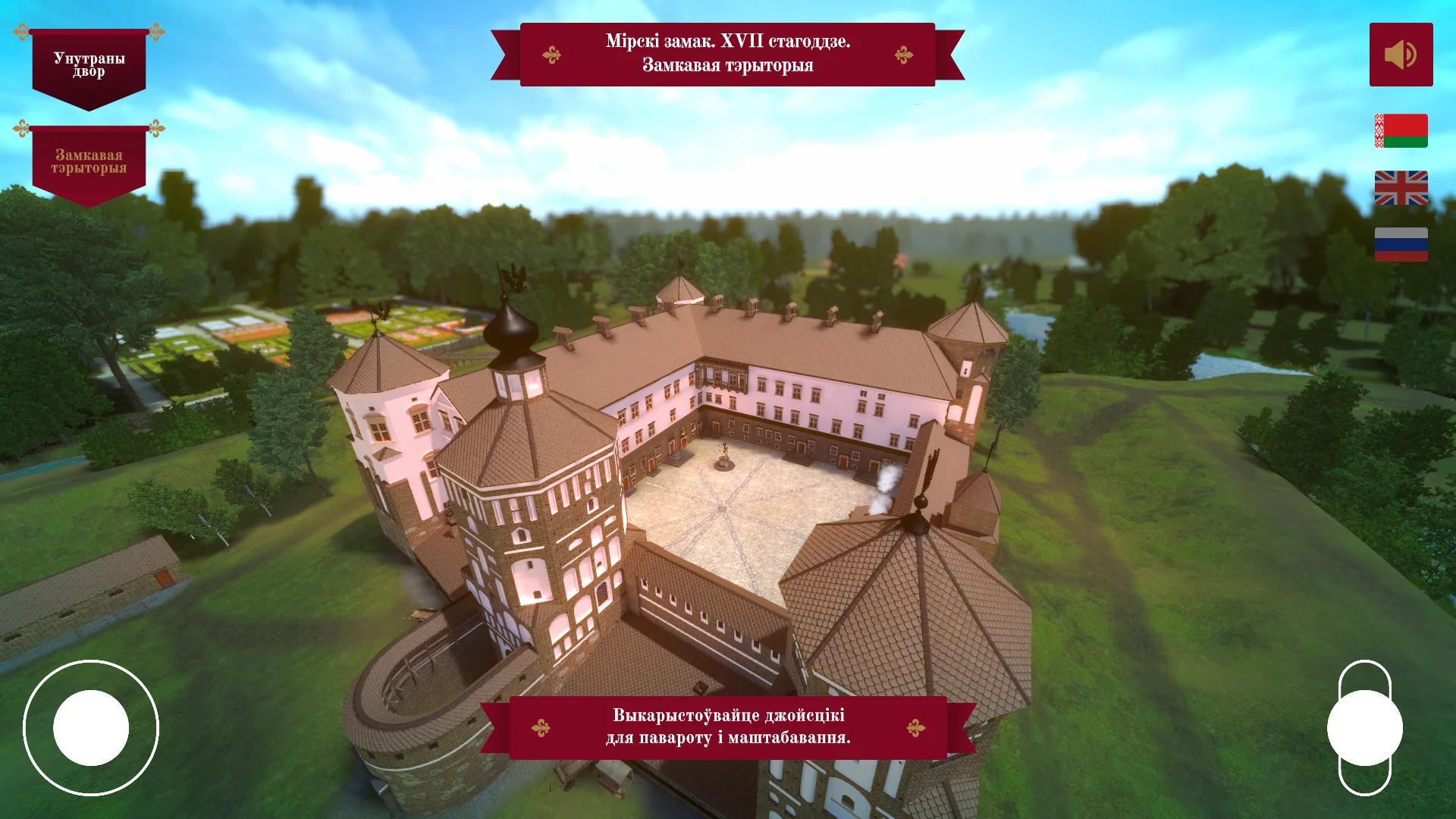
We proposed installing an interactive table in the central hall and developed an engaging map of the district's development with the ability to “travel” through different eras.
For the City History Museum, our engineers created scenarios for guests of different ages: children assembled puzzles of historical buildings, adults compared photos of streets from different years, and seniors could examine archival documents in detail on a large screen.
The interface was so simple that visitors started using it within a few seconds of touching it — without instructions or staff assistance.
The results exceeded expectations: the average time spent in the hall increased from 15 to 40 minutes, and the number of guests who return to the museum for a second visit nearly doubled.
One in three visitors, after working with the table, visited the institution’s website to find additional materials on the topic. Staff also noticed a “word of mouth” effect: guests began sharing their impressions on social media more often, bringing free reach.
This interactive table case study is a clear example of implementation where the results of the interactive kiosk are measurable and directly affect audience loyalty.
Two months later, the museum ordered two more tables from us for other halls — without even negotiating the price. We helped turn passive viewing of exhibits into a living exploration that is remembered and makes people come back.
How to choose the right format for your task?
There is no universal interactive table — the same format can work perfectly in a museum and be completely unsuitable for a shopping mall.
Therefore, we first ask questions: who will use the table, how many visitors pass through the location per day, what content you plan to show, and what actions guests should take.
The answers determine the size of the stand, the screen tilt angle, the number of simultaneous touches, and the content management method. But those are already our tasks: you just need to describe the situation, and we will choose a format for your goals.
Most often we choose between a tabletop option, a floor-standing structure, and a built-in solution. A floor table works well in high-traffic places — several people gather around it, and interaction turns into an event.
The tabletop format is more compact and suits small spaces, reception areas, or exhibition stands. A built-in construction looks like part of the interior and does not conflict with the location’s design.
But these are not rigid rules: if you have specific requirements, we adapt the format to the particular features of the place and audience.
It is also important to consider the usage scenario. For a short introduction to information, a simple interface with large elements is enough; for educational programs or catalogs, a deeper structure is needed.
We listen to what your visitors want and turn that into a clear on-screen scenario. At this stage, we show a prototype of the future interaction and adjust it before launch.
As a result, you get not just “a screen on legs,” but a tool that solves the task of the business: increases engagement, reduces staff load, or increases time spent in the location.
If you are unsure which format suits you best, send us a description of the task — our engineers will offer 2–3 options with reasoning. That way, you make a decision based on numbers and scenarios, not intuition.
Addressing common customer doubts
Doubts before ordering are normal. Most often, clients worry that the kiosk will break down and that content management will be complicated. We mitigate these risks: we provide a warranty, take over maintenance, and train your team.
Below are answers to the questions we are asked most often.
What if the interactive table breaks?
The equipment and work are covered by a warranty from 1 year: in case of a malfunction, we repair or replace the device free of charge.
After the warranty period, maintenance continues under a contract — an engineer will arrive, carry out diagnostics, and resolve the issue as quickly as possible.
Who will maintain it?
No specialist is needed. We monitor the system remotely, update content, and make on-site visits when necessary. Your employees simply use the finished solution.
How long does launch take?
A typical project takes 2–4 weeks; with ready content, several days. The timeline is fixed in the contract so you can plan the opening without surprises.
Why does it cost that much?
This is not an expense, but a sales tool: the table attracts attention, shows products, collects contacts, and reduces queues. It pays off through increased average order value and repeat visits.
Leave a request for project development
Leave a request — tell us what tasks you need an interactive table for: attract visitors, speed up service, showcase a product clearly. We will propose a solution that fits the budget and timeline.
After your inquiry, a manager will contact you within one business day, clarify the details, and, if necessary, show examples of similar projects.
If the task is standard, we will prepare a commercial proposal in 1–2 days; for non-standard scenarios, it takes a little longer, but the approach is always the same: first the benefit to your business, then the technical implementation.
What you get after your inquiry
- Free calculation of cost and timeline — you’ll immediately understand whether the project fits your budget.
- Format selection — a table, kiosk, panel, or custom structure for your space and tasks.
- Turnkey package — equipment, interface, content, and installation, without having to look for contractors piece by piece.
- Adaptation for clients — a simple interface that visitors of any age can easily master.
- Support and warranty — after launch, engineers are available to keep the system running smoothly.
- Ability to update content — change promotions, catalogs, and information without stopping the table.
To order an interactive table or simply clarify the cost, fill out the form — it will take a couple of minutes. We’ll discuss the task, propose the optimal solution, and prepare a commercial proposal with clear figures and timelines.