


Buy an Interactive Table for Kindergarten: Are Children Bored?
Preschoolers quickly lose interest when an activity feels like a boring duty. Teachers spend time trying to hold attention, while children get distracted, throw tantrums, and fail to remember the material.
As a result, children’s development suffers, and parents begin to doubt the quality of early childhood education.
The cause is not the children, but the format of delivery. Modern kids grow up surrounded by bright screens and games, so static posters and ordinary pictures no longer resonate. Even a good curriculum loses its power if it doesn’t engage a child’s natural curiosity. The task of classroom equipment is to give children a tool that speaks their language.
An interactive table for kindergarten solves this problem: it turns learning into an exciting adventure. The child is naturally drawn to the tasks because they see movement, hear a response, and get instant feedback.
Engagement increases, the teacher stops being a “showman” and becomes a mentor — explaining, guiding, and helping. At the same time, activities develop logic, speech, fine motor skills, and teamwork.
We help kindergartens implement such solutions turnkey: we select the configuration according to age and goals, set up educational content, train teachers, and provide support after launch.
You get not just equipment, but a ready-made tool that makes the educational process brighter and more effective. Children run to kindergarten with joy, parents see progress, and management gets modern equipment that strengthens the institution’s reputation.
Five Reasons Children Will Love Their Lessons
Children are drawn to screens — and an interactive table turns that into an advantage. Instead of passively watching cartoons, a child works with their hands: drawing, solving puzzles, sorting objects by color and shape.
That is the first reason: activities develop fine motor skills and coordination, which are directly connected to speech and thinking. Teachers notice that after such activities, children hold a pencil more confidently and complete tasks faster.
The second reason is that learning becomes a game, not a duty. The table itself gives hints, praises success, and gently guides the child if they make a mistake. Children are not afraid to try new things because there is no strict grading.
As a result, knowledge is absorbed naturally: the child remembers letters, numbers, and rules through engaging scenarios rather than boring repetition.
The third reason is that each child can work at their own pace. The table adapts to the group’s level: tasks are simpler for some and more complex for others. The teacher sees who is moving quickly and who needs help, and can give extra attention to those who are falling behind.
Meanwhile, the other children continue to play and learn independently, without constant adult supervision.
The fourth reason is involving parents in the process. The table can save activity results: photos of work, completed levels, progress by topic.
After a day at kindergarten, the child proudly shows their parents what they learned, and mothers and fathers see real results, not just the teacher’s words. This strengthens trust in the kindergarten and raises the value of the activities in the eyes of the family.
The fifth reason is saving teachers’ time. Instead of spending hours preparing handouts and inventing exercises, they use ready-made lesson scenarios filled with educational content.
The teacher starts the program and calmly works with the group, while the table handles the routine: explaining the task, checking the result, and counting achievements. As a result, you get more benefit from the lessons with less strain on staff.
An interactive table pays off not only through child development, but also through improving the entire kindergarten’s operations: higher engagement, less preparation, and grateful parents.
And children are delighted — because every lesson becomes a little adventure they want to return to again and again.
Solution Formats for Different Needs
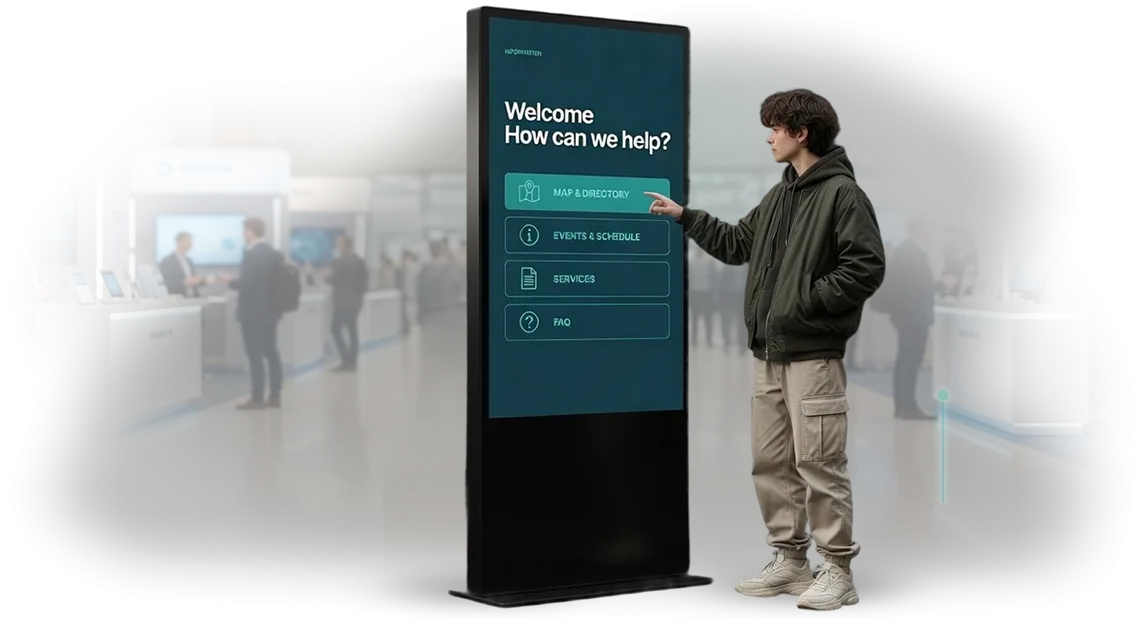
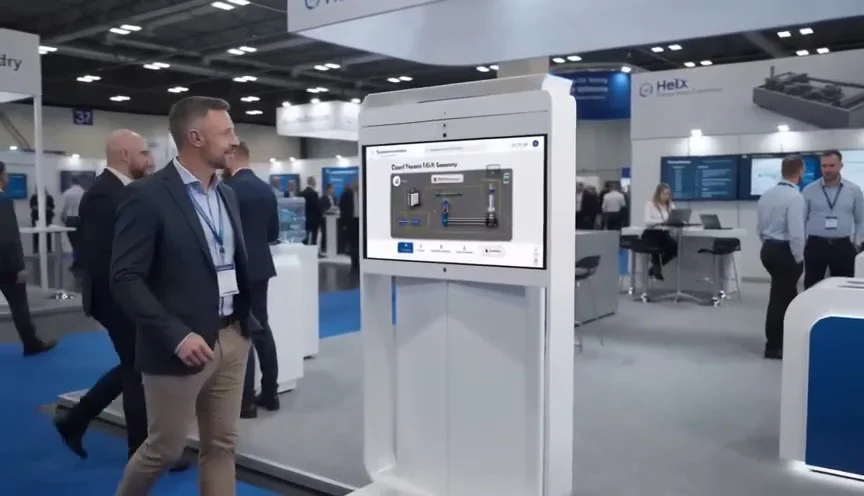
The interactive table format is selected according to the specific room and usage scenario. One kiosk can replace visual aids, part of the lessons, and even an information stand for parents — it is convenient and cost-effective.
It is important that the solution fits the space and is equally comfortable for children, teachers, and visitors.
For small groups and rooms where every square meter counts, a wall-mounted option works well. It takes up no floor space, is mounted at a child’s height, and is used for short tasks, games, and displaying materials.
A floor-standing table is better placed in the center of the group or in a separate zone — several children can use it at the same time, and it is stable and safe.
The portable option offers flexibility: it can be moved from the group to the hall, to a celebration, or to another building in just a few minutes.
In all three options, we use impact-resistant surfaces and rounded corners. Children can work safely on their own, and the teacher does not need to watch over the equipment — they only need to set up the lesson scenario once. We work with professional equipment, so the kiosk performs reliably throughout the entire day.
| Format | Where to Place | What It Gives the Kindergarten |
|---|---|---|
| Floor-standing | Center of the group, play area | Group activities, stability, “shared table” effect |
| Wall-mounted | Corridor, reception area, wall in the group | Space saving, rotating tasks, accessible height for children |
| Portable | Any room, celebrations, off-site events | Mobility, one kiosk for several groups, quick change of location |
The choice of format depends on the number of children, the floor area, and how often the kiosk is expected to be moved.
Our engineers will help you select a configuration for your layout and provide placement recommendations — so the equipment works for children’s development rather than simply taking up space. Just send us the floor plan, and we will handle the rest.
How the Project Process Works
Buying an interactive table for kindergarten is not a one-time transaction, but a solution that will affect lessons and child development for years to come. To make sure you get exactly the result you need, we have structured the process into clear stages. You always know what is happening and control every step.
- Brief and goals. We find out what the table is needed for: learning, games, speech therapy, or creative activities. We take into account the children’s ages, the number of groups, and the specifics of the room in order to propose a suitable solution.
- Plan and design mockup. We prepare a visual draft: we choose the color, shape, materials, and design to match the interior of your group. You get a clear picture of the future product before production begins.
- Approval. We discuss the details, make adjustments, and confirm the final version. You know exactly what you will get, with no surprises after launch.
- Implementation. We manufacture the table, install educational programs and games, and check the safety of the structure and materials. Everything is tested before shipment.
- Delivery and installation. We deliver, install, and connect the equipment. Our engineers show the teachers how to launch lessons, switch apps, and use the table in the group.
- Support and development. We train the staff, help with updates, and stay in touch. If any questions come up, you can always contact us — we continue working after launch.
This approach removes risks and saves your time: you do not need to dive into technical details, and you receive a ready-made tool for lessons that works immediately.
The result is transparent cooperation, clear timelines, and a solution that children and teachers will use every day.
What Is Included in the Delivery Package
When you buy an interactive table for kindergarten, you want a complete solution, not a kit you have to assemble and configure yourself. That is why we have prepared a single delivery package — it includes every detail so that the table works immediately after installation. Below is the full contents, with no hidden items or unexpected extra charges.
- Equipment — an interactive table with a touchscreen that withstands intensive use in a group: children can draw with their fingers, move objects, and see the result immediately. The frame is stable, the corners are rounded, and the height is adjustable — the table suits children of different heights, and teachers do not have to worry about safety.
- Software — educational games and tasks for different ages are pre-installed on the table: from simple puzzles and coloring pages to math and speech exercises. The app pack can be expanded as the group develops, and our engineers regularly update the programs to keep them relevant.
- Installation and setup — we deliver the table, mount and connect it ourselves, and check that all apps and sensors work properly. You do not need to look for a technical specialist: handover takes one day, and lessons can begin the very next day.
- Staff training — we run an orientation session for teachers and administrators: we show how to start lessons, switch between apps, and use settings for different groups of children. Staff receive a simple guide and can ask our coordinator questions if needed.
- Warranty and service — the equipment comes with an official warranty, and the software comes with updates for the entire period of cooperation. If a problem occurs, you only need to call or write to us: we can help remotely or arrange for an engineer to make repairs on site.
- Teaching materials and support — the package includes a selection of ready-made lessons and recommendations for using the table in kindergarten: from open lessons to organizing free play. This helps teachers get comfortable quickly and saves them from having to design scenarios from scratch.
In effect, this is a turnkey solution: installation, training, and support are already included in the price. You pay once and get an interactive center that works for children’s development and makes teachers’ work easier.
Case Study: A Real Project with Measurable Results
For a kindergarten head, the question was simple: how do you keep children’s attention while parents pick them up at different times? The cloakroom turned into chaos, and the tablets in children’s hands led to arguments and tears. We proposed an interactive table that works as a center for calm games and educational activities.
What We Did
We implemented an interactive table in the lobby of «Romashka» Kindergarten — the place where children wait for their parents. Our engineers selected a package based on the head’s goals: a durable frame, moisture protection, and a set of games for developing logic and speech.
Installation took one day, and teacher training took another two hours. The kiosk does not require constant supervision: children manage on their own, while kindergarten staff get a control panel for changing content.
Results Seen at «Romashka»
After a month, the head shared the numbers: the average waiting time for a child dropped from 15 to 7 minutes — children stopped being fussy while parents talked. During the day, the table handles more than 120 game sessions of 3–5 minutes each, and in a month, more than 2,500.
Teachers note that children now say letters and counting words more often, and parents say their children eagerly pull them toward kindergarten in the morning to “finish their task.”
The most important thing for the head was the return on investment. The table fully paid for itself within four months through saved staff time and fewer conflicts in the cloakroom.
After the trial period, the kindergarten ordered a second table for the older group, and two neighboring institutions asked for a similar solution based on our recommendation.
We didn’t just supply equipment — we solved a real problem for the head and made the kindergarten calmer. We are ready to show similar case studies for your institution and calculate when the table will pay off for you.
How to Choose the Right Format for Your Task?
How to Choose the Right Format for Your Task?
The main guide is not the price, but what tasks you want to solve with an interactive table. For a kindergarten, these are learning through play, the development of motor skills, attention, and teamwork.
So first of all, look at the quality of the touch panel, the stability of the frame, and the availability of proven educational content — not at the screen resolution or the number of built-in programs.
The price-to-quality ratio here follows a simple rule: a cheap device that saves on materials will cost more in maintenance than a reliable table that lasts for years without breakdowns.
Children press hard, draw, sometimes fall, and spill water, so the frame and screen protection are not things to save on. It is better to choose a proven model with a warranty and post-warranty support than to buy a minimal version and later spend your budget on repairs.
Reliability for a kindergarten means not only a durable frame, but also stable operation throughout the day. When the table is used during lessons, breaks, and celebrations, there should be no freezes or failures.
A good sign is licensed content that is regularly updated and the ability to switch modes quickly: learning, free play, material display. Ask the supplier whether remote management and administration are available — this will save time for teachers and administrators.
If you are unsure about the format, start with a pilot task: one zone in the group or lobby where the table will be used most often. Our team helps you choose a configuration that fits your budget, space, and number of children, and also adapts the content to your curriculum.
We will consult you for free and prepare a solution that will deliver results from the very first days.
Answers to Frequently Asked Questions
Customers rarely ask about technical specifications — more often they ask what will happen to them if something goes wrong. We answer four main questions: warranty, timelines, children’s safety, and content updates. Here is the short version.
What warranty do you provide, and what does it cover?
We provide a warranty on the equipment and work — usually up to 12 months. During this period, we eliminate faults for free and repair anything that fails through no fault of the children or staff. The process is simple: you call us — we help remotely or come by with a replacement.
What are the installation and launch timelines?
The timelines depend on the number of kiosks and the complexity of the content, but we always fix the date in the contract. For a typical project, 2–4 weeks are enough: from design approval to a trial launch. If you need it by a holiday, we can discuss an expedited option.
Is it safe for children?
All materials and surfaces are inspected, the corners are rounded, and the structure is stable — a child cannot knock the table over or get hurt. The power supply is enclosed, the wires are hidden, and the control works by touch, with no small parts or sharp edges.
How are games and content updated?
You are never left alone with the kiosk. We help update content for new lessons and holidays, and if necessary, we add new games and tasks remotely or with an on-site visit. This extends the life of the kiosk and keeps children interested.
These answers are usually enough to make a decision — the rest we discuss individually. Leave a request, and we will send you a timeline estimate and the cost for your kindergarten.Submit a Request for a Free Consultation
When choosing an interactive table for kindergarten, it is easy to focus on technical specifications and miss the main point: how it will help children develop and teachers make lessons more engaging.
A well-chosen solution increases children’s engagement, simplifies lesson preparation, and creates a positive image for the institution.
We have been creating interactive solutions for education for more than ten years, so we can tell you which format suits your kindergarten and which programs will bring the greatest effect.
Submit a request for a free consultation — we will analyze your situation, prepare a cost estimate, and, if necessary, provide demo access so you can evaluate the solution in action.
This is not binding: you will receive a clear plan and answers to your questions, including timelines, installation, and staff training.
What you get after contacting us:
- A free consultation: we help you choose the table format for your space and the children’s ages.
- A cost estimate with no hidden fees: an accurate quote within one day.
- Demo access to interactive programs: you can assess for yourself how the table works in lessons.
- Adaptation to your curriculum: pre-installed software or customized scenarios.
- Support and warranty: installation, teacher training, and ongoing assistance.
- Fast launch: from project approval to a working table in 5–10 days.
After the consultation, you will know exactly what you are buying, why, and how it will pay off. Leave your contact details — we will call you back at a convenient time and answer all your questions.