

Photo Archives: How an Interactive Kiosk Brings Visitors Back
Photo archives and exhibition collections hold unique images, but they usually go unnoticed: visitors glance at the displays and leave without remembering a single photo.
The problem is not the value of the materials but the presentation format — a static information stand does not create a dialogue with the visitor.
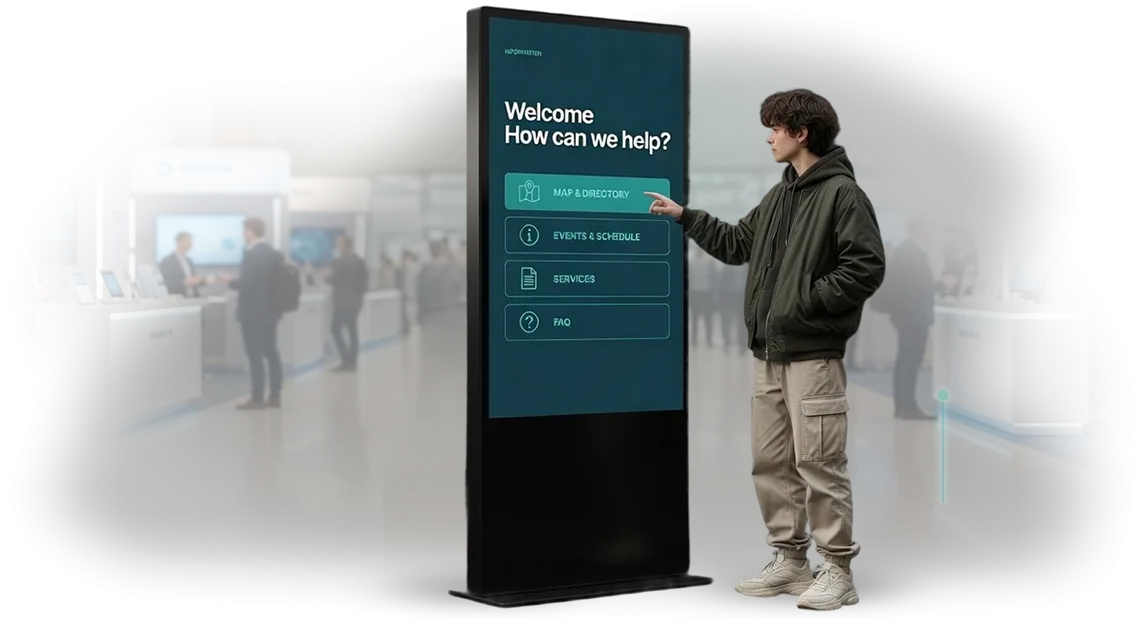
An interactive kiosk changes this dynamic. Instead of passive viewing, visitors choose an era, browse the digital archive, zoom in on details, and find familiar faces.
This turns a photo archive from a "memory repository" into a living story worth exploring — and returning to for new discoveries.
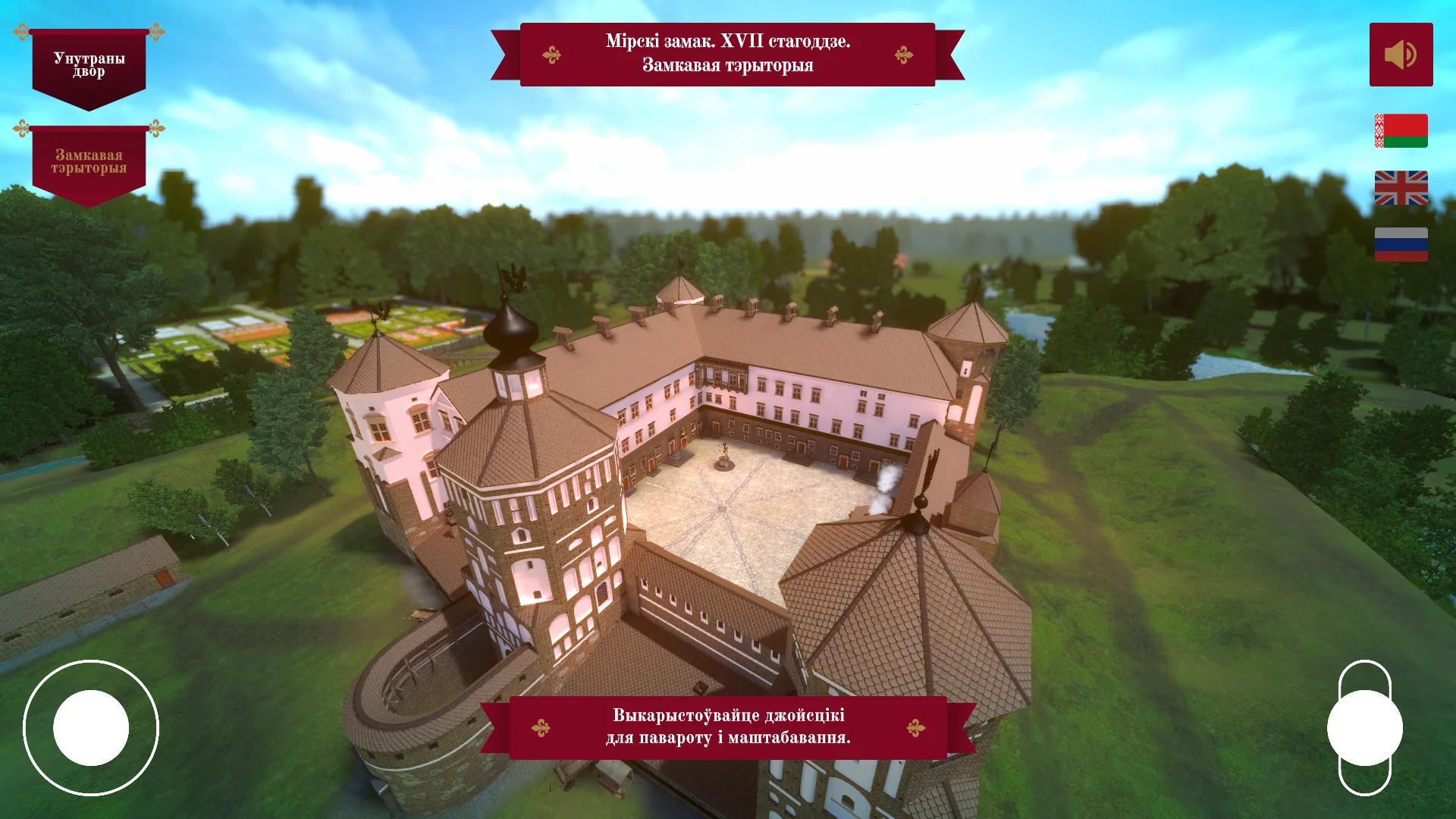
This format is especially important for memorial kiosks in museums, parks, and places of remembrance. Here, an interactive kiosk helps guests not just see photos but experience a personal connection to events.
Search by surnames, years, and geographic locations makes the exhibition individual: every visitor gets their own route through the archive.
For the venue owner, the benefit is clear: longer dwell time, more repeat visits, and a new reason to talk about the project on social media and in the press.
The photo archive starts building recognition and supports the image of a modern venue that preserves history with care and stays open to technology.
Such a kiosk becomes more than just equipment — it becomes a point of attraction for different generations, from schoolchildren to veterans.
We design and launch these solutions turnkey: from material digitization to installing an interactive kiosk with a clear interface and content management system.
We help photo archives and memorial spaces turn archival collections into living stories that people want to return to, share, and bring friends to.
What an Interactive Kiosk Gives Your Space
Visitor Engagement Instead of Passive Viewing
Photo archive visitors come for stories, but static displays hold attention for only a few seconds. An interactive kiosk turns viewing into a personal experience: the guest chooses an era, browses the archive with a touch, zooms in on details.
Guests stay at the exhibition several times longer and remember the emotion, not just the images. Such experiences bring visitors back — this time with friends.
An Interactive Exhibition Worth Exploring
A digital Book of Memory preserves unique materials and makes them accessible to everyone. Even someone who has never worked with an archive can find relatives, acquaintances, or significant events in just a few touches.
This presentation sets the space apart from ordinary exhibitions. The archive ceases to be a closed collection — it becomes a living part of the space.
Hospitality Without Overburdened Staff
The kiosk independently answers common questions, displays reference information, and suggests routes. Guests don't wait for help at the desk, while staff focus on personal interaction.
This is a level of care that people notice and appreciate: visitors always get a quick answer, and the team gets more time for guests.
Recognition and a Modern Image
A tech-driven approach to the archive shapes the image of a space that evolves while respecting its history. Every guest leaves with a personal experience — and recommends you on social media and in conversations.
A modern image attracts new audiences, strengthens partner trust, and makes the space stand out.
Interactive Kiosk Formats for Different Scenarios
Every venue has its own task: a museum tells a story, a memorial carefully preserves names, a school introduces opportunities, an archive helps find important documents. Visitors expect the kiosk to deliver the needed function right away, not make them figure out a menu. A properly chosen format saves guest time and increases the venue's value.
That's why we design solutions for specific scenarios: from compact touch stands to archive terminals.
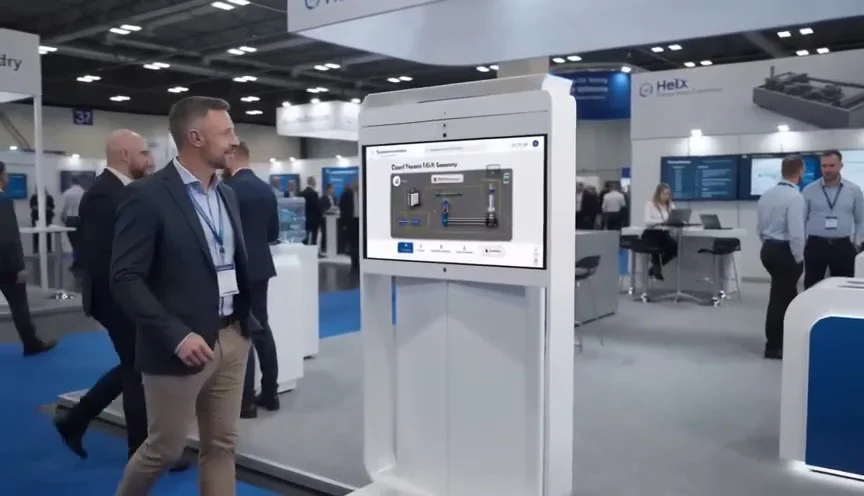
The kiosk becomes an independent point of attraction: it works without staff involvement, collects feedback, and helps guests complete their intended action — find a relative, study an exhibit, view an archival photo. Below are standard formats and their benefits for the client.
| Format | For Whom | What It Offers the Client |
|---|---|---|
| Museum kiosk | Museums, exhibition spaces | Complements the exhibition with multimedia materials, increases dwell time and depth of engagement with the collection |
| Touchscreen kiosk | Memorial complexes, parks of glory | Allows visitors to find a name by surname, year, or place — visitors return and recommend the venue to others |
| Information terminal | Schools, colleges, universities | Shows schedules, events, and virtual tours, relieves administrators and increases applicant loyalty |
| Archive kiosk for photo archives | Archives, photo libraries, public libraries | Provides instant access to digitized documents and photos, simplifies staff work and reduces inquiry queues |
Kiosk Development Stages: From Brief to Launch
A transparent kiosk development process means a predictable result. When you order an interactive stand for photo archives or a Book of Memory, it's important to understand what happens at every moment: from the first brief to installation and project launch. That's why we've structured our work so you can see every stage.
-
Brief and immersion — we pin down goals, audience, and archive specifics. We determine what materials will be available and what functionality guests and staff need.
-
Scenario and structure — we design the navigation logic: how visitors will search, browse, and interact. We agree on the key sections of the future interactive experience.
-
Layout and prototype — we show how the stand will look and work. You see the interface before the main development begins and can make changes without losing time.
-
Development and content filling — we build the interactive stand, adapt photo archive materials, configure search, captions, and accompanying texts. Everything works within a unified logic.
-
Testing and debugging — we check stability, response speed, and usability. We eliminate anything that could prevent visitors from using the kiosk freely.
-
Installation and commissioning on site — we come to you, mount and connect the equipment with the venue's specifics in mind. We test everything on location before opening.
-
Launch and support — we train the staff, hand over instructions, and stay in touch after the project goes live. We're available if operational questions come up.
At every stage, you receive a clear status update and approve key decisions. This approach to kiosk development avoids surprises, keeps deadlines, and delivers an interactive stand that works right away and wins visitors over.
What's Included in the Interactive Kiosk Delivery Package
An interactive kiosk is not just touchscreen equipment — it's a complete turnkey solution. We handle the entire cycle, from design to maintenance, so the delivery package includes everything needed for launch and day-to-day operation.
You don't need to find installation contractors or sort out technical details — you get a working system and a trained team.
Here's what's included in the kiosk package:
-
Hardware. Professional touchscreen equipment, a protected enclosure, and displays that withstand intensive use and installation in high-traffic areas. We adapt the appearance to your space's style — from classic to modern.
-
Software. An interactive interface and content management system that lets your staff update texts, images, and archival materials on their own, without involving developers.
-
Installation and commissioning. We deliver the kiosk, install it on site, connect it to power, configure it, and test all operational scenarios. Kiosk delivery is scheduled around your timeline — for example, to align with an exhibition opening or a memorial event.
-
Staff training. We conduct on-site or remote training for your employees. They learn how to upload materials, change operating modes, and resolve standard issues without calling in a specialist.
-
Technical support and warranty. Remote diagnostics, updates, phone consultations — and on-site visits if needed. We stay with you after the kiosk is handed over.
-
Documentation and instructions. Clear guides for staff, an operation manual, and a description of all functions. All of this stays with you and serves as a reference in daily work.
Case Study: How We Built a Kiosk for a School Museum
An ordinary school museum often loses to tablets and social media: the exhibition exists, but there's no genuine interest.
A museum at one of the city schools approached us with a request — to bring photo archives to life so people would actually look at them instead of walking past. The task wasn't easy: the archive had accumulated tens of thousands of photos from different years.
Our team took on the project and built an interactive kiosk that turns stacks of photographs into a living story.
At its core is a touchscreen with convenient navigation by years, events, and graduating classes. Instead of display cases with paper captions — the school's history that visitors explore on their own: flipping through photos, opening documents, reading alumni memories.
For us, it was important not just to install "one more screen" but to create a tool that students find intuitive and that doesn't require a curator's help.
What Changed After Launch
In the first school year, museum attendance nearly doubled — history lessons started being held right at the kiosk. The average time spent with the photo archives grew from two minutes to ten: guests don't just look, they search for familiar faces, discuss, revisit. Students began bringing their own photographs to add to the archive — the museum became alive.
Why the Museum Chose Us
We didn't stop at delivering equipment: we built the exhibition together with the teachers, digitized the photos, and set up a catalog structure that's easy to maintain going forward.
After the trial period, the museum ordered a second station from us — for the lobby, where it draws as much attention at parent meetings as the exhibition itself. This approach works not only for school museums — it works anywhere there are photo archives that people hold dear.
Frequently Asked Questions About Interactive Kiosk Development
We've gathered answers to the questions most often asked before a project starts. No complex technical information — only what helps you make a decision: timelines, compatibility with your content, and the real workload on your team.
How long does kiosk development take?
A typical project takes 4–6 weeks from the moment the layout and content are approved. The first 1–2 weeks go to interface and logic design, followed by assembly, content filling, and testing on real equipment.
If you need the kiosk by a specific date, plan for a buffer of 1–2 weeks for approvals — and we'll make it.
Can the kiosk be connected to our photo database or archive?
Yes, that's a standard task. We work with different storage formats: disk catalogs, cloud services, existing databases. The key is having access to the source files and understanding the structure. We handle integration through reliable service interfaces, so your data stays secure.
Is the kiosk difficult to maintain after launch?
For your team — no. Content filling and updates are done through a simple admin panel: upload new photos, edit a description — and within a couple of minutes everything is on the screen. Across our projects, clients manage with a single manager who has no IT background. If needed, we set up automatic loading from your archive.
What happens if the kiosk stops working during an event?
Across all projects, we build in crash protection: auto-start on power-up, hang control, remote monitoring. If a problem still occurs, the kiosk will reboot the software on its own and continue working.
Plus, you receive a short guide for staff and our tech support via chat or phone for the duration of the event.
How to Choose the Right Kiosk Format for Your Photo Archive?
There is no "best" kiosk format — only the right one for a specific photo archive. The choice depends on three things: what tasks the archive solves, how much space is available, and who will actually work with the kiosk.
That's why equipment selection starts with a conversation about your visitors and scenarios, not with a model catalog.
If visitors browse the archive and search for photos by year, event, or surname, the kiosk needs to offer fast search and convenient touch navigation.
When the photo archive also functions as an exhibition space, the enclosure design and content presentation matter more — the kiosk becomes part of the exhibition, not just a technical device.
We build on these scenarios and propose a configuration that solves the main task: making the archive accessible and alive.
The space also determines the kiosk format. For a small hall or corridor with limited floor area, a compact wall-mounted structure that doesn't block foot traffic is a good fit.
For a spacious lobby or waiting area — a freestanding station with a large screen that can handle a stream of visitors without queues. We take into account foot traffic, lighting, and power outlet locations so the kiosk is convenient for both visitors and staff.
Who will fill the kiosk also matters. A photo archive is constantly growing, so updating materials needs to be possible by your own staff, without hiring developers for every new photo.
That's why, when selecting equipment, we include a straightforward content management system — so the kiosk stays relevant for years instead of becoming a frozen museum piece.
In the end, choosing a kiosk is a joint project: you tell us about your photo archive, and we match a format and equipment that fits the space and works for your audience. We design the interface around specific tasks, test scenarios, and hand everything over ready to launch. Get in touch — we'll help find the configuration that makes your archive convenient and visible.
Order an Interactive Kiosk for Your Project
Ordering a turnkey kiosk is simple — tell us about your idea, and we'll propose a solution.
Over the years, we've delivered dozens of interactive projects for museums, exhibitions, and photo archives: from touchscreens to archive kiosks where visitors browse family photos and leave their own stories.
The consultation is free. We'll clarify the task, suggest a format that will engage your specific audience, and prepare an implementation plan. All it takes is a request — after that, we'll handle design, programming, and launch.
After you reach out, you will receive:
- a clear commercial estimate with a fixed budget — no unexpected extras;
- a recommendation on kiosk format and interaction scenario for your venue;
- an interface prototype for approval before development begins;
- a well-coordinated team: design, development, installation, and technical support;
- a testing phase with real users before opening;
- post-launch support — we make fixes, update, and help with content.
Leave a request — and within 15 minutes we'll discuss how to turn your exhibition into a point of attraction for visitors. We'll find a solution even if the project is unconventional: that's exactly what turnkey development is for.