

Why visitors don't linger at historical sites?
The pain is familiar to every site that works with history: guests walk past, cast a brief glance, and move on. Static plaques, barriers, and classic stands have long ceased to hold attention — people find reading boring; they want to participate and feel emotions.
The problem is not the site itself, but the format of its presentation. Even a unique historical fact goes unnoticed if presented as plain text. Visitors remember experiences, not dates and names. If an exhibition does not offer interaction, it vanishes from memory within a minute of leaving.
For the site owner, this translates into direct losses: guests don't linger, don't take photos, and don't tell friends. Recognition doesn't grow, there are no repeat visits, and promotional money is wasted.
The modern visitor chooses not to “see” but to “experience” — and expects a historical site to give them that opportunity.
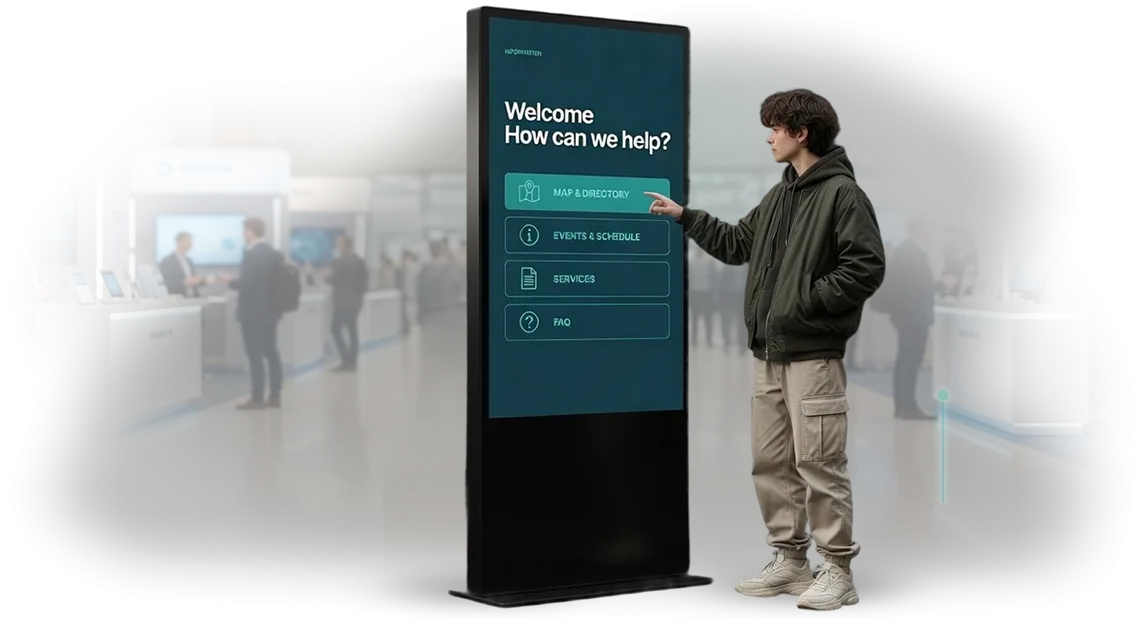
An interactive kiosk solves exactly this problem. It holds attention through engagement: tap, select, open a story, hear the voice of an era. Such actions create lively interactivity and turn passive observation into a personal experience.
The guest stays at the exhibit for several minutes, remembers the site, and shares their impressions on social media themselves.
We help historical sites solve the problem of indifference. Our interactive solutions integrate easily into existing spaces, require no reconstruction, and make an exhibition clear, lively, and memorable. As a result, the site starts working for you — bringing attention, reach, and returning guests.
What tasks an interactive kiosk solves at historical sites
Historical sites share a common pain: a visitor passes through in 15 minutes, remembers no details, and is unlikely to return. An interactive kiosk turns viewing into a dialogue — and solves several tasks at once that directly affect the site's metrics.
Tasks the kiosk covers
-
Increased dwell time. The guest lingers at the touchscreen to explore the history at their own pace. The longer the contact with the exhibition, the higher the engagement and the chance of a repeat visit.
-
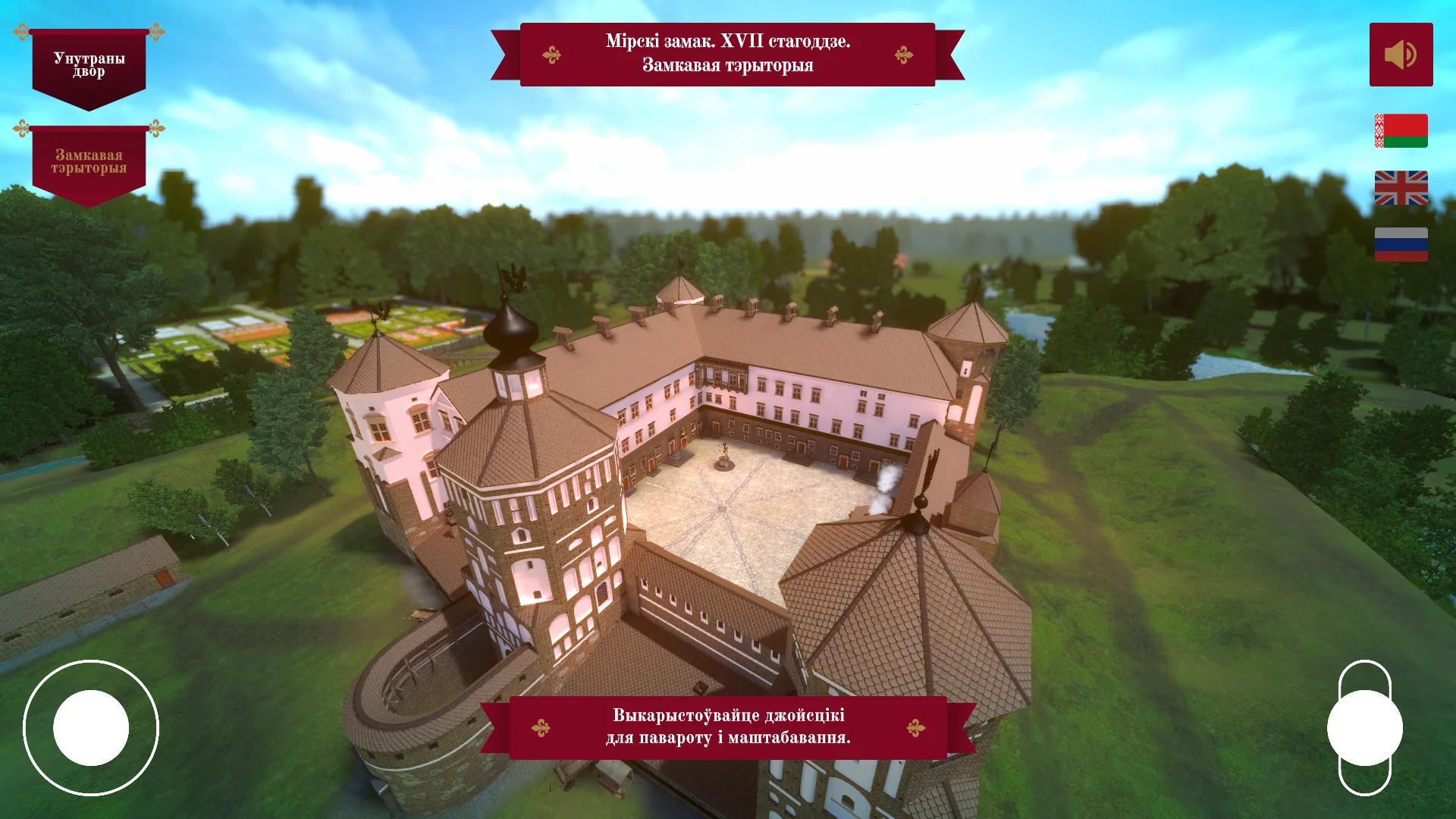
Bringing the exhibition to life. Static stands give way to interactive stories: maps, photographs, and eyewitness accounts. The visitor doesn't read text — they experience history.
-
New reasons to talk about the place. A vivid scenario, an unexpected detail, or a hero's personal story gives visitors a “hook” for social media. Each such post is free reach and recognition for the site.
-
Building a modern image. A venue that uses interactive solutions is perceived as caring about its visitors. That's a plus in the eyes of tourists and partners.
-
Collecting feedback. The kiosk can replace paper questionnaires: visitors rate their visit, leave contacts, and note what's missing. You get data for developing the exhibition, not guesses.
Our team implements kiosks for museums and memorial complexes: we design scenarios, interfaces, and data collection systems for your venue. As a result, the site becomes a place people want to return to and recommend to others.
Interactive kiosk formats for your task
Choosing the kiosk format directly affects the visitor's journey: where a person passes by, where they pause, and where they sit down to study details.
This is especially important for historical sites — an overcrowded area loses its atmosphere, while one that's too simple fails to hold attention.
We match the type of equipment to the location and the exhibition's logic, so every visitor gets exactly the experience they came for.
Below are the main formats we integrate into museums, memorials, and tourist spaces. In all cases, you get a manageable system with content that updates as the collection grows or new archival materials are added.
| Format | Suitable for | What it gives the client |
|---|---|---|
| Vertical touch panel | Lobbies, corridors, entrance areas, high-traffic zones | Instant information and navigation, frees up staff and helps visitors build their own route |
| Touch table | Interactive zones, battle maps, site plans, collective exploration of exhibits | Simultaneous immersion for multiple visitors, keeps the group at the spot and increases time spent at the site |
| Archive terminal | Reading rooms, libraries, memorial complexes, places with large volumes of digitized documents | Fast search through collections, access to primary sources and personal files without staff involvement, preservation of originals |
Each format easily adapts to the site's style — from strict classicism to contemporary museum graphics. At the same time, the interface stays intuitive for any age group: both a schoolchild and an older visitor can figure it out in a couple of touches.
What matters for historical sites is that the kiosk doesn't steal attention but works as a tool of immersion. After launch, you get not a structure with pictures but a functioning exhibition tool that covers navigation, education, and memory preservation.
We'll recommend the most effective format for your location and design it with the site's specific characteristics in mind.
How development works: stages and timelines
For historical sites, factual accuracy and careful handling of materials are especially important. We structured the development process so that you always know what stage the kiosk is at, when interim reviews will happen, and when to expect launch.
- Brief and archive immersion — we study biographies, photographs, documents, and existing exhibitions to define the kiosk's structure and content.
- Plan, layout, and timeline — we lock in the section structure, design mockup, scope of work, and schedule. We approve them with you before production starts.
- Concept approval — we show a navigation prototype, visual style, and content presentation logic. You make edits at this stage — it's faster and cheaper than reworking a finished kiosk.
- Assembly and content filling — we digitize the provided materials, lay out pages, add interactive elements, and adapt everything for the touchscreen.
- Testing and launch — we test the kiosk in near-real conditions: reliability, readability, and usability for visitors of different ages. We train your staff and launch the project.
- Post-launch support — we help update information, add sections, and extend equipment service life.
Each stage ends with an approval — you see the result and make a decision instead of watching a “black box.” This is why we deliver projects on time and adjust the plan in advance when necessary.
The typical development time for a kiosk at a historical site is two to four weeks, depending on the size of the archive and the number of interactive modules. We set exact dates in the plan after the brief and don't change them during the work.
What's included in the interactive kiosk delivery
When you order an interactive kiosk from us, you get a ready-made turnkey solution. You won't need to source the casing, screen, software, or installation contractor separately — everything is included in one package and works right after installation.
The basic package includes:
- Casing and touchscreen: a durable construction that withstands intensive visitor use and resists external impacts. Suitable for museum halls, memorial complexes, and outdoor exhibits.
- Software: convenient navigation, a site map, a timeline of historical events, and search across archival materials. The interface is clear to visitors of any age.
- Content for the historical site: structured materials — digitized documents, photographs, articles, video tours. The content is adapted to your exhibition.
- Installation and setup: our engineers deliver the kiosk, install it at the desired location, connect power, and check that all functions work.
- Instructions and maintenance guidelines: simple handbooks for staff so employees can start the system, change content, or resolve minor issues independently.
- Warranty and technical support: an official warranty on the equipment and software, plus phone consultations and remote access for resolving issues.
Additionally, we train your staff: in a short session, they learn how to operate the kiosk, update materials, and interact properly with guests. This reduces the load on administrators and lets you quickly integrate the system into daily operations.
In the end, you get a single package — casing, screen, software, content, installation, and warranty from one contractor. Our team handles all stages, saving you time and delivering a predictable result.
If the project needs to be extended, we'll add auxiliary modules and expand functionality without compromising quality.
Case study: an interactive book of memory for a memorial
Visitors passed by the memorial's static stands within a minute — the information didn't move them, and emotions didn't last. The venue's manager wanted guests to explore people's fates, return to the history, and bring others.
For the memorial complex “Memory of Generations”, we developed an interactive book of memory: a touchscreen kiosk where you can search a surname, open a biography, view photographs, and leave an entry.
The client didn't have to train staff — the interface is clear to visitors of any age, and data storage requires no significant costs. Within a week after launch, the kiosk became the central point of the exhibition.
Implementation results
The average time spent at the kiosk tripled — from one minute to three and a half. In a month, guests accessed the archive more than six thousand times and left about eight hundred personal entries in the electronic book of memory.
Visitors began recording stories on their phones and sharing them on social media, so mentions of the memorial in the public sphere grew several times over.
Client's review
The director of the memorial complex noted: “The kiosk has become a center of attraction; families gather around it.
We see people coming back to it several times — that never happened before.” After the launch, the client ordered two additional kiosks for neighboring exhibitions.
The case shows: an interactive format turns an archive from static information into a living experience, and a memorial into a place worth returning to.
How to choose the right kiosk format for your site?
Choosing a kiosk format doesn't start with the equipment model but with the characteristics of the venue itself. Every historical site has its own foot traffic, placement zones, and audience.
What works perfectly in a spacious museum lobby may be inconvenient in the narrow corridor of an old estate, and a touch table designed for extended exploration makes little sense under heavy visitor flow.
The first criterion is area and layout. Assess how much space is actually available for a stand or panel: whether clear access is needed, or whether the kiosk would obstruct the view of the exhibition.
If the venue is compact, a wall-mounted kiosk with a slim casing that doesn't take up usable floor space could be the solution. For spacious halls, freestanding structures with a waiting area can be considered.
The second criterion is traffic and interaction time. With high visitor flow, it's important that the interface starts instantly and doesn't make people queue.
For tour groups, a quick scenario is best: “touch — see — move on.” If the kiosk is meant for individual immersion, such as reviewing archived documents or personal stories, then a more spacious area and content designed for 3–5 minutes of interaction should be planned.
The third criterion is content type. Text materials, photographs, video chronicles, interactive maps, or 3D reconstructions require different performance levels and screen sizes.
High-quality video looks better on a diagonal of at least 27 inches, while a compact panel is enough for text work. Also consider whether visitors will listen to audio: will headphones be needed, or are built-in speakers and a quiet location sufficient?
Finally, the budget determines not only the type of kiosk but also its finish, reliability, and potential for future upgrades. A casing styled to match a historical interior costs more than a standard one, but it's what turns a technical device into an exhibition element.
With a limited budget, you can choose a classic finish and compensate with graphic materials around the kiosk.
Our team helps choose a format based on your venue's parameters: we consider area, foot traffic, content type, and financial constraints already at the briefing stage. You'll get a solution that fits the interior, handles the load, and won't require rework after launch.
Frequently asked questions and what if something breaks
We understand: an interactive kiosk is part of the impression of your site. It must work reliably during peak hours, because a failure in front of guests hurts both reputation and emotions. So we address the main fears: breakdowns, content updates, and staff training.
Below are answers to the questions that most often concern clients before launch. If you see yours here — good, you're asking the right questions.
What happens if the kiosk breaks down at the busiest moment?
A breakdown is not the end of the world. We connect remote diagnostics in advance: an engineer sees the device's status and usually resolves the problem within 20–30 minutes.
If the breakdown is serious, we bring a replacement — we keep modules in stock, so downtime is measured in hours, not days. Visitors won't even notice the failure.
Who will update the information if we're not tech-savvy?
Updates are done without a programmer. A simple control panel is included: you upload new historical facts, photos, videos, or event schedules in a couple of minutes from any computer.
We'll train your employee in an hour or two, and if you don't want the routine — we'll handle content and support ourselves.
Do we need to specially train staff?
No. The interface is designed for the visitor: the guest clicks through sections themselves. The employee only needs basic actions — restart, change the design, upload a new file. We give a short briefing and leave a handout with video instructions. Within a day, the staff works confidently.
What warranty do you provide and what does support include?
We provide an official warranty on equipment and installation work. Basic support includes round-the-clock remote monitoring, update management, content backup, and priority engineer visits. The service agreement is flexible: you can renew it monthly or order one-off inspections.
Ready to discuss interactive solutions for your site?
Visitors to historical sites expect not just information but immersion in an era. Ordinary stands and plaques get lost against vivid impressions, while an interactive kiosk holds attention and turns a tour into a live dialogue with history. We help create a format that enhances guests' impressions and increases recognition of your site.
It's convenient to start with us: you get a consultation, a cost estimate, and a clear action plan before work begins. We discuss the venue's goals, audience, and content presentation format in advance, so we can propose a solution that solves exactly your tasks.
What you get when you contact us:
- Format consultation — we'll advise which interactive format suits a museum, memorial, or park best.
- Cost estimate and timeline — a transparent quote with no hidden fees, fixed before the project starts.
- Custom project for your exhibition — not a template, but a scenario based on historical materials and the site's specifics.
- Ready-to-launch package — equipment, interface, and content that just need to be installed and switched on.
- Team training — your staff will be able to update content and manage the kiosk independently.
- Post-launch support — we stay in touch to quickly resolve any questions and keep developing the solution.
Leave a request for an estimate today — we'll respond within one business day, discuss your tasks, and prepare a preliminary proposal. This doesn't obligate you in any way, but gives you specifics for planning your budget and timeline. Tell us about your site, and we'll suggest how to make it even more vivid for visitors.