


Why visitors avoid local history museums
When people come to a local history museum, they expect a vivid story about their native land, not quiet halls with yellowed labels. Museum visitors quickly lose interest in an exhibition if the information is presented statically and requires lengthy reading.
Within a few minutes, their gaze glides over display cases without emotion, and the main exhibits go unnoticed.
The modern guest is used to interactivity: they want to choose what to explore, get quick answers, and leave with vivid impressions of the visit.
When instead they find long texts and “do not touch”, people walk through the halls formally, remember no details, and are unlikely to return. Moreover, they will not recommend the museum to friends, and word of mouth still plays the key role in cultural tourism.
For a local history museum, this means declining attendance, weak interest from schools and families, and consequently a lack of funding for new projects. Unique artifacts and stories are lost without a modern presentation — their value remains hidden behind an outdated format. The museum ceases to be a point of attraction for local residents and visitors to the region.
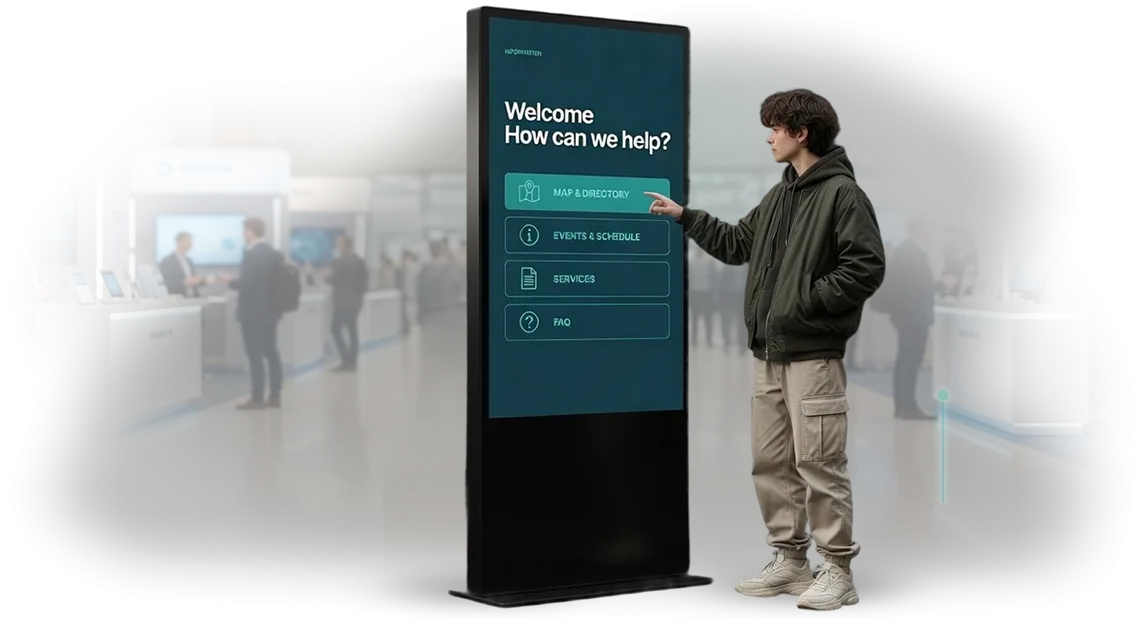
We help break this vicious circle. Interactive information kiosks turn an exhibition into a living journey: guests discover stories themselves, browse archival photographs, listen to audio narratives, and share their findings on social media.
That gives visitors a reason to linger, return again, and bring those who have not been yet. The local history museum once again becomes a place where people want to spend time.
What an interactive kiosk brings to your museum and its guests
A museum is a space of experiences, and that is what visitors come for. The deeper a person immerses themselves in history, the longer they stay in the hall and the more willingly they return.
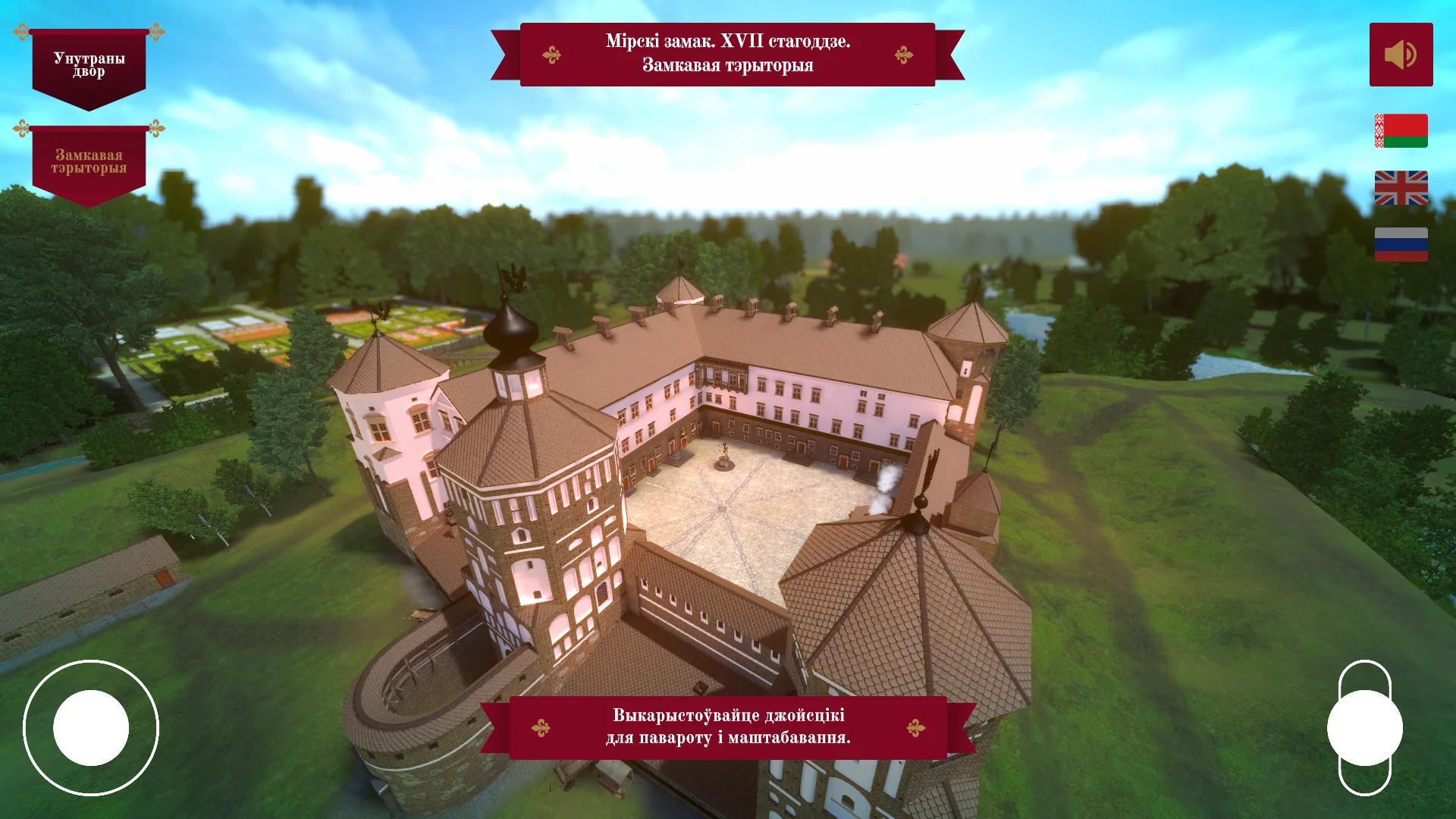
An interactive kiosk turns passive viewing into a living exploration: visitors choose their own route, examine documents, browse photographs, and listen to eyewitness memories.
The kiosk solves the main problem of a local history museum — how to show more than can fit in display cases. Archival materials, rare photographs, and manuscripts are digitized and become accessible with a single touch, while the originals remain in storage.
This is especially valuable for guests who come from afar and want to find materials about their family or their hometown — they no longer need to wait for staff assistance or work with paper inventories.
For the museum team, an interactive kiosk provides relief during peak hours and major events.
Staff stop answering dozens of repetitive questions like “where is what” and “how to find...”, and instead engage in direct conversations with visitors, conduct tours, and assist those who genuinely need help.
The kiosk takes over the routine of navigation and information — that is its management benefit: greater efficiency, lower staff fatigue.
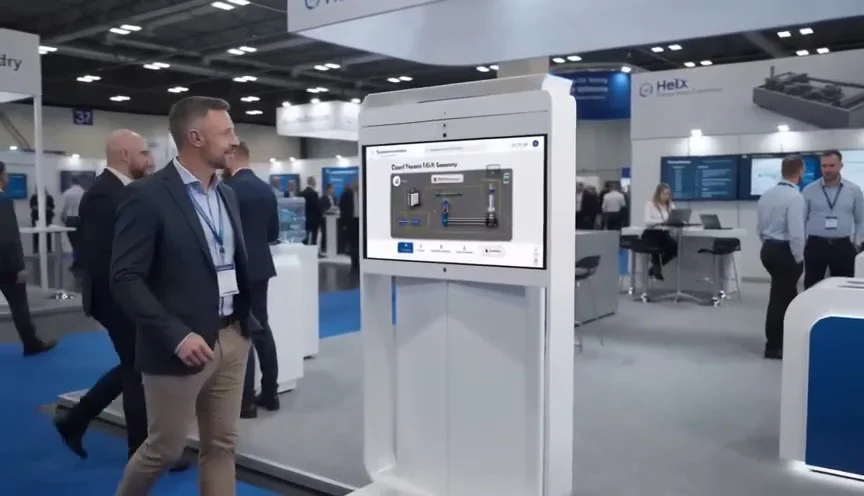
The location of the kiosk itself becomes a point of attraction. Modern equipment in an antique interior creates a contrast that people notice, photograph, and discuss on social media — which means the museum gains additional mentions among new audiences.
Younger guests, accustomed to touchscreens, engage with the exhibition more easily, while the older generation appreciates large fonts and simple prompts at every step.
In the end, the kiosk serves three key museum objectives: it increases engagement with the exhibition, opens access to archival collections, and frees up staff time.
For the client, this means higher attendance, more positive reviews, and a reputation as a modern cultural space that people want to return to and recommend to others.
Interactive kiosk formats for local history museums
For a local history museum, every exhibit is a piece of history that deserves to be shown vividly. Interactive kiosks turn static stands into points of attraction: visitors choose for themselves what to see and do not wait for a guide.
It is important to choose a format that matches the task — from a quick overview to deep immersion in archival materials.
Below are the typical formats that we adapt to your exhibition and audience. Each option features an intuitive touch interface and content updates without interrupting operation.
Typical formats for museum tasks
| Format | Who it is for | What it gives the museum |
|---|---|---|
| Museum info kiosk | Regular visitors, families, tourist groups | Navigation and exhibit descriptions, fewer questions to staff, free-flowing route |
| Interactive Book of Memory | Schoolchildren, researchers, descendants | Access to biographies and photos, search by surname, in-depth history without paper |
| Touch table | Groups, school lessons, family programs | Collaborative study of maps and documents, discussion and engagement |
| Archive kiosk | Local historians, researchers, staff | Fast search across fonds, electronic inventories, preservation of originals |
Formats can be easily combined: an info kiosk at the entrance provides orientation, a touch table engages schoolchildren, and an archive kiosk reveals the depth of the collection.
We will select a configuration and content for your tasks so that each kiosk becomes a point of attraction for visitors.
How we create a kiosk: steps for the client
For a local history museum, an interactive kiosk solves several tasks at once: it enlivens the exhibition, opens access to archival materials, and engages visitors who are used to digital formats.
To ensure you get a working project without surprises, we manage turnkey development following a clear six-step process.
-
Brief and immersion in the task. We discuss what materials you want to show, who your audience is, and what outcome matters most — from increasing attendance to preserving history in digital form.
-
Concept and structure. We propose a section layout, navigation logic, and a visual design that fits the museum interior and does not look out of place.
-
Design mockups approval. We show how the kiosk will look and work using real examples of your materials. We make revisions before the main development begins.
-
Development and content. We build the system and upload digitized documents, photographs, and stories. You see intermediate versions and control the process.
-
Delivery, installation, and setup. We bring the equipment, install it at the right spot, and adjust it to your space — lighting, sound, viewing angle.
-
Staff training. We prepare your team to operate the kiosk: how to turn it on, update materials, change current sections, and resolve basic tasks without calling a specialist.
At every stage, you receive clear documents and accurate timelines. The project launch does not interrupt museum operations — we install and configure the equipment at a convenient time.
What is included in the interactive kiosk delivery
The kiosk does not arrive as a “piece of hardware in a box” but as a ready-made solution: plug it in, upload your data — and you are ready to go.
We assemble the package according to the specific museum’s tasks, so the delivery includes everything needed for launch and daily operation.
- Touch stand with a protective enclosure. A durable design made for public spaces: it withstands accidental impacts, dust, and constant contact with visitors.
- Professional display and computer unit. Equipment is selected based on the size of the archive and the number of simultaneous users — the image stays sharp and the system does not freeze even under peak load.
- Pre-installed software. Exhibition management, archive search, and upload of new materials — with no monthly licensing fees and no dependence on third-party services.
- Interactive content tailored to your archive. We digitize and structure the provided materials: photographs, documents, biographies, audio and video memories. All of this becomes convenient thematic sections.
- On-site installation and setup. We deliver, install, connect, and test the system — the museum receives a fully finished station, not a bundle of parts.
- Admin panel for your staff. Museum employees can add new records and change the structure of sections themselves, without a programmer — training takes just a couple of hours.
- Instructions and documentation. Simple guides for switching on, daily care, and replacing consumables, so that operation raises no questions.
- Warranty and post-warranty service. We stay in touch after launch: we help update content, advise staff, and quickly resolve any technical issues.
The client receives a single complete package from one team — no need to search separately for hardware, software, and installation contractors. Everything is already configured and tested before the kiosk meets its first visitors.
Case study: how an interactive kiosk attracted new visitors
For a local history museum in a district center, our team developed an interactive kiosk that turned archival materials into a living narrative about the city.
The task was not easy: the permanent exhibition attracted mostly the older generation, while young people and families with children walked past. The museum lacked a modern format that would interest new visitors.
Together with museum staff, we selected the most interesting materials: old photographs, maps, and residents’ memories. On the kiosk, guests can “flip through” the history of streets, find their house on a map, and see how it looked a hundred years ago.
This sparked genuine interest: visitors began to linger, share discoveries on social media, and return with relatives.
Results of the implementation
Museum attendance grew by a third in the first few months, and the average time spent increased from 25 minutes to nearly an hour. Repeat visits also rose noticeably — people came back to show the kiosk to friends and family.
According to staff feedback, the kiosk became an exhibit in its own right, around which families and school groups gather.
Client testimonial
“We used to think the kiosk was just an electronic reference guide. In reality, it has become a separate exhibit that attracts visitors. In six months, the museum received more new guests than in the previous two years,” notes the museum director.
This case shows that an interactive kiosk is not a fad but a tool for increasing attendance. It pays off through new guests, repeat visits, and mentions on social media.
If your museum wants to attract a new audience and present its collections in a modern way, tell us about your task — we will propose a solution tailored to your exhibition and budget.
How to choose a kiosk format for your museum’s needs?
Choosing a kiosk format starts not with equipment, but with the museum’s goals and the expected result.
Understand who will be the user — schoolchildren, researchers, or older adults — and what experience they need: quick archive search, immersion in family stories, or an introduction to the exhibition. The answers determine the optimal configuration.
If individual access to the local history museum’s archives is the priority, vertical stands with search by surname, locality, or year are a good fit. For group map viewing, a horizontal touch table works well. For guided tours, a multimedia panel with an interactive map and story mode is ideal.
Consider the hall layout, the number of simultaneous visitors, how content will be updated, and durability. Decide in advance how the museum will expand the database — through a convenient admin panel or with the help of our team.
If you have non-standard requirements — an unusual enclosure, integration with digital collections, special navigation scenarios — that is a reason to develop a solution, not to abandon the idea.
We adapt the solution: we design the look, align the logic, and test the scenario together with your staff.
Start with a kiosk consultation: we will ask questions about your goals and audience, show you project examples, and propose a format that will actually work.
After the consultation, you will receive a transparent cost estimate and an understanding of how the kiosk will fit into the life of the museum.
Common client concerns about kiosks
These concerns are understandable: a kiosk is new technology, and it may seem that it will require time to master and constant attention. In practice, it is much simpler: it turns on with a button and operates autonomously.
We take care of technical matters so the museum can focus on what really matters — preserving and presenting the history of the region.
Is the kiosk difficult to operate and does the staff need training?
Operation is a single power button; everything else starts automatically. Any attendant can master the system after a short briefing — no special skills are needed.
How do we update content when the exhibition changes?
Through a simple admin panel: an employee can add stories, photos, and descriptions without a programmer. Publishing takes minutes, so the museum can easily update materials for a new exhibit or expand the archive.
What about the warranty if the kiosk breaks down?
The kiosk comes with a warranty: we repair the equipment free of charge or replace it with a new unit. While repairs are being made, we provide a replacement unit — the exhibition never stands idle. Support works remotely and, when necessary, includes on-site visits.
We reduce technical risks in advance: surge protection and a rugged enclosure minimize the likelihood of breakdowns during peak load times. Therefore, the kiosk does not become a source of worry but calmly fulfills its mission — introducing visitors to the history of their native land.Order an interactive kiosk for your museum
Order an interactive kiosk for your museum — and visitors will be able to browse an electronic Book of Memory, explore archival documents and photographs right in the exhibition hall.
We develop a project around the needs of a local history museum: from the section structure to an interface design that is understandable to people of all ages.
No off-the-shelf solutions — every kiosk is built individually. You receive an accurate cost calculation before the work begins, and after launch — technical support and content updates. It is important to us that the kiosk works reliably and benefits your museum for many years.
What you get when you contact us:
- an individual kiosk project tailored to your museum’s concept and audience;
- a well-thought-out structure for the Book of Memory, archive files, and photo galleries;
- cost and timeline calculation before signing the contract — no hidden extras;
- professional equipment and an interface that every visitor understands;
- installation, setup, and staff training;
- kiosk support after launch and the ability to update content.
Leave a request on our website — we will get in touch, clarify your tasks, and prepare a proposal with a cost estimate. Make your local history museum’s exhibition truly interactive.