

Interactive Kiosks for Fortresses: Memory, History, Accessibility
A fortress is not only walls and exhibits—it is the hundreds of destinies behind them. But classic plaques and stands often fail to hold attention: visitors glide over dates and names without truly feeling the history.
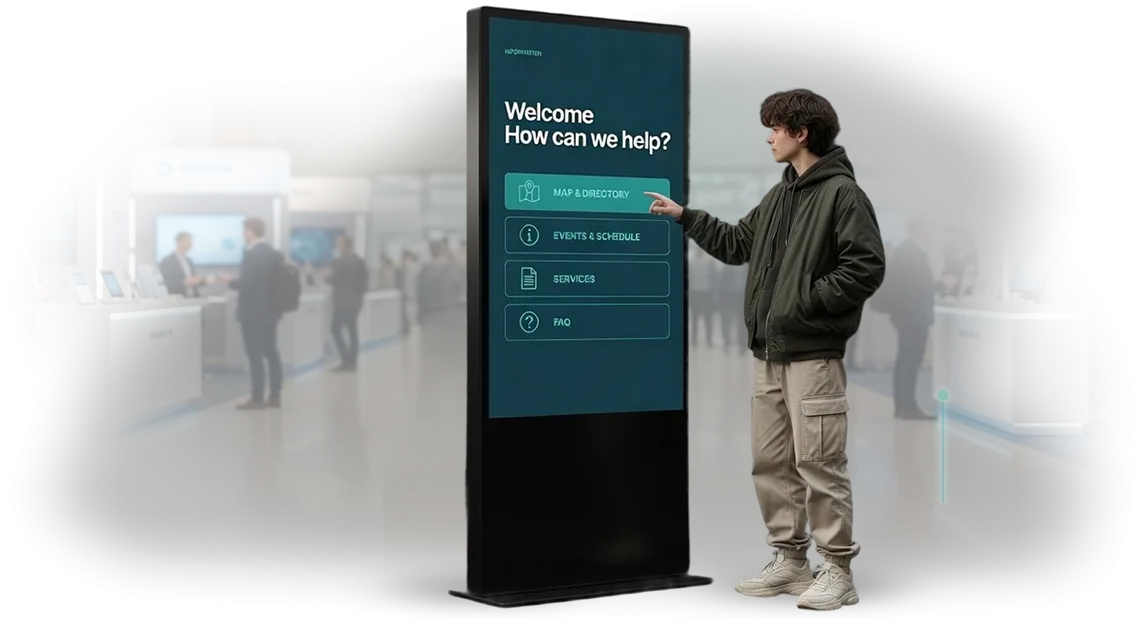
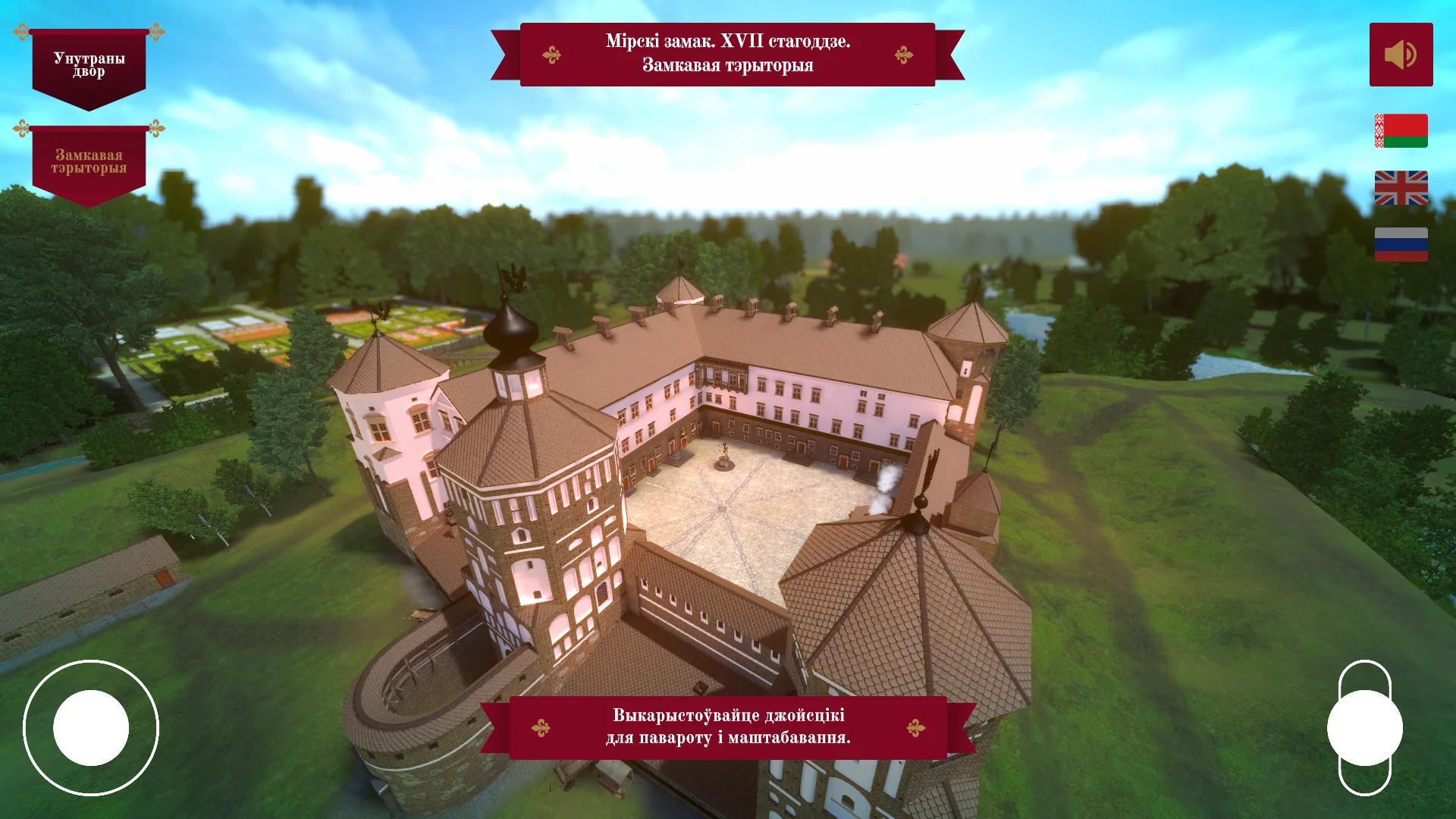
An interactive kiosk turns the tour into a living dialogue—guests choose the era themselves, open documents, listen to stories, and search for familiar names.
An archive kiosk for a fortress solves several tasks at once. Visitors get quick access to digitized maps, letters, and photographs that cannot be displayed in showcases. Museum administration can update materials without reprinting stands and without losing presentation quality.
This makes the historical site deeper and more engaging, and guests leave with a sense of connection.
Book of Remembrance is a separate tool that strengthens the emotional connection. A visitor finds the surname of a defender, leaves a note about their relatives, or shares a family story. This gives them a personal reason to return and recommend the fortress to friends.
We design museum kiosks for a specific site: from a compact directory at the entrance to a full-fledged archive terminal with a Book of Remembrance in the exhibition. We work on professional equipment, adapt the interface to the audience's age and varying lighting conditions.
We help integrate the kiosk into the space so that it enhances the impression of the fortress rather than overwhelming it.
What You Get from an Interactive Kiosk: 5 Key Benefits
An interactive kiosk in a museum or memorial complex is not just a screen with information, but a tool that turns passive viewing of exhibits into a live dialogue. It helps guests dive deeper into history, and helps you solve specific tasks—from navigation to preserving memory.
The first benefit is visitor engagement. Instead of static signs, the kiosk offers self-directed exploration: guests choose what to see, browse archival documents, and listen to recollections. This holds attention and increases dwell time—so every guest leaves with more impressions.
The second is information accessibility for everyone. The kiosk works like a personal guide: large font, audio, simple interface.
People with different levels of preparation, children, and elderly visitors easily find what they need—without queues for a guide or unnecessary waiting.
The third is convenient navigation around the site. This is especially important for memorial complexes with large areas: visitors quickly understand where they are and how to get to key points, without wasting time searching. This reduces staff workload and makes the visit comfortable.
The fourth is recognition and the image of the place. Original interactive content becomes a separate attraction: people talk about the kiosk, photograph it, and recommend it. This gives the museum an extra reason for repeat visits and organic promotion.
The fifth is preservation of historical heritage. The kiosk brings together archival materials, photographs, and testimonies that are unavailable in the physical exhibition.
This makes it possible to present history in greater depth and preserve it for future generations—the very purpose of memorial complexes.
Formats of Interactive Kiosks for Museums and Memorial Complexes
In the practice of our team, three main interactive kiosk formats have emerged: a touch table, a vertical information terminal, and an archive kiosk with a Book of Remembrance. Each covers its own scenario—from group exploration of the exhibition to individual data search.
The choice of format depends on how visitors interact with the space: a horizontal table is convenient for large groups, a vertical kiosk for individual visitors, and an archive station for deep search.
Which format to choose
| Format | For whom | What it gives the client |
|---|---|---|
| Touch table | Exhibitions, interactive zones, children's routes | Gathers groups around it, allows joint viewing of maps, diagrams, and photographs; holds attention longer than a static stand |
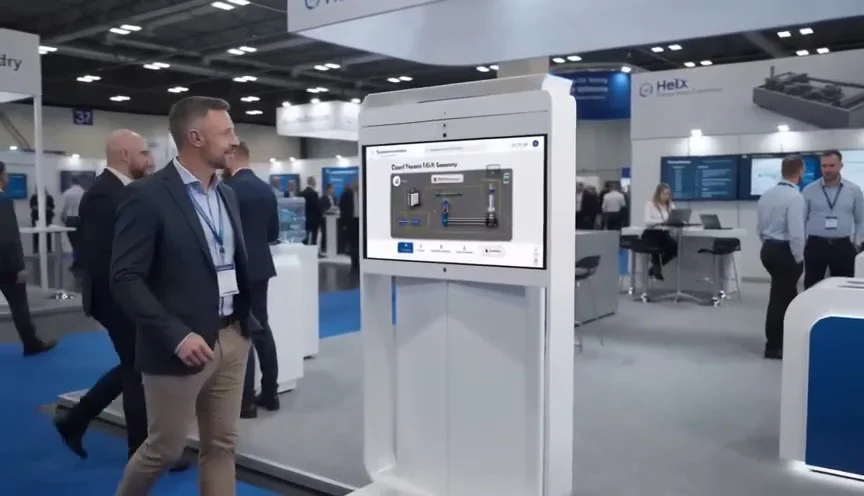
| Touch kiosk | Lobbies, entrance areas, navigation | Replaces the administrator desk: visitors get information, floor plan, and opening hours on their own; operates without staff at any hour |
| Archive kiosk (Book of Remembrance) | Memorial complexes, military museums | Makes it possible to find a surname, study a biography, leave a note; strengthens the emotional connection with the place and history |
All formats are vandal-resistant museum equipment with a well-thought-out enclosure and screen protection. We customize content for your exhibition and, if needed, connect kiosks into a single network so that information is always up to date. You also get a unified design and the ability to update any data remotely.
How the Project Works: From Brief to Kiosk Launch
-
Brief and project immersion You tell us about your fortress, its history, and its audience. We study archival materials and clarify the kiosk usage scenarios—for example, self-guided viewing or a guided tour. At this stage, we set the timeline and budget so that we can move forward without surprises.
-
Prototype and structure approval We create an interactive prototype of the future interface—without design, but with the section logic. You see how visitors will navigate: map, chronology, stories of the fortress defenders. It is easy to make edits here without redoing finished screens.
-
Design concept We develop the visual style of the kiosk—from fonts to color palette—matching the atmosphere of the fortress. We show 2–3 options, and you choose. Once the concept is approved, we lock in the appearance of all screens—this saves time at subsequent stages.
-
Content development and filling Our editors collect your materials: texts, photographs, diagrams, videos. If something is missing, we help find it in open archives.
Then programmers lay out the screens and link the navigation logic so that the kiosk works flawlessly even with a high visitor flow.
-
Testing and launch We test on the actual kiosk hardware: touch resistance, readability under different lighting, protection against random failures. On launch day, you receive a working kiosk and your staff receive a brief instruction. We stay in touch: we can update content or fix errors remotely if needed.
This process makes cooperation transparent: you always know the project stage and control the outcome. Museums and fortresses across the country work with us—for example, Brest Fortress entrusted us with creating the remembrance kiosk, and we launched it exactly on schedule.
What Is Included in the Interactive Kiosk Delivery
Let's open the delivery package: you receive a ready-to-use system, not a set of scattered components. The interactive kiosk for fortresses and archives arrives assembled, with installed software and preloaded content—just plug in and start.
The basic package includes:
- Protected enclosure and touch screen designed for intensive use in a museum, lobby, or outdoor area.
- Licensed software with an interface that adapts to the exhibition design and the site's brand identity.
- Content filling: Book of Remembrance structure, archival materials, thematic sections, photographs, and historical references.
- Administrator panel—so staff can update data without involving developers.
- Interface and navigation styling for the specific exhibition.
- User manuals, staff instructions, and quick-start guides.
- Warranty on hardware and software, plus a technical support agreement.
Thanks to this package, your team does not have to bring together contractors for each layer: there is one responsible partner who handles the entire system. Warranty and support are valid for the entire service life of the kiosk, and response time is specified in the contract.
If you need to supplement the content or add new sections, it is handled through a support request—without searching for new vendors or prolonged approvals.
Case Study: Interactive Kiosk at Brest Fortress
At Brest Fortress—one of the country's most visited memorials—guests often walked through the grounds in 40–50 minutes without having time to immerse themselves in the defenders' stories.
Guides physically could not cover all groups, and individual visitors were left without assistance. We proposed adding an interactive remembrance kiosk to the route.
We developed a kiosk that works as both a self-guided tour and an archive at once. Visitors select an era on the touch screen, watch the chronicle, and search for a relative's surname in the defenders' database. This format relieves staff and gives guests the freedom to study the material at their own pace.
What changed for the fortress
Two months after launch, we measured dwell time: visitors began staying 30% longer, and repeat visits increased. Many return with relatives to find their own surnames in the archive—this creates a personal connection with the memorial.
Guides got some relief: visitors resolve basic questions through the kiosk, while staff focus on in-depth tours. On peak days, the kiosk handles up to 1,500 inquiries—that's almost three additional guides.
Why this case is telling
This project confirms that even a conservative museum format can be enhanced with interactive technology without losing depth of meaning. The key is not technology for technology's sake, but a scenario that meets the real needs of the visitor. We influenced not only attendance but also how long guests stay within the exhibition.
The client appreciated the result so much that they returned to us to develop a mobile version and a second kiosk for the adjacent hall.
Thus the case turned into a long-term partnership—and this is the best indication that the interactive remembrance kiosk pays for itself in the first months through higher quality of experience and reduced staff workload.
How to Choose an Interactive Kiosk for Fortresses for Your Needs
Choosing a kiosk for a fortress starts not with technical specifications, but with the answer to the question: how exactly will visitors interact with the information?
It is important to understand where the kiosk will be installed—in an enclosed museum space, in the lobby of an administrative building, or outdoors. This determines the screen size, enclosure type, and control method, ensuring stable operation in any weather and workload.
The second criterion is the audience. Tourists with children, school groups, and elderly people come to a fortress—each with their own level of preparation and temperament.
The interface must be understandable without instructions, and the content easily adaptable to different groups. Think about what you will show: historical photographs, siege maps, video tours, veterans' memories.
Each content type needs its own structure: large buttons, convenient navigation, and an option to increase font size.
The third important point is reliability and ease of maintenance. The kiosk operates without constant supervision, so dust and moisture protection, software stability, and the ability to update information remotely are critical.
Ask how quickly components can be replaced and whether technical support is provided for the entire service life.
The main advice is to choose not "a kiosk in general" but a solution for a specific task: one fortress may need a large touch panel with an audio guide, while another may need a compact terminal with an interactive map.
In our practice, we first study the location, visitor flow, and archive content, and then recommend the optimal format.
Send us a description of your space and the material you want to show—together we will select an option that is convenient for guests and requires no unnecessary launch costs.
Frequently Asked Questions about Kiosks for Fortresses: Timelines, Durability, Support
Even after a presentation and commercial proposal, clients often still have questions that stand in the way of a decision. A kiosk for a fortress is not just a screen with content, but part of the museum space that must work for years and withstand visitor flow.We have gathered answers to the questions we hear most often. If your scenario is not listed here, you can ask it directly—we will prepare a calculation for your fortress and its specifics.<details> <summary>How long does turnkey kiosk development take?</summary> A standard project takes 3 to 6 weeks: from brief to on-site installation.If you already have content, it is faster; if the content needs to be collected, archival materials digitized, and texts approved, additional time is added for approvals. We set exact timelines in the contract. We work in stages, so you can always see the project stage and when the kiosk will be ready.</details> <details> <summary>How resistant is the kiosk to wear and vandalism?</summary> The kiosk is designed for high traffic—it is not a home tablet but an industrial solution for public spaces.The enclosure and protective glass withstand impacts, moisture, and temperature fluctuations in unheated rooms. If your fortress has no permanent heating or the kiosk is placed in a walkway, that is not a problem.We select the configuration to match the specific operating conditions. </details> <details> <summary>What happens if the kiosk breaks down?</summary> We provide a warranty on the hardware and software.During repairs, we provide a replacement unit so that the exhibition does not stop and visitors continue to receive information.For remote monitoring and prevention, we use a server architecture—we can see the kiosk's status ourselves and prevent a problem before visitors notice it. </details> <details> <summary>Will we be able to update content ourselves?</summary> Yes.All information is stored in a convenient admin panel: you can change texts and add new photos and videos without developer involvement. Staff training takes no more than an hour, and all documentation remains with you.</details> <details> <summary>Will the kiosk fit the fortress interior or look out of place?</summary> The enclosure design is developed for your space—material, color, shape, and mounting method are matched to the fortress's style. The kiosk can stand on the floor, be wall-mounted, or be built into an existing exhibition element.</details> Order an Interactive Kiosk for Your Fortress For a fortress, it is important that an interactive kiosk not only attracts visitors but also works reliably under high load.We develop kiosks that blend easily into a historic environment and require no complex maintenance. The studio has more than ten years of experience and hundreds of completed projects for museums and tourist sites.To order a kiosk, simply contact us for a consultation. We will calculate the project for your tasks and advise which format is best for your fortress—a stationary stand, touch panel, multimedia table, or a custom solution.
What you get when you reach out:
- Project calculation within 1–2 days—exact cost, timeline, and equipment list.
- Consultation on format selection—we will advise on the best way to present the fortress's history and exhibits.
- Adaptation to your content—we will upload descriptions, photographs, maps, and videos.
- Compatibility check—we guarantee that the kiosk will work in your premises.
- After-sales support—we will help with material updates and repairs.
- Integration with existing systems—if you need to connect audio guides or visitor counting.
- Contract and fixed timelines—you know exactly when you will receive the finished kiosk.
Contact us any way you like: through the form on the website, by phone, or by email. In reply, we will send you a calculation and a list of recommendations. No prepayment required for the consultation—first the project, then the decision.