



Interactive Kiosks for Cultural Centers: Bringing Back Live Engagement
Visitors to cultural centers are increasingly walking past display cases and stands: familiar exhibitions fail to hold attention, and interest fades after the first few minutes of viewing.
Museums, galleries, and exhibition spaces lose the most important thing—live contact with their audience—which in turn reduces repeat visits and the venue's recognizability.
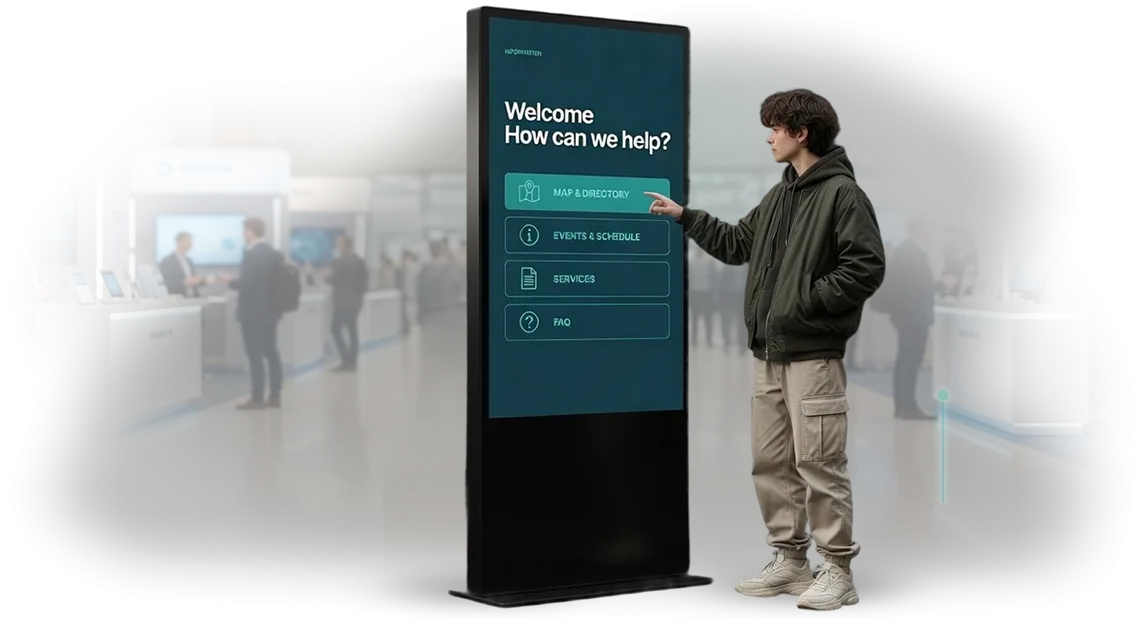
This is where an interactive kiosk helps: it turns passive viewing into active exploration. Visitors choose their own path, browse archival materials, add their own impressions to the story—and transform from spectators into participants.
For a cultural center, this is a way to bring back the emotions that guests later talk about and bring friends to share.
We design interactive kiosks for the specific needs of your venue: from a "living" book of memory to an archival navigator for collections.
Engagement starts with the interface—understandable even to those standing at the screen for the first time—and continues with scenarios that encourage action: find something personal, leave feedback, share a discovery.
A kiosk for a cultural center is not just equipment, but a tool for managing attention. It gives guests a reason to linger, return, and tell others about the space, while the venue team receives measurable audience feedback that informs future exhibitions and programs.
What Results an Interactive Kiosk Will Bring Your Institution
Visitors come to a cultural center for experiences, and an interactive kiosk turns an ordinary visit into a live dialogue with history.
Instead of passively viewing exhibits, people choose what to look at, tap, browse, and return to materials that interest them—and as a result, they spend more time in your space than they planned.
The direct benefit is increased engagement: guests who interact with information remember it far better. They tell friends about your institution, share impressions on social media, and leave positive reviews.
Each such visitor becomes a voluntary ambassador, expanding the center's recognition without additional advertising costs.
The kiosk also solves the daily task of navigation and accessibility. Visitors independently find the right hall, event schedule, and exhibit history—no need to wait for a staff member or decipher paper signs.
This is especially valuable during peak hours, when visitor flow is high, and for visitors with diverse needs who prefer to receive information at their own pace.
Modern interactive equipment enhances the institution's image. It shows that you keep up with the times, care about the quality of experiences, and are not afraid of new formats.
This approach sets your center apart, raising its status in the eyes of visitors, partners, cultural authorities, and potential sponsors.
Beyond the external effect, the kiosk gives you valuable information about audience preferences. You see which sections are in highest demand, what guests search for most often, and which topics spark interest.
This data helps improve exhibitions, plan new programs, and respond precisely to your audience's needs.
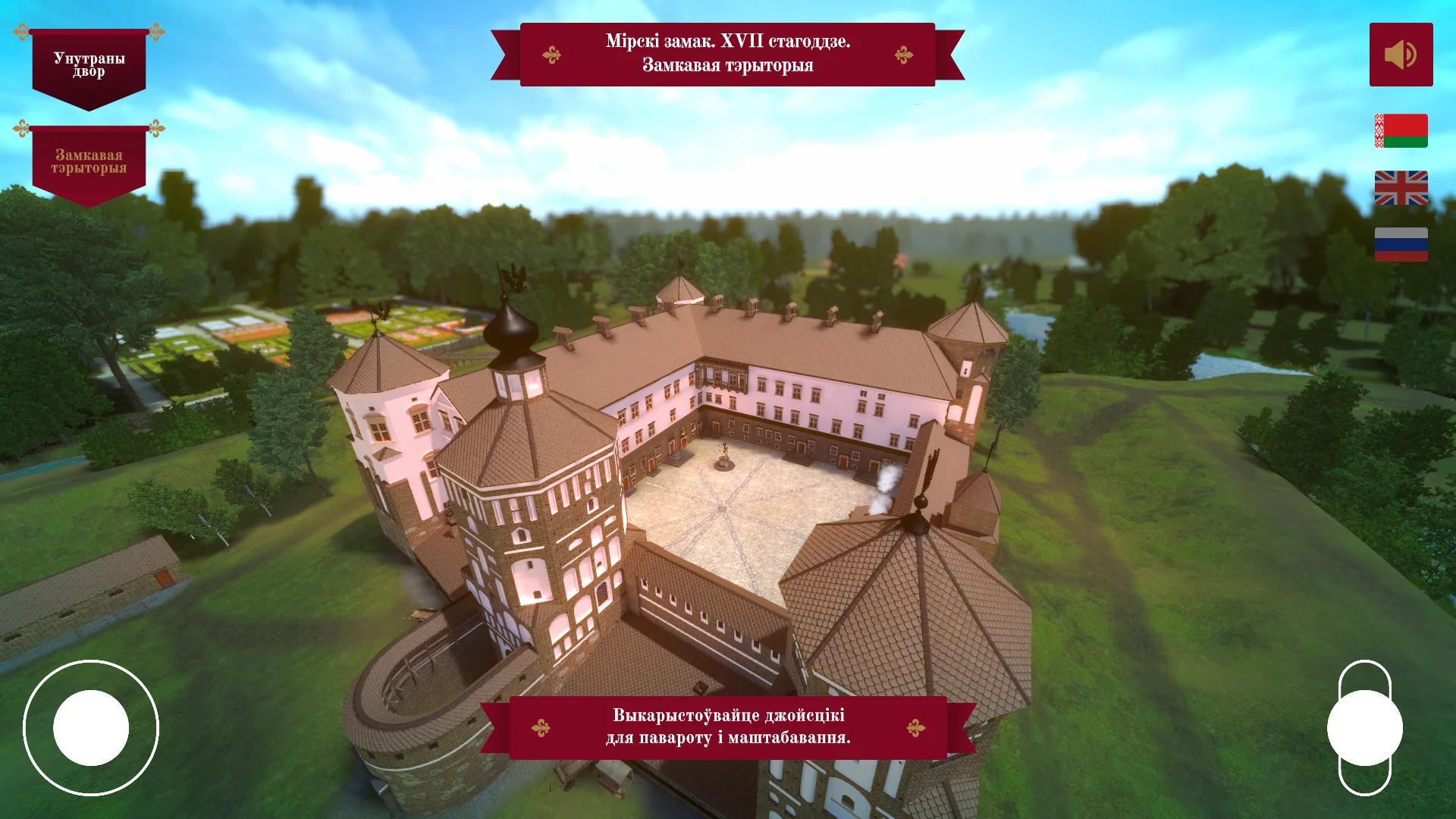
Finally, an interactive kiosk opens possibilities that are impossible in a classic exhibition: virtual journeys through collections, multimedia stories about little-known facts, and themed selections for different visitor groups. All of this makes your center a place people want to return to and recommend to others.
The result is not just an information stand but a tool that increases the value of a visit, strengthens audience loyalty, and shapes a modern, open image for your institution. These outcomes ultimately convert into higher attendance and reputation.
Interactive Kiosk Formats for Cultural Center Needs
Cultural centers work with different audiences: veterans search for the names of loved ones, schoolchildren study history, researchers look for archival documents, and tourists explore exhibitions. One universal kiosk does not solve all these tasks equally well. That is why we match the format to the specific space and goal—and only then fill it with content.
Below are typical scenarios we implement in cultural centers, museums, and exhibition spaces.
| Kiosk format | For whom | What it gives the cultural center |
|---|---|---|
| Interactive book of memory | Memorial halls, war exhibitions, families and descendants | Visitors find names, view people's fates, and leave entries. Strengthens emotional connection and preserves history. |
| Archival kiosk | Local history and city archives, libraries | Quick access to digitized photos, documents, and newspaper archives. Search by years and names without staff assistance. |
| Museum guide | Permanent exhibitions, independent groups | Visitors choose a route, read exhibit descriptions, and listen to audio narration. Reduces the load on tour guides. |
| Exhibition kiosk | Temporary exhibitions, festivals, projects | Content is easy to change for a new exhibition. Attracts attention and creates an interactive point of attraction. |
Each format is tailored to the needs of a particular center: archive structure, design matching the exhibition's style, and ease of use for the elderly and children. Management remains with your staff—adding materials takes minutes, not weeks.
Stages of Developing an Interactive Kiosk for Your Institution
Working on an interactive kiosk for a cultural center is not just installing a screen and uploading files. It is a structured process that takes into account your exhibition's specifics, your audience, and the task of preserving the memory of people and events.
We accompany the project from the first brief to launch and subsequent updates, so you get a working tool that is clear to both you and your visitors.
-
Brief and immersion. We meet with your team, review archival materials, the room layout, and the visitor profile. We define the main goal: personal stories, event chronology, photo gallery, or a combination.
-
Concept and scenario. We propose the future kiosk's structure: how visitors will move between sections, what they will see on the start screen, and which viewing scenarios will be key. We align the logic with the logic of your exhibition.
-
Visual solution. We design the look in your institution's style: color palette, fonts, and title screens. You see a preview of the interface and make edits before assembly begins—no surprises at the finish.
-
Assembly and content loading. We upload digitized materials, set up navigation, search, and filters by years, names, and events. You provide files in any format, and we convert them into a visitor-friendly format.
-
Testing and launch. We test performance across different scenarios, fix any issues, install the kiosk in your space, and train staff on how to turn on the equipment, update content, and handle minor glitches.
-
Support and development. We stay in touch after launch. When new materials appear or the exhibition changes, we make updates without purchasing new hardware. Support is included in the project and continues as long as your center needs it.
As a result, you get not a "screen with text" but a living tool of memory that resonates with visitors and makes your team's work easier.
All stages are documented in the contract; timelines and deliverables are clear—you control the process without handling technical details.
What's Included in the Interactive Kiosk Delivery
We assemble the kiosk as a complete turnkey project, not just a box with a screen. The delivery includes everything needed for launch—from equipment to content and staff training. You get a working tool, not a set of parts you still have to figure out.
What's included in the delivery
- Touchscreen kiosk with enclosure. A durable, vandal-resistant housing that fits into a museum or library interior. Withstands constant touching, tolerates cleaning, and runs from opening to closing.
- Pre-installed software. Content management, touch statistics, and protection against crashes and freezes. Administration is clear even to those who have never worked with kiosks before.
- Content filling. Structure, texts, and media files for the initial launch. You get not an empty placeholder but a story of memory ready to view.
- Installation and setup. We deliver, install at the desired location, connect power and network, and verify operation. No need to find a contractor—the project team handles everything.
- Staff training. We show how to turn it on, add materials, and update information. After training, your staff can use the system independently.
- Documentation and warranty. A staff manual and warranty support. If anything happens to the equipment, we assist within the service agreement.
What this looks like in practice
You don't need to understand hardware or programming—we deliver a ready-made solution. After installation, trained staff can put the kiosk to work immediately, and visitors get convenient access to archives and stories.
The delivery is already aligned with cultural center needs: the package includes typical scenarios—archive search, browsing memory pages, and viewing videos and photos. All you need to do is add your institution's materials, and the kiosk starts working.
Implementation Result: How a Kiosk Increased Activity in a Museum
Implementation story
Museum visitors rarely linger at static display cases: attention wanders, and emotions quickly fade. An interactive kiosk turns a tour into a living journey—the guest browses the archive, finds familiar names, and leaves a personal message in the electronic book of memory.
One such project we completed for the City Cultural Center. The task was to animate an exhibition dedicated to the district's history and attract school groups. We installed a touchscreen kiosk with a digital photo archive and an interactive book of memory.
The result appeared within the first month: hall attendance grew by a third, and the average time spent at the kiosk exceeded twelve minutes, compared to the previous one and a half.
The most important thing was engagement. More than 260 visitors left entries and memories in the kiosk. Center staff noticed that tours became longer: parents discuss found materials, and children return to the kiosk after the main program. For the museum, this means measurable growth in interest and an organic reason for repeat visits.
To ensure the system doesn't fail during peak hours, we use professional touch equipment and reliable server architecture. For the client, this means a stable result without constant oversight: the kiosk requires no administrator presence, and data is automatically protected.
The project performed so well that the cultural center ordered a second kiosk for its branch and added a module with commemorative dates.
Thus, a one-off interactive stand turned into a growth point: new tour formats emerged, the center's recognition grew, and guests found a reason to return.
How to Choose a Kiosk Format for Your Cultural Center's Specifics?
Choosing a format begins not with design but with questions: who comes to the cultural center, what do visitors expect, and how much time are they willing to spend at the screen. The same device will work differently in an intimate museum, a busy foyer, or an open-air venue. Therefore, there is no universal solution—only one that fits your space's specifics.
If the center's main value is the history of the place, the fates of people, and the memory of events, it's worth considering kiosks with an archive and search.
This format is classically used for books of memory: a person finds a familiar surname, immerses themselves in a biography, and leaves their mark.
For a center with regular events, tours, and clubs, a kiosk with a news feed, schedule, and navigation is more convenient—this reduces the load on administrators and helps visitors engage with the space's life more quickly.
The physical context also matters. A noisy lobby needs a large screen, a sturdy stand, and the option to use headphones; a quiet hall calls for a compact tabletop version.
Consider how often content will change: a dynamic event listing requires prompt updates, while an archive module only needs to be configured once and then simply expanded.
The most reliable way to decide is a test scenario before purchase. We study your cultural center's space, tasks, and audience, and choose a format that fits into existing processes and works toward your goals.
That way, you get not a beautiful screen but a tool that engages visitors, strengthens interest in the project, and creates a reason to come back again.
Frequently Asked Questions and Concerns About Implementing Interactive Kiosks
Implementing an interactive kiosk in a cultural center raises questions: how often will the information need updating, who ensures uninterrupted operation, and what to do if it breaks. This is normal—any new tool requires confidence in its reliability.
Over years of work, we've developed an approach where the client gets not a "box with a device" but a solved problem with clear guarantees.
Below, we address the most common concerns so you can make a decision without hidden risks. Review the answers to understand how we ensure stable operation at every stage.
What happens to the kiosk if it breaks down?
The kiosk is assembled from professional components and designed for 24/7 operation in a public place. But even so, warranty and post-warranty service are provided.
If an issue occurs, simply contact us by phone or messenger—we will check the system remotely and, if necessary, quickly replace the equipment.
How often does the information on the kiosk need to be updated?
Updating takes a few minutes. We set up an easy-to-use control panel through which a cultural center staff member can independently change the event listing, news, or opening hours.
No special skills are required—the application interface is designed to be intuitive for people far from information technology.
What if the kiosk is left without support after launch?
We officially support the project during the warranty period and remain in touch after it ends. At the client's request, we sign a service agreement for ongoing maintenance: regular equipment checks, software updates, and staff consultations. You always know who to contact.
Can we manage the kiosk ourselves without programmers?
Yes, IT specialists are not needed. The system is designed so that a cultural center employee can upload new materials through a simple control panel. We train the staff and provide a clear manual. Usually, one short session is enough for the team to feel confident.
Discuss Your Interactive Kiosk Project: Get a Cost Estimate for Your Task
Leave a request and receive a cost estimate for your task within one business day. During the initial conversation, we'll clarify where the kiosk will be placed, who will work with it, and what content you plan to show.
This allows us to give you timelines and budget right away—no "calls a week later" or additional approvals.
The consultation is free and non-binding. You get not general words but a concrete plan for your cultural center: enclosure format, interaction scenario, content options, and cost.
What you get immediately after contacting us:
- A cost and timeline estimate for your project—accounting for your goals and installation location.
- Recommendations on kiosk format: touchscreen panel, table, or floor-standing unit—suited to your space and audience.
- An approximate content structure: how to organize a book of memory, archival materials, or exhibition navigation.
- Options for integrating your materials: photos, video, documents, audio recordings, and texts.
- Answers to questions about maintenance, content updates, and warranty.
- A clear plan of next steps—what we need from you, what we do, and in what order.
To prepare your estimate, all it takes is a couple of minutes to submit a request. Then a personal manager will take over the project and stay in touch with you until the kiosk launches.