

Why visitors pass memorials by and don't come back
Visitors come to a memorial to honor the fallen, but often limit themselves to formally laying flowers and leave after a few minutes. Information stands with dates and surnames don't trigger an emotional response — they present facts, but not stories.
As a result, a memorial complex is perceived as a mandatory stop on the itinerary rather than a place people want to return to again and again.
This is especially true for the younger generation. Schoolchildren and students perceive archival data as an abstraction rather than the fates of real people who lived, worked, and defended what mattered to them.
Without a personal connection to history, memory fades, and the memorial turns into a faceless monument.
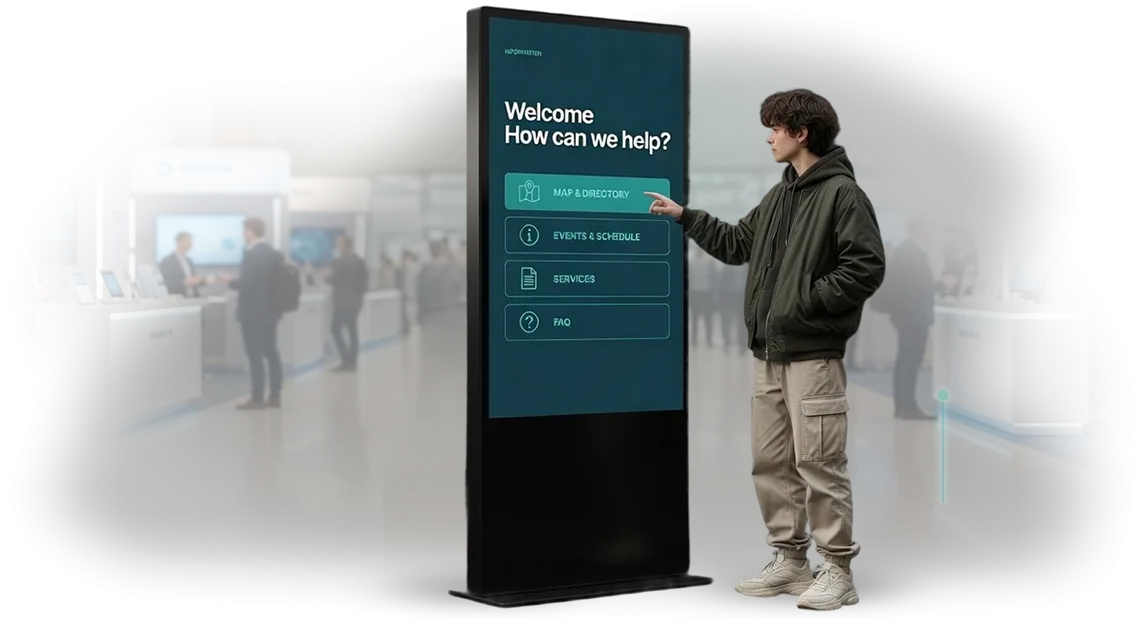
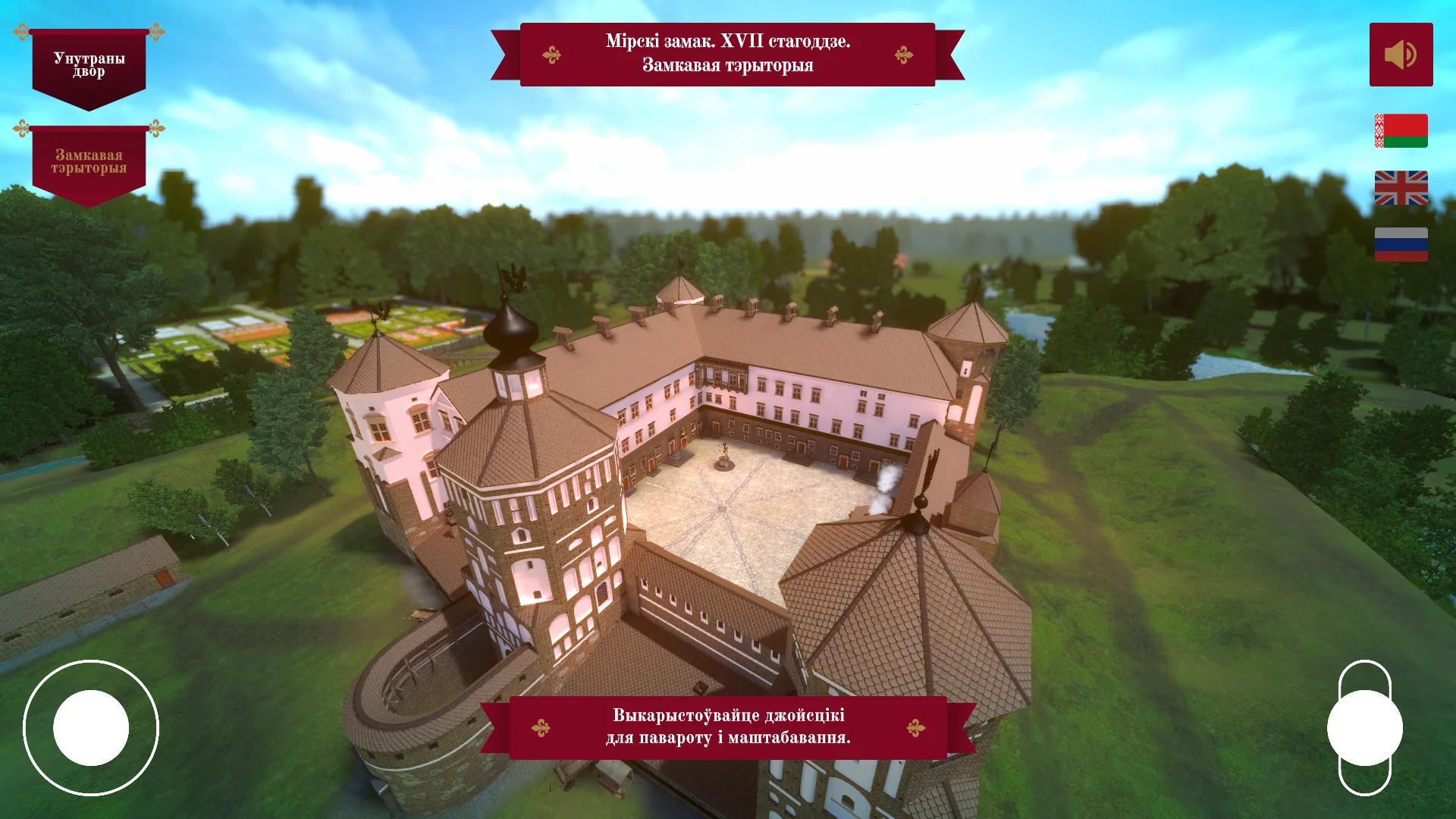
We solve this problem with interactive kiosks and digital books of memory. Instead of a static list of names, the visitor gets the opportunity to explore a hero's biography on their own, view photographs and documents.
An interactive kiosk turns a memorial visit into a personal exploration — a person finds the story that resonates with them and leaves with a sense of personal connection.
This format holds attention far longer than a standard exhibit walkthrough. People don't just walk past — they stop, interact, and share their impressions with family and friends.
That means the memorial complex starts living its own life: people talk about it, return to it, and bring new visitors.
What an interactive kiosk brings to your memorial: 5 key benefits
A memorial visitor comes for an emotional experience, but static stands and plaques leave them alone with silence.
An interactive kiosk turns the visit into an experience: a person flips through stories at their own pace, looks at archive footage, and leaves an entry in the book of memory.
This kind of experience creates the emotional response that a regular exhibit doesn't provide — and it's exactly what people take with them and talk about after the visit.
This response directly translates into audience reach. Visitors photograph screens, shoot short videos, and post them on social media with a geotag or mention of the memorial.
Each such post works as a free recommendation: it tells people who haven't visited yet about your venue and attracts new generations of guests.
At the same time, the memorial's brand recognition grows. A modern, respectful approach to memory through an interactive format is memorable and sets you apart from other memorial sites.
For city authorities, sponsors, and the board of trustees, this is a signal: the project is developing and speaks the language of today's audience.
The kiosk also becomes a lead generation tool. You can offer visitors the option to subscribe to event news, leave contacts for volunteer programs, or download archival materials.
This database is valuable to your partners and sponsors, and it gives you clear feedback: you can see which stories evoke a lively response and what deserves to be added to the exhibit.
Together, five benefits — emotional response, social media reach, recognition, leads, and feedback — turn the kiosk from a technical element into a full-fledged communication channel.
It pays for itself not only as part of the exhibit, but also as a way to systematically engage the audience. We help implement such a kiosk so that every story works for your memorial and its future.
Interactive kiosk formats for memorial needs
Every memorial works with different audiences: relatives search for names, schoolchildren come on field trips, researchers study archival documents. A single universal kiosk rarely covers all tasks — which is why we offer formats that can be combined at one site.
Main formats for memorial needs
At the briefing stage, we select a solution for the specific location: visitor numbers, floor area, exhibit type, and archive depth.
| Format | For whom | What it gives the client |
|---|---|---|
| Book of memory | Relatives, descendants | Quick search for a name and biography, personal story — the visitor gets engaged and stays longer |
| Archive kiosk | Researchers, local historians | Access to digitized documents without waiting in line, independent work with materials, less staff workload |
| Multimedia stand | School groups, tourists | Narrative stories and a photo-video sequence; the group gets engaged, the guide gets a ready-made story |
A book of memory is the basic format for names and reference data; an archive kiosk adds depth: scans, wartime publications, search by year. A multimedia stand is already a story: chronicles, photographs, recollections — it attracts even casual visitors.
We combine formats and tailor the solution to the memorial's tasks — a single kiosk or a network of terminals across different halls. The result: every visitor gets convenient access to memory, and the venue gets a modern, reliable tool.
How we develop a kiosk: stages of working with you
Work on a kiosk for a memorial isn't just equipment delivery. It's a project where order and predictability matter: you always know what stage the work is at, what decisions are being made, and when the result will be ready.
We've structured the process so that all issues are resolved promptly and you don't have to dive into technical details.
- Brief and task analysis. We meet (in person or remotely), define the goals: who will use the kiosk, what materials need to be shown, where it will be installed. Based on this, we prepare the technical specification.
- Concept and structure. We propose a kiosk workflow: how a visitor interacts with the screen, what sections and stories will be available. We agree on the logic and content.
- Design mockup. We create a visual style that fits the memorial space. We show you the mockup and make revisions until full approval.
- Content and assembly. We upload materials — texts, photos, videos, archival documents. We configure the program and run testing on professional equipment.
- Installation and launch. We deliver the kiosk, install it on site, and check all operating modes. We train your staff: how to power it on, change content, and resolve simple issues.
- Support. After launch, we stay in touch: update materials, help with refinements, and answer requests. This keeps the kiosk up to date without your involvement.
What's included in the delivery: a package for your memorial
You don't get "hardware with software" — you get a fully finished tool for preserving memory. We assemble, configure, and launch the kiosk turnkey — all you have to do is welcome visitors and top up the archive when needed.
Delivery package: what exactly you receive
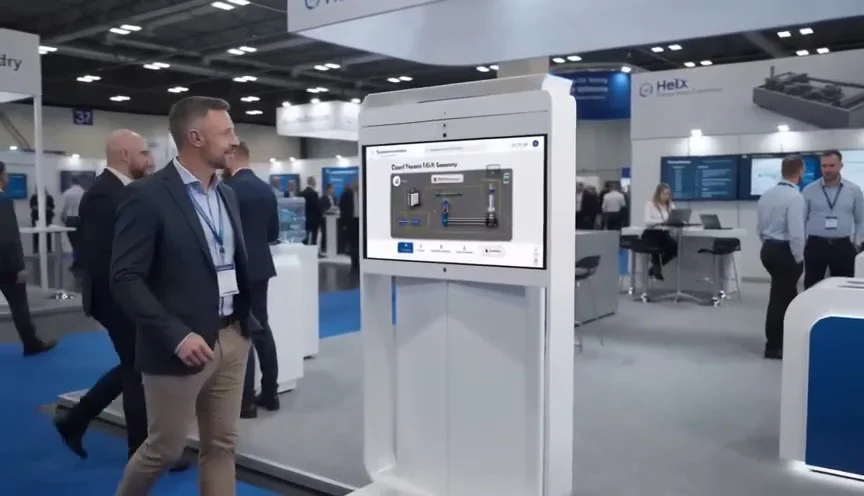
Touch stand. A durable enclosure protected from dust and moisture, with a vandal-resistant screen — works both indoors and outdoors. Visitors flip through pages and view photos and documents on their own, without staff assistance.
Software with archive. A structured database: biographies, photographs, awards, historical records. Convenient search by surname, date, or place of service — the right information is found in a couple of touches.
Design content. Interface styling for your memorial: corporate colors, coat of arms, fonts, background images. We adapt materials to the screen so everything reads easily and looks dignified.
Installation and launch. We deliver, install in the agreed location, connect, and verify all functions work. No hassle with contractors and setup.
Staff training. We show employees how to operate the kiosk, add new records, and change content. We prepare a cheat sheet so any staff member can handle it independently.
Manual and warranty. Clear operating documentation plus warranty support. If anything needs adjustment or consultation — we're in touch.
This is a ready-made solution, not a "semi-finished product": after installation the kiosk works immediately, and visitors get access to materials from day one.
Case study: interactive kiosk for the Eternal Flame memorial — 3x increase in attention
Memorial visitors often walk past information stands — the eye glides over the text and memory doesn't hold the details. The task was not just to show facts but to give people a personal contact with history.
For the Eternal Flame memorial, we created an interactive kiosk that turns dry archival data into a living narrative: a timeline of events, photographs, and testimonies can be explored at a comfortable pace, returning to key moments and sharing the story with loved ones.
The result was felt within the first month. The average time a visitor spends at the kiosk tripled — people stopped rushing past and began deliberately studying the materials.
At the same time, repeat visits increased: guests come back to show what they found to relatives or to re-read a specific page. For the memorial, this means not only deeper engagement but also higher attendance without additional spending on advertising.
Project metrics
- Average interaction time — 3x increase
- Repeat visits to the kiosk — nearly doubled
- Greater engagement at the exhibit: guests bring other visitors over and discuss what they've seen
Why the client recommends us
The project didn't end with equipment installation. We helped structure the archival materials, adapted the interface for different age groups, and set up remote content updates — memorial staff change historical records themselves without involving developers. The kiosk runs reliably without failures, and the support team is available any day.
The client has already come back to us for a second project — expanding the kiosk for the event's anniversary. For us, this is the main indicator: the client got measurable value and is ready to develop the solution further.
How to choose the right kiosk format for your task?
Choosing a format starts not with the equipment model, but with the question: who will use the kiosk and what task should it solve?
If the main audience is memorial visitors who need to find a specific name or browse archival pages, an interactive book of memory with clear search is the right choice.
If the kiosk becomes part of the exhibit and works as an independent element, it's important to consider how it fits into the space, lighting, and visitor flow.
The key criterion is the specifics of the venue: hall size, ambient noise level, availability of stationary power supply, safety requirements, and the possibility of placement next to other exhibits.
Compact vertical stands suit small spaces; full-size touch panels or structures with multiple access points suit spacious halls.
We also account for who will interact with the screen: elderly visitors, children, people with disabilities — screen height, font size, volume, and ease of control depend on this.
Another important point is the nature of the content. If the archive is expected to grow with new records, photographs, and biographies, the kiosk should accept updates easily without service interruption.
If the content is static and stays unchanged for years, a simpler solution can be chosen and the budget directed toward cabinet design and image quality.
We always suggest starting with a short consultation where we break down the task, the audience, and the venue specifics. After these parameters are clarified, we select the format, construction, and interface that will work toward your goal.
The same "hardware" can be adapted to different scenarios: a kiosk with a horizontal screen for archival documents, a vertical one for biographies and portraits, or both options combined in one enclosure.
If you're unsure which format fits your site, we come to the venue or conduct an online walkthrough. Based on the results, we give specific recommendations: how many stations to place, what screen size to choose, and how to organize navigation for different visitor groups.
The goal isn't to sell you a "universal" solution, but to create a kiosk that's comfortable to use in your conditions and won't require rework after launch.
Frequently asked questions: what to know before ordering
Before ordering an interactive kiosk for a memorial, many people share the same concerns: will the equipment break, who will operate it, how will it fit into the hall. We answer the main questions so you understand how we work and what you get.
Is the kiosk difficult to operate and update?
Operation takes a few minutes a day. No special knowledge or programmers needed — a memorial staff member can add records to the book of memory, change photos, and edit texts through an intuitive interface. We train your team in one session and stay in touch for guidance.
What are the requirements for the installation space?
The kiosk runs from a standard 220 V outlet and doesn't require reconfiguration or additional ventilation. A compact stand needs about 1.5 × 1.5 meters of free floor space in a quiet area protected from direct sunlight.
If an outdoor version is needed, we provide protection against moisture and temperature fluctuations.
How long does creation and launch take?
On average, 2–3 weeks pass from mockup approval to a working kiosk. The timeline depends on the archive volume and design complexity. You get an accurate stage schedule at the start, and we monitor every step so the opening happens on the planned date.
What does the warranty cover and how does maintenance work?
We provide a warranty on equipment and the software component; during this period we fix issues free of charge. After the warranty, we offer post-warranty maintenance: scheduled checks, database updates, and consultations — so the kiosk runs smoothly for years. All requests are handled within one business day.
How much does such a project cost?
The cost is calculated after audit — it depends on the kiosk configuration, the volume of digitized materials, and the interface design. It's calculated individually after the brief, fixed in the contract, and doesn't change along the way. You know the final amount in advance and understand what each item includes.
Transparent terms and support at every stage are what allow you to focus on what matters most: preserving memory and making the memorial accessible to people, rather than dealing with technology.Submit a request — let's start developing your interactive kiosk
Submit a request for the development of an interactive kiosk for your memorial — and get a solution that presents stories with care and strengthens the emotional connection of visitors.
We take on the entire process: from idea to launch, and you get a tool that works for the recognition of the place and respect for memory.
After your request, we'll go through five steps together:
- Initial consultation — we discuss the memorial's goals, visitor profile, and content presentation format.
- Cost calculation — we prepare a transparent estimate for your scale, with no hidden charges.
- Mockup and concept — we show how the kiosk will look and how visitors will interact with the content.
- Commercial proposal — we define the scope of work, timeline, and cooperation terms.
- Contract and development start — after approval, we begin work and support you at all stages.
Spend 15 minutes on an initial call — during that time we'll answer your questions and outline a plan. Leave your contacts in the form, and we'll reach out at a convenient time.
This approach helps start projects without unnecessary bureaucracy. You immediately understand what you'll get, how long it will take, and what results the kiosks will deliver for visitors and for the memorial's image.