

Why visitors lose interest in the exhibition within five minutes
Visitors to the museum-estate walk through the hall in five minutes, glance at the display cases, and move on to the next point on the route. They don't linger at exhibits, don't ask questions, and don't return to materials that could tell them more.
As a result, the museum loses the most important thing — emotional response, the desire to come back, and the urge to bring friends.
Classic plaques and static stands can't hold a modern visitor's attention — especially when a phone with its usual speed of information delivery is right there. While a person reads a short label, they're already thinking about the next step.
The museum-estate gets a flow of visitors but not their engagement, and therefore loses both repeat visits and word-of-mouth.
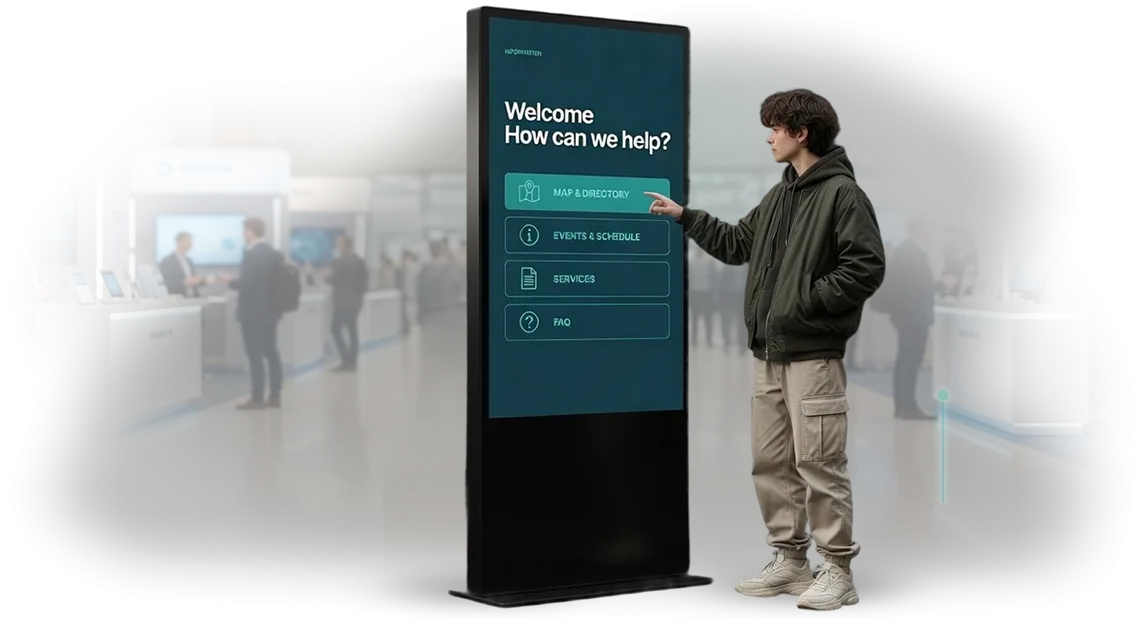
This is where an interactive kiosk for the museum helps. An information stand for the museum lets each guest choose their own depth of immersion: quickly glance at key facts or open up the family history, archives, and photographs.
This turns the visitor into a participant in the exploration rather than a passive observer, and they spend several times longer at the screen.
The key thing is that visitor engagement becomes a managed process, not a random coincidence. Well-thought-out scenarios and a user-friendly interface hold attention on the right materials, suggest next steps, and give visitors a reason to return to the exhibition again.
This is exactly why we create kiosks for museum-estates: they turn a superficial look-around into a living story that guests remember and tell others.
Interactive kiosks for museum-estates: what this delivers
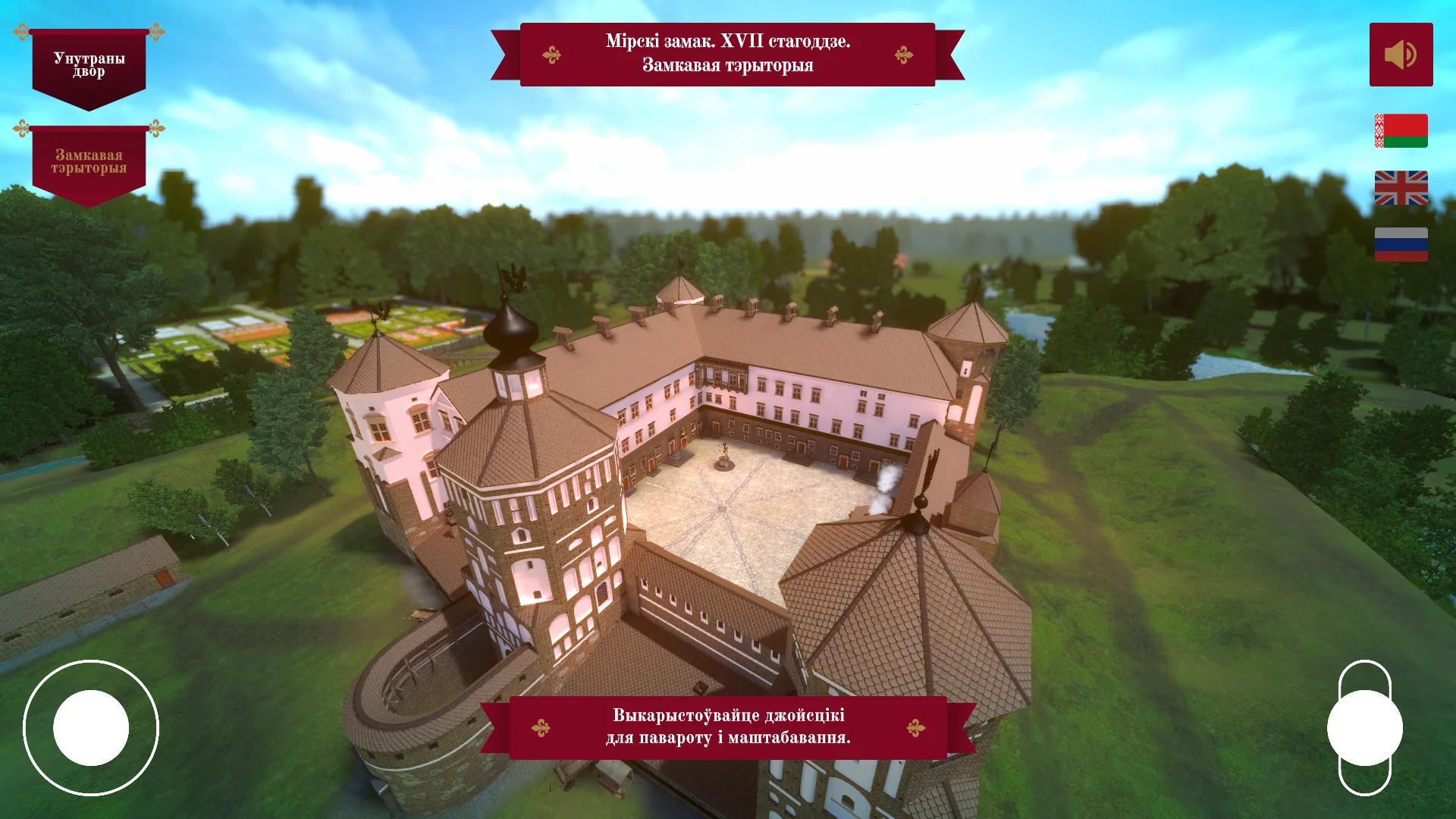
Visitors to estates remember not plaques with dates but stories and emotions. An interactive kiosk turns a tour of the exhibition into a living journey: the guest chooses their own route, flips through archival photographs, and listens to the story of how the estate lived. This kind of interaction holds attention far longer than a static display case.
For the museum, this works as a guest-attraction tool. An unusual digital exhibition becomes a reason to visit, people tell friends about it and post about it on social media.
And a simple, clear interface makes the estate comfortable for all kinds of visitors — from schoolchildren to the elderly.
Attracting guests to the museum
The kiosk is also a point of attraction. Guests happily photograph bright interactive pages and share their impressions, which means the museum gets free advertising in visitors' personal accounts. Each such review is an invitation for new guests.
Digital Book of Memory
One digital book can hold everything: biographies of the owners, the history of the buildings, descendants' memories, rare photographs. Previously these materials were kept in archives and inaccessible to a wide audience; now they are open to every visitor. This preserves the heritage and makes it part of the museum's everyday life.
Interactive exhibition without renovation
A digital kiosk doesn't require hall renovations or display case replacements. It blends naturally into any interior, and the content can be updated — adding new exhibits, information, and scenarios. Together with our team we develop solutions that easily adapt to the needs of a specific estate.
An interactive kiosk gives visitors a new format for engaging with history, and the museum growing interest and repeat visits. It is a modern, careful way to tell a heritage story so that it stays with people.
Formats of interactive kiosks for different tasks
For a museum-estate, one and the same kiosk solves dozens of tasks: from navigating the grounds to exploring the history of the families who lived within these walls. It is important to choose a format that fits the specific exhibition and the type of guest. Below are the main options and who they suit.
Main formats and use scenarios
| Format | Who it's for | What it gives the client |
|---|---|---|
| Information kiosk | First-time visitors | Estate map, event calendar, route through the halls. Relieves pressure on staff and helps plan the visit |
| Exhibition kiosk | Temporary and permanent exhibitions | Exhibit stories, photo archives, videos. Guests stay longer at the stand and recommend the exhibition to others |
| Archive kiosk | Museum staff, researchers | Access to digitized collections and documents. Saves hours of work and opens the archive to guests |
| Digital Book of Memory | Descendants of owners, school groups | The story of people's lives and events of the estate. The guest leaves their own entry and feels a connection to the history |
| Guestbook in a kiosk | Families with children, all visitors | Photos, ratings, impressions instead of paper books. Reviews go straight into the accounting system and social media — the museum gets ready-made feedback |
The format is chosen based on the task: navigation, education, or collecting feedback. In most projects we combine 2-3 formats in one enclosure — this covers tourists, researchers, and families with children without increasing the equipment budget.
How work on a kiosk proceeds: 6 clear steps
Work on a memory kiosk is designed so that at every stage you understand what is happening and what you are paying for. No "black boxes": you get a clear plan, concrete deadlines, and approval checkpoints, and the museum accepts the final result in person.
We have completed more than a dozen projects for museums and estates, so the process has been refined down to the details. Below are the six steps every client goes through.
- Kiosk brief — you tell us about your exhibition, audience, and objective: what guests should learn, what story to convey to them. We help you articulate the request and define success criteria.
- Content concept and structure — we propose which sections and materials will go into the kiosk: photographs, documents, letters, audio stories. We approve the scenario so it fits the estate's atmosphere and doesn't overwhelm the visitor.
- Design approval — we create the visual style of the interface: fonts, color palette, screen layout. It is important that the kiosk looks organic alongside historic interiors and is convenient for people of any age.
- Prototype and testing — before production, we show a working mockup on a real screen. You try out the scenario, make edits, we adjust — until the result fully satisfies you.
- Kiosk assembly and installation — we manufacture the enclosure, mount the equipment, load the software. We deliver, install in the hall, and check that everything works on site together with your staff.
- Launch and kiosk support — we train the staff, hand over instructions, and stay in touch. Support includes content updates, diagnostics, and quick response if visitors notice an issue.
The entire process takes from two to five weeks depending on the volume of materials. You always know what stage the project is at and when the next approval will take place.
This approach removes surprises and guarantees: by the time the exhibition opens, the kiosk will be ready and running reliably.
What is included in the delivery of an interactive kiosk
You won't have to assemble a kiosk piece by piece from different contractors — we deliver a turnkey solution. The package already includes everything needed for the kiosk to start working immediately after installation: from the enclosure to content and staff training. Below is the full list of what is included in the delivery.
- Kiosk hardware — a touchscreen protected against dust and accidental knocks, with a stable computer inside. The equipment is designed for 24/7 operation in a public space and won't require frequent maintenance.
- Custom enclosure design — we match the kiosk to the estate's style: from classic wood to modern materials. You get an art object that doesn't disrupt the museum's atmosphere but complements it.
- Content filling — texts, photographs, archival documents, audio guides, and video. We digitize the materials, structure them, and create convenient navigation so visitors find what interests them on their own, without help from attendants.
- Interactive navigation system — the estate map, family history, daily life, famous guests. Guests select a section with a single touch — convenient for children, the elderly, and foreign visitors alike (we can create several language versions).
- Kiosk installation and connection at the museum — we deliver, install, configure, and test on site. You get a fully ready-to-use kiosk on installation day, without lengthy coordination with technical services.
- Staff training and instructions — a short guide and a personal consultation for the team. Attendants will be able to answer visitors' questions and, if needed, restart the system with a single button.
- Post-launch support — technical support, content updates, and scheduled engineer visits. If a year later you decide to add a new section or change a temporary exhibition, we will do it without replacing equipment.
The main thing the museum-estate gets is a working tool for preserving and presenting history that doesn't break down and doesn't require constant staff attention. All the technical side stays with us, and you focus on welcoming guests.
Case study: how a kiosk brought an archival exhibition to life
Visitors to a museum-estate come for the atmosphere and personal stories, but paper documents under glass don't tell that story.
The archive room often remains the emptiest part of the exhibition: the guide talks, guests nod — and five minutes later they have forgotten what they saw. We encountered this ourselves when a museum-estate approached us with a request to bring its archive hall to life.
Instead of simply adding another display case, we developed an interactive kiosk that turns documents into a compelling narrative.
Here is how the kiosk works in action: the visitor chooses an era or a person on the touchscreen and sees a map of the estate, letters, photographs — everything that was previously hidden in the collections.
The story unfolds through taps rather than through dull text, so even teenagers linger at the screen. For the museum, this is a visible result: the average time spent in the archive hall grew from two to eight minutes, and the flow of people reaching that hall doubled.
A month later, the museum saw repeat visits rise by a third — guests were bringing relatives to show them "that very kiosk."
The client's feedback was the best confirmation of our work for us: "We were afraid the kiosk would just be an expensive toy, but it became the narrative center of the exhibition.
Guests photograph the screens, ask questions to the attendants, and come back to the museum with the whole family. This is the best gift to our archival collection in recent years." — director of the museum-estate
This interactive kiosk case is not a one-off solution but a story about trust. Six months later, the museum ordered a second kiosk for the wing, and we assembled the content for it in two weeks.
Such a result is only possible when the developer hears not "we need a terminal" but "we need to bring history to life." That is how we work with every client — which is why we can show examples and name names.
How to choose an interactive kiosk for museum-estates?
Choosing an interactive kiosk for museum-estates starts not with the equipment model but with the goals of the exhibition.
One and the same floor-standing terminal can serve a guest welcome area, while an archive kiosk with digitized documents suits a quiet hall of historical materials.
Before comparing specifications, decide what visitors should actually do: examine maps, leaf through letters, browse photographs of the estate, or listen to a story about its owners.
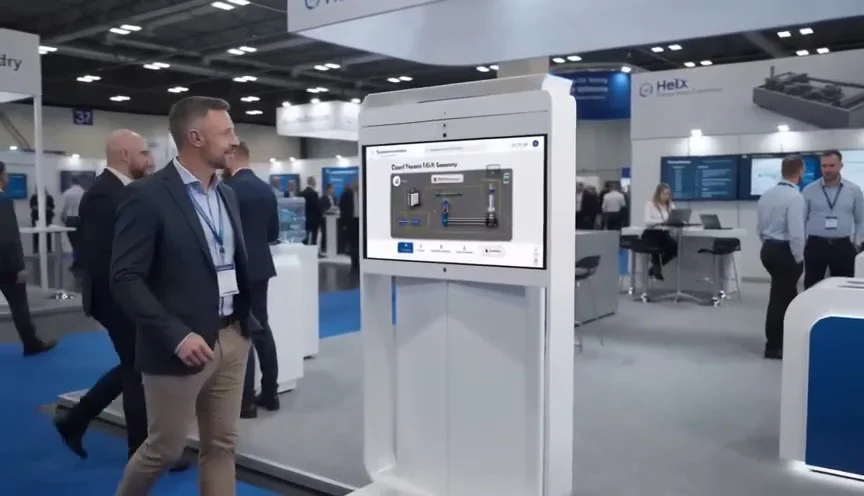
Once the scenario is defined, choose a format for the specific location. At the entrance to a museum-estate, a floor-standing kiosk with a large screen is convenient — it immediately provides navigation and introduces the history.
In small rooms or near display cases, wall-mounted panels and tabletop tablets work better: they don't obstruct the view of exhibits and don't disrupt the atmosphere. For working with archival materials, a kiosk with a scanner or document search function is a good fit.
It is important to account for the specifics of a historic building: the layout of the halls, lighting, interior style. The kiosk should be an unobtrusive helper, not a bright spot.
The enclosure can be finished to match the exhibition, and the interface kept in a calm palette so it doesn't pull attention away from the authentic objects.
A simple algorithm: set the goal, identify the installation point, choose the format, and test the scenario's convenience for guests of different ages. When in doubt, rely on the experience of those who have already worked with museum audiences.
That is how you choose a kiosk for museum-estates when you want a lively visitor response and to preserve the spirit of the place.
Common doubts: what is important to know before ordering
Before ordering an interactive kiosk for a museum-estate, the same questions always come up: won't the equipment break, who will teach the staff to use it, and will a separate administrator be needed? Let's look at the main concerns and show how they are addressed from the very start of the project.
We take on production, installation, and launch ourselves — usually 2-4 weeks pass from approval to readiness. After that, the warranty and technical support kick in, as described below.
What happens if the kiosk fails during guest reception?
The kiosk is designed for demanding daily use. If a failure does occur — we will run a remote diagnostic and quickly replace the faulty module. The museum doesn't stop, and staff are not left alone with the equipment.
What warranty does the kiosk have and what does it cover?
The equipment and preinstalled software come with an official warranty. Repairs, part replacements, and software errors are handled free of charge. Extended maintenance is available on request: scheduled inspections and priority visits.
Is it difficult for museum staff to work with the kiosk?
Management is built on a simple web interface: a staff member without a technical background can add archival materials, change texts, and update photographs. At launch, we provide brief training, after which attendants, ticket sellers, or guides can easily handle daily tasks.
Who is responsible for technical support, and is a separate administrator needed?
No separate administrator is required. The kiosk runs autonomously, and we provide monitoring and support. Any staff member can handle routine content tasks through the interface; everything else is on our side.
Order the development of an interactive kiosk
When you contact our team, you will receive a preliminary cost calculation for a kiosk tailored to your museum-estate's needs. Simply describe the exhibition, the audience, and the desired scenarios — we will prepare solution options and give you an idea of the figures.
We work as a full-cycle contractor: a turnkey interactive kiosk — from concept and design to enclosure manufacturing, installation, and launch. You don't need to coordinate multiple vendors: we take on project management, deadlines, and responsibility for the result.
For a museum-estate, it is important that technology doesn't argue with history. We match the enclosure format — from a wall-mounted panel to a separate stand — to the estate's interior and the logic of visitor flow.
What you get after reaching out:
- A preliminary cost calculation for the kiosk within two business days — no prepayment or obligations.
- Scenario adapted to the museum-estate's exhibition: family history, archival photographs, documents, video materials.
- Professional equipment built to withstand intensive visitor use — without failures on peak days.
- A design that fits the estate's interior and doesn't disturb its atmosphere.
- Support at every stage: mockup approvals, testing, museum staff training.
- Warranty and post-project support — we quickly resolve any issues after launch.
Leave a request for a museum kiosk development — we will call you back within one business day, clarify the details, and send an individual calculation. We will show you examples of our work and advise on how to make the project convenient for guests of all ages.