

Losing castle visitors? Interactive kiosks solve this
Visitors come to the castle wanting to touch living history, but instead they encounter static stands and plaques that evoke no emotion.
People walk past the main exhibits barely stopping, and within an hour they leave the castle with the feeling of "been there, nothing special." Such interest quickly fades, and along with it, repeat visits and recommendations to other guests decline.
For the castle owner, this means one thing: investments in restoration and renovation are not working at full capacity. The history you painstakingly piece together remains unread, and unique artifacts do not get the attention they deserve.
Without engagement, any museum or palace becomes a mere storage of things rather than a place you want to return to.
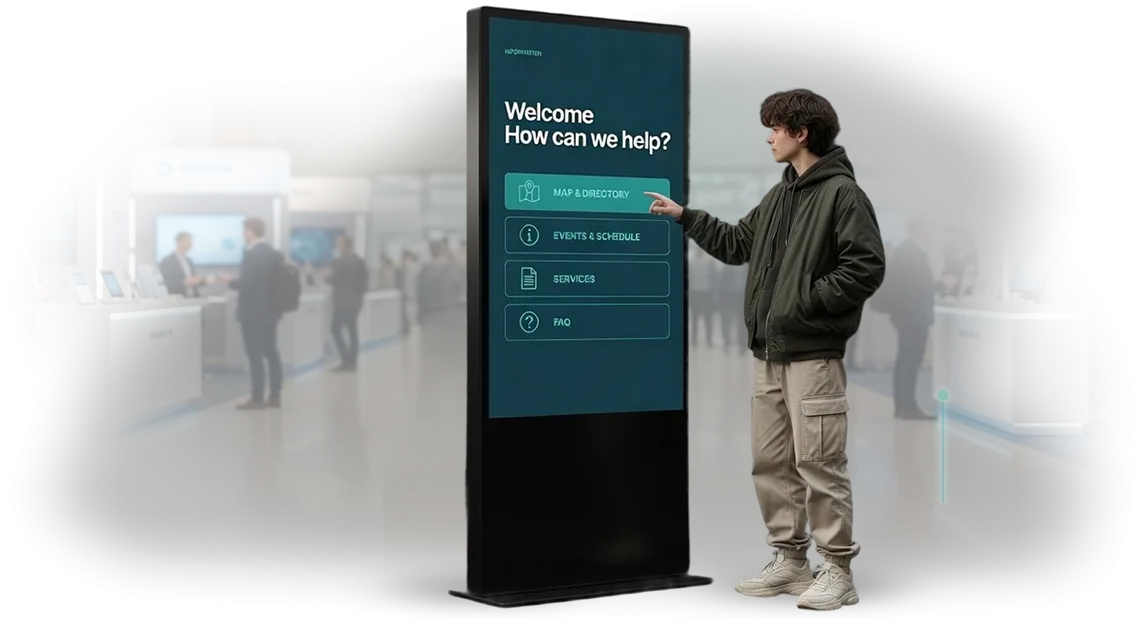
There is a solution — interactive kiosks that change the format of interaction with the exhibition. Instead of passive reading, the visitor chooses what to learn, where to pause, and how to experience the castle's history. This holds attention, sparks interest, and makes people stay in the halls longer.
Interactive kiosks give the visitor freedom — to dive into details, hear the voices of historical figures, and see how the halls changed over the centuries. This format suits adults and children alike, requires no guide, and works even during peak hours. As a result, a tour becomes an event rather than a formality.
We have been developing interactive kiosks for castles and palaces for over 10 years, helping clients bring back visitors' interest in history. Our team makes sure every guest leaves with an impression that will bring them back and bring their friends along. That is the result you get with a ready-made solution.
What an interactive kiosk gives your castle
Guests of modern castles come for emotions, not for plaques. If a tour comes down to viewing walls and halls, attention fades after an hour, and only a few end up with social media photos.
An interactive kiosk changes this dynamic: it turns passive observation into a lively exploration that people want to join.
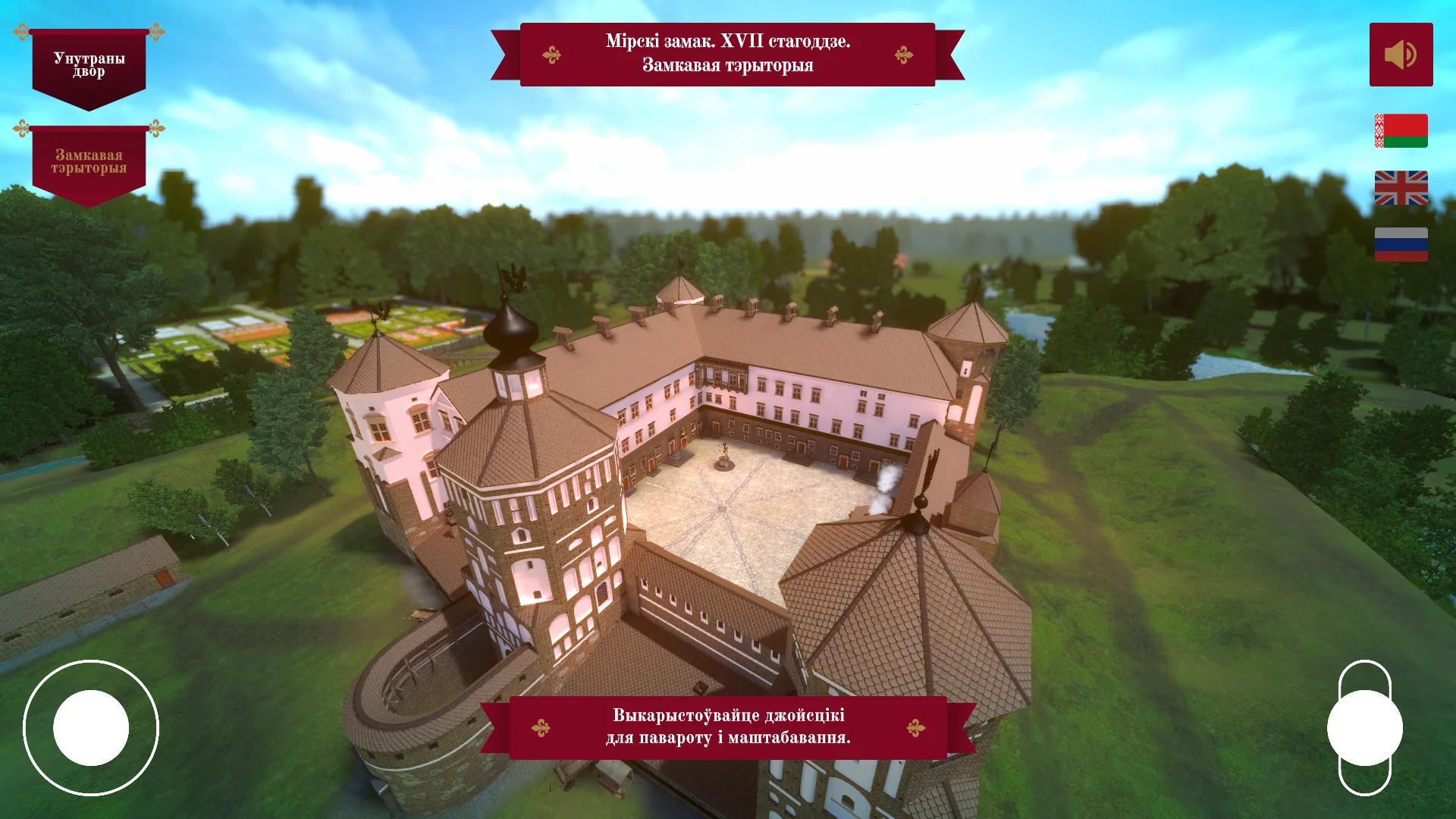
Touch panels allow every visitor to independently "flip through" the castle's history: view old plans, read the letters of its residents, and open archival photographs. In this way, the depth of immersion grows without a guide — the guest chooses what interests them. For families with children, it is a game and a discovery; for adults, a reason to come back again.
Thanks to this lively format, the castle's recognition is strengthened. Guests remember not just towers and facades, but the story they pieced together with their own hands. This creates a personal connection to the place and turns a one-time visit into a full brand story.
Our team develops kiosks on professional touch panels that withstand thousands of touches — so even in the peak season, everything works stably and without interruptions.
What such a kiosk gives to different categories — in the table:
| Format | For whom | What it gives the client |
|---|---|---|
| Interactive castle map | Solo tourists, couples | The guest builds their own route and does not miss the highlights |
| Archival memory book | Families with children, researchers | Immersion into the destinies of people who lived in the castle |
| Virtual tower tour | Event organizers | An extra "feature" for weddings, receptions, private tours |
Each format makes the visit richer and more photogenic, and thus amplifies free advertising through guests' posts. As a result, the castle receives not just hardware, but a tool for growing recognition and repeat visits.
Interactive kiosk formats for castles
Every castle has its own objectives: one wants to engage tourists and increase dwell time, another wants to present the family's history neatly without a crowd at a single stand, and a third wants to digitize family archives.
That is why we do not make a one-size-fits-all kiosk, but match the format to the space and the visitor's journey.
Technically, these are always professional touch devices that run stably all day without supervision. Which format to choose, however, depends on your goals.
Formats and their role
| Format | For whom | What it gives the client |
|---|---|---|
| Touch table | Grand halls, foyers, waiting areas | Gathers 6-8 guests around it at once, turning castle exploration into hands-on interaction with the map and exhibits |
| Touch panel | Narrow corridors, exhibits with limited space | Provides quick access to information about halls, exhibits, and history without creating queues |
| Archive showcase | Family estates, private manors | Opens digitized documents, letters, and family photos to visitors — while originals remain in storage |
| Interactive castle kiosk | Overview point at the entrance or ticket office | Helps visitors orient themselves, tells about routes and highlights, and motivates them to go further |
This approach solves several tasks at once: a visitor without a guide gets an engaging presentation of material at their own pace, and the castle administration gets less staff workload and more reasons for repeat visits.
Formats are often combined: a touch table in the grand hall and an archive showcase in the library.
For the owner, this creates a cohesive route for the guest: first the table catches the eye, then the visitor dives into the showcase and stays at the castle an hour longer than average.
We help you choose a configuration for your spaces and budget and take on the entire cycle — from interface development to installation and staff training.
How we create a kiosk for your tasks
We start with a brief — we listen to who will use the kiosk: castle guests, tourists, archive researchers. The scenarios, interface, and even placement depend on this.
After the brief, we lock down the tasks and timelines so you can see the full picture of the project before the work begins.
Transparent development stages mean a predictable result with no surprises. We coordinate every step with you and make key decisions together, so the kiosk meets the castle's objectives and visitors' expectations.
The main stages of creating a kiosk for your tasks:
- Brief and task audit — we define the kiosk's goals, target audience, and success criteria.
- Interface prototype — we show the structure of sections and navigation logic, so you immediately see how guests will search for information.
- Layout approval — we refine the screen designs together with you and make edits before development starts.
- Content assembly — we adapt archival documents, photographs, and videos from the castle's materials into an interactive memory book.
- Software implementation — we connect the interface to a database and ensure stable operation on touch equipment.
- Testing in castle conditions — we test the kiosk under natural light, with different touch speeds, and in long-running mode.
- Launch and staff training — we hand over instructions, provide brief training for administrators, and remain on support.
We work with professional equipment, so the kiosk does not freeze at the most critical moment, and archival materials display clearly and quickly.
Our team has dozens of interactive projects for museums, castles, and exhibition spaces under our belt — we know how to make navigation clear for guests of any age.
What is included in the interactive kiosk delivery
It is a turnkey solution: equipment, software, content, and instructions are already included in the price. Installation and setup take one day, after which the kiosk is ready to welcome guests.
What is included in the standard delivery:
- Reliable touch kiosk — a sturdy enclosure for the castle's halls and foyers, withstands visitor traffic, and is easy to move when needed.
- Software with an admin panel — upload new materials, change scenarios, and update information without involving developers.
- Interactive content based on your archival materials — we turn photographs, documents, and historical maps into an engaging chronicle of the castle.
- Staff training — your team will learn to launch the kiosk, change files, and handle common requests.
- Instructions and guidelines — short reference notes for working with the system and maintaining the equipment.
- Warranty and support — service for the entire term: consultations, updates, and equipment replacement in the event of a malfunction.
All of this is packaged into a single solution that will continue to operate on your premises. If necessary, we can extend the functionality: add additional languages, synchronization with your website, or souvenir printing — even after launch.
Case study: how a kiosk brought a castle's history to life
Let us tell you about a project we are especially proud of: an interactive memory book for an ancient castle that tourists visit from across the country.
The task was not just to "install a kiosk," but to bring the exhibition to life for guests of all ages — from schoolchildren to elderly couples who come for a nostalgic atmosphere and family stories.
Before the implementation, visitors spent on average 6-7 minutes in the history hall, quickly skimmed the stands, and left. After the kiosk launch, dwell time grew to 18-20 minutes, and the number of guests returning to the exhibition nearly doubled.
People do not just read — they browse archival materials, find the surnames of their ancestors, and share discoveries with their families.
What changed for the castle
The main result: tours have become longer and guest satisfaction has grown. Guides now use the kiosk as the central element of the narrative: visitors approach the screen and choose the era and family history themselves.
This eases the staff workload and gives every guest a personal, "their own" route through the exhibition.
The second important effect is word-of-mouth. Guests photograph the information they find, take screenshots, and talk about the castle on social media.
For the venue's administration, this means free reach and an additional flow of tourists in the following months, confirmed by the growing demand for tickets after the interactive launch.
Numbers that speak for themselves
In the very first season, the kiosk became the most visited point of the exhibition: more than four thousand unique sessions in two months. Of those, a third of the guests spent more than five minutes at the screen and opened additional materials.
Six months later, the administration ordered a second kiosk for the neighboring hall — the best indicator that the solution pays off and serves the historical heritage.
We now use this experience as the foundation for similar projects: archive kiosks, interactive memory books, digital guides for estates. If you have a venue with a rich history but guests walk past the exhibits — let us discuss how to bring it to life for visitors.
Answers to questions about interactive kiosks
Castle owners and exhibition organizers often worry that an interactive kiosk will be difficult to operate: it will break down, freeze, and the content will become outdated with no one to update it. In fact, modern kiosks for castles are designed not to require constant staff attention.
Below we answer the three most common questions — maintenance, warranty, and content updates. These answers address the main concerns before implementation and help you understand that supporting the interactive will not become an extra burden.
How do you maintain the kiosk? Is a dedicated employee needed?
The kiosk does not require constant presence. It turns on according to schedule, operates autonomously, and in the event of a failure, the system restarts itself. Wiping the screen and checking the connection once a month is enough — it takes no more than 10 minutes.
We handle the technical side: we set up remote monitoring, so we receive a signal if it "freezes" and can solve the problem remotely without visiting the site.
What about warranty and repairs?
We provide a warranty on the equipment and the software. If an unexpected situation occurs and the kiosk needs to be taken in for diagnostics, we will provide a replacement during the repair — your exhibition will continue running without pauses.
All work is carried out remotely or with an engineer's visit; timelines are specified in the contract. After the warranty period ends, we stay in touch and offer post-warranty service on a subscription basis.
How do we update content? We do not know how to program.
For this, there is a simple admin panel: upload texts, photos, and videos through the browser — no development skills required. Changes appear in the kiosk immediately or on a schedule, which is convenient for the memory book and castle news.
If the admin panel still seems like an extra task, we can take over updates entirely: you send us the materials, and we lay them out and publish them. This way, the content always remains up to date, even if your team has no spare time.
Order kiosk development for your venue
Your venue is unique, so a kiosk cannot be "out of the box": it must greet guests, sell tickets, tell the history, or serve as a memory book. We develop a solution for a specific hall, exhibition, and audience.
Order a consultation — we will discuss the tasks, propose options, and prepare an accurate cost estimate for your venue, with no hidden extra charges.
During the consultation, you will learn which type of kiosk suits you, how it will fit into the interior, what features your visitors need, and how long the launch will take.
We will show you examples of completed projects for castles and museums and give you a clear idea of budget and timelines. After that, you will be able to make an informed decision and order kiosk development.
When you place an order, you receive:
- An accurate cost estimate for your venue before work begins.
- An interface prototype that you can review and adjust.
- An experienced curator — a single point of contact at every stage.
- Preparation of the installation site and turnkey coordination with your contractors.
- Staff training and instructions for a quick launch.
- Post-launch support and content updates as needed.
Leave a request for a consultation and cost estimate — we will call you back within one business day, answer your questions, and prepare a personalized offer for your venue.
Ordering a kiosk from our team means a reliable partner, clear timelines, and a result that enhances the impression of your space.
How to choose a kiosk format for your castle's specifics?
The choice of kiosk format depends directly on the castle's specifics: the layout of the halls, visitor traffic, lighting levels, and even the preservation of historical interiors.
There is no universal solution here — what works in a grand enfilade will be inconvenient in a narrow tower or casemate.
That is why, before installation, we visit the site in person or request a detailed floor plan to choose a hardware configuration and placement that will not get in the way of visitors or disturb the atmosphere of memory.
The interactive memory book is the most adaptive format for castles with a rich history. It blends naturally into the exhibition and allows you to present archival documents, photographs, and the fates of people connected to the place.
If the halls are small, we choose a compact touch panel on a stand that takes up less than a square meter.
For spacious halls, a floor-standing terminal with a larger screen is a good fit — it will become the conceptual center of the exhibition and will not get lost among architectural details.
It is important to take into account how guests move along the route. If the castle sees a steady flow of visitors, the kiosk is best placed in a zone where visitors naturally gather, but not in a narrow passageway.
We help determine the placement so that the memory book does not create queues but, on the contrary, keeps guests near the key attraction. We also assess the lighting: on the sunny side, we select an anti-glare screen coating so that images remain readable at any time of day.
We also keep the preservation of historical walls in mind — kiosks can be floor-standing and mobile, without drilling or attaching to load-bearing structures.
This makes it possible to use them in rooms under special preservation regimes and to move them easily for temporary exhibitions or events.
Such a solution removes the limitations that worry the directors of castle museums: zero damage to the interior, while the electronics are fully autonomous.
Ultimately, choosing the right format is not a matter of terminal design, but a task tailored to the specifics of a particular castle: route, area, light, and operating rules.
We will analyze these parameters at the start and propose a solution that will work for the venue's recognition and the guests' impression.
The interactive memory book will become a natural part of the exhibition rather than a foreign element — and visitors will remember not the stand, but the stories it reveals.