


Clients get lost in logistics centers and warehouses without navigation
Visitors to logistics centers and warehouses — drivers, freight forwarders, company representatives, new employees — arrive for cargo, documents, or access clearance.
A large area with dozens of storage zones, loading docks, office blocks, and vehicle flows without clear navigation turns every visit into a quest. A person gets lost, searches for the right department or pickup point, spends 20–30 minutes on something that should take five.
This is a key point of visitor loss: instead of a quick visit, there are queues, confusion, delays, and negative feedback spreading across social media.
The consequences for your business are tangible: employees are distracted from their work to give directions, clients miss their deadlines, and some even leave for competitors — where warehouse navigation is well thought out.
Lost minutes add up to hours of downtime, increased staff workload, and damage to reputation. There are extra calls to the dispatch office, shipment delays, and partner dissatisfaction.
The problem is not with the people — it is the lack of a simple, always available way to find one’s way.
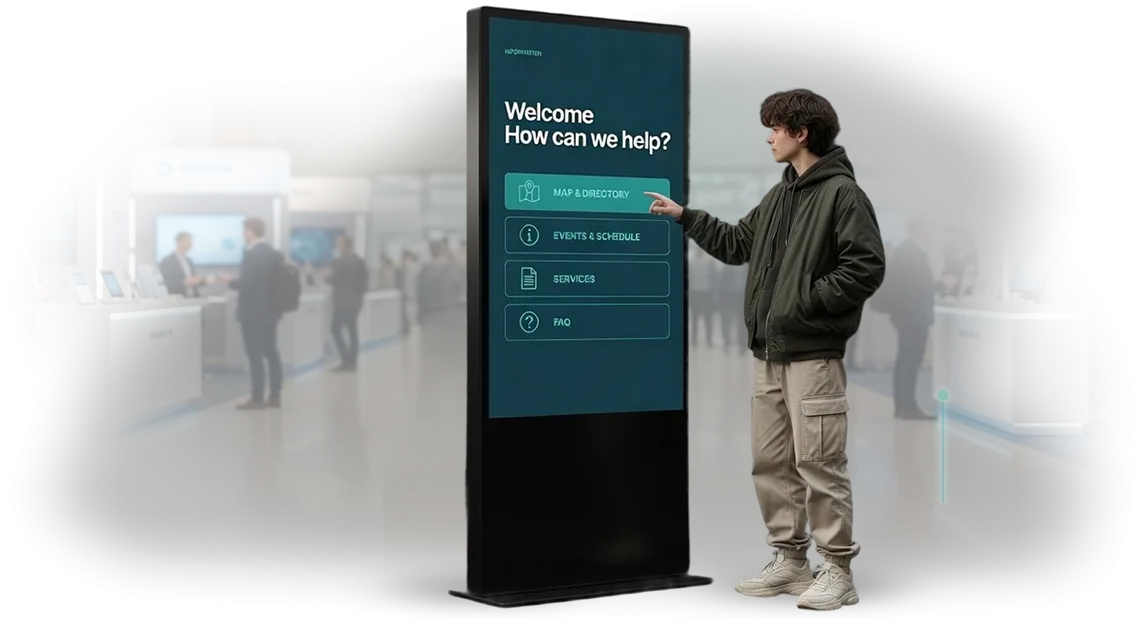
An interactive information kiosk solves this pain point. Within seconds, a visitor gets a clear route to the desired location, information about working hours, safety requirements, and department contacts.
No more signs, hunting for security, or asking employees — everything is visual, fast, and stress-free. This is not just convenience: service speed increases, staff focus on their tasks, and clients come back.
At our team we develop such kiosks for logistics centers and warehouses, adapting the interface to the internal logic of your processes. We work with professional equipment and reliable software, so the kiosk operates stably even during peak loads and at any time of day. As a result, your warehouse navigation becomes clear to everyone — from the very first visit.
What you get from implementing an information kiosk
Every day at a logistics center, dozens of drivers, couriers, and visitors ask the same questions: where is the unloading zone, how to get to the office, which dock is free.
Operators and security spend up to a third of their working time giving verbal directions instead of performing their core tasks.
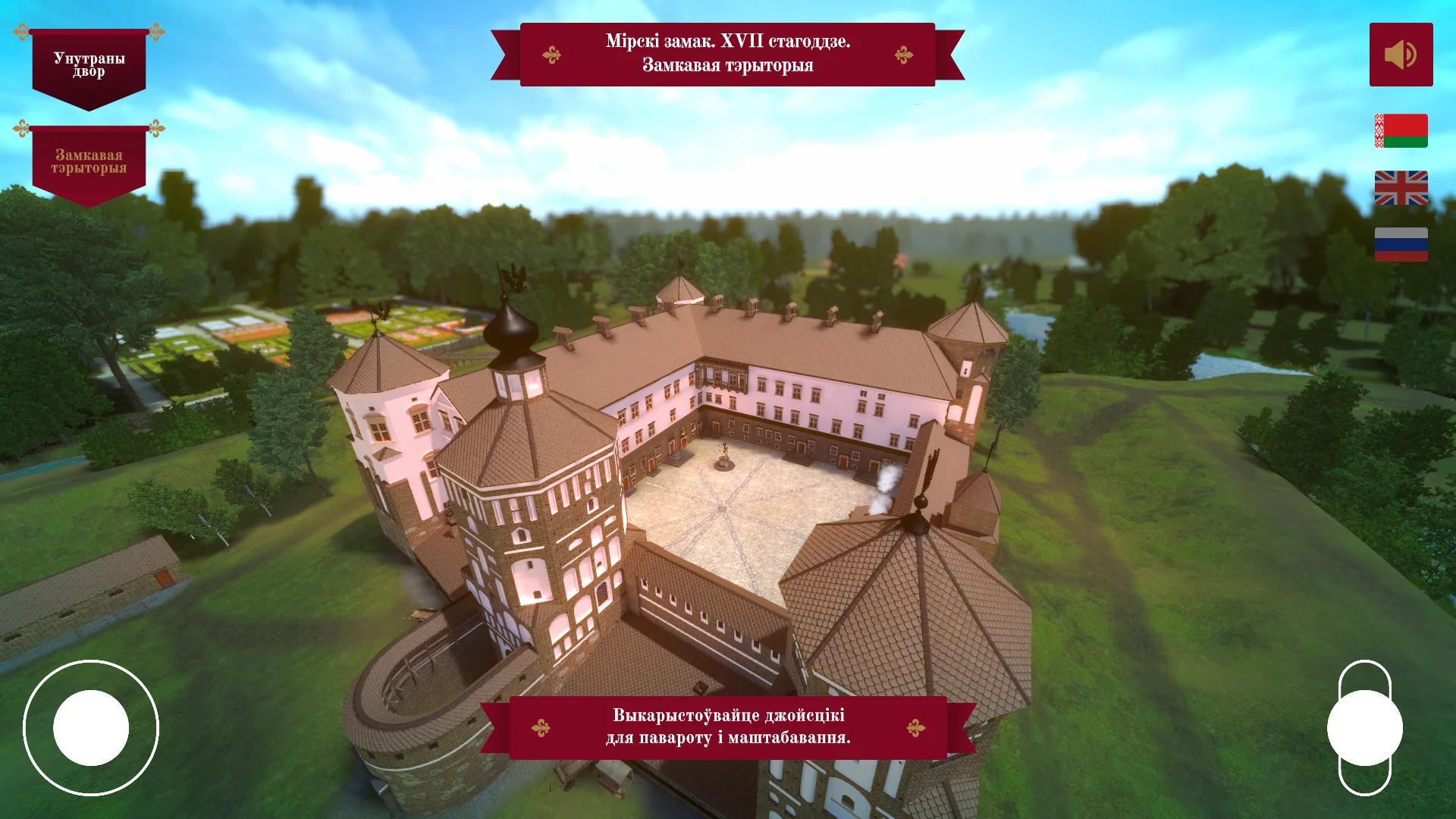
The information kiosk takes over this routine: the visitor independently finds the desired point on the map, gets a route, and checks the zone status in a few touches.
The main result is a reduced workload for staff. Employees stop being a “live help desk” and return to their duties, while drivers no longer wait in line at the information window.
The kiosk works around the clock, responds just as quickly during peak hours, and does not need breaks.
For clients and partners, this means greater loyalty: a person does not stand in an awkward queue but immediately understands where to go.
Fast zone search — warehouse, parking, checkpoint, rest area — reduces time spent on-site and the risk of missing a trip, which directly affects the punctuality of transportation.
Our team builds kiosks on professional equipment and designs the interface so that anyone can understand it without instructions. Automating the help desk pays off through saved employee time and a smoother visitor flow — without expanding staff.
You get a tool that takes routine questions off your team’s shoulders and makes navigation around the facility simple and predictable.
Formats of touchscreen kiosks for navigation and information
At a logistics center or warehouse, a visitor spends time finding the right department, pickup point, or meeting room. Touchscreen kiosks reduce this to seconds, but the format must match the installation location and business tasks it solves. Let's look at the three main options.
Comparison of formats
| Format | Target users | What it gives the customer |
|---|---|---|
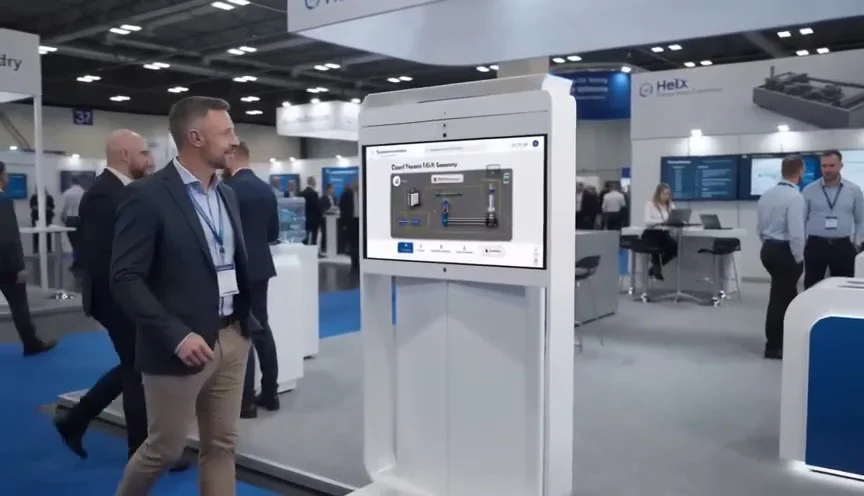
| Floor-standing kiosk | Visitors, drivers, staff in the entrance area or lobby | A large screen convenient for quick scanning, warehouse map search, and route building to the desired location. Information is available without queuing or staff involvement |
| Wall-mounted kiosk | Clients in waiting areas, staff in aisles and corridors | Compact placement, does not take up usable floor space. Helps check working hours, department contacts, zone information, and rules |
| Virtual concierge | Anyone who needs personal assistance: visitors, new employees, contractors | Interactive dialogue with prompts and quick resolution of non-standard questions. Reduces staff workload and shortens response waiting time |
The specific format depends on the layout, visitor flow, and objectives of your facility. We select the configuration for your warehouse or logistics center, develop a clear interface, and launch the kiosk end-to-end.
As a result, visitors find their way in a minute, and your employees stay focused on their tasks instead of responding to the same questions.
How kiosk development and launch works in 6 steps
We have structured our work so that you control the process at every stage and know exactly when the kiosk will go live. Below is the step-by-step plan we use to launch information terminals in logistics centers and warehouses.
-
Brief and task analysis. We examine which scenarios your facility actually needs: zone navigation, employee search, schedules, instructions for drivers. We record the requirements and agree on timelines.
-
Approval of the layout and operating logic. We draw the screen structure and show how the visitor will interact with the kiosk. You see the future interface before development starts and can make changes.
-
Interface development and content creation. We create the design in your colors, add warehouse maps, prompt texts, and contacts. The information is presented simply — even a new employee can figure it out in a minute.
-
Hardware preparation and installation. We select the stand and touchscreen for the conditions of your space — from an ordinary office to a dusty warehouse. We install the kiosk, configure the network, and connect the power supply.
-
Scenario testing and staff training. We test all scenarios: zone search, calling an employee, the emergency call button. We train your administrators on how to update information and what to do in case of a failure.
-
Launch and support. The kiosk starts operating in normal mode. We stay in touch: answer questions, update content on request, and monitor system stability.
What is included in the delivery of an interactive kiosk
You get not just “hardware in a box” but a ready-made end-to-end solution — from equipment to staff training. There is nothing extra to buy, assemble, or refine: the kiosk arrives, is installed, and starts working on the day of launch.
Standard delivery includes:
- Hardware — a touchscreen kiosk in a vandal-resistant enclosure designed for 24/7 operation in warehouse and checkpoint environments. The device is configured and tested before shipping.
- Software — a virtual concierge with a floor plan, database search, and step-by-step navigation. The interface is designed for unprepared visitors: large buttons, prompts, language selection.
- Content — we fill in the information about your center: access map, list of tenants, services, contacts, entry rules. We agree on texts and layouts with you.
- Installation — delivery, placement at the desired point, network connection, and performance check. Our specialists do this in one visit without stopping warehouse operations.
- Staff training — a short briefing for administrators: how to update the map, change the list of services, add an emergency announcement. All management is done through an easy-to-use panel, no programming required.
- Warranty and support — official warranty on hardware and commissioning. When contacted, we connect remotely or visit the site to keep the kiosk running.
Such a package saves your team time: there is no need to look for contractors separately, supervise suppliers, or deal with technical details. You specify the installation point — we take care of the rest.
Case study: how we helped a warehouse speed up zone search
Warehouse staff spent up to 15–20 minutes per shift finding the right rack or unloading zone. For a distribution center with a hundred employees, this means dozens of lost person-hours every day, plus more picking errors and extra stress for staff.
We installed an interactive kiosk with navigation and a zone reference guide: the system showed the route to the right place, explained the specifics of each zone, and helped newcomers get up to speed faster. A month later, we measured the results together with the client.
Implementation results
- Zone search time dropped from 15–20 minutes to 2–3 minutes — saving about an hour per employee per shift.
- Picking errors decreased by a third — warehouse workers stopped confusing similar racks.
- Training of new employees became twice as fast: the reference guide explained the rules for working with each zone.
The director of the logistics complex Terminal-Logistik noted that the payback period was less than two months. Within six months, the client asked to add a second kiosk and further refine the interface to match their internal regulations.
Why the client chose us
We did not simply supply equipment — we studied the logistics processes, warehouse layout, and typical employee movement routes. As a result, the system fit into their operations without restructuring, and we took on content updates and support. The client did not have to hire a dedicated specialist.
This case is one of more than fifteen implementations in logistics and manufacturing. Each time we start with an analysis of tasks and return to a measurable result: faster, more accurate, with lower training costs.
How to choose the format of an information kiosk?
Choosing a kiosk format starts not with a catalog but with the conditions of your facility.
For logistics centers and warehouses, the key factors are foot traffic, floor area, and the use case — this determines whether the kiosk will work as a full-fledged information center or as a quick reference point for employees.
First, assess the space. In a wide lobby, a standalone kiosk is convenient — it is visible and does not block the passage. For narrow corridors and transit areas, a wall-mounted panel is a better fit: it saves space and creates no obstacles.
A compact tabletop model is good for an administrator’s desk where quick access to information is needed.
The second factor is the use case. If the kiosk replaces a live concierge, you need a large screen and a simple menu. If an employee needs to quickly get directions to a rack or unloading zone, a catalog with search is enough.
In any case, reliability matters: the equipment works around the clock and is designed for intensive use.
The main room requirements are lighting, mounting height, and access to power. Do not place the kiosk in direct sunlight so the screen remains readable. For a floor-standing model, leave a clear area to avoid congestion. For a wall-mounted model, choose the mounting height based on the average height of users.
The main advice: choose the format together with your contractor at the planning stage. An experienced developer will offer a solution for your tasks and room specifics, not just a standard model. This reduces preparation costs and increases the kiosk’s value to the company and its visitors.
Frequently asked questions about implementing and operating kiosks
For a logistics center, an information kiosk is a working tool that affects the speed of processing visitors and internal operations.
Any downtime leads to delays and client dissatisfaction, so we have gathered answers to the main questions: warranty, maintenance, repair, and timelines.
How reliable is the kiosk during 24/7 operation?
The kiosk is designed for warehouse environments: industrial components, shatterproof glass, dust protection. All units pass quality control before shipping. The service life is at least five years without performance loss.
What does the warranty cover?
The warranty covers all components for two years. If the kiosk fails due to our fault, we will restore or replace it within two working days — all terms are specified in the contract.
How is maintenance organized?
Scheduled maintenance includes sensor diagnostics, updating reference materials, and checking mounts. The schedule adapts to your operations, and remote monitoring allows us to detect a failure before it affects you.
How long does a repair take, and what happens while the kiosk is not working?
Spare parts are always in stock, so a typical repair takes no more than one day. During this time we provide a replacement kiosk — the information service continues to work without interruptions, and you do not lose clients.
What are the implementation timelines?
The standard period is two to three weeks from the approval of layouts. There is also an expedited option that cuts this time in half.
Order development of an information kiosk for your task
Leave a request and we will prepare a cost estimate for your task within one business day. No long briefs or dozens of emails: you describe what visitors to your warehouse or logistics center need, and we propose a solution with clear pricing and timelines.
The personal offer includes everything needed for a quick solution:
- free calculation of cost and development timelines for your facility;
- selection of the kiosk format — from an information terminal to a virtual concierge;
- a list of functions for your visitors’ scenarios: navigation, queue management, document ordering;
- placement and integration scheme with existing systems;
- content recommendations so employees and guests start using the kiosk right away;
- launch plan, testing, and staff training.
You do not need to dive into technical details yourself — we handle all the development work. Leave a request through the form or by phone, and we will come back with a personal proposal that you only need to approve.