


Lost Customers at Ports and Piers: How to Win Back Their Attention
A passenger in an unfamiliar port spends precious minutes looking for the right exit, berth, or luggage storage. During this time, they manage to lose patience, miss boarding, and form a negative opinion of the entire infrastructure.
For the administration, this is not a formality but direct losses: lost customers return less often and stop using cafes, shops, and paid services.
Without clear navigation in the port, guests feel left to fend for themselves. They cannot understand where to go, which departures leave in five minutes, and where a free berth is nearby.
During peak hours, this creates crowds at information desks, lines for staff, and a stream of negative reviews on social media.
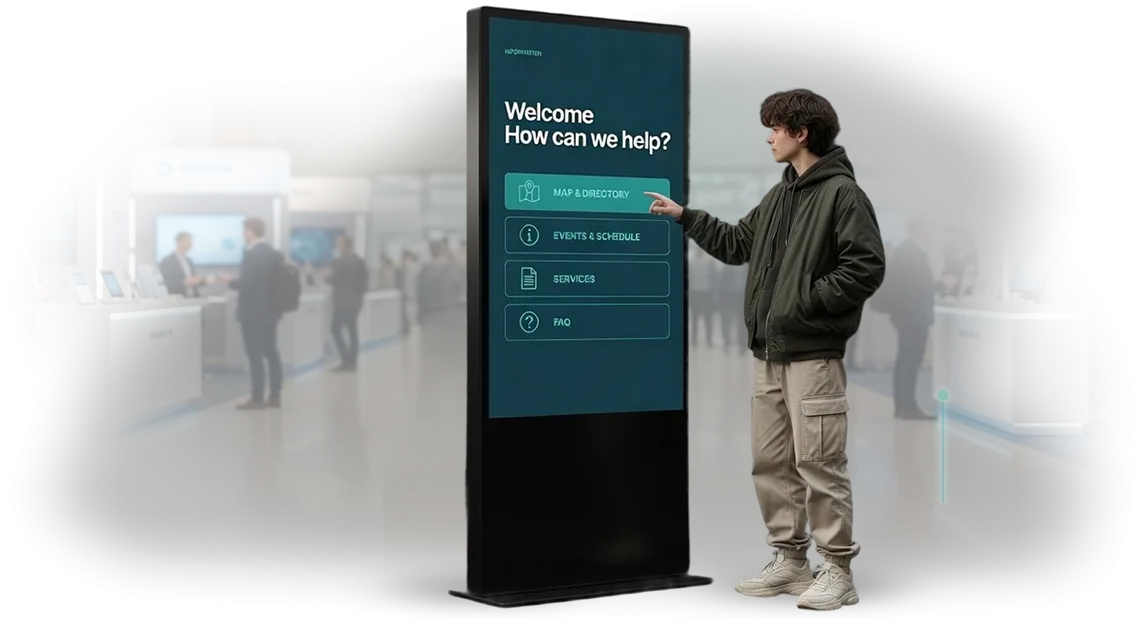
An interactive kiosk is the first step toward restoring order. An information counter installed in the waiting area instantly builds a route, shows the schedule, port map, transport arrival times, and service contacts. The visitor gets an answer in 10–15 seconds, and staff stop repeating the same work.
We develop such kiosks tailored to the specifics of your port or pier. We take into account the scenarios of tourists, sailors, logistics specialists, and staff, and add several languages and a simple interface that requires no training. The system operates around the clock and is independent of the human factor.
The result is a predictable flow of visitors, fewer delays, and more satisfied guests. Customer retention grows because even a first-time visitor can easily find their way around. The port also gains an additional point for informing people about services and promotions.
The first step is to analyze exactly where visitors get lost. We help choose locations for kiosks and offer a solution that pays for itself through guest loyalty and increased revenue for tenants.
What an Interactive Kiosk Gives Your Business
An interactive kiosk on the territory of a port or pier is not just an information counter. It improves the customer experience, increases revenue, and raises the status of your facility. Let's look at the key business benefits.
Improving the Customer Experience
Passengers often get lost among the berths, search for schedules, and don't know where to buy a ticket. The kiosk solves this in seconds: it clearly shows the port layout, routes, departure times, and nearby cafes and shops.
Visitors feel comfortable, and lines at the information desk shrink—this directly affects guest loyalty and their desire to return to your port.
Increasing Port Revenue
The kiosk doesn't just inform—it also sells. The screen features recommendations for excursions, souvenir shops, and restaurants, as well as tickets for boat trips and transfers. This increases the average check and generates profit without hiring additional sales staff.
According to our team's experience, such solutions pay for themselves within the first months and continue to generate revenue for years.
A Modern Image for the Port
An interactive kiosk shows that the port keeps up with the times and cares about visitors. This is especially important in negotiations with cruise companies and tour operators—they are glad to recommend a destination where everything is well thought out.
Travelers remember a tech-savvy port, so they return and bring friends, expanding your audience without advertising budgets.
Reducing the Workload on Staff
Information desk staff stop answering the same questions and focus on more complex tasks. The kiosk operates around the clock, without breaks or days off, so guests always get the information they need.
This saves the budget on operators, makes port management more efficient, and maintains a high level of service even in peak seasons.
Formats of Interactive Kiosks for Ports and Piers
Ports and piers operate at a demanding pace: ferries, cruise liners, private yachts. Visitors want to quickly understand where the exit is, how to find the ticket office, where the mooring is, and what services are available.
The impression of the place and tourist loyalty depend on this. The right kiosk format addresses questions before they even arise.
The choice of model depends on the installation point: an enclosed space or an open embankment, a large flow of people or rare visits. We select the configuration for the specific task so that the kiosk runs without failures and pays for itself from the first weeks.
| Kiosk format | Who it's for | What it gives the client |
|---|---|---|
| Stationary kiosk | Waiting halls, railway stations, port administration buildings | A reliable information point without expanding staff, fewer lines |
| Outdoor kiosk | Embankments, open piers, waterfront parking lots | Round-the-clock navigation, operation in any weather, protection from the marine climate |
| Touchscreen kiosk | Information desks, tourist zones, entrance areas | Quick self-service information, interactive maps and routes |
Such a set of formats covers all typical port scenarios: from quick assistance for a passenger to navigation for a yacht sailor. You get a tool that saves people's time and reduces the workload on staff, and your facility becomes clearer and more welcoming for every visitor.
How Kiosk Development Works: From Brief to Launch
For a port or pier, an information kiosk is not just a screen but a digital concierge that helps guests quickly find their way and relieves staff from repetitive questions.
To ensure you get exactly this result without surprises, we have built a transparent kiosk development process: at each stage, you understand what is happening and make key decisions.
Project Stages
-
Kiosk brief. We discuss the objectives, installation locations, guest scenarios, and expected effect: reducing queues at the information desk, navigation around the berths, and ship schedules. We set timelines and the format of interaction.
-
Structure design. Based on the brief, we build the kiosk logic: main menu, sections, the visitor's flow, and points with port information. At this stage, it becomes clear which blocks you will need and how they will be connected.
-
Interface design. We create screens that are easy to read from a distance and match the style of your port or pier. The interface is adapted to different screen sizes and lighting conditions—so the kiosk is convenient both on a sunny day and in the evening.
-
Development and configuration. We assemble the kiosk itself: screens, server side, and an admin panel for content management. You will be able to independently change schedules, news, and announcements without involving a contractor—through a simple and intuitive interface.
-
Content and testing. We upload real data: ship schedules, pier maps, and service contacts. We test typical guest scenarios: how a passenger finds their berth, how a visitor learns about services on site.
-
Kiosk launch. We install the equipment, mount it in an accessible area, and check connectivity and stability under peak loads. We conduct training for staff—employees know how the kiosk works and what to do in emergency situations.
-
Support and development. After launch, we stay in touch: we update content, add sections, monitor load, and quickly respond to failures. If necessary, we expand functionality—for example, we add payment for services or integration with the port's accounting system.
This approach to kiosk development allows you to launch the project within the agreed timeline and keeps your team from being distracted from daily tasks. You get a ready-made tool that genuinely reduces staff workload and improves visitors' impression of the port.
What's Included in the Delivery: A Complete Kit for Launch and Operation
You get not just a kiosk but a completely ready-to-operate solution for a port or pier. We take on the entire cycle—from equipment selection to handing over the keys to your team—so the launch takes days, not months.
- Equipment: a touchscreen kiosk with a vandal-resistant enclosure, protected from moisture and accidental damage. Suitable for open areas, railway stations, and waiting zones.
- Software: a ready-made navigation system, ship schedule, port services information, maps, and routes. Everything is configured to match your port's structure and visitor movement patterns.
- Content and updates: filling with information about the port, piers, and available services. You can quickly change schedules, announcements, and traffic patterns without involving developers.
- Installation and commissioning: delivery, installation at the desired location, connection to power and network, and comprehensive on-site testing.
- Staff training: a short briefing for your employees—how to manage content, change schedules, and handle typical visitor questions.
- Warranty and support: service support for the entire service life, system updates, and troubleshooting on request.
With this delivery set, the info kiosk starts working immediately after installation. Guests and port staff get fast, clear access to information—this reduces the load on the information service and increases trust in your facility.
Real Case: How an Interactive Kiosk Increased Profit
We started with the Baltic Port Terminal: passengers got lost looking for their berth, the queue at the information desk created congestion, and some clients missed their departures.
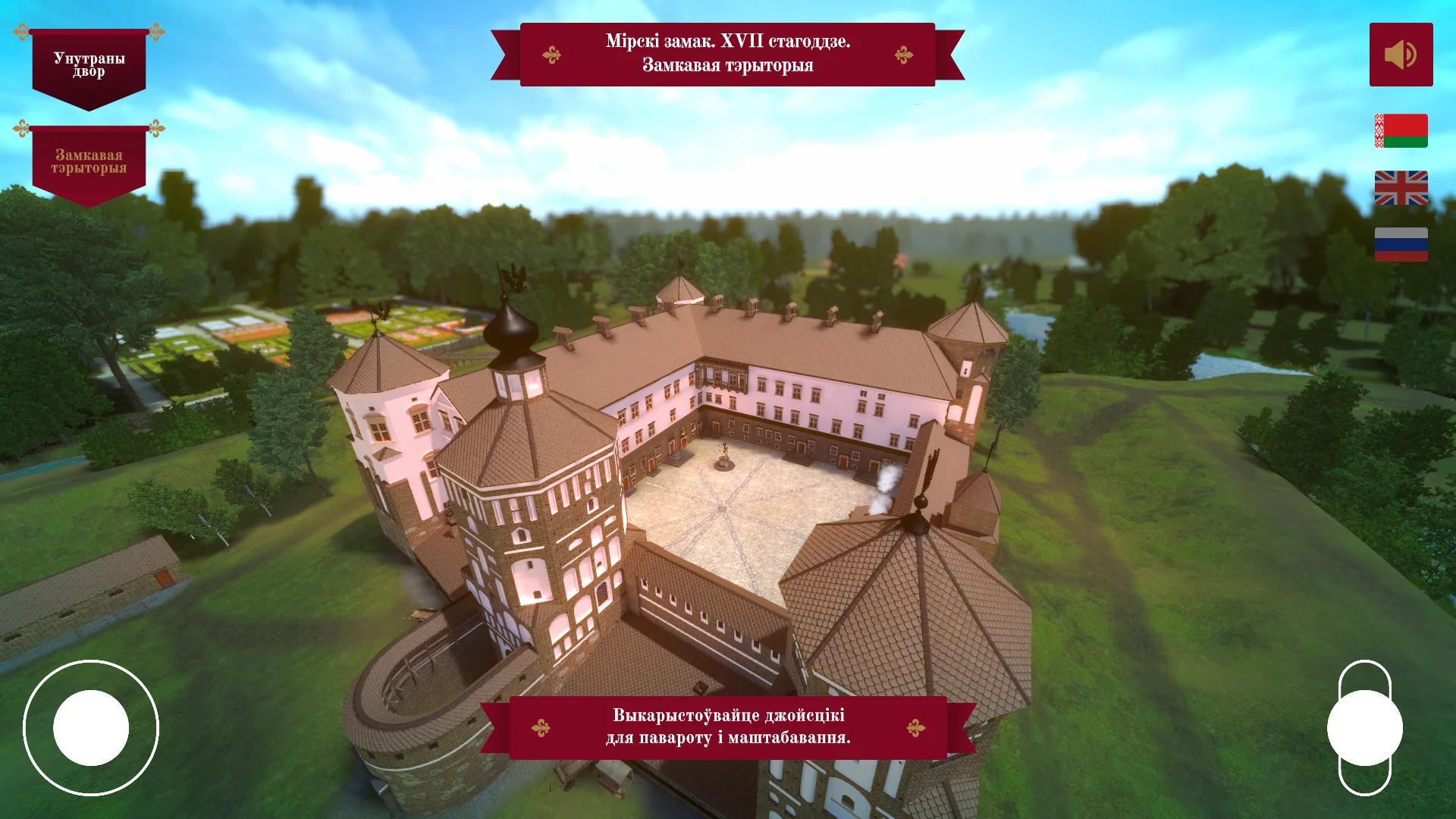
Instead of adding more administrator counters, we installed an interactive kiosk with a virtual concierge—it immediately showed the facility map, departure times, and available luggage storage lockers.
Before the kiosk launch, a passenger spent an average of 15 minutes finding the right direction. After implementation, this time dropped to three minutes. In the first month, more than 12,000 people used the kiosk—about every third visitor to the terminal.
The information service was offloaded by almost half: employees stopped answering routine questions and focused on issues that truly require live interaction.
Business Results of the Implementation
The key point is that the kiosk began generating revenue, not just saving time. Through it, visitors booked taxis, hotel reservations, and excursion tickets. The additional services paid for the kiosk's cost within two months.
By the end of the season, revenue from passenger traffic grew by 22%—without expanding staff or an advertising budget.
The kiosk's return on investment was also confirmed by a repeat order. After the first project, the terminal ordered three more kiosks for adjacent berths and the cargo terminal.
Today, it is a unified network of information points that performs equally well on peak days and in the off-season.
This port case showed that an interactive kiosk is not just a replacement for an information counter but a full-fledged sales and service channel. Passengers get an instant answer, and port management gets measurable profit and reduced staff workload.
Frequently Asked Questions About Kiosk Development and Implementation
When choosing an interactive kiosk for a port or pier, clients ask the same questions: will the equipment withstand continuous load, how quickly can we launch the system, and who will be responsible for its operation after installation. Below are answers to the main concerns so that you know the outcome before signing the contract.
How long does kiosk development and installation take?
We launch a typical information kiosk with navigation, a port map, and ship schedules in 4–6 weeks: from brief to equipment delivery and setup. If you need to connect online booking, payments, or external services, the timeline increases by 1–2 weeks.
We set the exact schedule in the contract with stage-by-stage delivery—you see progress and control the process.
Is the kiosk reliable in port and pier conditions?
Kiosks operate in high-traffic areas with temperature fluctuations and humidity, so we use industrial enclosures and protected screens. The software is configured for automatic restart after failures and stable operation without staff involvement.
For you, this means visitors always get up-to-date information, and employees are not distracted from their tasks.
What does the kiosk warranty and maintenance include?
We provide a warranty on equipment and software—from 12 months. It includes replacement of faulty parts, interface updates, and remote support. We also offer a regular maintenance contract: preventive service, content updates, and adding new sections. You always know who is responsible for the system and within what timeframe they resolve issues.
Is the kiosk compatible with our information systems?
The kiosk does not replace existing infrastructure but complements it. We connect it to your website, schedule database, maps, and external services. If you use ready-made platforms for the port or pier, we integrate with them through open interfaces. Passengers see up-to-date data in real time, and you don't have to update information manually.
Leave a Request — We'll Calculate the Cost of a Kiosk for Your Project
Every day, hundreds of people pass through the port and pier—passengers, tourists, drivers, and employees. While they search for the right terminal, schedule, or ferry exit, time is lost, the flow of questions to staff grows, and travelers are left with a feeling of chaos.
An information kiosk solves this simply: people find the information they need themselves, and your staff handle real tasks instead of repeating the same thing a hundred times.
We have been developing interactive systems for transport and navigation for more than 10 years. We understand the specifics of ports, know how to integrate into existing infrastructure, and create kiosks that are actually used.
Leave a request—we will calculate the cost for your project free of charge and show how the kiosk will pay for itself through staff time savings and improved service quality.
Here is what you get when you contact us:
- Cost calculation within 1 business day—no hidden fees or "asterisks" in the estimate.
- A consultation with an engineer and designer: we will select the enclosure, screen size, and functionality for your traffic and tasks.
- Interface adaptation to the port's brand style and the needs of different visitor groups—from retirees to international tourists.
- Full cycle: design, delivery, installation, configuration, and staff training.
- Content updates without a programmer—change schedules, maps, and announcements in a couple of minutes.
- Warranty and 24/7 technical support: if the kiosk is not working, we solve the problem remotely, and if necessary, we visit the site.
Fill out the form—we will call you back within an hour, answer your questions, and prepare a personalized offer. Ordering a kiosk is simple: you describe the task, and we take care of everything else.
How to Choose a Kiosk Format That Suits Your Project?
Choosing a kiosk format for a port or pier starts not with technical specifications but with answers to three simple questions: where the device will be placed, who will use it, and what task it solves.
These criteria determine the screen size, enclosure type, and interface logic—so it is better to start selecting a kiosk with operating conditions rather than ready-made models.
The first criterion is the installation location. On an open embankment or at a pier wall, the kiosk must withstand wind, moisture, temperature fluctuations, and bright sun while remaining readable in any weather.
In an enclosed terminal or waiting hall, the requirements are softer, but the convenience of placement comes to the forefront: the kiosk must not obstruct the passenger flow and must fit into the space where it will be installed.
The second criterion is the usage scenario. A passenger hurrying to their flight needs quick access to the schedule and berth directory—a compact touchscreen kiosk with a minimalist menu is enough for this.
If the kiosk serves as a virtual concierge—helps build a route around the port, tells about services, answers frequent questions—a larger screen, convenient navigation, and a well-thought-out information structure will be required.
The third criterion is the audience. In a port and at piers, you encounter people of different ages and levels of digital literacy: tourists, families with children, elderly passengers, and people with limited mobility.
The more diverse the audience, the simpler the interface should be, and the more attention should be paid to the enclosure height, button size, and navigation that works without instructions.
By answering these questions, you will get a clear idea of the appropriate kiosk format even before contacting developers.
We always start with this preliminary analysis of the site and tasks—and then propose a configuration that will work specifically in your conditions and adapt it to the project, taking into account all the specifics.