


Interactive Kiosks for Tourist Information Centers
Every guest arrives at a tourist information center with a specific request: where to go, what to see, how to get there, and where to eat. Staff answer the same questions dozens of times a day, and in high season a queue forms at the counter.
At that moment, the impression of the city starts forming not from emotions but from waiting. An interactive kiosk solves this: it instantly provides routes, attractions, events, and maps — without pauses, repetitions, or dependence on staff workload.
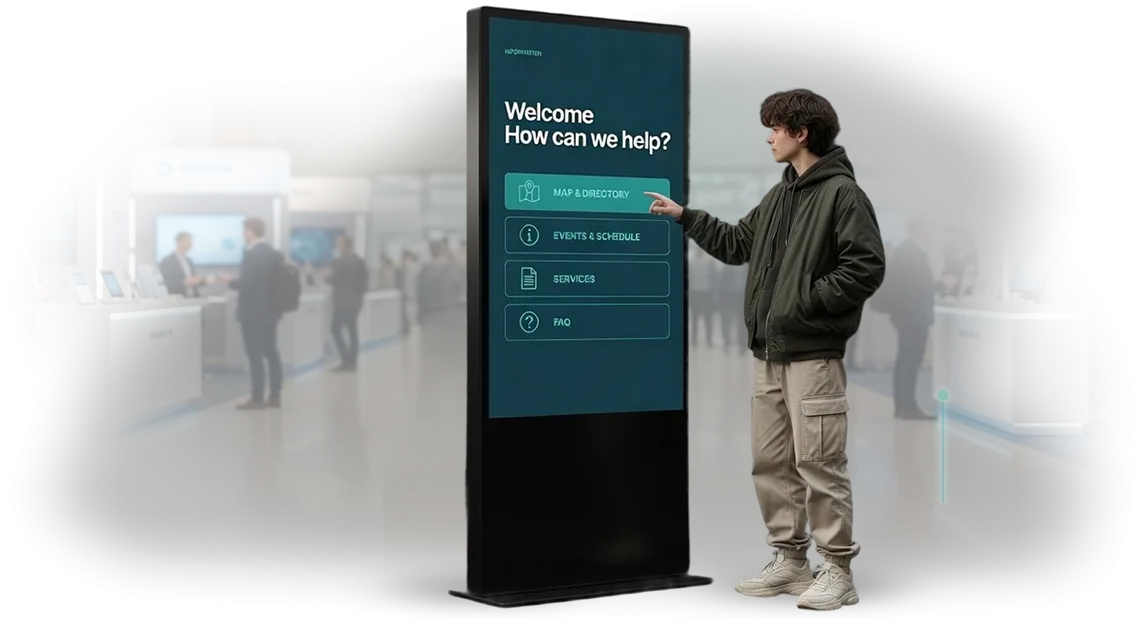
Navigation for guests becomes simple and intuitive. Visitors choose what interests them, browse descriptions, photos, and current event listings, and get directions to a destination when needed.
An infokiosk in a tourist information center works like a 24/7 information desk: it doesn't wait for business hours, doesn't get tired, and speaks to the guest in a language they understand.
By placing such a kiosk, you resolve the most frequent requests before they even reach a staff member.
From the center's perspective, such a kiosk is also an information control tool. Data on events, museum opening hours, temporary closures, or new excursions is updated centrally — without reprinting flyers and without the risk of displaying outdated documents.
The information desk becomes an analytics collection point: which places visitors choose, what they are most interested in, which routes remain popular. These insights help plan tourism offerings and develop city services.
We have been working on such projects for over ten years and build interactive solutions that integrate into the daily operations of tourist centers without adding unnecessary complexity for staff.
Professional equipment, fine-tuned software, and remote configuration allow the kiosk to be launched quickly and kept up to date.
The guest gets full navigation and the impression that "they care about us here," while the center gets relief for its staff and more time for live conversations with those who truly need individual assistance.
What an Interactive Kiosk Gives Your Information Center
For a modern tourist information center, the information desk is the main point of contact with the guest. When there's a queue and a staff member repeats the same thing for the hundredth time, the impression gets blurred.
An interactive kiosk changes the scenario: visitors find answers themselves in a couple of touches, and the center's team frees up for live communication.
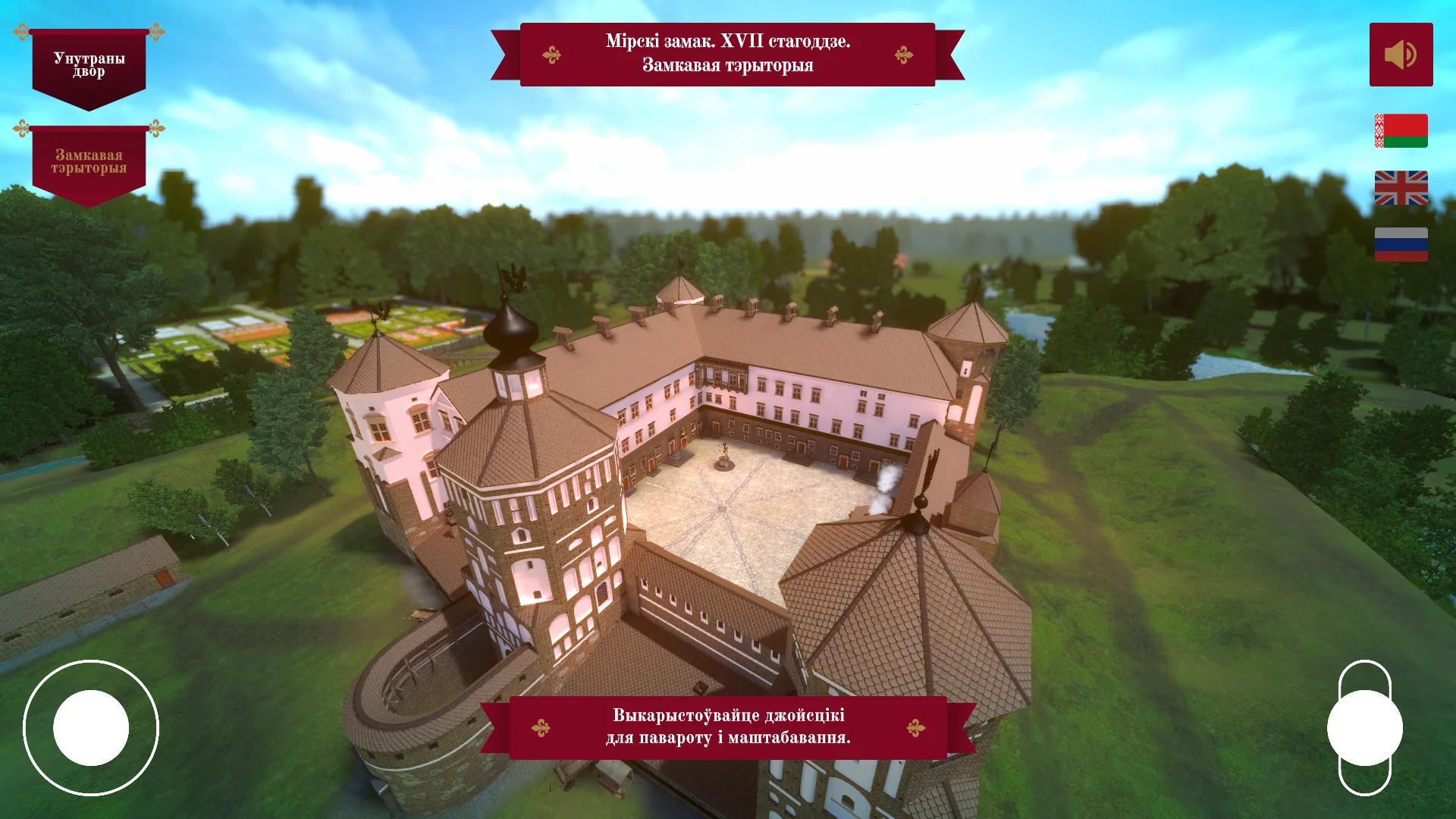
A tourist expects not just information but fast access to routes. An interactive map with popular destinations and a mobile guide work like a personal concierge: the guest plots a tour on the screen, sends it to their phone, and leaves prepared. You get a satisfied visitor without additional staffing costs.
For the center itself, the kiosk becomes a brand element. Design in your brand style increases brand recognition, and rotating content for events and holidays attracts new guests.
Built-in visit statistics show what actually interests tourists: which locations, formats, and promotions work better. This data helps develop the tourist season and plan the budget.
We handle the technical side: professional equipment and a polished platform with regular updates and support. The kiosk remains a reliable assistant every day, not "dead hardware" in the corner.
In the end, the center gains higher guest satisfaction, staff time savings, and a foundation for improving its services.
Formats of Interactive Kiosks for Information Centers
A guest in an unfamiliar city spends the first minutes trying to get oriented: where to stay, what to see, and how to get there. During high season, information center staff are busy, queues grow, and paper maps don't answer questions or build a route in a minute.
An interactive kiosk removes this burden: it handles typical questions, shows attractions, events, and routes, and works without breaks. Which format to choose depends on the floor space, visitor flow, and the goals of your center.
Which format suits your center?
| Format | For whom | What it gives the client |
|---|---|---|
| Floor-standing kiosk with touchscreen | Centers with high visitor traffic and available floor space | Draws attention, holds maximum information, convenient for interactive maps and place catalogs |
| Wall-mounted panel | Compact counters, narrow halls, areas near cash desks | Saves space, always in sight, relieves staff during peak hours |
| Virtual concierge | 24/7 showcase windows and centers with a steady flow | Answers common questions, provides routes and events without staff involvement |
| Compact touchscreen on a counter | Small information points, museum and hotel lobbies | Quick access to the essentials: opening hours, directions, what's nearby |
We often combine formats: we place a floor-standing kiosk at the entrance and a wall-mounted panel in the waiting area. This distributes the flow evenly, and administrators spend their time only on complex requests.
Either way, guests get an answer in a couple of touches, and the center gets clear request statistics and a basis for improving service.
How Kiosk Development Works for Your Center
Kiosk development isn't just equipment installation — it's a structured process where you participate at key milestones. We support your project from brief to launch and beyond — you always know what's happening and when the kiosk will start delivering value to visitors.
-
Brief and requirements analysis. We gather the requirements: who will use the kiosk, what information is searched for most often, and how it will fit into your center's space. We lock in timelines and budget — from here we work without surprises.
-
Prototype and design mockup. We create the screen structure and visual style to match your brand. You see how the kiosk will look before production and can make changes — this saves time and money.
-
Approval. We finalize the mockup, texts, and functionality. After this point, changes won't delay the process: you get a predictable result exactly within the agreed timeframe.
-
Production and configuration. We prepare the software and hardware and test all scenarios, from simple search to an interactive map. We verify stable operation under real-world conditions.
-
Launch and training. We install the kiosk at your center, show staff how to manage content, and provide clear instructions. We stay in touch during the first days to answer any questions.
-
Support and evolution. We regularly update information and help with technical issues. If your services, events, or opening hours change, the kiosk changes with you without lengthy downtime.
As a result, you get not "a box with a screen" but a working tool that relieves administrators and increases guest satisfaction. All stages are transparent: you understand what you're paying for and control the process at every step.
What's Included in the Interactive Kiosk Delivery
Instead of disparate parts, you get a turnkey solution: an interactive kiosk that works from day one. Below is the full list of what's included in the delivery. We put it in the contract so there are no surprises.
- Licensed software — official rights to use the software. You don't risk fines and operate legally.
- Adapted content — maps, routes, attractions, and reference information for your region. The content is structured logically so a tourist finds what they need in 20–30 seconds.
- Simple update system — a center employee updates event listings, opening hours, and news without a programmer. Changes are published in a couple of minutes.
- Instructions and staff training — a clear guide in Russian and a short briefing for your administrators. Staff confidently work with the kiosk right away.
- Warranty on hardware and software — an official warranty that covers repairs and consultations. We stay in touch after launch.
- Commissioning — we deliver, connect, configure, and test the kiosk at your site. On launch day, it's already receiving its first guests.
- Data backup — the system automatically saves data so you don't lose settings or inquiry statistics even after failures.
This package removes the need to assemble a solution from multiple contractors. You get a single point of responsibility and an exact launch date.
Case Study: How an Infokiosk Increased Inquiries at a Tourist Center
During the season, a resort town is full of tourists and the information desk can't cope: the queue grows, questions repeat, and some guests leave without answers.
One of our clients, the Open City Tourist Information Center, ran into exactly this: by evening, up to 40% of visitors didn't get the information they needed.
We installed a touchscreen infokiosk with a map, events, and ready-made routes at the center.
After a month of operation, the center measured the results: the number of requests for information grew 2.5 times, and the wait time for a live consultation dropped from 15 minutes to nearly zero.
In reviews, visitors noted that the kiosk helped them get oriented quickly, and 9 out of 10 recommended it to other tourists.
How the kiosk changed the lobby's operations
The infokiosk was placed at the entrance and became the first assistant for guests: people find attractions and cafés themselves and come to a consultant with a specific question.
During peak hours, the kiosk handled up to 70% of simple requests, so staff had time for those who truly needed live help.
There was also an unexpected marketing effect: guests posted photos of the screen with their personal route to social media. This brought the center about a thousand extra impressions per week — brand awareness grew without an advertising budget.
Why the client ordered a second kiosk
A season later, Open City came back for a second infokiosk — this time for its airport branch. The first launch showed the main thing: such a solution doesn't just relieve staff — it shapes the impression of the center as a modern and caring service.
The case's result: sustained growth in the number of inquiries after installation, confirmed by the center's statistics. For us, this is the best illustration of how technology makes tourist services more accessible and helps a brand earn positive reviews.
How to Choose a Kiosk Format for Tourist Information Centers?
Choosing a kiosk format for a tourist information center starts not with design but with two questions: where will it stand, and how will visitors approach it?
The answers determine the dimensions, touchscreen type, and — most importantly — the functionality tourists actually need, not "everything at once."
In a space with heavy traffic, a floor-standing kiosk with a large screen and an interactive map works well at the entrance or near the information desk.
If space is limited — a corridor, waiting area, or small administrator counter — choose a wall-mounted or compact option: it doesn't create queues and fits easily into the space.
Define functionality based on your guests' scenarios: routes, attractions, events, excursion booking, or a QR code for downloading a mobile version.
The more operations and information requests the kiosk covers, the less strain on staff and the faster the service — tourists get what they need in a minute rather than through a conversation with an administrator.
To make the choice easier, here is a basic table matching formats to the needs of a typical center:
| Format | For what traffic | What it gives the tourist |
|---|---|---|
| Full-size floor-standing | High traffic, entrance, large halls | Interactive map, routes, events, large buttons, quick selection |
| Wall-mounted | Medium and low traffic, corridors, waiting areas | Saves space, basic reference information, good for a general overview |
| Compact tabletop | Small halls, administrator counters | Personal search: attractions, schedule, route printing (optional) |
The main principle: the format must match not trends, but the real flow of guests and the tasks of your tourist information center.
We select the configuration for your space, prepare operating scenarios, and deliver the system with staff training, so the kiosk starts delivering value from the very first day of installation.
Frequently Asked Questions About Interactive Kiosk Development
Many managers of tourist centers worry that implementing an interactive kiosk is slow, complicated, and risky. In practice, with proper organization, a project takes just a few weeks, and staff master the system in a day.
Below are answers to the questions we are asked most often when discussing information kiosks for tourist information centers.
How long does development and launch take?
A typical project takes 3–5 weeks, from brief to delivery and installation. If you need standard functionality (map, attractions, routes, schedule), the timeline shrinks even further.
We lock the schedule into the contract with milestone checkpoints, so you always see what stage the work is at.
What warranty is there, and what happens if the kiosk breaks?
We provide a warranty on hardware and software — typically from 12 months. Technical support is included for this period: an engineer will connect to the system remotely or replace a component promptly.
Downtime risks are minimal because the infrastructure is protected against power surges and incorrect visitor actions.
Is it hard for staff to learn to work with the kiosk?
No. The interface is clear to guests even without hints, and your team only needs a short webinar: content upload, schedule changes, basic settings. If needed, we provide on-site training right during installation, plus a clear instruction manual.
What does the cost depend on, and how is it calculated?
The cost is based on screen size, enclosure configuration, feature set, and design complexity. After a short brief, we will send a transparent estimate within 2–3 business days — no hidden charges.
If you don't want large investments upfront, we can offer rental with maintenance: payments then come evenly from your current budget.
Ready to Start Your Interactive Kiosk Project for Your Center?
You don't need to understand the technology — we take on the entire journey from idea to a working kiosk. Our process is structured so you always understand what's happening and what stage the project is at.
Below is a typical sequence of work on an interactive kiosk for a tourist information center:
- Request: you submit an inquiry on the website or by phone — we get back to you within one business day.
- Consultation: we discuss your center's goals, target audience, and kiosk usage scenarios.
- Cost calculation: we prepare a transparent estimate with a fixed price — no hidden payments or fine print.
- Free on-site visit: if needed, we come to the location to assess placement, connectivity, and logistics.
- Contract: we lock in timelines, scope of work, and guarantees — you get legal protection.
- Implementation: we design the interface, approve the design, and hand over the finished solution.
- Launch and support: we install the kiosk, train staff, and stay in touch after launch.
In the end, you get a digital assistant that works for your visitors 24/7. And thanks to a transparent process, you always know what's happening with the project.
Submit a request now — it's completely non-binding. We'll consult you for free and propose an option that fits your goals and budget.