


Theaters Lose Audiences Due to Queues and Booking Confusion
A visitor comes to the theater for an experience, but the first thing they see is a line at the box office or at the administrator.
While the line drags on, irritation builds up, and if there is also a mix-up with a reservation or seat, the visitor remembers the theater exactly that way.
Thus, due to mundane chaos, audiences are lost: they don't attend the performance, don't buy the next ticket, and don't recommend the theater to friends.
Errors in manual booking — double reservations, lost requests, late guest groups. Administrators and cashiers are busy with routine instead of helping visitors and solving unconventional issues. As a result, the theater loses not only time but also its reputation as a caring place.
The modern audience is used to buying and booking online, but inside the building they still face queues and paperwork.
Ticket kiosks and electronic queuing remove the very reason for dissatisfaction: guests quickly pass through with their tickets, sign up independently for tours, lectures, or the theater café, and staff are no longer hostages to peak loads.
Interactive kiosks solve the problem comprehensively: they reduce waiting time, eliminate booking errors, and free up employees for direct interaction with the audience. The theater stops losing guests due to chaos in organizational processes and earns from additional services. This is exactly the tool that turns a theater visit from stress into pleasure.
Benefits of Kiosks: Audience Comfort and Sales Growth
Modern audiences come to the theater for experiences, not to stand in lines. The ticket office, cloakroom, buffet — during peak hours these points become a source of stress and eat up time that could be spent in the lobby or over a glass of refreshment.
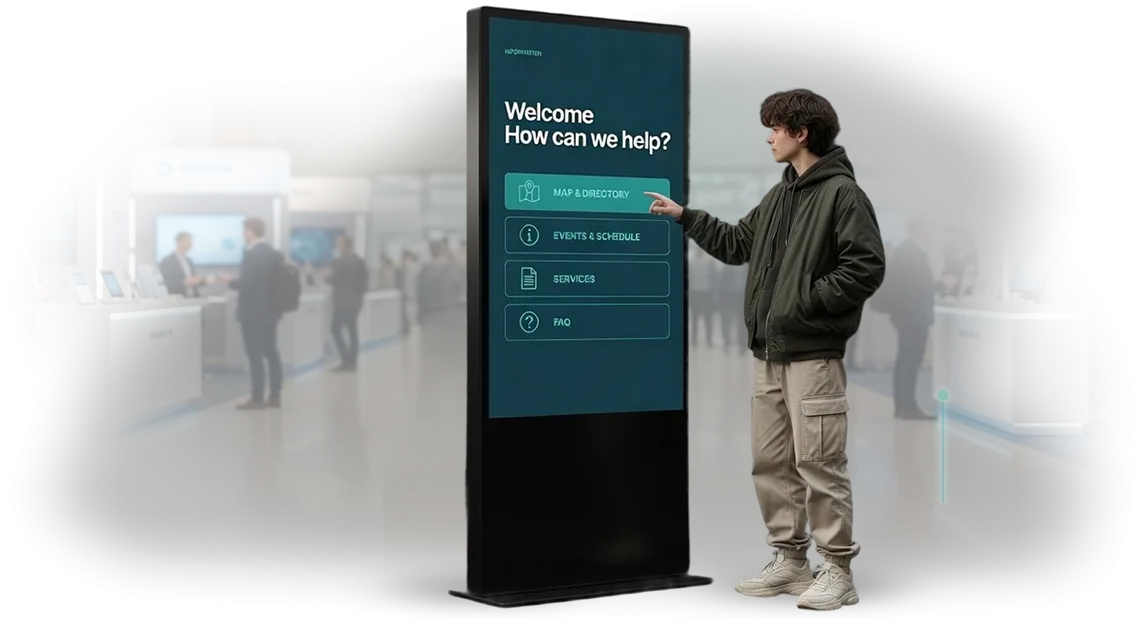
An interactive kiosk at the theater solves this problem: buying a ticket, choosing a seat, ordering an intermission drink takes a few taps, not a quarter of an hour.
The main result is shorter queues without expanding the cashier staff. Visitors get into the hall faster, the theater frees up personnel for other tasks, and the audience develops a habit of returning for new premieres.
According to independent research, service speed directly affects audience retention: International Theater Experience Review notes that "a visitor who spent more than ten minutes at the box office will next time choose a venue with electronic booking — it's a matter of respect for personal time."
The kiosk is also a channel for additional sales. At the moment of purchase, the system offers an upgraded seat, a visit to a lobby exhibition, payment for a subscription, or a club card.
This way the theater increases the average check without additional sales staff, and the visitor gets ready-made solutions for the evening — from the program to a glass at intermission.
Regular booking of events builds audience loyalty: they feel cared for, and the theater gains predictable demand.
We work with professional equipment that withstands high loads, and the software platform integrates easily with your ticketing system.
For the client, this means stable operation without delays on the busiest evenings and clear feedback: kiosks become a growth point for service, not a source of problems.
Interactive Kiosk Formats: For Any Hall
A theater lives by different rhythms: before a performance — a dense flow of visitors, at intermission — a matter of minutes, after — questions that staff no longer have time to answer.
The kiosk format must match the specific task and space, otherwise even convenient functionality will go unused. We develop three options — stationary, wall-mounted, and mobile — each covering its own workflow scenario for the hall.
| Format | Who It Suits | What It Provides at the Theater |
|---|---|---|
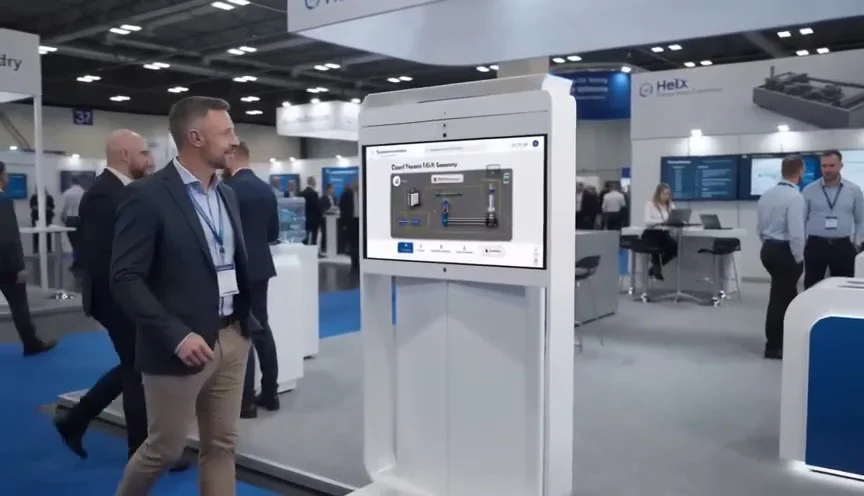
| Stationary kiosk | Main lobby, entrance foyer, administrator zone | Helps visitors navigate the program, pick up orders, and join the electronic queue without the hassle at the box office |
| Wall-mounted kiosk | Cloakroom, buffet, small halls, and corridors with limited space | Takes up no usable floor area, quickly shows the way to the hall, and reduces crowding in narrow spaces |
| Mobile kiosk | Intermission, premieres, off-site promotions, and lobby events | Works where help is needed here and now: queue sign-up, up-to-date program, answers to frequently asked questions |
All formats work with the theater's unified electronic queue. Visitors see the current status — how many people are ahead, when the ticket inspector or cloakroom attendant will be free.
The administrator manages flows in real time, and the usher receives a prompt on who to invite next.
We adapt the logic and interface to your operating procedures — from a single station in the lobby to a combination of all three formats in different areas.
The result is the same: fewer queues, satisfied visitors, and unburdened staff who do their job instead of repeating the same thing a hundred times.
How Implementation Works: From Brief to Launch
Implementing a kiosk at a theater is not a "black box": we divide the process into short stages, and at each one you understand what is happening. You don't wait for sudden results; you participate in key decisions — from brief to launch. Below is a typical work plan that we adapt to the specific theater's tasks.
-
Brief and immersion in the theater's objectives. We meet and discuss which scenarios the kiosk should cover: sign-up for performances, seat selection, building navigation. We set deadlines, work format, and expected results.
-
Plan and screen flow. We design the menu logic: how many steps to booking, how the guest confirms a reservation, what happens in case of an error. You approve the structure before development begins — this eliminates unnecessary revisions and disputed decisions.
-
Software development and configuration. We create an interface in your theater's style and connect the kiosk to the sales and booking system. We provide test access so you can verify functionality and submit requests before installation.
-
Kiosk installation and launch. We mount the equipment in the lobby, configure the network and ticket printing. We test all scenarios on the actual device so that the first visitors don't encounter technical failures.
-
Staff training. We conduct a short training session for cashiers, administrators, and ushers: how to use the kiosk, how to assist a visitor, what to do in an emergency. We leave a reference guide for common questions.
-
Launch and support. We open the kiosk to visitors and stay in touch during the first weeks of operation. After that, support continues: software updates, resolving staff questions, and refinements during operation.
This approach allows us to deliver projects on schedule and without surprises. You control every stage of implementation, and responsibility for the result lies with us.
What's Included in Delivery: A Complete Working Package
Atmosphere matters at a theater: neither the visitor nor the administrator should be distracted by technology. That's why we deliver a turnkey solution — from kiosk hardware to software. Everything is already configured and tested; all you have to do is turn the kiosk on.
The delivery package includes:
- Kiosk with pre-installed software. A touchscreen in a durable enclosure that fits into the lobby. The visitor selects an event, sees available seats, and leaves a request — no queue at the administrator.
- Electronic queue and booking module. The system distributes the flow of guests: seat reservations, session time management, attendance tracking. Visitors don't crowd at the entrance, and staff see the day's picture in advance.
- On-site installation and setup. We deliver, install, connect to the network, and integrate with your program and box office. You don't need to hire other contractors.
- Staff training. We show administrators and cashiers how the kiosk works and what to do in non-standard situations. Training takes a couple of hours.
- 2-year warranty and support. Equipment replacement, maintenance, and consultations — all included. If you need help, we're in touch.
This way you get not just a device, but a working service from day one. The kiosk reduces staff workload, shortens queues, and increases audience loyalty — leaving you free to focus on the creative side.
Case Study: How a Kiosk Reduced Theater Queues by 40%
At one city theater with a classical repertoire, the queue problem was acute every evening. Visitors arrived early to pick up reserved tickets or release unused reservations, but dozens of people crowded at the single box office. Some performances started late, and the theater lost audiences who didn't want to wait in a crowd.
We installed an interactive kiosk with electronic queuing and booking in the lobby. The guest chooses the performance, date, and seat, pays, and receives a ticket — all in a couple of minutes.
The kiosk completely replaced the paper queue at the administrator, and staff stopped performing routine sales operations.
Results the Theater Achieved
Average waiting time dropped from 20 to 5 minutes, and the queue in the lobby became 40% shorter. The number of bookings in the first season grew by a third, and hall occupancy increased because visitors reserve seats in advance rather than at random upon arrival. The theater eliminated conflicts from double sales.
Theater Director Andrey Mikhailovich summed it up: "We expected convenience for visitors, but we didn't think the box office work would become this much simpler. Staff stopped being distracted by repeated explanations, and there are no more delayed performances. The kiosk has become a true helper."
After the first season, the theater ordered an expansion of the solution to a second venue — which confirms the project brought real value and paid off in the short term.
Any theater, concert hall, or cultural center can achieve the same result: we adapt the scheme to your scenarios, install the equipment, and launch it turnkey.
How to Choose a Kiosk Format for Your Needs?
Choosing a kiosk starts not with the product lineup, but with your theater's objectives. Decide which operations will move to self-service: ticket purchases, seat selection, confirmation printing, hall navigation.
Key criteria depend on this: which screen is more convenient, how many scenarios you'll need, and how the kiosk will connect to your ticketing system.
Pay attention to the actual visitor flow. If a queue of 30–50 people forms during peak hours before a performance, the main thing is the speed of one purchase: a simple interface, fast search, payment in one action.
If the kiosk is only needed for information, a wall-mounted format without extra options is sufficient — it's cheaper and takes up no space.
To avoid overpaying, compare the project budget with the expected benefit. Features visitors don't use often turn out to be unnecessary: voice prompts, complex analytics, non-standard scenarios.
Saving at the design stage usually results in rework after launch, so it's wiser to budget for refinements based on the first weeks of operation.
Payback is determined by the load on the box office and administrators. A kiosk that handles recurring questions pays for itself in one season: staff focus on live guests, and the average check grows through additional sales — tours, programs, souvenirs.
That's why for a theater, a format with ticket functionality and printing wins over a mere program display.
In summary: choose a kiosk for your flow's specific task, build the budget with a buffer for launch, and don't chase features for their own sake. We'll help calculate the load and suggest a format that will pay off faster.
FAQ: Breakdowns and Kiosk Security
Any theater owner worries about one thing: the kiosk must not fail on premiere night, and visitor data must be protected. We hear these questions on every project, so protection is built into three levels: reliable hardware, fast repair, and clear obligations in the contract.
What happens if the kiosk breaks down during operation?
The kiosk is built on professional equipment that withstands peak loads before performances without failure. If a failure does occur, the system automatically restarts so visitors don't lose their place in the queue.
For the duration of repairs, we provide a replacement kiosk — service continues without interruption.
How is visitor personal data protected?
Purchase and booking data is stored on a secure server, with access limited to authorized theater staff. Information is transmitted over an encrypted channel, and if needed, we configure local storage — then data never leaves your environment. No third parties gain access to it.
Who is responsible for uninterrupted kiosk operation?
We take on post-launch maintenance: we remotely monitor kiosk status and alert you to potential issues before they affect visitors. The contract specifies response time — in an emergency, a specialist arrives on the day of the request. You get stable operation without maintaining your own IT department.
If you still have doubts — ask us before the project starts. We'll show how the kiosk behaves under high load and discuss warranty obligations separately for your specific workflow.Let's Discuss Your Project? Quote and Demo in 1 Day
Leave a request on the website, and within one business day we'll prepare a custom quote and show you a demo of the interactive kiosk adapted to your theater's needs. No abstract commercial proposals: only specifics for your repertoire, visitor flows, and placement areas.
What You Get Right Away
- Personal consultation: we'll analyze how the kiosk will fit into your lobby and which usage scenarios will deliver maximum impact.
- A quote for your project: timeline, equipment composition, implementation cost, and integration with your box office or ticketing system.
- Interface demo: an interactive prototype with the program, hall seating chart, announcements, and electronic queue and booking capability.
- Scenario recommendations: how to reduce box office queues, lower the load on administrators, and boost sales before performances.
- A clear launch plan: what steps are needed, who is responsible for what, and when the kiosk will go live at your theater.
All of this — the result of one day. We don't stall with answers or overload you with technical details. Our engineers use professional equipment and standard protocols, so you won't have to worry about compatibility — the kiosk will work right away.
Convenient workflow: you send a request, we get in touch within an hour, agree on a short call or meeting, and by the end of the day you receive all materials by email.
No obligations on your part — just a clear understanding of how this kiosk will solve your theater's challenges.
Leave a request now — and by tomorrow you'll know the exact cost, timeline, and solution format. We'll prepare the quote and demo in one day so you can make a decision quickly and without unnecessary approvals.