


Why Universities Lose Applicants to Queues
The admissions committee is where the fate of enrollment is decided: within a few weeks, hundreds and thousands of applicants pass through it. A university's first impression is formed right here—in the queue, in conversation with staff, in the feeling of order or chaos.
Long queues turn document submission into a multi-hour ordeal: people don't know how long they'll wait, where to go, or what paperwork is still needed.
This tension builds up, and by evening it spills over into negativity that applicants and parents discuss with each other and on social media.
Lost time means lost applicants. When the wait takes an hour or more, the decision to "try another university" comes naturally: people choose the place that respects them and saves their time.
This way, the university loses strong students and, along with them, their recommendations that bring the next wave of applicants.
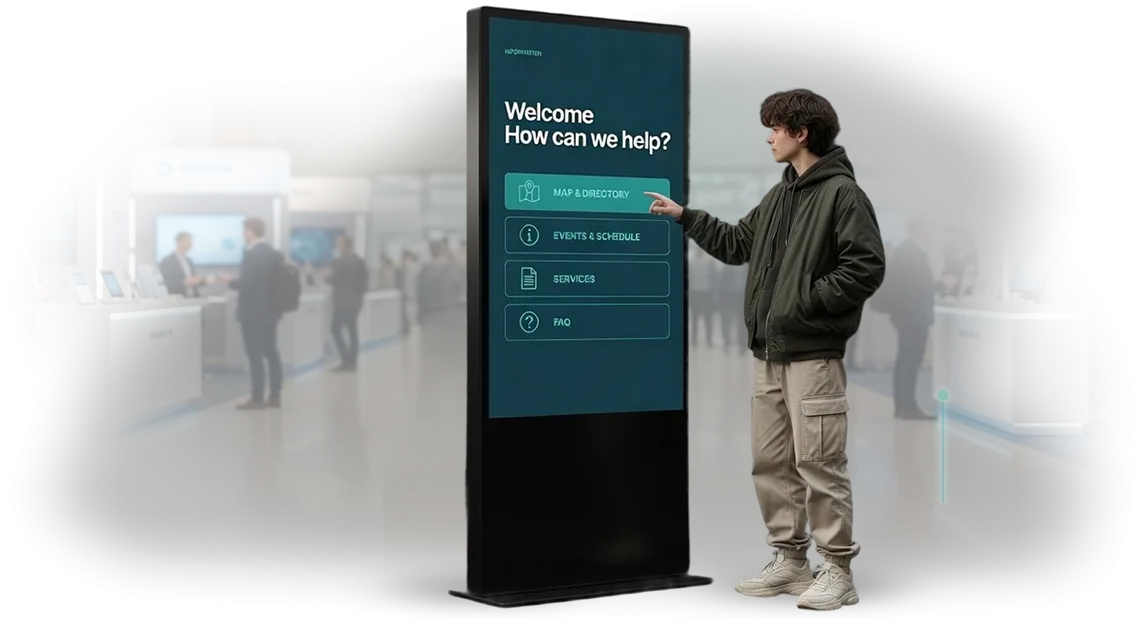
Interactive information kiosks with electronic queueing and scheduling restore order: applicants immediately see their number, know where to go, and stop worrying.
We help universities turn the admissions committee from a source of stress into a competitive advantage—and below, we'll show how this works in practice.
What an Interactive Kiosk Gives a University and Its Visitors
A modern university welcomes applicants, students, and visitors—and everyone wants to resolve their matter quickly. Paper notices, queues at the dean's office, and confusing corridors create tension from day one.
An interactive kiosk from our team removes this burden: it works around the clock, without breaks or human error.
The main benefits for the university are in this short checklist:
- Electronic queue. Visitors take a number on the screen and wait without crowding the counter. Staff can see the order and prepare for each visitor in advance.
- Visit scheduling. Applicants choose a convenient time for a meeting with the admissions committee or a consultation—right at the kiosk or from their phone via QR code. This reduces empty time slots and missed appointments.
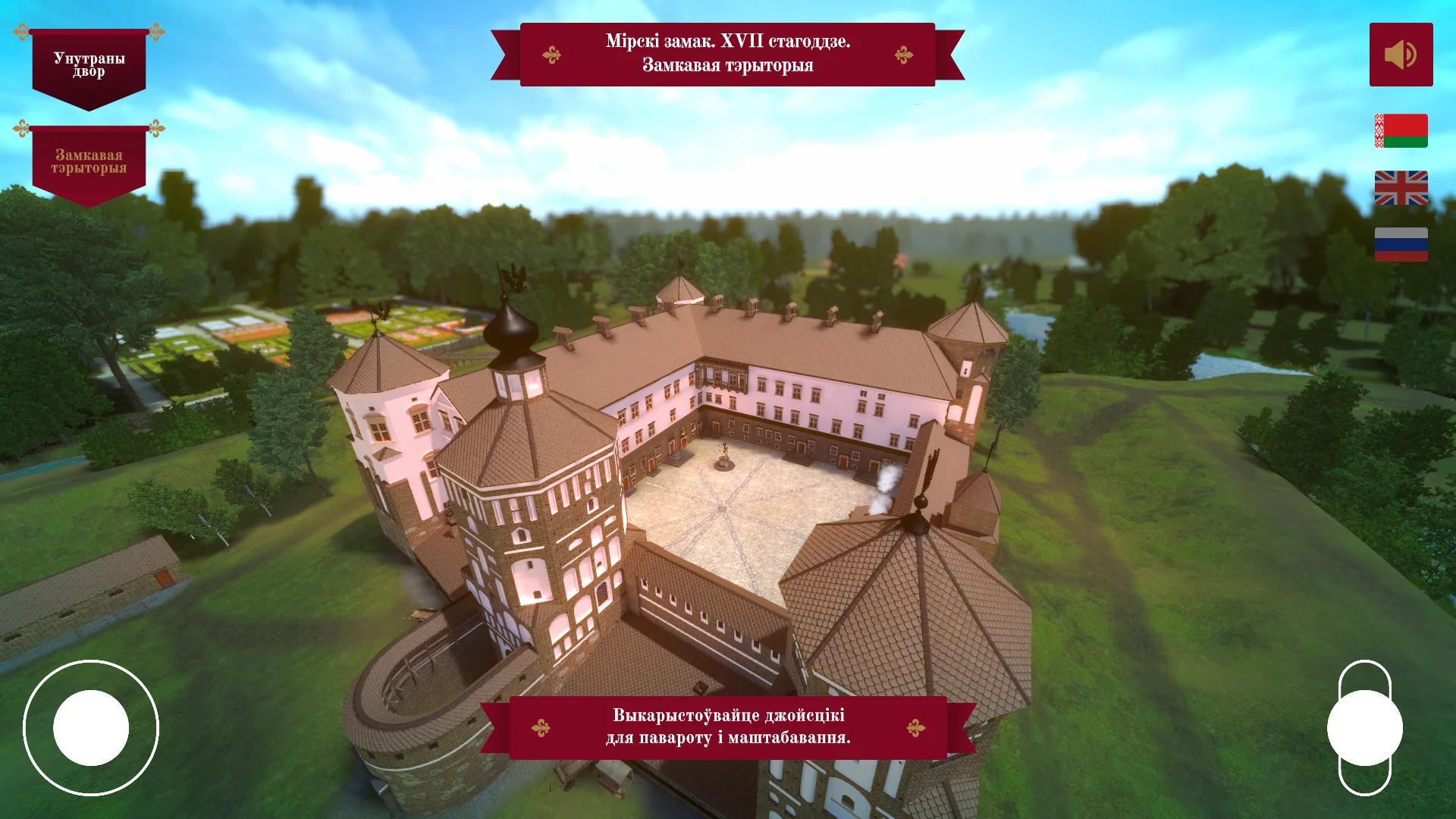
- Campus navigation. A map of the buildings and grounds helps newcomers find classrooms, the library, or the cafeteria without asking security. This relieves staff and reduces lateness.
- Service speed. Common requests—where an office is, how to get a certificate, what the working hours are—are resolved in a couple of taps. Staff stop being distracted by routine and focus on their actual tasks.
- A modern image for the university. A digital kiosk at the entrance is part of the institution's brand. Visitors remember the tech-savvy approach, and it strengthens the university's reputation as innovative.
Each kiosk is tailored to a specific building and the university's particular needs. We don't deliver a "box"—we design scenarios around your processes and launch a solution that genuinely simplifies the day for visitors and staff.
Kiosk Formats for Universities: From Scheduling to Navigation
During the peak of the admissions campaign, a university meets hundreds of applicants a day.
Without a clear system, the queue turns into a crowd, staff answer the same questions instead of working with documents, and future students get stress instead of a first impression of the institution.
Different kiosk formats help solve this. They address three tasks: streamline the flow, remove routine, and orient visitors across a large area. Below is a summary of the formats and their value to the admissions committee.
| Format | For Whom | What It Provides |
|---|---|---|
| Electronic queue | Applicants with documents waiting to be seen | Transparent order, no crowding outside offices, reduced staff workload |
| Visit scheduling | Those arriving in advance or planning their day | Fixed appointment times, fewer idle periods and repeat visits |
| Information kiosk | All visitors with questions about admission rules | Quick answers at any time, staff relieved of routine questions |
| Navigation kiosk | Applicants on a large campus | Map of buildings and classrooms, fastest route to the required office |
Such an ecosystem of 2–4 kiosks pays off within the first season: the admissions committee processes more applications without expanding staff, and applicants get a modern service.
We design and implement these formats around the needs of each specific university—from a single kiosk at the entrance to a full set with shared analytics on visitor flow.
How We Develop a Kiosk: 6 Steps to Launch
To ensure a kiosk genuinely simplifies electronic queueing and scheduling, development can't be left to chance. We've structured the process so you can see the results at every stage and understand what's happening—from the initial brief to launch and ongoing support.
- Brief and immersion in the task. We analyze who will use the kiosk—applicants, students, visitors—and which scenarios it must cover: scheduling an appointment, electronic queue, certificates, or navigation. We document the requirements and agree on timelines.
- Prototype and screen logic. We show the structure of the future screens and the user journey before writing any code. You can see how a person will select a service, take a ticket, and book an appointment without an administrator's help.
- Design mockup. We adapt the interface to the university's style and touchscreen: large buttons, clear hints, comfortable contrast. We take into account that people of different ages will use the kiosk.
- Development and integration with your services. We configure the electronic queue, schedule, and appointments. We integrate the kiosk with your database so visitor data doesn't have to be entered manually.
- Testing on real scenarios. We check peak load, network failures, and simultaneous bookings. We make sure the system stays stable on the busiest day—for example, during document submission.
- Launch and support. We install the kiosk, train staff, and stay in touch. After launch, we monitor operations and promptly update scenarios if the schedule or list of services changes.
The result is a turnkey working kiosk—with an intuitive interface, reliable electronic queue, and support that doesn't leave you alone with technical issues.
What's Included in the Delivery: A Package for the University
The package for a university isn't a "box of software" but a complete turnkey solution: electronic queue, appointment scheduling, and information screens are already configured to your processes. You don't need to hire programmers or dig into technical details—everything works from day one.
The delivery package includes:
- Electronic queue software — configured for the admissions committee, dean's offices, library, or any other department.
- Server side and data protection — deployed on your hardware or in the cloud, with backup configured so appointment data is never lost.
- Touchscreen kiosks and information panels — delivered, installed, connected to your network and systems; everything is calibrated and tested in advance.
- Administrative panel — manage queues, schedules, reception windows, and reports through an intuitive interface, no technical knowledge required.
- Instructions for staff and students — short guides on how to book, take a ticket, and call a specialist; they can be printed or displayed on screen.
- Staff training — we conduct training sessions for administrators, operators, and dean's office staff: how to launch booking, handle an unusual situation, and generate a report.
- Technical support and maintenance — we handle updates, stability monitoring, and staff questions; in case of a failure, we respond within the agreed time and restore operations.
The result is a package that's immediately integrated into working processes: students book themselves, queues move faster, and management has up-to-date statistics on department workload.
No hidden add-ons or extra investments—only what's actually used in the university's daily operations.
Case Study: How a University Eliminated Queues with Kiosks
Queues at the dean's office are a classic pain point for any university. Students lose hours to get a certificate or book a consultation, while staff are forced to work flat out during peak days.
This not only erodes student loyalty but also creates reputational risks: negative reviews about a university spread across social media instantly. We solved this problem for a major university using interactive kiosks and an electronic queue.
Technological University approached us in the middle of the admissions campaign: applicants were creating a crush in the corridors, and parents were generating a flood of calls to the admissions committee.
Our team audited the processes and proposed a solution: install kiosks with an electronic queue that lets people take a ticket, book a consultation, and print a certificate in a couple of minutes.
The system was integrated with the university's internal database so students could see the current schedule and office workload. The rollout took just three weeks—without stopping the work of the admissions committee or the dean's office.
The results exceeded expectations. Queue waiting time dropped by 70%—from 25 to 7 minutes. 85% of all requests began going through the kiosks, and the workload on staff decreased by a third: the freed-up time was redirected to individual work with students.
Peak throughput doubled, and complaints about queues virtually disappeared. Additionally, we set up an analytics system that shows the real-time load of each building.
Six months later, the university ordered kiosks for two more buildings and integrated the system with electronic document management.
This case confirms that proper implementation of an electronic queue relieves the pain of students and staff, and the investment pays off through time savings and improved service quality. If your university faces a similar situation—we're ready to adapt the solution to your processes.
What If You Need a Custom Kiosk for Your Specific Task?
Yes, that's not a problem. Most universities run their own internal processes, and a ready-made off-the-shelf model rarely covers all the needs. You have your own visitor flows and scenarios: admissions scheduling, timetables, navigation across buildings, certificate issuance. We take this into account and build the kiosk around your specifics—not the other way around.
It all starts with analyzing the task: who will use the kiosk and why, where it will be placed, and what operations need automation. Based on this, we design interfaces for different audiences—applicants, students, faculty, or conference visitors.
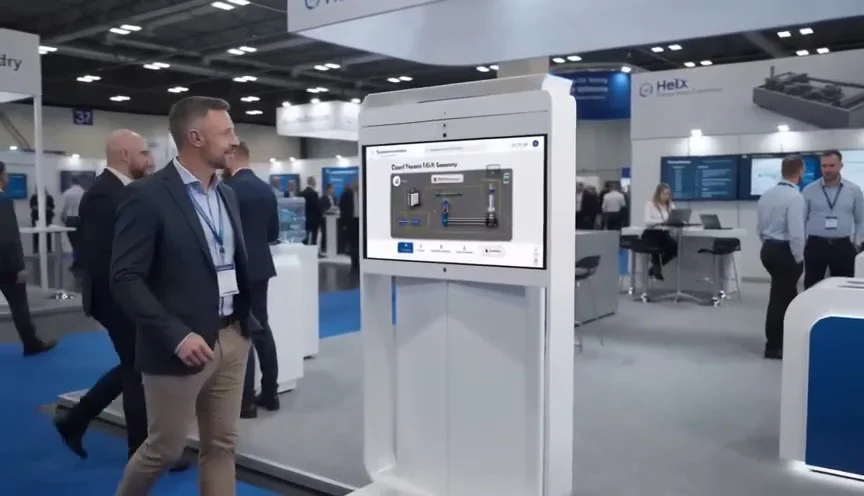
We select the hardware and enclosure for the installation site: compact floor stands, wall-mounted panels, or vandal-resistant housings for high-traffic lobbies.
A custom solution isn't limited to a "general information" menu. The kiosk can be connected to the university's internal systems: display the live schedule, accept consultation requests, help find the right office or classroom, show event information.
We tailor functions to your scenarios—from a simple directory to a full-fledged electronic assistant.
We don't try to sell a "standard project we've already done a hundred times." On the contrary, for us it's normal when a task requires an unconventional approach: an unusual building layout, special security requirements, corporate identity, or high-load conditions.
That doesn't complicate the process—it just changes project details that we discuss and lock in early.
The result is a kiosk that looks like part of your university and solves your specific tasks—not abstract "generic" functions. We agree on every stage, confirm timelines and costs before work begins, and stay in touch and support the system after launch. You don't need to adapt to the product—we adapt to you.
Frequently Asked Questions About Kiosk Implementation and Setup
When ordering a kiosk for a university, clients most often ask the same things. Here are answers to the key questions so you know how the project will go from day one.
How quickly does implementation go, and won't it interfere with the academic process?
Implementation is done in stages, at a time convenient for you—for example, during holidays or at night. We don't stop the university's operations: first we set up one kiosk, test it with your electronic queue and scheduling, then launch the remaining points.
Will the kiosk work with our existing systems?
Yes. We build the software around your infrastructure: we connect the kiosk to databases, synchronize it with schedules and the booking system. You won't need to replace your familiar tools—everything will work in a single window.
What guarantees and support are there after launch?
We provide a warranty on both hardware and software. We train staff, hand over instructions and management access. A hotline remains after launch—if needed, a specialist visits the site and resolves the issue within an agreed timeframe.
How secure is student and staff data?
We operate in compliance with personal data regulations. Access to information is role-based, and data transmission is protected. All data stays within the university's perimeter—it doesn't go to third parties or get used for any other purpose.
How does payment work and what's included in the cost?
The budget is fixed before the work begins, with no hidden surcharges. Payment is in stages: after the project is approved, after the prototype is ready, and after the kiosk goes live. You always see what you're paying for and what stage the project is at.
If your question isn't listed here—write to us. We'll respond within one business day, and if needed, prepare an individual proposal for your university's tasks.Let's Discuss Your Project and Find a Solution
At a university, queues at the dean's office, admissions committee, and other departments eat up hours of staff time and students' patience.
An electronic queue at a kiosk helps bring order, but the system must account for your rules: priorities, booking with specific specialists, notifications. That's why we start with a conversation about your task, not a formal technical specification.
We've been making interactive kiosks for educational institutions for over 10 years—we work remotely, so we're ready to discuss a project from any city.
We have ready-made solutions for electronic queueing and scheduling, so we can name the cost and timelines quickly, even before a detailed specification. And after the consultation, you'll get a concrete solution, not vague "ranges."
For a cost estimate, just let us know:
- what task we're solving: electronic queue, appointment scheduling, or notifications;
- how many students and staff will use the kiosk daily;
- which windows, offices, or specialists are involved in the intake;
- whether preferential categories or priorities need to be considered;
- your desired launch date.
In response, we'll send a commercial proposal with two options: a minimum one and an extended one. Within one business day, you'll receive the cost estimate, timelines, and a recommendation on equipment composition. After that, it's just a matter of agreeing on the details—and we'll start the work.
Leave a request on this page—let's discuss your project and find a solution that works for you and your visitors.