

Why does a regular kiosk for a museum lose visitor attention?
In a museum, a visitor spends on average an hour to an hour and a half, but lingers at each exhibit for only minutes. A regular kiosk for a museum that shows long texts and menu buttons often goes unnoticed — guests walk past because they don't see a reason to stop.
As a result, the museum loses the opportunity to tell the exhibit's story more deeply, and the visitor leaves with the feeling of a formal inspection rather than a living impression.
Why does this happen? Classic kiosks are arranged like an e-book: dense text, small font, strict linear navigation from section to section. The modern visitor is used to fast visual interaction — gestures, pictures, short videos.
So a boring interface fails to spark interest, and museum navigation in such a form only formally shows a map but does not help explore the exhibition.
For the museum, this means lower visitor engagement and inefficient use of space: expensive equipment sits idle, while guests don't get answers to their questions.
In the worst case, the kiosk becomes an obstacle — a queue forms at the entrance, and inside the halls people get lost and waste time searching for the right room.
An engaged visitor, by contrast, spends more time at the exhibits, returns again, and brings friends — this directly affects reputation and attendance.
An interactive kiosk for a museum solves this problem. It holds attention through clear scenarios that adapt to the visitor — from a short overview for those in a hurry to deep immersion for the curious.
Museum navigation becomes a natural part of the story rather than a separate reference guide. We design such kiosks so that every minute at the screen works toward the impression, memorability, and the desire to return.
What an interactive terminal will give your exhibition: 5 benefits
An interactive terminal solves five tasks of your museum at once — from holding attention to saving resources. Here is what you get with its installation.
The first benefit is growing interest in the exhibition. The terminal engages visitors through interactive scenarios, quizzes, and additional content. People spend more time examining the exhibits and share their impressions more actively.
The second result is increased dwell time. With interactive accompaniment, guests stay 20–30 minutes longer — studying materials, answering questions, and returning to the display cases. This boosts satisfaction with the visit and the desire to come again.
The third benefit is collecting visitor data. You see which exhibits are in demand, how long people linger at each zone, and what interests them. Based on this data, it becomes easier to improve the exhibition and build tour programs.
The fourth point is savings on staff. The terminal automates standard tour routes and answers visitors' questions, freeing employees for more valuable tasks — working with groups and running signature programs.
And the fifth component of success is improved navigation. An interactive map with exhibit search and individual routes reduces the time spent finding halls, lowers the load on administrators, and makes the visit more comfortable.
Together, these benefits create an effect that is impossible to achieve with ordinary stands — an engaged audience, measurable indicators, and an exhibition that works for you.
Museum kiosk formats: which one to choose for your task
Choosing a kiosk format for a museum starts not with the equipment, but with a question: what should visitors do — find an exhibit on their own, explore a topic more deeply, or share an impression?
This determines whether it will be a floor-standing terminal at the entrance, a wall-mounted screen in the gallery, or an interactive table in the rest area.
We have broken down the main formats by task so you can quickly estimate which kiosk for a museum fits your exhibition. The table is not about hardware specifications, but about the benefit for visitors and for your team.
| Format | Who it's for | What tasks it solves | What result the museum gets |
|---|---|---|---|
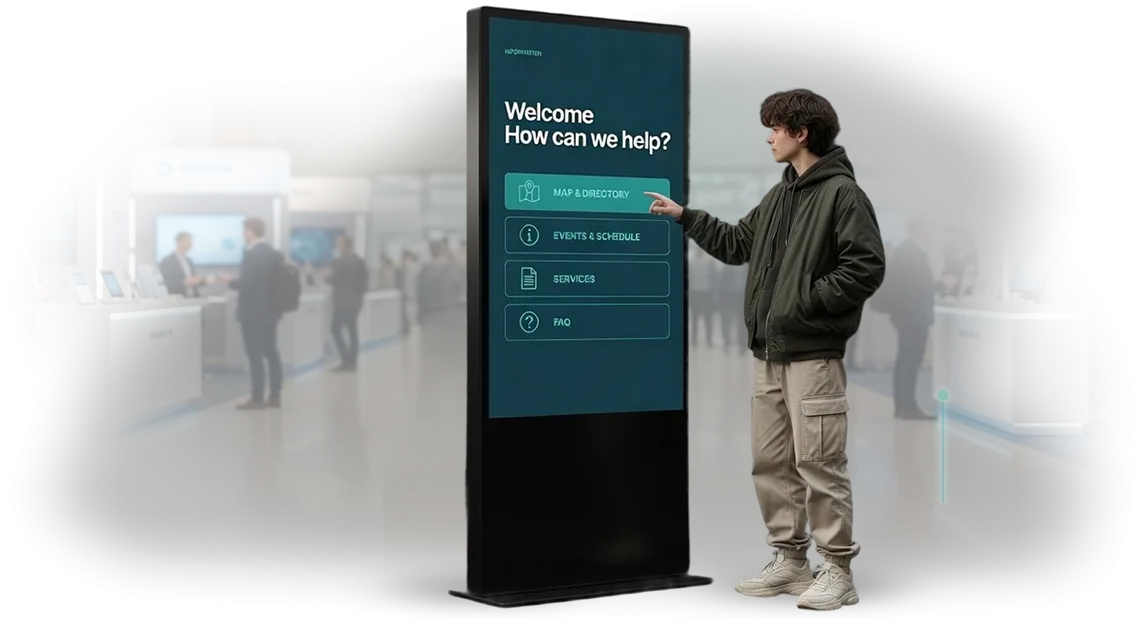
| Floor-standing kiosk | Visitors at the entrance, high-traffic flows | Hall navigation, ticket purchases, tour schedule | Fewer ticket-office queues, visitors find the desired exhibit faster |
| Wall-mounted kiosk | Exhibitions in narrow passages, small halls | A supplement to exhibits: history, photos, videos, archival materials | Deeper immersion in the topic, visitors stay longer in the hall |
| Touch table | Families with children, interactive zones | Joint exploration of maps, game quizzes, viewing exhibit details | Higher engagement, emotions that visitors take away with them |
If you need a universal option, a floor-standing touch kiosk will work: it acts both as a navigation point and as an information center. Wall-mounted panels are good where it's important to preserve the airiness of the exhibition and not overload the space.
And a touch table becomes a center of attraction for a group — it is the best choice for children's and family programs.
Our engineers will select the format to match your hall layout, visitor numbers, and the tasks of your exhibition. Professional equipment and refined tools are simply a way to give visitors stable and fast access to information at any time the museum is open.
The key point is that we will calculate in advance how the kiosk fits into the logic of your museum: where to place it, what interface to build so that it helps rather than hinders the attendants.
If you are unsure about the choice — just write to us, and we will show on real projects how different formats solve similar tasks.
How the development and launch of a visitor system works
We don't chase speed for its own sake — each stage is structured so that you understand what is happening and can influence the result.
Our engineers, designers, and a methodologist take part in the process, and you act as the project lead: you make key decisions and see all intermediate results.
-
Brief and immersion in the task. We discuss what the kiosk should solve: reduce queues, tell about exhibits, guide visitors along a route. We record expectations and success criteria.
-
Audience and scenario analysis. We look at what guests come — families, tourists, school groups. We determine what matters to them: fast search, a simple interface, large text, or interactive hints.
-
Concept and prototype. We build the structure of sections and the logic of screens. At this stage, you see how a visitor will move through the scenario and can adjust the emphasis before development starts.
-
Design and content approval. We choose a design that fits into the exhibition and prepare texts and materials. You approve the mockups — and only after that do we move to technical implementation.
-
Installation and setup. We deliver and install the terminal, connect it to the network and system, and configure it for the specific location: viewing angles, brightness, volume, standby mode. We verify that the kiosk runs stably from day one.
-
Staff training. We show employees how to manage the system, change content, and handle typical visitor questions. So that support doesn't fall on your shoulders.
-
Support and development. After launch we stay in touch: we monitor performance, update materials, and promptly resolve any difficulties. The kiosk lives and grows together with the exhibition.
This sequence helps avoid typical surprises — when it turns out the interface is inconvenient or installation is impossible in the planned spot. You see the result in advance and accept it stage by stage, not "all on one day."
What is included in the delivery package of an interactive solution
The delivery package includes everything needed to get the kiosk working from day one. The museum doesn't have to look for contractors separately, buy equipment, or figure out the technical side — we assemble a turnkey solution.
- Equipment: touch panels and enclosures protected against active use by visitors. Everything is already configured and tested before delivery.
- Software: the kiosk interface and a content management system with licenses. You can update exhibit information without involving developers.
- Design content: screen design and content tailored to the museum's style. We will prepare the navigation structure, texts, and hints so visitors can easily find their way.
- Installation and connection: engineers will come to the site, install the kiosk in the right place, and check that all functions work. You won't have to coordinate several crews.
- Staff training: a short instruction for administrators and hall attendants. They will learn to turn on the kiosk, change content, and resolve simple visitor questions.
- Documentation: clear operation and maintenance guides. Everything you need to know about the kiosk is in one place, without technical jargon.
- Warranty and support: an official warranty on the equipment and the software part. If something fails, we will respond quickly and restore operation so the kiosk doesn't sit idle.
The main thing for a museum is a predictable result: the kiosk works, visitors use it without queues or prompts, and employees don't have to be distracted from their work. We take the technical side upon ourselves.
Case study: an interactive guide at an exhibition center — sales growth
Let's take a real example from our team's practice. For the exhibition center ExpoGrad — essentially a museum of modern exhibitions — we developed interactive kiosks that became a full-fledged guide for visitors.
Before they appeared, guests got lost in the halls, didn't understand how a tour was better than a self-guided visit, and left having bought only a regular entry ticket. Tour sales were stuck in place, even though the flow of people was steady.
We installed the kiosks in the lobby, in the path of every guest. On the touch screen, a person chooses an interesting topic — from the history of the building to rare exhibits — and sees what exactly will be shown on the tour.
The kiosk immediately offers the nearest session time, books a spot, and issues a ticket without a queue or the help of an administrator. This way the guest moves from "just looking" to "learning more" in one click.
The implementation results proved measurable. In the first six months, tour sales grew by 35%, and the share of visitors who switched to the tour format after interacting with the kiosk nearly doubled.
The average ticket value also grew — guests more often bought audio guides and souvenirs. Ticket-office staff stopped spending time on consultations and paperwork, so they gained the opportunity to focus on visitors' live questions.
The main thing we see in this case: the kiosk works not as a map or reference guide, but as an instrument for selling experiences. It converts interest in an exhibit into a concrete action — booking a tour, buying a ticket, a positive impression.
The center's manager noted that guests began spending 20% more time at the exhibition and returned more willingly with new routes. This is exactly what drives revenue growth right after launch and sustains it in the long run.
Frequently asked questions about developing interactive terminals
Before ordering an interactive terminal, museum managers have the same questions: how much it costs, how quickly it can be implemented, whether the equipment will become a burden for staff, and how well it fits museum-specific needs. Below are answers to the main concerns we hear most often.
How much does developing a kiosk for a museum cost?
The cost depends on the number of locations, functionality, and content complexity. We prepare a transparent estimate: it includes design, development, equipment purchase, and launch — with no hidden fees.
For small museums, a budget-friendly solution can be selected, and for large venues, a scalable package.
What are the implementation timelines?
A typical project takes 4–8 weeks from the approval of mockups. We fix the deadlines in the contract and deliver the work in stages — you see intermediate results and control the process. If you need it faster, we'll discuss a separate schedule.
Is it difficult to operate the terminals in daily work?
No. The terminals run in automatic mode: turn them on, and they are ready to receive visitors. Staff can learn in a single day, and the screens are easy to clean and maintain. Technical support stays in touch, and if needed, we resolve issues remotely.
How do you adapt the solution to museum-specific needs?
We take into account the style of your exhibition, the age of the audience, and the features of the premises. We make the interface intuitive, with large elements and the ability to serve people with different needs.
Content is easy to update without involving developers — the museum itself changes descriptions, posters, and routes.
We start every project by immersing ourselves in the museum's tasks, so the terminal becomes a natural part of the exhibition rather than a standalone device. If your question remains unanswered — write to us, and we'll suggest a solution for your situation.What you get after ordering: a complete package for launch
After the project is delivered, you get not just a device, but a full-fledged working tool for your museum. We take on all stages: from equipment setup to launch and team training. As a result, the kiosk works from day one, and employees handle it with confidence.
Here is what the complete package includes:
- A ready turnkey solution. The kiosk is installed, configured, and loaded with your content. All that's left is to turn on the power — and it is ready to welcome visitors.
- Staff training. We conduct a short hands-on session: how to start, restart, change materials, and act in typical situations.
- Technical support after launch. We answer questions, fix faults remotely, and update software — without pausing the exhibition's operation.
- Documentation for employees. Clear operation and administration instructions that are easy to find and use.
- Content management. We show how to update posters, exhibit descriptions, and news on your own, without involving developers.
- Warranty service. If necessary, we extend the maintenance contract and connect remotely without delay.
- Usage report. We share which sections visitors view most often — this helps improve the exhibition and visitor routes.
After launch, we stay in touch. A kiosk for a museum is not a one-time delivery, but a long-term tool, so we are invested in it delivering real value. You get a clear system, a trained team, and a reliable partner for growth.
What to do if you have specific requirements for equipping your hall?
Museum halls are rarely standard: columns, niches, security zones, special lighting, or historic decor often prevent installing a typical stand.
If you're worried that a kiosk for a museum "won't fit" into the space, this is a solvable task, not a reason to give up a digital guide. We design structures based on your drawings and photos, so the terminal becomes part of the exhibition rather than a foreign object.
Customization of a kiosk begins not with a "beautiful enclosure", but with the question: what should happen in this particular hall?
One museum needs a floor-standing terminal with reinforced touch protection, another needs a wall panel that takes up no floor space, and a third needs a low cabinet accessible to children and people using wheelchairs.
We select the format, size, and materials for your non-standard tasks, including unusual room geometry or special inclusivity requirements.
An individual solution involves not only hardware, but also interface design and content. If your exhibition changes every season, we build a system where you update texts and images yourself without a programmer.
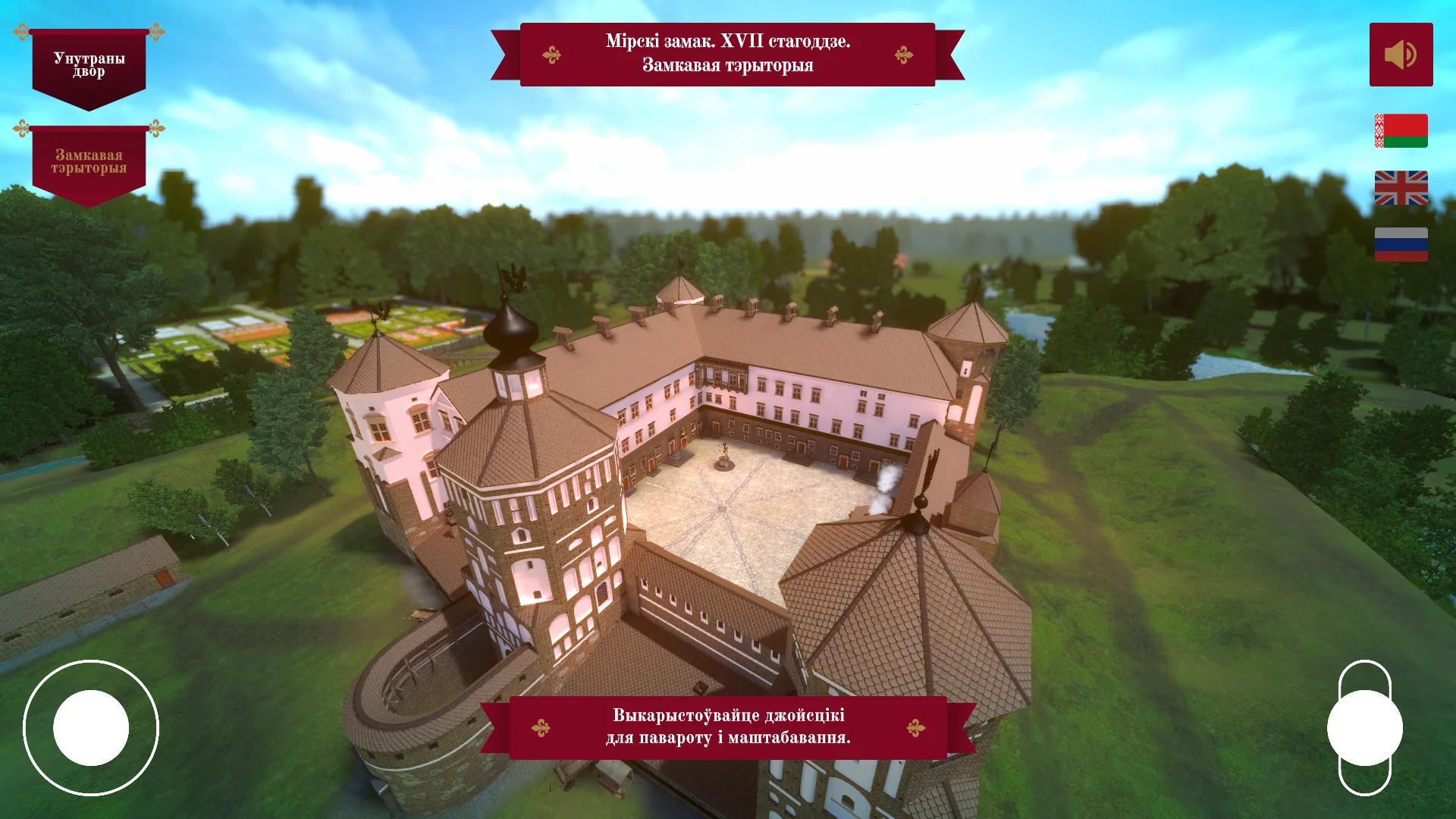
If you need an unusual scenario — for example, a quiz for school groups or a multilingual audio guide synchronized across halls — we implement it on proven tools, but for your scenario, not "like everyone else's."
The key point is that we don't force your hall to fit a standard solution; instead, we build the kiosk around the logic of your exhibition. At the start, we conduct a short audit of the premises, clarify the visitor flow, and identify the points where people stop the longest.
Then we propose a mockup and approve it before production, so you know exactly what everything will look like before installation. This eliminates the risk of "surprises" and unnecessary rework costs.
In the end, you get not just an information stand, but a working tool that increases engagement and relieves your staff.
Specific requirements are our usual format of work: we have already built kiosks for halls with protected stained-glass windows, for temporary exhibitions, and for spaces with limited floor area. Describe your task — we'll take care of the rest.