

Touchscreen Kiosk for a Museum: How to Keep Visitors Engaged?
Modern museums are increasingly losing the battle for visitors' attention. Static exhibits and descriptive plaques hold interest for only a few seconds — a guest's gaze glides past and moves on to the next hall.
As a result, the museum gets foot traffic but loses depth of engagement: the visitor doesn't connect with the story, doesn't remember the details, and doesn't come back.
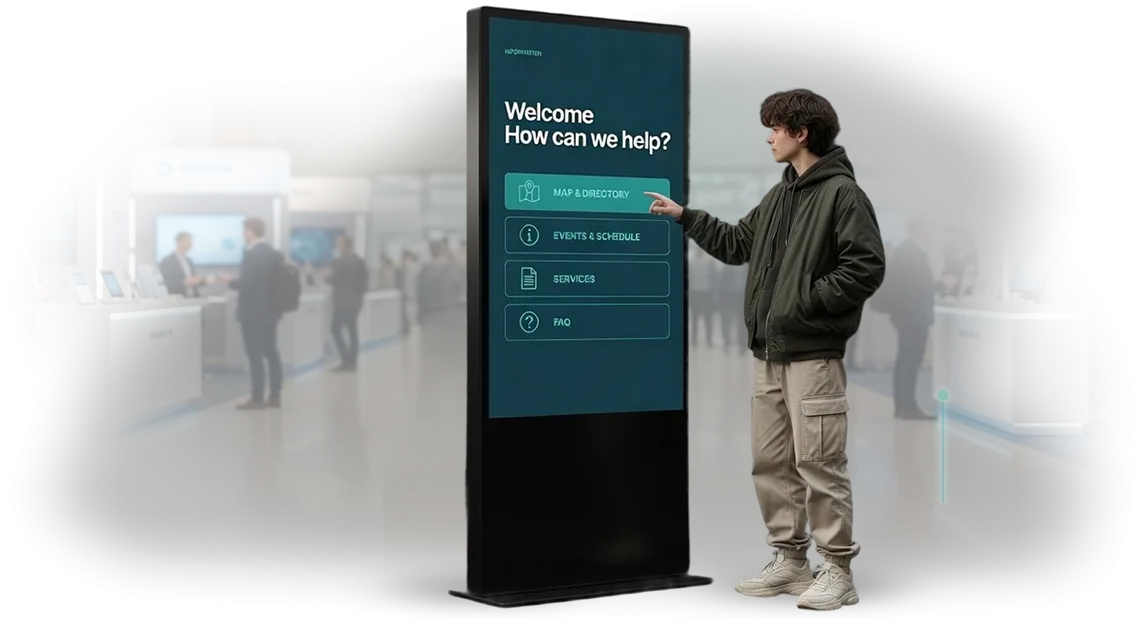
A touchscreen kiosk for a museum turns passive viewing into live interaction. Instead of reading text on a wall, visitors choose their own path: opening photographs, watching videos, answering questions, comparing eras.
This holds attention several times longer — guests immerse themselves in the exhibition and walk away with an emotional experience they then share with friends. That's how museum interactivity builds brand awareness without an additional advertising budget.
Interactive kiosks for museums also solve a more pragmatic problem: digitizing exhibitions frees staff from repetitive explanations and lets museums show more material without expanding floor space.
A single kiosk can replace dozens of printed displays and is always up to date — content is easy to refresh for new exhibitions and temporary projects.
We develop these solutions around the needs of each specific museum: we craft scenarios, interface, and content so that interactivity enhances the collection rather than distracting from it.
Our engineers use refined, proven tools and professional equipment, so the kiosk runs reliably even on days of peak attendance. In the end, the museum sees higher visitor engagement, and the touchscreen kiosks become a natural part of the exhibition.
What an Interactive Kiosk Gives a Museum and Its Visitors
Visitors come to a museum for experiences, not for text plaques. A standard display with an exhibit description holds attention for a few seconds, and then the visitor moves on.
An interactive kiosk turns viewing into a live dialogue: visitors choose what to see, in what order, and how deeply.
We've been helping museums solve this challenge for more than ten years. We've designed solutions for exhibition spaces, local history collections, and children's exhibits — and every time we see the same effect: guests stay longer, share their impressions, and come back again. Below are the concrete benefits the museum gains.
Longer Stays, Greater Revenue
When visitors interact rather than just look, the time they spend in the hall grows 2–3 times. They tour the exhibition at a leisurely pace and return to exhibits that caught their eye.
And the longer a guest stays in the museum, the more likely they are to visit the café, the gift shop, or attend the next exhibition.
Deeper Immersion in Content
Video, animation, historical photographs, and archival materials come to life on screen. Guests can see exhibit details that are invisible behind the display glass, or listen to a guide's narration at their own pace.
For schoolchildren, it's a chance to explore a topic independently; for adults, a way to rediscover a familiar collection.
Convenient Navigation — Fewer Questions for Staff
A kiosk with a museum map and exhibit search saves visitors' time and relieves the staff. Guests plan their own route, see which hall holds what, and find what they need without asking an attendant. This is especially important in large museums with complex layouts.
Repeat Visits and Positive Reviews
Interactive elements are memorable — and guests tell their friends about the museum and share it on social media. This brings in new visitors without extra advertising spend. Many return to show the museum to their children or out-of-town guests.
We build kiosks that a museum is proud to place in the center of a hall: a neat enclosure, an intuitive interface, and a design that fits the exhibition. Content is easy to update, and technical support keeps everything running smoothly.
For the Museum of Urban History project, the new kiosks took over three halls — and within the first month, guests were lingering at each one twice as long on average.
Consider how much time and budget a museum loses when visitors walk past. Our engineers will plan zones for different exhibits and match content to your collection. Contact us — we'll show you examples and discuss your museum.
Interactive Solution Formats for Exhibitions
Visitors engage with an exhibition in different ways: some stop at display cases, some come with children, some hurry toward the exit. The kiosk format determines how easily an exhibit "speaks" to each of them.
We select the configuration based on the type of hall and audience so the digital layer complements the exhibition rather than getting in the way.
Selecting a Format for Your Hall
| Format | Ideal for | What it gives the client |
|---|---|---|
| Floor stand | Entry zones, large halls | Greets the visitor, creates navigation, and engages from the first minute |
| Wall-mounted panel | Narrow corridors, exhibits along walls | Saves floor space, doesn't overload the room, works as a "live" display |
| Multitouch table | Family and children's tours | Brings visitors together, turning exploration into group interaction |
| Contactless screen | Interactive halls, inclusive programs | Touch-free gesture control — hygienic, striking, accessible to everyone |
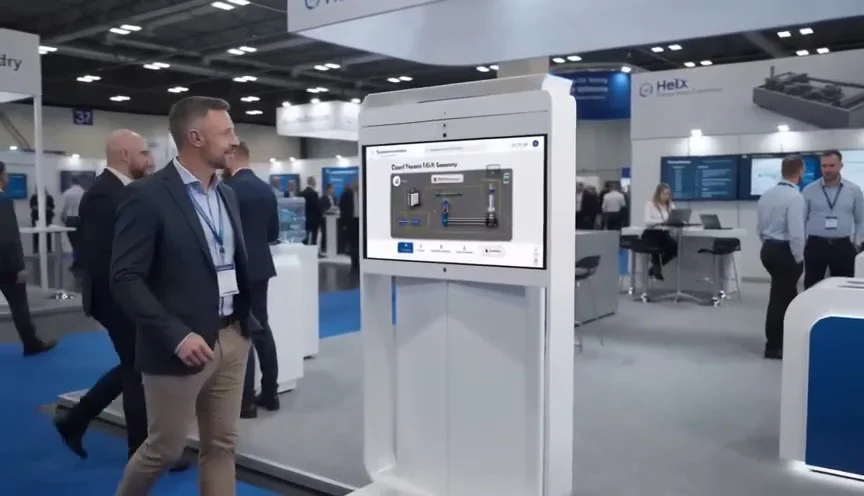
| Exhibition kiosk | Temporary exhibitions, trade show booths | Quick to install, easily adapts to new content and operating schedule |
Each row is a ready-made scenario: how the visitor approaches, what they see, and how they get engaged.
A floor stand works well as an entry point into the story, a wall-mounted panel as a complement to an exhibit, a multitouch table as a discussion hub, and a contactless screen as a highlight element.
We design the enclosure ourselves, select materials to match the exhibition style, and tailor the interface to the specific hall. One technical brief is enough — our team handles the rest, from sketch to on-site launch.
How the Development and Launch Process Works
We start with a brief — studying the exhibition, the hall's architecture, and visitor behavior. This lets us propose a scenario that blends naturally into the space and doesn't look like a foreign element.
Then we move to the prototype: at this stage, you see the future interface and the logic of the screens. Once the prototype is approved, we create the design and build a content management system so you can update information yourself.
Delivery, installation, and setup are included in the project. Our engineers install the kiosk, connect the equipment, and test it under real-world conditions.
- Brief and space audit — we identify the kiosk's objectives and the exhibition's characteristics.
- Interface prototype — we show the screen structure and navigation logic.
- Design and development — we design the interface, program the logic, and assemble the content.
- Enclosure production and delivery — we manufacture the enclosure to custom dimensions.
- Assembly and installation — we install the kiosk, configure the equipment, and run testing.
- Content loading and training — we upload the materials and train your team on the system.
- Warranty support — we support the project after launch and update content on request.
After launch, we stay in touch: we respond quickly to requests, update content remotely, and visit the site when needed. You don't need a technical specialist on staff — we manage the entire process.
What's Included in the Interactive Stand Package
When you order a touchscreen kiosk for a museum from us, the delivery includes the complete interactive package — from the enclosure and screen to content and training.
You get a turnkey solution that can be powered on and used on installation day, without sourcing separate contractors for each component.
- Enclosure and touchscreen. A design that fits the exhibition, with protection from external impact and a comfortable tilt angle for visitors of different heights.
- Kiosk software. A management system with an intuitive interface, crash protection, and statistics on attendance and popular sections.
- Content for your exhibition. Ready-made materials: hall navigation, exhibit descriptions, photo and video assets, interactive scenarios.
- Content update system. Update information without calling an engineer — just upload new materials to a dedicated section and they appear on the kiosk.
- Documentation and guides. Instructions for startup, daily maintenance, and handling common situations — clear to any employee without technical training.
- Museum staff training. A hands-on session with your team: how to manage the system, change content, and quickly answer visitor questions.
- Warranty and technical support. The hardware and software are covered by warranty; support can be extended if needed for ongoing assistance.
In the end, the museum gets a self-contained stand that requires no special technical knowledge from staff and is immediately ready to operate.
Project Result: Growth in Visitor Engagement
The main pain point for museums isn't halls or collections — it's visitor attention. People walk through an exhibition in half an hour, don't pause at the displays, and leave without strong impressions. Attendance may remain decent, but emotional engagement is low.
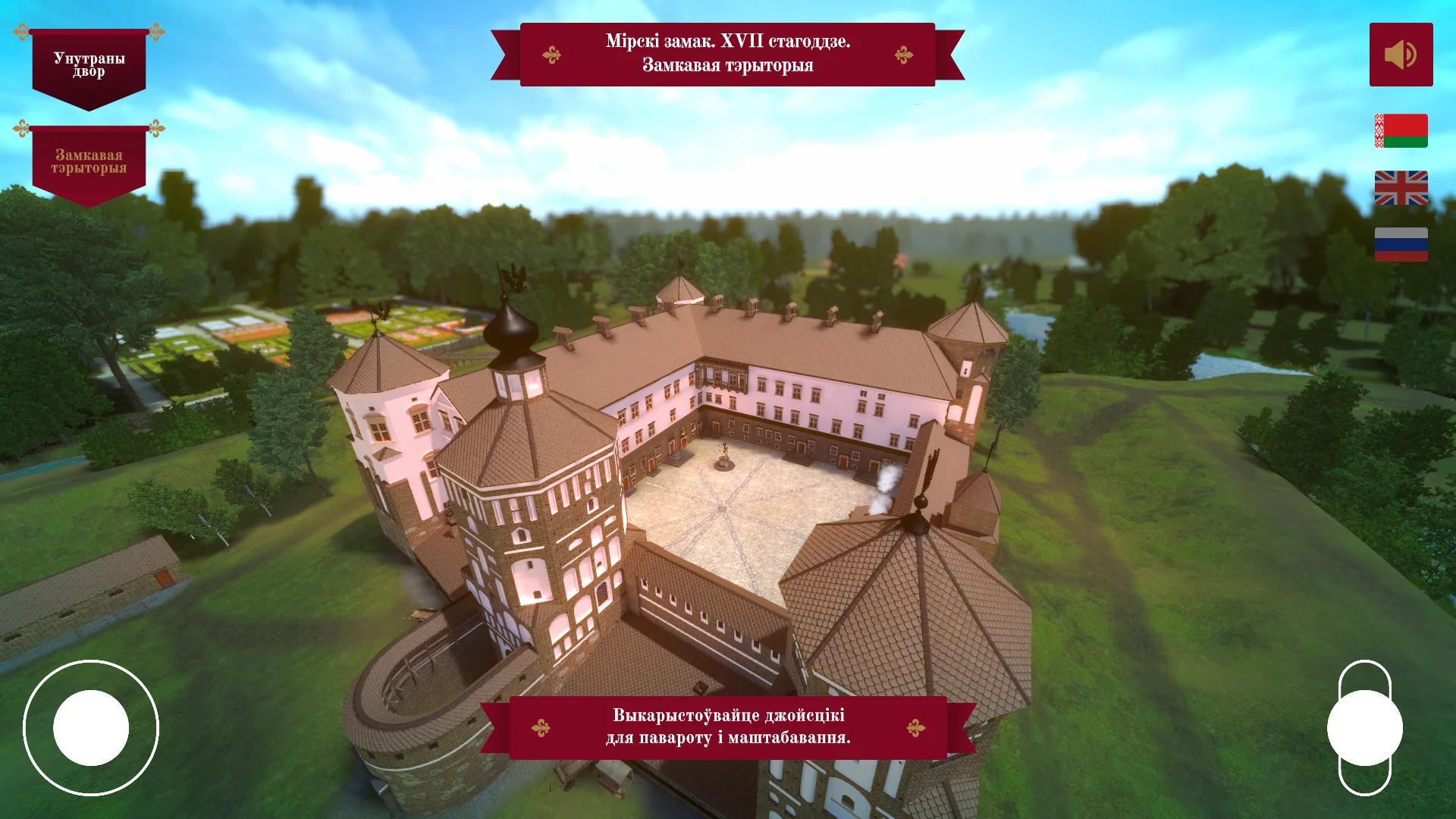
We solve this with scenarios that turn viewing into a dialogue. For the City History Museum project, we installed touchscreen kiosks: on the main screen, guests see a map of the halls, and each landmark exhibit has an interactive story and a children's quiz.
Together with the curators, we assembled content that complements rather than replaces the guided tour.
Implementation Results
Three months after launch, the share of guests who used the interactive features grew by 40%. On the first day the kiosks were running, more than 300 sessions were recorded in two hours — every second visitor tried the new format.
The interactive kiosk case confirmed: people seek out points of contact themselves when the content answers their questions.
Average time spent in the museum increased — guests began lingering longer in the halls, and tour guides stopped spending time explaining routes. The museum gained both higher attendance through repeat visits and a deeper connection between guests and the collection.
The best proof of the result is a repeat order: the system was expanded to the adjacent hall. Now the kiosks are used in both children's programs and temporary exhibitions.
How to Choose the Right Format for Your Task?
Choosing a kiosk format depends not on trends but on three things: your space, your audience, and your goals. A full-size touchscreen kiosk in a spacious lobby and a compact stand in a narrow gallery are different solutions, each with its own cost and effect.
So first, it's worth answering the question: where will the equipment stand, and how many people pass it daily?
The space determines the enclosure type and screen size. A hall with heavy visitor traffic needs a sturdy structure that doesn't create queues and withstands heavy use. For a small hall or a temporary exhibition, a mobile option works well — it can be moved, removed, or replaced.
Interactive equipment is best selected on site: we account for lighting, mounting height, and traffic routes, so the kiosk doesn't obstruct but blends organically into the exhibition.
The audience dictates the interface. For children's programs — large buttons and game-like scenarios; for adult visitors — an intuitive menu with quick access to content.
If many guests are international, we add language switching; if visitors with disabilities are expected, we design the screen height and tilt accordingly.
All of this affects the cost — not because "it's more complex," but because that's what makes the kiosk actually solve your problem.
The kiosk budget is made up of the format, content complexity, and support. A simple informational kiosk with a ready-made story will cost less than a multimedia center with video, animation, and game mechanics.
At the same time, choosing the right solution for the task often saves money: a large touchscreen isn't always necessary — sometimes a compact kiosk with a quality scenario is enough. We help find the balance and offer options that fit the budget without losing effectiveness.
Ultimately, the best way to avoid a mistake is to tell us what should happen in your hall: how many visitors, what content, what reaction you want to achieve. We'll analyze the space, propose 2–3 formats at different budget levels, and show what each one will give your museum.
This is free and non-binding — but you'll walk away with a clear understanding of which kiosk you need.
Frequently Asked Questions About Development and Installation
Any touchscreen kiosk is technology that operates in a public space and must withstand constant visitor attention.
That's why managers ask the same questions before ordering: what about the warranty, who handles maintenance, how quickly can content be updated, and what happens if it breaks. Below, we address the main concerns from the perspective of a museum or exhibition space.
What warranty comes with the kiosk and what does it cover?
We provide an official warranty on the equipment and workmanship — typically from one year. Maintenance and repairs are included for this period: if issues arise, you don't pay for the service visit or parts.
After installation, we hand over a guide that clearly explains how to check the kiosk and who to contact.
What happens if the kiosk breaks down?
We design kiosks with a safety margin: vandal-resistant enclosures, overheat protection, and stable power. Even if one module fails, the system keeps displaying content or alerts you to the problem in advance. Our engineers run remote diagnostics and visit the site when needed. Response times are set out in the contract.
How often does a touchscreen kiosk need maintenance?
A scheduled check once a quarter is usually enough: cleaning the screen, checking connectors, and updating settings — that takes 1–2 hours.
If the museum has high foot traffic, we recommend shortening the interval to once a month so the touch sensors always respond accurately and don't let you down on peak days.
How is content updated?
You can update the materials yourself through an easy-to-use admin panel, without a programmer: exhibit descriptions, event posters, hall maps, photos, and videos. Or we can handle content management for you.
Updates are applied remotely or on a schedule, so current information appears on all kiosks right away.
Can you adapt the kiosk to a non-standard space?
Yes, that's a standard task for us. We adjust the dimensions, stand, tilt angle, and mounting type to suit the specific hall: alcoves, columns, height restrictions, or exhibition layout. The kiosk can be floor-standing, wall-mounted, or built into an exhibition structure. Before production, we take on-site measurements or work from your drawings.
Ready to Strengthen Your Exhibition? Let's Start Today
When a visitor lingers at an exhibition for 5–7 minutes instead of rushing past in 30 seconds — that's already a win for the museum. An interactive kiosk turns displays into a living story: guests choose the narrative themselves, examine the details, and share their impressions. For you, that means growing interest in the collection and a reason to come back again.
We handle the entire journey — from idea to installation and launch. Turnkey kiosk development includes design, setup, and content, so you get a complete solution that fits your interior and runs reliably even at peak hours.
To make your decision easier, here's what you get right after reaching out:
- Interactive consultation: we'll recommend the format that suits your hall, theme, and audience — from a simple touchscreen to a game-based scenario.
- Budget estimate: a transparent quote with no hidden fees or "surprises" within a few days of the brief.
- Prototype of your future kiosk: you'll see what the screen and interface will look like before production begins.
- Delivery and installation plan: clear timelines so the launch fits easily into your events calendar.
- Staff training: your team will quickly learn how to manage content and update information without calling a programmer.
- Post-launch support: we stand by the museum, helping with updates and refinements as new ideas come up.
Submit a request — you can get a cost estimate for the kiosk right at the first consultation, and it's non-binding. We'll respond within one business day, ask a couple of clarifying questions, and offer a solution that fits your budget. Don't put it off: a museum that surprises gets chosen more often — let's start today.