

How an Interactive Screen Boosts Loyalty and the Average Check
A visitor to a shopping mall or public space spends up to 10 minutes searching for the right store, café, or exit. That is enough time for them to get tired, irritated, and leave without buying anything.
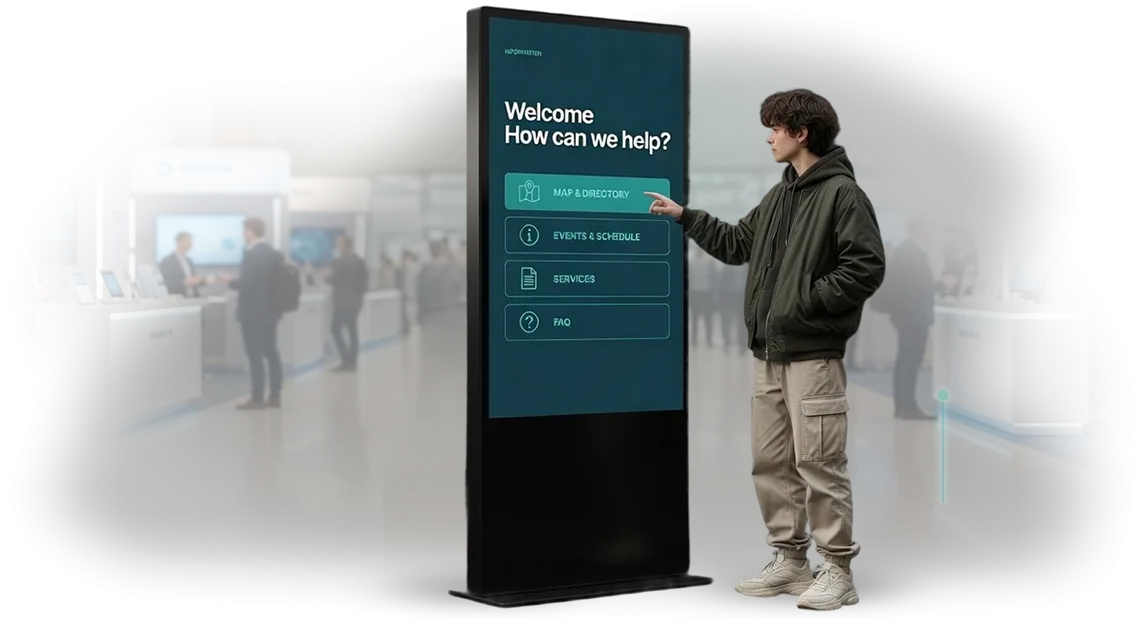
An interactive kiosk with a wayfinding function removes this pain point: the guest finds the route in 30 seconds, and their mood stays positive.
When a guest quickly reaches the right location, they are more willing to linger and make spontaneous purchases.
An interactive map with recommendations shows nearby cafés, new collections, and temporary promotions — so visitors see what they would have walked past without a prompt. As a result, the average check grows thanks to additional items the customer simply did not know about.
The wayfinding guide works to retain visitors: it offers not just one point but a whole walking scenario — "from coffee to the exhibition, then to the discount zone." People follow the route, spending 1.5–2 times longer in the space than they planned.
The longer a guest stays, the higher the chance of a repeat order for food, parking, or paid activities.
The convenience a guest experiences on the first visit builds loyalty long before they walk out the door. They remember that someone took care of them here and return a week later with friends or family.
The interactive screen works like a silent staff member who is always on duty, never gets tired, and is equally polite with everyone — this takes the load off administrators and improves service quality.
For a business owner, it is also a control tool: the kiosk shows which areas are in demand and which are idle, and suggests where to place advertising or strengthen navigation.
This way, an interactive kiosk stops being just a screen and becomes a revenue growth point — starting from the very first day of operation.
Interactive Wayfinding Formats for Any Task
Each venue has its own traffic logic and visitor flows. A shopping mall needs fast navigation between stores, an exhibition needs to engage visitors at the stand, a hotel needs comfortable self-service access to information.
That is why at our teamwe offer three interactive wayfinding formats — from a classic touchscreen kiosk to a floor-mounted structure with a presence effect.
The table below will help you figure out which format suits you best. We take into account the area, expected visitor flow, and usage scenario — and you get a clear tool that works toward your goals, not just stands in the corner.
| Format | Who It Is For | What It Gives the Customer |
|---|---|---|
| Touchscreen information kiosk | Shopping malls, museums, business centers | Fast navigation, map, object search; visitors find what they need without staff assistance, reducing the load on administrators |
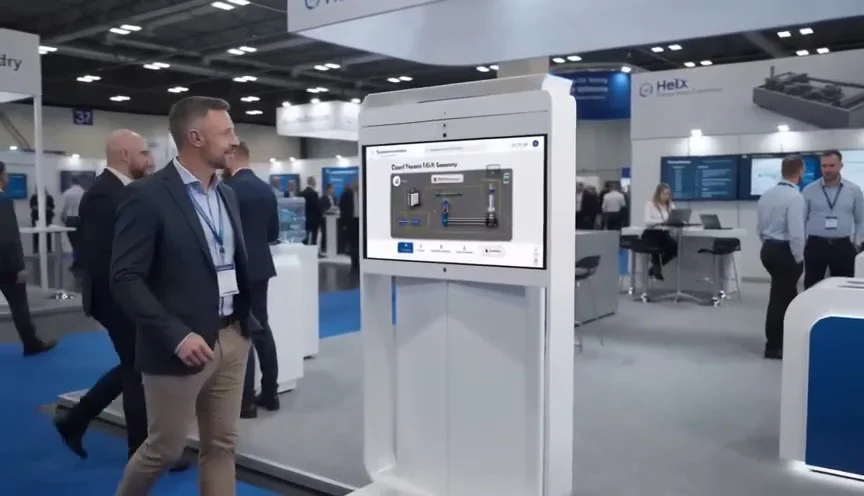
| Floor kiosk | Exhibitions, showrooms, event venues | Attracts attention, engages visitors in interaction, increases time at the stand and brand memorability — guests take photos themselves and share them |
| Interactive counter | Hotels, restaurants, clinics | The guest independently obtains information about services, routes, and promotions, while staff save time on repetitive questions |
Each format is not just "hardware" but a ready-made system: a well-thought-out touch-enabled interface and content that you can easily update without a programmer. Even an unusual floor-mounted structure remains manageable and reliable in operation.
Tell us where the wayfinding guide will be placed and what visitors should do — we will select a format for your space, budget, and expectations. You get a complete solution; all that is left is to launch it and start collecting results.
Development Stages of an Interactive Wayfinding Guide Without Surprises
Clients value predictability: timelines, budget, and results are clear from the start. Our team have structured the interactive wayfinding guide development process so you can see what happens at every step. No surprises — only agreed-upon commitments.
Work Stages
- Brief and task analysis. We find out who will use the kiosk and how, which locations and services to show, and which brand style to follow. This lays the right foundation.
- Plan, cost estimate, and timelines. We lock in the scope of work and dates. You get a plan without hidden items, and we get a clear understanding of the tasks.
- Mockup approval. We present the screen structure and navigation logic — from the main menu to the map. You make edits before development starts, when it is cheap and fast.
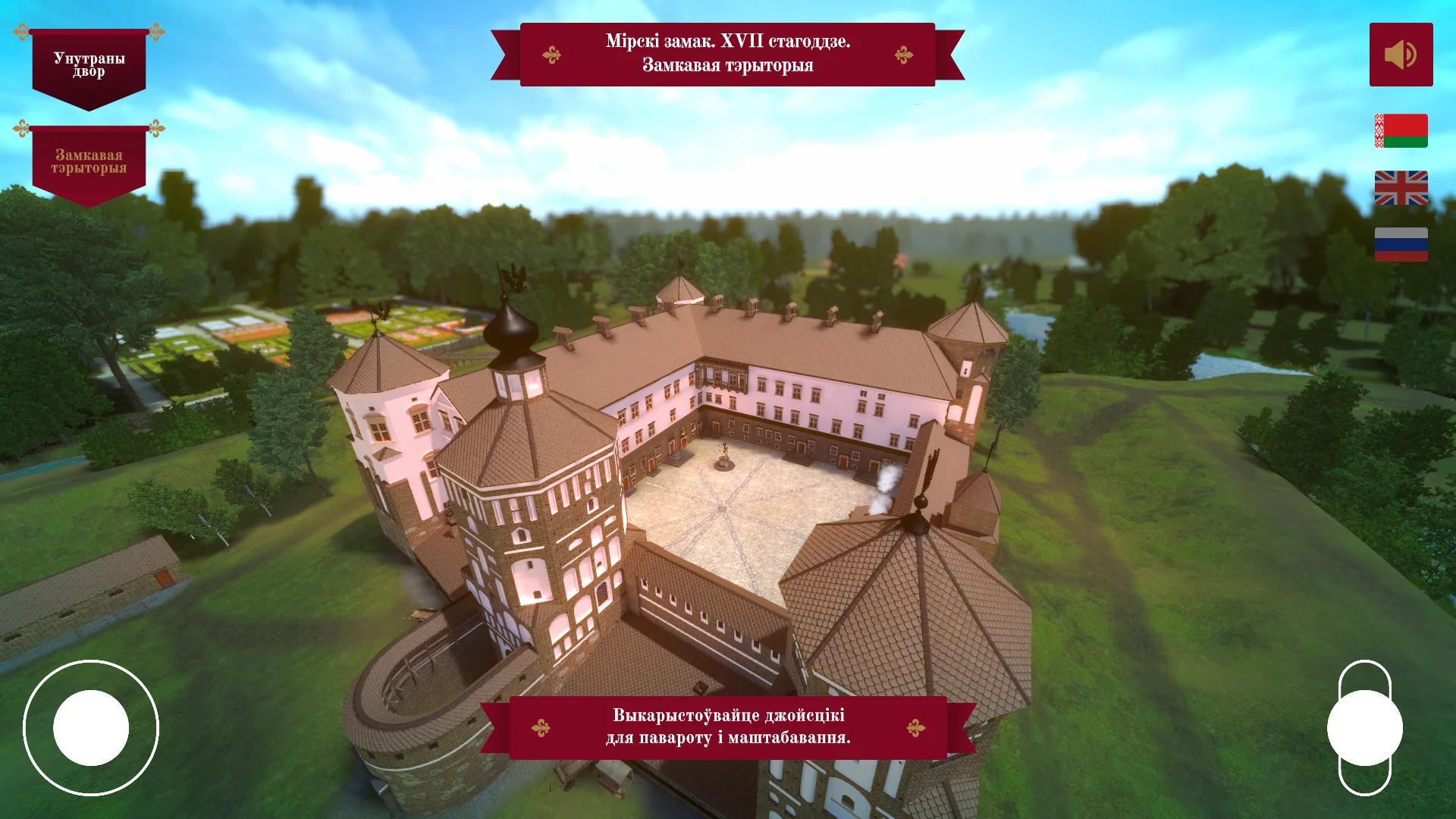
- Three-dimensional application development. We create the interactive environment, populate it with content, and test scenarios on real hardware. Fine-tuned tools deliver stable results even under heavy loads.
- Kiosk launch. We install the system, connect the equipment, and set up updates. We train staff so they can handle routine questions on their own.
- Technical support. We stay in touch after launch: we update content, monitor stability, and respond quickly to failures. You are never left alone with the equipment.
Stage-based work removes the main risks: mismatched expectations, missed deadlines, and hidden costs. In the end, you get exactly the wayfinding guide you saw in the mockups.
What's Included in the Delivery of a Completed Project
After development is complete, you receive not just a program but a comprehensive solution ready to operate in your space. We deliver the project turnkey: from equipment to staff training — everything needed for launch and daily operation.
- Kiosk delivery — a fully configured device with a preinstalled application and custom branding. All you have to do is choose a location and plug it in.
- Installation and setup — our specialists perform the mounting, connect the kiosk to the network, and check all operating scenarios and synchronization with your systems.
- Content updates — an intuitive admin panel lets you change information yourself: add new routes, promotions, and object descriptions. Updates are published without stopping the kiosk.
- Staff training — a short training session for your employees: how to use the control panel, solve routine issues, and quickly fix minor problems.
- Operational documentation — you receive instructions for daily care, safety rules, and maintenance procedures.
- Warranty support — after the project is delivered, we stay in touch: we help with configuration, provide consultations, and support updates throughout the warranty period.
- Source materials — we hand over all mockups, graphics, and content created during the project. You can use them for other communication channels.
This approach lets you focus on what matters most — how the kiosk attracts visitors and boosts their loyalty. We take care of all technical matters.
Real Implementation Experience: Results and Numbers
For a wayfinding guide to be useful rather than just a screen in the lobby, the client needs a clear result. We always record numbers before and after implementation — footfall, navigation time, return on investment. One of our benchmark projects is a network of city museums.
Historical Quarter — a union of six exhibition venues — approached us with a typical problem: guests walked through the halls in 20–25 minutes, missed key exhibits, and rarely returned. Simple signs and paper maps did not help.
What We Did and What Results We Achieved
We developed an interactive wayfinding guide with a map, personalized routes, and tips about interesting objects. The kiosks were installed at the entrance and in the transition zone between exhibitions.
In the first two months, more than 15,000 visitors used the wayfinding guide. Average navigation time dropped from 12 to 6 minutes, and time spent at the exhibition grew by 1.5 times.
A third of the guests who chose a route via the kiosk visited halls they had not known about before.
For the museum, this translated into concrete revenue: ticket sales grew, souvenirs were bought more often, and the share of repeat visits during the season increased by 40%.
The client recouped their investment in one operating season and ordered an expansion of the wayfinding guide to new venues.
This case is not a one-off story. On every project, we build measurable performance indicators and show the client the link between how the kiosk works and their business metrics.
Will It Be Difficult to Integrate the Kiosk Into Our Infrastructure?
No, integrating the kiosk will not require restructuring your infrastructure or stopping operations. Essentially, only two conditions are needed: a standard power outlet and internet access — via cable or a wireless network. We handle everything else: mounting, setup, connection to your services, and staff training.
Installation work usually takes a few hours and does not require construction work, drilling into load-bearing walls, or laying new utilities. The kiosk can be placed in the lobby, near the entrance, or in the waiting area — and can be moved to another location if needed.
If the venue is already operating, we schedule the installation at a convenient time so as not to disturb visitors or staff.
We also think through the internet connection separately. A stable channel is enough — the kiosk works with up-to-date data, can update content, and collect statistics.
If necessary, we set up an offline mode: the kiosk will continue to show information even during temporary network outages, and data will synchronize later. This removes the risk of failures at the worst possible moment.
Integration with your infrastructure is not a one-off event but a process we support. Before installation, we visit the site or conduct a remote audit: we check power outlets, network signal strength, and traffic in the installation zone. Based on that, we prepare a plan, agree on it with you, and complete all work turnkey.
As a result, you get a working kiosk without involving your IT team and without business downtime. We are responsible for compatibility, stability, and support after launch.
Frequently Asked Questions About Quality and Reliability
Clients often worry that an interactive kiosk will break down at the worst possible moment. Typical vendors give a warranty "on paper" and then disappear after launch — leaving you alone with a non-working screen in the lobby.
We build the product so it runs without failures in heavy visitor flows, and we back it with real commitments. Below are answers to the main questions about durability and warranty service.
What is the warranty on the kiosk and what does it cover?
The equipment and built-in components carry an official warranty — we replace the touchscreen, housing, and electronics without extra charges or unnecessary approvals. If a failure occurred due to our fault, we restore operation for free as quickly as possible.
How quickly is a touchscreen repaired?
We keep spare screens in stock for key kiosk models. Upon a request, an engineer arrives within one or two days, or we send a replacement unit. The average repair time is 2–3 business days, so the kiosk gets back to serving visitors quickly.
What is the service life of an interactive kiosk?
We use industrial components designed for round-the-clock operation in public spaces. With regular maintenance, the kiosk lasts 5–7 years without losing performance — that is above the market average. At the end of its life, we perform an upgrade rather than replacing the entire structure.
What ensures uninterrupted operation?
Real-time kiosk monitoring: we track temperature, screen load, and software stability. The system automatically restarts hung modules and notifies us of a potential problem before a visitor notices any failure.
We do not just sell a kiosk — we take responsibility for its operation. Describe your task — we will suggest a format that protects you from downtime and unexpected expenses.Submit a Request — We'll Lock In the Cost Within 2 Days
Submit a request for a quote, and within 2 days you will know the exact cost of your interactive kiosk project. No vague estimates: only concrete figures for your tasks, the number of locations, and usage scenarios. We will handle everything else.
What the process includes:
- Quote request — you describe the task in a few words, and we will clarify the rest.
- Engineer consultation — a specialist will ask the right questions about your audience and goals so you do not overpay for unnecessary functionality.
- Free brief — we record the requirements: scenarios, design, operation logic, and required equipment.
- Cost and timeline calculation — you see what the price is made of and when the kiosk will go live.
- Price lock-in — after confirmation, the cost is fixed in the contract and does not change.
- Launch plan — you understand which stages are needed and what is required from your side.
This approach is especially important for an interactive wayfinding guide: the project has many details — the map, object descriptions, navigation, photos, and videos.
At the brief stage, we set priorities and remove the unnecessary so the budget works toward results rather than "we can add this later."
The request is non-binding. In 2 days, you will get a clear quote and can compare it with other offers. And if the project is not a fit, you can use the document as a market reference.