

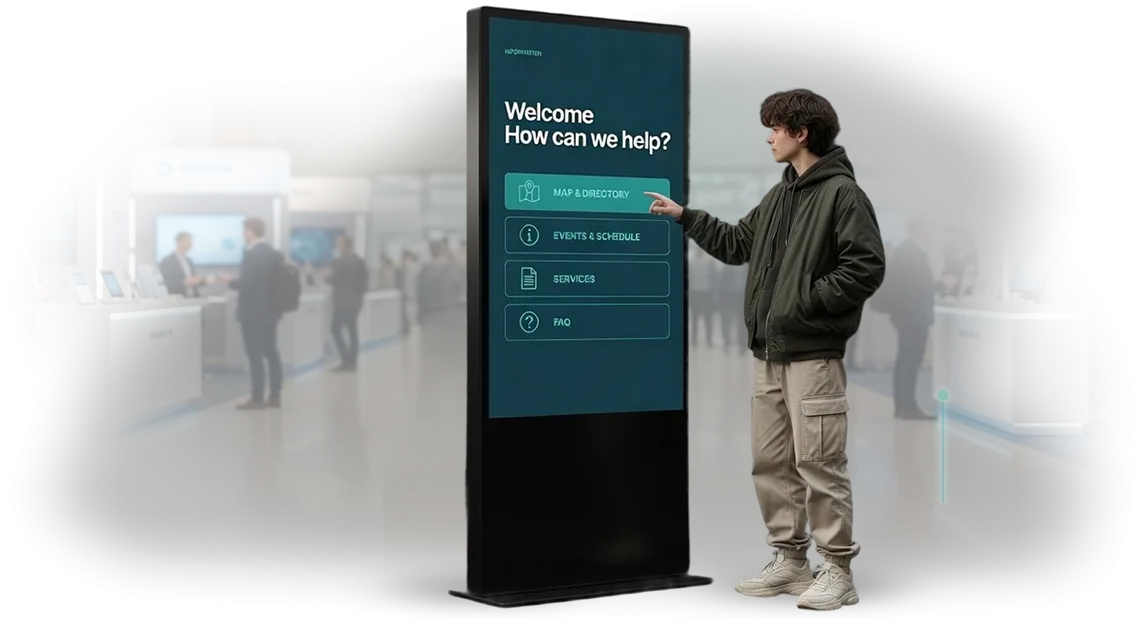
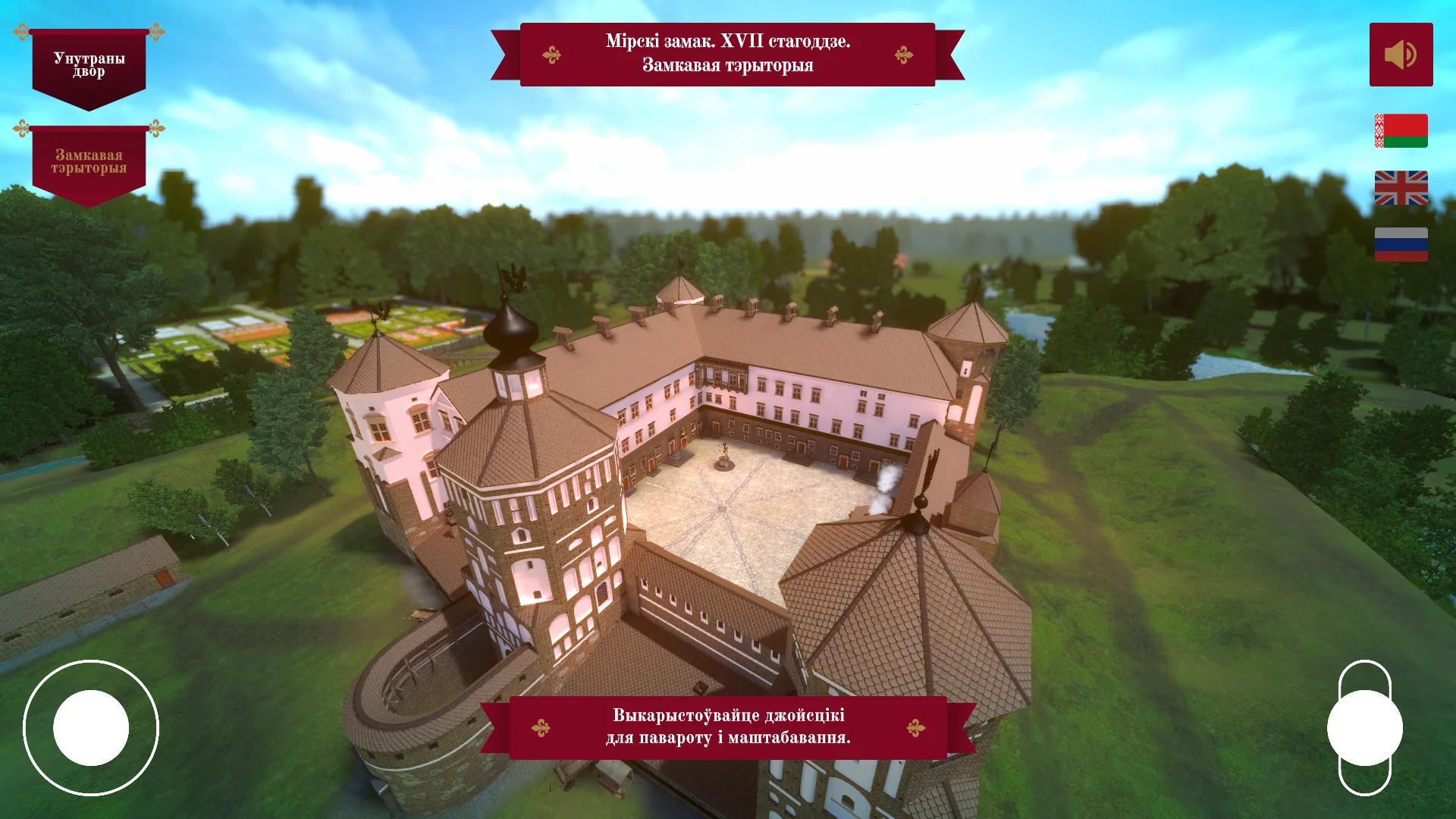
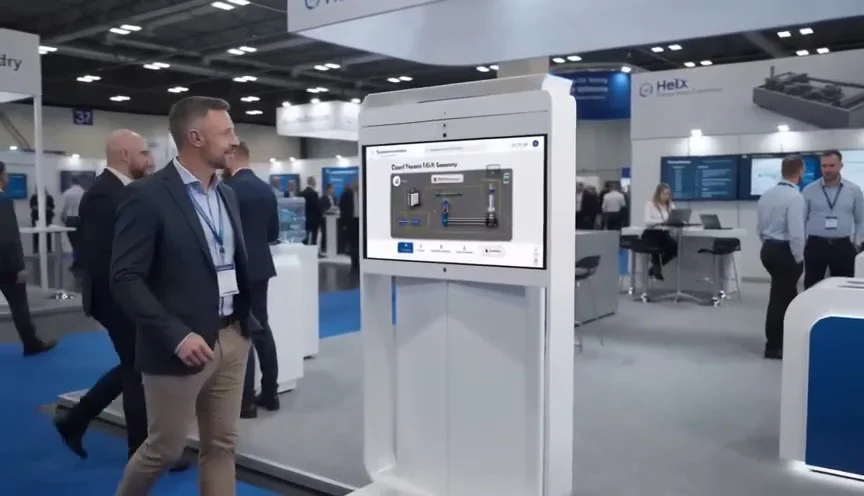

Does an Interactive Kiosk on CentOS Let You Down at Peak Hours?
Imagine peak traffic: a line at the information desk, and the interactive kiosk freezes or reboots at the worst possible moment. Visitors turn around and head to competitors — this is not a one-off accident but a systemic loss of customers.
Each such failure costs you not only staff time but also the reputation of your venue, which is hard to restore. Sound familiar? We see it at many sites where dozens of people use kiosks at the same time.
Most often, the problem is not in the equipment itself but in the software underneath. Typical kiosk development that ignores load, long continuous operation, and external conditions fails precisely when the system is needed most.
Weak components, suboptimal scenarios, no protection against freezes — all of this falls on the shoulders of staff and visitors. The result: lost requests, negative reviews, and the feeling that technology hinders the business instead of helping it.
We eliminate this pain at the design stage. Developing an interactive kiosk on CentOS is a choice for stability, backed by millions of server installations worldwide.
This industrial-strength operating system ensures stable operation even under prolonged load without reboots, meaning the kiosk will not let you down during the busiest hours. You get a system that requires no daily supervision and rarely draws attention to itself.
For you this means predictable service: customers are served quickly, the line moves, and no visitor leaves because of a technical failure. You get a manageable solution that boots faster and runs for months without administrator involvement.
The business effect is obvious — higher conversion to orders, peace of mind at the venue, and visitor trust in your brand.
We take on the entire cycle: from scenario analysis to launch and maintenance. You get an interactive CentOS kiosk that stays reliable at peak hours and a team accountable for its round-the-clock availability.
Tell us about your task — our engineers will contact you and show you how it will work at your location.
Business Benefits of an Interactive Kiosk
An interactive kiosk solves several business tasks at once: it holds guests' attention, speeds up service, and is remembered better than any printed sign.
Unlike a regular stand, such a terminal engages the user in dialogue — they can choose sections, browse the catalog, and navigate the room. This turns waiting into useful and pleasant time that works for your brand.
Guests remember emotions, not routine actions. Game mechanics or unusual content presentation holds attention for 5–7 minutes — enough time for a person to learn more about a product, promotion, or service than in a minute of conversation with a consultant. This way, the kiosk subtly increases visitor engagement and deepens brand familiarity.
Service speed is another obvious advantage. The kiosk takes over routine operations: selecting a service, booking, payment, submitting a request — and the line moves 2–3 times faster. Staff can focus on truly complex issues instead of repeating the same information. Customers spend less time waiting and enjoy their visit more.
Custom interface design, animations, and unusual scenarios make the kiosk a distinctive element of your image. Guests take photos of the screen, share them on social media, and tell their friends — reach grows without additional ad spend.
Built-in analytics shows which sections are in demand and helps update content quickly, turning the interactive experience into a full-fledged marketing tool.
At the core of our solutions is a stable CentOS-based platform that runs for years without failures and does not require constant intervention. This keeps the kiosk operational during the busiest hours.
The head of the coffee chain "Sladkaya Zhizn" confirms: "We installed a kiosk at one of our locations — guests place orders themselves, and we manage to serve twice as many people without expanding staff.
It's nice to see visitors photographing the screen with our character and posting it on social media."
App Development Formats for a CentOS Kiosk
For retail outlets and the service industry, a CentOS kiosk is a reliable way to automate service and move away from paper catalogs. At the same time, it is important to choose the right format: from a compact wall-mounted panel to a full self-service terminal. Below are the main options we work with and their practical benefits.
| Kiosk format | Best suited for | What the business gets |
|---|---|---|
| Wall-mounted kiosk | Cashier areas, small spaces: show promotions, catalog, directions | Takes up minimal space, quick information updates |
| Floor-standing kiosk | Sales floors, exhibitions: interactive showcase, product selection, promo | Attracts attention, increases customer dwell time |
| Self-service terminal | Order placement, service booking, payment without waiting in line | Reduces staff workload, increases throughput |
| Feedback collection module | Exit zones, reception: surveys, quality assessment | Clear statistics, loyalty growth through feedback |
This is not a complete list — we adapt any format to your task: adding a video camera, receipt printer, barcode scanner, or connecting to your product database.
The key is that the solution is built on a proven server architecture — you get stable, failure-free operation and a well-thought-out turnkey project.
How Kiosk Development Works: From Brief to Launch
The kiosk development process is designed so you always know what stage the project is at and when launch will happen. The stages have been refined across hundreds of projects, so you won't need to dive into technical details — you only make business decisions.
-
Brief and call. We discuss kiosk goals: who the visitors are, what actions they should take, and where the terminal will be located. We agree on timelines and possibilities.
-
Plan and estimate. We formalize the scope of work, stages, and deliverables. You receive a clear document with no hidden items or unexpected changes.
-
User scenario. We design the screen structure and the path from first touch to the target action: booking, order, navigation. You approve the scenario before development.
-
Design and development. We prepare an interface in your brand style, adapt it for a touchscreen, and configure stable kiosk performance. At this stage, you see intermediate versions and fine-tune details.
-
Testing on a real device. We test scenarios with random taps, reboots, and network outages. We fix everything before installation so the terminal never fails for visitors.
-
Launch and training. We install the kiosk on site, connect it, and train your staff: restart, content replacement, common questions. We remain in touch after launch.
This sequence makes the kiosk creation process predictable — you participate at key milestones, and the launch goes according to plan, without surprises or downtime.
What Is Included in the Kiosk App Delivery
"Interactive information kiosk development" is not about "deliver and forget." You get a manageable tool that your team can adapt to any task: from changing the menu to launching a new special offer.
Here is exactly what is included in the delivery package:
- Documentation in Russian — operation diagrams, setup instructions, and update procedures. Staff will quickly understand it even without a technical specialist.
- Staff training — we run a practical session with your team: how to change content, add sections, and track statistics. You are not dependent on us for everyday tasks.
- Application source code — a complete developer kit. Your IT department can make changes themselves or assign them to any contractor. No "hostage situation" with a single developer.
- Server side and system distribution — a stable CentOS-based foundation that works predictably on any kiosk hardware and does not require frequent intervention.
- Software keys and licenses — everything is prepared, activated, and registered to your company. No "gray" versions or risk of blocking.
- Acceptance certificates — we record the system state at launch. This is a transparent starting point for warranty obligations and future development.
Such a delivery package means one thing: you get not a "black box" but a full-fledged product. Update the menu with your staff, change the logic together with your IT department, and contact us only for new features or expanding your kiosk network.
Case Study: CentOS Kiosk Increases Visitor Loyalty
When a visitor stands in line at the cashier, they have time to think twice about whether it was worth coming at all. Our client's task was to remove this pain: ease the load on the checkout zone and give guests a useful digital assistant that works without failures.
With the previous solution, people got confused, the screen froze, and in a third of cases guests simply went to the administrator, reducing the automation effect to zero.
We took on a project for the cinema chain "Kinoman" — an interactive terminal based on the reliable CentOS operating system that simultaneously displays hall navigation and sells tickets without a cashier.
The platform was chosen not for fashion but for stability: the kiosk had to survive peak screenings without freezes or lost payments, and CentOS handled this role perfectly.
In one evening, 800 guests used the kiosk, and the time of interaction with the screen grew by 40% — from one and a half to two and a half minutes.
Instead of quickly buying a ticket and forgetting about the brand, people explored the program, chose seats on a convenient hall map, and enjoyed the process.
As a result, the checkout line shrank by a third on average — even at peak hour, no more than three people remained at the cashier.
The key result was increased loyalty: 6 out of 10 guests who bought a ticket through the kiosk for the first time returned to the cinema within a month.
Every tenth visitor photographed the interactive map and posted it on social media, giving the brand extra mentions without an advertising budget.
The client received not just a terminal but a tool that paid for itself in one season, and since then they have been ordering kiosk support and updates from us.
We love such cases because they show real business value, not just the installation of a piece of hardware.
Our practice includes hundreds of similar projects — each one starts with a brief and ends with a measurable result: shorter lines, higher loyalty, and an unburdened checkout.
How to Choose the Right Kiosk Format for Your Task?
Choosing a kiosk starts not with the model or design, but with answers to three questions: where it will be installed, how many people will use it, and what task it must solve.
These answers determine the construction, functionality, and final budget — and therefore the return on investment.
First — location. A kiosk in an office lobby, a retail floor, or outdoors means different requirements for the enclosure, protection from dust and moisture, and screen brightness.
Wall-mounted format saves space and fits perfectly into high-traffic areas; floor-standing is convenient for active use and attracts attention; desktop suits cash desks and information desks. A properly chosen installation location determines how comfortable it will be for visitors to use.
Second — load. If hundreds of visitors will use the kiosk daily, it is important that it does not freeze at peak hours and withstands intensive touchscreen use. For this scenario, we use reinforced hardware and a well-designed cooling system.
If the load is irregular, a simpler configuration is enough — this reduces the total cost of ownership without losing quality.
Third — goals. A kiosk for building navigation, browsing a catalog, booking an appointment, or paying for services requires different interfaces and feature sets. Once the main task is defined, it is easy to choose the right screen size, input method, and menu logic. It is at this stage that convenience for your customers and staff is established.
We help clients choose the optimal kiosk format and design a solution for a specific situation: location, visitor flow, and business tasks.
We use professional hardware and a stable CentOS platform — as a result, you get a smoothly running kiosk that fulfills its function and requires no constant attention. This approach eliminates mistakes at the start and reduces costs for further refinement.
Frequently Asked Questions About Kiosk Development
We answer the questions most often asked before starting a project. Here — about guarantees, timelines, compatibility, support, and modifications. If your question is not on the list, write to us and we will discuss the details on a short call.
What guarantees do you provide for the kiosk?
The warranty on application software is 12 months from launch. During this period, we fix issues affecting operation for free and help with updates. Hardware and the touchscreen are covered by the manufacturer's warranty — typically also 12 months.
How long does development take?
A typical kiosk with a catalog or map takes 4 to 6 weeks, including testing and setup. If integration with your CRM or payment system is needed, the timeline extends to 8–10 weeks. We provide an accurate estimate after the brief and include it in the contract.
Will the kiosk work on our hardware?
We develop for CentOS — a stable platform that suits most industrial and office computers. Before we start, we will check your hardware; if something is missing, we will suggest a cost-effective configuration. You will see how the kiosk behaves on real hardware during the testing phase.
How much does support cost and what is included?
Post-warranty support is subscription-based; the cost depends on the scope of work. It includes content updates, uptime monitoring, troubleshooting, and consultations for your staff. You pay for the level of service, not for each failure.
Can the kiosk be modified after launch?
Yes, that's how we work. The kiosk does not stand still: you can add new sections, change the design, and connect additional features. We make modifications according to an agreed budget and timeline — just as at the start. Many clients begin with a basic version and then expand functionality.
We don't ask unnecessary questions — on a short call, we will analyze your task and suggest the optimal kiosk format. Leave a request, and we will come back with specific solution options.Order CentOS Kiosk Development with a Guarantee
Ordering a CentOS kiosk means getting not just a terminal but a working tool for your customers. So you understand what you are paying for and what the timelines are, we record all agreements and provide a guarantee for every stage.
The CentOS kiosk development process is arranged so you can monitor progress and make changes in time. Leave a request — on the first call, we will discuss the task, calculate timelines, and propose a solution that fits your budget.
Then work follows a transparent timeline:
- Brief and analytics — we analyze your task, usage scenarios, desired interface, and integration points for free.
- Prototype and estimate — we show the screen structure and record functionality, timelines, and cost so there are no surprises.
- CentOS development — we build the solution, connect hardware and external services, and customize it to your brand.
- Testing and debugging — we check all user scenarios, performance, and resilience to failures.
- Launch and training — we install the system at your site, brief your staff, and hand over documentation.
- Support and development — we stay in touch, update software, and help add new features as your business grows.
The guarantee covers the kiosk's operation after launch: you get a stable solution without hidden payments or "surprises" a month later.
You can order a turnkey kiosk right now — leave your request, and our engineer will contact you within one business day to discuss details and calculate an exact timeline.