

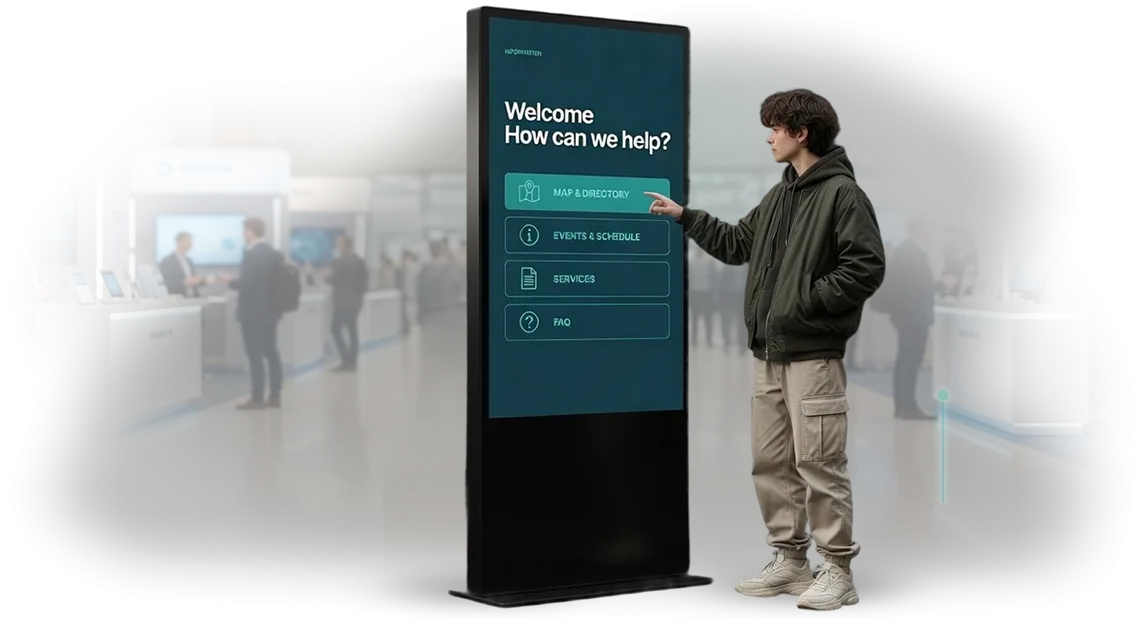
Information Kiosks Losing Customers? The Solution on Raspberry Pi OS
Interactive kiosks today are the first point of contact between a visitor and your business. As long as the screen works, the customer gets the information they need, books a service, or places an order — and leaves with a positive impression.
But if the kiosk freezes for ten seconds or restarts at the worst possible moment, the person loses time, and you lose their trust. As a result, information kiosks turn from helpers into a source of irritation and direct losses.
Such situations are especially painful in high-traffic locations: shopping malls, clinics, railway stations, exhibition halls.
A customer will not look for a staff member and figure out what happened — they will simply go to a competitor, and then tell a few acquaintances about the bad experience.
A single technical failure can erase the effect of an entire advertising campaign, because the impression of service is formed here and now, at the point of service.
The solution is to build the kiosk on the Raspberry Pi OS platform, which is specifically designed for long-term operation without failures or overheating.
This is not a "toy" option but a refined system that we configure for each client's specific tasks: from maps and schedules to catalogs and online booking.
Thanks to kiosk stability, staff stop being distracted by firefighting, and customers get predictable service — fast, clear, and without queues.
Reliability directly affects customer service: the fewer failures, the higher the loyalty and the repeat visits.
A business owner sees the result in numbers — increased conversion to the target action, reduced staff load, and a reputation like a company where "everything works." This is exactly the task we have been solving for over ten years: we design, assemble, and support interactive kiosks on Raspberry Pi OS so that they bring value rather than create new problems.
If you are thinking about introducing kiosks or your current information kiosks require constant attention — it is time to change your approach.
We take care of the entire technical side and guarantee stable operation, while you get a growth point that pays for itself through better service and satisfied customers.
Kiosks on Raspberry Pi: Three Key Benefits for Business
Live visitor engagement — and growing loyalty
An ordinary stand or presentation does not hold attention: visitors walk past in a couple of seconds. An interactive kiosk on Raspberry Pi OS engages the visitor in a game, test, or catalog — they choose the scenario themselves and stay for a few minutes longer.
The emotion of self-directed interaction is remembered better than watching advertising. A person tells colleagues and friends about this experience, and the brand becomes associated with technology and care — a direct path to repeat visits.
Brand recognition and organic reach
A bright kiosk with a non-standard design and interface draws attention and becomes a photo spot. Every guest posts a picture or video on social media — you get free mentions that keep working long after the campaign or event ends.
This kind of reach is hard to buy with advertising: a recommendation from a real visitor inspires more trust. A kiosk on Raspberry Pi OS adapts easily to your brand style, so every contact strengthens the company's positioning.
Lead collection without extra effort
The kiosk replaces paper forms and business cards: the visitor enters their contacts in a convenient interface themselves. Requests automatically go into the database — managers no longer have to retype data or spend time on manual entry.
Built-in scenarios let you offer a discount or a useful resource in exchange for contacts. This way you get not just a database but warm leads who are already interested in the product — the conversion to a sale is higher than after cold calls.
Interactive Kiosk Formats for Your Task
When a visitor approaches a kiosk, they have only a couple of seconds to decide whether it is worth interacting with it. If the format is chosen correctly — they touch the screen, explore the information, and leave the data you need.
If not — they turn around and leave, and the development budget never pays off. That is why we start not with the interface but with the question of where and how the device will be used.
Over ten years, we have built kiosks for stores, museums, business centers, and urban spaces. All of them run on the refined Raspberry Pi OS platform, which gives you two important results: stability without constant administration and the ability to update content quickly. Below are four basic formats that cover most client tasks.
Comparison of formats
| Format | For whom | What it gives the customer |
|---|---|---|
| Floor-standing kiosk | Shopping malls, museums, lobbies | Attracts attention, works as an independent information point, and handles high visitor flow |
| Wall-mounted kiosk | Narrow passages, reception desks, elevator lobbies | Saves space, does not obstruct movement, and is always in the line of sight |
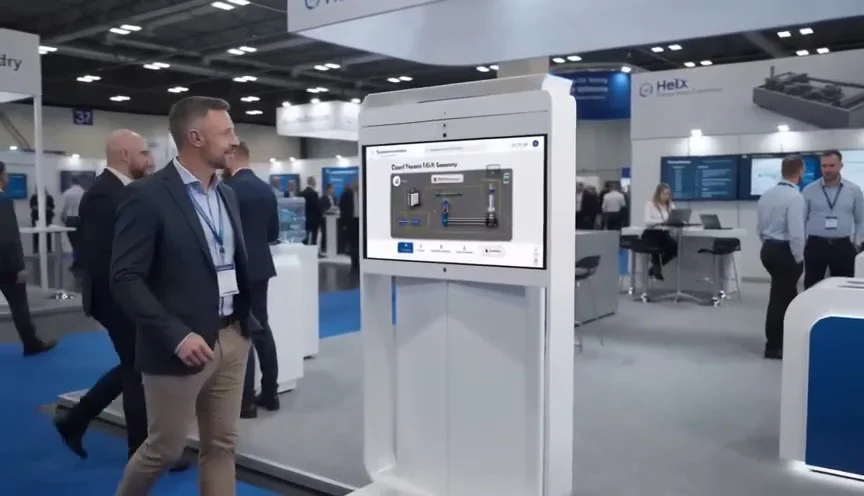
| Tabletop kiosk | Exhibitions, conferences, waiting areas | Compact, quick to set up, and suitable for short sessions, surveys, and registration |
| Outdoor kiosk | Streets, entrance areas, stadiums | Protected from weather and vandals, operates around the clock, and attracts passers-by from outside |
Formats can be combined: for example, a floor-standing kiosk at the entrance handles navigation, while tabletop kiosks at the registration desk collect forms. This gives visitors a unified experience and gives you more points of contact with the audience.
If you are not sure which format is right for you, we will send a recommendation after a short briefing.
How We Create a Kiosk: 7 Steps from Brief to Launch
We have structured kiosk development so that you can see the result at every stage and never wonder what happens after signing the contract. It is a transparent seven-step process — from the first brief to launch and support.
You get clear deadlines, control over key decisions, and a contractor who is responsible for the result rather than just handing over the project.
-
Brief and task discovery. A short meeting where we understand your audience, usage scenarios, and kiosk goals. You describe your tasks, we propose solutions — and we record everything in a document so there are no surprises later.
-
Plan, estimate, and timeline. Based on the brief, we create a work plan: stages, dates, and cost. You approve the document, make edits — and only then do we start work. No hidden surcharges or "unexpected" stages.
-
Design and screen structure. We design the navigation and visual style of the kiosk: what each menu will look like, how a visitor will reach the right section without getting lost. You see the mockups at this stage and can make edits before development begins.
-
Assembly and configuration. We assemble a working kiosk: configure the software, test scenarios, and verify that everything works stably over long periods of use. We use professional hardware, so the system does not freeze at the most critical moment.
-
Testing in real-world scenarios. We simulate situations that happen in practice: several visitors using the kiosk at the same time, someone making a navigation error, the screen staying on for hours. We fix issues before launch, not after visitors have already started arriving.
-
Launch and staff training. We install the kiosk, connect it to the network, and show your staff how to manage content and what to do in an unusual situation. This usually takes one day — and you are fully ready to work.
-
Maintenance and support. After launch, we stay in touch: we answer questions, update content, and adjust the logic if it no longer fits. You are not left alone with the hardware — we make sure the kiosk works and delivers value every day.
What the Ready-Made Solution Includes
The ready-made solution includes everything needed to get the kiosk running — no hidden surprises or "installation-stage surcharges." You receive not separate modules but an assembled system: interface, hardware, configuration, protection, and ongoing maintenance.
We work on the refined Raspberry Pi OS base — a professional platform that ensures stable 24/7 terminal operation. You will not need to deal with the technical side: we handle system configuration, application launch, and post-project support.
What is included in the package
- Application for your tasks — the kiosk interface that guides the customer from the first touch to the target action: catalog, booking, form, payment, navigation.
- Content management — you change promotions, prices, and materials yourself through an easy-to-use admin panel, without contacting developers.
- Protection and stability — the terminal runs without failures, mid-way restarts, or freezes at the worst possible moment.
- Remote monitoring — you see the status of each kiosk and learn about an abnormal situation in time, not from visitors.
- Instructions and training — short materials for your staff: how to turn it on, how to replace content, what to do in case of a problem.
- Technical support — post-launch support, updates, and preventive maintenance to keep the kiosk running without downtime.
What this looks like in practice
When we hand over the project, you receive not source code and a "developer's manual" but a working tool. The terminal is already configured, the application is installed, the content is uploaded, and access rights are transferred. Just plug the kiosk in — and it is ready to welcome visitors.
If questions arise during operation, you contact a familiar support channel and get a solution within the agreed time frame. This approach keeps your team from being distracted by technical details and lets you stay focused on business — serving customers and increasing revenue.
Case Study: How a Museum Cut Queues and Doubled Attendance
City History Museum faced the downside of popularity: on weekends, lines of 20–30 minutes formed at the ticket office and cloakroom, and visitors got lost in the maze of halls.
Staff answered the same questions over and over, with no time to help in depth, and some guests left before reaching the key exhibits. The flow was growing, and the museum physically could not serve it without losing the quality of the experience.
We proposed automating navigation and information support with interactive kiosks.
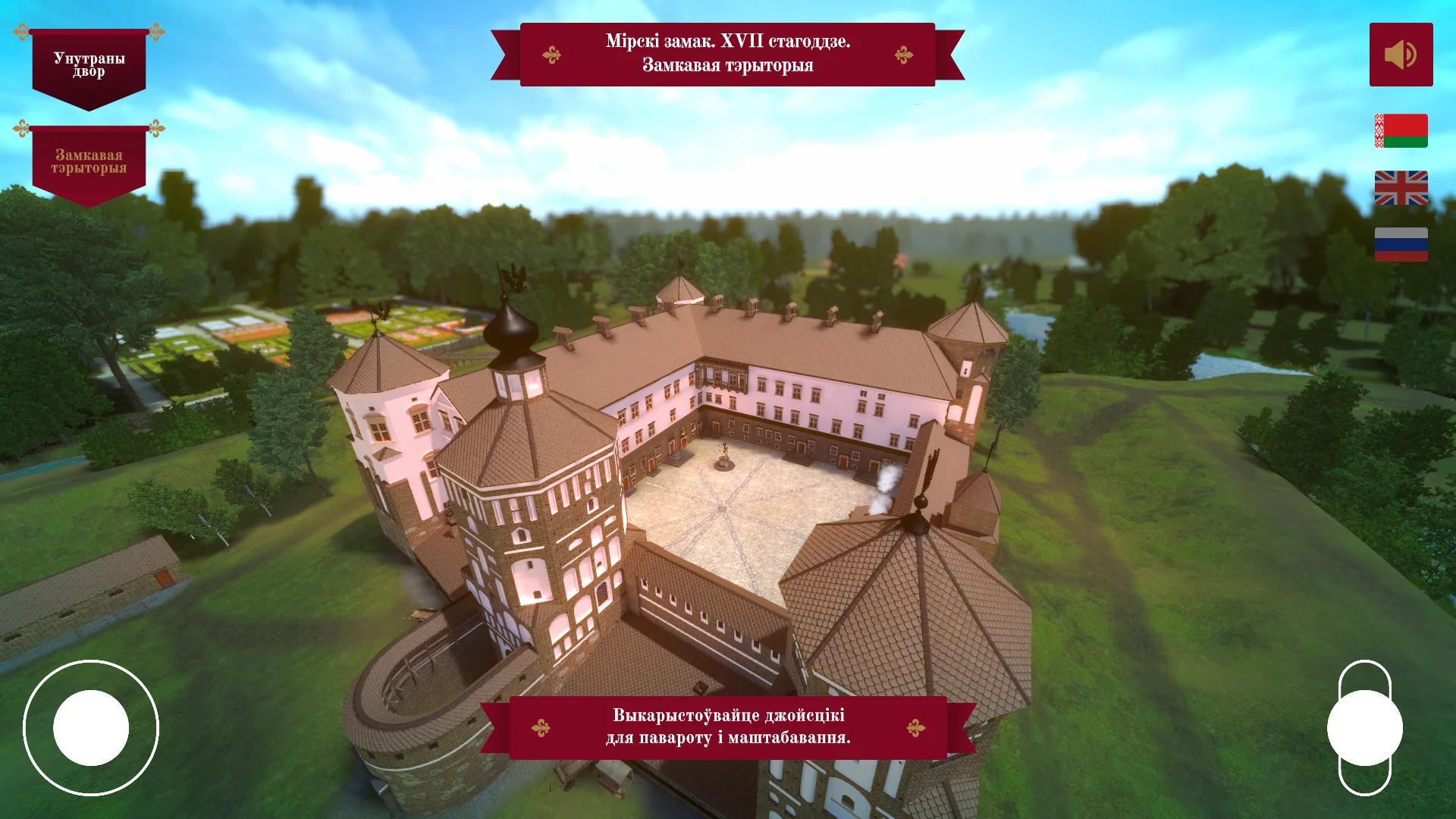
Using the stable and cost-effective Raspberry Pi OS platform, our team specialists installed touch terminals in the lobby and at transitions between halls, featuring a museum map, a plan of current exhibitions, and detailed descriptions of exhibits. Visitors choose their own route and get answers to questions without distracting staff.
What the museum gained
The average waiting time at the entrance dropped from fifteen minutes to three, and the workload on hall attendants was distributed evenly.
Visitors began spending an hour longer in the museum and returning more willingly — over the year, the number of guests doubled, and the share of repeat visits increased by 40%. Every other review mentions convenient navigation, and ticket sales grew without expanding the staff.
The result was so convincing that the management ordered similar kiosks for the branch and temporary exhibitions. We continue to support the system: we update content, add new exhibitions, and ensure smooth operation — the museum focuses on its mission, not technical details.
What If the Kiosk Breaks Down or Needs Modification?
A kiosk works 24/7 in a high-traffic place — a load that not every device can withstand. We assemble the system on the refined Raspberry Pi OS platform and professional hardware so that it works stably through restarts, power fluctuations, and long-term use.
For you, this means predictable operation during peak hours — without lost orders or dissatisfied visitors.
Kiosk reliability is an engineering standard for us, not a promise. We proactively test the scenarios that most often break terminals: network outages, power cuts, accidental taps, overheating.
After launch, you get a warranty on the kiosk and maintenance: if something goes wrong, we remotely restore operation without a site visit.
A kiosk is not a static display — over time, you need new promotions, menu changes, or features. We build extensibility into the architecture: content can be updated or a section added without stopping the terminal.
No need to rewrite the system — just approve the task, and we will make the changes within the agreed time frame.
Kiosk maintenance begins after launch: we stay in touch and help expand the functionality as your business changes. You always know who is responsible for the terminal's operation, and you can plan a support budget instead of guessing.
The key point: you are not left alone with the hardware. If the kiosk breaks down or needs modification, you contact us and we solve the problem turnkey. This makes the terminal a safe investment rather than a source of headaches.
We Answer Common Doubts Before Ordering
Before ordering an information kiosk, almost everyone asks the same questions: how to manage it, whether the launch will stretch over months, and whether the system will require replacing all existing equipment.
These doubts are understandable, because a kiosk must run without failures and not distract staff from their main tasks. Our team have already been through this process with dozens of clients and we remove the risks at the briefing stage.
Instead of abstract promises, we give concrete answers to the most common fears. If your question is not on the list — just write to us, and we will tell you how we solved a similar problem.
How do I manage the kiosk if I don't have a programmer?
We provide an easy-to-understand admin panel: you can update promotions, add a new price list, or replace a video in 10 minutes without knowing any code. We train your staff at launch and stay in touch for guidance. This is not a one-time handover but support for the entire life of the kiosk.
How long does it take to launch a kiosk?
A typical project takes 2–3 weeks: brief, mockups, approval, installation. If you need it urgently, we prioritize production. You don't wait for months — you get a working kiosk with content already loaded.
Will I have to change infrastructure or overpay?
We use refined solutions based on Raspberry Pi OS and professional hardware that easily integrates with your existing network and peripherals. The budget is fixed in the contract — no hidden surcharges.
If you later need to expand functionality, we will do it in stages without replacing the entire system.
Ready to Get a Kiosk That Works Without Failures?
We know what a kiosk that never lets you down looks like: no freezes during presentations, no data loss, no nighttime calls from staff. That is exactly the result you get when you entrust the development to us.
We don't sell a "box" — we create a solution for your specific task and support it after launch.
Let's start with a brief. In 15 minutes, we will figure out how the kiosk should work in your scenario: what interaction scenarios are needed, who will use it, what data to collect.
After that, we will send you an estimate and propose the optimal configuration — with clear timelines and a guarantee.
What you get when you order a kiosk from us:
- Free consultation on kiosks and a preliminary estimate — you know the budget and timelines before work begins.
- Individual configuration for your brand and tasks — the kiosk doesn't look template-based.
- Stable operation on Raspberry Pi OS — a refined platform that handles 24/7 loads without failures.
- Fast launch: from brief to working kiosk — without lengthy approvals.
- Support after launch: monitoring, updates, prompt resolution of issues.
- Analytics: you see which features visitors use and what can be improved.
Leave a request for a consultation — we will call you back within one business day, answer your questions, and prepare an estimate. The first step takes 15 minutes of your time, and the result is a kiosk that works without failures and brings value to your business.