


Culinary schools lose students when information is presented in a boring way
Prospective culinary school students come for an experience: they want to see how classes are taught, feel the atmosphere, and understand that this is a place where they will really learn to cook well.
But most often they are met with paper brochures and static displays that don't answer the key question — why choose this particular school.
As a result, the future student leaves without enrolling, and the school loses a stream of applications and misses out on prospects who already arrived with genuine interest.
The information that needs to be conveyed to a potential student keeps getting more complex: programs, schedules, instructors, learning formats, and starting conditions.
It's impossible to put all of this on a regular display — the text becomes long and unreadable, and a visitor only spends a few minutes getting to know the school.
Those minutes decide whether a guest becomes a student or leaves for a competitor where the presentation is brighter and clearer.
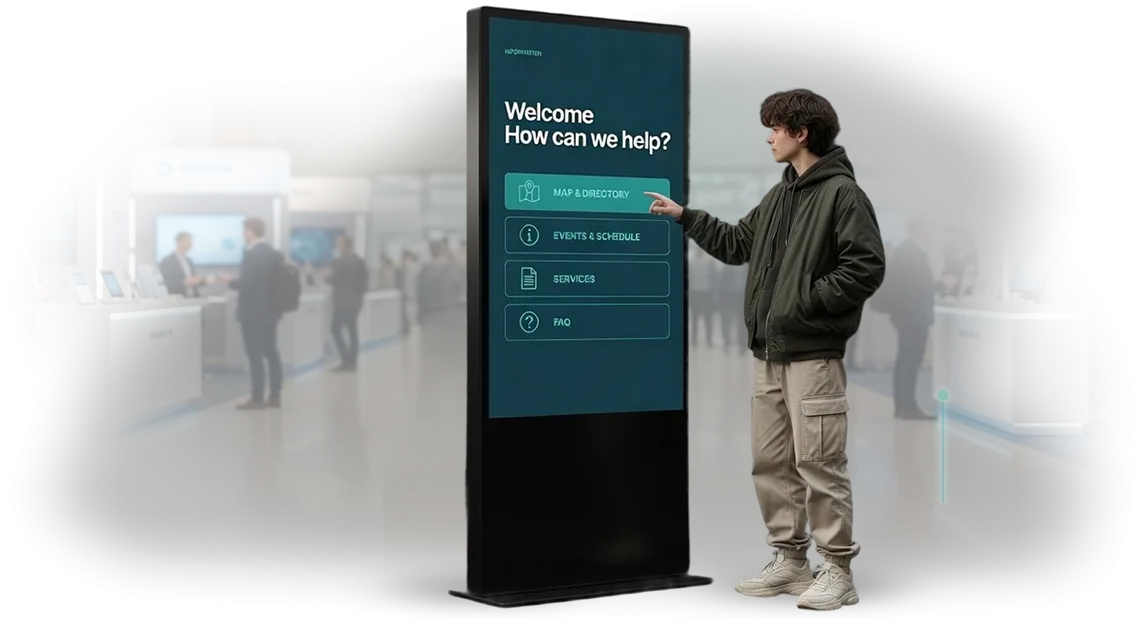
We solve this pain with interactive kiosks for culinary schools. A touch-screen device with an intuitive interface helps a prospective student choose a program in a couple of taps, watch videos from master classes, compare courses, and leave a request for a trial lesson.
Instead of boring brochure reading — a live introduction to the school's kitchen that holds attention and gently guides visitors toward enrollment.
These kiosks solve the problem of attracting students right on the spot: a future student doesn't put off the decision but gets answers to their questions in a single visit.
The culinary school, in turn, gets a clear tool that works without an administrator's involvement, never gets tired, and never misses a single guest. Information is always up to date, and the desire to enroll happens here and now.
As a result, the culinary school turns an ordinary visitor visit into a small event that is remembered and increases the likelihood of course enrollment.
The interactive kiosk becomes the point where interest meets convenience — and this brings the school new students without additional spending on advertising and consultants.
What an interactive kiosk gives an educational institution
Culinary schools often face the issue that prospective students know little about the programs, and administrators spend time on repetitive questions.
A touch-screen kiosk in the lobby changes this: it introduces visitors to courses, shows master classes, and collects applications. Interactive kiosk development from our team helps the educational institution stand out and streamline processes.
Increased interest in programs
A prospective student sees bright presentations, photos of dishes, and videos from classes. This format holds attention longer than a static display or brochure and encourages choosing the school.
A modern image for the school
An interactive kiosk is a sign of the educational institution's technological sophistication. It creates the impression of a modern space, builds trust with parents and partners, and attracts attention on social media: guests often take photos next to unusual equipment.
Reduced workload for administrators
The kiosk answers common questions: schedule, cost, admission requirements, documents. Staff are freed up for more important tasks — consultations, guided tours, and paperwork.
Increased number of applications
A visitor can immediately leave contact details, select a course of interest, and sign up for a trial class. Applications go into a single system — they are easy to process and track, which speeds up the admissions office's work.
Kiosk formats for culinary school needs
At a culinary school, a visitor wants to immediately see the master class schedule, sign up for a course, or find out the menu for an upcoming event. If information is scattered around the administrator's desk, lines form and guests get lost.
An interactive kiosk solves this — you just need to choose the right format for the specific school zone.
We make kiosks for three standard scenarios: floor-standing for the lobby, wall-mounted for a display window or hallway, and table kiosks for master classes. The table below will help you quickly decide.
| Format | Where to place it | What it gives the school |
|---|---|---|
| Floor-standing kiosk | Lobby, waiting area, near the entrance | Helps guests independently find the right course or instructor, reduces the administrator's workload, and shortens queues. |
| Wall-mounted kiosk | Display window, hallway, area near the kitchen | Introduces the schedule and dishes in a "menu" format; works even where there is little free space. |
| Table kiosk | Tables for master classes, tasting area | Lets participants immediately sign up for the next lesson, view a recipe, or leave feedback — without breaking away from the process. |
Whichever format you choose, the content and design are adapted to the culinary school's brand identity.
We will recommend the optimal option for your layout and tasks, and after launch we stay in touch: we'll help update the schedule and add new features, such as online booking or a loyalty program.
How we launch a project: 6 steps to a finished kiosk
Launching a kiosk for a culinary school is not about "uploading files to a screen." To make a kiosk that actually signs guests up for master classes, shows the menu, and boosts sales, you need a clear process.
We've gone through it on dozens of projects for schools and cafés and broken it down into six stages — you always see what's happening and when the finished result will be ready.
-
Brief and discovery. We analyze the school's goals: which courses we're promoting, how guests choose dishes, what should be on the main screen. We set project deadlines and the scope of work.
-
Screen and scenario plan. We create a flowchart: greeting, choosing a direction, schedule, class sign-up. We confirm the logic before design begins, so nothing has to be redone later.
-
Design in the school's style. We create the interface with dish photos, clear buttons, and brand colors. At this stage, you make revisions and see how the kiosk will look in the lobby.
-
Development and testing. We build the interactive system, check touch input, response speed, and resilience to queues. We test real scenarios: signing up for a master class, viewing the menu, instructor contacts.
-
Delivery and implementation. We configure the equipment, install the kiosk in the entrance area, connect it to the internet, and verify everything works on site. We train administrators so they can assist guests in the first days.
-
Support and growth. We monitor stability, update the schedule and seasonal offers, and add new features — from a loyalty program to online payment. The kiosk grows with the school, and you're never left alone with the technology.
What's included in delivery: a turnkey package
The culinary school receives a complete solution, not a box of hardware. We assemble, configure, and test the kiosk before delivery — on launch day it works immediately, without needing your own specialist. The package includes everything needed to get started:
- Touch panel — professional vandal-resistant equipment with clear touch response. Visitors confidently browse course schedules and training programs.
- Enclosure — a sturdy structure that protects the hardware from moisture, grease, and impacts. The mounting is chosen for the space: wall-mounted, floor-standing, or on a stand.
- Pre-installed software — the interface is configured for the culinary school's needs: master class and course schedules, prices, and sign-up. An administrator can change content without a programmer.
- Staff instructions — simple guides: how to turn on the kiosk, update the schedule, replace content. An administrator can figure it out in 10 minutes.
- Staff training — a short hands-on session for administrators and instructors. Employees confidently use the kiosk and help guests sign up.
- Warranty and support — extended warranty on the equipment. If anything fails, we resolve it remotely or send a specialist — the kiosk doesn't sit idle.
- Installation and launch — we deliver, install, connect, and verify everything works on site. Plug in the power — and the kiosk is already taking sign-ups.
The package saves time and eliminates the risk of hardware, software, and enclosure incompatibility. You get a tool that attracts attention and collects applications from day one.
Case study: how a kiosk increased student sign-ups by 40%
The culinary school network Gastronom faced a typical pain point: guests came to tastings and showed interest in courses, but bookings were often lost — administrators couldn't keep up with applications during peak hours, and by evening visitors forgot to call back. Management wanted to turn interest into real bookings without increasing staff.
We installed an interactive kiosk in the lobby of each school with a master class schedule, course descriptions, and a convenient sign-up form. The guest chooses a direction, a convenient date, and leaves their contact — it takes less than a minute. The schedule updates automatically, so the kiosk always shows current openings and prices.
The result exceeded expectations: within two months, the number of applications grew by 40%. The kiosk works during peak hours and when the administrator is busy — not a single inquiry is lost.
Additionally, the share of repeat bookings increased: guests reserve their next master class right away, without putting it off.
"The kiosk has become our best salesperson — it calmly guides, helps choose, and immediately signs people up. We see clear application dynamics and save administrators' time on routine tasks." — Anna, head of the culinary school network.
For us, this is confirmation: a properly configured touch-screen kiosk pays for itself in the first months and becomes a growth point for the business. Want the same momentum in your culinary studio?
We'll tell you how we implement a project tailored to your specifics and what results you can expect in the very first season.
How to choose the kiosk format for your task?
Choosing a kiosk starts not with design but with the question: what should visitors do? If the goal is to sign a guest up for a cooking course, show the master class schedule, or introduce the menu, each format has its own role.
Floor-standing, wall-mounted, and mobile kiosks solve different tasks, so it's important to honestly assess the space, foot traffic, and usage scenario.
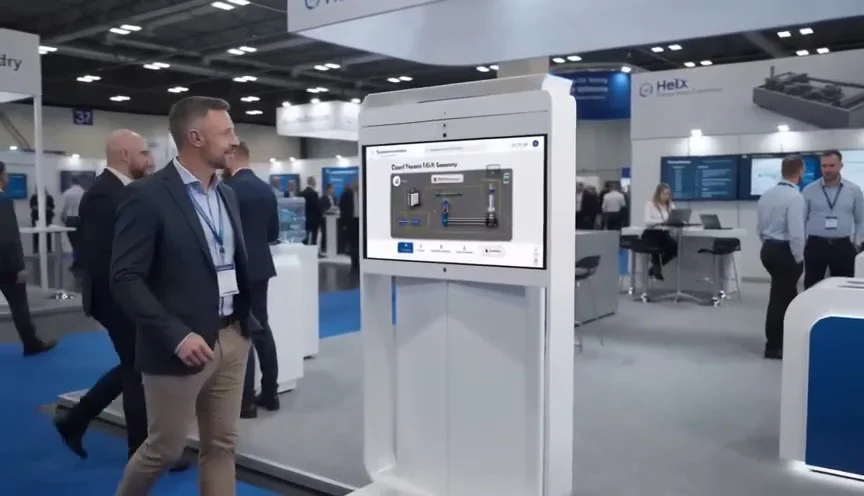
A floor-standing kiosk is the choice for spacious lobbies and waiting areas. It immediately attracts attention, works as a bright navigation point, and lets a person step up without creating a line.
This format is convenient for detailed course selection: a large touch surface, calm navigation, and the ability to show photos of dishes, instructors, and reviews.
A floor-standing kiosk handles traffic well and suits schools where guests spend several minutes before a class begins.
A wall-mounted kiosk is a solution for narrow corridors, passageways, and small studios. It takes up no usable floor space and is always in sight. It's convenient for short reference info: today's schedule, room number, current menu.
If a guest already knows why they came, a wall-mounted kiosk helps them quickly check the details without distracting from the main action. It's an unobtrusive assistant that reduces the administrator's workload.
A mobile kiosk is built for flexibility: off-site master classes, festivals, open house days, temporary promotions. It requires no installation — set it up where the traffic flows, and pack it up after the event.
This format is especially valuable when you're testing new locations or running one-off events. A mobile kiosk can be temporarily placed at a mall entrance or at a fair, collect applications, and then be moved to the main building.
The key advice is to first determine how many people pass through the location per hour and what action they should take. If traffic is high and you need to provide detailed program information, go with a floor-standing model.
If space is limited and fast access is needed — choose wall-mounted. If the task changes from event to event — go mobile.
We help determine the format at the start and adapt the interface to your scenario: this saves budget and makes the kiosk genuinely useful for a culinary school, not just a trendy screen in the corner.
Frequently asked questions about implementing interactive kiosks
Culinary school owners often imagine an interactive kiosk as complex technology that requires a dedicated administrator.
In practice, it's the opposite: the kiosk takes on routine tasks — signing up for master classes, showing programs, collecting contacts — while your staff calmly focus on guests. Below we answer the questions most often asked before launch.
Who will maintain the kiosk and how often?
On a daily basis, all you need is a damp cloth for the screen. Technical maintenance of the kiosk — system updates, connection checks, backups — happens automatically.
We periodically perform remote preventive maintenance, so your team doesn't need to understand how the hardware works.
What if the kiosk breaks down?
The kiosk runs on professional equipment designed for continuous load. But if a failure does occur, you won't be left alone with the problem: all work is covered by an official warranty. If needed, we quickly repair or replace the equipment while guests continue using the service.
How do we update content: prices, event listings, schedules?
You manage the content yourself through a simple panel — no programmers or extra approvals needed. Changed a master class time or added a new course? In a couple of minutes, the info is already on the screen.
We can also set up automatic data loading from your website — then the kiosk always shows current information without any staff involvement.
How long does implementation take?
A standard project takes about two weeks after layout approval. We handle equipment setup, interface design in your school's style, testing, and staff training.
In the end, you get a ready-made tool that immediately starts bringing in new students and increasing brand recognition.
Leave a request — we'll calculate your project in 1 day
A request is not an obligation but an opportunity to get a tailored solution for your needs. Within one business day, we'll send you a site analysis, a free screen prototype, and a cost calculation with specific timelines. You'll be able to make a decision based on numbers, not guesswork.
The prototype is not just a picture — it's an interactive mockup of the future kiosk. You'll see how a visitor chooses a course, views the schedule, and signs up for a master class.
The site analysis will show where to install the kiosk so it doesn't get in the way of guests and delivers maximum value.
For a culinary school, it's especially important that the kiosk helps visitors quickly find the right master class rather than creating a queue at the entrance.
What you get after submitting a request:
- A free screen prototype — a clear view of how the kiosk will look in your culinary school.
- A cost calculation for your specific tasks — only the options you and your guests actually need, with no overpaying.
- Installation site analysis — placement recommendations so the kiosk works effectively and doesn't disrupt the flow.
- Launch timeline — a realistic work plan with dates your team can understand.
- Content recommendations — what to write in course cards so visitors sign up more often.
- Post-launch support — schedule and menu updates handled by our specialists.
Leave a request — and within a day you'll have the full picture: cost, timeline, and prototype. It's free and carries no obligation. We'll start by discussing your goals, and then show you how the kiosk will fit into your interior and learning process.