

Why do visitors to museum-reserves leave disappointed?
Visitors come to a museum-reserve for vivid experiences, but they encounter queues, inconvenient signs, and a lack of live storytelling.
Without clear navigation in the museum, the route becomes a guessing game: some exhibits go unnoticed, and the history of the place is lost behind dense text on the wall.
As a result, guests spend their time confused and leave with the feeling that they missed the most important part.
Even if guided tours cover part of the audience, independent visitors are left alone with the space. Information kiosks could become a personal guide, but often they are outdated screens with confusing menus. Instead of helping visitors find their way, they create a barrier and deepen the disappointment.
Guest satisfaction directly affects whether they will return and recommend the museum to friends. Negative experiences spread quickly through reviews and social media—and then it no longer matters how valuable the collection is. Visitor impressions are not a nice extra, but the key outcome of any museum-reserve's work.
We solve this problem: we design interactive kiosks that guide guests through the grounds, suggest routes, and tell stories at a comfortable pace. Visitors feel cared for from the first seconds, and the museum gets grateful guests instead of disappointed ones.
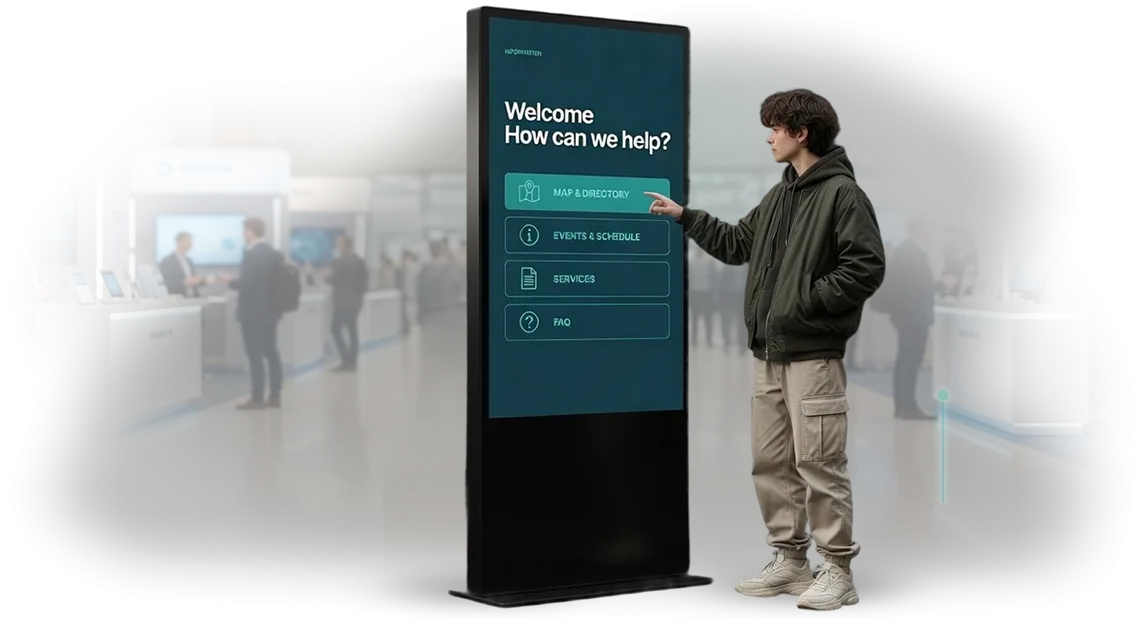
Interactive kiosks: increased engagement and guest convenience
Visitors come to a museum-reserve for an experience, not for text on a sign. If a guest cannot quickly find their bearings or does not understand what is interesting nearby, they lose attention and leave after 40 minutes.
A modern kiosk solves this problem: it turns the visit into a living journey—with routes, stories, and the ability to look at any object in more detail.
Below is a checklist of what the museum gets after launching interactive kiosks.
-
Visitor engagement. Guests do not just read—they interact: choose routes, open photos and videos, listen to stories. Time spent in the museum grows, and the emotions become something they want to share on social media.
-
Navigation convenience. Forget queues at the entrance and “where is the restroom?” questions. The kiosk shows a map of the grounds, suggests the shortest route to the desired object, and helps plan a visit in a minute.
-
Behavior analytics. The system collects anonymized data: which exhibits are chosen most often, where guests linger, and what they walk past. This is a ready-made basis for updating displays and routes without surveys or guesswork.
-
Museum reputation. Guests perceive attention to detail as a sign of a museum's high standard. After such a visit, they recommend the museum to friends and come back themselves.
-
Staff savings. The kiosk handles part of the typical questions, allowing staff to spend more time on live tours instead of repeating the same information.
Wedevelop kiosks tailored to the specifics of reserves: outdoors, in historic buildings, and across large territories. We handle scenario design, UI design, adaptation for touchscreens, and training for your staff. Launch one kiosk—and you will see how guest behavior changes within the first month.
Interactive kiosk formats for museum-reserves
For a museum-reserve (such as Kolomenskoye), the territory is not a single hall but a park, pavilions, historic buildings, and routes between them. Visitors get lost without navigation, and staff spend time on the same questions.
Therefore, the kiosk format must match the installation zone—at the entrance, in a hall, or in an open area—and the task: to guide the guest, show an exhibit, and tell the story of the place.
We develop three basic touchscreen kiosk options and one universal scenario—an interactive map. Each solves its own task and easily integrates into the museum's existing infrastructure.
| Format | Where it is installed | What it gives the museum and visitors |
|---|---|---|
| Outdoor kiosk | Entrance zone, park, open areas | Works in any weather, greets guests before the ticket office, reduces queues and relieves staff |
| Wall-mounted kiosk | Lobbies, corridors, exhibition halls | Saves space, does not obstruct visitor flow, provides quick information about opening hours and object locations |
| Floor-standing kiosk with touchscreen | Vestibule, pavilions, temporary exhibitions | Attracts attention, convenient for 3D models, historical references, games, and quizzes |
| Interactive map | Any kiosk or touchscreen table | Builds a route based on guest interests, shows travel time and key points, reduces the load on attendants |
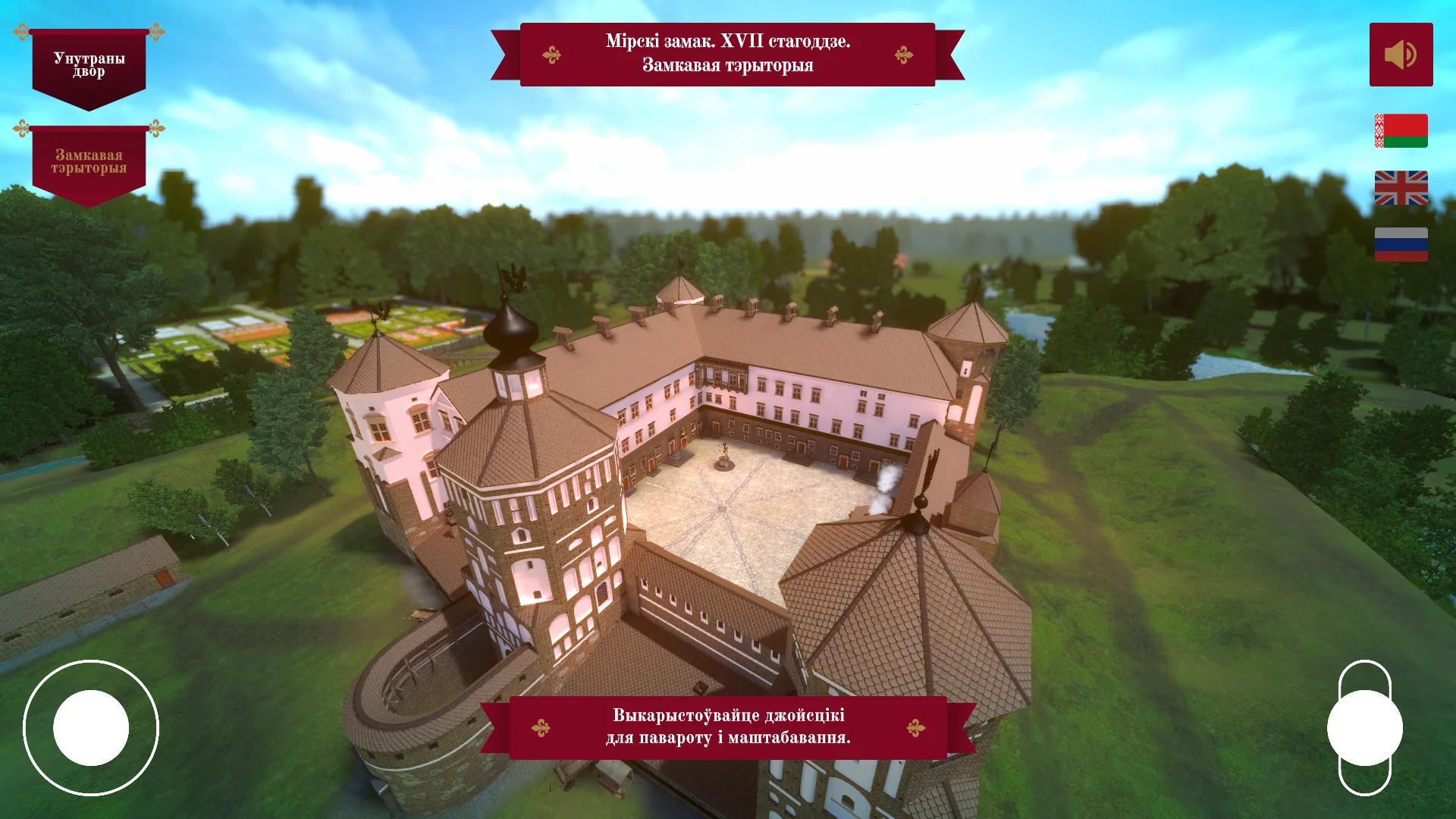
An interactive map is a must-have element for a museum-reserve. It turns a scattered territory into a single scenario: guests choose for themselves what to see—the main exhibits, children's programs, or quiet corners of the park. This increases visitor satisfaction and extends time spent on the grounds.
Which format should you choose? An outdoor kiosk at the entrance solves navigation up to the ticket office; a wall-mounted kiosk works in halls and corridors; a floor-standing kiosk works at points of attraction.
Most often, a museum-reserve uses a combination of formats, with the interactive map serving as the connecting link. We will help you choose a configuration for your territory and budget—from a single kiosk to a comprehensive navigation system.
How turnkey kiosk development works: from brief to launch
Working on a kiosk for a museum-reserve is a collaborative project where it is important that visitors immediately feel the benefit and staff do not waste time on complicated management.
We have divided the process into clear stages: from the first conversation to launch and ongoing support. At each step, you see the result and can influence the decisions.
-
Brief and task definition. A short interview with you: where the kiosk will be located, who its main users are—tourists, school groups, or regular guests—and what should take priority: navigation, exhibition storytelling, or the event calendar. We record the goals and success criteria.
-
Approval of structure and logic. We show what sections the kiosk will include: a map of the complex, descriptions of halls, information about exhibits, opening hours. You approve which sections are needed first and which can be added later.
-
Layout and visual style development. We create a design that does not clash with the museum's architecture: we use your brand colors, fonts, and photographs. We approve the layout before programming starts—so you can see in advance what the kiosk will look like.
-
Content filling. We prepare texts and select images and videos. We help adapt existing materials for the touchscreen: short notes that are easy to read from a distance, large buttons for people of all ages.
-
Assembly and testing. We assemble the kiosk, install the software, and test scenarios: standby mode, touch input, switching between sections. We verify that the kiosk handles peak-hour visitor flow without freezing.
-
On-site installation and handover. We deliver and install the kiosk at the required location, set up connectivity with your network if needed, and conduct a short training session for staff: how to turn it on, restart it, and update information. We provide a clear instruction manual.
-
Post-launch support. We stay in touch: answer questions, help replace texts or add a new section. Content can be changed without a programmer—a simple management system is provided for this.
This process helps avoid surprises: you understand what is happening at each stage and get a predictable result within the agreed timeline.
What is included in the interactive kiosk delivery
For a museum-reserve, an information kiosk is not just a stand with a screen, but a full-fledged tool for navigation and presenting the exhibition. We put together a turnkey delivery package: from content scenarios to installation and staff training.
You won't have to look for different contractors, coordinate deadlines between them, or deal with technical details—one team handles everything.
Here is what is included in the delivery:
- Scenario design tailored to the museum's needs. Routes around the grounds, historical references, maps, descriptions of exhibits and display objects—the content is designed with the specifics of your reserve in mind.
- Kiosk content. We prepare texts and select photographs, videos, and audio materials. If you already have your own materials, we adapt them for the kiosk screen—you don't need to redo anything yourself.
- An interface that every visitor understands. Large buttons, simple navigation, and comfort for guests of all ages—from schoolchildren to older adults. Visitors figure it out without staff assistance.
- Reliable hardware. We select enclosures with protection against dust, moisture, and vandalism—this is especially important for open grounds where the kiosk operates in any weather.
- Installation and configuration. We install the equipment, connect it, and verify operation in your museum's real conditions: lighting, placement, and accessibility for visitors.
- Staff training. We conduct a short instruction session for attendants and administrators: how to turn on the kiosk, update content, and help guests with navigation. Your staff will have no questions after we leave.
- Post-launch support. We update information, provide phone consultations, and maintain kiosk operation so that it never sits idle and always meets the museum's current needs.
As a result, you get a working service that improves the visit experience and reduces the load on staff. Visitors find their own way and learn the history of the place, while staff engage in live interaction with guests instead of answering the same questions.
Case study: how an interactive kiosk increased guest dwell time
The Old Harbor museum-reserve faced a typical situation: guests walked through the exhibition in 40 minutes, did not manage to see the key objects, and left without impressions.
During the high season, tour guides could not cope with the flow, and paper signs and handouts did not hold attention.
We proposed interactive kiosks with touchscreens installed at the entrance and at three points along the route.
Guests choose their own scenario: “Quick Tour,” “Family Walk,” or “Quest Code.” The kiosk shows the path, tells stories, and offers tasks right on the screen—nothing needs to be downloaded.
After three months, we measured the results. Average dwell time grew from 40 to 67 minutes—almost 70%. The number of visitors who reached the far estate doubled. Exit survey satisfaction rose from 4.0 to 4.8 out of 5.
Notable changes
- Repeat visits grew by 35%—guests return to complete the quest they did not have time to finish on their first visit.
- Tour guide workload evened out: the kiosk covers peak hours, and staff work with small groups.
- Ticket office queues decreased by 20%—tickets can be purchased directly at the kiosk.
The museum director revised the development plan: by the next season, two more kiosks were added and used for exhibition announcements.
The project paid for itself within four months—guests began spending more time on the grounds, and revenue at the cafe and souvenir shop increased.
For us, this is the main indicator: the kiosk is not just an information stand, but a tool that increases the value of the visit for the visitor and revenue for the museum.
Frequently asked questions about kiosk development and integration
Museum-reserves often worry that an interactive kiosk is a complex project that will drag on for months and require constant involvement of IT specialists. In practice, development follows a clear procedure, and integration into the exhibition takes minimal time. Below are answers to the questions that directors most often ask before starting.
How long does kiosk development and installation take?
A typical project from brief to launch takes 3-5 weeks. The first version with basic functionality is ready within 1.5-2 weeks; the remaining time is spent on content filling and on-site testing.
Installation does not require construction work: the kiosk plugs into a power outlet and the museum's network, and all configuration is done remotely.
What happens if the kiosk breaks down? Who services it?
We provide a warranty on the equipment and developed software. During the warranty period, an engineer remotely monitors the system and quickly resolves issues. If component replacement is needed, we handle it within 2-3 business days.
After the warranty expires, you can sign a regular maintenance contract to keep the kiosk in working condition at all times.
Will the kiosk work with our equipment and existing infrastructure?
Compatibility is ensured at the design stage. The kiosks work with any modern touchscreen equipment and do not require a dedicated server infrastructure.
The software easily integrates with the museum's website, ticket system, and other services, and data can be exported to your accounting system if needed.
Can we update the information in the kiosk ourselves?
Yes. The package includes a simple control panel: a museum staff member can change opening hours, add announcements, news, and exhibit descriptions without a programmer. Staff training takes 1-2 hours, and all instructions are provided in writing.
These answers remove the main barriers: timelines are clear, the warranty is fixed in the contract, and daily work does not fall on museum staff. Contact us to get a preliminary timeline estimate and a list of work items for your project—it is free and with no obligation.Ready to discuss an interactive kiosk project?
For a kiosk to work for visitors rather than just “for show,” it is not enough to simply place a screen with a map. You need to plan the scenario, content, and logic that will keep guests engaged and reduce the load on staff. We help you do this—from the first brief to launch.
Leave a request, and within one business day we will prepare a cost estimate and implementation plan for your project. You will receive:
- A clear work plan and timeline—you immediately see when the kiosk will go live and who is responsible for what.
- An estimate that fits your budget—no “surprises” mid-project and no forced options.
- An interface prototype before development starts—you see in advance how visitors will interact with the screen.
- Recommendations on content and structure—we will help present information about the museum, exhibits, and routes in the most visual way.
- Post-launch technical support—a specialist is available, with updates and refinements as needed.
- Adaptation to any touchscreen and enclosure—we fit into your space without changing the exhibition.
Tell us about your task during a consultation—we will advise which functionality you actually need and what is better to skip so you don't overpay. It will take 15-20 minutes, but it will save you weeks of rework.
To get an estimate, send a couple of photos of the installation area and describe the kiosk's audience. Then we will propose a solution that will be clear to both schoolchildren and foreign tourists. We'll start with a short call or messages—whichever is more convenient.
How to choose the right kiosk format?
There is no single “ideal” kiosk for all museum-reserves—the format is determined by the tasks it solves. If you need navigation across a large territory, that is one scenario; if you need deep immersion in the exhibition, it is another.
Therefore, the first step is to clearly define what the visitor should do at the screen: find a route, see a historical reconstruction, or get additional information about an exhibit.
The next criterion is the installation location and operating conditions. For indoor halls, classic floor-standing or wall-mounted designs are suitable.
For streets, entrance groups, or objects scattered across a protected territory, you need protected enclosures with a vandal-resistant screen and resistance to moisture and temperature fluctuations.
It is also important whether the kiosk will operate year-round or only during the season—this determines the equipment class.
Finally, consider the audience: visitors' age, level of preparation, and basic skills with touchscreens. Museum-reserves often host both school groups and older tourists, so the interface should be intuitive for everyone.
Practice shows that the best solutions come from jointly analyzing guest behavior scenarios—from entrance to exit.
We help museum-reserves at this stage: we study the specifics of the site, the installation zones, and the exhibition goals, and then propose a suitable kiosk type and interface that will blend naturally into the space and be convenient for your visitors. All that remains is to approve the design mockup—and you can launch.