

Lost Revenue for Restaurants and Cafés Due to Long Queues
Queues are a direct loss of revenue for restaurants and cafés. While a guest stands at the checkout, they may change their mind and leave for a competitor that serves faster.
According to operators' estimates, when there is a noticeable queue, up to 30% of visitors do not place an order at all, and these losses repeat every day.
A departing guest is not just a lost receipt. They come back less often, and the negative impression spreads through reviews and social media, cutting off new customers. In this way, queues hit revenue twice: immediately and in the long term.
The problem is especially acute during the lunch peak and in the evening, when the load on the checkout is at its maximum. The cashier physically cannot serve everyone quickly, and the restaurant loses profit even when the dining room is full. This is exactly where the most valuable guests leave — those who are ready to pay right now.
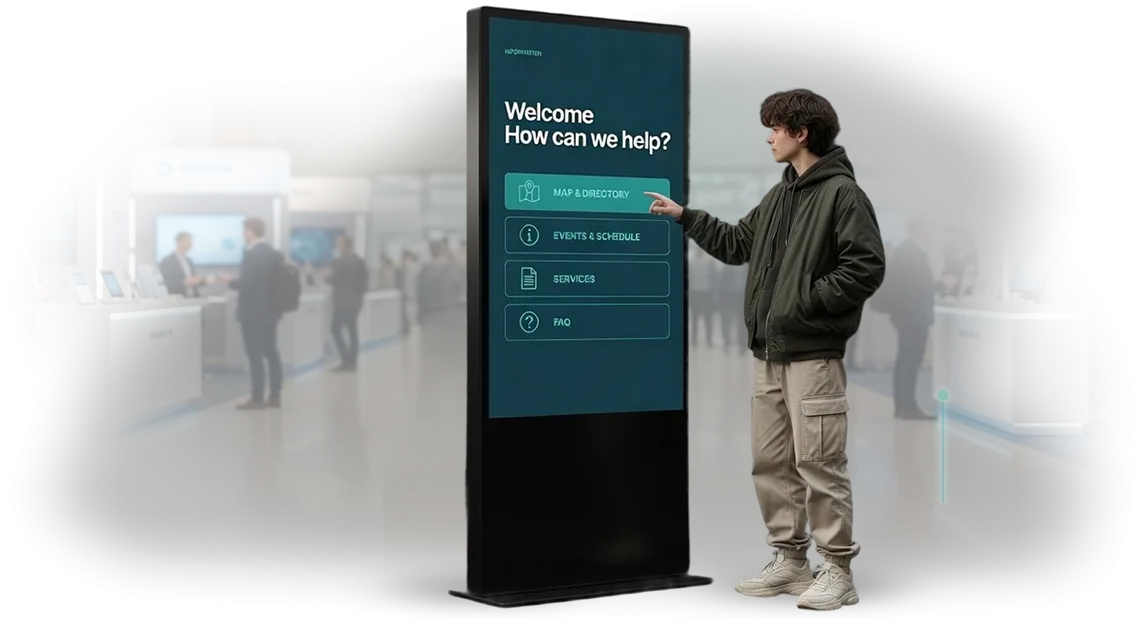
An interactive self-service kiosk eliminates this loss: the guest places their own order in 30–40 seconds, without a cashier and without waiting in line.
They can calmly choose dishes, see promotions and upsells — the average check grows, and the establishment's throughput increases.
We implement such kiosks for restaurants and cafés on a turnkey basis: we design the menu, the ordering scenario, and help launch the process without downtime.
This is a proven solution that brings guests back, reduces queues, and noticeably increases revenue within the first weeks of operation.
What Benefits Do Interactive Kiosks Bring to Your Business
Interactive kiosks are not just a replacement for a paper menu, but a tool that directly affects profit. Our team has helped dozens of restaurants and cafés implement such solutions and know what results they deliver in the very first months of operation. Here are the main benefits a business gets.
-
Higher average check. The guest sees photos of dishes, and the kiosk offers upsells — drinks, desserts, extra toppings. As a result, the order grows by 10–15%, because every item looks appetizing, and adding it takes one click.
-
Service speed. Placing an order takes about a minute — without waiting for a waiter or queue. This is especially valuable during peak hours: tables turn over faster, and guests don't leave when they see a bottleneck. Dining room throughput grows without expanding staff.
-
Guest loyalty. The modern touch interface is convenient and intuitive: the guest controls the process themselves, with no need to ask again or wait. The order is always accurate, without any "wrong item" mistakes. This impression sticks — guests return and recommend the place to friends.
-
Sales analytics. The kiosk collects anonymized data on every order: popular dishes, check size, peak times, seasonality. You see what actually sells and what should be replaced or featured in a promotion. Decisions are made based on numbers, not intuition.
These four benefits work together: faster service — more guests, higher check — more revenue, convenience — greater loyalty, analytics — more precise marketing. A kiosk usually pays for itself within a few months, and then continues to deliver a lasting effect. We handle development, setup, and support — all you have to do is enjoy the result.
Interactive Kiosk Formats for Business Needs
Choosing an interactive kiosk format is not a matter of design, but of guest behavior and service speed. From compact stands to stationary panels — each solution has its own purpose: relieve the checkout, shorten the queue, or give the guest more time to choose dishes.
Comparing kiosk formats
| Format | Who it's for | What it gives the business |
|---|---|---|
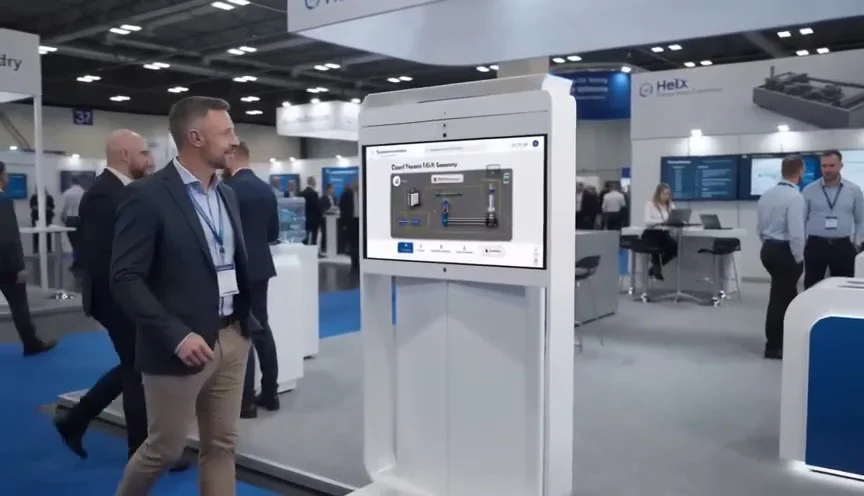
| Floor-standing kiosk | Restaurants and cafés with heavy guest flow | Relieves the checkout during peak hours, orders are placed in a minute or two, the queue moves faster |
| Tabletop kiosk | Establishments with table service | The guest chooses dishes and add-ons themselves, the waiter only brings the order — average check grows, table turnover accelerates |
| Touch panel | Food courts, events, summer terraces | Mobile scenario: the panel is easy to move, the menu is quick to update, no hall reconfiguration required |
The choice depends on your goals. If your main pain is queues and staff shortage during peak hours, take a floor-standing kiosk at the entrance. If you want to increase the average check without pushy waiters, place tabletop kiosks at the tables. For temporary promotions and locations with changing space, a touch panel is more convenient.
We have been helping establishments choose a kiosk format for their space, guest flow, and budget for more than ten years. We'll advise which option will pay off faster and develop an interface that guests will master without staff guidance.
How Kiosk Development Goes: From Brief to Launch
We know how important predictability is in the restaurant business: any kiosk downtime means queues and unhappy guests. That's why the development process is designed so that you see the result at every stage and understand what is happening. No "black box": only clear steps, approvals, and fixed agreements.
- Brief and analysis. First, we discuss the establishment's goals, menu specifics, guest profile, and growth points. We ask questions that help build the right ordering logic before development even starts.
- Prototype. We create an interactive mockup of the future screen: how sections look, how the guest chooses dishes, adds them to the cart, and pays. This mockup can be opened on a tablet or computer, "feel out" the logic, and adjust it without programming costs.
- Approval. You make edits to texts, prices, dish compositions, and scenarios. We freeze the version on which the entire further process is built. At this stage, we synchronize the menu structure with your accounting system to avoid discrepancies in the future.
- Implementation. We configure the system for your processes: integration with the cash register and warehouse, connection of touch equipment, uploading dish photos and descriptions. Proven tools are used inside — you get stable operation without "surprises" on the busiest evening.
- Launch. We install the kiosk in the dining room, run test orders using real scenarios, and train administrators and waiters. We check payment, refund, and hint scenarios — everything should work like clockwork from day one.
- Support and development. After the launch, we stay in touch: we quickly update the menu, monitor stability, and add new features when needed. You always know who to contact and how quickly the issue will be resolved.
What Is Included in an Interactive Kiosk Delivery
When you order an interactive kiosk, it's important to understand exactly what is included in the final price. We put together the delivery package so that you don't have to buy or refine anything yourself — from the enclosure to the staff training guide.
-
Equipment. A reliable touchscreen kiosk with a housing suitable for a dining room, lobby, or street. Professional components operate stably even under high load — guests simply choose dishes instead of thinking about the technology.
-
Software. A system for managing the menu, prices, and promotions. You update content yourself: change seasonal items, prices, add dish photos — without contacting developers.
-
Design mockups. Interface adaptation to your brand: brand colors, fonts, convenient navigation. At first glance, the guest understands where coffee is, where breakfasts are, and where payment is.
-
Installation and commissioning. We deliver the kiosk, install it on site, connect power and network, and check all operation scenarios. You don't need to look for a contractor for installation — we do everything ourselves.
-
Staff training. A short instruction for employees: how to update prices, add a new dish, replace the receipt printer roll. Plus a quick reference guide and access to a knowledge base.
-
Technical support. We help by phone and remotely during business hours. If the issue cannot be resolved remotely, we visit the site and fix it under warranty.
As a result, you get a working turnkey kiosk: equipment, software, design, and installation — everything in one package. For a restaurant or café, this means a quick launch without extra hassle and a payback driven by higher average checks and reduced staff load.
Case Study: How a Kiosk Doubled the Average Check
For a coffee shop chain with four locations in a residential district, the main task was to raise the average check without expanding the space or hiring additional staff.
Guests were used to ordering only coffee, and the barista physically couldn't find time to talk about desserts and seasonal items.
We suggested installing an interactive kiosk — instead of an extra checkout, it became an unobtrusive seller that shows the guest an upsell at the right moment.
This is the coffee shop chain we worked with on this project.
Before the kiosk was introduced, the average check stayed at the level of "coffee + a couple of candies." In the very first month of kiosk operation, upsells of desserts and second drinks grew by almost a third.
Within two months, the average check doubled — the kiosk offered combo sets to the guest and added a "little treat" to the order when the person had already chosen an item.
What the project brought from a business perspective
The kiosk paid for itself in four months — after that, it generates net profit. Importantly, staff workload did not increase: baristas continue to work with drinks, while the kiosk takes on the function of increasing the check.
Additionally, the chain gained data on guest preferences: which items are most often paired together, which combos perform better.
After six months, the owners ordered a second kiosk for a new location, and then switched two more establishments to kiosks.
According to the client's assessment, kiosks became part of the service rather than a replacement for staff: guests receive their orders faster, and the average check stays at the new level.
How to Choose a Kiosk Format for Restaurants and Cafés?
Choosing a kiosk format for a restaurant or café is not a question of "which terminal to buy" but a question of "how guests can most conveniently place an order." A fast-food place with customer flow at the counter and a restaurant with waiter service need different solutions: it's important to rely on the establishment's specifics and its service format.
If guests choose dishes at the counter, a touchscreen kiosk at the entrance shortens queues and lets them study the menu calmly. At the same time, the terminal suggests additional items — the average check grows.
For a restaurant with waiters, ordering from the table is more convenient: via a touchscreen or the guest's smartphone.
Also consider how guests use the establishment: they come for business lunches, use delivery, or are in a hurry.
A quick-service restaurant needs just one or two kiosks in the waiting area, while for a café with a large dining area, ordering from the table is more profitable — guests don't have to get up and are more likely to order dessert.
We choose the format after analyzing the establishment: peak load, staff, menu complexity, and guest behavior. It's important not just to install a terminal but to integrate it into operations — the order immediately goes to the kitchen, and the guest doesn't waste time.
The right format solves specific tasks: it reduces staff load, shortens queues, and makes service predictable. We help you choose a solution for your specifics, prepare the interface, and launch the kiosk so that it pays off from the very first weeks.
Frequently Asked Questions and Concerns About Kiosk Implementation
Before launching a kiosk, a restaurant or café owner has the same questions: what happens if the equipment breaks down, how long the development takes, how it will affect the checkout, and who will update the menu. We address the main concerns — without technical details, in the language of business.
What if the kiosk breaks down?
A kiosk is the same kind of equipment as an espresso machine or a cash terminal, so breakdowns cannot be ruled out.
But we structure our work so that they don't affect your revenue: we provide fast repairs and replacement of components, as well as remote diagnostics, which often resolves the problem before a specialist even arrives. During repairs, you are never left without a sales tool.
How long does development and launch take?
We launch a typical kiosk for a restaurant or café within 3–4 weeks: from brief to a working device on site. The timeline depends on the number of dishes, payment methods, and integrations, but we always fix the date in the contract and meet it. For chains with a standard menu, launching the second and subsequent locations goes even faster.
How will the kiosk work with our cash register?
Integration with cash register software happens at the level of order and payment exchange: the guest builds their order on the screen, pays, and the data automatically goes into your accounting system.
We take care of configuring and testing the connection before launch, so you won't have to change familiar processes or duplicate operations manually.
Who will update the menu and how?
Updating the menu takes a few minutes and doesn't require a programmer. Through a personal account, you change prices, photos, dish compositions, and promotions — all changes immediately appear on the kiosks.
If needed, we connect automatic synchronization with your accounting system so that prices and dish availability always match actual inventory.
If you still have questions about kiosk implementation, leave a request, and we'll review your case taking into account the specifics of your establishment and current processes.Order Kiosk Development and Get a Ready-Made Solution
Leave a request on this page — and we'll get back to you within one business day. We'll clarify the project details, kiosk objectives, and timelines that work for you.
After a short conversation, you'll receive a cost estimate and a launch plan — it's free and creates no obligation.
Here's what happens right after your request:
- First contact — a manager contacts you at a convenient time and answers all questions.
- Consultation — we discuss which functions your establishment actually needs: menu, promotions, loyalty program, or guest entertainment.
- Cost calculation — we prepare two or three solution options for your budget, with no hidden fees.
- Contract and fixed deadlines — you know in advance when you'll receive the finished kiosk and what's included in the price.
- Development and setup — we build a system that easily fits your interior and works without failures during peak hours.
- Launch and staff training — we install the kiosk, show waiters and administrators how to use it, and provide short instructions.
You get a turnkey solution, not a set of technical specifications. We take on all stages — from idea to the kiosk's daily operation. Fill out the form or call us — we'll handle the rest.