

Kiosk Integration with Tourist Route Management Systems
A tourist with a paper map is a lost tourist. Printed signs become outdated, route maps diverge from reality, and visitors waste time on endless clarifications instead of enjoying their trip. The result is dissatisfied guests, negative reviews, and fewer repeat visits.
The problem becomes especially acute in peak season, when navigation errors are amplified by the flow of people.
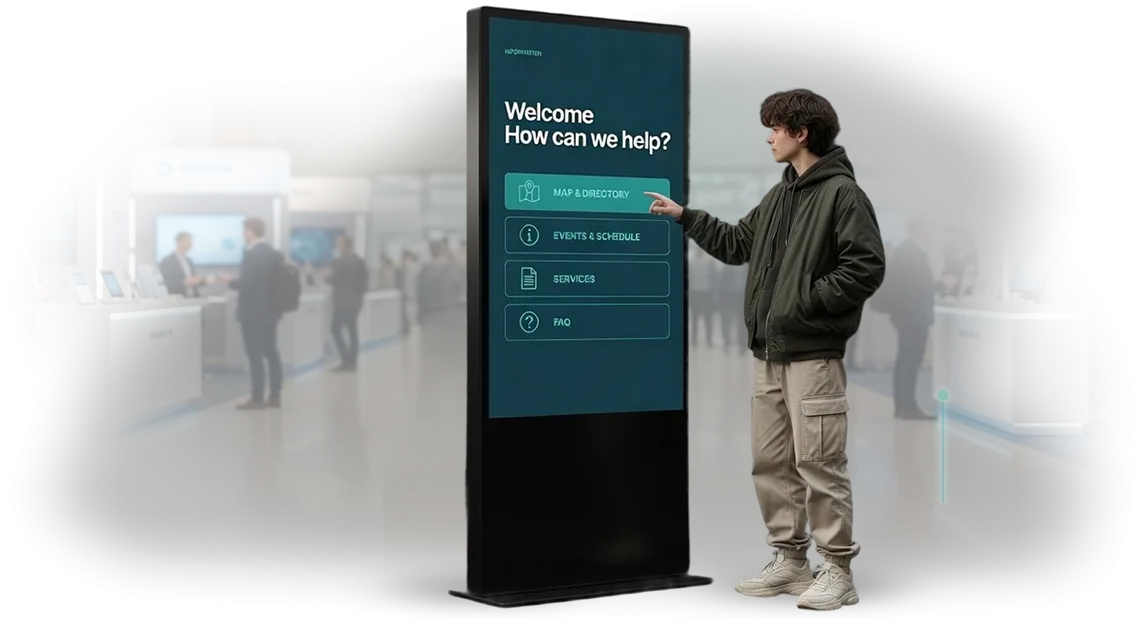
The solution is an interactive kiosk integrated with a tourist route management system. The kiosk receives data directly from that system: current route maps, temporary closures, new points of interest.
Information updates automatically, so navigation for tourists is always fresh — without reprinting brochures, manual edits, or lengthy approvals.
For your facility, this means satisfied guests and fewer hassles. Visitors quickly find the right route, stay longer, and leave with positive impressions. Staff don't need to manually verify data — the kiosk does it on its own.
And you get order in your information environment and protection from mistakes that can cost your reputation.
We have previously carried out kiosk integrations with route management systems for tourist locations. We help choose the scenario, configure data updates, and train staff. You get a working navigation tool that saves time and increases guest loyalty.
Business Benefits of Live Kiosks: Increased Visits and Leads
Outdated information in a tourist kiosk is a direct loss of revenue. A visitor looks for a route, sees a closed museum or a long-changed schedule, gets annoyed, and leaves.
As a result, the business loses visits, and the brand loses trust — people no longer see the kiosk as a reliable source.
We solve this through integration with tourist route management systems. Our solution connects to SmartRoute, a platform that aggregates data from tour operators, museums, and city services.
The kiosk receives real-time information about events, object availability, and changes — without manual updates.
The technical side is designed so the client doesn't have to think about maintenance. The integration uses open standards and a server architecture that easily handles peak loads during the vacation season.
This means stable kiosk operation even amid crowds of tourists, while data freshness is guaranteed automatically.
A live kiosk works like a magnet for audiences. People see that they can get a timely answer here, stay longer, and explore offers.
Interactive scenarios collect contacts from those who want a curated route selection — turning the kiosk into a lead generator for hotels, restaurants, and tours.
Audience growth comes from satisfied visitors: they recommend the kiosk on social media and return for their next trip. Fresh data increases loyalty — they trust you as a reliable navigator. The result: more visits, inquiries, and repeat contacts without extra advertising costs.
Interactive Kiosk Formats for Different Needs
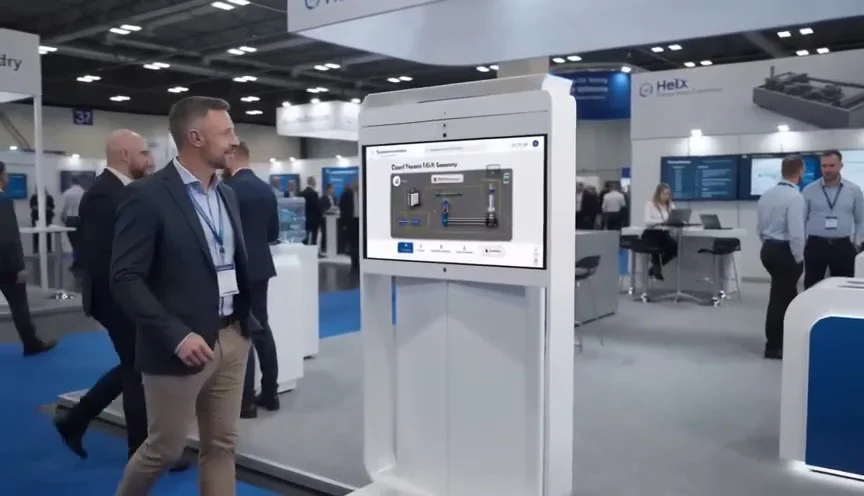
An interactive kiosk is useful when the format matches the task and installation site. Touchscreen kiosks suit museums and visitor centers, wall-mounted panels suit narrow hallways, and outdoor terminals suit city routes.
We select the option for your scenario and immediately configure the link to tourist route management systems: maps, points of interest, schedules, and navigation work identically on all screens.
| Format | For whom | What it gives the client |
|---|---|---|
| Touchscreen kiosks | Museums, visitor centers, hotel info areas | Guests build routes themselves, listen to audio guides, and find the objects they need without staff assistance |
| Wall-mounted panels | Narrow hallways, elevator zones, ticket offices | Save space and provide quick access to maps, nearby points of interest, and opening hours |
| Outdoor terminals | Parks, embankments, tourist streets | Work in any weather and show the way even when offices and ticket offices are closed |
The format does not affect the unified data logic: a tourist can start a route at an outdoor terminal and continue at a museum kiosk — selected points are preserved. For the client, this means less manual work and more control.
We connect kiosks to your route management system, so updates appear immediately on all devices, and you can see which points of interest visitors choose most often.
Choosing the format takes one short call: tell us where the kiosk will be placed and what guests should do, and we'll propose a solution without overpaying for unnecessary features.
Stages of Integrating Kiosks into Your Infrastructure
Integrating an information kiosk with your tourist route management system is a full-fledged project, not a one-time installation. We structure the process so you can see results at every step.
For example, for one client, City Tours, we carried out the integration with their route network within a few weeks — and this became a benchmark for the typical timeline.
- Brief and audit. We collect requirements, examine your route management system, existing databases, and scenarios. We determine how the kiosk will help tourists and what content is needed.
- Solution design. We develop the menu structure, design, and operating logic. We agree with you on how routes, landmarks, and maps will be displayed.
- Integration and configuration. We connect the kiosk to your system: configuring data exchange for routes, opening hours, and promotions. We adapt the interface to your brand.
- Testing and debugging. We run real user scenarios: search, navigation, failures. We check stability under peak load.
- Launch and installation. We install kiosks at selected points, configure the network and system access. We perform commissioning and hand over the keys.
- Support and development. We regularly update content, monitor performance, and answer staff questions. We expand functionality as needed.
What's Included in the Delivery: Turnkey Set
We take on the entire cycle — from idea to a working kiosk at your site. You don't need to look for different contractors: equipment, software, design, and installation are combined into one set and supported after launch.
The standard delivery includes:
- Equipment: a touchscreen panel or enclosed kiosk suited to your space and load. The hardware is designed for 24/7 operation in public spaces.
- Software: a configured interface with a built-in tourist route management system. Content updates and adding new points happen without programmers.
- Design: visual styling of the screen and enclosure in the brand style of the tourist facility. We'll advise on what looks best in your space.
- Installation and connection: we deliver, install, and launch the kiosk on site. We test all operational scenarios so staff can welcome guests right away.
- Staff training: a short briefing on how to turn on the kiosk, change schedules, and answer common visitor questions.
- Documentation and warranty: device passport, instruction manual, and warranty service. On request, we can provide ongoing kiosk maintenance.
This approach saves weeks on approvals and eliminates hidden additional payments. You get a ready-to-work turnkey kiosk — one contractor is responsible for the whole result.
Case Study: How a Museum Increased Attendance with a Kiosk
One of our projects was a tourist kiosk for the Old Town Museum-Reserve. Visitors got lost in the halls, missed key exhibits, and left after the first floor; the average visit barely reached half an hour.
The museum needed navigation that not only shows displays but turns a walk into an experience and brings guests back.
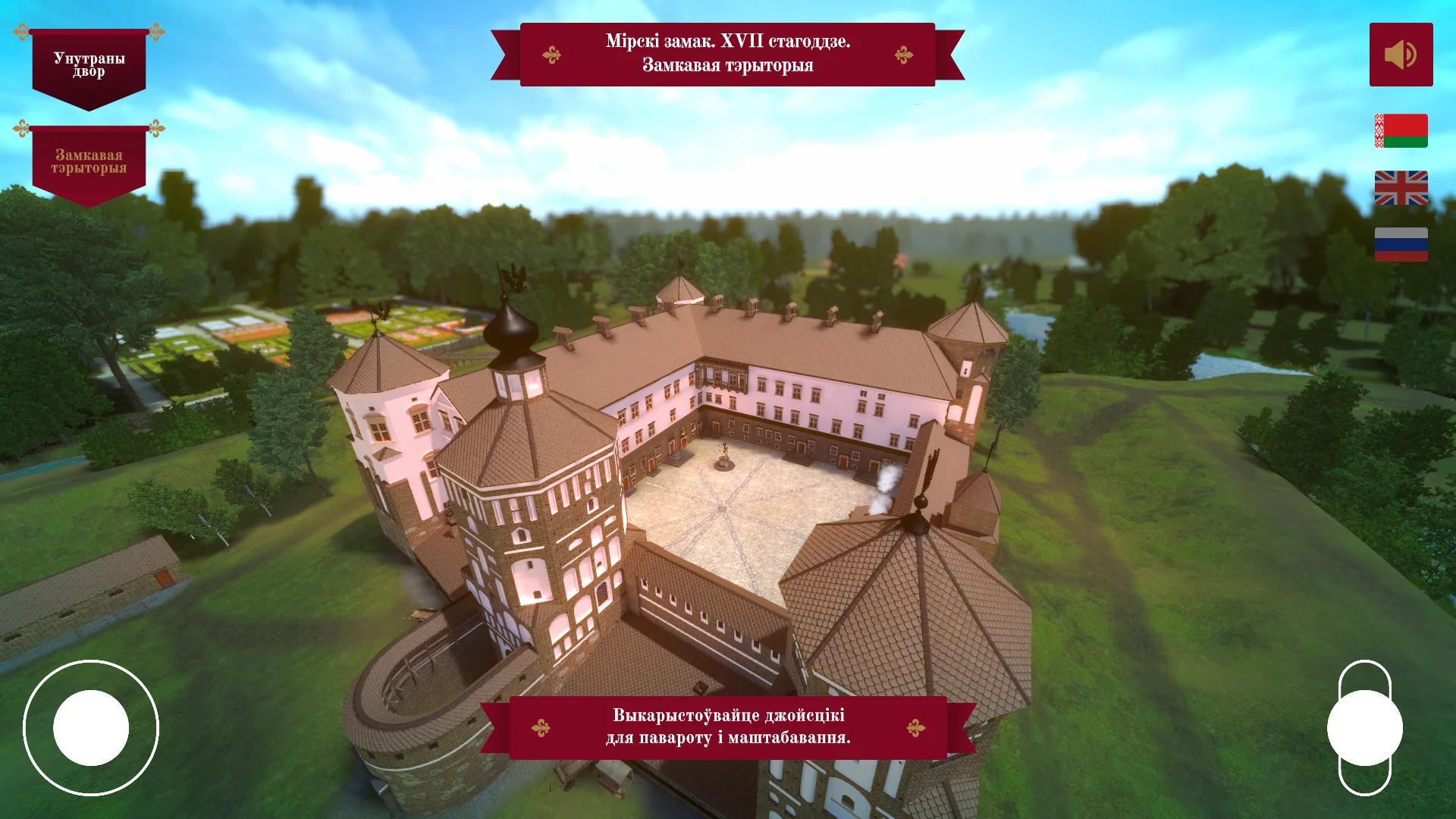
We installed a kiosk with interactive maps and ready-made routes: "the entire exhibition in 40 minutes," "for the whole family," "photo spots and panoramas." The system suggested less crowded halls and plotted paths to avoid crowds.
The kiosk case showed that guests stopped asking attendants for directions, and administrators gained a tool for managing visitor flow during peak hours.
What changed
In the first month, attendance grew by 23% — more guests reached the far halls that were previously empty. Average stay time almost doubled, and the share of repeat visits in a quarter grew by 1.5 times.
During the launch, 47 guest sessions passed through the kiosk in two hours — over 80% of visitors during peak hours.
Management noted that the kiosk became an attraction in its own right: guests photograph the maps, create personal routes, and return with friends. After the season, the client ordered an expansion — we added audio guides and a three-language interface.
Why it worked
The secret is not in sophisticated hardware but in the service logic: the guest immediately sees the value and receives a ready-made visit scenario. Professional equipment and well-tuned software handle peak loads on weekends and holidays, so the kiosk runs stably.
For the museum, this means increased reach and loyalty without adding staff or an advertising budget.
Common Doubts Before Ordering: We Answer Honestly
We understand your doubts: an interactive kiosk has to work at the most critical moments. These are the days when hundreds of guests come to you, and any failure means queues, stress, and lost profit. So we briefly and honestly answer the three questions we get most often.
We don't offer a "box" without support. Behind every project is a team responsible for kiosk stability and information freshness. Below are specific answers, no fine print or vague promises.
What if the kiosk breaks down while in operation?
Planned breakdowns are extremely rare: we use professional equipment and well-established operating scenarios. But if it does happen, we have a rapid response protocol.
For the entire project, you receive engineer contacts and communication channels to resolve the issue remotely or replace the device as quickly as possible.
Important: during the agreement stage, we discuss the readiness level. If the kiosk operates at a regular exhibition, we plan for a backup set or an on-site visit in advance. You are never left alone with the equipment.
How often will we need to update route information?
As often as your business needs. Updating schedules, new points of interest, or seasonal promotions takes just a few minutes and requires no special knowledge from your staff. Simply make changes through an intuitive admin panel — the system picks up the update automatically.
If you'd rather not do it yourself, we can take over maintenance: we'll set agreed timelines and keep content up to date.
What if staff can't figure out the setup?
For this, we conduct short training: we show how to turn on the kiosk, change information, and shut it down after an event. Everything is done on a real scenario — no unnecessary theory. After launch, you get a one-to-two-page quick reference with answers to common questions.
If anything is still unclear, just write to our support — we respond quickly during business hours and guide you step by step.
How to Choose a Kiosk Format for Your Task and Routes?
The kiosk format should be chosen not by appearance but by how visitors interact with routes. If the main task is to quickly orient a guest and send them into the city or across locations, simple navigation and a large screen are needed. When detailed point descriptions, multimedia, and booking take center stage, the approach changes.
A floor-standing kiosk is the optimal choice for entrance areas, lobbies, and tourist centers. It's visible, handles large crowds, and lets users build a route in just two taps.
This format is convenient when visitors choose their own direction: they view a map, explore landmarks, and immediately get a printed tip or QR code for navigation on their phone.
A wall-mounted panel saves space and works where there's no room for a bulky structure. It's a good option for small waiting areas, hotel cafés, and elevator zones — anywhere a guest spends a few minutes and wants to quickly find nearby route points.
The panel perfectly shows routes of the day, tour schedules, and current events without creating queues.
An outdoor terminal with a protected enclosure is designed for autonomous operation in any weather. It's needed where the route starts outside the building: on embankments, in parks, at tourist bus stops.
This kiosk covers the "arrived — oriented — went" task without staff involvement, and integration with your route management system allows instant updates to maps, closed facilities, and temporary changes.
The right choice depends on three things: where the kiosk is located, how many people approach it, and what the visitor should do after the screen.
We help determine the format for your task and routes, then configure the interface so the guest doesn't have to think about buttons — they simply get the information they need and set off.
Leave a Request — We'll Select a Kiosk and Integration in 3 Days
Leave a request, and within three business days we'll prepare a solution for your task: select a suitable kiosk, plan the integration with your tourist route management system, and estimate the cost.
No abstract "from" and "to" ranges — only specifics for your facility, number of points, and project scale.
Here's what you'll get after your request:
- Cost estimate for your project — the final figure including equipment, software, integration, and launch.
- Kiosk and configuration selection — matched to your space, load, and tasks: from navigation to ticket sales.
- Presentation of usage scenarios — how visitors will interact with the kiosk and how it affects guest flow.
- Integration plan with your route system — what data is transferred, how routes are updated, and where you can manage content.
- Implementation stages and timelines — a clear plan from approval to launch.
- Development recommendations — what else can be connected to the kiosk to increase reach and guest return rate.
The request is non-binding — we provide an estimate, and you make the decision. Fill out the form, and within three days you'll have a clear plan: which kiosk, which integration, what it will cost, and when it will pay for itself.