


Classic Branded Style for Interactive Kiosks
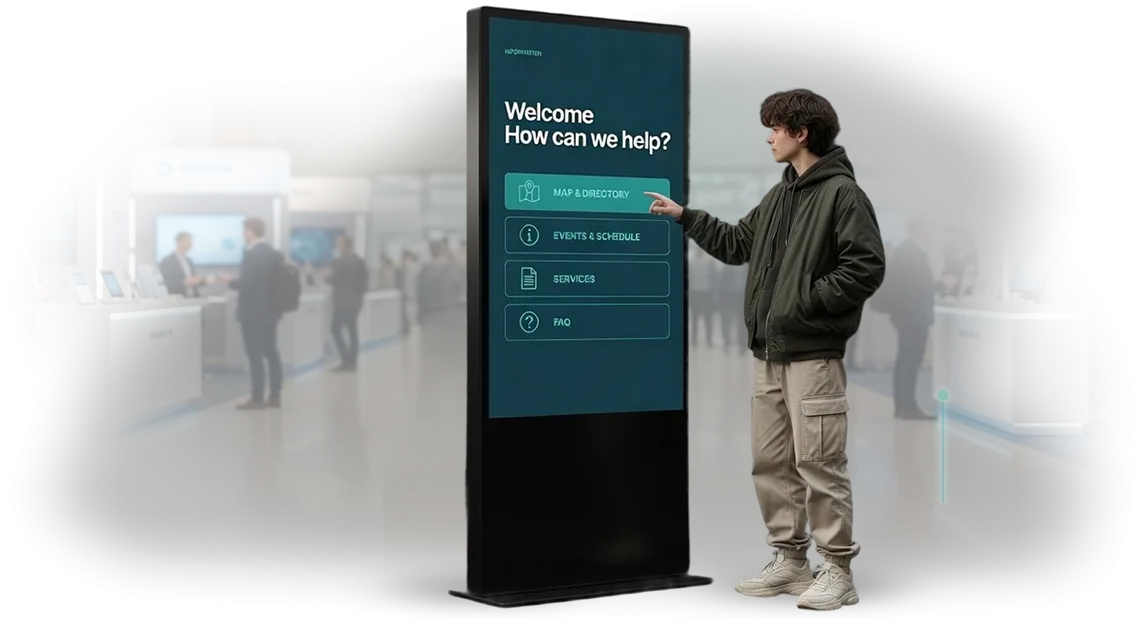
When a visitor approaches an interactive kiosk, the first few seconds determine their attitude toward your brand. It is at that moment that the kiosk design works for you or against you.
The classic branded style solves this problem: it creates a recognizable image, builds trust, and instantly reads as an extension of your company.
An interactive kiosk is not just a technical device but a full-fledged customer touchpoint. If the design clashes with the overall style, it breaks brand consistency and reduces user confidence.
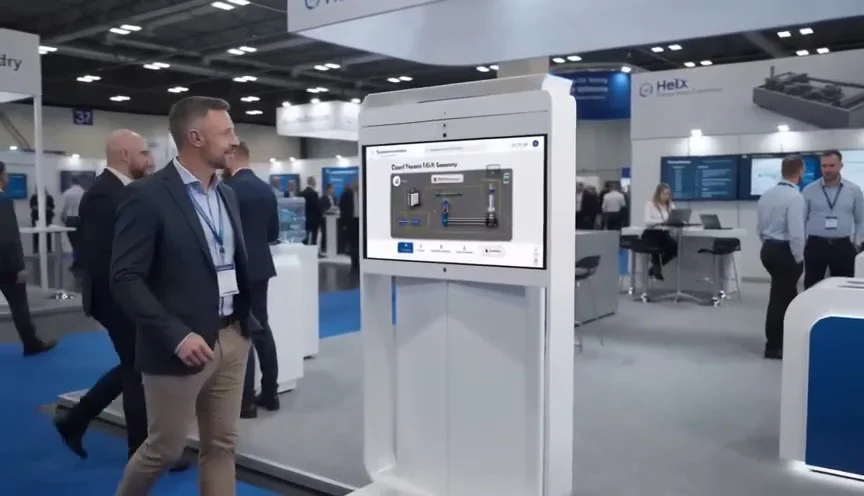
Classic execution with well-considered brand colors, fonts, and logo makes the kiosk a natural part of your space — a lobby, store, exhibition, or waiting area.
At the same time, kiosk branding should not interfere with its main task — helping the customer. That is why we combine kiosk design and UX: large clear buttons, logical navigation, neat hints, and a unified visual language.
The user quickly finds the needed information, and the service process feels easy and professional. This approach reduces errors and shortens task completion time.
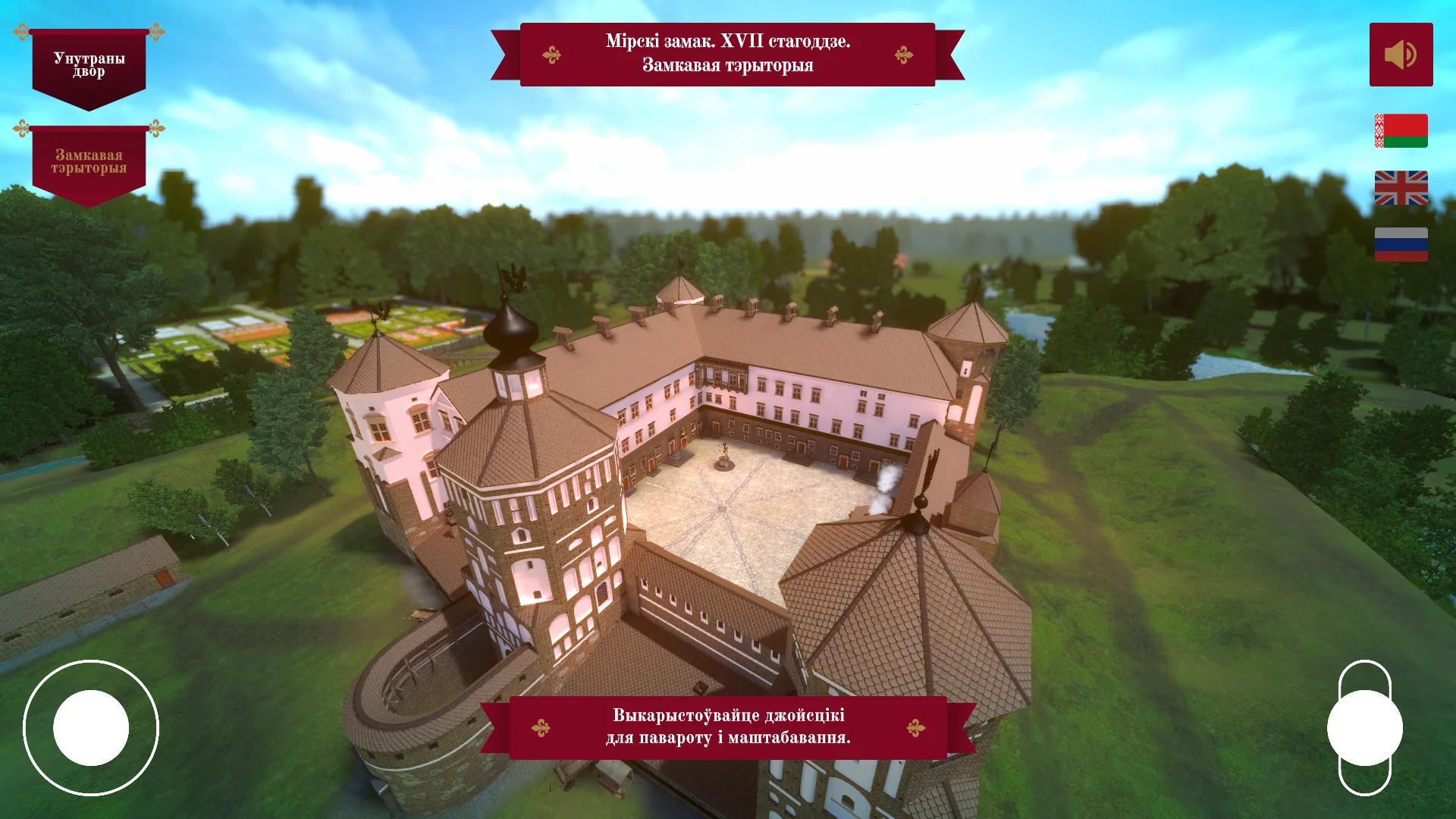
When developing kiosk design, we take your brand identity and adapt it for touch control. This is not copying a website or brochure, but a well-thought-out screen system that preserves recognizability while accounting for interaction specifics.
As a result, you get not a template solution but a polished tool that strengthens your company image and increases visitor loyalty.
The classic branded style for interactive kiosks is an investment in recognition and trust that keeps working after every screen touch. It turns an ordinary self-service device into an element of your reputation. And that affects customer impressions and their willingness to return to you again.
What Do You Get by Choosing Classic Design?
Classic branded style is not just a conservative picture but a strategic solution that drives results. This design looks familiar and solid, so kiosk visitors immediately perceive the company as serious and do not waste time adapting to an unconventional interface.
The main advantage is increased customer trust. When the screen is designed in brand colors, with neat typography and familiar navigation logic, the user feels no doubt about the brand’s reliability.
This is especially important in high-responsibility industries: banks, medical centers, government services, hotels. A calm classic interface removes the fear of making a mistake and makes interaction more confident.
The second benefit is brand recognition. A consistent kiosk style aligned with other touchpoints — website, signage, print materials — forms a cohesive image. Each screen becomes an extension of the brand rather than a random technical device.
Over time, this strengthens the company’s position: customers remember the style and return because they feel familiarity and predictability.
Finally, classic design directly improves user experience. It assumes large clear buttons, minimal distractions, and a clear section structure. This reduces time spent searching for information and lowers the number of errors during data entry.
As a result, queues move faster, and visitors receive service without frustration or unnecessary questions.
By choosing classic branded style, you get not just a nice screen but a tool that increases loyalty, speeds up service, and reinforces your image. It is this combination that makes the kiosk convenient for guests while also working for business metrics.
Work Formats for Kiosks to Fit Your Task
Choose the format that matches your goal: from a ready-made touch kiosk to a fully custom project. We select the option based on your budget, timeline, and expectations — each has been proven in practice and delivers predictable results.
| Work Format | For Whom | What the Client Gets |
|---|---|---|
| Ready-made solution | Need fast launch, standard scenario | Short timeline, clear budget, proven logic |
| Adaptation of a standard project | Have basic mechanics, need own branding and refinements | Unique interface without development from scratch |
| Custom project | Non-standard task, integration with your systems | Fully tailored to your brand, process, and business goals |
| Turnkey package | No time to dive into details | We handle all stages: concept, installation, launch, support |
A ready-made solution is suitable for navigation, catalogs, or application forms — such kiosks launch in a few days and have already proven their effectiveness.
A custom project is chosen when you need non-standard mechanics, integration with an accounting system, or a distinctive design that sets you apart from competitors.
In any format, you get an interface in a classic branded style: strict, recognizable, and clear to visitors. This increases trust and strengthens the company image. Contact us — we will help you choose the optimal format for your task and calculate the timeline.
How the Project Works: Stages and Control
Work on an interactive kiosk is not separate “pieces” of design and programming but a managed process with clear logic. We make the project transparent: you know in advance the stages, timeline, and what you get at the end.
Each step is accompanied by approval, so the result meets expectations rather than being discovered only at the end.
- Brief and immersion. We clarify the business task, visitor profile, and style preferences. Based on this, we propose a concept and scope of work.
- Prototype and scenarios. We build the screen structure and navigation logic. You see how a person will use the kiosk before the final design is even drawn.
- Design project in branded style. We create an interface based on your brand identity: colors, fonts, graphics. All screens are approved with you and adjusted as needed.
- Implementation and configuration. We turn mockups into a working system, connect catalogs, promotions, maps, and other data, and configure scenarios for your tasks.
- Testing and launch. We check stability on real hardware, fix issues, and train staff. After that, the kiosk goes into operation.
- Support. We stay in touch: update content, monitor performance, and refine features if business tasks change.
Control at every stage means regular reports and demonstrations of intermediate results. You don’t wait for a “final surprise” — you see how the solution takes shape and can influence it along the way.
What Is Included in the Kiosk Package
When you order a touch kiosk, you want a turnkey solution rather than assembling it piece by piece from different contractors. We develop and deliver the complete package: from interface design to post-launch support — all you have to do is plug the kiosk in.
The interface is designed in a classic branded style: brand colors, logo, fonts, and the company’s tone of voice are preserved on every screen. Visitors immediately recognize the brand, trust it, and spend less time finding the information they need. This works for recognition and image, not just for task completion.
The package includes:
- Interface design in a classic branded style — adapted for touch control, with large buttons and clear navigation.
- Software — refined and stable on the kiosk, without freezes or failures during peak hours.
- Content filling — your products, services, promotions, and contacts are already loaded and structured at the time of delivery.
- Admin panel — you update prices, news, and banners yourself without involving developers.
- Installation and setup at your site — including verification of all working scenarios on location.
- Support and updates — we help with questions and develop functionality as business tasks change.
You get a single point of responsibility: one contract, one contractor, a clear timeline. The kiosk starts working on launch day, not after a long assembly process by your own staff.
Case Study: How Design Increased a Chain’s Recognition
Brand recognition is what makes a guest choose your coffee shop among a dozen similar ones. When an order is placed through a touch kiosk, the interface works like a salesperson: it greets, guides, and remembers.
For the coffee chain “Warm Day”, we designed the interface for information kiosks in a classic branded style, and the result was noticeable across the entire chain.
What We Did
We studied the chain’s brand identity — from cup colors to display case design — and transferred it into the touch interface. No abstract solutions: the same fonts, logo, and mood of photography.
A guest approaching the kiosk immediately feels it is part of their favorite coffee shop, not a third-party payment terminal.
Results
In the first three months, brand recognition for the chain (based on guest surveys) grew by a third, 28% of orders began to be placed through the kiosk, and the share of repeat purchases increased by 18%.
Guests are more willing to return when the interface does not intimidate them but looks clear and familiar.
“We expected an increase in orders, but the main surprise was how guests started talking about us — photos with the branded kiosk design appeared many times more often on social media. That works for recognition even without advertising,” noted the chain’s marketing director.
Six months later, the chain ordered a second batch of kiosks for new locations — the design was recognized as part of the service standard.
How to Choose the Right Format for Your Business?
Choosing an interactive kiosk format begins not with screen size or case model, but with the question: what business task does it solve at a particular location?
For one establishment, a compact stand with a product catalog is enough; for another, a full self-service zone with document printing is needed. Once you understand the main scenario, you can easily filter out unsuitable options and avoid overpaying for unnecessary features.
There are only three selection criteria: location, visitor behavior, and expected outcome. In a lobby with high foot traffic, you need a durable case and fast response time — no one waits 10 seconds for a menu to load.
At an administrator’s desk, where the guest has already received a consultation, the kiosk can be a compact panel for clarifying details. If the goal is to free up staff and reduce queues, choose a floor-standing terminal with a clear interface and self-service scenario support.
It is important that the device’s appearance matches your brand. Classic branded style is not just a sticker with a logo, but coordinated colors, fonts, and interface composition.
Such a kiosk does not look like a foreign element: it continues the space of an office, store, or clinic and works for recognition. Visitors trust a screen that visually feels “theirs” more quickly than anonymous equipment from a catalog.
Finally, consider who will use the kiosk: your employees, regular customers, or casual visitors. For staff, data entry speed and error protection matter; for guests, large buttons and hints matter.
The same functionality can be designed differently for different audiences — and this is also part of choosing the format.
We will help determine the right scenario at the brief stage, design the interface in your brand style, and assemble a technical solution that will work at your location for years.
Frequently Asked Questions About Kiosk Development
Before starting a project, clients ask about guarantees, timelines, and budget. We answer the main questions so you can make a decision without hidden risks.
What guarantees do you provide?
We work under a contract: we fix the requirements, timeline, and delivery process. After launch, we provide a warranty on development and stay in touch for prompt support.
How long does kiosk development take?
The timeline depends on the number of scenarios and the interface style. Usually, a project takes three to five weeks, but we give the exact date after clarifying the task and confirm it in the schedule. The process is transparent: you see checkpoints.
What makes up the cost?
The cost is formed from the number of screens, design, and testing. Before the start, we prepare a detailed estimate and fix it in the contract — no hidden payments or additional charges along the way. If needed, we help adapt the functionality to your budget.
Can I make edits after launch?
Yes, we include a testing and refinement stage before delivery. After launch, you can contact us for changes — we stay in touch and help develop the kiosk so it remains useful for a long time.
Order a Kiosk Developed for Your Brand
Ordering a kiosk in your brand style means getting a tool that guests recognize at first glance. We transfer your logo, brand colors, and fonts into the interface so it looks natural on a touch screen and strengthens your company image.
Turnkey kiosk development follows a transparent algorithm. Each stage is fixed in the contract, so you understand the timeline, budget, and result. All edits are made during mockup approval — without unpleasant surprises after launch.
How Kiosk Ordering and Development Works
- Brief: we capture the kiosk’s goals, audience profile, and usage scenarios.
- Concept: we propose a screen structure and navigation logic for your brand style.
- Design mockup: we develop each screen in brand colors with your elements.
- Approval: we show the mockups and make edits until full sign-off.
- Development and assembly: we program the logic, set up content updates, and connect hardware.
- Testing and launch: we check all scenarios, train your team, and hand over the kiosk for operation.
You can submit a request for kiosk development right now — we will contact you within one business day, clarify the tasks, and propose a solution for your budget. Tell us about your project, and we will create a kiosk that works for recognition and solves business tasks.
In the end, you get not just a touch screen but a full-fledged tool: guests find information faster, staff are less distracted by repetitive questions, and the brand looks modern and cohesive.