

Why Shoppers Get Lost in Supermarkets and Leave Without Buying
A customer arrives for a specific product, spends 10–15 minutes searching, gets frustrated, and leaves with whatever caught their eye, not what they planned to buy. Every such departure is a lost sale and reduced loyalty. If a person can't quickly find their bearings, they blame the store, not the layout.
This is especially noticeable in large supermarkets and hypermarkets, where shelves are rearranged and navigation is limited to signs above the aisles.
A shopper looks for dairy products, walks past the right shelf, doubles back, and then heads to a competitor — where everything is familiar and predictable.
As a result, the store loses not only the current purchase but also future ones: people remember the negative experience and choose another supermarket.
The solution is AR navigation for supermarkets, which guides the shopper along the shortest route right on their smartphone screen. There's no need to study the floor plan or track down staff: just point the camera at a department — and arrows show the way to the desired product. This removes the visitor's main pain point and helps the store retain customers.
In-store navigation works as an added service: shoppers find products faster, spend less time searching, and more time choosing and buying.
For the supermarket, this means a higher average check and lower customer churn — especially during peak hours, when navigation matters most.
What AR Navigation Will Bring Your Store: Higher Tickets and Loyalty
A supermarket shopper spends an average of 15–20 minutes looking for the product they need. If they don't find it within a couple of minutes, they go to another store — and their purchase goes to a competitor.
AR navigation turns the shopper's smartphone into a personal guide: they see the route to the right department and don't waste time wandering the floor.
We've already implemented such solutions in retail and know what they deliver for business. Here's what changes after launch:
- The average ticket grows. On their way to the product they need, shoppers see complementary offers and buy more. Navigation suggests items "along the way" — and this works better than any static banner.
- Customer loyalty increases. People return to places where they aren't forced to search. Every trip becomes fast and predictable, so repeat visits increase.
- Reach without advertising spend. Guests film the unusual navigation experience and share it on social media. The store gets free mentions that bring in new visitors.
- Less strain on staff. Sales associates stop answering the same questions like "where's your milk?" and focus on what truly matters.
- Clear route analytics. You see where people go, where they linger, and which zones they pass by. This is a ready-made foundation for shelf placement and promotions.
Implementation itself requires no store reconfiguration: AR navigation works on top of the existing layout. Launch takes a few weeks, and the results are measured in traffic and average ticket figures.
Check your store against this list — and if even one item resonates, let's discuss your project.
AR Navigation Formats for Supermarket Goals
There's no one-size-fits-all solution for every store: a hypermarket needs an overview map, a discount store needs fast search for a specific item, and a boutique needs atmosphere and guidance.
That's why we tailor the AR navigation format to your floor area, assortment, and customer behavior.
The table below shows implementation options already working in retail. Each one addresses a specific business goal: reducing product search time, increasing the average ticket, or reducing the load on staff.
| AR Navigation Format | Which Supermarket It Suits | What It Gives You as the Client |
|---|---|---|
| Stationary AR map at the entrance | Hypermarkets, shopping centers with a large assortment | The shopper immediately sees the route to a department — fewer abandoned carts, higher foot traffic in remote zones |
| Smartphone navigation via QR code | Local convenience stores, discounters | Fast product search without installing an app — higher purchase conversion among new customers |
| Product search with shelf highlighting | Medium-sized supermarkets, seasonal promotions | Reduces search time to 1–2 minutes, customers less often leave without buying |
| Personal route based on shopping list | Chains with a loyalty program | Automatic suggestion of complementary products — higher average ticket |
| AR hints on shelves | Premium stores, tastings | Visual presentation of promos and product details — deeper engagement with campaigns and more repeat visits |
How We Launch AR Navigation: 6 Steps
We start with a brief and timeline agreement — so you understand what happens at each stage and when you'll see results. We work transparently: after each step, we show the interim result, and the final version goes live under your team's supervision.
- Brief and measurements — we discuss the goals, store layout, and the points visitors need to find. We lock in timelines and areas of responsibility in a short document so there are no surprises later.
- Route building — based on the floor plan and brand book, we create the navigation scenario: from the entrance to the target department, taking shelves and promotions into account. You receive a mockup of the future interface for approval.
- Interface development — we design clear indicators, arrows, and hints that don't conflict with the store's visual style. We test the design with you on real scenarios.
- Build and test — we set up navigation on your employees' devices or test it on our demo stands. We verify that the route works correctly in every zone, including noisy and crowded departments.
- Launch — we install the application, configure access rights, train administrators, and provide a guide for staff. At this point, you already have a working tool for your first visitors.
- Support and refinements — we stay in touch after launch: we update navigation points when shelves are rearranged and add routes for new promotions. Any adjustment is handled within the agreed service schedule.
In the end, you get not an abstract "technology" but ready-to-use navigation with clear timelines and a single point of responsibility. The entire project from brief to launch typically takes three to five weeks — exact dates are set at the start.
What You Get After Implementation: The Delivery Package
You get more than just an app — you get a fully functional tool for your supermarket. The delivery package includes everything needed to launch AR navigation from day one: the application itself, a management dashboard, content, and staff training. Nothing needs to be bought separately or ordered extra — the system works right away.
What's included in development and implementation:
- Visitor application — navigation by department, product search, route to the shelf. Visitors find what they need on their own, ask staff less, and reach the checkout faster.
- Navigation management dashboard — you edit department locations yourself, upload new promotions, and change routes. No developers needed: just a simple interface we configure for your store.
- Ready-made scenarios and content — screen templates, visitor hints, texts, and instructions. Everything is already adapted for retail; you simply plug in your products.
- Staff training — we conduct training sessions for administrators and cashiers so employees can confidently use the dashboard and help visitors. Training takes a few hours and happens right in your store.
- Support and updates — after launch, you receive technical support and regular updates. The system stays stable, and new features are added without downtime.
- Analytics and reports — see where visitors linger, which departments are popular, and how navigation affects purchases. The data helps improve shelf layout and plan promotions.
All elements of the package are connected and work as a single system. You're not getting a "raw" prototype but a solution that quickly pays for itself through a higher average ticket and reduced load on staff. Implement it once — then use and manage it on your own.
Case Study: How We Helped a Retail Chain Increase Sales
In a large supermarket, a shopper spends an average of 15–20 minutes searching for a product. If they don't find what they need on the first try, they often leave for a competitor — that's a direct loss of revenue.
Meanwhile, staff are constantly distracted by questions like "where's the promo?" and "where's the milk?" instead of stocking shelves and helping with selections.
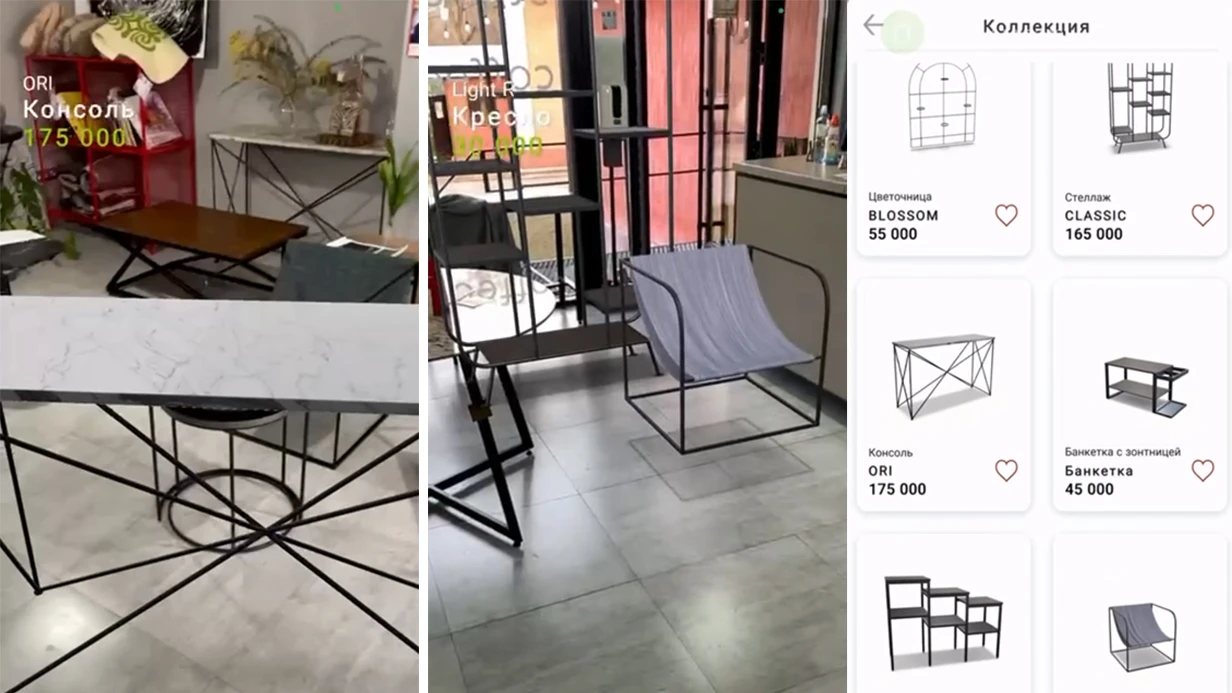
We solved this pain point with AR navigation. For a retail chain, we developed navigation right in the mobile app: the shopper points their camera at the store map and sees arrows on the screen to the right shelf.
Implementation required no equipment replacement or store reconfiguration: we just placed markers and connected the floor plan.
We tracked the results together with the client for three months. During that time, more than 120,000 shoppers used the AR navigation across five stores in the chain. The average ticket grew by 18%, and staff inquiries about product locations were cut in half.
We were especially pleased with the 7% increase in repeat visits — customers came back for promotional items because they were easier to find.
For the chain, this wasn't just a "trendy feature" but a measurable contribution to sales. Navigation also freed up employees: they spent more time on stocking and consultations instead of pointing the way to shelves.
We're now scaling the solution to the chain's remaining stores and building a module with personalized discounts along the route to the product.
This case shows how AR navigation works in real retail: fast launch, clear metrics, and quick payback. If you want similar results for your supermarket — let's start with an audit of your layout and customer scenarios.
How to Choose the Right AR Navigation Format?
Choosing an AR navigation format for a supermarket isn't about technology — it's about your business goals. One store just needs customers to find products faster; another wants to engage visitors in promotions and increase the average ticket.
Your answers determine the budget, implementation timeline, and how guests will perceive the novelty. We help undecided clients navigate the options and select a format that delivers measurable results.
Before choosing, answer three questions: What's your floor area and foot traffic? Where do customers get lost most often? What matters more to you — speed of purchase or time spent in the store?
The heavier the traffic, the simpler navigation should be: directional gaze and large arrows work faster. For smaller stores, interactive scenarios are more appealing: recipe hints, complementary products, personalized discounts at the moment a shopper is standing at the shelf.
The scenario determines the format. If the main pain point is queues at the consultation desk, AR navigation frees up staff: shoppers guide their smartphone camera through the store themselves and get a route to the product.
If the goal is promoting new items or driving repeat sales, AR markers at displays work well: they open descriptions, ingredients, usage ideas, and even reviews.
For a large hypermarket, a map with points of interest overlaid on the real space is a better fit — it keeps even new visitors from getting lost.
How visitors interact with the navigation matters too. Most people won't want to install a separate app — it's more convenient when AR works through the camera or an already installed messenger.
We always take this into account and recommend a format that doesn't create extra barriers. Otherwise, even a perfectly working technology will go unnoticed.
We offer a free consultation on AR navigation: we analyze your navigation requirements, visitor traffic, layout, and business goals. We help you choose a format — from voice hints to a full augmented reality map — that will pay off in your specific case. Leave a request on the website, and we'll offer a solution, not just technology.
Frequently Asked Questions About AR Navigation Implementation
Supermarket owners ask the same questions before implementing AR navigation. We answer briefly and to the point — so you understand how it works for visitors and your team.
How long does implementation take?
Navigation for a single store can be set up in 2–4 weeks. The timeline includes planning, map creation, and testing. If you need to launch across multiple locations at once, we add a few more days for rollout — but we always match the schedule to your deadlines.
Will it be difficult for visitors and cashiers?
AR navigation works through a smartphone camera — the guest simply points their phone at the shelf. Staff need no special training: all information appears on screen as hints. Your team will get the hang of it in 15 minutes.
How does integration with the store's accounting system work?
We connect navigation to your product and promotion data without replacing existing software. We use open formats and documentation, so integration requires no reconfiguration of store operations. We handle the entire technical side.
What happens if the application doesn't work?
We guarantee the result and stay in touch after launch. We respond to any issue within one business day, and scheduled updates are invisible to visitors. The contract includes support, so you don't have to worry about the tech — you just see the growth in purchase conversion.
Book Your Free Demonstration
The AR navigation demonstration is a chance to see how your supermarket visitors will find products without staff assistance and lengthy searches.
We've prepared a short session where we show navigation in real scenarios: from the entrance to the shelf with the desired product, taking into account your layout specifics and customer journey.
The free consultation lasts about an hour. You'll tell us about your store's goals, and we'll show how AR navigation solves them: reducing load on staff, increasing the average ticket and dwell time, and helping promote campaigns and new products.
We don't need technical documentation — just an understanding of what matters to your business and your customers.
To make the meeting as productive as possible, we'll research your store's information in advance and prepare preliminary options. After the demonstration, you'll receive a clear implementation plan, timelines, and answers to your team's questions. All of it — without obligations or hidden conditions.
Here's what the free demonstration includes:
- Walkthrough of the "visitor searching for a product" scenario — we'll show how to cut search time to under a minute;
- Interface demo on a regular smartphone — you'll see that navigation is easy for people of any age;
- Discussion of your supermarket's project and specific goals — from layout to product promotion;
- Preliminary timeline and implementation stage estimates;
- Answers to questions from your employees and department heads;
- Fixed terms for the implementation proposal — no surprise add-ons or fine print.
Leave a request for the free demonstration — we'll get back to you within one business day, find a convenient time, and show how AR navigation works in your format. It's the first step toward making your store more convenient for customers and more profitable for your business.