

iOS ARKit: Customers Can't Visualize Products in Their Own Space — and They Leave
Today, customers don't choose from a catalog — they choose based on the feeling: “how will this look in my home?”.
Without augmented reality, the buyer sees only a flat photo and cannot grasp the scale, compatibility, and details — that is the main reason they close the tab and go to a competitor.
This is especially evident in furniture, décor, electronics, and clothing. While scrolling through a standard gallery, the user hesitates: will the wardrobe fit against the wall, will the sofa fit into the living room, will the jacket look good in motion.
Doubt is a direct path to product returns and extra logistics costs. And the loss happens silently: no complaint, no feedback — just an abandoned purchase.
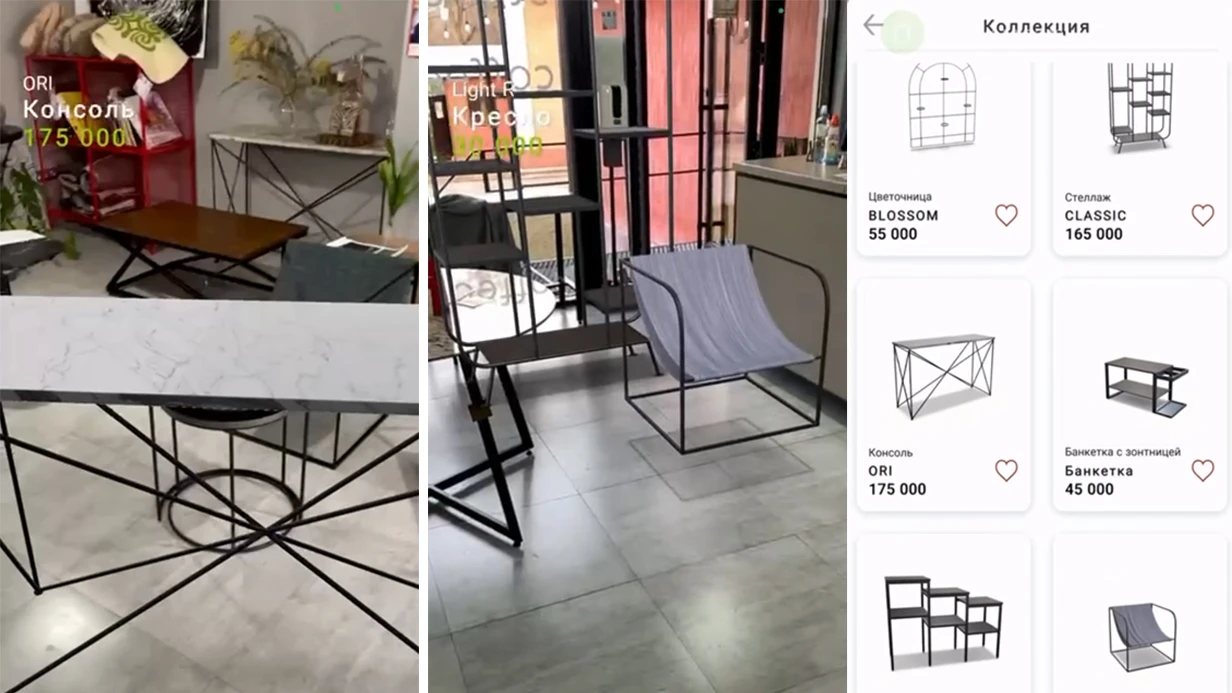
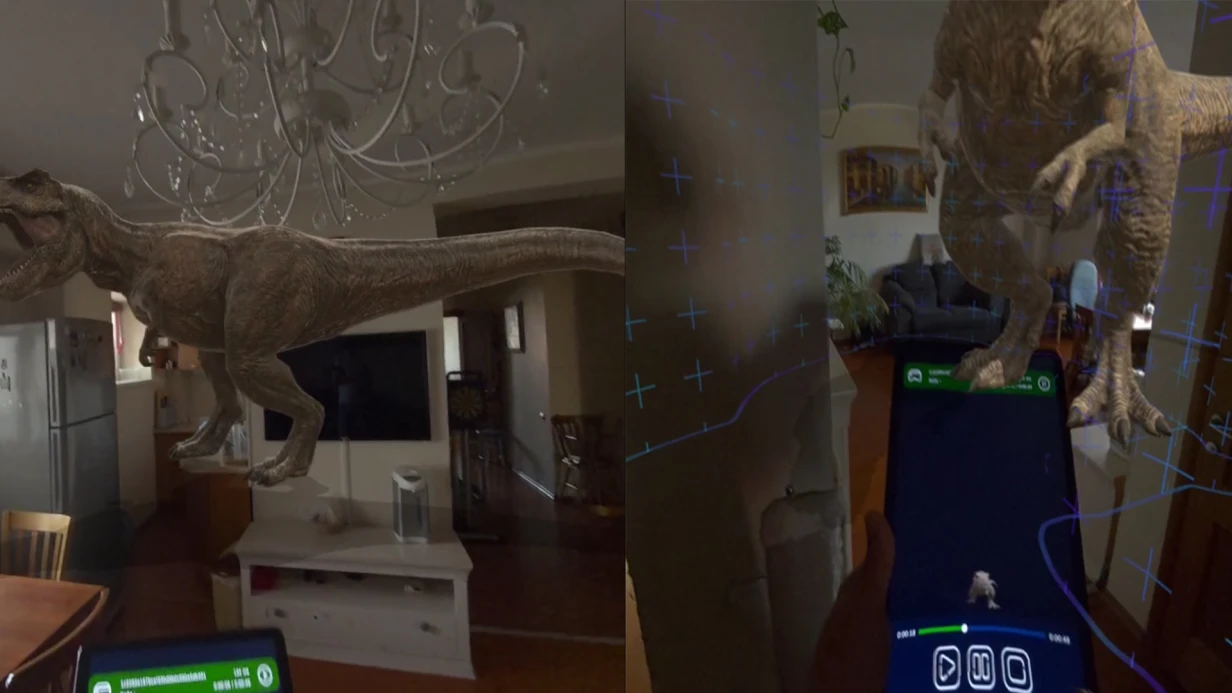
However, when customers can “place” a sofa in their own room through the smartphone screen, doubt turns into confidence, and engagement turns into a purchase.
This is exactly why we build mobile apps based on iOS ARKit: the augmented reality technology works natively inside a familiar interface, without extra steps or complex training.
This approach solves the core business challenge — increasing conversion and reducing returns. The buyer sees the product at real scale in their own space, assesses how it fits with the surroundings, zooms in, and examines details.
As a result, the average order value increases because the customer is confident in their choice and cancels orders less often.
Finally, AR visualization is also a way to engage the audience. Users willingly share their fitting experiences and save favorite options to favorites — this kind of interactivity increases repeat visits to the app and naturally attracts new customers who come by referral.
We create an app that doesn't just “show a picture” but helps you sell: it gently guides prospects to a decision, removes barriers, and gives buyers the very experience that makes them choose your brand.
What AR Visualization Delivers to Your Business
For business, AR visualization is not just a trendy technology — it's a working tool that turns interest in a product into measurable metrics. What benefits of augmented reality do you get in practice? We highlight five key ones.
- Higher engagement. When customers see a product in their own environment through the smartphone screen, they spend 2–3 times more time with it. That's attention a static image simply cannot get.
- Brand recognition. Users share AR experiences on social media — every such post works for your brand for free. Reach grows without an ad budget, and the company is remembered as modern and tech-savvy.
- More leads. To get the AR result, users usually leave their contact details. This turns interactivity into a source of inquiries: you get a hot base of potential customers.
- Higher sales. AR removes the main barrier — pre-purchase uncertainty. Those who “try on” a product virtually decide to order many times faster. Businesses see conversion and average order value rise.
- Customer loyalty. Augmented reality leaves an emotional impression. After this experience, buyers return and recommend you to friends — that means repeat sales and a solid reputation.
We have been implementing AR solutions for business for many years. We'll help you achieve these measurable benefits too.
iOS ARKit: App Formats for Your Task
Most of your customers already own Apple phones and tablets — they don't need to buy extra equipment or install complex programs. They simply open a browser or download an app from the App Store, point the camera at an object — and AR mode starts on its own.
That's why the technology works even for businesses that have never used augmented reality before: easy user entry and measurable business impact.
We adapt iOS ARKit to your specific task: we choose the format that will get you to the desired result fastest. Below are five proven scenarios that our clients order most often.
| Format | For Whom | What It Gives the Customer |
|---|---|---|
| Virtual AR fitting | Clothing, eyewear, and accessories stores | The buyer sees the product on themselves before purchase — higher conversion, fewer returns and consultations. |
| AR furniture visualization | Furniture showrooms, interior design studios | The customer places a sofa or wardrobe in their own room, checks the size and color — makes a purchase decision faster. |
| Interactive tour | Museums, exhibition halls, training centers | Visitors interact with exhibits, stay longer, and come back again — interest and attendance grow. |
| AR promo campaign | Retail, cafes, event organizers | Guests take photos and videos with the brand and publish them on social media — reach without an ad budget. |
| Indoor navigation | Shopping malls, airports, business centers | Visitors see arrows through the phone camera and find the shop or counter they need — fewer staff inquiries, higher loyalty. |
Each format is scalable: start with a promo campaign and later launch permanent navigation or a virtual catalog. We'll advise on the best fit for your audience and handle turnkey development — from idea to App Store publication.
How We Build an AR App: Stages of Work
We've structured the process so you understand what's happening at every stage and how it gets you closer to launch. Below is the proven workflow we use in every project, from the first meeting to support of the finished product.
- Brief and task immersion. We listen to why you need AR: to impress guests, boost recognition, increase sales. We pin down the target audience, use cases, and desired outcome.
- Concept and plan. We propose a solution idea and show examples of similar projects. We set the app development timeline and key milestones, so you can see right away when you'll get intermediate results.
- Project approval. We approve the concept, scope of work, and timeline. After that, nothing changes without your knowledge — you control every step.
- Development and intermediate demos. We build a working prototype and regularly show it to you. You see how the app looks and behaves and can make changes before the final version.
- Testing on real scenarios. We test stability, usability, and performance. We polish it until the app is easy to use with no instructions needed.
- Launch and rollout preparation. We publish the app in the App Store and configure it for your event or business process. We help with installation and first launch.
- Support and growth. We monitor stability and collect user feedback. When needed, we update content and features — the app stays relevant.
What's Included in the AR App Delivery
The full delivery doesn't just include the app — it's a complete kit for launching an AR project. We hand over everything from the working product to staff training and documentation, so you never depend on the developer at any stage.
- Ready-to-use AR app for iOS based on ARKit. We select and implement features for your industry: virtual fitting rooms, interactive catalogs, real-size product display. The product passes all checks and is ready for publication in the Apple App Store.
- Source code and all project files. You get full rights to the product and can develop it with any team — we don't lock you in.
- AR project documentation: installation, configuration, and day-to-day operating instructions. Everything is written in plain language, without complex technical jargon, so any employee can understand it.
- Staff training. We run a session for your employees so they can confidently use the app and explain its features to visitors. Training can be held in person or remotely.
- Warranty support for the app for an agreed period. We fix bugs promptly and help with updates to keep your product stable.
- Clear administration guide: how to manage content, update data, and control the app's operation.
Case Study: Conversion Tripled After Launching an AR Catalog
People don't buy a sofa from a photo — they buy the feeling of how it will fit into their living room. A typical furniture store catalog leaves that to the buyer's imagination: they hesitate, postpone the decision, or end up with a product that “didn't fit size-wise.”
We proposed replacing the flat product cards in a furniture retail client's catalog with an AR catalog where buyers “place” a sofa, wardrobe, or armchair right in their own room via the smartphone camera.
They see the real proportions, how it works with the wallpaper and lighting — and confidently click “buy.” Implementation took a few weeks, and the results exceeded expectations: catalog conversion tripled in the first month, the average order value rose by a quarter, and returns due to “didn't fit size-wise” almost disappeared.
“We expected more interest, but we didn't expect buyers to make decisions so quickly. Before, a person would browse the catalog for weeks; now they choose, try it on in their room, and order in a single evening,” notes the client's digital director. Furniture retail chain, 40+ stores across the country
From a business standpoint, this isn't a gadget — it's a tool that removes the biggest objection in furniture buying: “what if it doesn't fit?” The buyer sees the result before payment, so trust in the store grows along with revenue.
The same solution suits lighting showrooms, kitchen studios, and finishing materials — anywhere products are bought “for the interior.” Showing a product in the customer's environment instead of on a white background is a simple way to shorten the path from viewing to ordering.
How to Choose an AR App Format That Pays Off?
There's no universal AR format that pays off equally for everyone. What generates revenue for a furniture store is unlikely to work for an industrial company or an event agency.
So the right first question isn't “which technology do we choose?” but “what business problem are we solving?” — growth in sales, training savings, brand recognition, or visitor engagement.
An app's ROI depends directly on the use case. Virtual fitting in retail raises conversion and lowers returns; an AR training scenario cuts staff onboarding costs; an interactive zone at an event increases time spent with the brand and generates organic social media reach.
Each format pays back its investment in its own way — through direct sales, operational savings, or marketing impact.
That's why we do a brief analysis before development: who your audience is, what their main pain point is, and what outcome is measurable for you — inquiries, purchases, repeat visits, media reach.
Based on that, we propose a format that matches your budget and expectations, and we honestly explain when and how the investment will pay off.
We often recommend starting with a limited scenario — one key feature that delivers a fast, visible result. If it works, we scale the solution to other areas: new products, cities, event formats. This approach reduces risk and makes the first project's payback clear and predictable.
Our goal is to keep you from overpaying for unnecessary features or getting disappointed in the technology due to poor implementation. We'll match the AR format to your task and budget, and after launch we'll measure the impact together.
Leave a request — during the brief we'll analyze your case and propose a scenario that delivers measurable results.
Frequently Asked Questions About AR App Development
We understand: before launching an AR solution, many questions come up — from budget to what happens after release. We've collected the five most common concerns and answer them honestly so you can see the full project journey.
How much does AR app development cost?
The cost depends on the complexity of the scenarios, the number of AR objects, and integration with your catalog or CRM. So there's no single price. We conduct a short brief, prepare a detailed estimate, and lock it in — no hidden payments upfront.
What are the development timelines?
Typically, a project takes anywhere from a few weeks to 2–3 months. The timeline directly depends on the scope of work and how quickly you provide materials. We break the work into stages with checkpoints: you always see what's done and what's left.
What devices will the app work on?
We specialize in iOS ARKit — Apple's augmented reality technology. So the app runs stably on most modern iPhones and iPads. That means your audience can use AR without buying special equipment — just a regular smartphone.
Is AR hard for users to figure out?
Quite the opposite — the AR interface is intuitive: the user points the camera and sees objects right in the space. We design the scenario so actions are obvious: hints, animations, and clear buttons. As a result, customers succeed on the first try — and our projects confirm this.
What happens if the app doesn't work?
We provide a guarantee of uninterrupted operation and stay in touch after launch. During the warranty period, we fix bugs and adapt functionality to new iOS versions. You don't just get a “file on launch day” — you get long-term support.
If you have any other questions, write to us — we'll send project examples and an individual estimate.Order an iOS AR App: Start with a Free Brief
You already know AR formats boost audience engagement, but launching your own iOS app feels intimidating because of the unknowns: timelines, cost, technical risks.
Start with a free brief — in 20 minutes we'll break down your task, goal, and target audience, and you'll get an honest assessment, not fluff.
The brief is not a checkbox questionnaire — it's a structured conversation with our analyst. We clarify exactly what you need: staff training, an augmented reality catalog showcase, an entertainment scenario for an event, or a separate 3D section inside your existing app. Based on that, we pin down the logic and conditions that will make the project successful.
After the brief, you don't get a “presentation about us” — you get a working package:
- Prototype of the future screen — you'll see how your AR scene will look and behave before development even starts.
- Transparent estimate — we lock in the scope of work and cost for your request, with no hidden extras or “surprises.”
- Stage-by-stage work plan — you'll know when the first result will be ready, when testing happens, and when the app goes live in the App Store.
- AR consultation — we'll tell you which iOS mechanisms already solve your problem and what's coming a bit later.
- Team composition — you'll see in advance who's involved in the project and who's responsible for what.
- Timeline estimate — realistic dates with a buffer, not “we'll see how it goes.”
All communication is conducted in the language of your business: no technical magic, just goals, timelines, and results.
The team at our team has been working on AR projects for over ten years and delivers turnkey development — you work with a single contractor at every stage: from idea and prototype to store publication and post-release support. iOS, ARKit, and 3D graphics are our part of the job; your part is making product decisions.
Leave a request on this page and we'll get back to you within one business day. We'll help you formulate a technical specification, show you examples of similar solutions, and start the process as early as this week. The free brief comes with no obligation — but it gives you a clear plan to start your AR journey.