

MR for Enterprise: Why Businesses Lose Customers
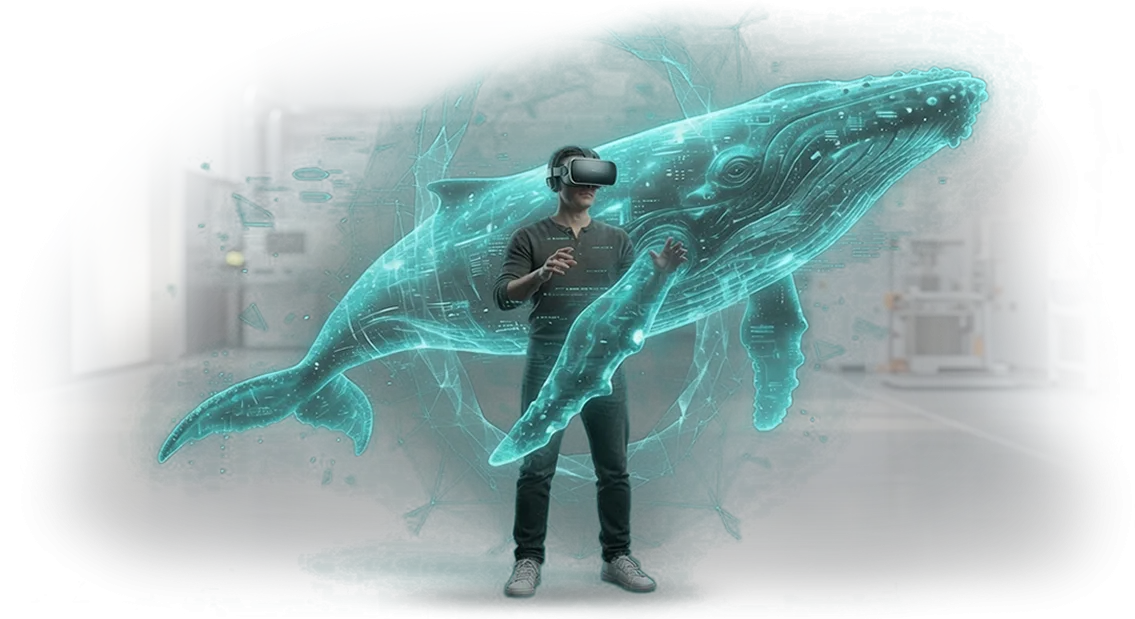
Modern customers make decisions in minutes and have no time to dive into a complex product. While you are giving a presentation, a competitor is already letting them "try on" their solution, literally. Without MR for enterprise, you lose audience attention—and therefore revenue.
The problem is often not the product itself, but the way it is presented. Catalogs and 2D diagrams don't help customers imagine how equipment or a service will fit into their workflow.
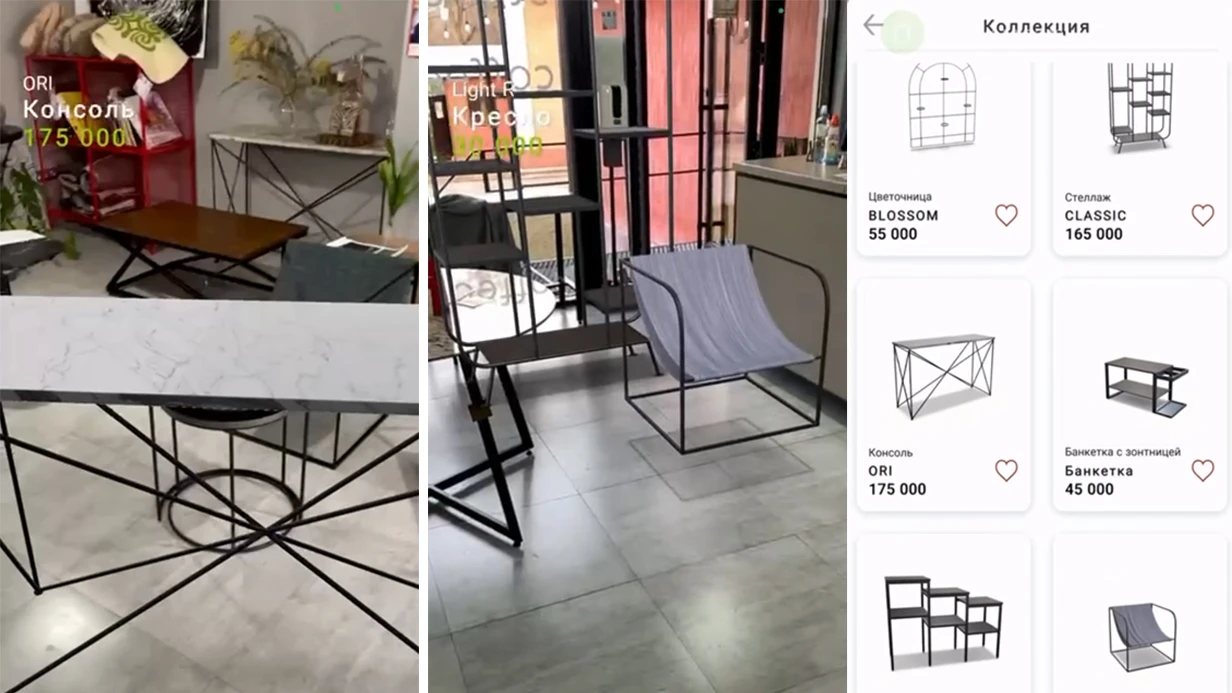
Implementing VR/AR closes this gap: buyers see the product at real scale, in their own space, with the required options. An employee doesn't have to guess—they show the customer a preview of the future solution. This removes objections and increases conversion.
For business, this is not entertainment but a sales and support tool. MR for enterprise shortens the sales cycle, reduces errors when selling complex equipment, and accelerates training.
Every scenario directly affects margin and customer loyalty, and the payoff becomes visible from the very first deals.
Companies that adopt XR for business establish themselves as experts and respond to objections like "too expensive," "too complex," "they won't understand"—by showing results before the purchase.
MR consulting helps build such a system without experiments and unnecessary costs. We have been supporting projects like these for over 10 years. If you don't, a competitor will.
What Benefits MR Solutions Bring
Corporate MR solutions are not just a technology but a way to train people faster and sell complex products.
Digital instructions and 3D models are overlaid directly onto physical objects, so employees don't have to look at monitors, and customers see the product in a real environment.
VR and MR Training Accelerates Time to Productivity
Newcomers practice operations on a digital twin, with no risk to equipment or people. Training time shrinks from weeks to days, and errors in actual production no longer cause downtime and defects. Content updates instantly—no need to reprint manuals or gather a group for training.
Client Engagement Grows Without Extra Presentation Costs
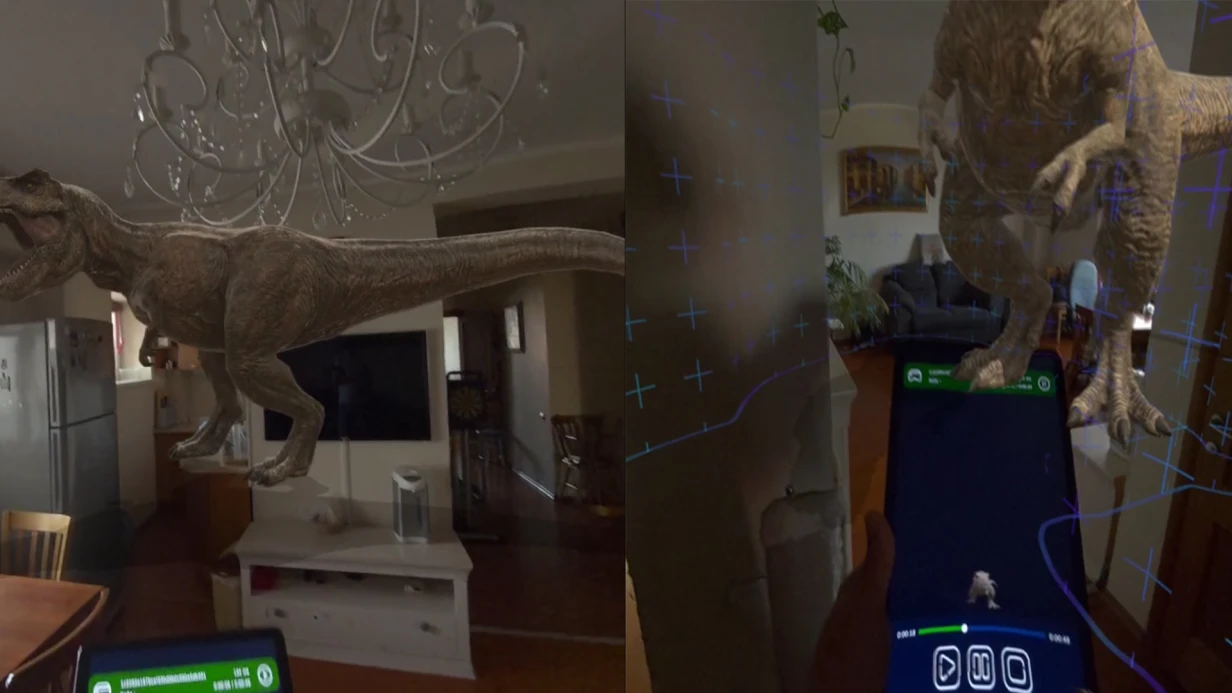
Instead of slides, you show an object at 1:1 scale, look inside a mechanism, or "walk through" a future space. Such a demonstration holds attention several times longer and increases negotiation conversion.
Lower Logistics and Prototype Costs
An engineer remotely sees the object through the eyes of a specialist on site and gives instructions in real time. Business trips and expensive mock-ups are needed less often, and a single digital twin can be shown to ten clients at once.
Our team implements MR solutions for the client's specific needs—from training to sales. Come with a specific task, and we will calculate the economic impact.
MR Formats for Enterprise: Choosing by Objective
For business, MR is not entertainment but a working tool: employees acquire skills faster, customers see the product before buying, and experts can help from any distance. The key is choosing the right format—otherwise, even strong technology won't deliver measurable results.
| Format | For Whom | What It Gives the Client |
|---|---|---|
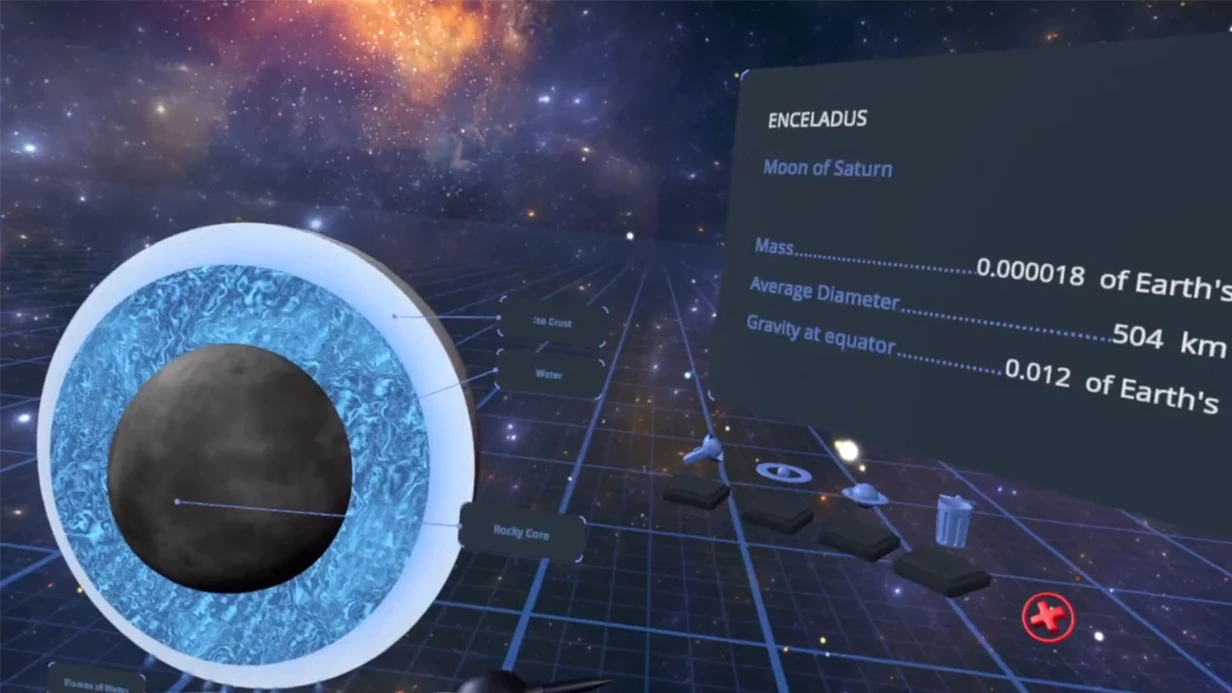
| Training simulator | Manufacturing, training centers, medical organizations | Skills practice without risk or material consumption; reduced onboarding time |
| AR presentation | Sales departments, marketing, exhibitions | Vivid product demonstration; higher conversion and visitor interest |
| Virtual showroom | Real estate, furniture, equipment | Product display anywhere; savings on logistics and samples |
| Remote assistance | Service departments, installation, support | Expert sees the situation through the employee's eyes; fewer disruptions and business trips |
When choosing, focus on the business objective. If you need to train staff quickly and safely, use a simulator. If impressing a client during negotiations or at an exhibition is important, an AR presentation works. For regular on-site operations, remote assistance is effective.
We help you select the format and scenario for your goal, then design it so the result is measured in time and money. Let's discuss your case—we'll find a solution with a clear effect.
How MR Project Development Works
We have structured the process so that you see a result at every stage and understand where the money goes. No "black box": from the first brief to launch, a single team works with you and is responsible for timelines and quality.
- Brief and task immersion. We identify where MR solutions will be applied: employee training, presentations, remote support. We set goals, audience, and success criteria.
- Prototype and scenario. We show how users will interact with the product, and align on the logic before development starts—this saves budget.
- Development. We build a working solution on professional equipment that will withstand real-world load, not just an exhibition demo.
- Testing with users. We test scenarios with your audience, gather feedback, and make adjustments before release.
- MR project launch. We deploy the system, train your team, and prepare instructions. You get a working tool, not a raw demo version.
- Support. We update content, add new scenarios, and ensure stability. You don't face the product alone after launch.
This approach lets us launch MR solutions in 4–8 weeks, depending on complexity. Most clients come back for new scenarios because they see a measurable effect: faster training, fewer errors, higher engagement.
We have been designing immersive business solutions for over 10 years and take responsibility for results at every stage—from brief to support.
What's Included in an MR Application Delivery
When you order an MR application, the answer to "what's included in delivery" determines whether you get a tool your team will actually use. We structure the delivery so that after launch you have everything you need: the solution, its rights, training, and support.
- A working MR application tailored to your task — adapted to your company's processes and runs on the devices your employees already have.
- Content management panel — your specialists can update instructions, add 3D models and scenarios themselves, without waiting for programmers.
- Integration with corporate systems — the application exchanges data with CRM, accounting systems, or training platforms; results appear where managers can see them.
- Rules and training materials — short instructions for users and administrators that make it possible to launch the solution without lengthy training.
- Source code and development rights — you own the product and can develop it in any direction.
- MR project guarantees — fixed in the contract: timelines, budget, acceptance criteria, and response to errors during the warranty period.
- Technical support and updates — we stay in touch after launch, help with improvements and adaptation to new tasks.
This delivery scope answers the question "what's included in a VR/AR/MR application" not in words but with concrete artifacts. You get not a "black box" but a manageable solution that is easy to implement and develop.
That is the guarantee that the project will benefit the business rather than become just a report on completed work.
Case Study: How an MR Solution Paid Off for Manufacturing
A large energy equipment manufacturer came to us with a pain point: new operators had to be trained for two weeks, and every fifth shift on complex assemblies ended in rework. Paper instructions and mentors couldn't keep up with growing volumes. We proposed an MR solution that overlays digital guidance directly onto real equipment.
For AtlantProm (name changed), we deployed a pilot at a turbine assembly site. Wearing an MR headset, an employee sees step-by-step actions, control zones, and error warnings—without reaching for a tablet or waiting for a mentor.
The system records where deadlines are missed and where most mistakes occur, which provides material for process improvement.
The Numbers the Client Saw
Over the three-month pilot, the time for a newcomer to reach full capacity fell from 14 days to 3, and assembly errors dropped by 40%. Site productivity grew by a quarter, and rework costs were cut in half.
The main argument is payback. The investment in the MR solution paid back in 5 months: savings on training and defects reached a substantial level annually.
After the pilot, the client rolled the solution out to two other workshops—we gave a discount on the repeat project, and the payback there was even faster.
For businesses, this means MR solutions stopped being an exhibition toy long ago. They reduce costs, speed up production ramp-up, and are easy to scale to other sites—without reworking technological processes or hiring new specialists.
How to Choose the Right MR Solution Format?
First, determine what task the MR solution should address in your business. Training employees on complex operations without risk to equipment is one thing; showing customers a product at real scale before purchase is another.
The answer to that question immediately narrows your options: for internal efficiency tasks, corporate applications integrated with your processes work best; for external communications, choose formats that are easy to run on customers' smartphones and tablets.
Assess the scale and frequency of use. If a hundred engineers need the solution daily, choose an option that installs on work devices and supports your IT infrastructure.
If it's a temporary campaign or exhibition, a lighter format that requires no installation will deliver the effect without a lengthy rollout.
The rule is simple: the more frequently it's used, the more important convenience and reliability are; the shorter the campaign, the faster the launch should be.
Then consider how you will measure the result. For training, measurable speed and quality of operations after the program matter; for sales, conversion and average order value growth; for service, faster incident resolution.
We help you define these metrics before development starts and record them in the technical specification, so you see a return on investment rather than just a "pretty picture."
Consider internal resources. Are your employees ready to work with new devices? Do they have modern smartphones? For the corporate sector, we often choose mixed scenarios: some tasks are done in headsets, some on regular screens, all synchronized through the cloud. This approach lowers the entry threshold and pays off faster.
Ultimately, the right format is determined by three factors: business objective, audience, and timeline. Tell us about your situation—we'll find a solution that withstands the load, fits the budget, and delivers measurable results. We work remotely and have already handled similar tasks in manufacturing, retail, and logistics.
Frequently Asked Questions About MR Applications
We've gathered the questions clients ask most often before launching an MR project. They are not about technology but about predictability: how quickly the solution will pay off, how it fits into current processes, and who is responsible for results after launch.
How is an MR application different from a regular mobile app, and when is it really needed?
MR overlays digital instructions and 3D models directly onto the workspace. Employees see hints the moment they perform an operation—fewer errors and faster training.
If you save more than a hundred hours a month on tasks where precision matters, this solution pays off within the first few months.
What guarantees do you provide for the application's performance?
We set timelines and outcomes in the contract. The guarantee for correct operation is from 12 months, including updates for new versions of hardware and operating systems. We also specify an SLA separately: incident response time and recovery speed, so your processes don't stop.
How safe is the solution for corporate data?
Data doesn't leave for third-party servers: the MR application runs within your own environment or in an isolated setup. We use encryption during transmission and role-based access controls inside the system.
We design the architecture to meet your security department's requirements—from individual employee access to full activity audits.
What if employees find the headset uncomfortable?
We don't force one device on everyone. We select equipment for the scenario—from lightweight glasses to stationary headsets. At the first stage, we run a pilot with 5–10 employees and adapt the interface to real operations.
As practice shows, getting used to it takes just a few sessions, after which speed and accuracy noticeably improve.
If your question isn't in this list, leave a request and we'll send a detailed answer tailored to your industry and scenario. Or let's discuss it directly during a short demo.Get a Turnkey MR Solution in as Little as 8 Weeks
When you order an MR solution from us, you get more than just an application—you get a manageable process with a predictable result. In 8 weeks, we go from brief to working product, and you always know where the project stands and what happens next.
The timeline is designed so you see the first results as early as week two:
- Week 1–2: immersion in your business problem, interviews with employees and customers, description of scenarios and requirements.
- Week 3–4: prototype of the interface and key scenarios—you see how the solution will look and work, and you make adjustments before development starts.
- Week 5–6: MR application development, integration with your systems, and configuration for your infrastructure.
- Week 7: testing with real users, fixing issues, final polish.
- Week 8: launch, employee training, and delivery of full documentation and a development roadmap.
Thanks to this approach, turnkey MR development stops being a "black box." You know the cost of the MR solution upfront and lock in deadlines—no hidden surcharges or sudden delays.
We take on all risks: if something goes off plan, you'll hear about it before it affects the launch date.
Ordering MR from us means getting a solution that delivers measurable value to your business: higher conversion, shorter training time, and lower costs. We work with professional equipment and proven tools, so the result is stable—not "weather-dependent."
Leave a request on the website—in 30 minutes we'll break down your task, calculate the cost of the MR solution, and propose a plan of action for your budget. We start with a short audit, not promises.