



Customers can't try carpets and curtains against their own interior
A buyer almost never sees a carpet or curtains in the context of their own room.
They look at the product photo, mentally try to picture it against their wallpaper and furniture — and most often hesitate to click "Buy." It's precisely this uncertainty that stretches carpet selection and curtain purchases over weeks, while the store loses sales at every stage of the funnel.
When a product is still bought blind, a second problem surfaces — a mismatch between expectations and reality. The scale is wrong, the color is wrong, the texture doesn't fit the interior.
As a result, product returns grow, and along with them — logistics costs and customer dissatisfaction. Without a way to try the product against their own space, the buyer is always in doubt, and doubt directly hurts the store's conversion rate.
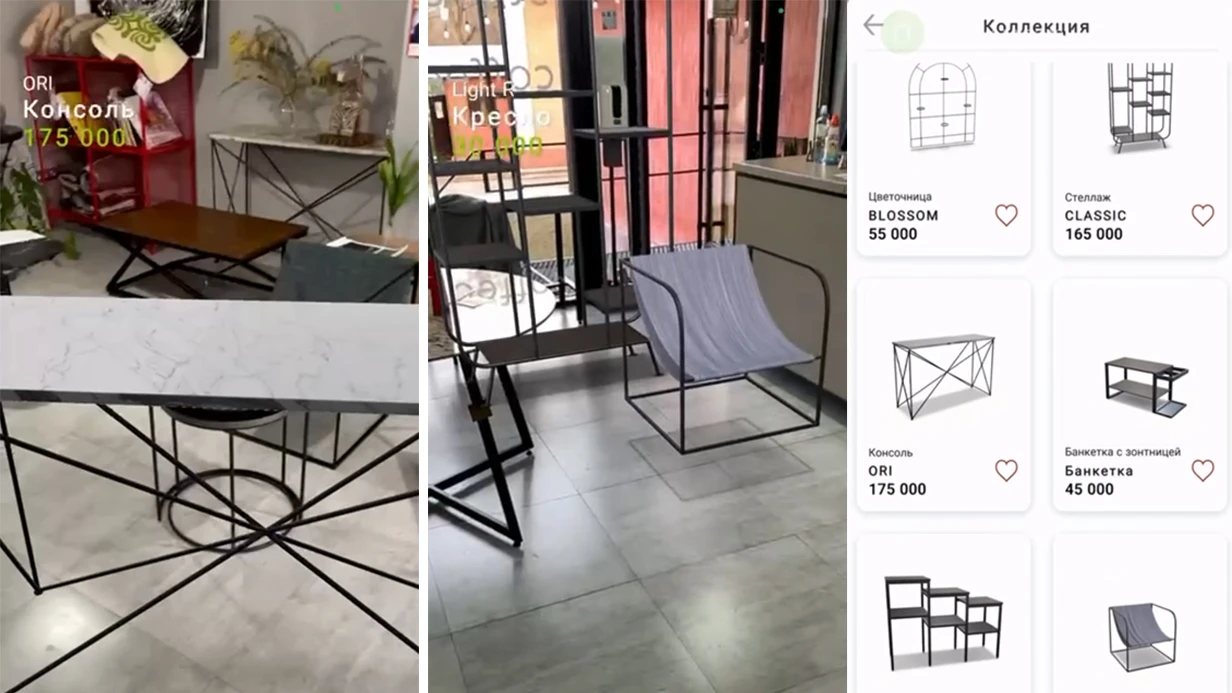
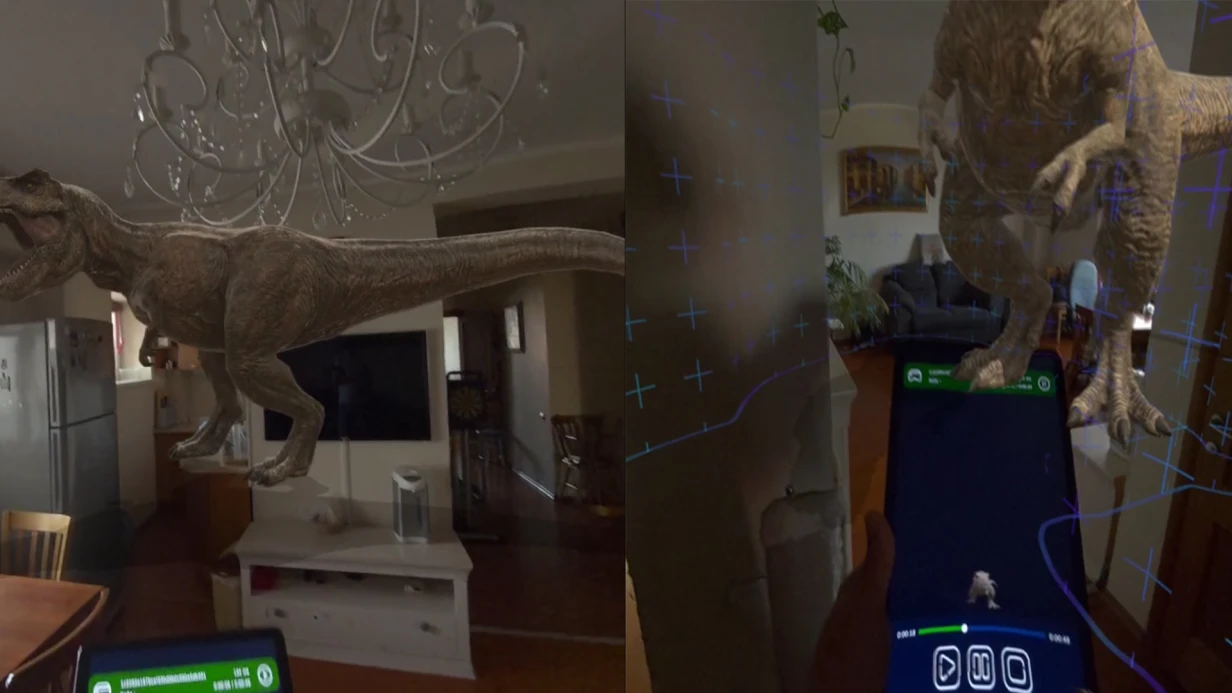
The solution is to give customers an interior try-on tool right on the website or in the app. Through the smartphone camera, a person sees how a specific carpet lies on their living room floor, and how curtains drape — the way the folds fall and the light hits them.
This removes the main barrier: instead of an abstract picture, there's a realistic scene the buyer already lives in.
This approach changes audience behavior: time spent exploring products increases, confidence in the choice grows, and the share of successful orders rises noticeably.
The customer stops relying on luck — they make an informed decision and, as a result, return products far less often. For the store owner, this means higher sales without expanding the assortment or adding discounts.
We help address this need: we design and implement AR visualization that embeds into your catalog and requires no complex software installation from the buyer. Simply open the product page — and within seconds, the carpet or curtains appear in the customer's interior. This very capability becomes the decisive argument for choosing your store.
How AR visualization helps sell carpets and curtains
A buyer of carpets and curtains can rarely imagine exactly how a product will look in their room, next to their furniture, and under their own lighting. Regular photos aren't enough, doubts arise, and the person postpones the purchase or picks the wrong thing.
The result is lower conversion, more returns, and greater dissatisfaction. We solve this problem with AR visualization that shows the product in a real interior.
There's no need to measure anything with a tape or rearrange things in your head — just point the smartphone camera, and the customer already sees how the carpet lies on the floor and how curtains hang on the window of their own room.
This kind of "try-on" directly speeds up the purchase decision. The customer stops agonizing over "will it fit or not" and sees the finished result.
This shortens the selection cycle, increases the share of orders, and makes it possible to sell more expensive items — buyers are more willing to buy when they're confident it will fit perfectly.
The average check also grows, since customers can check and combine several options at once if they want.
Fewer returns are the second key benefit. When a customer has already seen the product in their space and made a conscious decision, cases of "color didn't match" or "looks different" almost disappear.
You save on logistics, packaging, and return processing, and the customer gets the expected result on the first try. This directly boosts loyalty and the frequency of repeat orders — people enjoy shopping at a store where they made the right decision.
Finally, AR visualization supports brand recognition. The experience itself is engaging: visitors spend more time in the catalog, try different combinations, and tell friends about this unusual feature.
Natural word-of-mouth emerges, and your store is remembered as modern and convenient. Engagement growth comes from memorable moments people want to share, and each such moment means new reach and a stronger brand position.
In the end, you get not just a demonstration tool, but a full-fledged driver of sales and brand trust.
AR visualization formats for different store tasks
It's hard for a buyer to imagine how a carpet or curtains will look in their room. A regular product photo doesn't convey the scale, texture, or color under different lighting. Because of this uncertainty, decisions are postponed, and the store loses sales.
AR visualization brings the product into the customer's real space — onto the floor, window, or wall. It removes the key objection of "I don't know if it will fit," shortens the selection time, and boosts trust in the store. The format depends on the task — from a storefront to personal work with a client.
| Format | What task it's for | What it gives the store |
|---|---|---|
| AR storefront | Point of sale: display window, sales floor, exhibition booth | Attracts attention, engages visitors, increases time at the product and the number of questions to the consultant |
| Catalog with try-on | Online store, collection catalog | The buyer "places" the carpet or curtains into their room from their phone — higher conversion and fewer returns |
| Personal fitting | Wholesale, showrooms, designers and decorators | Fast approval of options for a specific interior, clear presentation of collections |
| Mobile showroom | On-site meetings, exhibitions, manager work | The entire assortment in a tablet — sales without being tied to the store |
This approach covers the needs of both retail and the sales department. The formats are easy to combine: the storefront attracts, the catalog drives the purchase, and personal fitting helps with complex orders.
It's important that the solution works on regular smartphones and doesn't require installing heavy apps.
We build the system around your task, configure it for your carpet and curtain assortment, and support the launch — the store gets a tool that pays for itself through a larger average check and fewer returns.
How the project goes from the first request to launch
The whole point of any project is a predictable result without surprises. We've structured the process so you always know which stage your carpet and curtain AR visualization is at, what's happening right now, and when it will be ready.
From the first message to launch, there are several stages, and at each one you make the key decisions — we simply help you structure them properly.
-
Request and short brief — you send a request through the website or a messenger. You tell us what interior the visualization is needed for, which assortment of carpets and curtains to show, and where the result will be used. No technical knowledge is required — a description of the task is enough.
-
Plan and commercial proposal — we review your materials, determine the number of scenes, timelines, and work format. We come back with a clear plan: what we'll do, how long it will take, and what you get as a result. You approve the scope, and we confirm the start.
-
Preparing mockups and visual style — at this stage we create the first samples: how the carpet lies on the floor, how a curtain looks at the window, how the light changes at different times of day. You review and make edits — while these are drafts, changes are inexpensive.
-
Approving the mockup and final scenes — after your "yes," we lock in the chosen style and content. You receive a preview link, check it against your expectations, and approve it.
This is also where we decide which devices the visualization will run on — tablet, phone, or in-store display.
-
Testing the visualization — we check how quickly scenes load, whether the catalog displays correctly, and how easy it is to switch between carpet and curtain options.
You test in parallel on your side and gather feedback from colleagues — this is a real rehearsal before showing it to a client.
-
Launch and handover — after final edits, the project moves into the production environment. You get access to the finished solution, a user guide, and a short training session for staff if needed. After that, support continues for the agreed period so the launch goes smoothly.
The entire journey takes from a week to a month, depending on the size of the catalog and the number of scenes. All we need from you are decisions: which assortment to display, in which rooms, and in what style. We handle the entire technical side — shooting, processing, assembly, and setup — ourselves.
What's included in the delivery and what you get at the start
The full delivery package is more than just the application itself — it's a working sales tool for your carpet and curtain catalog. All the elements are coordinated so you can launch the visualization without contractors and put it to work right away.
- Ready-made visualization module — the customer selects a product and sees it in their interior on a smartphone or computer. The app runs on your website or as a separate section.
- Integration with the product catalog — data on SKUs, prices, and stock levels sync automatically. You don't need to transfer information manually or order modifications when the catalog changes.
- Staff training — we hold a session for managers and consultants: how to show a customer the product in an interior and how to answer typical questions.
- Instructions for customers — a cheat sheet and a short video so buyers can open the visualization on their smartphone in the store or at home.
- Source materials — 3D models, mockups, and designs stay with you. Use them for advertising, catalog printing, or future projects.
- Technical support — after the handover, we stay in touch for the agreed period and help your team get up to speed.
This package lets you launch the visualization within a few days, and your staff get a clear tool for increasing carpet and curtain sales.
Case study: how AR visualization increased a store's sales
Buying a carpet or curtains is always a risk: will the size fit? Will the color blend with the interior? Because of such doubts, visitors leave to "think it over," and the store loses up to half of its potential orders.
Advertising and consultants no longer help — the buyer needs confidence that can't be gained from looking at a flat photograph.
We addressed this need for the Kovry i Shtory store chain with AR visualization.
A "Try in Interior" button appeared in the catalog on the website and in the mobile app: the buyer points their smartphone camera at the floor or window and sees the selected product at real scale.
They can walk around it, evaluate the color under different lighting, and compare several options side by side on the spot.
Implementation results
A month after launch, conversion from visitor to buyer grew by 36%, and the average check rose by 17% — customers started choosing more expensive collections. Decision time dropped from two weeks to two days, and the share of repeat orders increased by 1.5 times.
The reduced return rate was another bright spot: customers were no longer disappointed with the product after delivery.
The store manager shared their impression: "Before, customers hesitated for a long time, left to 'think it over,' and often never came back. Now they see their future interior with their own eyes, feel confident, and order without extra consultations.
Customers also share photos of their try-ons on social media — so the brand gets free advertising among friends and followers."
This case confirms that AR visualization isn't an experiment but a measurable tool for sales growth. We implement it in online catalogs and showrooms so carpet and curtain stores turn hesitant visitors into loyal customers.
How to choose the right format for your task?
The choice of format directly depends on the task you're solving: showing a customer how a carpet or curtains will look in their room, or giving a designer a tool for quickly matching materials.
There's no one-size-fits-all solution — one business needs a simple AR camera on a phone, another needs a full virtual room with different layouts and lighting.
That's why we start not with development, but with a specialist consultation.
At the first stage, we assess your project requirements: where the app will be used, who your audience is, how detailed the fabric texture needs to be shown, and whether integration with the catalog and cart is needed.
The choice of solution depends on the answers to these questions — from mobile AR visualization to an interactive VR showroom.
If you have specific requirements — for example, visualizing a stack of carpets with different pile heights or showing curtain draping from different angles — we can help with that as well.
We'll advise which format handles the task best in terms of timeline and budget, what can be simplified, and what must be preserved so the client gets a vivid and authentic picture.
In short: you get not just an app, but a tool that solves your business problem — increasing conversion, lowering returns, and speeding up the buyer's decision.
Describe your task in two or three sentences, and we'll propose a suitable format with a clear cost estimate and timeline.
Answering frequently asked questions before launch
Before a project launch, customers always have the same concerns: "what if it doesn't work," "how long will we wait," "is it difficult to integrate into our process." We've gathered answers to the main questions so you understand how everything works even before the brief.
We work remotely and have been launching AR solutions for carpets and curtains for many years. Most fears are put to rest during the discussion stage — below are typical questions and our honest answers.
What guarantees are there that everything will work?
We fix the result in the contract: you can see the scope of work and the acceptance criteria. Before launch, we test the project on real devices — the smartphones and tablets your customers use. If anything goes wrong, we fix it before delivery.
How long does the launch take?
A typical project takes two to four weeks. The timeline depends on the size of the catalog and the number of scenarios. We have an established process: brief, mockup approval, build, test, launch. You get a clear schedule and don't have to guess when everything will be ready.
What devices will it work on?
We select a solution for your audience: most modern smartphones and tablets support AR. If some visitors have older devices, we'll offer a fallback — for example, tablet demonstrations at a stand. The equipment can be rented, or you can use your own.
What happens after launch?
We don't disappear after the handover. We stay in touch by phone and email, help with catalog updates, and answer staff questions. Support is included in the contract, so you won't be left alone with technical details.
What do you need from us to get started?
Just a brief: describe your goals, your audience, and the platform where the visualization will be used. From there, we prepare the plan, select the tools, and show intermediate results. Your involvement is only approving decisions — we take care of the rest.
Leave a request — we'll select the right format for your assortment
No obligations — just a substantive conversation.
We don't send a commercial proposal "blind": first we study your assortment, typical sizes, and the number of SKUs, then we decide where customers will find it easiest to view carpets and curtains in an interior — in the app, on the website, or in the showroom.
Immediately after you contact us, you receive:
- a response within one business day and clarifying questions about the assortment;
- a selection of similar projects for the "carpets and curtains" niche with real digitization examples;
- a preliminary format assessment: an online catalog, a website module, or a temporary solution for an exhibition;
- a sample demonstration on your actual items — you see how a specific product will look in a living room, bedroom, or office;
- a commercial proposal with a fixed timeline and a clear scope of work;
- a launch plan with tasks distributed between your team and ours.
From there, we move forward on a transparent timeline. We finalize the brief, agree on the list of items for digitization, and hand the materials over for production. Within a few days, you receive a test version and make edits to texture, color, and scale.
After approval, we place the tool where your customers find it convenient and train your managers to work with it. Launching a typical project takes 2–3 weeks.
The next steps will take less than an hour: a short call, 5–7 questions about your assortment, and choosing a time for the demonstration. Leave a request for a cost estimate — we'll select the right format for your assortment and show you the result before the contract is signed.